Key takeaways
- All three platforms (Searchable, Profound, AthenaHQ) offer some form of competitor benchmarking, but the depth varies significantly -- from basic share-of-voice comparisons to detailed prompt-level breakdowns.
- AthenaHQ leads on enterprise-grade benchmarking with detailed per-prompt competitor data, but its credit-based model limits how often you can pull fresh comparisons.
- Profound's benchmarking is strong for prompt analytics and integrations, though users have flagged data consistency issues and a steep learning curve for turning insights into action.
- Searchable is the lightest of the three -- useful for getting started, but it lacks the depth most competitive teams eventually need.
- If you want benchmarking that connects to content creation and traffic attribution, none of these three fully close the loop on their own.
Competitor benchmarking in AI search is genuinely different from traditional SEO ranking comparisons. You're not just asking "who ranks above me?" -- you're asking "which AI models mention my competitor when a customer asks about my category, and why?" That's a harder question, and the tools that answer it well are still maturing.
Searchable, Profound, and AthenaHQ are three platforms that get mentioned together frequently in this space. They overlap in some areas and diverge sharply in others. This guide breaks down exactly where each one stands on competitor benchmarking specifically -- not just general feature lists.
What "competitor benchmarking" actually means in AI search
Before comparing tools, it's worth being precise about what we're evaluating. In the context of AI visibility platforms, competitor benchmarking typically covers:
- Share of voice: How often is your brand mentioned vs. competitors across a set of prompts?
- Prompt-level breakdown: Which specific prompts is a competitor winning that you're not?
- Model-by-model comparison: Are they stronger on ChatGPT but weaker on Perplexity?
- Citation source analysis: What content is getting them cited -- and can you replicate or beat it?
- Trend tracking: Is their visibility growing or declining over time?
The best platforms handle all five. Most handle two or three. Let's see where Searchable, Profound, and AthenaHQ land.
AthenaHQ
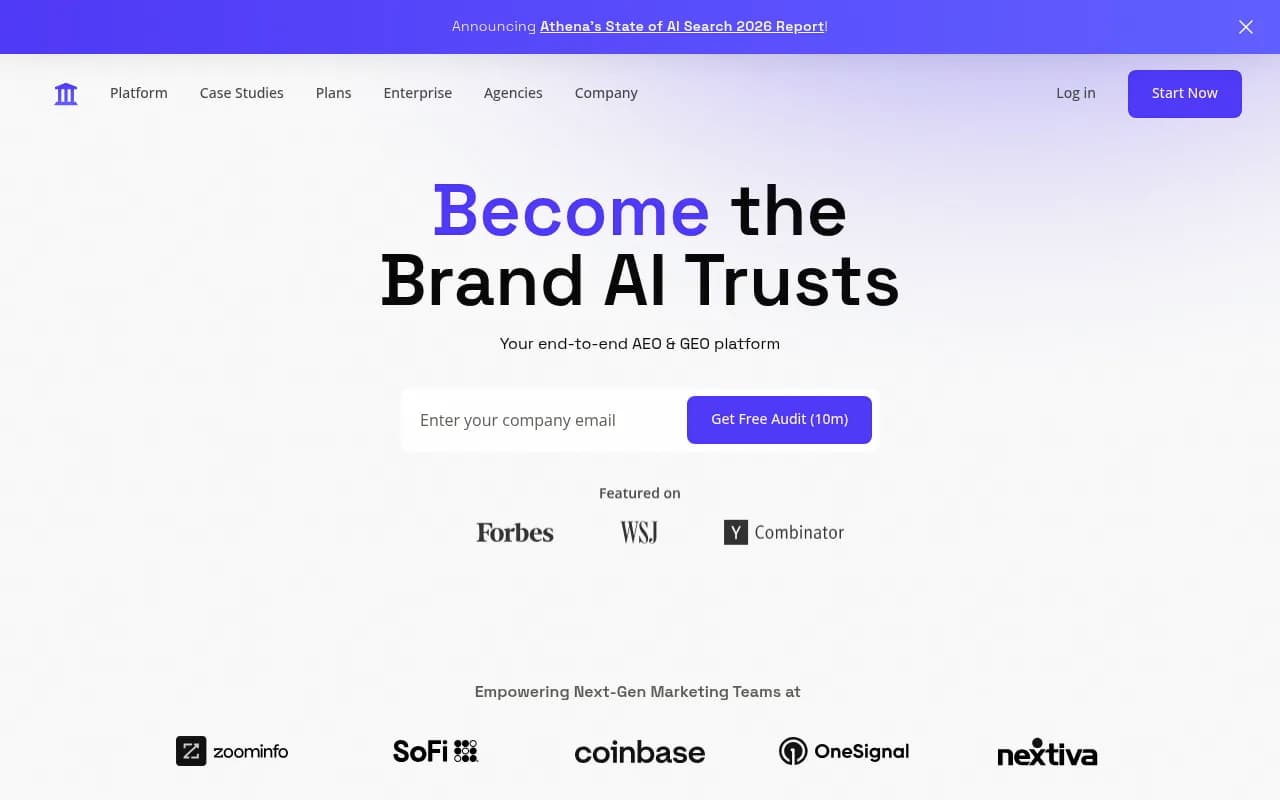
AthenaHQ has built a reputation as the more enterprise-focused option in this comparison. Its benchmarking features are genuinely detailed -- you can compare brand visibility across prompts, see competitor mention rates side by side, and break results down by AI model.
The platform covers 8+ AI search engines, which matters for benchmarking because your competitor might be dominating ChatGPT while you're actually ahead on Perplexity. Without model-level granularity, you'd miss that.
Where AthenaHQ gets complicated is its credit system. Analysis runs cost credits, which means frequent competitive refreshes can get expensive or require careful rationing. For teams that want to check competitor benchmarks daily or run large prompt sets, this creates friction. A few users on Reddit's r/seogrowth have noted that the methodology across platforms like AthenaHQ is solid but that credit limits make continuous monitoring harder to justify at lower tiers.
AthenaHQ's G2 rating sits at 4.9, with enterprise customers like SoFi, ZoomInfo, and Wix listed as users. That's a meaningful signal -- these are teams with real competitive intelligence needs.
The gap is on the action side. AthenaHQ is primarily a monitoring and analysis platform. It shows you where competitors are winning, but the workflow for turning that into content changes or optimizations is largely manual.
Best for: Enterprise teams that need detailed, model-specific competitor benchmarking and have the budget and staff to act on the data manually.
Profound

Profound positions itself as a full-stack AI search visibility platform with strong prompt analytics. Its benchmarking capabilities are solid -- you get competitor share-of-voice data, prompt-level visibility comparisons, and integration options that make it easier to pull data into existing reporting workflows.
One meaningful advantage Profound has over AthenaHQ: it offers unlimited prompts on its plans rather than a credit-based system. For benchmarking specifically, this matters. If you're tracking 200+ prompts across a competitive set, you don't want to be rationing queries.
Profound also offers faster SLA response times (5-minute vs. AthenaHQ's 2-hour, according to one comparison by Nick Lafferty). For teams running real-time competitive monitoring, that gap is real.
The criticism that comes up consistently is data reliability. Some users report inconsistencies in how Profound tracks mentions across different AI models, which is a problem when you're trying to make competitive decisions based on the numbers. There's also feedback that translating Profound's insights into concrete next steps requires significant manual effort -- the platform surfaces the data but doesn't guide you toward what to do with it.
Pricing starts at $99/month, which makes it accessible for mid-market teams, not just enterprise.
Best for: Mid-market and enterprise teams that need prompt-level competitor benchmarking with unlimited queries and integration flexibility.
Searchable
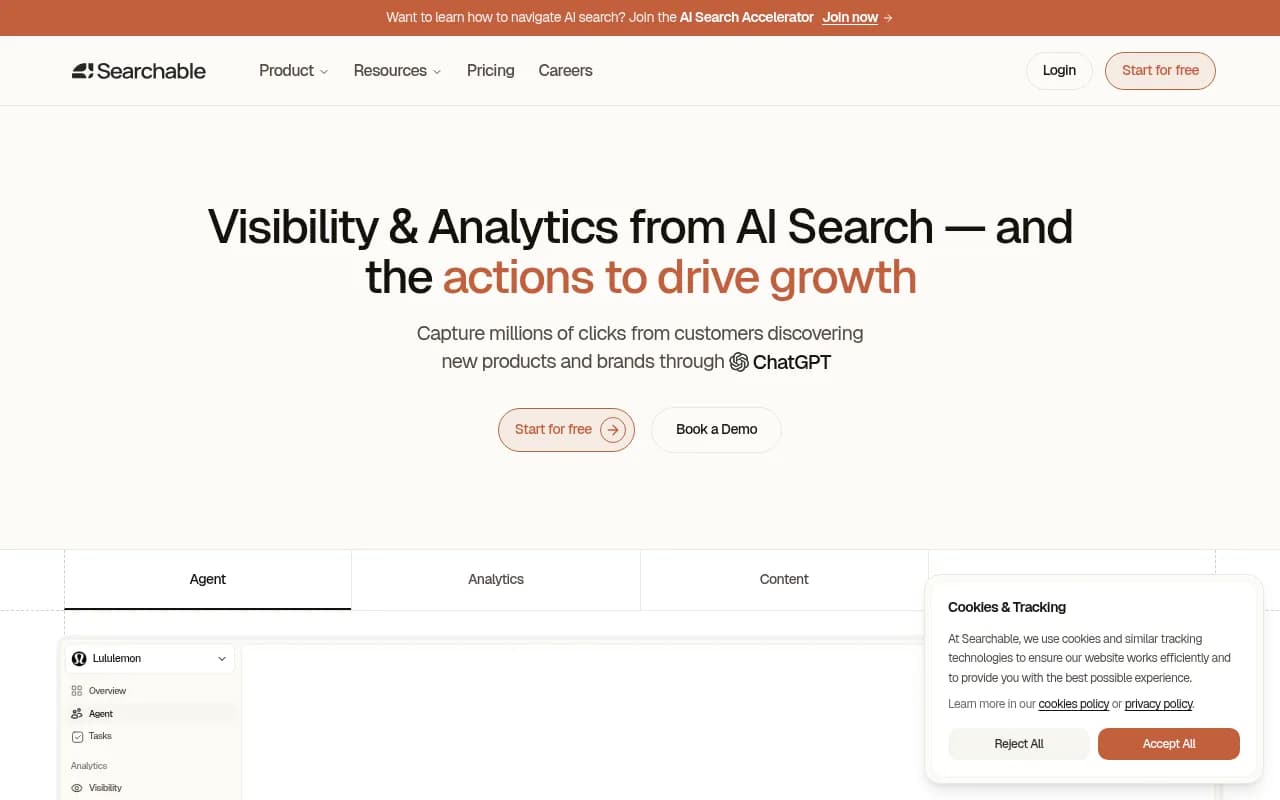
Searchable is the lightest of the three. It covers AI search visibility monitoring and includes some competitor comparison features, but it's not built for deep competitive benchmarking the way Profound or AthenaHQ are.
Where Searchable works well is as an entry point. If you're a smaller brand or agency just starting to understand AI search visibility, Searchable gives you a readable overview of how you and a few competitors are appearing across AI models. The interface is accessible, and the learning curve is low.
The limitation becomes obvious when you need more. Searchable doesn't offer the same prompt-level granularity, model-by-model breakdowns, or trend analysis depth that the other two platforms provide. For teams doing serious competitive intelligence work -- tracking 50+ prompts, comparing across 5+ competitors, watching for shifts week over week -- Searchable will feel constrained.
Best for: Smaller brands or teams new to AI visibility who want a simple starting point for competitor comparison without a steep learning curve or high price tag.
Head-to-head comparison
| Feature | Searchable | Profound | AthenaHQ |
|---|---|---|---|
| Competitor share of voice | Basic | Strong | Strong |
| Prompt-level benchmarking | Limited | Yes | Yes |
| Model-by-model breakdown | Limited | Yes | Yes (8+ models) |
| Unlimited prompts | Unclear | Yes | No (credit-based) |
| Citation source analysis | Limited | Partial | Partial |
| Trend tracking over time | Basic | Yes | Yes |
| Content optimization tools | Limited | Limited | Limited |
| Integrations / API | Limited | Yes | Yes |
| Starting price | Lower | $99/mo | Higher |
| Best for | SMBs / entry-level | Mid-market | Enterprise |
The gap all three share
Here's the honest assessment: all three platforms are primarily monitoring tools. They show you the benchmarking data -- where you stand vs. competitors, which prompts they're winning, which models favor them. What they don't do well is help you close the gap.
That's the real limitation. Knowing that a competitor appears in 40% of AI responses to "best project management software" while you appear in 12% is useful. But what do you actually do with that? Which pages need to be created or updated? What content format does ChatGPT want to cite? Which topics are you missing entirely?
This is where the monitoring-only model breaks down. For teams that want to move from benchmarking to action, you need a platform that connects competitive data to content creation and then tracks whether the new content actually improves your visibility.
Promptwatch is built around exactly this loop -- it identifies where competitors are visible that you're not (Answer Gap Analysis), generates content designed to get cited by AI models, and then tracks whether your visibility scores actually improve. It's worth considering alongside these three if your goal is to act on competitive data, not just observe it.

Which platform wins on benchmarking?
It depends on what you need from benchmarking.
If you need the most granular, model-specific competitive data and have an enterprise budget, AthenaHQ is the strongest option -- just be prepared for the credit constraints and manual follow-through.
If you need unlimited prompt tracking with solid benchmarking and integration options at a mid-market price, Profound is the better fit. The data consistency issues are worth monitoring, but for most teams they won't be dealbreakers.
If you're just getting started and want a simple competitive overview without a steep learning curve or high cost, Searchable is a reasonable starting point -- with the understanding that you'll likely outgrow it.
And if your goal is to actually improve your competitive position rather than just measure it, you'll want to pair whichever platform you choose with something that handles the content and optimization side of the equation.
A few other tools worth knowing
The three-way comparison above covers the main contenders, but the AI visibility space has expanded quickly. A few other platforms are worth a mention depending on your specific needs.
Peec AI is strong for international brands that need multi-country benchmarking with sentiment analysis.

Otterly.AI is a budget-friendly option for teams that primarily need brand monitoring and alerts rather than deep competitive analysis.

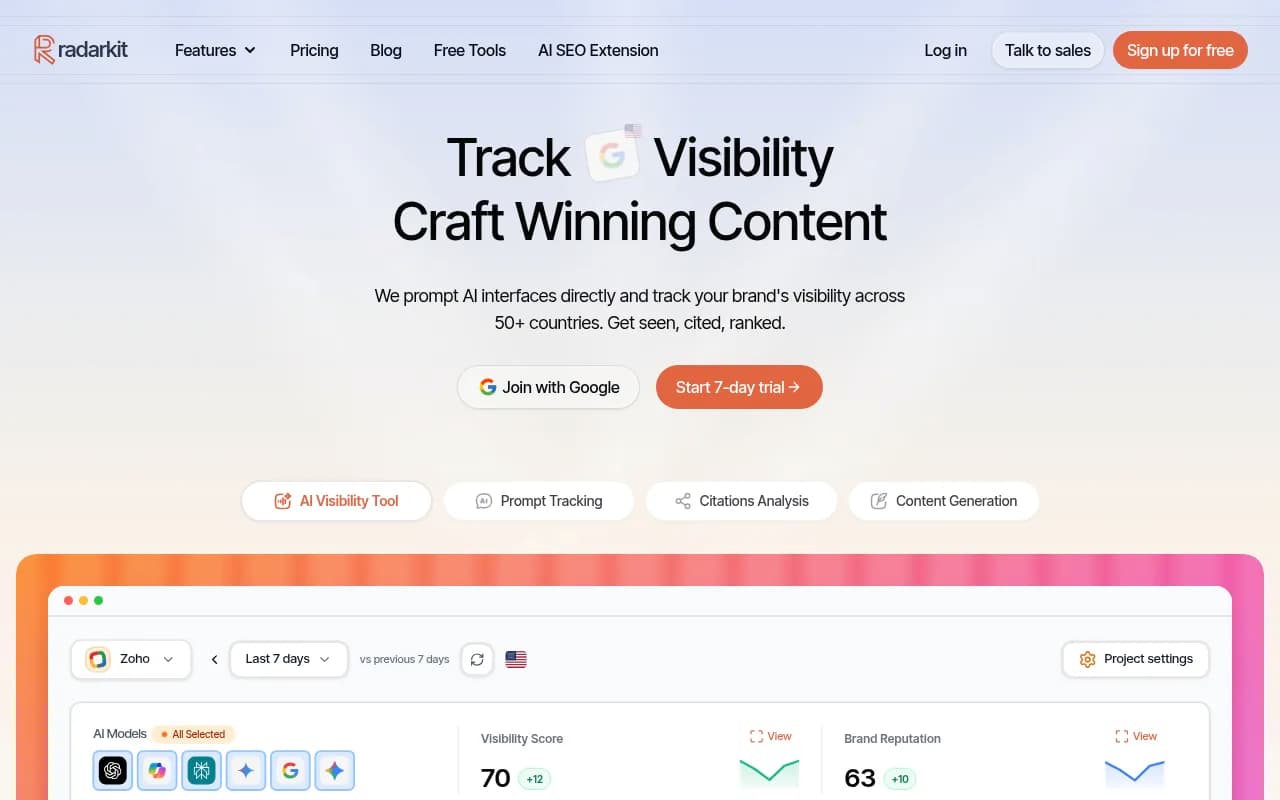
Radarkit has built a solid reputation among agencies for real LLM prompting (not API-based), competitor share-of-voice tracking, and multi-location proxy support -- useful if you need geographically granular benchmarking.
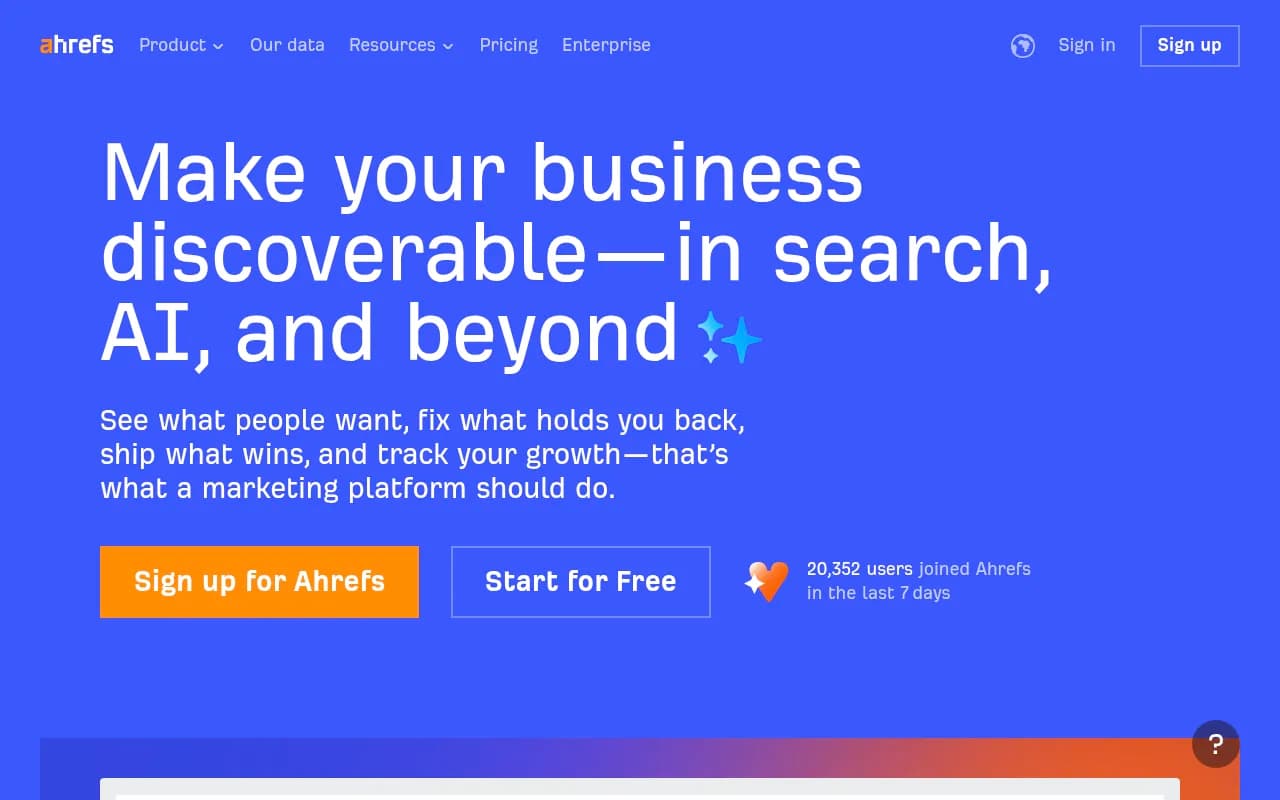
Ahrefs Brand Radar is worth considering if your team already lives in the Ahrefs ecosystem. It covers 6 AI platforms and includes branded search volume alongside AI visibility data.
Bottom line
Competitor benchmarking in AI search is still a relatively new capability, and no platform has fully nailed every dimension of it. AthenaHQ is the most capable for enterprise use cases, Profound offers the best balance of depth and accessibility, and Searchable is a reasonable entry point for smaller teams.
The more important question is what you plan to do with the benchmarking data once you have it. If the answer is "create content that closes the visibility gap," make sure the platform you choose -- or the combination of tools you use -- can actually support that workflow end to end.