Key takeaways
- AI shopping assistants return short lists instead of pages of results, so a product that is absent from the list never gets a bid, a click, or a sale.
- Retail media agencies and commerce platforms are adding GEO services because the shelf they sell ad space on is moving into AI answers.
- ChatGPT showed ads in an average of 20.1% of web-search responses between May 20 and August 17, 2026, so organic and paid AI visibility now overlap.
- Product data quality (schema, prices, availability, safety and material attributes) matters more than keyword bids in AI answers.
- The tools worth buying measure visibility, show which sources get cited, and help fix gaps. A dashboard that only reports a score is not enough.
Why retail media people suddenly care about GEO
Retail media has always been about owning the moment of purchase intent. Sponsored products sit on the digital shelf, and the shelf was a search results page. Brands bid on keywords, and agencies optimized ASINs and listings around those keywords.
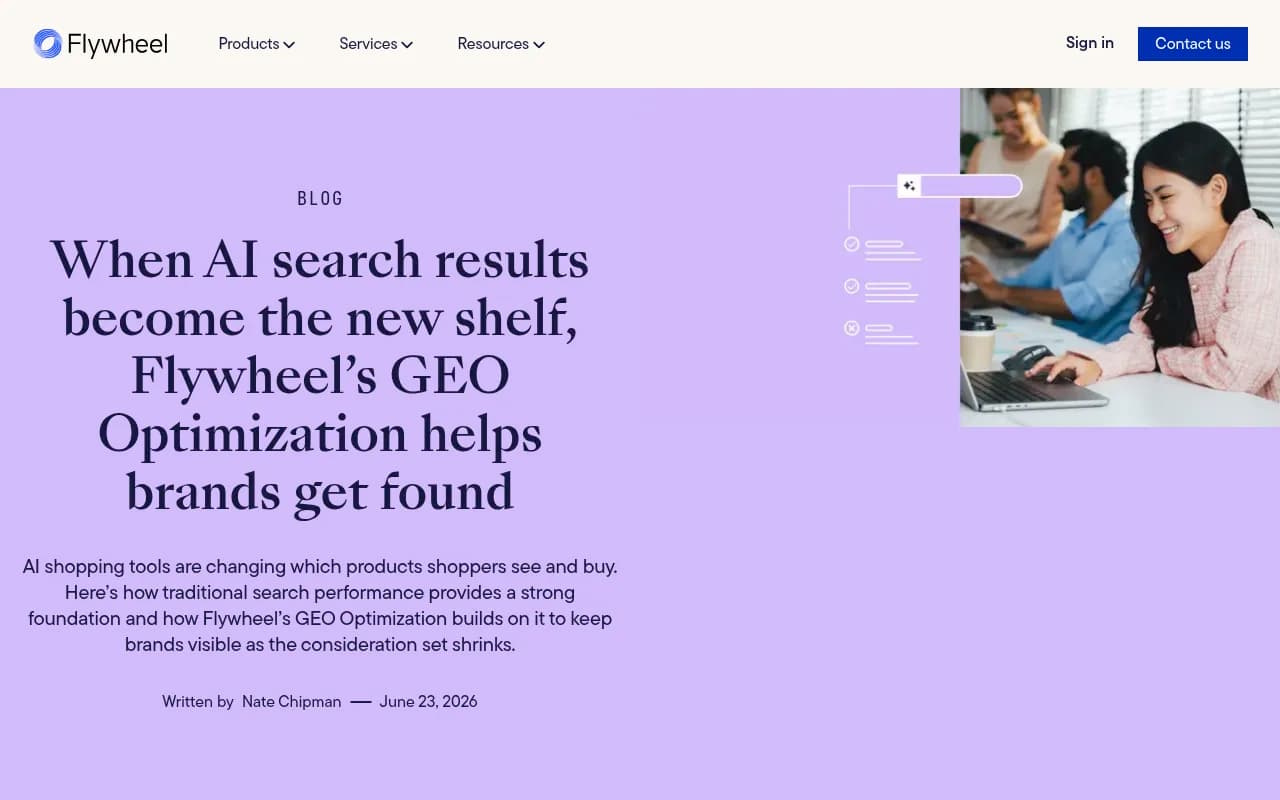
That shelf is being replaced by a conversation. Tools like Amazon's Alexa for Shopping, Walmart's Sparky, Amazon Rufus, Google's AI Overviews, and ChatGPT respond to a shopper's question with a handful of recommendations. Flywheel, a commerce agency, described the effect in a June 2026 post: the consideration set compresses, and if your product isn't in the short list, the shopper moves on without you ever being part of the conversation.
That is why you now see retail media shops launching GEO and AEO offerings. Front Row, which sells cross-channel retail media analytics, lists GEO, AEO, entity and knowledge graph optimization, AI search audits, and ongoing monitoring as a service line. Flywheel launched a GEO Optimization product built on top of its search work. These companies did not wake up one morning and decide to become SEO shops. Their clients' sales are being decided somewhere their existing dashboards cannot see.
Ranking well in search no longer guarantees showing up
The uncomfortable part is that strong traditional performance does not transfer cleanly. Flywheel's point is that AI assistants pull from product information to answer a specific question, and keyword bidding doesn't factor in. A product that ranks consistently in classic search can be largely absent from AI-generated results.
Their example is a good one. A shopper asks, "What stuffed animal is safe for a 3-year-old?" The model looks for age range, safety certifications, and materials. If those signals aren't clearly on the product page, the AI has little reason to include you, regardless of how well the listing ranks elsewhere. That is a content and data problem, not a bidding problem, and most retail media teams have never been measured on it.
How generative engines pick products
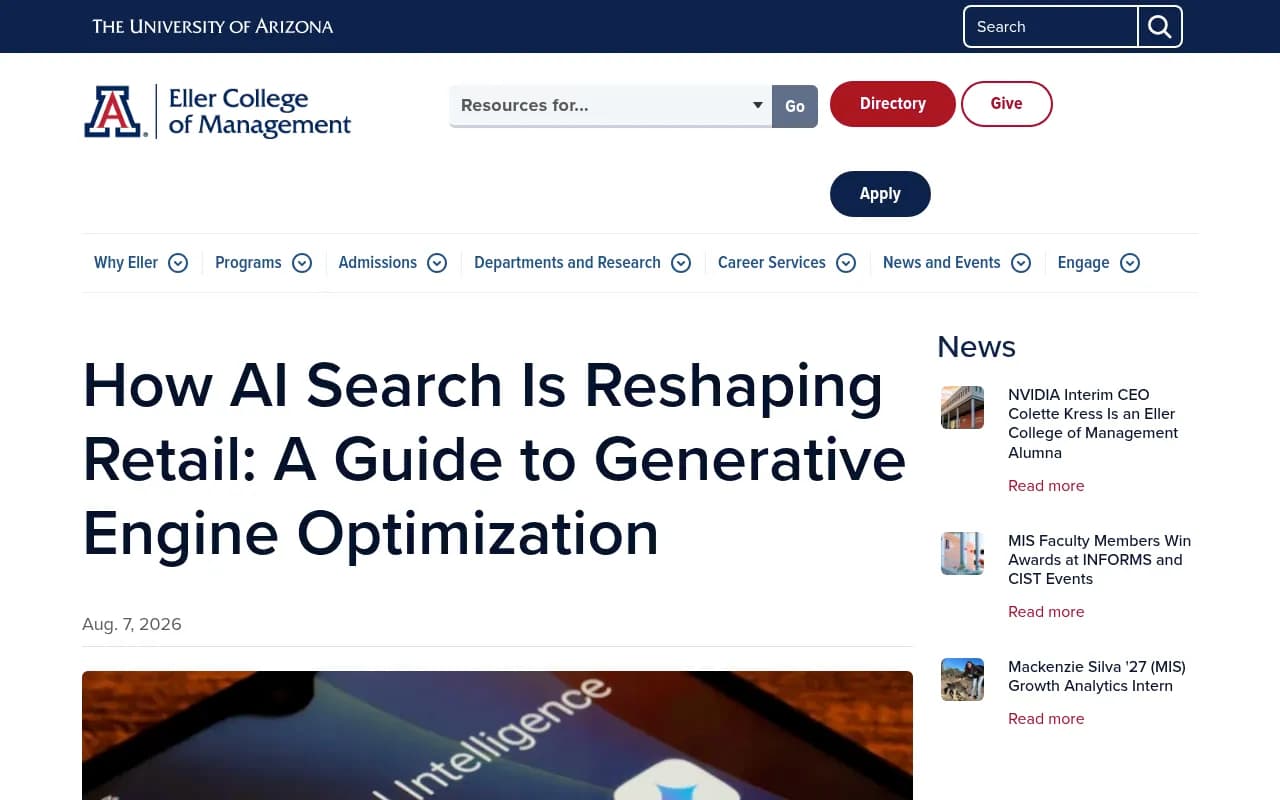
The University of Arizona's Eller College published a useful plain-English explainer in August 2026. Ask ChatGPT or Gemini for the best 30 inch refrigerator for a family of four, and the engine first checks the question against its training data. If it decides it needs fresh, authoritative information, it runs a live web search, pulls snippets from several sources, and hands them to the language model. The model then writes one answer with inline citations.
Two things follow from that. First, the sources the engine retrieves matter as much as your own site. Second, generative search still leans heavily on traditional search engines to find those sources, so Eller's advice is to keep investing in classic SEO while adding GEO on top.
What a product needs to be recommended
From the research and from Promptwatch's own data, the checklist is fairly consistent:
- Complete Product schema markup
- Accurate prices and availability
- A clean merchant feed
- Attributes that answer the questions shoppers actually ask (age range, materials, certifications, fit, compatibility)
- Content on third-party pages that AI already cites, such as reviews and listicles
Promptwatch's data suggests the content type matters too. In its ChatGPT citation share by content type report, product pages were the most cited type at 22.4% of citations from September 28 to October 4, 2026, followed by landing pages and listicles. For a retailer, that is good news: your product pages are the asset AI most wants to cite, if they are readable.
Where ads enter the picture
This is the part that makes retail media buyers pay attention. AI answers are not just organic. According to Promptwatch's ChatGPT ads data, ChatGPT served no ads until May 27, 2026, when they appeared in 1.69% of responses. After a jump past 30% on July 1, the rate stuck. Across the 90 days from May 20 to August 17, ads appeared in an average of 20.1% of ChatGPT responses that ran a web search, with daily peaks as high as 43.9%.
The prompt mix is worth noting. Over the 7-day window in that report, 73.3% of ad-bearing responses came from organic prompts, 18.0% from brand-specific prompts, and 8.6% from competitor comparison prompts. That is a mix by volume, so it shows where ads appeared rather than how likely each prompt type is to trigger one. Still, it tells a media planner something: a lot of the ad inventory sits on unbranded, early-stage questions, which is exactly where brands used to win through search ads.
Shopping features are a separate thing. Product cards, recommendations, and price comparisons appear in only a low single-digit percentage of web-search responses overall, per Promptwatch's ChatGPT shopping usage data. They concentrate on commercial and transactional prompts, and the rate moves in steps, which Promptwatch reads as OpenAI actively tuning when cards show. The practical takeaway: do not plan around a fixed trigger rate. Monitor it.
What commerce platforms are actually buying
There are three buying patterns I see, and they are quite different.
Pattern 1: services bolted onto retail media agencies
Front Row and Flywheel sell GEO as managed work: audits, entity data cleanup, content restructuring, monitoring. If you already buy retail media management from one of these shops, adding GEO is the lowest-friction path. The downside is that you inherit their tooling choices and you may not get raw access to the data.
Pattern 2: commerce-specific GEO tools
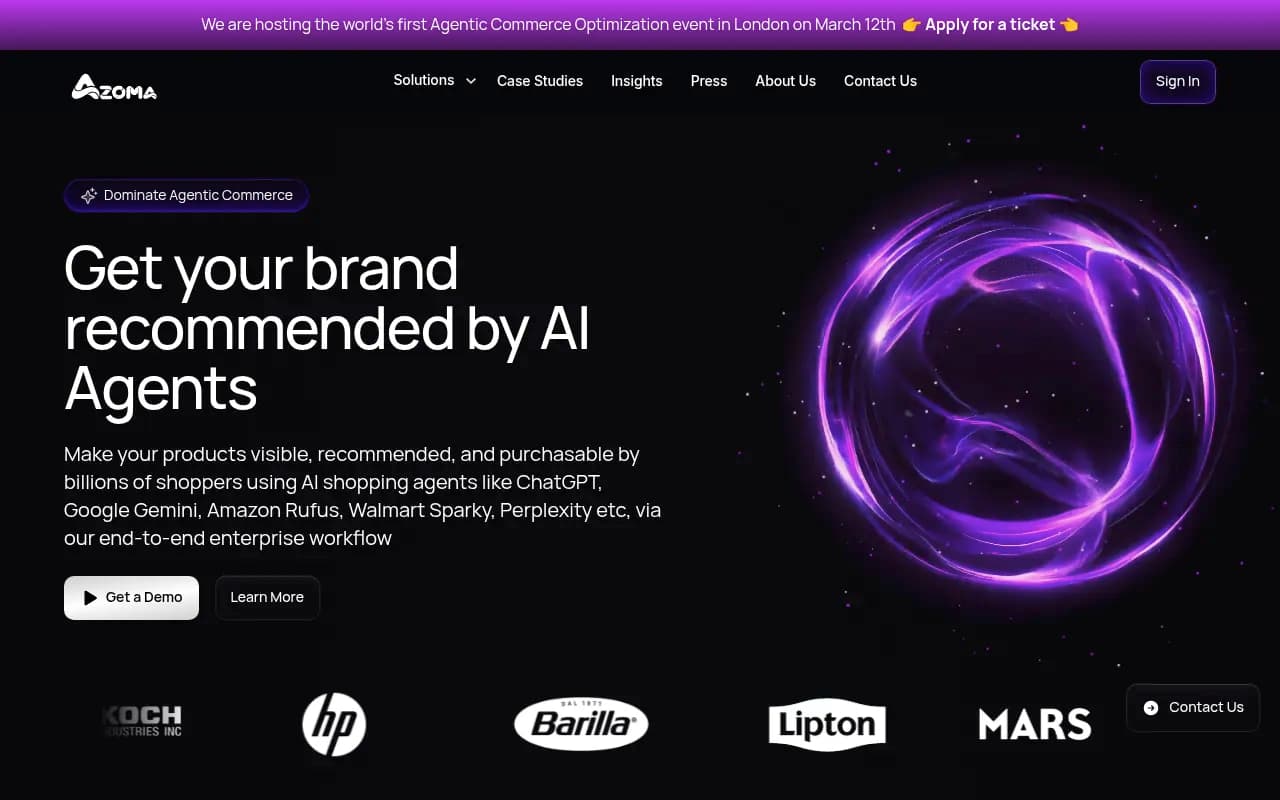
A newer group of tools is built around shopping surfaces rather than general brand mentions. Azoma focuses on AI shopping optimization for ChatGPT and Rufus. Goodie AI pitches agentic commerce optimization. Yotpo Discover targets ecommerce product discovery, and ShopOS offers GEO practices for ecommerce brands.


These make sense when your whole business is a product catalog. I would still ask each one how they collect data, because answers from a real consumer interface can differ from API outputs.
Pattern 3: general AI visibility platforms
Brands and agencies that sell across many channels often pick a broader platform that tracks multiple AI engines, citations, and traffic. Promptwatch sits here. It tracks ChatGPT, Google AI Overviews, Google AI Mode, Gemini, Perplexity, Copilot, Amazon Alexa, and Meta AI through their real interfaces, and its AI Shopping and Ads Radar shows which products ChatGPT shopping carousels and Alexa product results recommend, which competitors get picked instead, and which advertisers bid on your prompts. Shopping is on the Business plan and Enterprise; Ads Radar is on Business, every agency plan, and Enterprise.

What I like for this use case is that it goes past reporting. Content gap analysis, the Content Agent, and CMS publishing to WordPress, Webflow, and Framer let a team fix the pages AI isn't citing, and AI crawler logs show whether bots can even read a product page. The shopping features overview and Ads Radar page explain the retail-specific pieces.
A comparison of tool types
| Approach | Examples | Strength | Watch out for |
|---|---|---|---|
| Agency-led GEO | Front Row, Flywheel | Fits into existing retail media contracts | Less transparency into raw data |
| Commerce-specific tools | Azoma, Goodie AI, Yotpo Discover | Built around product catalogs and shopping surfaces | Narrower coverage beyond shopping |
| End-to-end AI visibility platform | Promptwatch | Monitoring, citation tracing, content creation, crawler logs, traffic attribution | Shopping and Ads Radar need Business or higher |
| Enterprise SEO suites with AI add-ons | BrightEdge, seoClarity, Semrush | Familiar workflow for large SEO teams | AI tracking can be shallower than dedicated tools |
| Pure monitoring tools | Otterly.AI, Peec AI | Cheap and fast to start | Tell you the problem, not how to fix it |


For a longer list of options, the GEO software directory at bestgeosoftware.com is a decent place to browse by category.
How to evaluate a GEO tool for retail
I would not start with a feature grid. Start with questions about your own catalog.
- Can it run the prompts your shoppers actually use, in your markets and languages, and show which brands fill the answer?
- Does it show which sources get cited? Reviews, marketplaces, and listicles often outrank brand sites, so you need to know where to show up.
- Can it tell an access problem from a content problem? If AI bots cannot crawl your product pages, rewriting them is wasted effort. Crawler logs matter here.
- Can you connect visibility to traffic and revenue? Without that, GEO stays a cost line.
- Does it help you do something about gaps, or just chart them?
Check the data source
This is easy to skip. Some tools query model APIs, while others capture what users see in the actual interface. Shopping cards and citations can differ between the two. Ask which one you are getting, particularly for Rufus-style surfaces and ChatGPT shopping.
A practical starting plan
- Pick 30 to 50 shopper prompts across your top categories. Include conversational ones like "which hair spray works for fine hair" rather than only keywords.
- Record which brands, products, and sources appear. Track across several days, because a single run can land on an outlier.
- Audit your product pages for the attributes those prompts imply. Fill in schema, price, availability, and safety or materials details.
- Check crawler access. A free option is the Agentic Readiness Check to see which AI crawlers can read your site.
- Review your retail media plan. If AI surfaces are showing ads on your category prompts, note which advertisers and landing pages win the slots.
- Re-measure monthly. Shopping features and ad rates change in steps, so one snapshot ages fast.
The Eller guide is right that this does not replace SEO. Treat it as an extra layer on the same product data.
What I would be cautious about
A few claims floating around deserve skepticism. One vendor-adjacent snippet says AI platforms cite brand-owned domains in only 12.03% of relevant consumer goods and retail responses. I could only verify that as a search snippet, so treat it as directional until you see the underlying study. Likewise, Adobe's survey on shoppers using AI being more likely to purchase is cited by Flywheel, but you should read the original before putting it in a deck.
Also, AI shopping is early. Flywheel itself says adoption is still early in the curve. The case for buying GEO tools now is not that AI has replaced search. It is that measurement is cheap compared to discovering a year from now that your category has been answered without you.
FAQ
Is GEO the same as retail media optimization?
No. Retail media optimization is mostly about bids, placements, and listing quality inside a marketplace. GEO is about whether AI engines mention and cite your products when answering shopper questions, including outside marketplaces. They overlap on product data quality.
Do we need a separate tool, or can our agency handle it?
If your agency runs it, ask for access to the underlying data and the prompts they track. If you run it in-house, a platform like Promptwatch gives you monitoring plus the means to fix gaps. Pricing starts at $95/month on the Essential plan, with a 7-day free trial; confirm current plans at promptwatch.com/pricing.
What should we measure first?
Visibility and citation share on your highest-value commercial prompts, plus whether AI crawlers can read your product pages. Traffic and conversion attribution come next. The attributing AI traffic guide covers the setup.
Bottom line
Retail media teams are buying GEO tools because the shelf they sell is now partly an AI answer. Choose tools that measure real interfaces, trace citations, and help you fix product pages, then re-check every month, since ChatGPT's ad and shopping behavior has already changed several times in 2026.