Key takeaways
- GEO tools collect AI answers in one of two ways: scraping the consumer interface that real people use, or calling the model API. The two often produce different answers.
- Surfer's 2026 study of 13,779 answers found ChatGPT API answers named 13.8 brands on average versus 7.9 in the UI, and cited 3.1 sources versus 12.1 in the UI. Surfer sells a scraping product, so treat the numbers as directional.
- Ads, shopping cards and live-browsing citations only appear in the consumer UI. If those matter to your brand, API-only monitoring cannot see them.
- API data is not useless. It shows what a model believes from training data and is easier to control and repeat.
- The best enterprise setup uses real UI data as the primary signal and API models as a secondary one. Ask vendors to tell you which is which, per engine.
Why this question matters more than the dashboard
Most GEO dashboards look alike. A visibility score, a share of voice chart, a list of cited domains. The numbers feel authoritative. But the number is only as good as the answers it was built from, and those answers come from one of two very different places.
Under the hood, GEO tools are data pipelines. They send prompts to AI engines at scale and parse what comes back. The Olostep buyer's guide describes the category as a pipeline with several stages, and the collection stage is where the biggest differences hide. If a tool asks the wrong thing of the wrong interface, everything downstream is polished noise.
This matters most for enterprise buyers. You are signing a larger contract, reporting numbers to a CMO, and probably making content investment decisions on the back of them. So it is worth knowing exactly what you are measuring.
The two collection methods, explained
UI scraping (real interface data)
The tool drives the actual product, such as chatgpt.com, Google AI Mode or Perplexity, the way a person would. It captures the rendered answer: the prose, the citations, the shopping carousel, the ad slot, the source list in its real order.
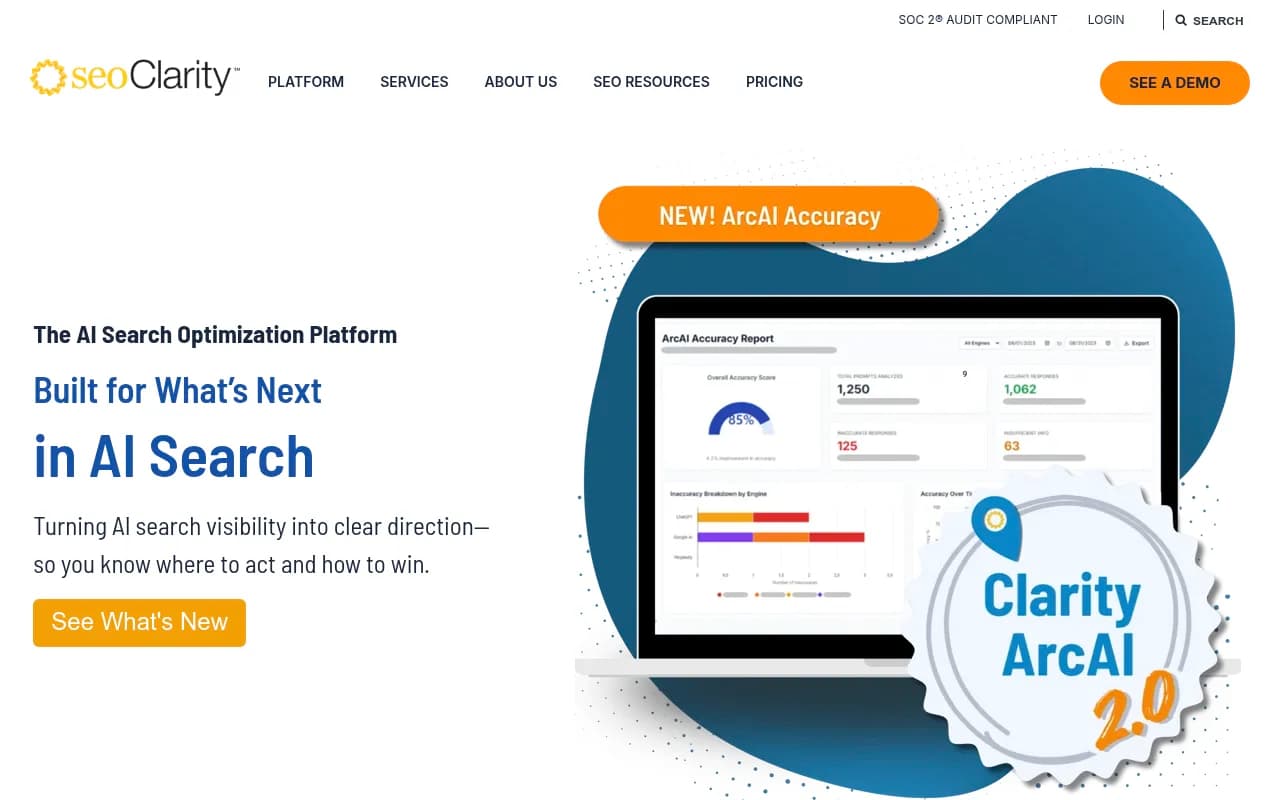
seoClarity, which argues for this approach, describes it as simulating a logged-in user and capturing the full rendered output, including shopping results, formatting and live browsing content. It also claims the ChatGPT interface applies proprietary logic and undisclosed parameters that the API cannot replicate. That is a vendor claim, but it matches what many practitioners see.
The cost is complexity. Scraping needs proxies, session handling, location control and constant maintenance when the interface changes. seoClarity admits that API access is easier, faster and open to anyone, which is why many new entrants start there.
API monitoring
The tool calls the model through the developer API, sends a prompt, and records the text that comes back. It is cheap, stable and easy to repeat. It also gives you control over model version and whether web search was used.
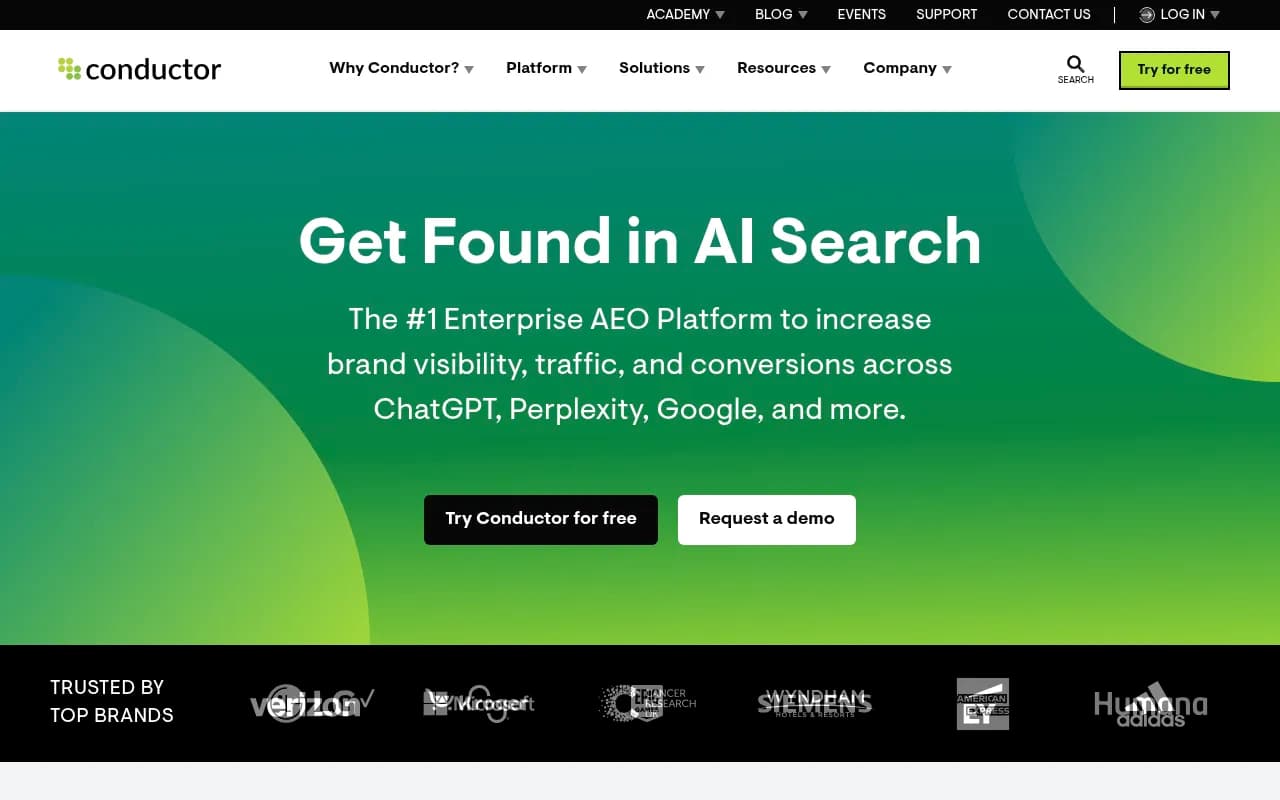
Conductor, which sells an API-based product, makes the best case for it. UI scrapers can break silently when a page changes, leaving gaps in data. They run into geographic blocking, CAPTCHAs and authentication overhead. They often capture a single configuration, so results reflect one type of user. Conductor also points out that scrapers sometimes run logged out or on downgraded models.
Those are fair criticisms, and they apply to badly built scrapers. They are an argument for choosing a vendor with mature collection infrastructure, not an argument that the API is a substitute for what users see.
Where the vendor bias sits
Every comparison I could find is written by a company that sells one of the two methods. seoClarity, Surfer and Writesonic favor real-platform monitoring. Conductor favors the API. Read all of them with that in mind.
What the data says about the gap
Surfer published the most detailed public comparison: 13,779 answers across 9 collection modes, covering ChatGPT, Perplexity, Gemini, AI Mode and AI Overviews. Its headline claim is that overlap between UI and API answers is "just 30% at best".
| Metric (Surfer study) | UI | API |
|---|---|---|
| ChatGPT brands per answer | 7.9 | 13.8 |
| ChatGPT words per answer | 421 | 863 |
| ChatGPT sources cited per answer | 12.1 | 3.1 |
| AI Mode sources per answer | 22.2 | 14.6 |
| Perplexity sources per answer | 10.27 | 19.5 |
| Gemini sources per answer | 3.4 | 6.5 |
| AI Overviews sources per answer | 10.3 | 14.6 |
| ChatGPT web search rate | 88% | 83% |
A few things stand out. The direction of the gap is not consistent. For ChatGPT the API gives fewer sources but more brands and nearly double the words. For Perplexity and Gemini the API gives more sources. So you cannot simply apply a correction factor to API data and call it UI data.
Domain overlap was also low. Surfer reports roughly 12% domain overlap for ChatGPT and about 27% for Perplexity. Its text is inconsistent on the ChatGPT figure (4.8% in one place, 12.1% in a chart caption), so verify before quoting it. For Gemini, AI Mode and AI Overviews, page-level overlap could not be measured at all, because the APIs return per-call redirect tokens rather than destination URLs. That alone is a problem if you want to know which of your pages gets cited.
A caution about reading any single number
Do not treat the ChatGPT source count as settled. Promptwatch Data's average sources per response report, published in September 2025 and built from UI collection, put ChatGPT at about 5 sources per web-search answer, Google AI Overviews at about 10 and Perplexity at almost exactly 10 every day. Surfer's UI figure for ChatGPT is 12.1. Dates, prompt sets and methods differ, and ChatGPT's retrieval behavior shifts with model updates.
That last point is worth dwelling on. Promptwatch's data on the ChatGPT citation drop shows average citations per response falling across GPT-5.3, GPT-5.4 and GPT-5-Mini around the March 4, 2026 rollout. A model snapshot you tested in the API last quarter may not reflect what the product does today.
Volume per answer is also high. In Promptwatch Data's unique domains report for Sep 28 to Oct 4, 2026, 47.6% of ChatGPT responses with citations named 10 or more different domains, and 66.1% named at least 8. For brand-specific prompts the picture is tighter: 21.3% cited 10 or more. One prompt tells you very little. Whatever method you use, measure across many prompts.
What only the real UI shows
Some surfaces simply do not exist in the API.
- Sponsored placements. Promptwatch Data tracks how often ChatGPT shows ads in its ChatGPT ads over time report. An API call will not return an ad.
- Shopping carousels and product cards. See the ChatGPT shopping usage report. If you sell products, this is where recommendations are made.
- Query fan-outs and live search behavior. ChatGPT began using the site: operator at scale on August 8, 2026, jumping from about 0.4% to about 17% of fan-out queries, according to Promptwatch Data's site: operator report. That is a product behavior change, visible in the interface.
- Location and market differences. Region-specific AI Overviews and local answers depend on where the user is.
- Citation order. Where your page lands in the source list is a UI artifact.
I would put it plainly. If your marketing team asks "what does a customer see when they ask ChatGPT about us?", the honest answer comes from the interface.
Where API data still earns its place
API data answers a different question: what does the model itself believe, absent live retrieval? That matters for brand perception baked into training data, and it is useful for long-term reputation tracking. APIs are also cheaper per call, easy to schedule and great for building internal dashboards or pipelines.
The sensible framing is that UI data tells you what users experience and API data tells you what models know. Keep them in separate columns. Problems start when a vendor blends them into one score without saying so.
How to check what a vendor actually collects
I could not find a verified public list of which tools use UI data and which use API data, and vendors are not always clear. So test them. Questions to put in your RFP or demo:
- For each engine, is the data collected from the consumer interface or the API? Ask for a table, not a sentence.
- Can you show me the raw response, including citations in their original order, for a prompt I choose?
- Do you capture ads and shopping results? If not, why not?
- How do you handle location? Can I set a country, state or city per monitor?
- What happens when an interface changes? How do you detect silent failures?
- Is the user logged in or out, and which model and mode are selected?
- How do you handle the fact that one prompt is not stable? How many runs per prompt?
- Can I export the raw responses and citations, or only the aggregate score?
The most telling test is simple. Give the vendor five prompts. Run the same five yourself in the actual product with a clean session. If the vendor's output looks nothing like what you see, you have learned what you needed to know.
Which tools collect what
Public documentation varies, so use this as a starting map rather than a verdict, and confirm each claim in a demo.
| Tool | Collection approach (as publicly positioned) | Notes |
|---|---|---|
| Promptwatch | Real interfaces for ChatGPT, Google AI Overviews, AI Mode, Copilot, Gemini, Perplexity, Alexa, Meta AI; API models tracked alongside | Keeps UI and API views separate |
| seoClarity | Argues for UI scraping | Enterprise SEO suite |
| Conductor | Argues for API monitoring | Sells a Data API |
| Writesonic | Says it monitors real AI platforms, not just APIs | Based on its docs snippet |
| Surfer SEO | Scraping-based, with published comparison data | Vendor-interest study |
| Profound | Enterprise monitoring platform | Ask directly per engine |
| Scrunch AI | AI visibility monitoring | Ask directly per engine |
| Peec AI | Prompt tracking | Ask directly per engine |
| Otterly.AI | Prompt tracking | Ask directly per engine |
Where I have written "ask directly", I have not seen a verified public statement, so I am not guessing.
Promptwatch
Promptwatch states that it collects responses, citations and click data from the actual user interfaces of ChatGPT, Google AI Overviews, Google AI Mode, Microsoft Copilot, Gemini, Perplexity, Amazon Alexa and Meta AI, in each country and language. API models like Claude, DeepSeek, Mistral and Grok are tracked alongside to show what models believe from training data. That is the split described above, with the two kept apart. It also adds IP-verified AI crawler logs and visitor analytics, which let you check the monitoring against what bots and visitors actually do on your site. Plans start at $95/month, and enterprise is custom; confirm current pricing at promptwatch.com/pricing. There is also a free AI visibility report if you want to compare its output with your own manual checks.

seoClarity and Conductor
These two are the clearest voices on opposite sides of the argument, and both are enterprise SEO platforms with AI visibility modules. Read their respective posts on scraping versus API side by side, then ask each how its own product behaves.
Surfer SEO and Writesonic
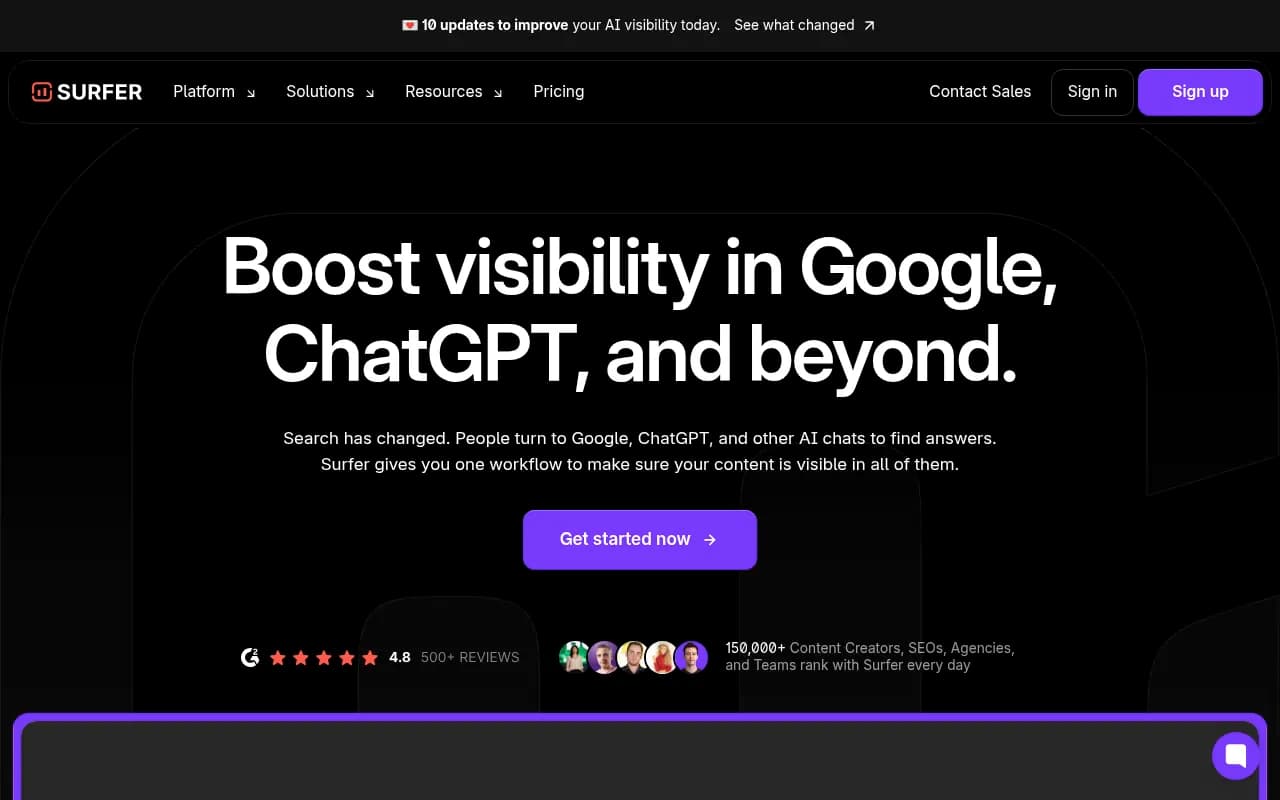
Both have published material arguing real-platform data matters. Surfer's study is the most detailed public dataset on the gap, though it comes from a company with a stake in the answer.
Other enterprise-oriented options
Profound, Scrunch and BrightEdge are often shortlisted for large organizations.

For a wider list, the directory at bestgeosoftware.com covers GEO platforms by category.
Practical setup for an enterprise team
Here is the approach I would take.
- Choose UI data as the source of truth for the engines your customers use. Report visibility, citations and share of voice from it.
- Add API models as a secondary view for training-data perception. Label it clearly.
- Pin location per monitor. A national average hides local problems.
- Track many prompts, with personas, and read trends rather than single answers.
- Validate against your own logs. If a tool says AI cites your page but crawler logs show the bot never fetched it, something is off. Crawler data helps separate an access problem from a content problem.
- Re-check after every major model rollout. Behavior shifts, as the March 2026 citation drop showed.
Bottom line
The interface and the API are different products, and the gap between them is large enough to change a content strategy. The research has limits: every comparison comes from a vendor with a side, and public numbers disagree. But the direction is clear. If you are paying enterprise prices to learn what AI says about your brand, ask where the answers come from, ask to see them raw, and test five prompts yourself before you sign.