Key takeaways
- Competitive intelligence in AI search means more than knowing where you rank -- it means knowing why competitors are cited and what you can do about it.
- Promptwatch is the only platform in this comparison that closes the full loop: find gaps, generate content, track results.
- AthenaHQ and Rankability are solid monitoring tools but stop short of helping you act on what they find.
- Qwairy focuses on GEO strategy and prompt optimization, with a narrower scope than Promptwatch but useful for specific workflows.
- If your team needs to show competitive wins in AI search -- not just dashboards -- Promptwatch is the clearest choice in 2026.
AI search has made competitive intelligence genuinely complicated. A year ago, "competitive intelligence" mostly meant checking who ranked above you on Google. Now it means tracking which brands get cited in ChatGPT answers, which sources Perplexity pulls from, whether Gemini mentions your product in a comparison, and why Claude recommends a competitor instead of you.
Four platforms come up repeatedly when teams start looking for answers: Qwairy, Promptwatch, AthenaHQ, and Rankability. They all operate in the AI visibility space, but they're solving different parts of the problem -- and the differences matter a lot depending on what your team actually needs to do.
This guide breaks down each tool across the dimensions that matter for competitive intelligence: prompt tracking, competitor benchmarking, content gap analysis, and whether the platform helps you fix what it finds.
What "competitive intelligence" actually means in AI search
Before comparing tools, it's worth being specific about what competitive intelligence looks like in this context.
In traditional SEO, competitive intelligence meant things like: who has more backlinks, who ranks for which keywords, what content gaps exist. Tools like Semrush and Ahrefs built entire product lines around this.
In AI search, the equivalent questions are:
- Which prompts is my competitor being cited for that I'm not?
- What sources does ChatGPT pull from when someone asks about my category?
- How does my share of voice compare to competitors across different AI models?
- Which pages on my site are being crawled and cited by AI engines, and which are being ignored?
- What content would I need to publish to start appearing in answers where I'm currently absent?
That last question is where most tools fall short. Monitoring who's visible is the easy part. Telling you what to do about it is harder.
The four platforms at a glance
Qwairy
Qwairy positions itself as a GEO strategy and optimization platform. It focuses on helping brands understand how AI models interpret and cite their content, with tools for prompt tracking and optimization recommendations.
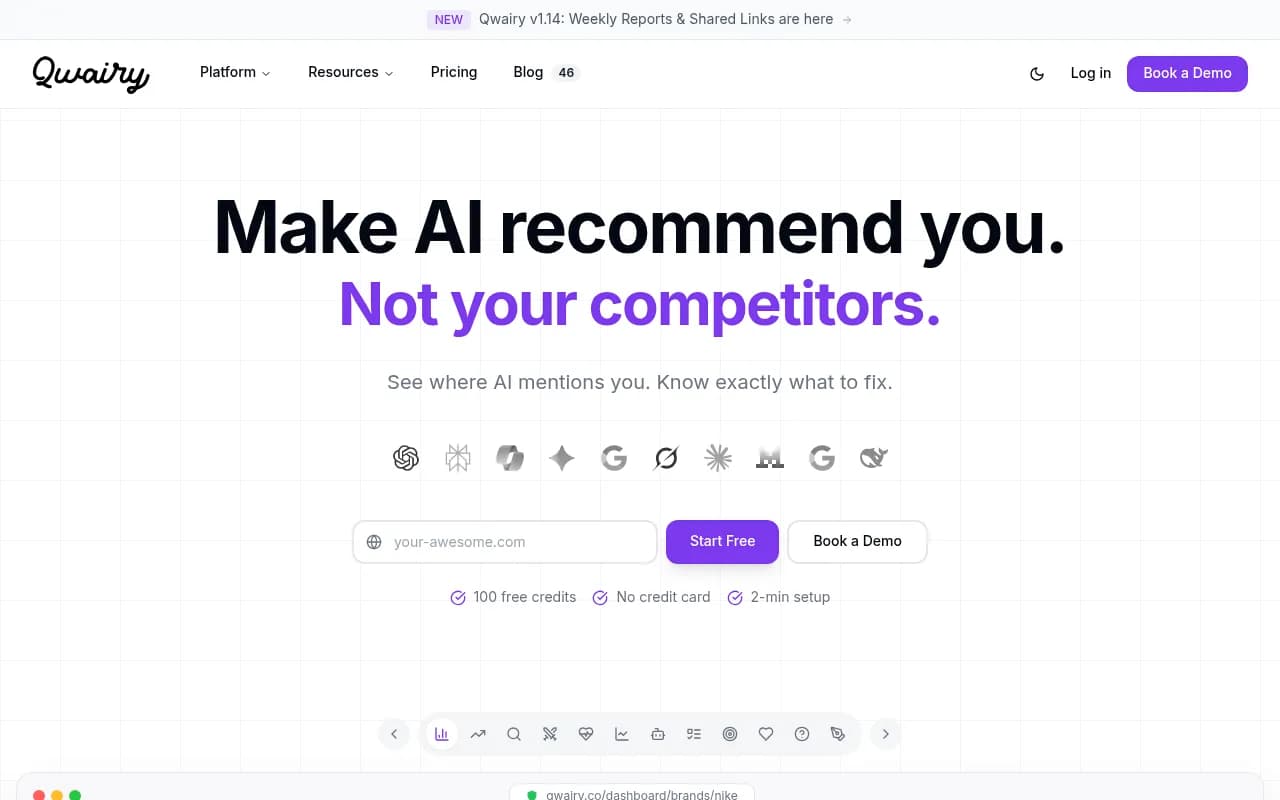
Qwairy's competitive intelligence features center on share-of-voice comparisons and prompt-level visibility tracking. You can see how your brand stacks up against competitors for specific queries across models like ChatGPT and Perplexity. The platform leans toward strategy -- it's built for teams that want to think about their AI search positioning systematically.
What Qwairy does well: prompt-level granularity and a clear focus on GEO workflows. What it lacks compared to the broader platforms: content generation capabilities, crawler log access, and the depth of citation data that comes from processing billions of queries at scale.
AthenaHQ
AthenaHQ is one of the more established names in AI visibility monitoring. It tracks brand mentions and citations across major AI models, gives you share-of-voice metrics, and surfaces prompt-level data.
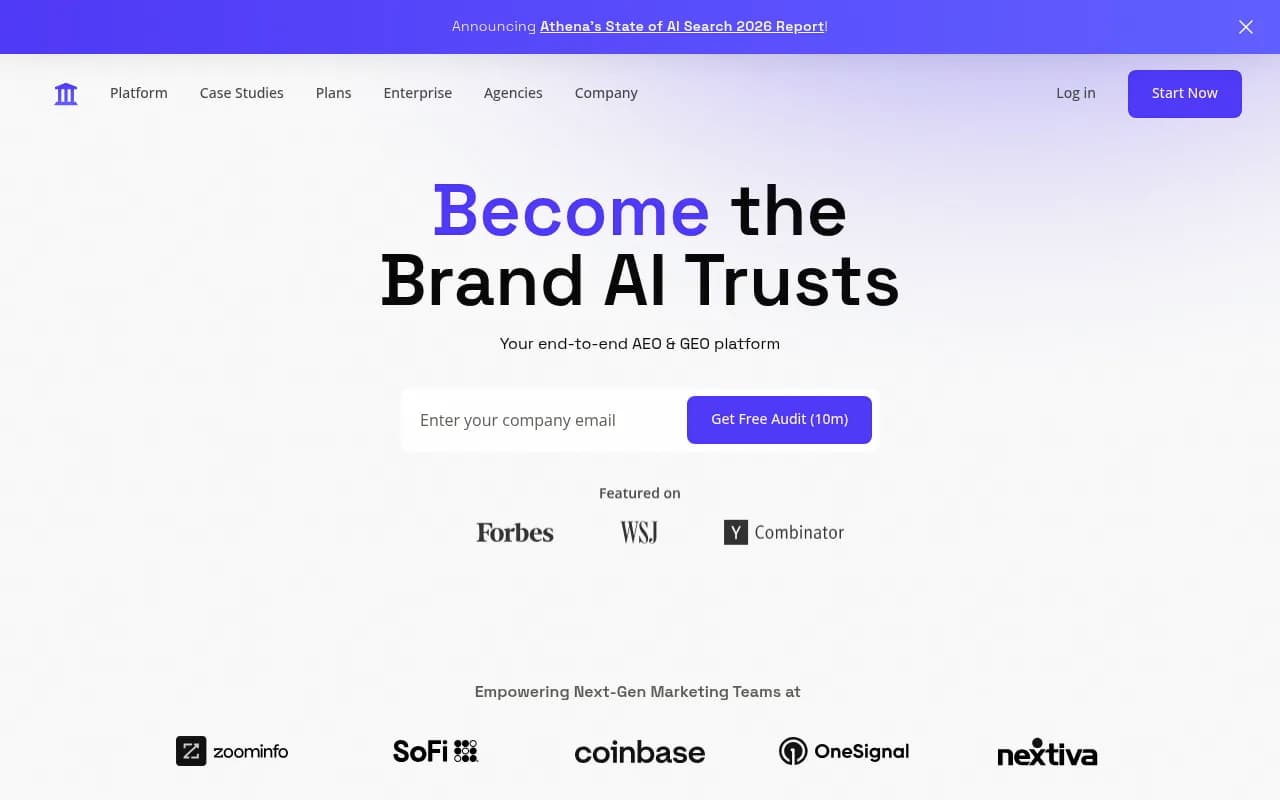
The competitive intelligence angle is real -- you can benchmark your brand against competitors across different AI engines and see where gaps exist. AthenaHQ's interface is clean and the data is generally reliable.
The limitation that comes up consistently: AthenaHQ is a monitoring platform. It tells you where you're invisible but doesn't help you become visible. There's no content generation, no content brief builder, no crawler logs showing you how AI agents are actually interacting with your site. For teams that just want a visibility dashboard, that's fine. For teams that need to move the needle, it's a starting point, not a complete solution.
Rankability
Rankability is agency-oriented, which shapes how it approaches competitive intelligence. The platform is built for teams managing multiple clients and brands, with reporting features that make it easy to show clients where they stand relative to competitors in AI search.
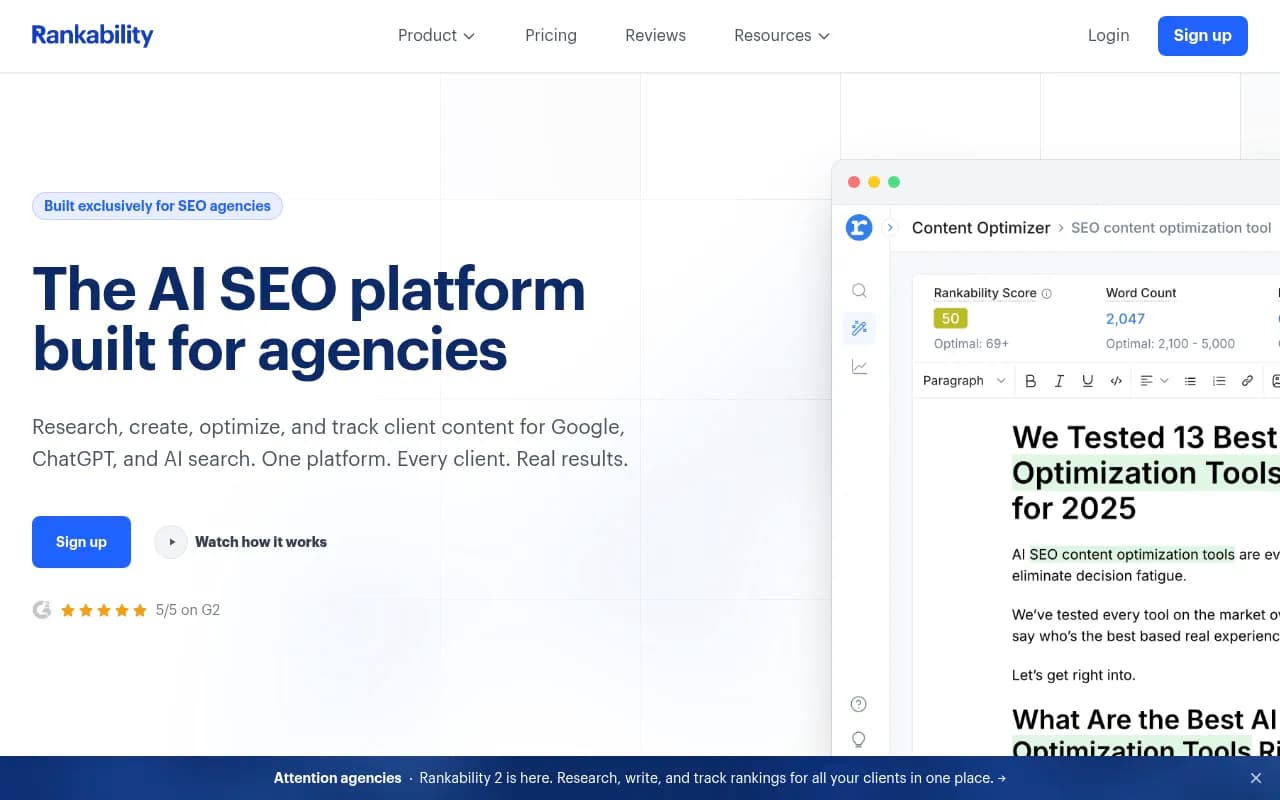
The competitive benchmarking in Rankability is solid for agency use cases -- you can pull together clean reports showing share of voice, citation trends, and competitor comparisons across models. It handles multi-brand management reasonably well.
Where it gets thinner: prompt intelligence (volume estimates, difficulty scoring), content optimization tools, and anything related to understanding why AI models cite certain sources. Like AthenaHQ, it's primarily a monitoring and reporting tool. The slatehq.com comparison of 12 AI search analytics platforms in 2026 categorized Rankability as an "agency-friendly option" -- accurate, but that framing also captures the ceiling.
Promptwatch
Promptwatch is the broadest platform in this comparison. It covers monitoring, competitive intelligence, content gap analysis, content generation, and crawler log analysis -- all connected in a single workflow.

The competitive intelligence features specifically include Answer Gap Analysis (which prompts competitors rank for that you don't), competitor heatmaps across 10 AI models, share-of-voice tracking, and citation source analysis showing exactly which pages, Reddit threads, and external domains AI models are pulling from. There's also offsite citation tracking -- useful for understanding whether a competitor's visibility comes from their own site or from third-party coverage.
What separates Promptwatch from the other three is what happens after you find a gap. Content Agents generate articles, listicles, and comparisons grounded in real prompt data and competitor analysis. AI Crawler Logs show you which pages AI agents are reading, how often they return, and when a page moves from crawled to cited. The full cycle -- find gaps, create content, track results -- runs inside one platform.
Promptwatch is used by 1,480+ brands and agencies including Booking.com and Center Parcs, and its data (4.5 billion+ citations, clicks, and prompts processed) has been cited by the Wall Street Journal. That scale matters for competitive intelligence because the underlying data is more representative of real AI search behavior.
Feature-by-feature comparison
| Feature | Qwairy | AthenaHQ | Rankability | Promptwatch |
|---|---|---|---|---|
| Prompt tracking | Yes | Yes | Yes | Yes |
| Competitor benchmarking | Yes | Yes | Yes | Yes |
| Share of voice | Yes | Yes | Yes | Yes |
| Answer gap analysis | Partial | No | No | Yes |
| Content brief generation | No | No | No | Yes |
| AI content generation | No | No | No | Yes |
| AI crawler logs | No | No | No | Yes |
| Offsite citation tracking | No | No | No | Yes |
| Reddit/YouTube insights | No | No | No | Yes |
| ChatGPT Shopping tracking | No | No | No | Yes |
| Prompt volume + difficulty | No | No | No | Yes |
| Query fan-outs | No | No | No | Yes |
| Page-level citation tracking | No | Partial | No | Yes |
| Traffic attribution | No | No | No | Yes |
| Multi-language/region | No | No | No | Yes |
| AI models covered | ~4-5 | 8+ | ~5-6 | 10 |
| Agency/multi-brand | No | No | Yes | Yes |
| Starting price | Custom | ~$99/mo | Custom | $99/mo |
A few things worth noting in that table:
The gap in "answer gap analysis" is significant. Knowing you're not visible for a prompt is useful. Knowing exactly which prompts competitors own that you don't -- with volume and difficulty scores attached -- is what lets you prioritize. Promptwatch's Answer Gap Analysis does the latter; the other three give you visibility data but leave the gap identification work to you.
The crawler logs row is also worth pausing on. Most teams don't think about this until they realize their content isn't getting cited despite being published. AI crawler logs tell you whether ChatGPT or Perplexity's agents are even reading your pages, what errors they're hitting, and how frequently they return. None of the other three platforms offer this.
Who each tool is actually for
This is where the comparison gets practical.
Qwairy suits teams that want a focused GEO strategy tool without a lot of extra surface area. If your primary need is understanding how AI models interpret your content and you want prompt-level optimization guidance, Qwairy is worth evaluating. It's less suited for teams that need to produce content at scale or want deep competitive benchmarking data.
AthenaHQ works for teams that need a clean, reliable visibility dashboard and aren't yet at the stage of acting on what they find. It's a reasonable starting point for brands new to AI search monitoring. The limitation becomes apparent once you've been using it for a few months and realize the data isn't translating into any action.
Rankability is genuinely well-suited for agencies managing multiple client brands. The reporting layer is strong, and the competitive benchmarking is good enough for client presentations. If you're an in-house team, the agency-first design can feel like a mismatch.
Promptwatch is the right fit for marketing and SEO teams that need to show results, not just data. The combination of competitive intelligence, content gap analysis, and content generation means you can take a gap you find on Monday and have a published article by Friday. For brands that are serious about AI search visibility as a growth channel -- not just a reporting metric -- the full action loop is what makes the difference.
The monitoring-only problem
It's worth being direct about something: most AI visibility tools in 2026 are still monitoring-only dashboards. They show you data. They don't help you do anything with it.
This isn't a knock on those tools -- monitoring is genuinely useful. But competitive intelligence that stops at "here's where you're losing" without helping you win is incomplete. The slatehq.com analysis of 12 AI search analytics platforms identified "workflow-to-action" as the most overlooked buying criterion -- whether the tool only monitors visibility or actually helps teams turn insight into shipped content.
AthenaHQ and Rankability both fall into the monitoring category. Qwairy gets partway there with optimization guidance. Promptwatch is the only one in this comparison that runs the full cycle.
Competitive intelligence beyond your own site
One area where the gap between Promptwatch and the others is sharpest: offsite intelligence.
A competitor's AI visibility might not come primarily from their own website. It might come from a Reddit thread that keeps getting cited, a YouTube video that Perplexity surfaces repeatedly, a listicle on a third-party site that mentions them favorably. If your competitive intelligence only tracks your own domain and your competitor's domain, you're missing a significant part of the picture.
Promptwatch tracks offsite citations -- Reddit posts, YouTube videos, external domains -- that are driving AI visibility for competitors. That's the kind of intelligence that tells you where to publish, not just what to publish.
None of the other three platforms in this comparison offer this.
Pricing reality check
Pricing in this category is genuinely variable, and some platforms aren't transparent about it.
Promptwatch publishes clear pricing: $99/mo for the Essential plan (1 site, 50 prompts, 5 articles), $249/mo for Professional (2 sites, 150 prompts, 15 articles, crawler logs), $579/mo for Business (5 sites, 350 prompts, 30 articles). A free trial is available.
AthenaHQ's pricing starts around $99/mo for basic plans, scaling up for enterprise features.
Rankability and Qwairy both use custom or quote-based pricing, which makes direct comparison harder. Generally, agency-oriented tools like Rankability tend to price at a premium for multi-brand access.
For the feature set you get, Promptwatch's pricing is competitive -- especially at the Professional tier where crawler logs and content generation are included.
Bottom line
If you're evaluating these four platforms specifically for competitive intelligence in AI search, the honest answer is that they're not equivalent.
Qwairy, AthenaHQ, and Rankability each do parts of the job well. AthenaHQ has clean monitoring. Rankability has good agency reporting. Qwairy has a thoughtful GEO strategy angle. But all three stop short of helping you act on what they find.
Promptwatch covers the full picture: competitive benchmarking, answer gap analysis, content generation, crawler logs, offsite citation tracking, and traffic attribution. It's the only platform here that connects competitive intelligence to actual output.
For teams that need to move from "we know we're losing in AI search" to "we're fixing it," that difference is the whole ballgame.