Key takeaways
- Rankscale is a budget-friendly tracker ($20/mo) that shows you where you stand in AI search -- but stops there. No content tools, no gap analysis, no crawler data.
- Relixir ($199/mo) adds content gap analysis and some AI writing features, making it a step up from pure monitoring, but it lacks crawler logs, Reddit/YouTube insights, and prompt volume data.
- Promptwatch is the only platform of the three that closes the full loop: find gaps, generate content engineered for AI citations, track results, and attribute traffic to revenue.
- If you're serious about improving -- not just measuring -- your ChatGPT visibility, the platform you choose matters more than how many prompts you track.
The AI search visibility space has exploded. Every week there's a new tool claiming to track your "ChatGPT rankings," and the pitch is always the same: connect your brand, add some prompts, watch the dashboard. What most of them don't tell you is that a dashboard showing you're invisible doesn't make you visible.
This guide compares three platforms that take meaningfully different approaches: Promptwatch, Rankscale, and Relixir. The goal isn't to declare a winner on a feature checklist -- it's to figure out which one actually helps you rank better in ChatGPT, Perplexity, Claude, and the rest of the AI search ecosystem in 2026.
What "moving your ChatGPT rankings" actually means
Before comparing tools, it's worth being precise about what we're optimizing for. ChatGPT doesn't have a ranked list of blue links. When someone asks "what's the best project management tool for remote teams," ChatGPT synthesizes an answer from its training data and, increasingly, from live web retrieval. Your brand either appears in that answer or it doesn't.
So "ranking" in AI search means being cited -- being the source an AI model pulls from when constructing its response. That happens when:
- Your content directly answers the questions people are asking AI models
- Your pages are crawled and indexed by AI crawlers
- Your brand is mentioned in trusted third-party sources (Reddit, review sites, YouTube)
- Your content is structured in a way that's easy for LLMs to extract and cite
A tool that only tells you whether you're being cited today is useful. A tool that tells you why you're not being cited and what to do about it is valuable.
The three platforms at a glance

Here's a high-level comparison before we go deeper:
| Feature | Promptwatch | Rankscale | Relixir |
|---|---|---|---|
| AI models tracked | 10+ (ChatGPT, Claude, Gemini, Perplexity, Grok, DeepSeek, Copilot, Mistral, Meta AI, Google AI Overviews) | ChatGPT, Perplexity, Claude, Gemini | ChatGPT, Perplexity, Claude, Gemini |
| Visibility tracking | Yes | Yes | Yes |
| Competitor benchmarking | Yes | Basic | Yes |
| Answer gap analysis | Yes | No | Yes |
| AI content generation | Yes (built-in writing agent) | No | Yes (basic) |
| AI crawler logs | Yes | No | No |
| Prompt volume & difficulty | Yes | No | No |
| Reddit & YouTube insights | Yes | No | No |
| ChatGPT Shopping tracking | Yes | No | No |
| Traffic attribution | Yes (GSC, snippet, server logs) | No | No |
| Starting price | $99/mo | $20/mo | $199/mo |
| Free trial | Yes | Yes | Yes |
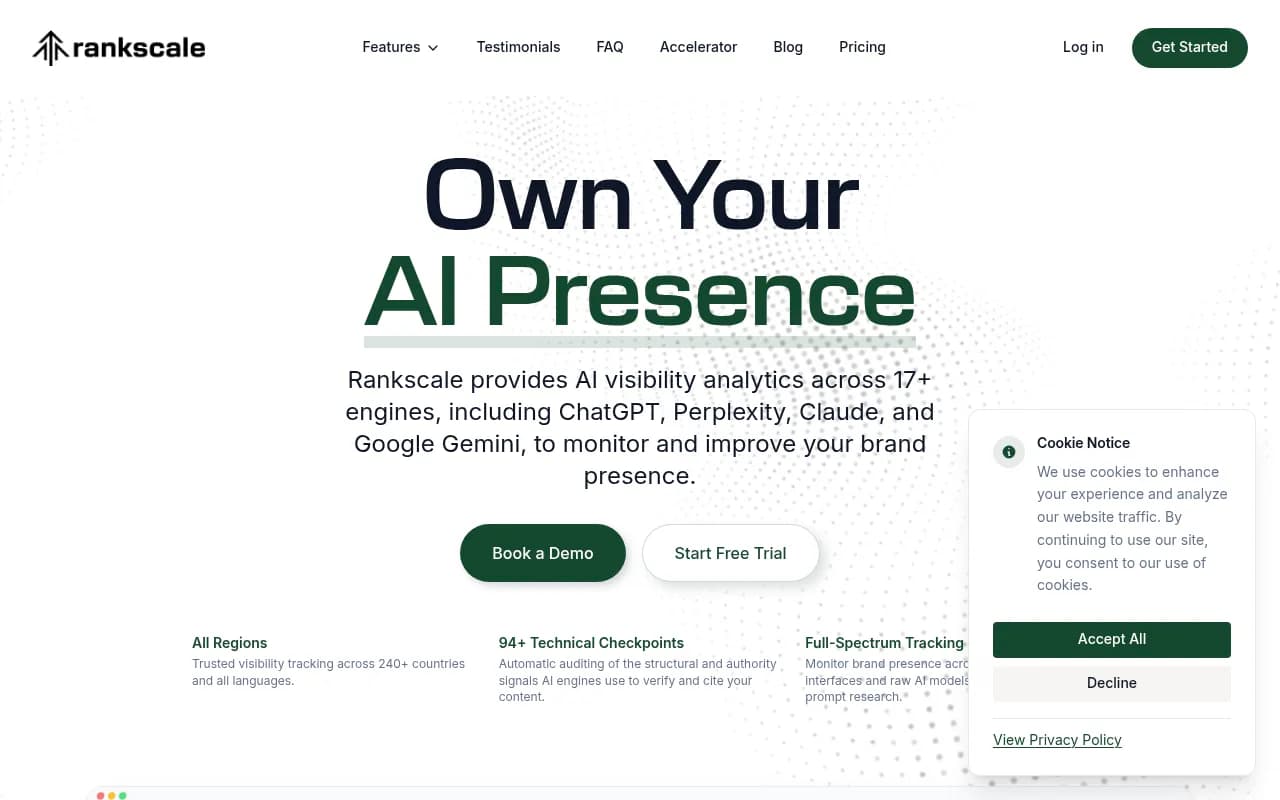
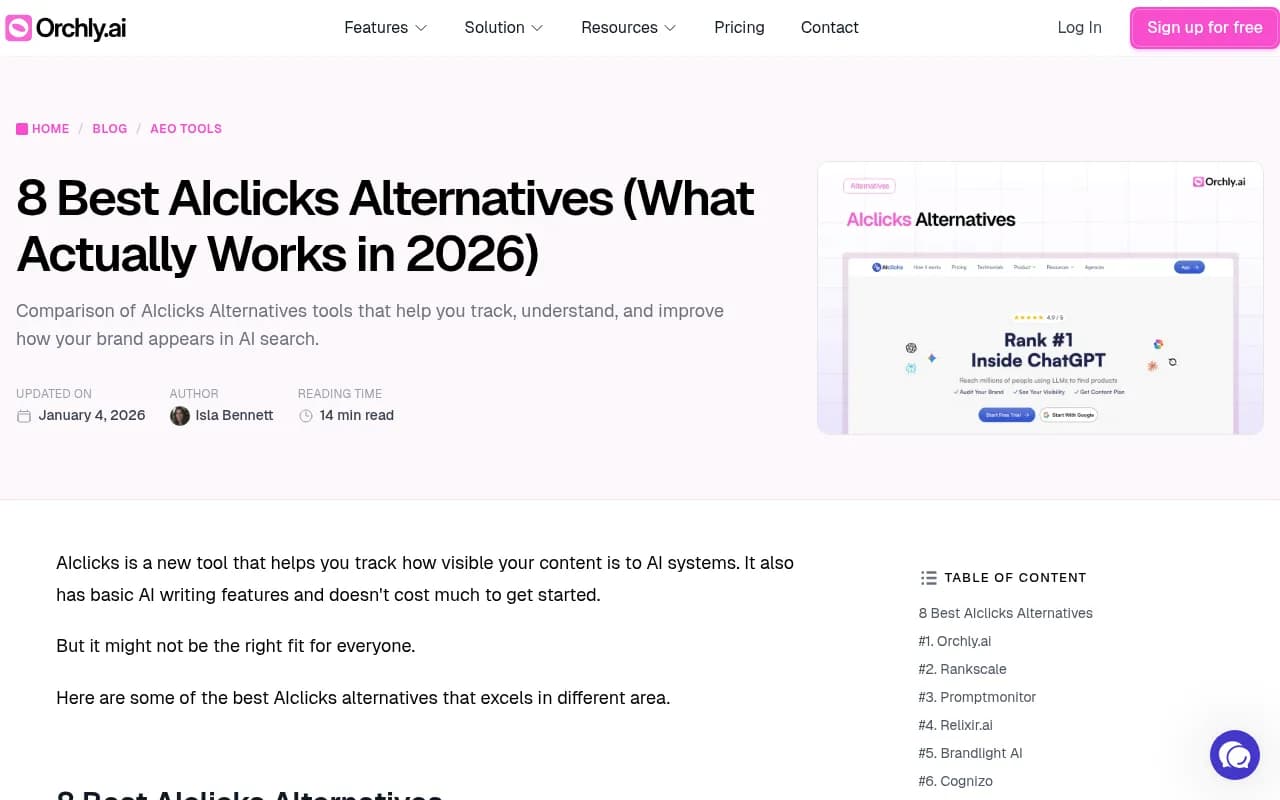
Rankscale: the affordable entry point
Rankscale positions itself as an accessible, no-frills AI visibility tracker. At $20/month, it's one of the cheapest options in the space, and for teams that just want to know whether their brand is showing up in AI responses, it does the job.
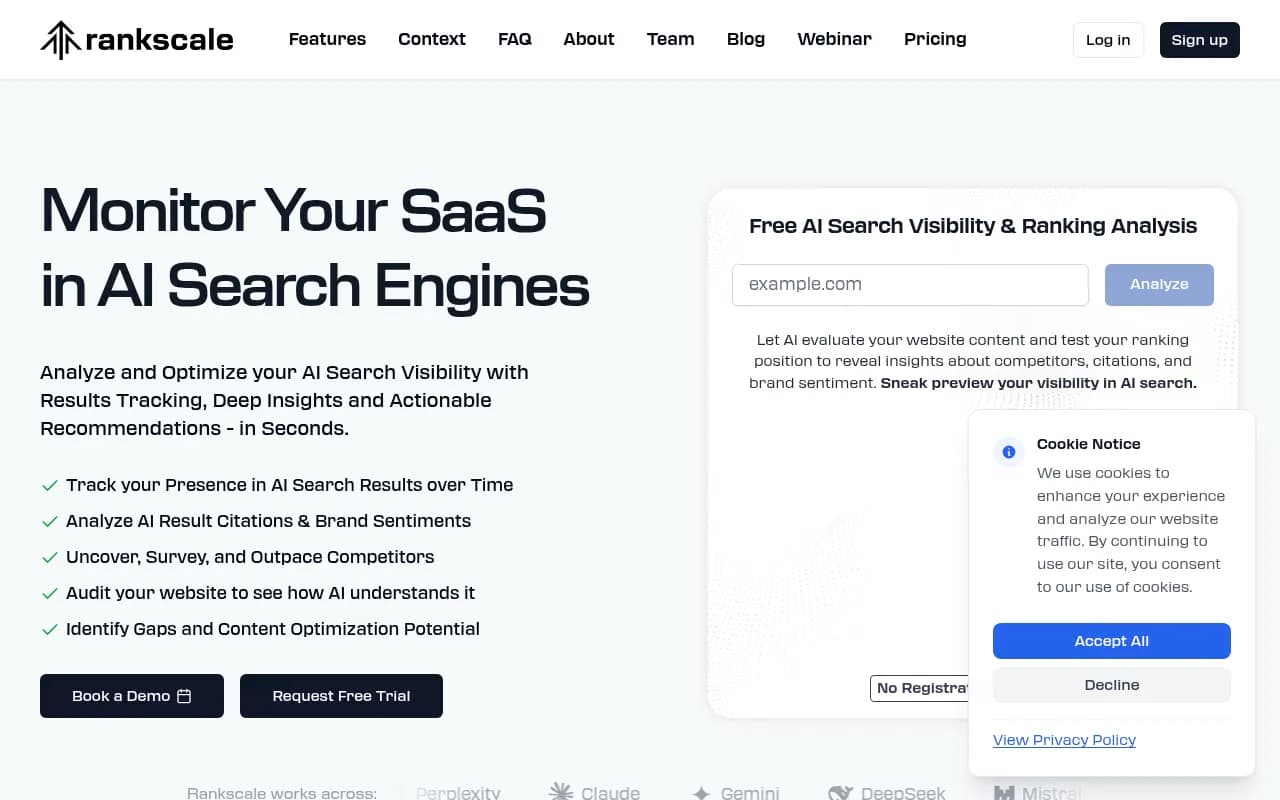
You set up prompts, it runs them across AI models on a schedule, and you get a dashboard showing citation rates and some basic sentiment data. The comparison view -- seeing how you stack up against competitors across different prompts -- is genuinely useful for a quick read on where you stand.
The honest limitation: Rankscale is a monitoring tool. It tells you what's happening, not why, and not what to do about it. There's no content gap analysis, no writing tools, no crawler data, and no prompt intelligence (volume estimates, difficulty scores). If your brand isn't showing up, Rankscale will confirm that fact but won't help you change it.
For a startup that just wants a cheap sanity check before investing more, Rankscale makes sense. For any team that needs to actually improve their AI visibility, it's a starting point at best.
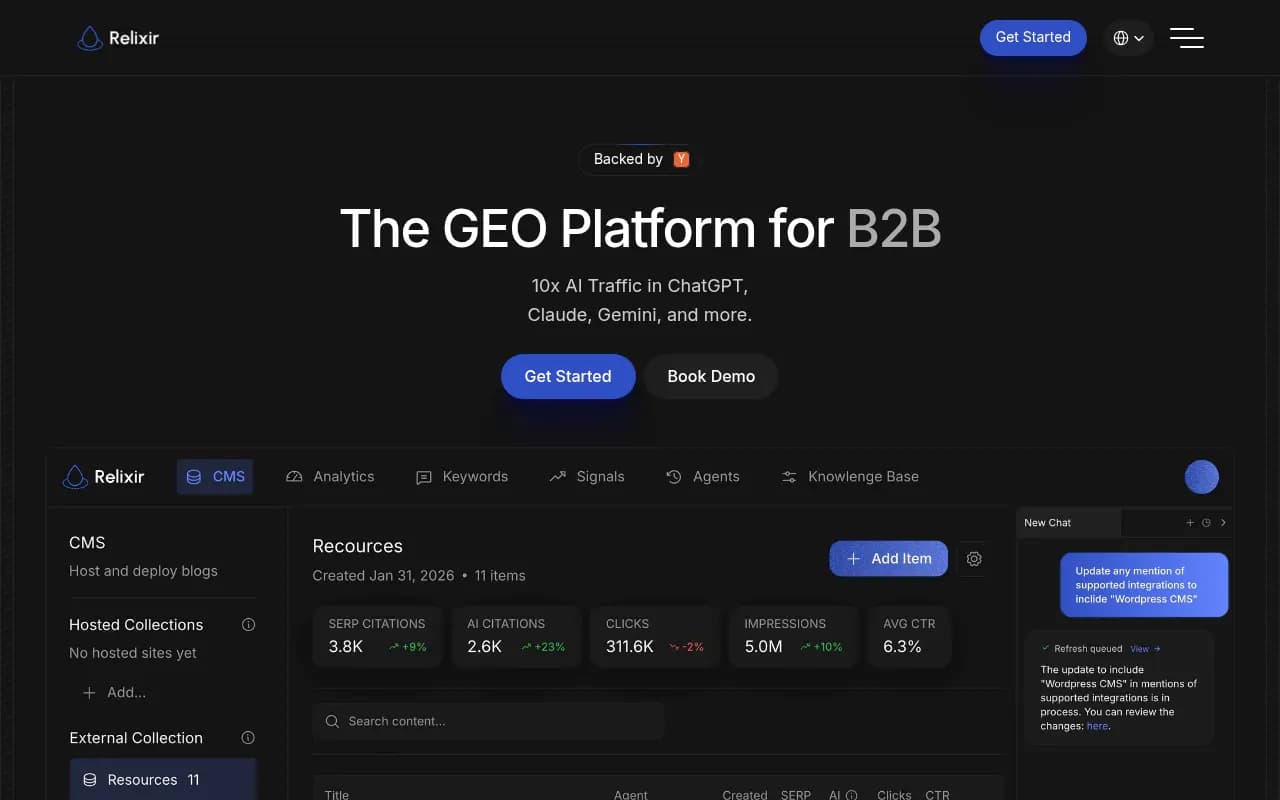
Relixir: monitoring with some optimization muscle
Relixir sits at $199/month and takes a more ambitious approach. It tracks visibility across the main AI models, includes competitive benchmarking, and -- this is the key differentiator from Rankscale -- it has content gap analysis and some AI writing capabilities.
The content gap piece is real and useful. Relixir can surface prompts where competitors are being cited but you're not, and it can help you understand what content might fill those gaps. That puts it a step above pure monitoring tools.
Where Relixir falls short relative to what's possible in 2026:
- No AI crawler logs. You can't see whether ChatGPT's crawler is even hitting your pages, or whether it's encountering errors that prevent your content from being indexed.
- No prompt volume data. You don't know if the gaps you're filling are for high-traffic prompts or niche ones nobody's asking.
- No Reddit or YouTube tracking. A significant portion of what AI models cite comes from community discussions and video content. Ignoring those channels means you're working with an incomplete picture.
- No traffic attribution. You can see your visibility score go up, but you can't connect that to actual website visits or revenue.
Relixir is a meaningful step up from Rankscale, but it's still primarily a monitoring and light-optimization platform. The content generation is there, but it's not grounded in the kind of citation data that makes AI-targeted content actually work.
Promptwatch: the full action loop
Promptwatch is built around a different premise: visibility tracking is only useful if it leads to action. The platform covers monitoring, but the core value is what happens after you see the data.
Finding the gaps
Promptwatch's Answer Gap Analysis shows you the specific prompts where competitors are being cited by ChatGPT, Claude, Perplexity, and other models -- but you're not. This isn't just "here are topics you're missing." It's granular: the exact questions, the exact competitors appearing, and what those competitors' pages contain that yours don't.
Prompt Intelligence adds another layer. Each prompt comes with volume estimates and difficulty scores, so you can prioritize. Filling a gap that 50,000 people ask ChatGPT every month is a different priority than filling one that 200 people ask. Most platforms don't give you this data at all.
Creating content that actually gets cited
This is where Promptwatch separates itself most clearly. The built-in AI writing agent generates articles, listicles, and comparisons using real citation data -- Promptwatch has processed over 880 million citations to understand what types of content AI models actually pull from. The output is structured to answer the specific questions AI models are trying to answer, not generic SEO content that happens to mention the right keywords.
The difference matters. An article written to rank in Google and an article written to be cited by ChatGPT are not the same thing. AI models want direct, authoritative answers to specific questions. The writing agent is calibrated for that.
Tracking results and attributing revenue
Once new content is live, Promptwatch tracks which pages are being cited, by which models, and how often. Page-level tracking shows you the direct impact of each piece of content you publish.
The traffic attribution piece closes the loop completely. Through a code snippet, Google Search Console integration, or server log analysis, you can connect AI visibility to actual website traffic and revenue. This is the part most platforms skip entirely -- and it's the part that matters most when you're trying to justify the investment to a CMO.
What else Promptwatch covers that the others don't
A few capabilities worth calling out specifically:
AI Crawler Logs: Real-time logs of when ChatGPT, Claude, Perplexity, and other AI crawlers visit your site. You can see which pages they read, which they skip, and whether they're hitting errors. If your content isn't being cited, this is often where you find out why.
Reddit & YouTube Insights: AI models cite Reddit threads and YouTube videos more than most people realize. Promptwatch surfaces the discussions and videos that are directly influencing AI recommendations in your category -- so you know where to publish and what to engage with.
ChatGPT Shopping Tracking: For e-commerce brands, ChatGPT's product recommendation carousels are increasingly important. Promptwatch tracks when your products appear there, which no other platform in this comparison does.
Multi-language and multi-region: Monitor AI responses in any language, from any country, with customizable personas. Useful for any brand with international presence.
Side-by-side: what you actually get for the money
| Capability | Promptwatch ($99-$579/mo) | Rankscale ($20/mo) | Relixir ($199/mo) |
|---|---|---|---|
| Know if you're being cited | Yes | Yes | Yes |
| Know why you're not being cited | Yes | No | Partial |
| Know which gaps to prioritize | Yes (volume + difficulty) | No | No |
| Generate content to fill gaps | Yes (citation-grounded) | No | Yes (basic) |
| See AI crawlers hitting your site | Yes | No | No |
| Track Reddit/YouTube influence | Yes | No | No |
| Track ChatGPT Shopping | Yes | No | No |
| Connect visibility to revenue | Yes | No | No |
| Number of AI models | 10+ | 4 | 4 |
The pricing gap between Rankscale and Promptwatch is real -- $20/mo vs $99/mo at the entry level. But the capability gap is larger. Rankscale tells you the score. Promptwatch tells you the score, explains why it is what it is, helps you change it, and shows you the revenue impact.
Relixir at $199/mo is actually more expensive than Promptwatch's Essential plan while offering fewer capabilities. The content generation is there, but without crawler logs, prompt volume data, or traffic attribution, you're paying more for less.
Which platform should you choose?
The honest answer depends on where you are and what you need.
Choose Rankscale if you're at the very beginning of your AI visibility journey, have a tight budget, and just need a basic read on whether your brand is showing up. It's a reasonable first step before committing to a more capable platform.
Choose Relixir if you want something in between pure monitoring and a full optimization platform, and the specific features Promptwatch offers (crawler logs, Reddit tracking, traffic attribution) aren't priorities for your workflow yet.
Choose Promptwatch if you're serious about improving your AI search visibility -- not just measuring it. The combination of gap analysis, citation-grounded content generation, crawler logs, and traffic attribution is the only complete loop available in this comparison. It's the platform you use when you want to actually move the needle, not just watch it.
For agencies managing multiple brands, Promptwatch's agency pricing and multi-site capabilities also make it the practical choice. Rankscale and Relixir are both single-brand-focused tools.
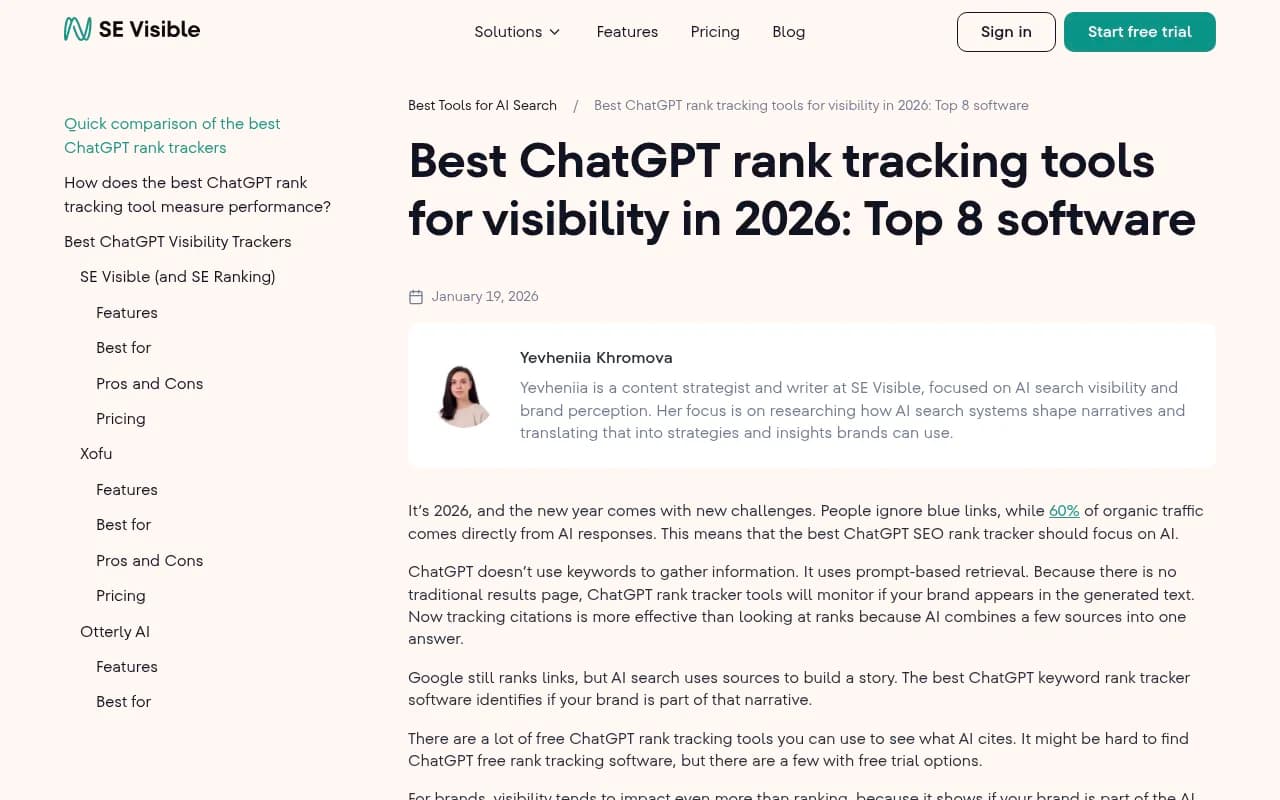
A few other tools worth knowing about
If none of the three above feel like the right fit, the AI visibility space has expanded significantly. A few others worth looking at:


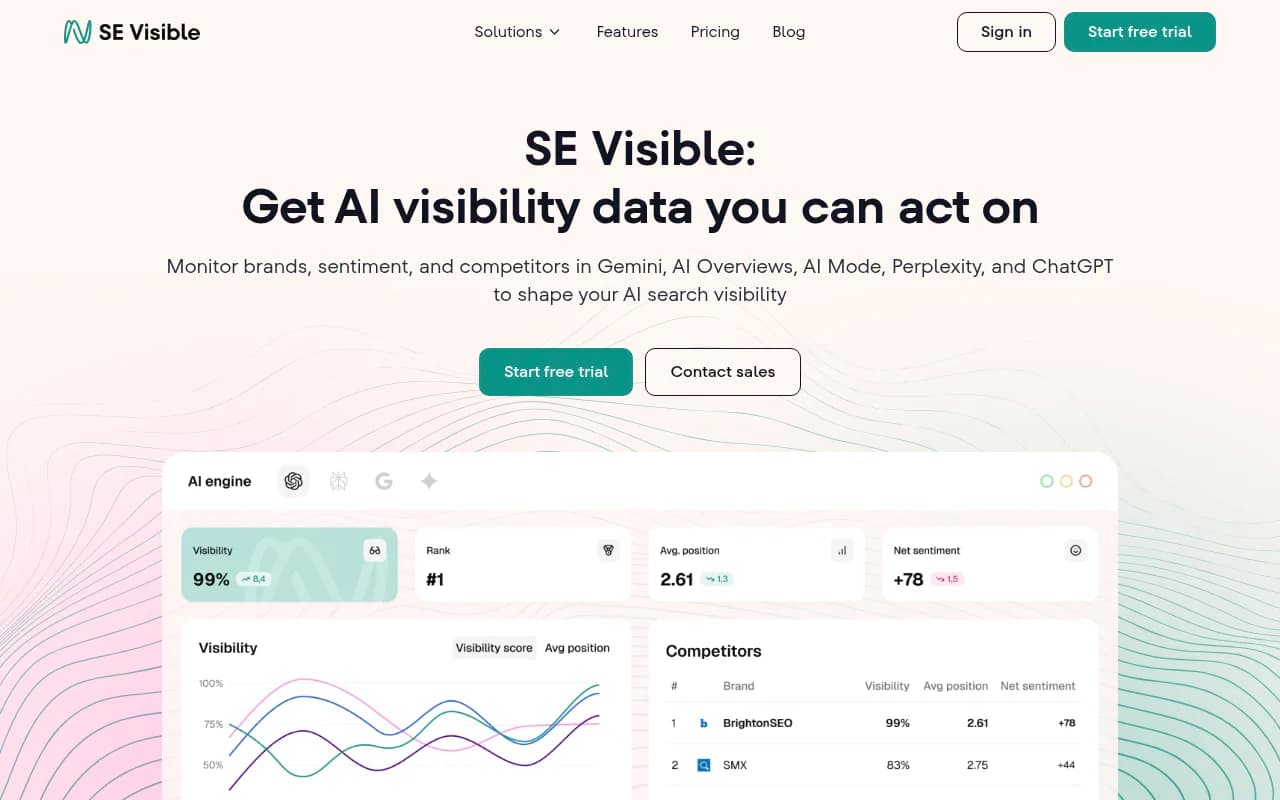
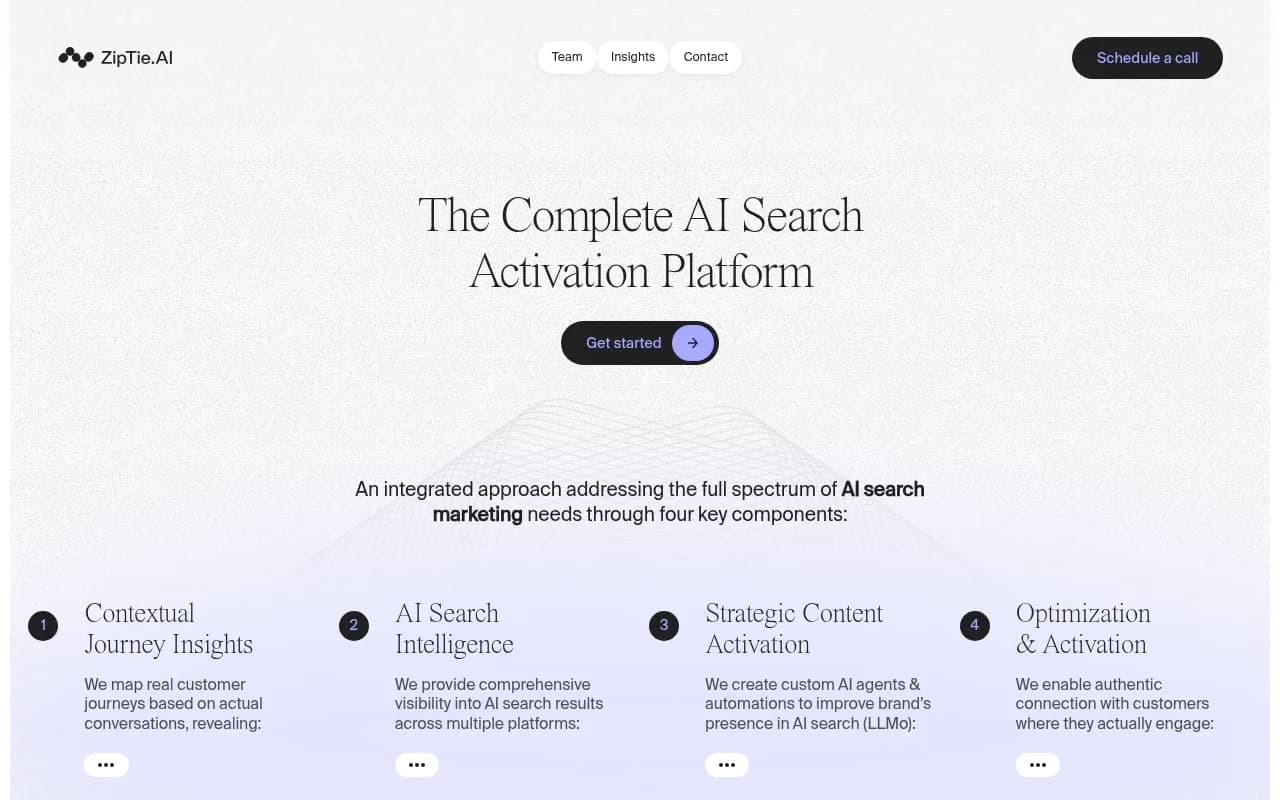
Profound has strong enterprise features and narrative control capabilities. Otterly.AI is a solid budget option for agencies monitoring multiple brands. SE Visible (from SE Ranking) is worth considering if you're already in the SE Ranking ecosystem. ZipTie focuses on deep analysis and actionable optimization recommendations.
None of them cover the full action loop the way Promptwatch does, but depending on your specific needs, one might be the right fit.
The bottom line
Most AI visibility tools are dashboards. They show you data, leave you with a list of problems, and expect you to figure out the rest. That's fine if you have a team that can translate visibility data into content strategy and execution. For most marketing teams, that gap between "we're not visible" and "here's the content that will make us visible" is exactly where things stall.
The platforms that will matter in 2026 are the ones that close that gap. Of the three tools in this comparison, only one does that end-to-end.