Key takeaways
- All four platforms (Profound, Scrunch, Relixir, Evertune) target enterprise buyers, but they solve meaningfully different problems -- don't assume they're interchangeable.
- Profound and Evertune lean heavily into monitoring and analytics; Relixir and Scrunch push further into content creation and optimization workflows.
- Security and compliance matter at enterprise scale: Scrunch and Profound both carry SOC 2 Type II certification; verify Evertune and Relixir's compliance posture before signing.
- None of these platforms are cheap -- budget for $1,000+/month at minimum, often significantly more for full enterprise access.
- If you want a platform that closes the full loop from gap analysis to content creation to traffic attribution, Promptwatch is worth evaluating alongside this group.

Why this comparison matters in 2026
The GEO platform market has fragmented fast. Two years ago, there were maybe a handful of tools tracking AI visibility. Now there are dozens, and the enterprise segment has its own distinct cluster: platforms with SOC 2 compliance, dedicated customer success, multi-brand support, and pricing that reflects it.
Profound, Scrunch, Relixir, and Evertune are four of the most-cited names in that enterprise tier. They all show up in procurement shortlists, they all have sales teams, and they all claim to help you understand and improve how AI models talk about your brand.
But they're not the same product. This guide breaks down what each one actually does, where they're strong, where they fall short, and which type of buyer each one fits best.
What "enterprise GEO" actually means
Before the platform breakdown, it's worth being clear about what separates an enterprise GEO tool from a general-purpose one.
Enterprise buyers typically need:
- Multi-brand or multi-domain monitoring under one account
- Role-based access controls and SSO for large teams
- SOC 2 or equivalent security certification
- Dedicated onboarding and customer success support
- API access for custom data pipelines
- Compliance documentation for procurement reviews
- Reporting that connects AI visibility to business outcomes, not just mention counts
Most SMB-focused tools (Otterly.AI, Peec.ai, and similar) skip several of these. The four platforms in this comparison all attempt to check most of these boxes, though with varying degrees of completeness.
Profound

Profound raised $35M in a Series B led by Kleiner Perkins, which tells you something about where the market thinks this category is going. The platform is used by a range of enterprise brands and positions itself around AI search visibility tracking -- specifically helping companies understand when and how they appear in AI-generated answers across ChatGPT, Perplexity, Google AI Overviews, and others.
What Profound does well
Profound's core strength is breadth of monitoring. It covers a solid range of AI models and gives teams visibility into brand mentions, competitor comparisons, and how AI responses characterize their products. The platform has SOC 2 Type II certification, which matters when you're going through enterprise procurement.
The analytics layer is reasonably mature -- you can track share of voice over time, compare your visibility against named competitors, and get a sense of which prompts are driving mentions. For a team that primarily wants a monitoring dashboard with enterprise-grade security, Profound is a defensible choice.
Where Profound falls short
The honest critique of Profound is that it's primarily a tracker. It shows you data. What it doesn't do particularly well is tell you what to do about it. There's limited content optimization functionality, and the gap between "here's your visibility score" and "here's how to improve it" is one you largely have to bridge yourself.
At the price point Profound commands, that's a real limitation. You're paying enterprise prices for what is, functionally, a monitoring dashboard.
Best for: Enterprise teams that need secure, multi-model brand monitoring and have a separate content team to act on the insights.
Scrunch
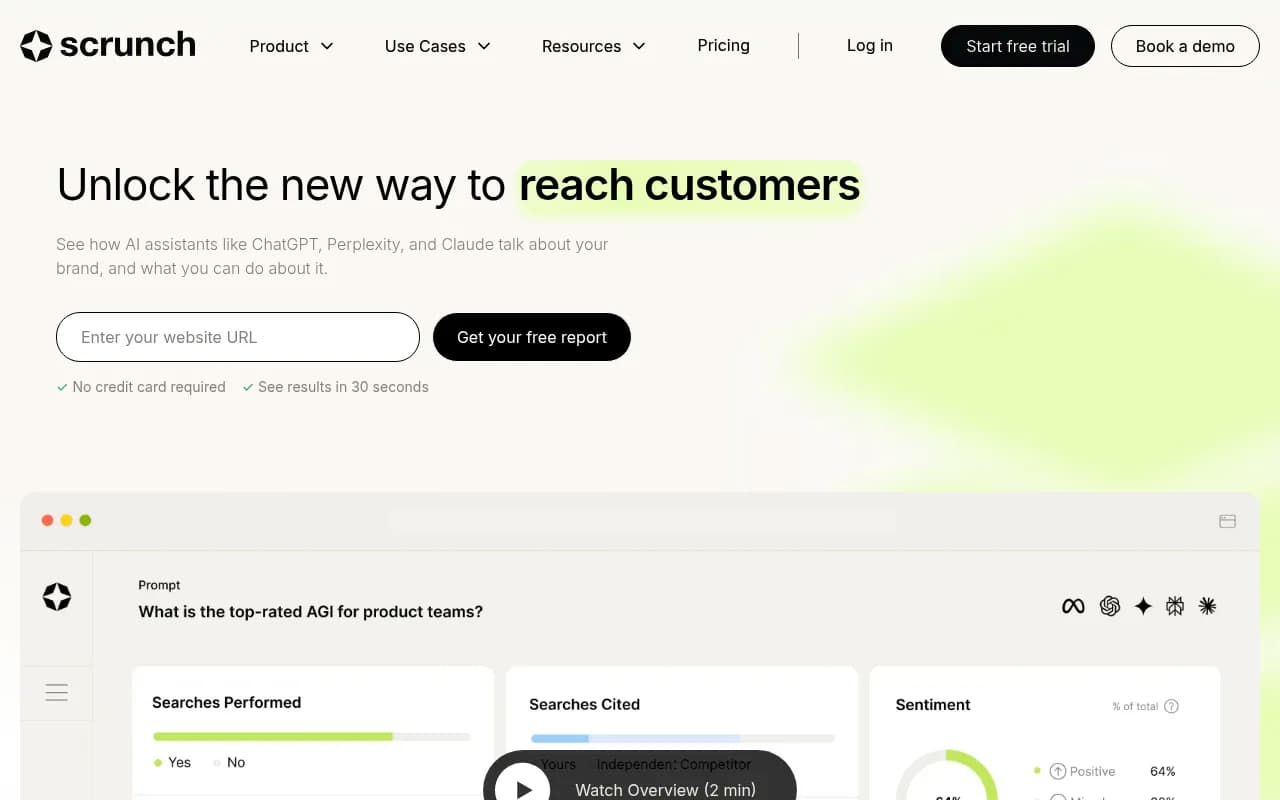
Scrunch takes a more opinionated stance on what GEO actually requires. The platform's own blog (which is worth reading, even accounting for the obvious self-interest) argues that the sharpest dividing line in the category is whether a platform can deliver AI-optimized content directly to AI agents -- not just monitor what's happening.
What Scrunch does well
Scrunch has SOC 2 Type II certification and supports SSO and role-based access controls, which puts it on solid footing for enterprise procurement. But the more interesting differentiator is its approach to content optimization. Scrunch goes beyond showing you where you're invisible and offers tools to actually influence what AI models ingest and surface.
The platform also has a reasonably transparent approach to its own positioning -- the comparison content Scrunch publishes acknowledges its own limitations and names competitors fairly, which is unusual in this space and suggests the product is confident enough to not need spin.
For enterprise teams that want to move from monitoring to action, Scrunch is one of the more complete options in this group.
Where Scrunch falls short
Scrunch's influencer signal analysis (surfacing which third-party content shapes AI recommendations) is a genuine differentiator, but it can feel like a secondary feature rather than a core workflow for teams that primarily care about owned content optimization. The platform's UI has also drawn mixed feedback -- some users find the configurability powerful, others find it takes time to get productive.
Best for: Enterprise teams that want monitoring plus content optimization, and care about understanding how third-party signals (influencers, publishers, forums) shape AI recommendations.
Relixir
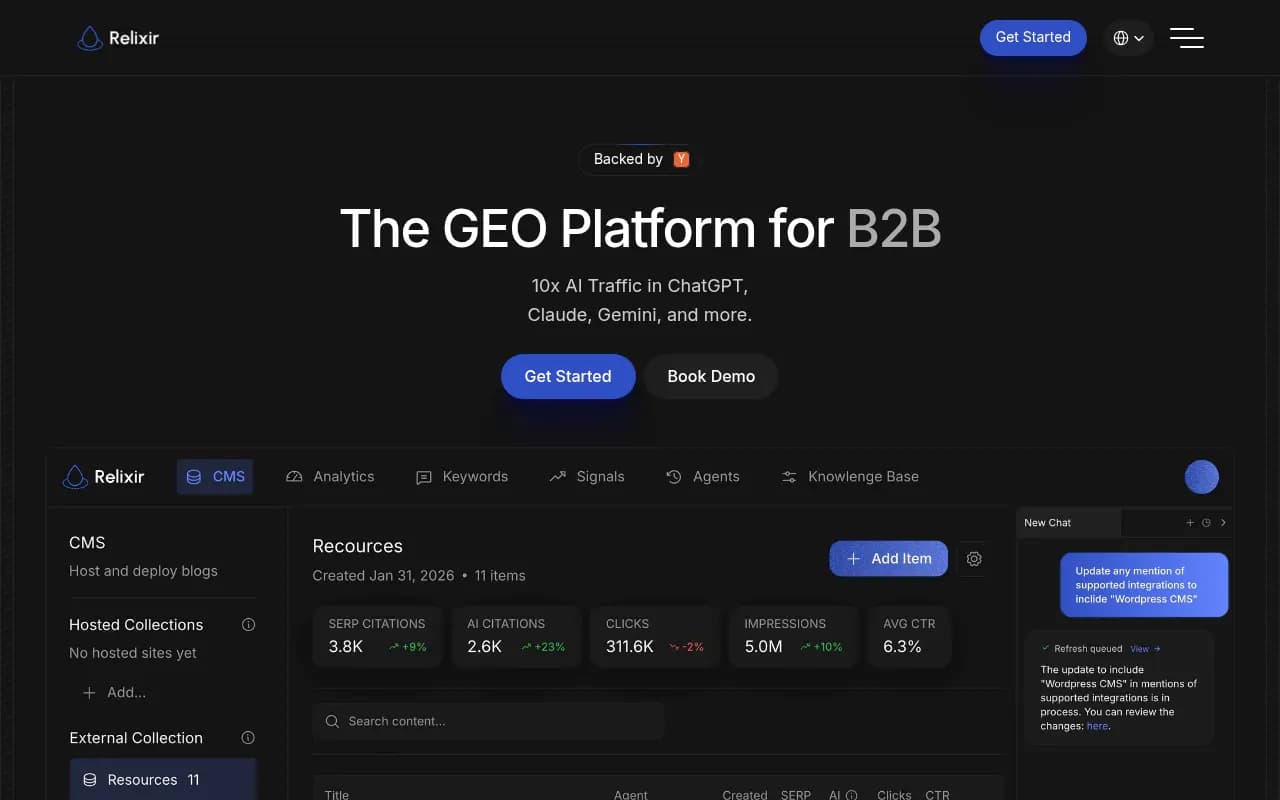
Relixir positions itself as an "AI-native CMS" for GEO -- which is a different framing than most platforms in this space. Rather than starting with monitoring and bolting on content tools, Relixir is built around the idea that the content creation workflow should be central, with visibility tracking in service of that.
What Relixir does well
The AI-native content management angle is genuinely interesting. Relixir's platform is designed to help teams create, manage, and publish content that's specifically engineered to get cited by AI models -- not just content that's generally good for SEO. The autonomous content optimization features mean teams can set up workflows that continuously improve their AI visibility without manual intervention at every step.
For brands that have a high volume of content to manage and want AI visibility baked into the production workflow rather than bolted on after the fact, Relixir's architecture makes sense.
Where Relixir falls short
Relixir is newer than Profound or Scrunch, which means the platform's enterprise compliance posture (SOC 2, SSO, RBAC) is worth verifying carefully before committing. The monitoring layer is less mature than Profound's -- if deep analytics and competitive benchmarking are your primary need, Relixir may feel thin.
The "autonomous" framing also deserves scrutiny. Automated content generation at scale requires careful governance in enterprise contexts, and teams should evaluate how much editorial control the platform actually gives you versus how much it runs on autopilot.
Best for: Content-heavy brands that want AI visibility built into their content production workflow, and are comfortable with a newer platform that's still maturing its enterprise feature set.
Evertune
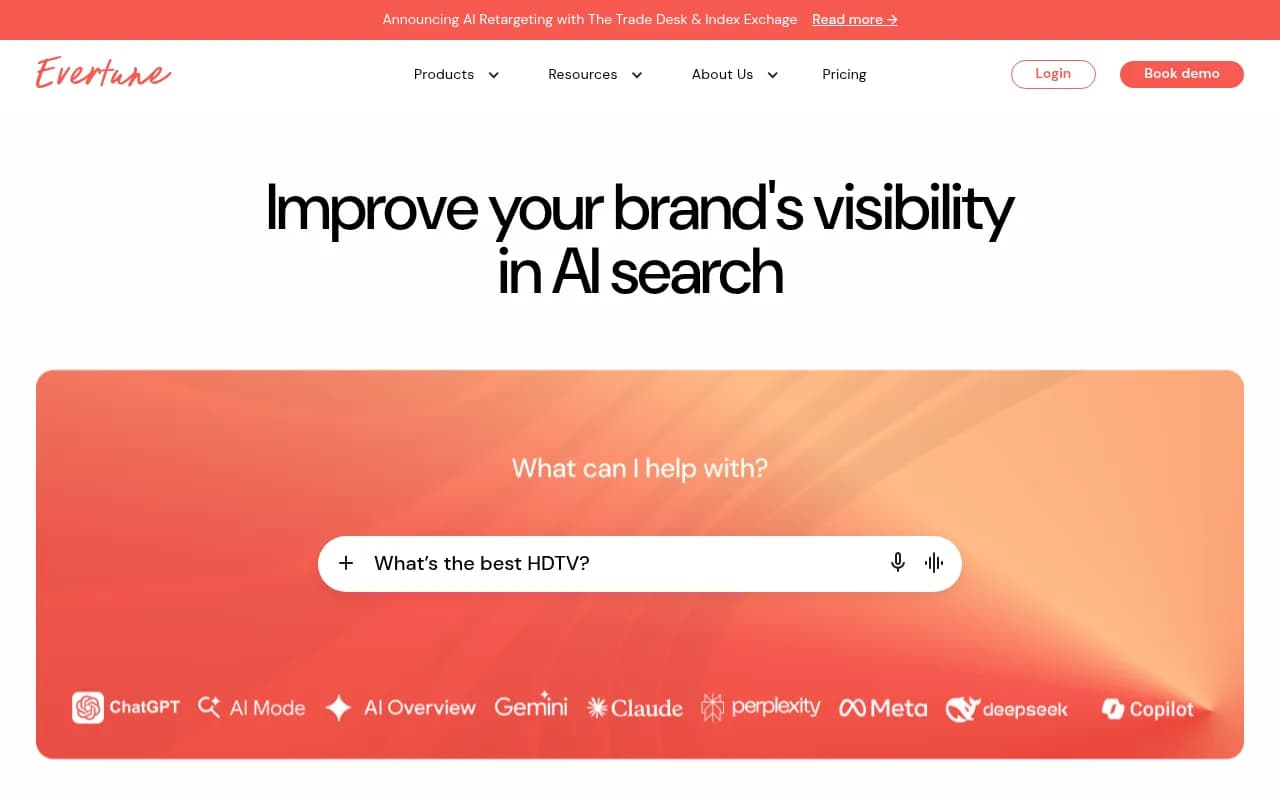
Evertune markets itself as the leader in AI visibility for enterprise brands, with particular emphasis on Fortune 500 clients and what it calls "unmatched GEO insights." The platform covers the major AI models and offers brand monitoring, competitive analysis, and sentiment tracking.
What Evertune does well
Evertune's competitive intelligence layer is one of its stronger features. The platform gives you a clear picture of how your brand is positioned relative to competitors across different AI models -- not just whether you're mentioned, but how you're characterized and what context surrounds those mentions. For brands where perception management is as important as visibility, that depth matters.
The platform also has a reasonably polished enterprise experience -- dedicated customer success, structured onboarding, and reporting formats that work for executive audiences.
Where Evertune falls short
Similar to Profound, Evertune's primary orientation is monitoring and analysis. The content optimization and creation capabilities are limited compared to Scrunch or Relixir. If your team's question is "how do we improve our AI visibility?" rather than "how do we measure it?", Evertune will give you good data and leave you to figure out the rest.
There's also a question of pricing transparency -- Evertune's enterprise positioning means pricing is largely custom and requires a sales conversation, which makes it harder to evaluate fit before investing significant procurement time.
Best for: Large brands where understanding AI-driven perception and competitive positioning is the primary goal, and where a separate team handles content strategy and production.
Head-to-head comparison
| Profound | Scrunch | Relixir | Evertune | |
|---|---|---|---|---|
| Primary focus | Monitoring & analytics | Monitoring + content optimization | AI-native content creation | Monitoring & perception analysis |
| AI models covered | Multiple (ChatGPT, Perplexity, Google, others) | Multiple | Multiple | Multiple |
| Content generation | Limited | Yes | Yes (core feature) | Limited |
| SOC 2 Type II | Yes | Yes | Verify | Verify |
| SSO / RBAC | Yes | Yes | Verify | Yes |
| Competitive benchmarking | Strong | Moderate | Limited | Strong |
| Third-party signal tracking | No | Yes (influencer signals) | No | Limited |
| Pricing transparency | Custom/sales | Custom/sales | Custom/sales | Custom/sales |
| Best for | Monitoring-first teams | Teams wanting monitoring + action | Content-heavy brands | Perception-focused enterprise brands |
| Funding / maturity | $35M Series B | Established | Newer | Established |
The gap none of them fully close
Here's the honest observation after looking at all four: even the best of these platforms leaves a gap between "here's your visibility data" and "here's the content that will fix it, tracked to revenue."
Profound and Evertune are strong at the data side but weak on the action side. Scrunch and Relixir push further into content, but their monitoring layers are less mature than Profound's.
The platform that closes this loop most completely -- finding gaps, generating content grounded in real citation data, and tracking results back to traffic and revenue -- is Promptwatch. It's worth putting on your shortlist alongside these four, particularly if your team wants to move fast rather than waiting for a separate content strategy process to kick in.
How to choose
The right platform depends on what your team actually needs to do next week, not what sounds best in a demo.
Choose Profound if your primary need is enterprise-grade monitoring with strong security credentials, and you have a content team that can act on the data independently.
Choose Scrunch if you want monitoring plus content optimization in one platform, and you care about understanding how third-party sources (not just your own site) shape AI recommendations.
Choose Relixir if content production is your bottleneck and you want AI visibility baked into the creation workflow rather than measured after the fact.
Choose Evertune if brand perception and competitive positioning in AI responses is your core concern, and you're less focused on content creation.
Consider Promptwatch if you want the full loop: gap analysis that shows exactly which prompts competitors win but you don't, content generation grounded in 880M+ real citations, and traffic attribution that connects AI visibility to actual revenue.
One practical note: all four platforms in this comparison require a sales conversation before you can evaluate pricing or get a real trial. That's a significant time investment. Before you book four demos, be clear on whether your primary need is monitoring, content optimization, or both -- that single question will eliminate at least two of these platforms from your shortlist immediately.
What to ask in demos
If you're running a formal evaluation, these questions will surface the real differences faster than any feature checklist:
- Show me the content gap analysis workflow -- how do I go from "I'm invisible for this prompt" to "here's the content I need to create"?
- How does your platform connect AI visibility to website traffic and revenue? Walk me through the attribution model.
- What does your SOC 2 report cover, and can I see it before signing?
- How many AI models do you monitor, and how often are responses refreshed?
- What does onboarding look like, and what's the typical time to first meaningful insight?
- Can I see a customer who's in a similar industry to ours and what results they've seen?
The answers to these questions -- especially the first two -- will tell you more than any marketing page.

Bottom line
Profound, Scrunch, Relixir, and Evertune are all credible enterprise platforms, and any of them is a better choice than doing nothing about AI visibility. But "enterprise" doesn't mean "complete" -- each has real gaps, and the right choice depends on whether your team's bottleneck is measurement, content, or both.
The broader market is moving toward platforms that do both well. If you're evaluating this category seriously, don't limit your shortlist to these four.