Key takeaways
- Peec AI is purpose-built for AI visibility tracking -- clean, simple, and supports unlimited countries and languages out of the box.
- SE Ranking is a full SEO platform that added AI visibility as a separate product. You get more tools, but AI tracking is not the core focus.
- Peec AI tracks 8 AI models on its base plans; SE Ranking's AI toolkit covers ChatGPT, Perplexity, and Gemini.
- SE Ranking wins on breadth (keyword research, site audits, backlinks, content tools). Peec AI wins on AI monitoring depth and simplicity.
- Neither platform helps you act on what you find -- they both stop at monitoring. If closing the gap between "you're invisible" and "now you're not" matters, you'll want a platform that also generates and optimizes content.
What you're actually choosing between
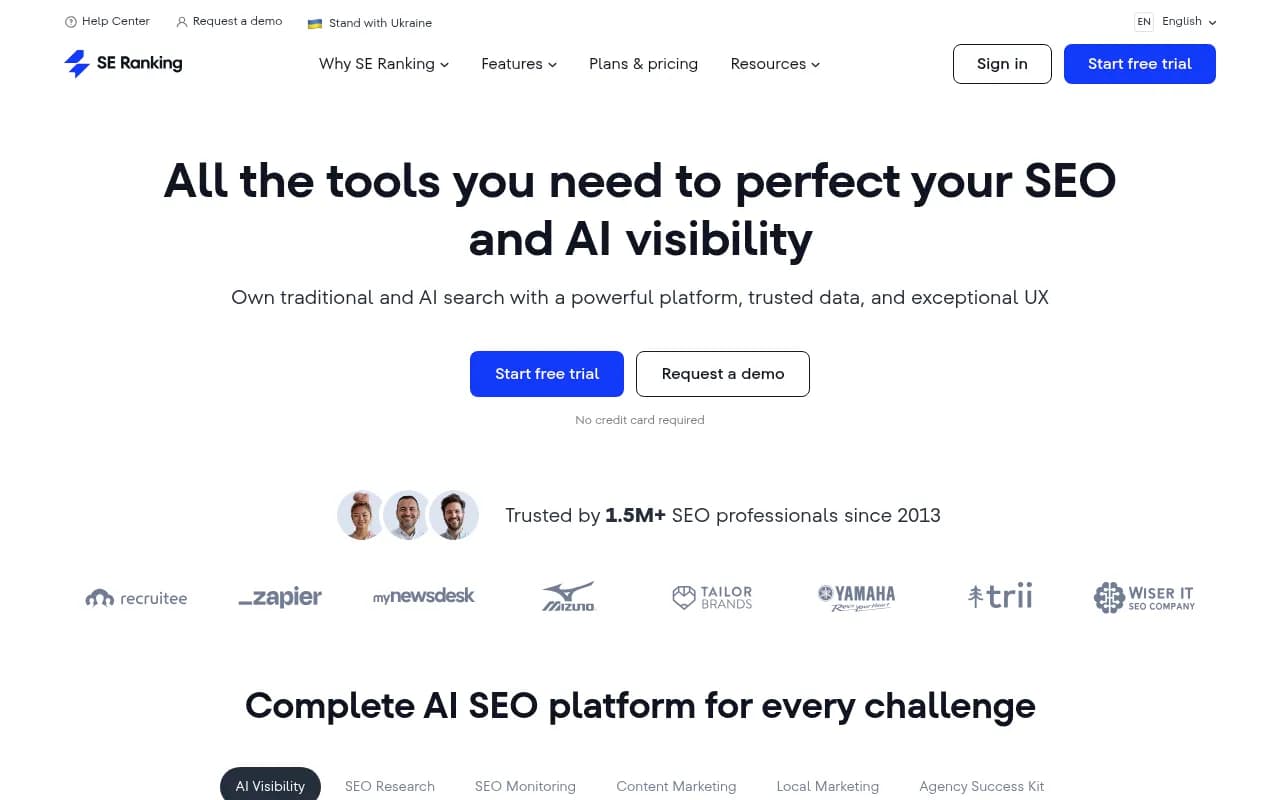
These two tools are solving different problems, which makes comparing them a bit awkward. Peec AI was built from day one to answer one question: how visible is my brand across AI search engines? SE Ranking was built to answer a much broader question -- how is my SEO performing? -- and then added AI visibility tracking later.
That origin story matters. It shapes everything from the UI to the pricing to how much you can actually trust the AI data you're getting.
Let's go through the specifics.

AI model coverage
This is where the gap is most obvious.
Peec AI's base Pro plan (€199/mo) tracks ChatGPT, Perplexity, Google AI Overviews, Claude, Gemini, Google AI Mode, DeepSeek, and Grok -- eight models. That's solid coverage for a mid-market team that wants to know where they stand across the major AI search surfaces.
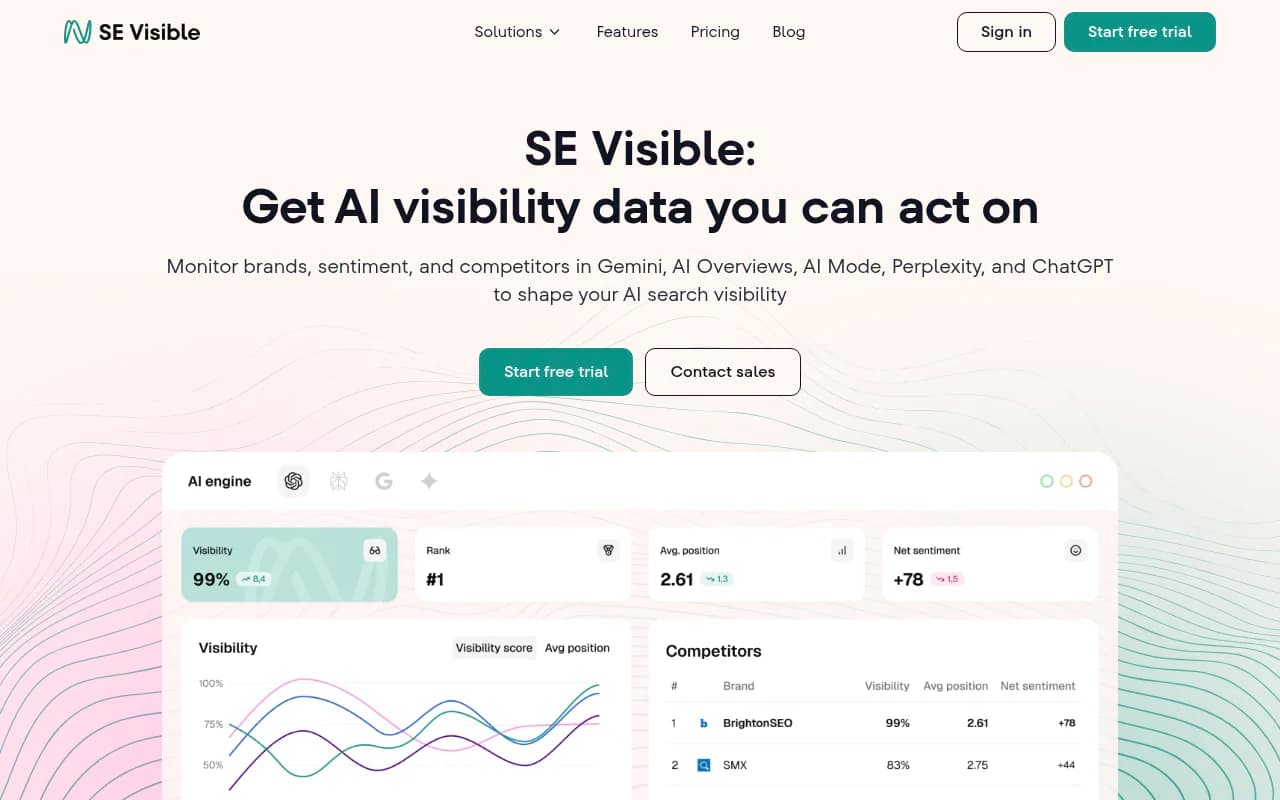
SE Ranking's AI visibility toolkit covers three: ChatGPT, Perplexity, and Gemini. That's not a knock on SE Ranking -- those three cover a lot of real user traffic -- but if you care about Claude, DeepSeek, or Grok, you're not getting that data here.
Worth noting: SE Ranking sells AI visibility in two different ways. There's the AI Visibility Tracker built into the main platform, and there's SE Visible, which is a separate standalone product. They come from the same company but are not the same product. If you're evaluating SE Ranking for AI monitoring specifically, make sure you know which product you're actually looking at.
Prompt management and tracking cadence
Both tools let you set up prompts and track how AI models respond to them over time.
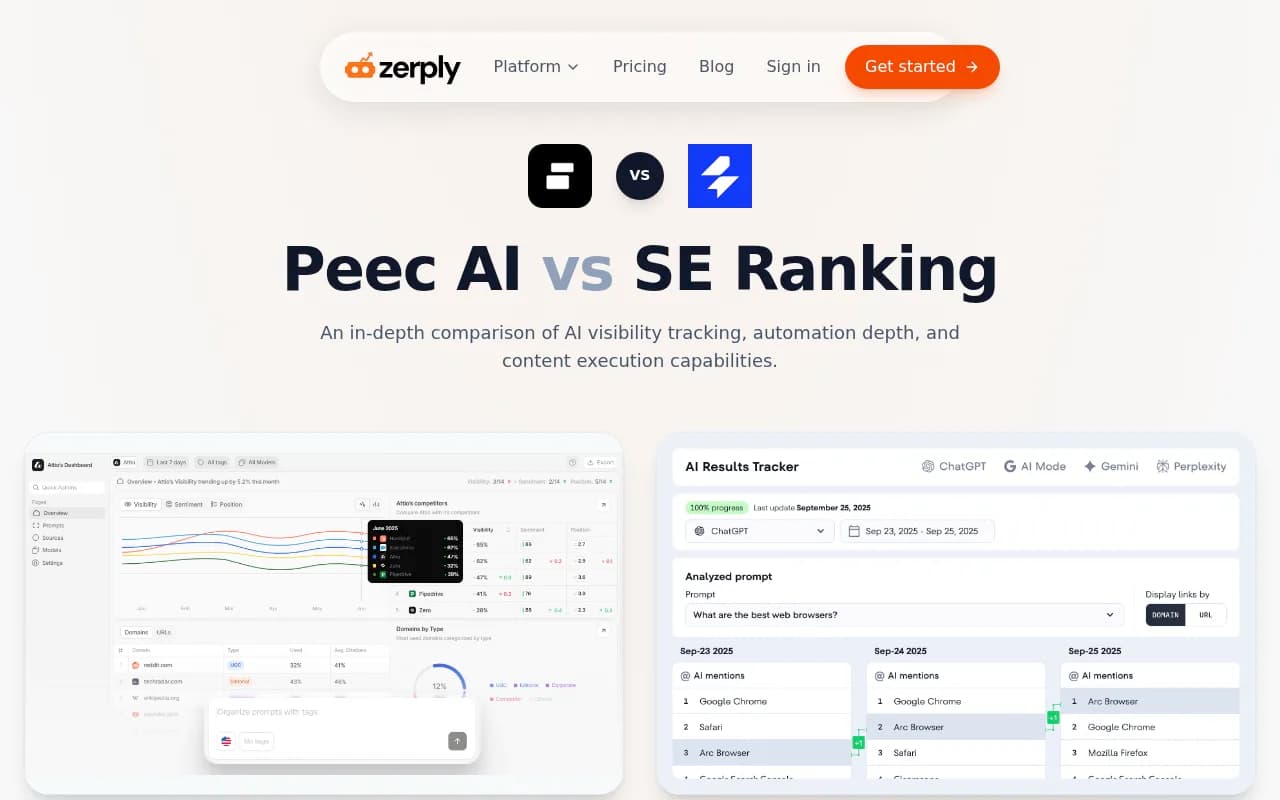
Peec AI scans your website to suggest relevant prompts, which is a nice touch for teams that don't want to start from scratch. It runs synthetic prompts every 24 hours. The cap on the Pro plan is 100 prompts and 9,000 AI answers per month -- enough for a focused monitoring setup, but you'll hit the ceiling if you're running competitive analysis across a lot of topics.
SE Ranking lets you create prompts manually and uses AI to suggest related ones, with scheduling options on higher plans. The daily automated tracking is comparable to Peec's cadence.
Neither tool offers the kind of prompt intelligence -- volume estimates, difficulty scores, query fan-outs -- that would help you prioritize which prompts are actually worth tracking. You're largely guessing at what matters.
What metrics each tool tracks
| Metric | Peec AI | SE Ranking |
|---|---|---|
| Mentions | Yes | Yes |
| Citations | Yes | Yes |
| Position / rank | Yes | Yes |
| Sentiment | Yes | No |
| Share of voice | Yes | Yes |
| Competitor heatmaps | Yes | Limited |
| Content gap analysis | No | No |
| Crawler logs | No | No |
| Traffic attribution | No | No |
Peec AI tracks sentiment, which SE Ranking doesn't. That matters if you want to know not just whether AI mentions you, but whether it's saying good things.
SE Ranking's competitive tracking is more limited on the AI side, though its traditional SEO competitive analysis is far deeper.
The SEO toolkit question
This is where SE Ranking pulls ahead significantly -- if you actually need traditional SEO tools.
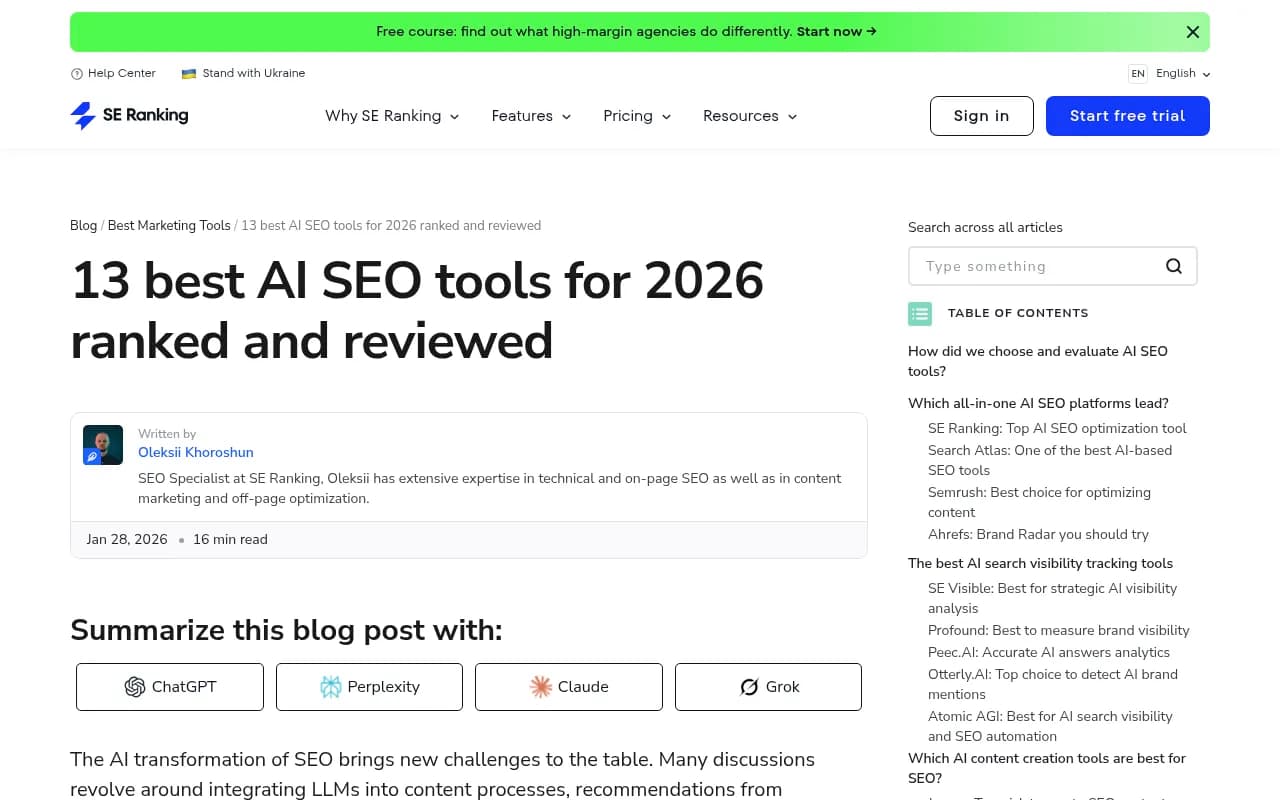
SE Ranking gives you keyword research, rank tracking, site audits, backlink analysis, on-page optimization, and content tools, all in one platform. It also integrates directly with WordPress for content publishing. For a team that needs to manage both traditional SEO and some AI visibility monitoring, SE Ranking is genuinely good value.
Peec AI has none of that. It's AI visibility monitoring, full stop. No site audits, no backlink data, no keyword research. If you're an SEO team that needs the full stack, Peec will leave you running multiple tools.
But here's the honest flip side: if AI visibility is your primary concern, SE Ranking's AI tracking feels like an add-on. The depth isn't there. You're getting basic monitoring of three models, not a dedicated intelligence layer.
Pricing comparison
| Plan | Peec AI | SE Ranking |
|---|---|---|
| Entry price | €199/mo (Pro) | ~$44/mo (Essential, annual) |
| AI models covered | 8 (base plan) | 3 |
| Prompt limit | 100 prompts/mo | Varies by plan |
| Content tools | None | Yes (built-in + WordPress) |
| Site audits | No | Yes |
| Backlink analysis | No | Yes |
| Countries/languages | Unlimited | Limited (varies by plan) |
| Free trial | Yes | Yes |
SE Ranking is considerably cheaper at entry level, and you get a lot more functionality for that price if you're an SEO team. Peec AI costs more but covers more AI models and supports unlimited countries and languages without extra charges -- a real differentiator for international brands or agencies running multi-market campaigns.
Peec's Enterprise plan adds Claude, Gemini, and AI Mode (yes, those are add-ons on the base plan), but pricing is custom. That structure can get expensive fast if you need full model coverage.
Collaboration and team features
Peec AI supports unlimited team members with dedicated agency workspaces. That's a meaningful advantage for agencies managing multiple client accounts -- you're not paying per seat or juggling access permissions.
SE Ranking's collaboration features are more standard. They work fine for internal teams but aren't specifically designed around the agency multi-client workflow.
What neither tool does
This is worth saying plainly: both Peec AI and SE Ranking are monitoring tools. They show you data. They don't help you do much with it.
You can see that a competitor is getting cited for a prompt you're not. You can see your share of voice is declining. But neither platform tells you what content to create, generates that content for you, or tracks whether your new content actually improved your AI visibility over time.
That gap -- between knowing you're invisible and fixing it -- is where most teams get stuck. Monitoring is the easy part. The hard part is closing the loop.
If you need a platform that goes beyond tracking into actual optimization and content generation, Promptwatch is worth looking at. It combines AI visibility monitoring with content gap analysis and AI-powered content agents that generate articles grounded in real prompt data -- so you can find the gaps and actually fill them.

Who should use Peec AI
Peec AI makes sense if:
- AI visibility tracking is your primary use case, not a side feature
- You need multi-language or multi-country monitoring without paying extra
- You're a B2B SaaS team focused on competitive positioning across AI search
- You want sentiment tracking alongside mentions and citations
- You already have an SEO platform and just need the AI layer
The 100-prompt cap and the fact that Claude/Gemini/AI Mode are Enterprise add-ons are real limitations. If you need broad model coverage at scale, you'll either hit the ceiling or end up on a custom enterprise contract.
Who should use SE Ranking
SE Ranking makes sense if:
- You need a full SEO platform and want AI visibility included (rather than running two separate tools)
- Budget is a constraint -- SE Ranking's entry price is significantly lower
- You're primarily focused on ChatGPT, Perplexity, and Gemini
- You want content publishing tools and WordPress integration in the same platform
- Your team is already using SE Ranking for traditional SEO and wants to add AI monitoring without switching tools
The trade-off is that you're getting AI tracking as a secondary feature, not a primary one. The model coverage is narrower, and the depth of AI-specific analytics is shallower than a dedicated tool.
Other tools worth considering
If neither Peec AI nor SE Ranking fits cleanly, here are a few alternatives depending on what you're optimizing for:
For broader AI model coverage with strong data quality, Ahrefs Brand Radar uses prompts derived from real search data rather than synthetic queries -- a meaningful architectural difference.
For teams that want dedicated AI visibility monitoring without the complexity of a full SEO suite, Otterly.AI is a simpler, more affordable option.

For agencies that need multi-client AI visibility tracking with competitive analysis, Profound is worth evaluating.

For a more affordable entry point into AI visibility monitoring, Airefs covers the basics at a lower price point.
The bottom line
Peec AI and SE Ranking are not really competing for the same buyer.
Peec AI is for teams where AI visibility is the job. It's more focused, covers more AI models on base plans, and handles international monitoring without nickel-and-diming you on languages. The price is higher, and the lack of any content tooling means you'll need other tools to act on what you find.
SE Ranking is for teams that need a full SEO platform and want AI visibility included. The AI tracking is functional but not deep. Three models, no sentiment tracking, no crawler logs. It's a reasonable addition to an existing SE Ranking workflow, not a reason to switch to SE Ranking.
If your team is serious about AI search visibility -- not just monitoring it but actually improving it -- you'll eventually outgrow both. The monitoring-only model has a ceiling, and the teams winning in AI search are the ones who've figured out how to turn visibility data into content that actually gets cited.