Key takeaways
- Peec.ai is a capable AI search analytics platform that tracks brand visibility, position, and sentiment across ChatGPT, Perplexity, Google AI Overviews, and other models.
- Its core strength is monitoring -- prompt-level data, competitor benchmarking, and citation tracking are genuinely useful.
- The gap teams kept running into: Peec shows you the problem but doesn't help you fix it. No content generation, no crawler logs, limited prescriptive guidance.
- Pricing scales up quickly as you add engines, prompts, and team members, which frustrated growing teams.
- Teams that switched typically moved to platforms with a full optimization loop -- find gaps, create content, track results -- rather than monitoring-only dashboards.
2025 was the year a lot of marketing teams realized they needed to care about AI search. ChatGPT's user base crossed 400 million weekly active users. Perplexity started sending measurable referral traffic. Google's AI Overviews showed up on the majority of commercial queries. Suddenly, "where does our brand appear in AI answers?" became a real question with real budget attached to it.
Peec.ai was one of the first platforms to take that question seriously. It launched with a clear pitch: track how AI models describe, rank, and cite your brand, the same way you'd track keyword rankings in Google. For a lot of teams, that was exactly what they needed to get started.
But 2025 also revealed the limits of monitoring-only platforms. This guide looks at what Peec.ai actually delivered, where it left teams stuck, and why some of them eventually moved on.
What Peec.ai got right
Prompt-level visibility tracking
The core mechanic is smart. You define prompts that mirror real user questions -- "what's the best project management tool for remote teams?" or "which CRM is easiest to set up?" -- and Peec runs those prompts across AI models to see where your brand appears, how often, and in what context.
This is meaningfully different from traditional rank tracking. You're not measuring a position on a SERP; you're measuring whether an AI model even mentions you at all, and if so, whether the framing is positive, neutral, or negative.
The three core metrics Peec tracks at the prompt level are:
- Visibility: how often your brand appears in AI responses to that prompt
- Position: where in the response your brand shows up (first mention, middle of a list, etc.)
- Sentiment: whether the AI's description of your brand is favorable
That's a genuinely useful framework. Teams that had never thought about AI search visibility before found it clarifying.
Competitor benchmarking
Peec lets you track competitors alongside your own brand, so you can see not just "are we mentioned?" but "are we mentioned more or less than [competitor]?" For brand managers who need to report on share of voice, this was a real selling point.
The competitor heatmap view -- showing which brands appear for which prompts -- gave teams a concrete picture of where they were losing ground in AI search, even if the platform didn't tell them what to do about it.
Multi-language and multi-region support
This was one area where Peec stood out from earlier tools. Running prompts in different languages and from different geographic contexts matters because AI models don't give the same answers everywhere. A brand that's well-cited in English-language responses might be invisible in German or Spanish ones. Peec handled this reasonably well.
Sentiment tracking
Peec's blog published some genuinely useful thinking on this. Their guide on tracking brand sentiment in LLMs introduced the concept of "sentiment prompts" -- prompts designed to surface how AI models describe your brand on specific attributes like support quality, pricing, and usability. That's a more sophisticated approach than just checking whether you're mentioned.
What Peec.ai missed
No path from insight to action
This is the central criticism, and it came up consistently in user reviews and community discussions. A Reddit thread on r/Stateshift from teams who tested Peec for three months put it plainly: the platform is good at telling you what's happening, but it doesn't help you change it.
You can see that a competitor is mentioned for 40 prompts you're invisible for. You can see that your brand sentiment is neutral while a competitor's is positive. But Peec doesn't show you which specific content is missing from your site, doesn't generate content to fill those gaps, and doesn't tell you which pages to update or how.
That left teams in a familiar position: a dashboard full of data, and a strategy meeting where nobody knew what to actually do next.
No AI crawler logs
Most platforms in this space don't offer this, but it's worth naming: Peec has no visibility into how AI crawlers actually interact with your website. You can't see which pages ChatGPT or Perplexity's crawlers have visited, which pages they're ignoring, or whether they're hitting errors. That means you can't diagnose why you're not being cited -- you can only observe that you're not.
Limited content guidance
A Medium comparison between Peec's "Actions" feature and Writesonic's Action Center noted that Peec's recommendations don't cover broken pages, crawlability issues, or structured data -- which are often the actual reasons a site isn't getting cited. The "actions" Peec suggests tend to be high-level content themes rather than specific, technical fixes.
Pricing that scales awkwardly
Lower-tier plans come with limits on prompts, answer counts, and AI engines. As teams grow their monitoring scope -- more prompts, more competitors, more languages -- costs climb quickly. Several reviewers noted that what looked like a reasonable entry price became significantly more expensive once they added the engines and prompt volumes they actually needed.
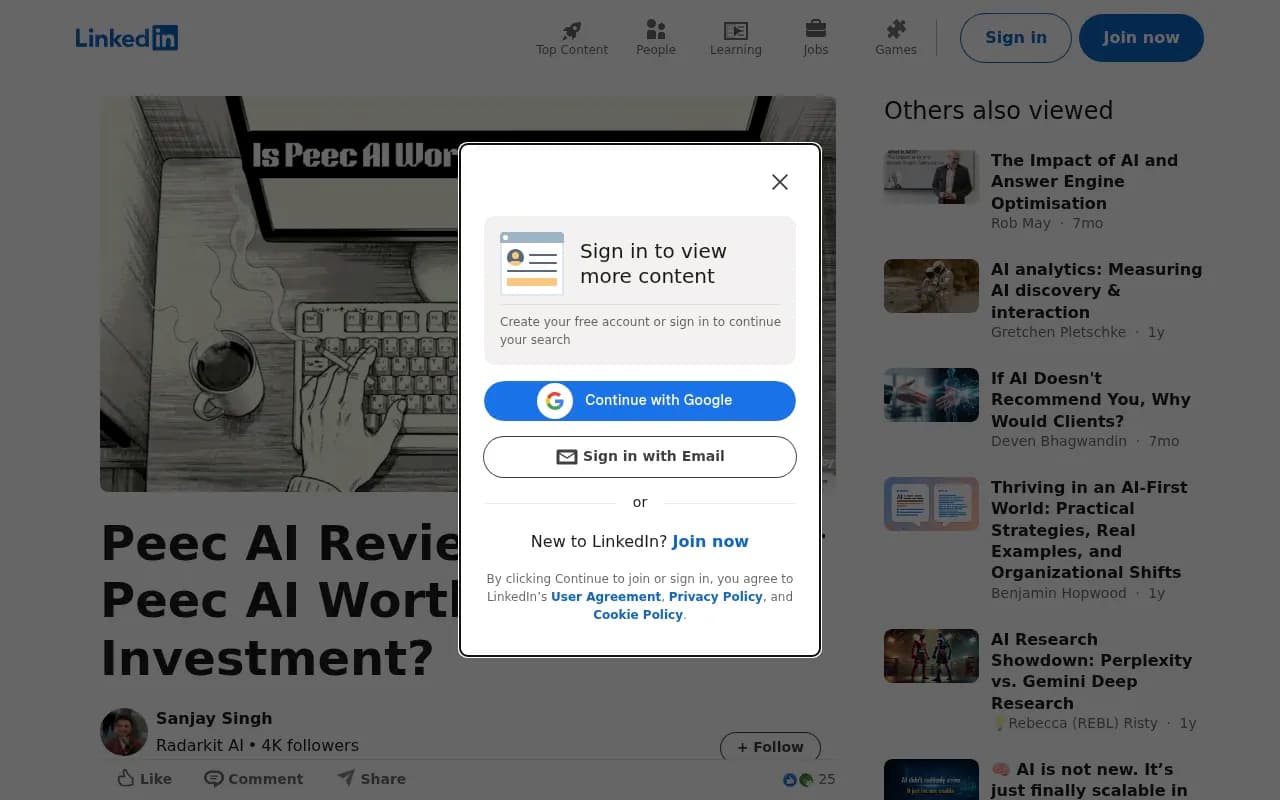
A LinkedIn review of Peec gave the platform an overall rating of 7.3/10, with "built-in actionable recommendations" and "scalability and pricing fairness" both scoring 6/10 -- the weakest categories in the assessment.
Beginner complexity
The platform's metrics and interface are built for experienced SEOs and marketers who already understand what GEO and AEO mean. Teams without that background found the learning curve steep. There's no guided onboarding that explains what to do with the data you're seeing.
The honest picture on AI content
One thing Peec's own blog got right in 2025 was sounding a warning about AI-generated content. Their piece on the risks of AI content called out something real: companies rushing to publish raw AI output at scale were seeing Google visibility drops, which in turn hurt their LLM citation rates (since LLMs use search engine results as part of their grounding process).
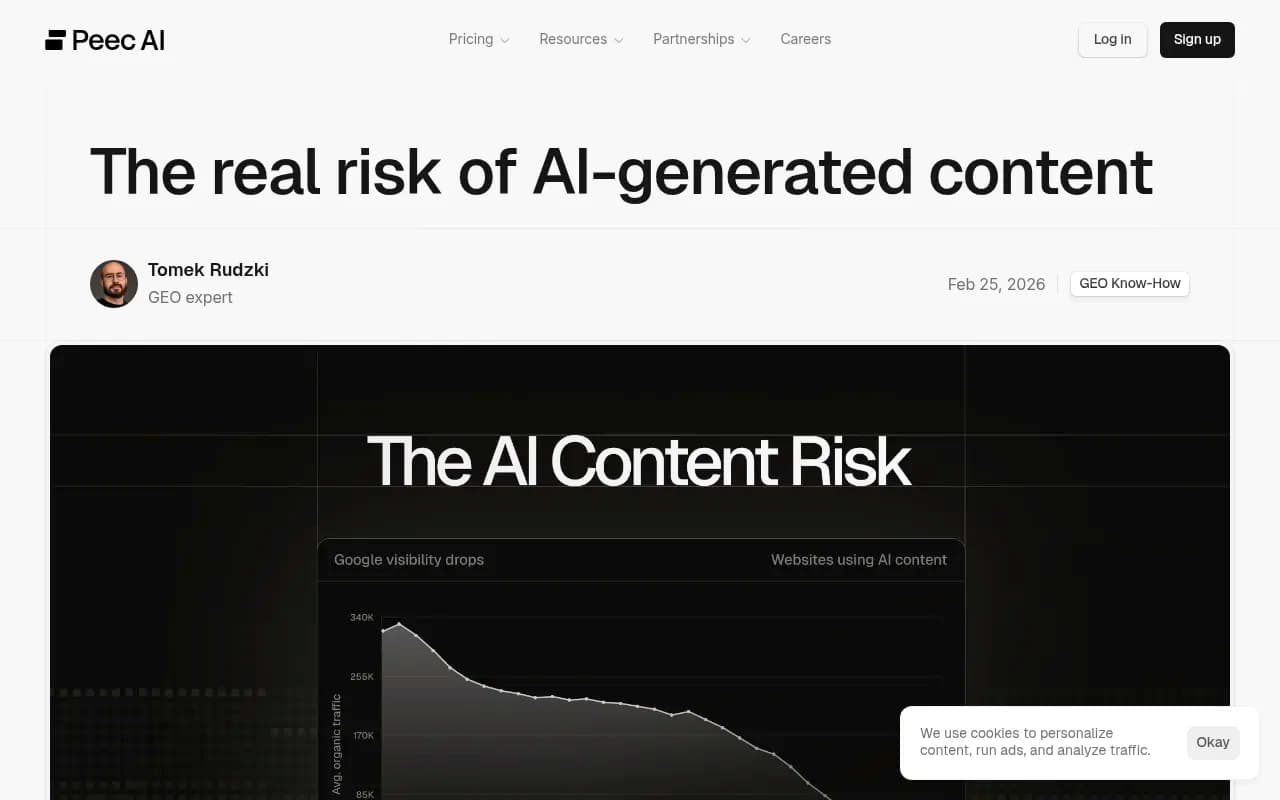
The point is worth keeping in mind when evaluating any GEO platform that offers content generation: volume without quality is counterproductive. The goal isn't to generate more content -- it's to generate content that actually answers the questions AI models are looking for. That distinction matters when choosing what tool to use next.
Why teams switched
The pattern in 2025 and into 2026 was consistent. Teams would start with a monitoring tool like Peec, get useful data, and then hit a wall. The data told them they had an AI visibility problem. It didn't tell them how to solve it.
The teams that switched were usually looking for one or more of these things:
- Content gap analysis that shows specifically which prompts competitors rank for that they don't
- Built-in content generation grounded in real citation data, not generic SEO writing
- Crawler log access to understand how AI engines interact with their site
- Traffic attribution that connects AI visibility to actual revenue
That's a different product category from what Peec built. Peec is a monitoring platform. What teams were looking for was an optimization platform.
How Peec.ai compares to alternatives
Here's a straightforward comparison of Peec against other tools teams commonly evaluated:
| Tool | Monitoring | Content generation | Crawler logs | Prompt gap analysis | Traffic attribution |
|---|---|---|---|---|---|
| Peec.ai | Yes | No | No | Limited | No |
| Otterly.AI | Yes | No | No | No | No |
| AthenaHQ | Yes | No | No | Limited | No |
| Profound | Yes | No | No | Limited | No |
| Promptwatch | Yes | Yes | Yes | Yes | Yes |




Promptwatch sits in a different category from the monitoring-only tools. It's built around a full loop: find the prompts you're missing, generate content engineered to get cited, and track whether your visibility actually improves. The crawler logs feature alone -- showing which pages AI crawlers visit, how often, and what errors they encounter -- addresses a diagnostic gap that most monitoring tools leave completely open.

Which tool fits which situation
The right tool depends on what stage you're at and what you actually need.
If you're just starting to understand AI visibility and need to benchmark where you stand, Peec is a reasonable starting point. The prompt-level tracking and competitor benchmarking give you a clear picture of the landscape.
If you're past the "understanding the problem" stage and need to actually improve your AI visibility, you'll need something that goes beyond monitoring. That means content gap analysis, content generation grounded in citation data, and the ability to track whether your changes are working.
A few other tools worth knowing about in this space:
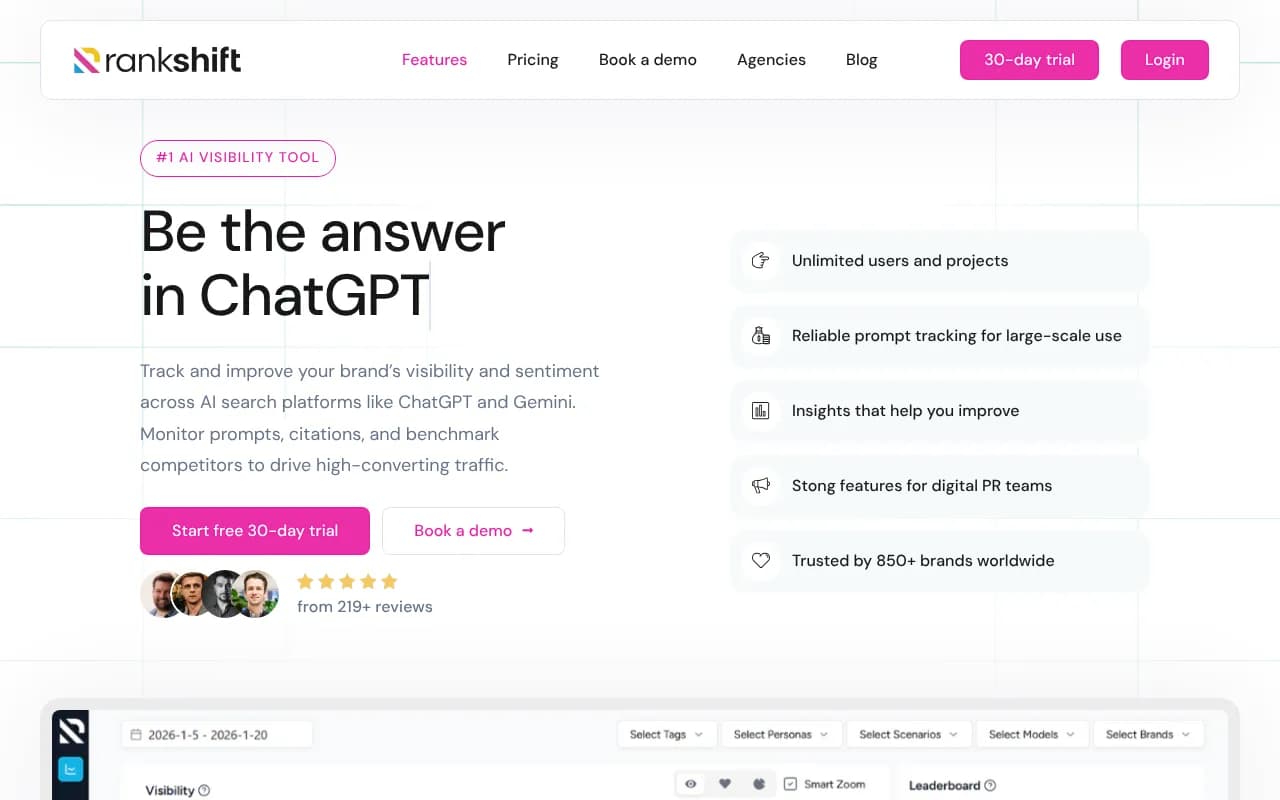
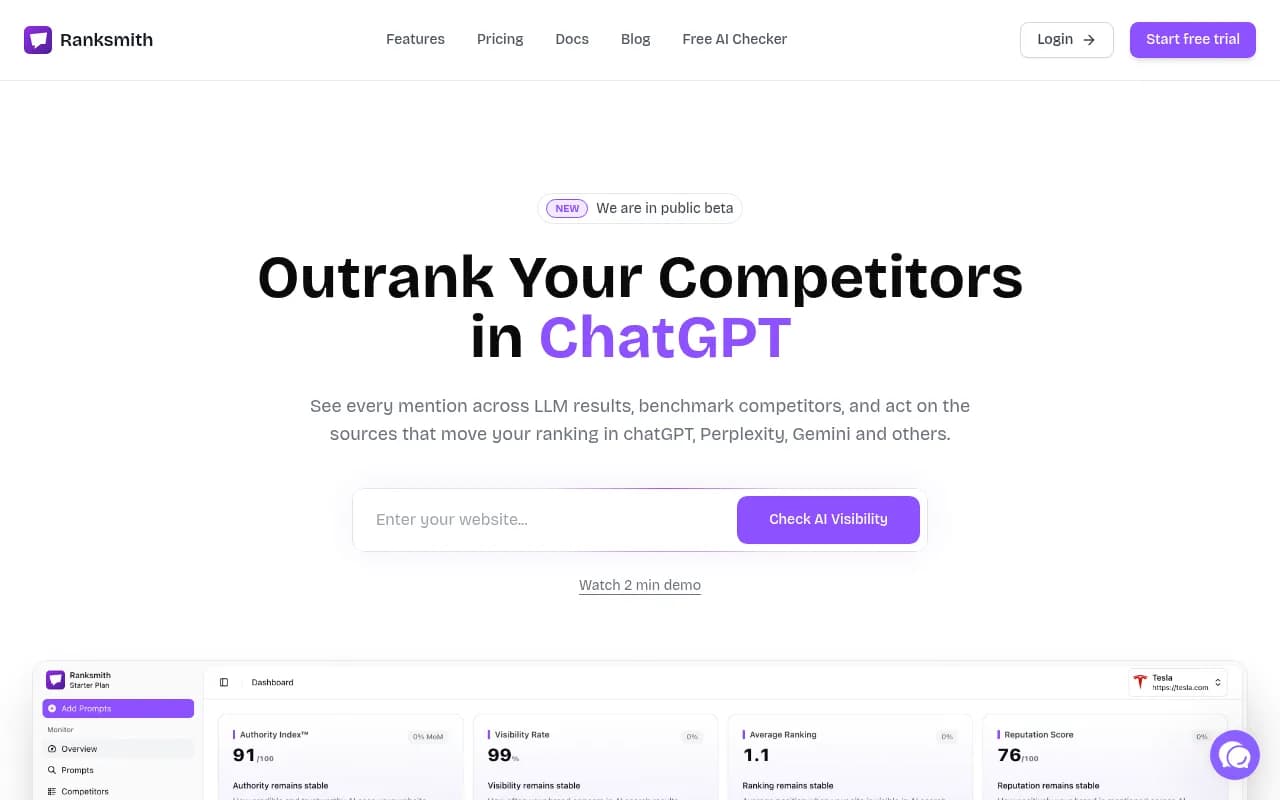
Each of these takes a different approach. Rankshift focuses on LLM tracking and GEO. Ranksmith emphasizes actionable insights. Scrunch AI is built for brand monitoring. None of them offer the full loop that Promptwatch does, but depending on your budget and needs, they might cover the specific gap you're trying to fill.
The bottom line on Peec.ai
Peec.ai built something genuinely useful in 2025. The prompt-level tracking, sentiment analysis, and competitor benchmarking are solid. For teams that already have strong content and SEO capabilities and just need a monitoring layer on top, it can work well.
The limitation is real, though. Monitoring tells you where you're invisible. It doesn't make you visible. Teams that treated AI visibility as a core channel -- not just something to watch -- eventually needed a platform that could help them act on what they were seeing, not just report it.
That's the gap Peec left open, and it's why the conversation about what comes next is worth having.