Key takeaways
- All four tools (Otterly.AI, Hall AI, Nimt.ai, ZipTie) focus on monitoring how your brand appears in AI search engines like ChatGPT, Perplexity, and Google AI Overviews.
- Otterly.AI is the most established of the four, with broad platform coverage and a Semrush integration that makes it appealing to SEO teams already in that ecosystem.
- Hall AI and Nimt.ai are newer, lighter-weight entrants that trade depth for simplicity -- good for teams that just want to know if they're showing up.
- ZipTie goes furthest toward actionability, offering diagnostic analysis on top of monitoring, though it's still primarily a tracking tool rather than a full optimization platform.
- If you need to move from "tracking visibility" to "improving visibility," none of these four fully close that loop on their own.
The AI search monitoring space has exploded in 2026. There are now dozens of tools claiming to track your brand across ChatGPT, Perplexity, Gemini, and the rest -- and most of them look identical at first glance. Dashboard, prompt list, visibility score, competitor comparison. Repeat.
So when four tools keep coming up in the same conversations -- Otterly.AI, Hall AI, Nimt.ai, and ZipTie -- it's worth asking: what actually separates them? Are any of them genuinely useful, or are they all just slightly different wrappers around the same API calls?
This guide breaks down each tool honestly, compares them head-to-head, and tells you which one makes sense for which situation.
Why "lightweight" AI monitoring tools exist
Before getting into the tools themselves, it helps to understand why this category exists at all.
The core problem: AI search engines like ChatGPT and Perplexity are now a meaningful part of how buyers research products and services. When someone asks "what's the best project management tool for remote teams," they get a synthesized answer naming three to five options -- not a list of ten blue links. If your brand isn't in that answer, you don't exist to that buyer.
Traditional SEO tools don't track this. They track rankings in Google's standard results, not what appears inside an AI-generated response. So a new category of tool emerged: AI visibility monitoring.
The "lightweight" end of this category -- where Otterly.AI, Hall, Nimt.ai, and ZipTie sit -- targets marketers and SEO teams who want to start tracking AI visibility without committing to an enterprise platform. They're generally more affordable, faster to set up, and narrower in scope than platforms like Profound or full-stack solutions.
The tradeoff is that most of them stop at monitoring. They show you data. What you do with it is up to you.
The four tools, one by one
Otterly.AI
Otterly.AI is probably the most well-known of the four. It's been around long enough to show up consistently in roundups from Amplitude, Local Dominator, and KIME's independent testing of nine platforms.

The pitch is straightforward: affordable AI brand visibility tracking across ChatGPT, Perplexity, and Gemini, with a Semrush integration that lets SEO teams pull AI visibility data into a workflow they already use. For teams that live in Semrush, this is genuinely useful -- it means you're not logging into yet another dashboard.
Coverage-wise, Otterly.AI tracks the major platforms. It shows mention frequency, citation rates, and basic competitor comparisons. The interface is clean and approachable, which matters for teams that don't have a dedicated GEO specialist.
Where it falls short: Otterly.AI is primarily a monitoring tool. It tells you where you're visible and where you're not. It doesn't help you figure out why, and it doesn't generate content to close the gaps. For teams just starting out with AI visibility, that might be fine. For teams that have been tracking for a few months and want to actually move the needle, it starts to feel limiting.
Reddit sentiment on Otterly.AI is generally positive for what it is: "best for fast monitoring and alerts," as one practitioner put it in r/ArtificialIntelligence. The caveat is that "fast monitoring" is a ceiling, not a floor.
Hall AI
Hall AI takes a slightly different angle. Where Otterly.AI leans into the SEO workflow integration, Hall AI focuses more specifically on how AI platforms cite and talk about your brand -- the qualitative side of visibility, not just the quantitative.
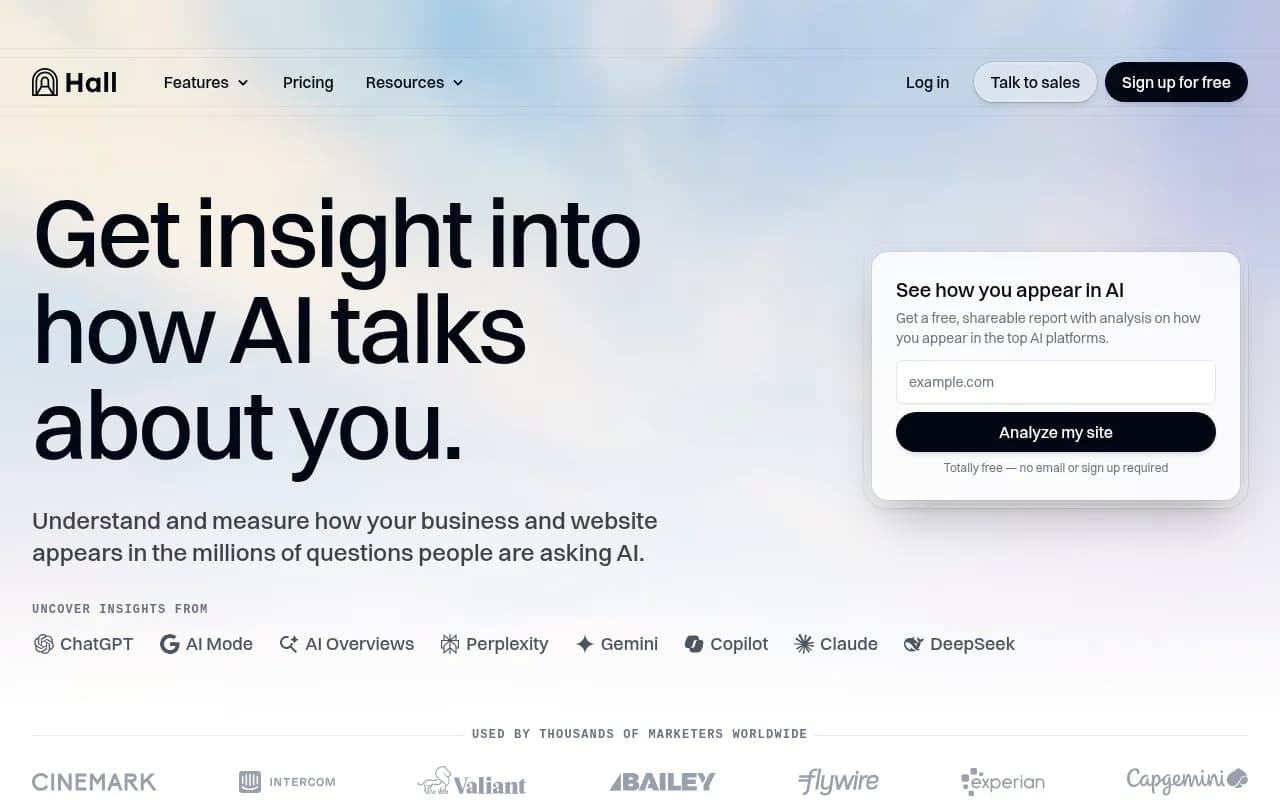
This matters more than it might seem. Knowing that ChatGPT mentions your brand in 40% of relevant prompts is useful. Knowing that it consistently describes your pricing incorrectly, or positions you in a vertical you don't serve, is arguably more urgent. Hall AI puts more emphasis on surfacing these accuracy issues.
KIME's independent testing found that only 2 of 9 platforms they evaluated flagged AI hallucinations about brand pricing or features. Hall AI's focus on the "what is being said" question puts it in better position to catch these issues than tools that only count mentions.
The limitation is scope. Hall AI is narrower than Otterly.AI in terms of platform coverage and reporting depth. It's a focused tool for a specific problem -- brand accuracy in AI responses -- rather than a broad monitoring platform. If you're a brand that has had a specific incident with AI misrepresentation, Hall AI is worth a close look. If you want comprehensive coverage across all major AI engines, it may not be enough on its own.
Nimt.ai
Nimt.ai is the newest and least documented of the four. It positions itself as an AI visibility tracking and optimization platform, but "optimization" is used loosely here -- in practice, it's closer to monitoring with some guidance layered on top.
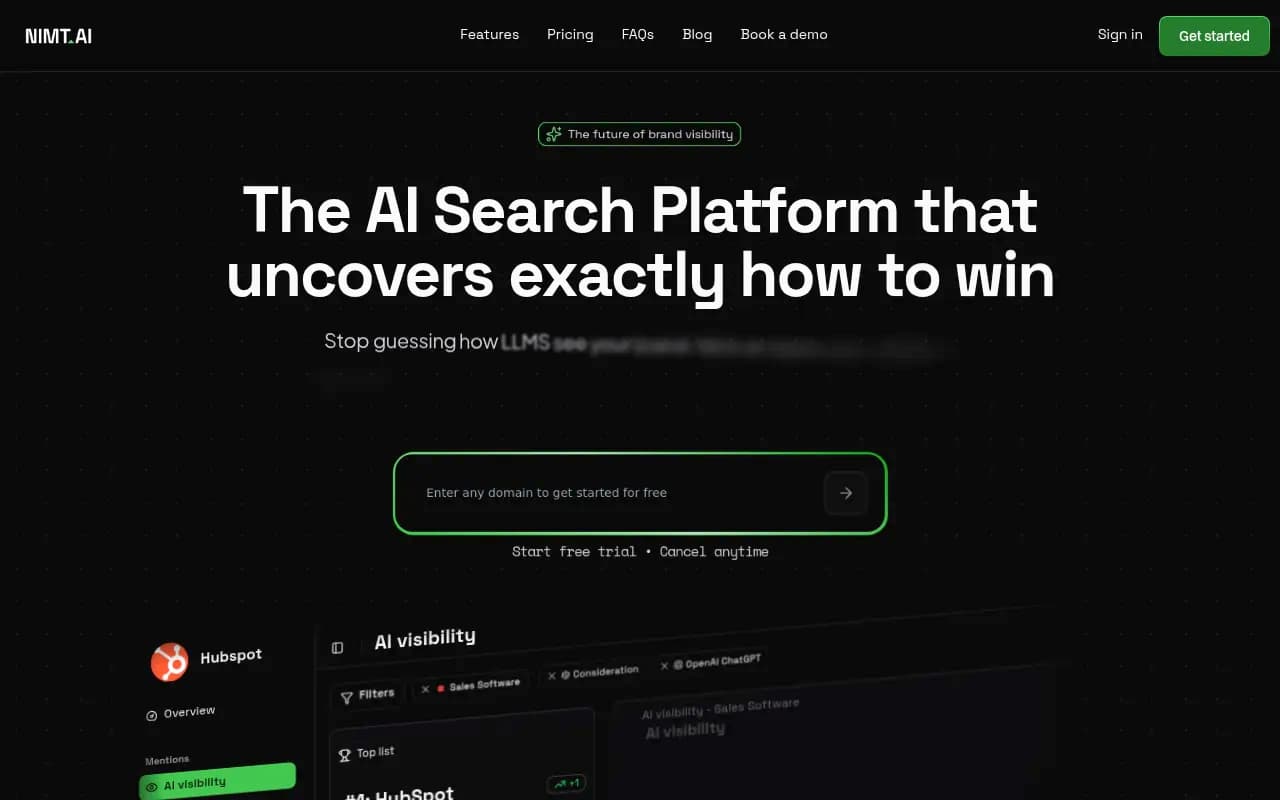
What Nimt.ai does well is accessibility. The onboarding is fast, the interface doesn't assume deep SEO knowledge, and the pricing appears to target small teams and solo practitioners who want to dip their toes in without a major commitment.
The honest assessment: there isn't enough independent testing data on Nimt.ai yet to make strong claims about its accuracy or reliability. It doesn't appear in the major 2026 roundups from KIME, Amplitude, or ZipTie's own competitive analysis, which is either because it's too new or because it hasn't differentiated itself enough to stand out.
If you're evaluating Nimt.ai, the right approach is to run it in parallel with one of the more established tools for a few weeks and compare outputs. Don't rely on it as your sole source of truth until you've validated its data against something you trust.
ZipTie
ZipTie is the most ambitious of the four, and the one that comes closest to bridging monitoring and action.
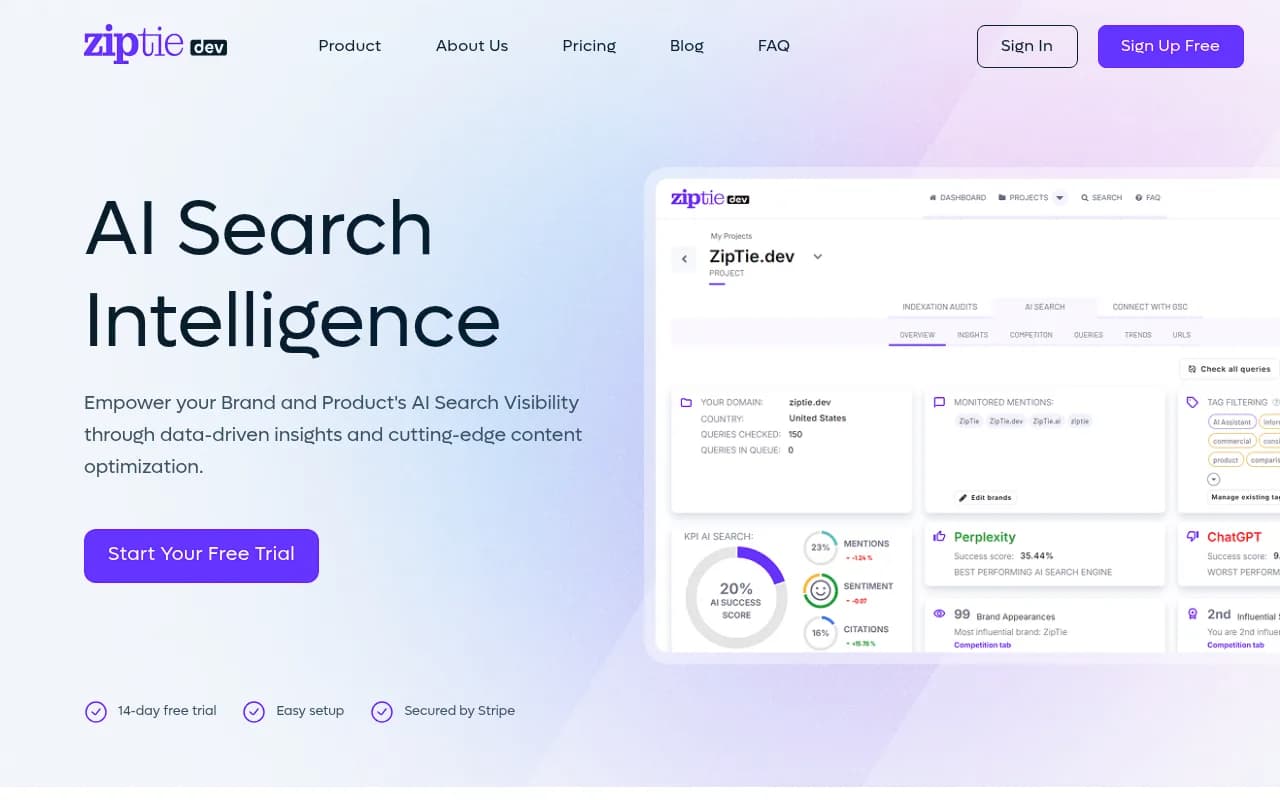
ZipTie's positioning is "monitoring AND actionable optimization," which is a meaningful distinction in a category where most tools stop at the dashboard. In ZipTie's own roundup of multi-model AI search visibility tools (yes, they ranked themselves, and they disclosed it), they claim the top spot specifically because they go beyond tracking to provide diagnostic analysis.

In practice, this means ZipTie surfaces not just where you're invisible, but gives you some guidance on why and what to do about it. It's not a full content generation platform, but it's more than a scorecard.
The tradeoff is complexity. ZipTie has more to learn than Otterly.AI or Nimt.ai. If you want something you can set up in 20 minutes and check weekly, ZipTie might feel like overkill. If you're serious about improving AI visibility and want a tool that helps you prioritize, it's the strongest option in this group.
Head-to-head comparison
| Feature | Otterly.AI | Hall AI | Nimt.ai | ZipTie |
|---|---|---|---|---|
| Platform coverage | ChatGPT, Perplexity, Gemini | ChatGPT, Perplexity (focused) | ChatGPT, Perplexity, others | Multi-model |
| Semrush integration | Yes | No | No | No |
| Brand accuracy / hallucination detection | Basic | Strong | Unknown | Moderate |
| Competitor comparison | Yes | Limited | Limited | Yes |
| Actionable recommendations | Minimal | Minimal | Minimal | Moderate |
| Content generation | No | No | No | No |
| Crawler / citation logs | No | No | No | No |
| Best for | SEO teams in Semrush ecosystem | Brand accuracy monitoring | Solo practitioners / small teams | Teams wanting monitoring + diagnosis |
| Price positioning | Budget-friendly | Budget-friendly | Budget-friendly | Mid-range |
| Independent review coverage | High | Low | Very low | Moderate |
A few things stand out from this comparison. First, none of these four tools include AI crawler logs -- the ability to see when ChatGPT or Perplexity's crawlers actually visit your site. That's a meaningful gap if you're trying to understand why certain pages get cited and others don't. Second, none of them generate content. They can tell you what's missing, but they can't help you create it.
What these tools don't do (and why that matters)
It's worth being direct about the ceiling here.
All four tools are monitoring tools. They track what's happening. They don't close the loop from "I'm not visible" to "now I am." That loop -- finding gaps, creating content that addresses them, tracking whether the new content gets cited -- requires more than any of these four tools provide.
The gap between monitoring and optimization is where most teams get stuck. You run Otterly.AI for a month, you see that a competitor appears in 60% of relevant prompts and you appear in 15%, and then... what? The tool has done its job. The hard work is still ahead of you.
For teams that want to move from tracking to actually improving AI visibility, platforms like Promptwatch are built specifically around that action loop -- finding gaps, generating content grounded in real prompt data, and tracking whether that content starts getting cited. It's a different category from the four tools in this guide, but worth knowing about if you're hitting the ceiling of what monitoring alone can tell you.

That's not a knock on Otterly.AI, Hall, Nimt.ai, or ZipTie. Monitoring is a legitimate first step. But it's worth being clear about what you're buying.
Which tool should you actually use?
Here's the honest breakdown:
Use Otterly.AI if you're already in the Semrush ecosystem and want AI visibility data without adding a new workflow. The integration is the differentiator. Without it, there are stronger options.
Use Hall AI if you've had a specific problem with AI misrepresentation -- wrong pricing, wrong positioning, wrong vertical -- and you want a tool that focuses on what AI is actually saying about you, not just whether it's saying anything.
Use Nimt.ai if you're a solo practitioner or very small team that wants the simplest possible entry point into AI visibility tracking. Validate the data before trusting it fully.
Use ZipTie if you want the most actionable tool in this group and you're willing to spend more time with it. It's the best option here for teams that want to move beyond "we have data" toward "we know what to do next."
Use none of them exclusively if you're serious about AI visibility as a growth channel. Combine monitoring with a content strategy, and consider whether you need a platform that can actually help you create and optimize content for AI search -- not just track it.
The bigger picture in 2026
The AI search monitoring category is maturing fast. In early 2025, the conversation was mostly "should we be tracking this?" In 2026, the conversation has shifted to "we're tracking it -- now what?"
That shift is exposing the limits of monitoring-only tools. Knowing your visibility score is 23% is interesting. Knowing it went from 3 citations to 8 citations in a month is more interesting. But neither of those numbers tells you what content to create, which prompts to target, or how to structure a page so that Perplexity's crawler actually picks it up.
The tools that will matter most over the next 12-18 months are the ones that help teams act, not just observe. Otterly.AI, Hall, Nimt.ai, and ZipTie are all useful starting points. None of them are the finish line.
If you're just getting started with AI visibility, any of these four will give you a baseline. Pick based on your existing workflow (Otterly.AI for Semrush users), your specific concern (Hall for brand accuracy), your team size (Nimt.ai for solo), or your appetite for depth (ZipTie for diagnostics). Run it for 60 days, establish your baseline, and then ask yourself what you're going to do about what you've found.
That second question is where the real work begins.