Key takeaways
- Most AI writing platforms are built to help you publish content faster -- not to help that content get cited by AI models like ChatGPT or Perplexity.
- Jasper and GrowthBar have the strongest SEO foundations, which indirectly supports LLM citation, but neither was designed with AI visibility as a primary goal.
- Copy.ai has pivoted hard toward GTM automation and is less focused on long-form content quality than it used to be.
- ContentMonk is the newest of the four and targets managed content workflows, but lacks the optimization depth of Jasper or GrowthBar.
- Getting cited in LLMs requires a separate layer of strategy on top of any writing tool -- tracking what AI models actually cite, and closing the gap between your content and what they want.
The question most content teams aren't asking
There's a version of this comparison that's easy to write: compare pricing, count templates, screenshot the interfaces, declare a winner. But that misses the real question in 2026.
The question isn't which tool writes the most words per minute. It's which tool helps you produce content that AI models actually reference when someone asks a question in your category.
That's a different bar entirely. ChatGPT, Claude, Perplexity, and Google AI Overviews don't cite content because it was published quickly or because it hit a keyword density target. They cite content that is authoritative, specific, well-structured, and genuinely useful. The writing tool you use matters -- but so does the strategy behind what you write and how you optimize it.
With that framing in mind, here's an honest look at Jasper, Copy.ai, GrowthBar, and ContentMonk.
What each tool is actually built for
Before comparing them on LLM citation potential, it helps to understand what each platform was designed to do. They're not really competing for the same user.
Jasper
Jasper started as a template-heavy AI writing assistant and has evolved into something closer to a marketing workflow platform. It wraps GPT-4 and Claude with brand voice controls, a document editor, campaign workflows, and team collaboration features. The pitch is consistency at scale: your whole marketing team produces content that sounds like your brand, not like a generic AI.
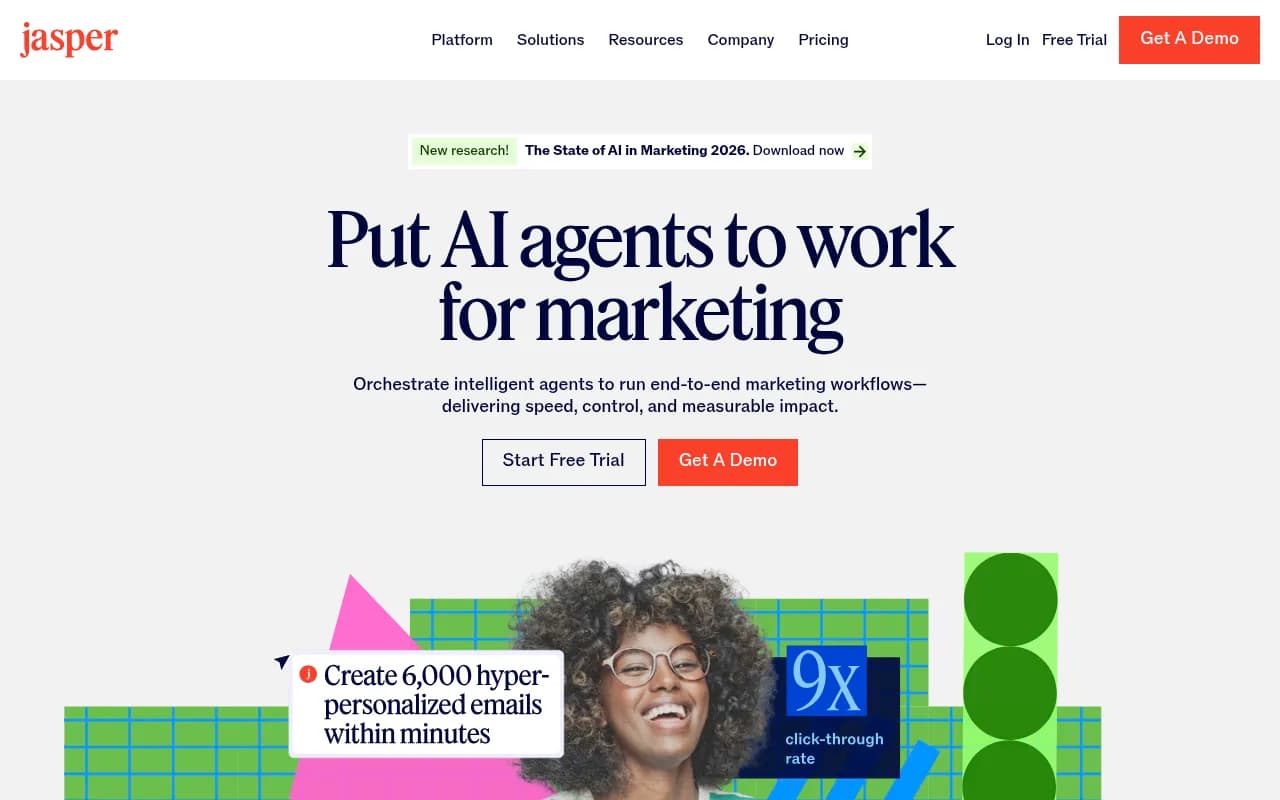
At $49/month for the Creator plan and higher for Teams, Jasper is one of the more expensive options here. You're paying for the workflow layer, not the underlying model. As the Zemith review noted, "tools like Jasper mostly wrap ChatGPT/Claude with templates and SEO features" -- which is accurate, and not necessarily a criticism. The templates and brand voice features are genuinely useful for teams producing high volumes of similar content.
What Jasper doesn't do well: it doesn't tell you which topics AI models are currently citing competitors for, and it doesn't optimize content specifically for LLM citation patterns. It's a production tool, not a visibility tool.
Copy.ai
Copy.ai has made a significant strategic shift. It's positioning itself as a GTM (go-to-market) automation platform rather than a pure writing tool. The focus is on automating sales and marketing workflows -- prospecting sequences, outreach copy, pipeline content. Long-form blog content is still possible, but it's not where the product is investing.
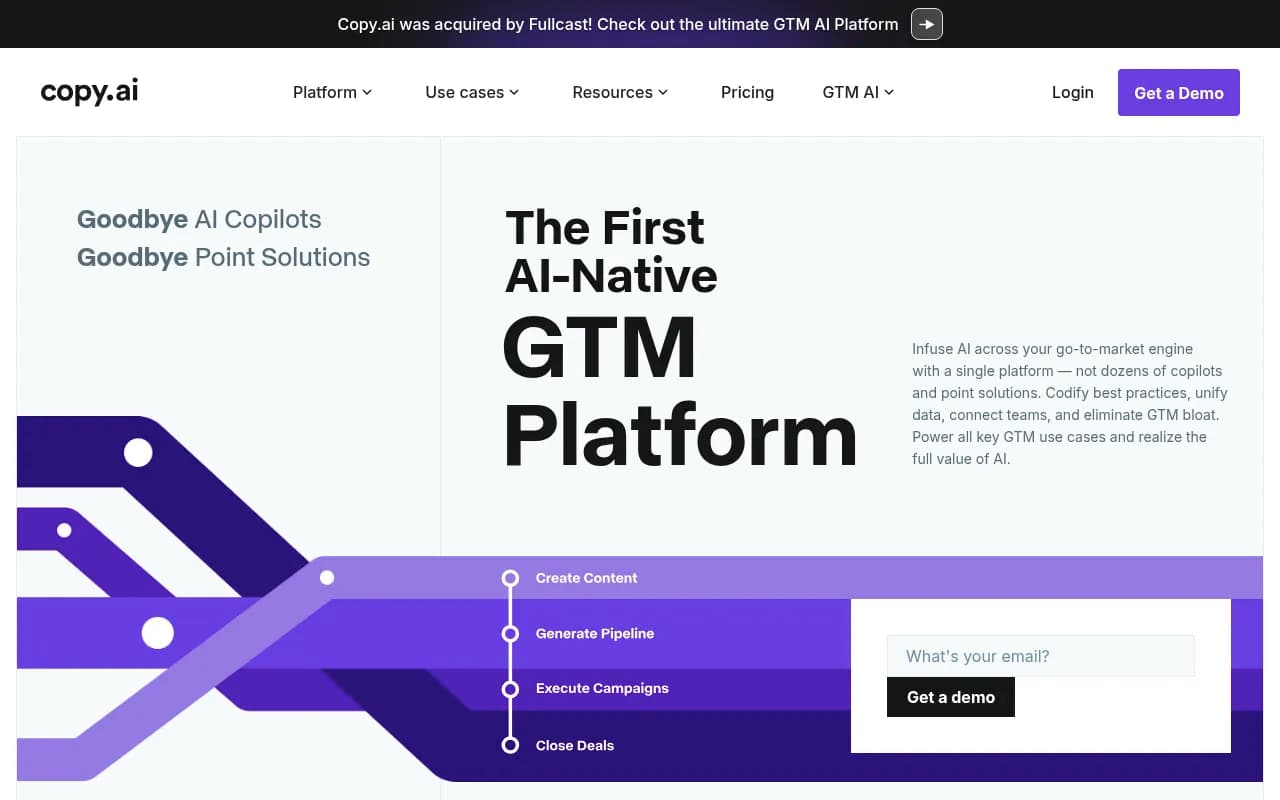
For teams that need to automate repetitive marketing copy at scale, Copy.ai is genuinely strong. For teams trying to build topical authority and get cited in AI search results, it's the weakest fit of the four. The content it produces tends toward short-form and conversion-focused, which isn't what LLMs typically cite.
GrowthBar
GrowthBar is the most SEO-native of the four. It's built specifically for blog content that ranks -- keyword research, competitor analysis, AI-generated outlines, and a writing interface that keeps SEO signals front and center throughout the drafting process. It's priced more accessibly than Jasper, with plans starting around $29/month.
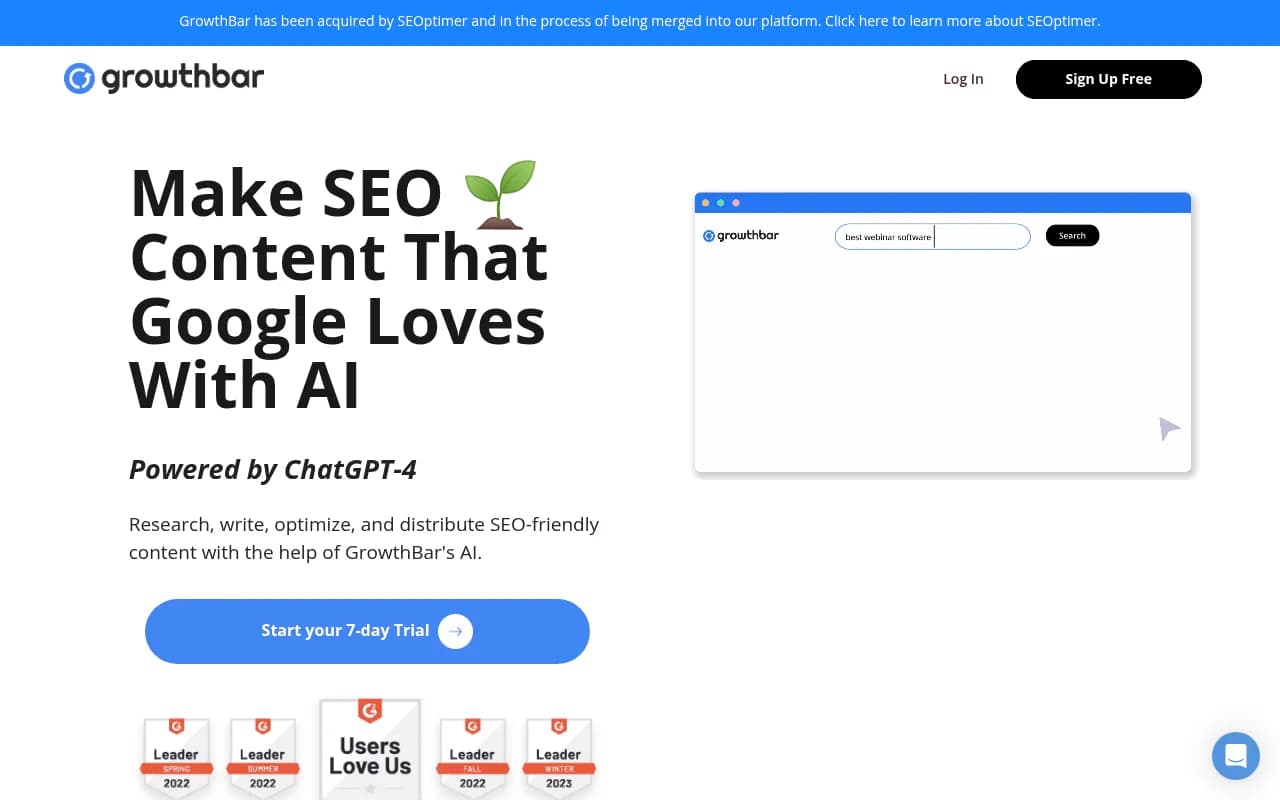
The SEO focus is relevant here because traditional SEO signals and LLM citation signals overlap more than people think. AI models tend to cite pages that are already authoritative in Google -- well-structured, topically comprehensive, linked-to. GrowthBar's approach to content briefs (building out topic clusters, covering related questions) aligns reasonably well with what makes content citable by AI.
The limitation: GrowthBar optimizes for Google rankings, not specifically for LLM citation. There's no mechanism to track whether your content is being cited by ChatGPT or Perplexity, and no analysis of what those models are currently citing in your space.
ContentMonk
ContentMonk is the newest and least well-known of the four. It targets teams that want a managed content workflow -- AI writing combined with human editorial oversight, content calendars, and publishing workflows. Think of it as a content operations platform with AI writing built in.
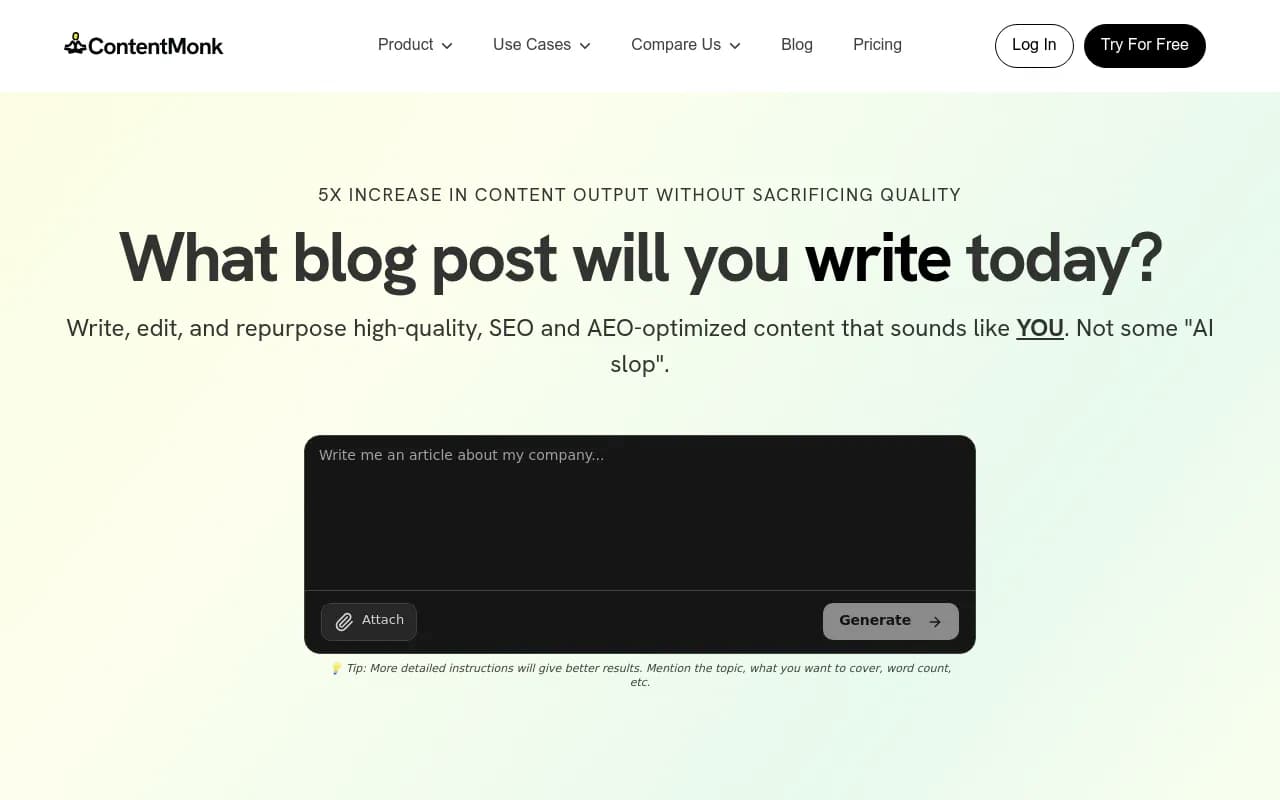
The human-in-the-loop approach is actually a meaningful differentiator for LLM citation purposes. AI models are increasingly good at detecting and deprioritizing content that reads like unedited AI output. Content that has been genuinely edited, fact-checked, and enriched with specific data tends to perform better. ContentMonk's workflow encourages that.
The downside: it's harder to evaluate because it's less transparent about its underlying models and optimization approach. It's also more of a service than a self-serve tool, which limits how much you can experiment and iterate.
How LLMs actually decide what to cite
To evaluate these tools fairly, you need to understand what drives LLM citation in the first place.
AI models like ChatGPT and Perplexity don't have a simple ranking algorithm you can game with keyword density. They cite sources based on a combination of factors:
- Topical authority: Does your site consistently cover a topic in depth, or is this a one-off post?
- Specificity: Does the content include concrete data, named examples, and specific claims -- or is it generic?
- Structure: Is the content easy for a model to parse? Clear headings, direct answers to questions, and well-organized information help.
- Existing web authority: Pages that Google already trusts tend to get cited more. Domain authority still matters.
- Freshness: For topics where recency matters, AI models prefer recently updated content.
- Citation patterns: What other sources cite your content? If authoritative sites link to you, models notice.
None of the four tools here directly optimize for all of these signals. What they can do is help you produce content that's more likely to hit several of them -- particularly specificity, structure, and topical coverage.
Head-to-head comparison
| Dimension | Jasper | Copy.ai | GrowthBar | ContentMonk |
|---|---|---|---|---|
| Primary use case | Marketing content at scale | GTM automation | SEO blog content | Managed content ops |
| Long-form quality | Good | Moderate | Good | Good (with editing) |
| SEO optimization | Basic | Minimal | Strong | Moderate |
| Brand voice controls | Strong | Moderate | Basic | Moderate |
| LLM citation focus | None | None | None | None |
| Topic gap analysis | No | No | Partial | No |
| Team collaboration | Strong | Strong | Moderate | Strong |
| Starting price | ~$49/mo | ~$49/mo | ~$29/mo | Custom |
| Best for | Marketing teams | Sales/marketing ops | Bloggers, SEO teams | Content agencies |
The honest read from this table: none of these tools were built with LLM citation as a design goal. They're all production tools. The citation question requires a separate layer of strategy.
Where each tool helps (and where it doesn't)
Jasper's strengths for LLM visibility
Jasper's brand voice and template system is genuinely useful for maintaining consistency across a large content library. AI models tend to cite sites that have consistent topical authority -- not sites that publish one great article and then go quiet. If Jasper helps your team publish more consistently in your niche, that consistency compounds over time.
The SEO mode in Jasper also pushes writers toward covering related questions and subtopics, which helps with topical depth. Deeper coverage increases the chance that a specific question from a user maps to something on your site.
What it won't do: tell you which questions ChatGPT is currently answering with your competitors' content instead of yours.
Copy.ai's limitations here
Copy.ai's pivot to GTM automation means its content output is increasingly optimized for conversion, not for being cited as an authoritative source. Short-form copy, email sequences, and sales enablement content rarely get cited by AI models. If your goal is LLM visibility, Copy.ai is the wrong tool for the job.
That said, if you're using Copy.ai for outreach and sales content, it's quite good at that. Just don't expect it to move the needle on your AI search visibility.
GrowthBar's SEO foundation
GrowthBar is probably the most useful of the four for building content that gets cited, because it's the most focused on the fundamentals that drive both Google rankings and LLM citations. Its content briefs push you to cover a topic comprehensively, answer related questions, and structure content clearly.
The research from buildmvpfast.com's 2026 content writing guide makes a useful point: "The workflow that works is AI draft, human review, human polish." GrowthBar's workflow supports this better than most -- it generates a solid draft that a human editor can then enrich with specific data and examples, which is exactly what makes content citable.
ContentMonk's editorial angle
ContentMonk's managed workflow approach -- AI draft plus human editorial review -- produces content that tends to be more specific and more accurate than pure AI output. That specificity matters for LLM citation. Generic content gets ignored; content with concrete claims, named examples, and real data gets referenced.
The limitation is scale and iteration speed. If you need to run experiments quickly -- publish, track, adjust -- ContentMonk's workflow is slower than self-serve tools.
The missing piece: tracking what actually gets cited
Here's the uncomfortable truth about all four of these tools: they help you create content, but none of them tell you whether that content is being cited by AI models. You can publish 50 articles with Jasper and have no idea which ones are appearing in ChatGPT responses, which ones Perplexity is referencing, or which topics your competitors are winning for that you're not even covering.
That gap -- between content production and AI visibility -- is where most content teams are flying blind right now.
Closing that gap requires a different kind of tool. Promptwatch is built specifically for this: it tracks which of your pages are being cited by ChatGPT, Claude, Perplexity, and other AI models, shows you the prompts your competitors are visible for that you're not, and helps you generate content specifically designed to fill those gaps. It's the layer that sits on top of whatever writing tool you're using.

The workflow that actually works in 2026 looks something like this: use Promptwatch to identify which topics and questions AI models are citing competitors for, use a writing tool (Jasper, GrowthBar, or whatever fits your workflow) to produce content that addresses those gaps, then track in Promptwatch whether your new content starts getting cited. That's a closed loop. Most teams are only doing the middle step.
Which tool should you use?
The answer depends on what you're trying to accomplish:
If you're a marketing team producing brand content at scale, Jasper is the most mature option. The brand voice controls and team workflows are worth the price if you have multiple writers who need to stay consistent.
If your primary goal is SEO-driven blog content, GrowthBar is the most focused tool here. It's cheaper than Jasper and more opinionated about what makes content rank.
If you're running a content agency or need managed editorial workflows, ContentMonk's human-in-the-loop approach produces content that tends to be more citable because it's more specific and accurate.
If you're primarily doing sales and marketing automation, Copy.ai is strong -- but it's not a content marketing tool anymore, and it won't help with LLM visibility.
For any of these, the production tool is only part of the answer. If you want to know whether your content is actually showing up when people ask AI models about your category, you need visibility tracking on top of whatever you're writing with.
A note on the underlying models
One thing worth keeping in mind: Jasper, Copy.ai, and GrowthBar all use GPT-4 or Claude as their underlying models. The quality ceiling is the same. What differentiates them is the workflow layer -- templates, brand voice, SEO briefs, collaboration features.
The buildmvpfast.com 2026 guide makes this point directly: "For high-volume content shops, the math favors API access to models like Claude or GPT over per-seat subscriptions." If you're technically comfortable, you can get similar output quality by prompting Claude or GPT-4 directly, at a fraction of the cost. The subscription tools earn their price through workflow, not through model quality.
That also means the content quality argument between these four tools is partly a workflow argument. Better briefs, better brand voice controls, and better editorial processes produce better content -- regardless of which underlying model is doing the writing.
Bottom line
Jasper, Copy.ai, GrowthBar, and ContentMonk are all useful tools. None of them are bad. But the question this guide started with -- which one produces content that gets cited in LLMs -- doesn't have a clean answer, because none of them were designed with that goal in mind.
GrowthBar comes closest, because its SEO-first approach to content briefs and topical coverage aligns with what makes content authoritative enough to cite. Jasper's consistency features help teams build the kind of sustained topical presence that compounds over time. ContentMonk's editorial workflow produces more accurate, specific content that AI models are more likely to reference.
But the real answer is that content production and AI visibility are two separate problems. You need a writing tool and a visibility tool. The writing tool gets content published. The visibility tool tells you whether that content is working -- and what to write next.