Key takeaways
- Prompt volume estimates are useful directional signals, not precise numbers -- treat them like early keyword data, not gospel.
- The prompts that drive clicks are usually mid-funnel and comparative, not generic "best X" queries. Volume alone doesn't predict click-through.
- Query fan-outs matter: one prompt branches into dozens of sub-queries. Targeting the parent prompt means you need content that answers the whole cluster.
- Start with 20-40 prompts, track across at least 2-3 AI models for 30 days, then cut the ones that show no citation activity.
- Tools like Promptwatch combine volume estimates with difficulty scores and gap analysis, so you can prioritize prompts you can actually win -- not just the ones with the biggest numbers.
Why prompt volume data is both useful and overrated
Here's the honest version: prompt volume is not keyword search volume. It's not even close.
When you look up a keyword in Ahrefs or Semrush, you're getting data from billions of actual searches. The number is imperfect, but it's grounded in real query logs. Prompt volume estimates for AI search are built differently -- they use machine learning models to map natural language prompts back to underlying topics, then estimate frequency based on proxy signals. DemandSphere, for example, describes their approach as "a resolution process from any string of text back to the core topic," with volume estimated from there.
That's a reasonable methodology. But it means the numbers carry more uncertainty than traditional keyword data. A prompt showing "high volume" might reflect a genuinely popular query, or it might be an artifact of how the model clusters related topics.
One SEO publication called prompt volume "basically a mirage" built on "tiny data samples and wild extrapolations." That's a bit harsh, but the underlying concern is valid. If you treat prompt volume as a precise ranking signal and build your entire content strategy around chasing the biggest numbers, you'll probably waste a lot of effort.
The right way to use prompt volume data is as a prioritization filter, not a guarantee. It helps you narrow down which prompts are worth tracking. It doesn't tell you which ones will send traffic.
So what does predict clicks from AI search? That's where it gets interesting.
What actually drives clicks from AI responses
AI models don't just answer questions -- they decide whether to cite a source. And when they do cite a source, users sometimes click through. Understanding that chain is what separates a useful prompt strategy from a vanity metrics exercise.
A few things consistently correlate with click-through from AI responses:
Specificity over breadth. Generic prompts like "best project management software" get answered with a list. The AI synthesizes the answer and the user rarely needs to click anywhere. But a prompt like "what project management tool is best for remote engineering teams under 20 people" often produces a response that cites specific sources -- because the AI needs to pull from somewhere to answer that level of detail.
Comparative and evaluative queries. When someone asks "Notion vs Asana for product teams," the AI typically pulls from review articles, comparison pages, and community discussions. Those sources get cited and clicked. This is why comparison content tends to perform well in AI search.
Prompts with commercial intent. Not "what is CRM software" but "which CRM should a B2B SaaS startup use." The latter implies a decision is being made. AI models tend to cite sources more heavily for decision-stage queries because the answer requires more nuance than the model can generate from training data alone.
Prompts where the AI lacks confidence. If a topic is niche, recent, or highly specific, AI models are more likely to pull from external sources and cite them. That's your opportunity.
How to build a prompt list worth tracking
Most teams start their AI visibility work by listing every "best [category]" and "top [product type]" prompt they can think of. That's a fine starting point, but it's not a strategy.
Here's a more structured approach.
Start with your existing SEO data
Your current keyword rankings are a map of what people search for. Many of those queries have AI-search equivalents. A keyword like "email marketing software for nonprofits" translates naturally to a prompt like "what email marketing tool should a nonprofit use." Run your top 50 organic keywords through this conversion process and you'll have a solid initial prompt list.
This works because the underlying intent is the same. The format changes -- conversational instead of fragmented -- but the person asking is in the same mindset.
Pull from your sales and support teams
Your sales team hears the same questions every week. Your support team sees the same confusion patterns. These are real queries from real buyers, and they're often more specific and more commercially valuable than anything you'd find in a keyword tool.
Ask your sales team: "What questions do prospects ask before they decide to buy?" Ask support: "What do people misunderstand about our product?" Both sets of answers translate directly into trackable prompts.
Map prompts to the buyer journey
Not all prompts are equal, and not all of them should be treated the same way. A rough three-stage framework works well here:
- Awareness prompts: "How does AI search work?" or "What is generative engine optimization?" These have volume but low purchase intent. Track them for brand visibility, not click-through.
- Consideration prompts: "What are the best AI visibility tools?" or "How does Promptwatch compare to Semrush for AI search?" These are where clicks happen. Prioritize these.
- Decision prompts: "Is [your brand] worth it?" or "What do users say about [your product]?" These are lower volume but extremely high intent. Don't ignore them.
Most brands over-invest in awareness prompts and under-invest in consideration and decision prompts. The consideration layer is where the clicks actually are.
Cover the five core prompt types
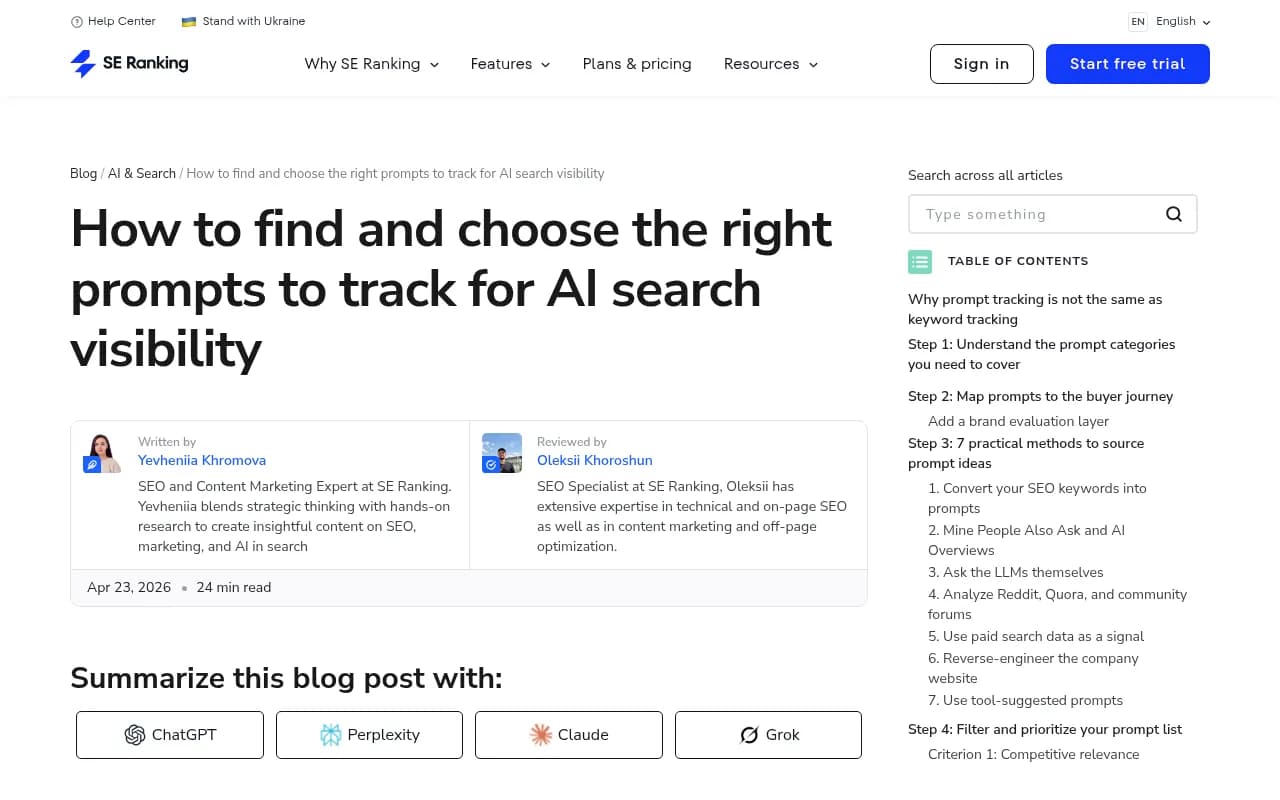
SE Ranking's research on prompt tracking identifies five types worth covering: informational, comparative, instructional, brand-specific, and transactional. Most brands track comparative prompts and ignore the rest.
Instructional prompts ("how do I set up AI search tracking for my website") are particularly undervalued. They tend to be longer, more specific, and more likely to require a cited source. If you have good how-to content, these prompts can drive meaningful traffic.
Understanding query fan-outs
This is one of the more underappreciated concepts in AI search strategy.
When someone types a prompt into ChatGPT or Perplexity, the model doesn't just process that one query. It internally generates a set of related sub-queries to build a comprehensive answer. This is called a query fan-out.
For example, a prompt like "what's the best tool for tracking AI search visibility" might fan out into sub-queries like:
- Which AI models does [tool] monitor?
- How accurate is AI search tracking?
- What's the difference between AI visibility and traditional SEO rankings?
- What do users say about [specific tools]?
If your content only answers the parent prompt but not the sub-queries, you're less likely to get cited -- because the AI model is pulling from multiple sources to build its answer, and those sources need to cover the full topic.
This is why topical depth matters more than keyword density in AI search. You need content that covers the topic comprehensively, not just content that mentions the right phrase.
Tools that surface query fan-outs are genuinely useful here. Promptwatch, for instance, shows how a single tracked prompt branches into sub-queries, which helps you understand what your content needs to cover to get cited consistently.

How to use volume data to prioritize (without being fooled by it)
Once you have a list of candidate prompts, volume estimates help you prioritize. But you need to combine volume with a few other signals to avoid chasing numbers that don't convert.
Volume + difficulty = opportunity score
A prompt with high volume and low difficulty (meaning few competitors are currently visible for it) is a genuine opportunity. A prompt with high volume and high difficulty means you're competing against well-established sources that AI models already trust.
Most platforms that offer prompt volume data also offer some version of a difficulty or competition score. Use both together. A prompt where you have a realistic chance of getting cited is worth more than a high-volume prompt where you're invisible and unlikely to change that quickly.
Promptwatch's prompt intelligence layer includes both volume estimates and difficulty scores, plus the query fan-out data mentioned above. That combination -- volume, difficulty, fan-outs -- is more useful than volume alone.
Track citation rates, not just mentions
There's a difference between your brand being mentioned in an AI response and your website being cited as a source. Mentions are brand visibility. Citations are what drive clicks.
When you're evaluating which prompts to prioritize, look at which ones are generating citations to your pages specifically, not just mentions of your brand name. A citation means the AI model linked to your content. That's the signal that can translate to actual traffic.
Watch for prompts where competitors are cited but you're not
This is the gap analysis approach, and it's one of the most actionable things you can do with prompt data. If a competitor's page is being cited for a prompt that's directly relevant to your product, and your content isn't being cited, that's a clear content gap.
You know the prompt has enough volume to be worth tracking (because someone built a tool to track it). You know the AI model is willing to cite sources for it (because it's citing your competitor). You just need to create better content that covers the topic more thoroughly.
Matching content format to prompt intent
Getting cited isn't just about having the right information -- it's about having it in the right format. AI models have preferences, and those preferences vary by prompt type.
| Prompt type | Best content format | Why it works |
|---|---|---|
| Comparative ("X vs Y") | Dedicated comparison page or article | AI models cite structured comparisons directly |
| Instructional ("how to...") | Step-by-step guide with clear headers | Easy for AI to extract and paraphrase |
| Evaluative ("best X for Y") | Listicle with specific criteria | Matches the format AI uses to answer |
| Brand-specific ("what do users say about X") | Review aggregation, case studies | AI pulls from third-party validation |
| Definitional ("what is X") | Concise explainer with examples | AI prefers authoritative, clear definitions |
| Decision-stage ("should I use X") | Honest pros/cons analysis | AI cites balanced, credible assessments |
The format matters because AI models are essentially doing a retrieval task. They're looking for content that answers the query cleanly and can be paraphrased or cited without ambiguity. A wall of text with no structure is harder to cite than a well-organized article with clear headers and specific claims.
Tools worth knowing about
A few platforms have built meaningful prompt volume and tracking capabilities. Here's how they compare on the dimensions that matter most for this use case.
| Tool | Prompt volume data | Difficulty scores | Query fan-outs | Citation tracking | Content gap analysis |
|---|---|---|---|---|---|
| Promptwatch | Yes | Yes | Yes | Yes | Yes |
| Profound | Yes | Partial | No | Yes | Partial |
| AthenaHQ | Yes | No | No | Partial | No |
| SE Ranking | Partial | No | No | Partial | No |
| Semrush | Partial | No | No | No | No |
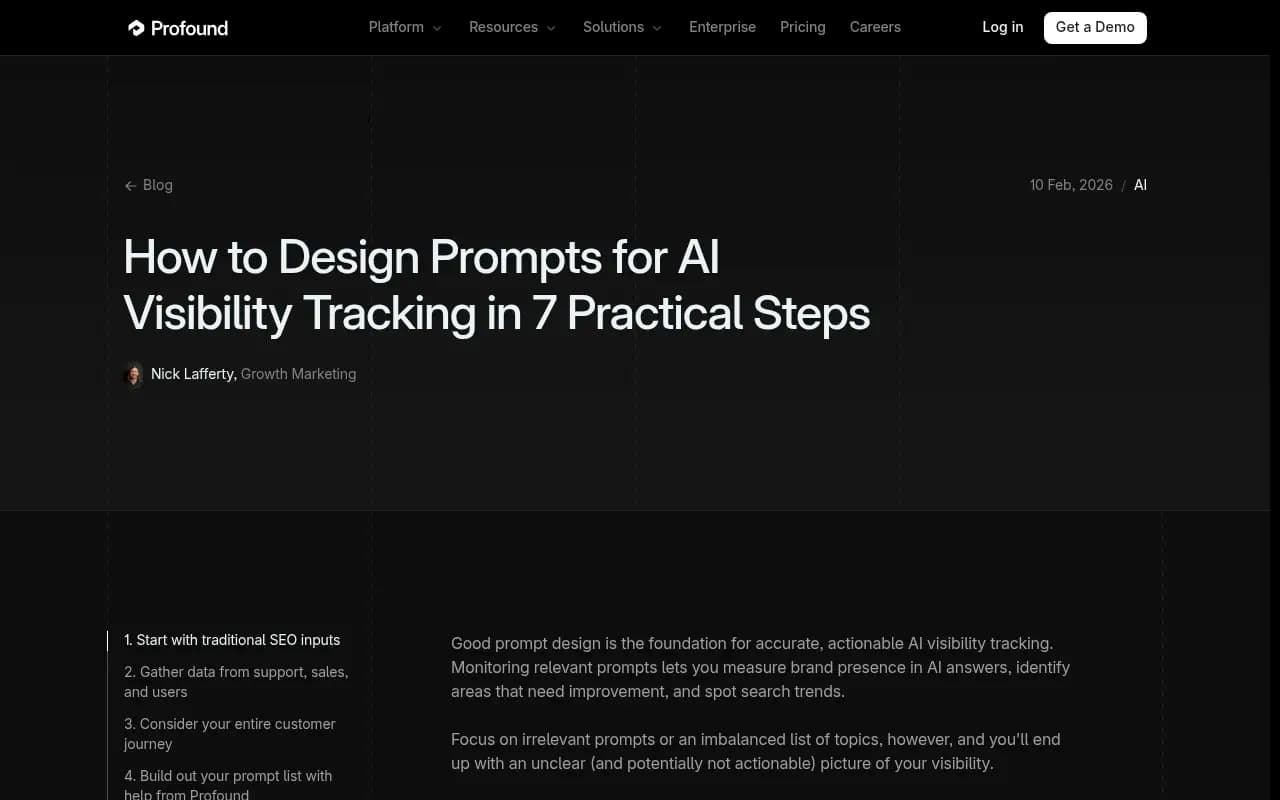
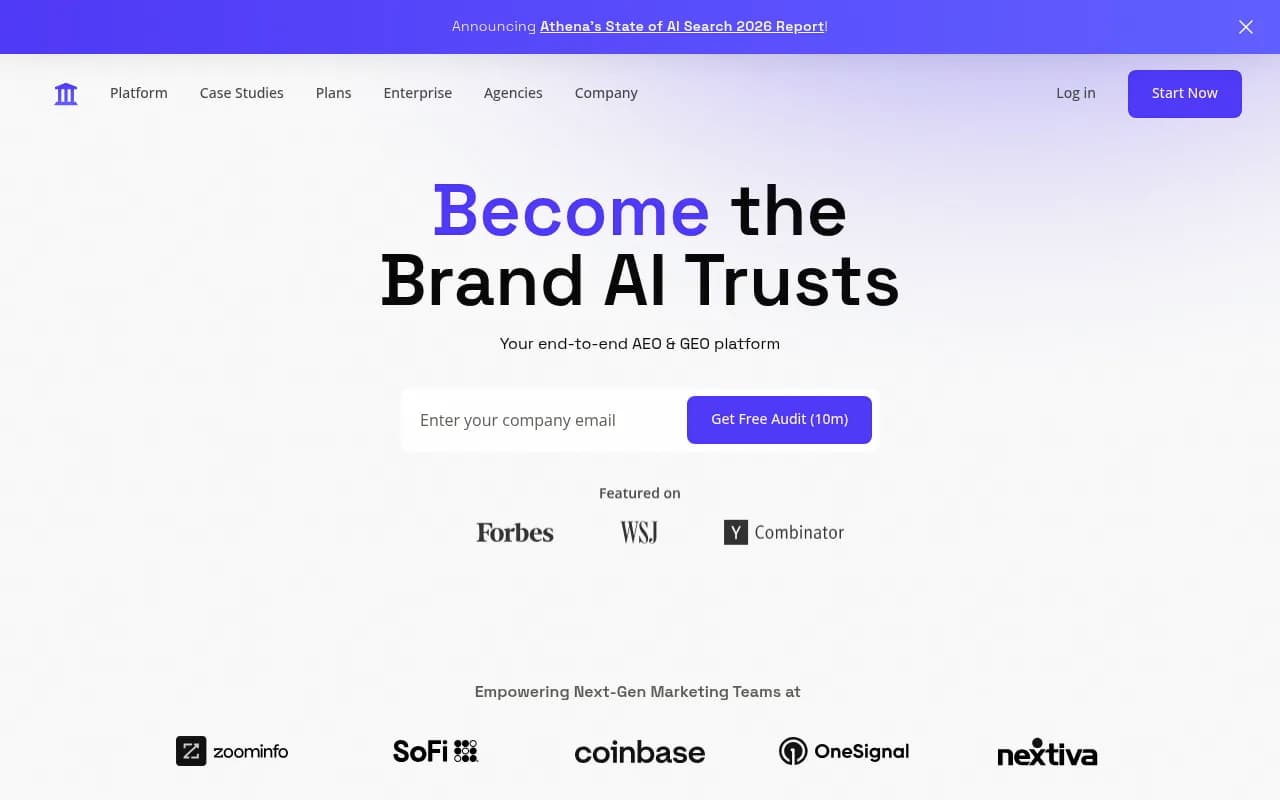
Profound has built a solid prompt volume feature and their tracking is reliable. AthenaHQ offers prompt volume estimates but the platform is more monitoring-focused -- you get data but not much help acting on it.

For teams that want to go beyond tracking and actually use the data to create content that gets cited, Promptwatch is the most complete option. The gap analysis shows you exactly which prompts competitors are visible for but you're not, and the built-in writing tools help you create content engineered around real citation data -- not generic SEO templates.
A practical workflow for 2026
Here's a workflow that works, based on what's actually driving results for teams doing this well right now.
Week 1-2: Build your initial prompt list Start with 30-40 prompts. Pull from your top organic keywords (converted to conversational format), your sales team's FAQ list, and your competitors' most-cited content. Cover all five prompt types and all three buyer journey stages.
Week 3-4: Run them across multiple AI models Track each prompt across at least ChatGPT, Perplexity, and Google AI Overviews. The same prompt can produce very different citation patterns across models. A page that gets cited by Perplexity might be invisible to ChatGPT. You need the cross-model view.
Month 2: Cut and prioritize After 30 days, you'll have real data. Cut the prompts that show no citation activity and no competitor citations (they're either too niche or the AI models don't cite sources for them). Double down on prompts where competitors are being cited but you're not -- those are your highest-priority content gaps.
Month 2-3: Create content for the gaps For each gap prompt, create content that covers the topic at the depth the AI model seems to require. Use the query fan-out data to make sure you're covering sub-topics. Format the content to match the prompt type (comparison page for comparative prompts, step-by-step guide for instructional prompts, etc.).
Ongoing: Track citation rates and iterate Once your new content is live, watch whether citation rates improve for those prompts. This is the feedback loop that makes the whole system work. If a page starts getting cited, look at what it's doing right and replicate it. If it's not getting cited after 60 days, revisit the format and depth.
The mistake most teams make
They track too many prompts, don't track them long enough, and never connect the data back to content decisions.
Prompt tracking without content action is just a reporting exercise. The value is in the loop: find the prompts where you're invisible, understand why (usually missing or thin content), create better content, watch your citation rates improve.
Volume data is the starting point for prioritization. But the teams seeing real results from AI search in 2026 are the ones treating prompt volume as one input among several -- combined with difficulty scores, competitor citation analysis, and actual traffic attribution -- rather than chasing the biggest numbers on a dashboard.
Start small, track consistently, and let the citation data tell you where to invest. That's the approach that actually compounds.