Key takeaways
- Start with a manual baseline before investing in any tool -- 10-20 prompts run weekly across ChatGPT is enough to see patterns
- The metrics that matter most are mention rate, share of voice, and cited pages -- not raw mention counts
- Automated platforms save hours and add consistency, but they vary wildly in what they actually track
- Tracking visibility without tracking what to do about gaps is just data collection -- the action loop (find gaps, fix content, measure results) is what moves the needle
- Progress is slow at first; expect 4-8 weeks before content changes show up in AI responses
Why tracking ChatGPT visibility is harder than it sounds
Google rankings are deterministic. Type a keyword, get a result, record the position. Done.
ChatGPT is not like that. Ask the same question twice and you might get two different answers. Ask it from a different location, with a slightly different phrasing, or with a different system prompt, and the brand mentions shift. There's no "page 1." There's no rank number. What you're really measuring is probability -- how likely is it that ChatGPT mentions your brand when someone asks a relevant question?
That makes tracking genuinely tricky. But it's not impossible. You just need a different mental model and a consistent methodology.
This guide walks through exactly that: how to build a baseline, what to measure, which tools help, and how to know if you're actually making progress.
Step 1: Define the prompts you want to win
Before you track anything, you need to decide what you're tracking against. This is the part most people skip, and it's why their "visibility data" ends up meaning nothing.
Think about how your actual customers use ChatGPT. They're not typing brand names -- they're asking questions. "What's the best project management tool for remote teams?" "Which email marketing platform is easiest to set up?" "Who are the top alternatives to [competitor]?"
Your prompt list should reflect that. A good starting set has:
- 5-8 category-level prompts ("best [your category] tools")
- 5-8 use-case prompts ("how to [solve the problem your product solves]")
- 3-5 comparison prompts ("[your brand] vs [competitor]" or "alternatives to [competitor]")
- 2-3 problem-aware prompts ("I need help with [pain point]")
Keep the list to 20-30 prompts when starting out. You can expand later. The goal is consistency -- you need to run the same prompts repeatedly over time to see trends, so don't make the list so long that you abandon it after week two.
Step 2: Build your manual baseline
Even if you plan to use a paid tool, run a manual baseline first. It takes a few hours and gives you something no tool can replace: a real feel for how ChatGPT is currently talking about your brand.
Here's how to do it:
- Open ChatGPT (use the web search-enabled version if possible -- it changes what gets cited)
- Run each prompt from your list
- Record the full response in a spreadsheet
- Note: Was your brand mentioned? Where in the response (first, middle, buried)? Was a URL cited? What was the sentiment?
- Do the same for your top 2-3 competitors
A simple spreadsheet with columns for Prompt, Date, Brand Mentioned (Y/N), Position, Competitor Mentions, and Notes is enough to start. Run this weekly for the first month.
What you're building is a snapshot -- a record of where you stood before you started optimizing. Without it, you have no way to prove that anything you do later actually worked.
Step 3: Pick your core metrics
Raw mention counts are misleading. If ChatGPT mentions your brand in 8 out of 20 prompts but mentions your main competitor in 18 out of 20, you're losing -- even though 8 sounds decent.
The metrics that actually tell you something useful:
Mention rate: The percentage of your tracked prompts where your brand appears at all. If you're tracking 20 prompts and appear in 6, your mention rate is 30%. This is your headline number.
Share of voice: Your mentions as a percentage of all brand mentions across your competitive set. If ChatGPT mentions you 6 times, Competitor A 10 times, and Competitor B 8 times, your share of voice is 6/24 = 25%. This is the number that tells you how you're doing relative to the market.
Citation rate: How often ChatGPT links to a specific page on your site when it mentions you. A mention without a citation is weaker -- it means ChatGPT knows your brand exists but isn't treating your content as a source. Cited pages carry more weight.
Sentiment: Is the mention positive, neutral, or negative? "Brand X is a solid option for mid-market teams" is different from "Brand X can work but has limitations." Track this qualitatively at first.
Position in response: Being mentioned first in a list of recommendations is meaningfully different from being mentioned fifth. Track where in the response your brand appears.
Step 4: Choose your tracking approach
You have three options, and they're not mutually exclusive.
Manual tracking with a spreadsheet
Best for: Small teams, early-stage companies, anyone who wants to understand the data before automating it.
The process described in Step 2 is the whole system. Run prompts weekly, log results, calculate mention rate and share of voice manually. It's time-consuming (expect 2-3 hours per week for 20 prompts across 2-3 AI models) but it forces you to actually read the responses, which surfaces insights no dashboard will show you.
Dedicated AI visibility platforms
This is where most teams end up after a month of manual tracking. These tools automate the prompt-running, aggregate results, and show you trends over time without the spreadsheet work.
The platforms vary a lot in depth. Some just show you whether you were mentioned. Others show you which pages were cited, how your share of voice compares to competitors, and what content gaps are causing you to miss prompts.
Promptwatch sits at the more comprehensive end -- it tracks across 10 AI models (including ChatGPT, Perplexity, Claude, Gemini, and others), shows page-level citation data, and includes an Answer Gap Analysis that shows which prompts competitors are winning that you're not. The difference from monitoring-only tools is that it also helps you act on what you find, with built-in content generation grounded in citation data.

For teams that want something focused specifically on ChatGPT tracking with a simpler interface, tools like Otterly.AI and Peec AI handle the basics well.


If you're already paying for Semrush, their AI Visibility Toolkit adds ChatGPT tracking on top of your existing SEO workflow without needing a separate subscription.
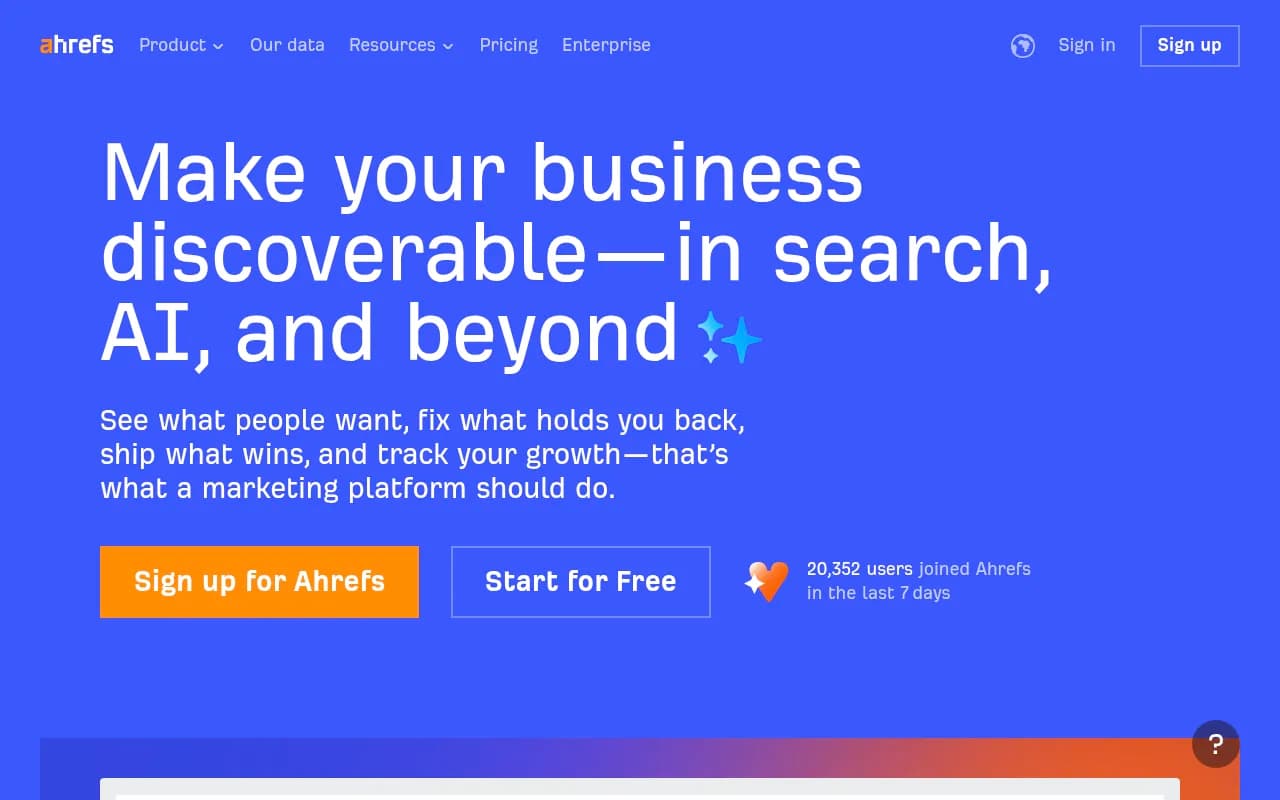
Ahrefs Brand Radar takes a similar approach -- layering AI visibility data onto a platform most SEOs already know.
Here's a quick comparison of the main approaches:
| Approach | Time cost | Data quality | Trend tracking | Actionability |
|---|---|---|---|---|
| Manual spreadsheet | High (2-3 hrs/week) | Good (you read everything) | Manual | Requires interpretation |
| Semrush AI Toolkit | Low | Good | Automated | Limited content guidance |
| Ahrefs Brand Radar | Low | Good | Automated | Limited content guidance |
| Otterly.AI / Peec AI | Low | Basic | Automated | Monitoring only |
| Promptwatch | Low | Comprehensive | Automated | Full action loop |
Lightweight purpose-built trackers
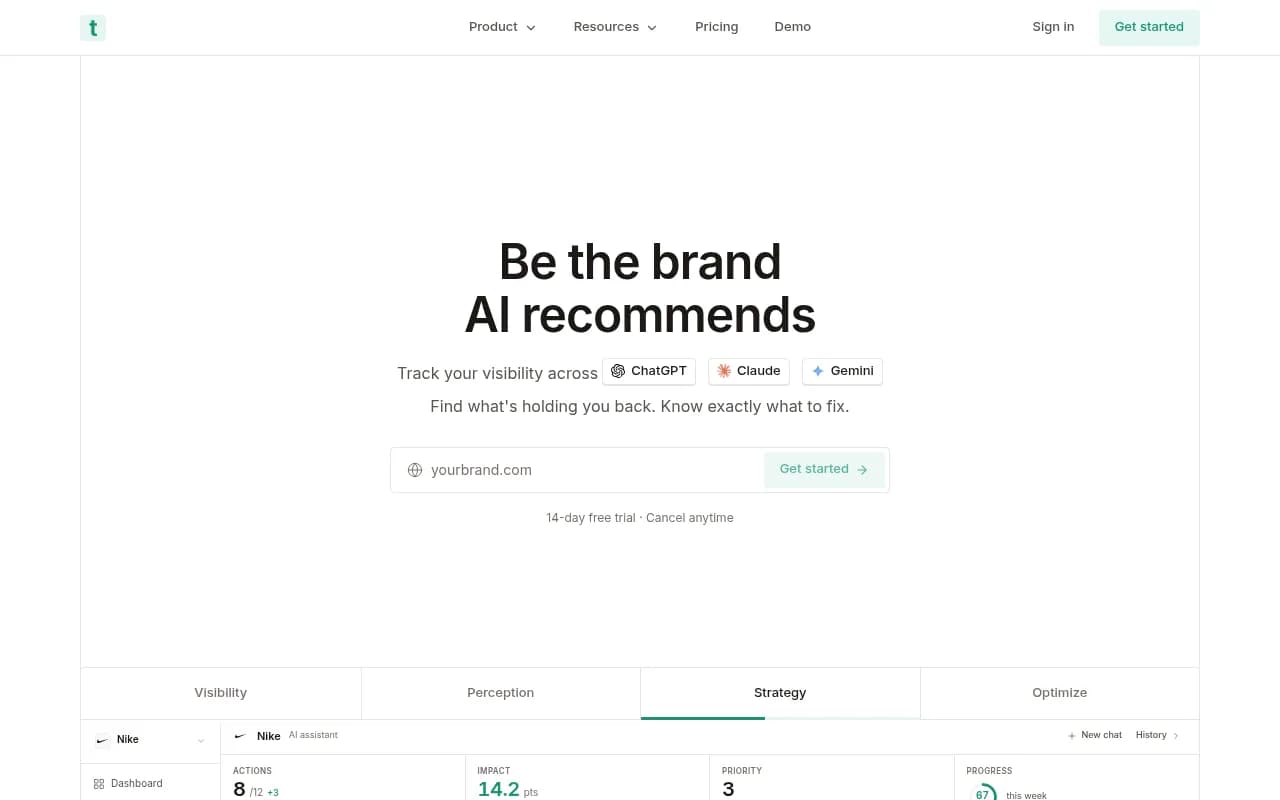
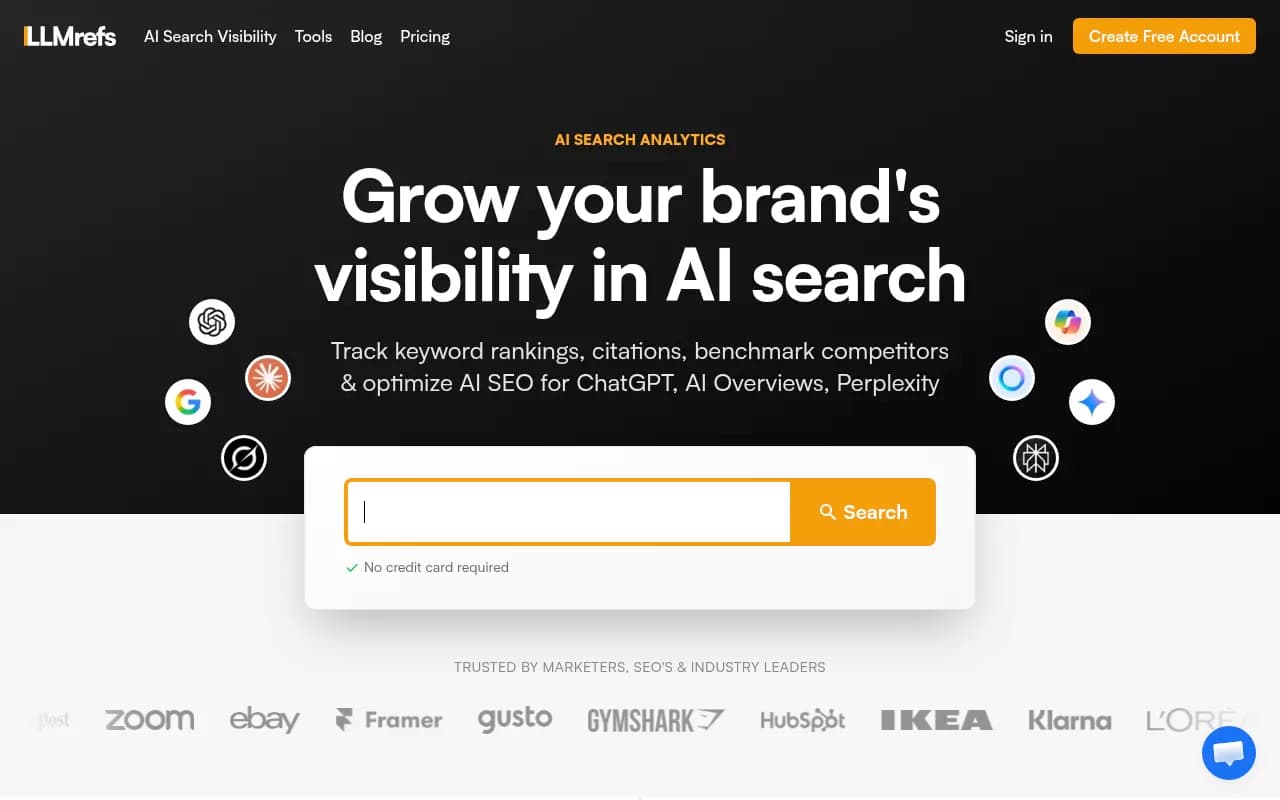
For smaller budgets or simpler needs, tools like Trakkr.ai, LLMrefs, and GPT Rank Tracker offer focused ChatGPT visibility tracking without the full platform overhead.

Step 5: Set up your measurement cadence
Consistency matters more than frequency here. Weekly snapshots beat daily checks that you abandon after two weeks.
A reasonable cadence for most teams:
- Weekly: Run your core prompt set, log mention rates and share of voice
- Monthly: Calculate trends (is mention rate going up or down?), review which pages are being cited, check competitor share of voice
- Quarterly: Review your prompt list (add new ones, retire prompts that are no longer relevant), assess whether your content investments are showing up in the data
One thing to watch: ChatGPT's responses shift when OpenAI updates the model. A drop in visibility in a given week might be a model update, not a content problem. That's why you need at least 4-6 weeks of baseline data before drawing conclusions from any single week's numbers.
Step 6: Track citations, not just mentions
This is where most tracking setups fall short. A brand mention is good. A cited page is better. And knowing which of your pages are being cited -- and which aren't -- is where the real optimization happens.
When ChatGPT cites a URL, it's telling you something: this page answered the question well enough to reference. When it mentions your brand but doesn't cite anything, it's drawing on general training data, which is harder to influence.
Your citation tracking should answer:
- Which pages on your site are being cited, and for which prompts?
- Are there prompts where competitors get cited but you don't?
- Are there pages you'd expect to be cited that never appear?
That last question is the most useful. If you have a detailed comparison page that should be the obvious answer to "X vs Y" but ChatGPT never cites it, something is wrong -- either the page isn't being crawled, the content isn't structured clearly enough, or it's not authoritative enough to be selected.
Tools like Promptwatch show page-level citation data and include crawler logs that tell you whether AI bots are actually visiting your pages. That combination -- seeing which pages get cited and whether they're being crawled -- closes a loop that most monitoring tools leave open.
Step 7: Connect visibility to traffic and revenue
Visibility scores are useful internally. But at some point, someone is going to ask: "Is this actually driving business?"
The honest answer is that attribution from AI search is still messy in 2026. ChatGPT doesn't pass UTM parameters. Users who see your brand mentioned in an AI response might search for you directly, visit your site organically, or do nothing -- and you can't always tell which.
A few approaches that help:
Direct traffic analysis: A sustained increase in direct traffic after you improve AI visibility is a reasonable signal. It's not proof, but it's a pattern worth watching.
Google Search Console: If people see your brand in ChatGPT and then search for you on Google, branded search volume goes up. Track branded query impressions in GSC alongside your AI visibility scores.
Server log analysis: Some platforms (Promptwatch included) analyze server logs to identify traffic coming from AI-referred sessions. This is more reliable than UTM-based attribution for AI sources.
Conversion tagging: If you can identify sessions that came via AI referral (Perplexity passes referral data; ChatGPT is more opaque), tag them and track conversion rates.
Don't wait until attribution is perfect to start tracking. The brands that build measurement infrastructure now will have a meaningful advantage when the data gets cleaner.
Step 8: Act on what you find
Tracking without action is just data collection. The whole point of building a baseline is to identify gaps and close them.
The most common gaps you'll find:
You're invisible for high-value prompts your competitors own. This usually means you don't have content that directly answers those questions. The fix is creating it -- not generic SEO content, but content that's structured to be cited: clear answers, specific claims, citable statistics.
You're mentioned but not cited. Your brand has enough presence to be known, but your pages aren't being selected as sources. This often points to content structure issues -- responses that are too vague, pages that aren't crawlable, or content that doesn't directly answer the question the prompt is asking.
Your citations are concentrated on one or two pages. If 80% of your citations come from your homepage and one blog post, you're fragile. A content strategy that builds topical depth across many pages is more resilient.
Competitors are winning comparison prompts. If someone asks "alternatives to [competitor]" and you're not in the answer, that's a specific content gap. A well-structured comparison or alternatives page can fix this.
Platforms like Promptwatch surface these gaps automatically through Answer Gap Analysis -- showing you exactly which prompts competitors appear in that you don't, so you can prioritize what to create next.
What "progress" actually looks like
Expect slow movement at first. ChatGPT's training data has a lag, and even real-time web search results take time to reflect new content. A realistic timeline:
- Weeks 1-2: Baseline established, gaps identified
- Weeks 3-6: New content published targeting gap prompts
- Weeks 6-10: First signs of new citations appearing
- Months 3-6: Meaningful shift in mention rate and share of voice
The brands that get frustrated and quit usually do so around week 4, right before the results start showing up. Stick with the cadence.
Progress looks like:
- Mention rate trending up over 8-12 weeks
- New pages appearing in citation data
- Share of voice growing relative to competitors
- Branded search volume increasing in GSC
One number going up in isolation doesn't mean much. When multiple signals move together, you're seeing real progress.
Recommended tools by use case
| Use case | Tool to consider |
|---|---|
| Full-stack AI visibility + content optimization | Promptwatch |
| ChatGPT tracking integrated with existing SEO stack | Semrush, Ahrefs Brand Radar |
| Budget-friendly monitoring | Otterly.AI, Peec AI, Trakkr.ai |
| Citation and page-level tracking | Promptwatch, LLMrefs |
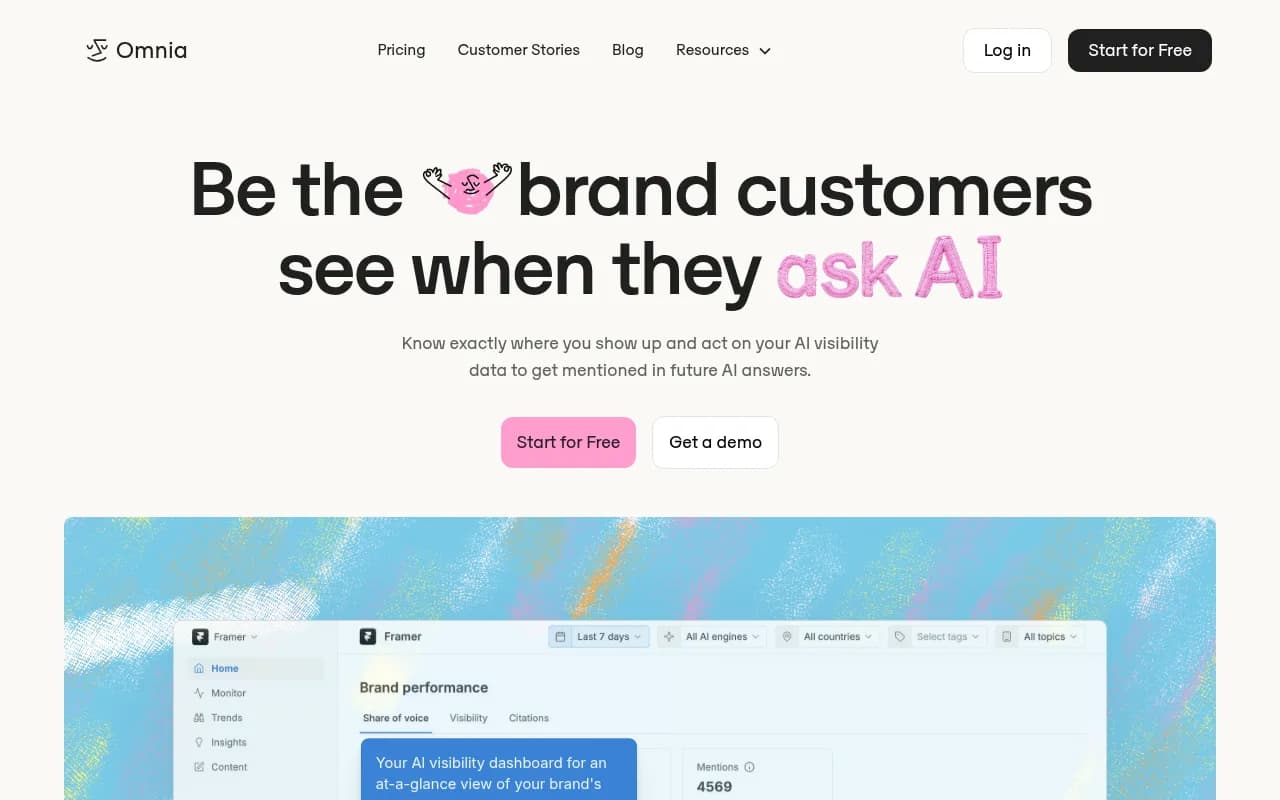
| Competitive share of voice | Promptwatch, Omnia |
| Traffic attribution from AI | Promptwatch (server logs), GSC (branded queries) |

The right tool depends on where you are. If you're just starting out, manual tracking plus a lightweight platform is enough. If you're managing multiple brands or need to report to stakeholders, a more comprehensive platform pays for itself in time saved and data quality.
The bottom line
Tracking ChatGPT brand visibility in 2026 is not optional for brands that care about AI search. The methodology is straightforward: define your prompts, build a baseline, track the right metrics consistently, and act on what you find.
The mistake most teams make is treating this as a monitoring exercise. Monitoring tells you where you stand. Optimization is what changes it. Build the tracking system, but build it in service of action -- because the brands winning in AI search right now aren't the ones with the best dashboards. They're the ones who found their gaps and filled them.