Key takeaways
- No tool moves citations by itself. Tools measure, diagnose, or help you write. The citations move when you publish or fix pages that AI engines actually retrieve.
- A 30-day window is shorter than the half-life of most cited content. Judge a test by whether gains persist, not by day-30 screenshots.
- Sort the 12 tools below by job (tracking, source analysis, content, execution) before comparing prices. A tracker and a writing tool are not competitors.
- AI answers vary between runs. Ask every vendor how many runs per prompt per model they use, or your "score" is partly noise.
- Product pages, landing pages, comparisons and listicles earn most ChatGPT citations. Test changes there first.
What this guide is, and what it isn't
I'm going to be straight about something. A lot of articles with titles like this one are written by a vendor, test a handful of their own clients, and report tidy percentage lifts. One example I read while researching this: a blog that ranked AEO tools by "average citation rate increase" (+34% for the top tool, +18% for a free one) after a 60-day test on three client sites. The numbers might be real. They come from a single vendor-style blog, with unnamed clients and no way to reproduce them, so I'm not going to repeat them as benchmarks.
What I can give you is a test design you can run yourself in 30 days, a sorted list of 12 tools worth putting into it, and the public data on what AI engines tend to cite. That's more useful than someone else's lift figures anyway, because your site, your category and your prompts decide the outcome.
Why a 30-day test is tricky
The obvious problem with a 30-day test is that citations don't behave like rankings. Promptwatch Data tracked every page ChatGPT cited on July 6, 2026 for 90 days and found big differences by content type:
- Landing pages: 78% still cited after 30 days, 69% after 60.
- Docs: 76% after 30 days, 67% after 60.
- Comparisons: 72% after 30 days, 63% after 60.
- Product pages: 55% still cited at day 60, reaching half-life after roughly 74 to 77 days.
- News: half of cited pages gone after 36 days, and almost a quarter never cited again after day 0.
So a 30-day window is shorter than the half-life of nearly everything. That cuts both ways. A citation you earn in week two might look like a win on day 30 and be gone by day 70, especially if the page is news or press content. And a page that looks like a failure at day 30 may simply not have been recrawled yet.
Practical rule: record a day-30 result, then re-check at day 60 and day 90 before you declare a winner. If you can only afford 30 days, weight tools that help you see why a page was or wasn't cited over tools that hand you a score.
The four jobs an AEO tool can do
Most comparison articles lump everything into one list. I find it easier to split tools by the job they do, because that's how you avoid buying three trackers and no way to fix anything.
- Tracking: which prompts mention your brand, in which models, versus which competitors.
- Citation and source analysis: which URLs and third-party sites the models pull from. Tools that skip this layer leave you optimizing pages the model may never retrieve.
- Content: briefs, drafts, refreshes scored for how likely they are to be cited.
- Execution: publishing, technical fixes, crawler access, and checking that the fix worked.
A fifth thing worth wanting is measurement on your own site: do AI crawlers read the page, and does AI traffic show up in analytics? That's easy to forget and it's where most tests fall apart.
The 12 tools I'd put in the test
I picked these to cover all four jobs, not because I think all 12 are equally good. Check pricing on each official page before you commit; plans change often and I haven't verified most of them.
| Tool | Main job | Where it fits in a test |
|---|---|---|
| Promptwatch | Tracking, source analysis, content, execution, crawler logs | The end-to-end option: monitor, trace, publish, measure |
| Profound | Tracking, analysis | Enterprise-leaning monitoring |
| Peec AI | Tracking | Straightforward multi-language prompt tracking |
| Otterly.AI | Tracking | Low-cost monitoring baseline |
| Scrunch | Tracking, analysis | Monitoring with brand-level analysis |
| AthenaHQ | Tracking, recommendations | Monitoring across several engines |
| Semrush | Tracking inside an SEO suite | Good if you already live in Semrush |
| Ahrefs Brand Radar | Tracking, citations | Good if you already live in Ahrefs |
| HubSpot AEO Grader | One-off scoring | Free baseline snapshot |
| SE Ranking (SE Visible) | Tracking inside an SEO suite | Budget-friendly all-in-one |
| Surfer SEO | Content scoring | Content job, not a citation tracker |
| AirOps | Content engineering | Workflow and content production |
Tracking-first tools
Promptwatch sits in a slightly different place from the rest because it covers more than tracking: it monitors ChatGPT, Gemini, Perplexity, Claude, Google AI Overviews and others from the real interfaces, traces which pages and third-party sources get cited, then lets you act on gaps with the Action Board and Content Agent. It also has IP-verified AI crawler logs and visitor analytics, which matter for a test like this because they show whether a bot actually read the page you changed. Business is the first plan with the automated Content Agent, so if that's the part you want to test, budget for $579/mo (Essential is $95/mo, Professional $245/mo; confirm at promptwatch.com/pricing). There's a 7-day free trial on monthly billing and a free AI visibility report if you want a baseline first.

Profound is the name you'll hear most in enterprise conversations.

Peec AI and Otterly.AI are the usual low-cost starting points. Both are mainly trackers, so pair them with something that handles fixes.


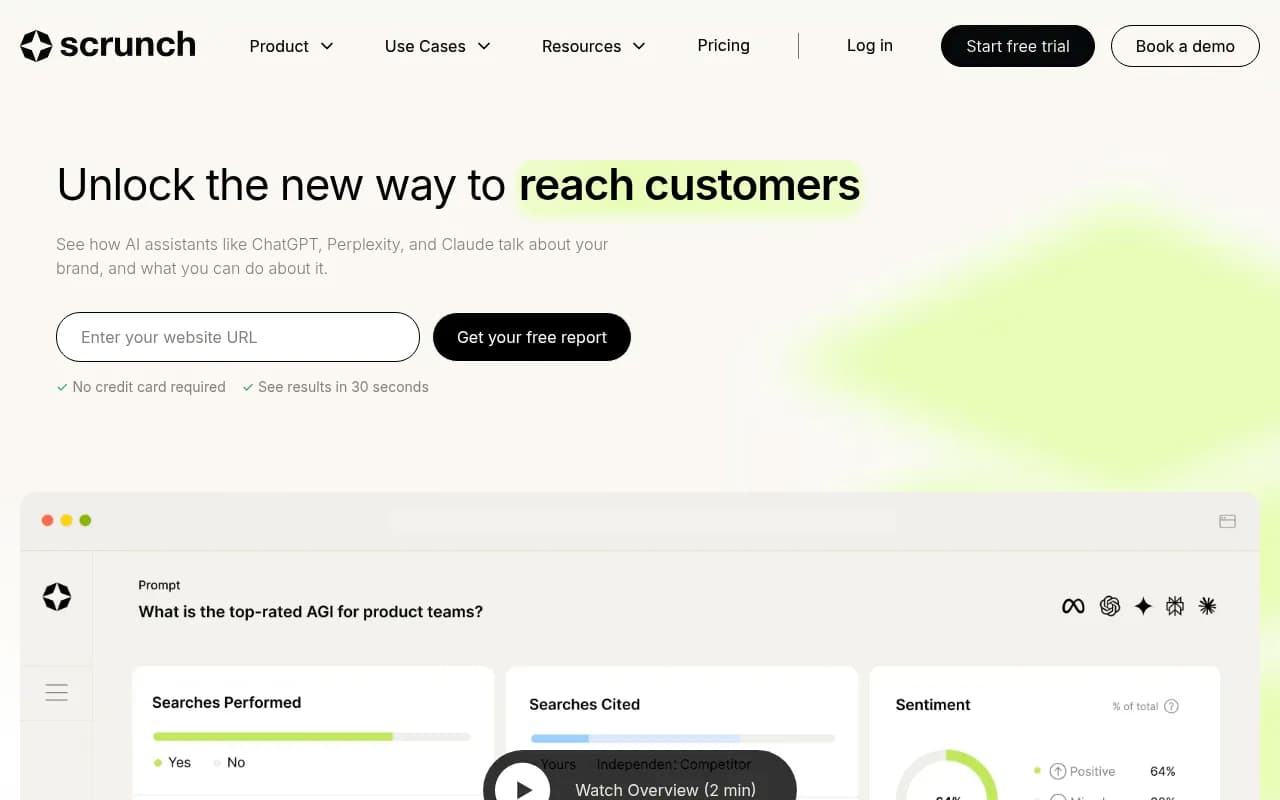
Scrunch and AthenaHQ round out the monitoring-focused group.

Suites that added AI tracking
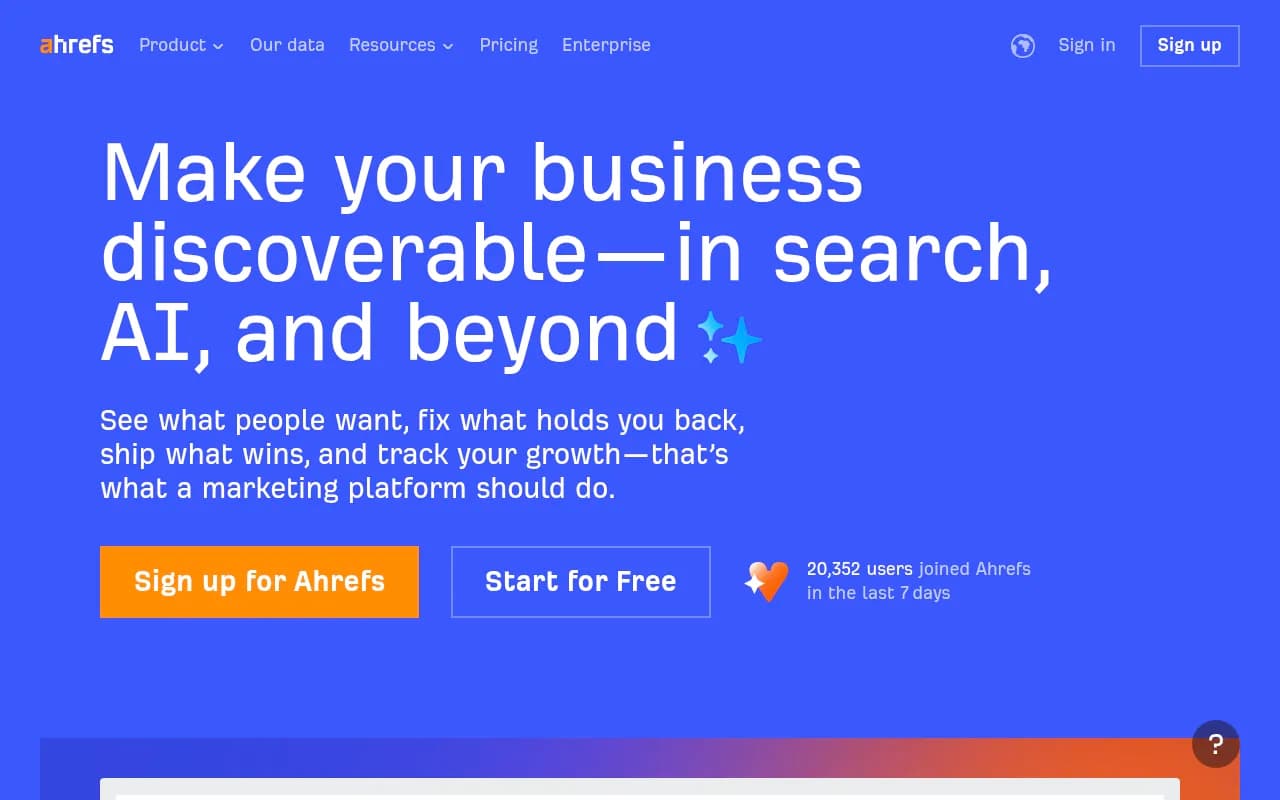
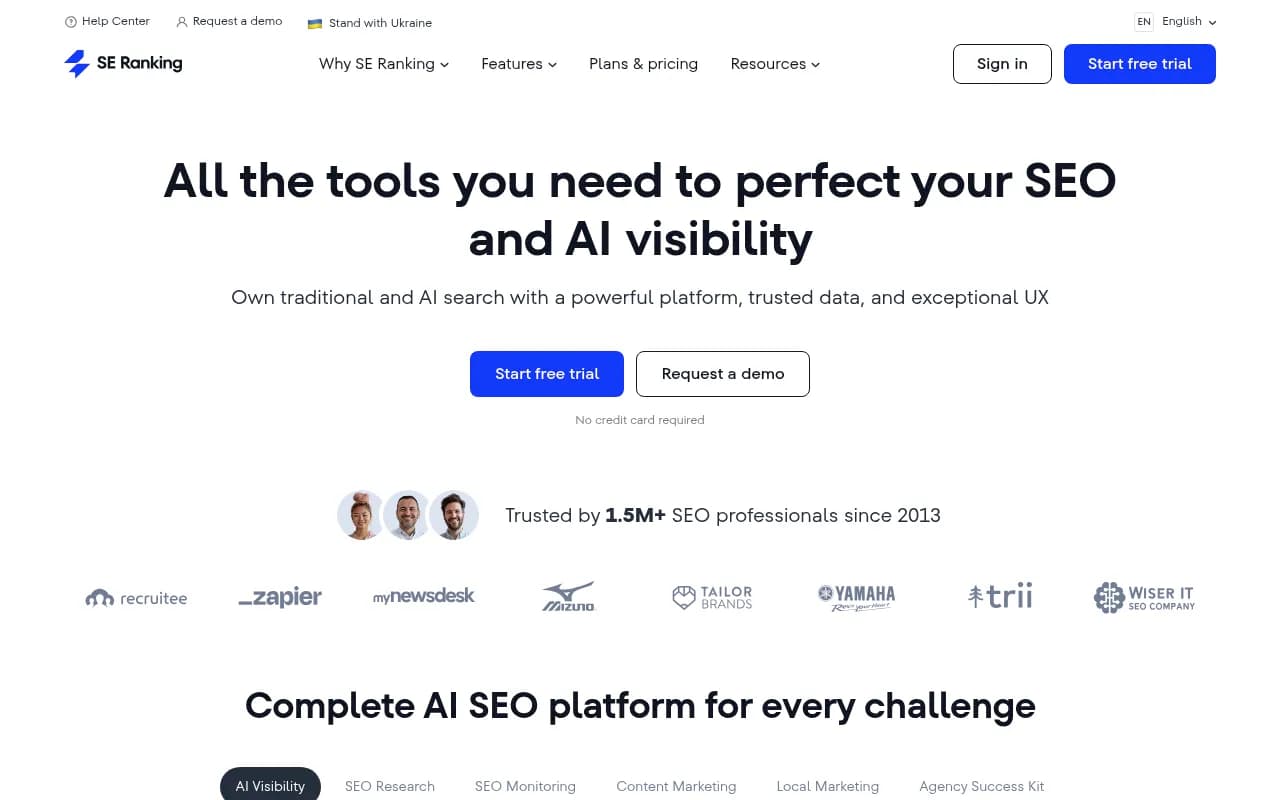
Semrush, Ahrefs Brand Radar and SE Ranking are worth testing if the team already pays for them. The tradeoff is depth: prompt sets can be fixed and the AI-specific data thinner than in dedicated platforms. One comparison I saw lists Ahrefs at $129/mo with Brand Radar standalone at $199/mo, but that came from a vendor-written roundup, so verify it.
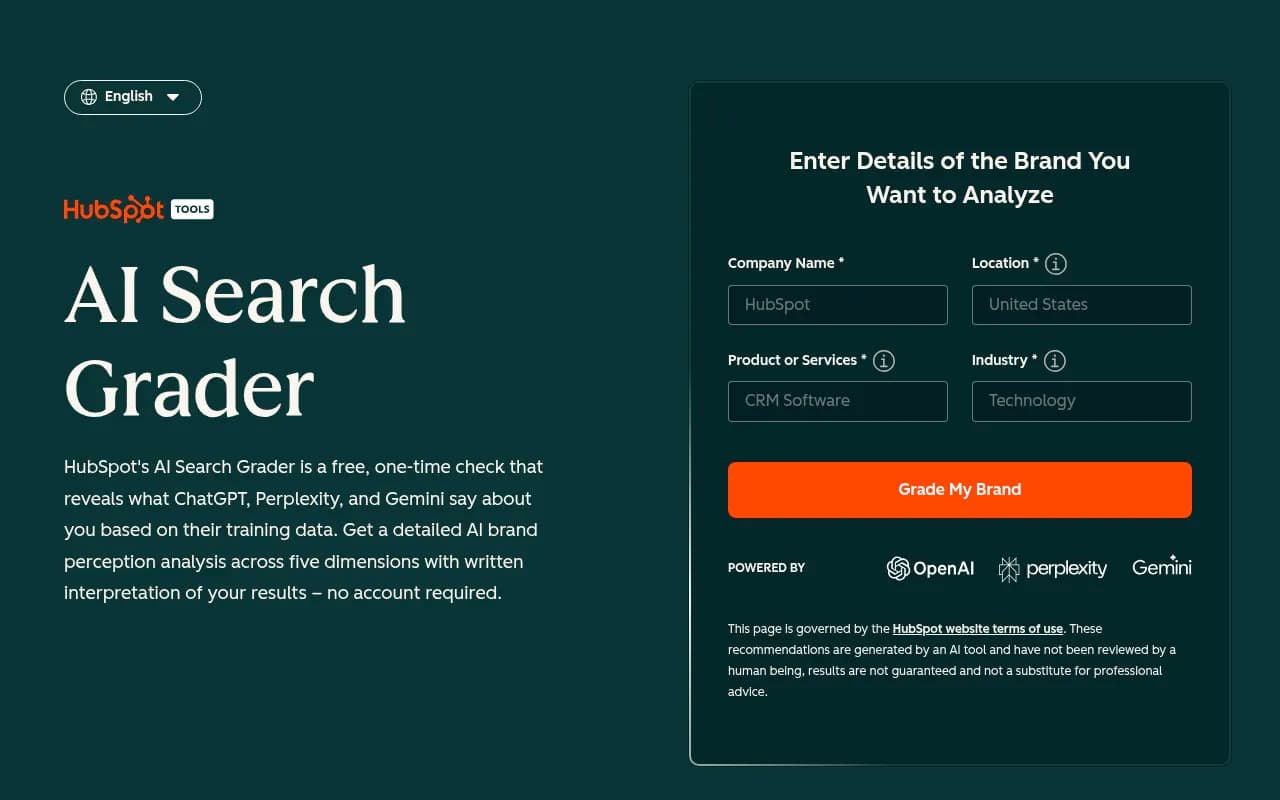
HubSpot's AEO Grader is a free one-off check, handy for a day-zero baseline. HubSpot's own AEO tooling scores brands out of 100 across weighted dimensions, per a write-up by the HubSpot partner On The Fuze, with Sentiment carrying the biggest weight.
Content tools
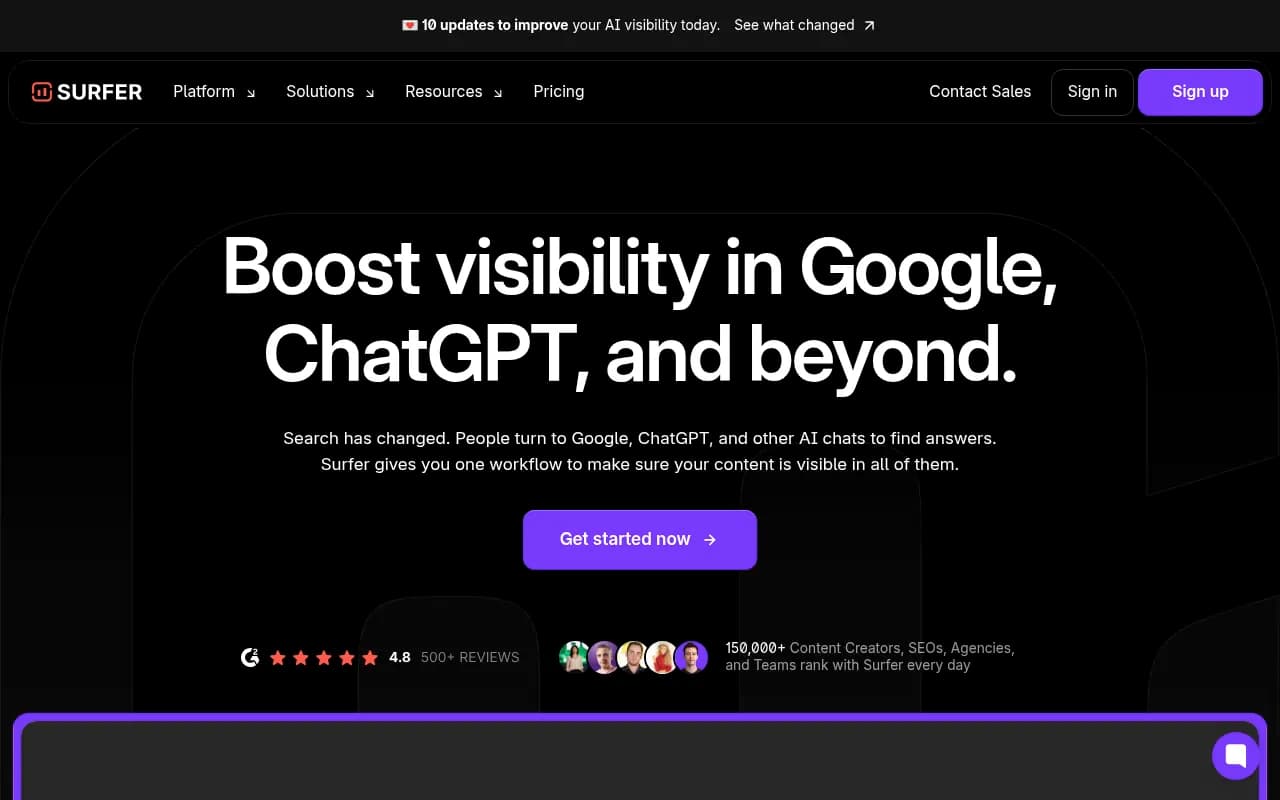
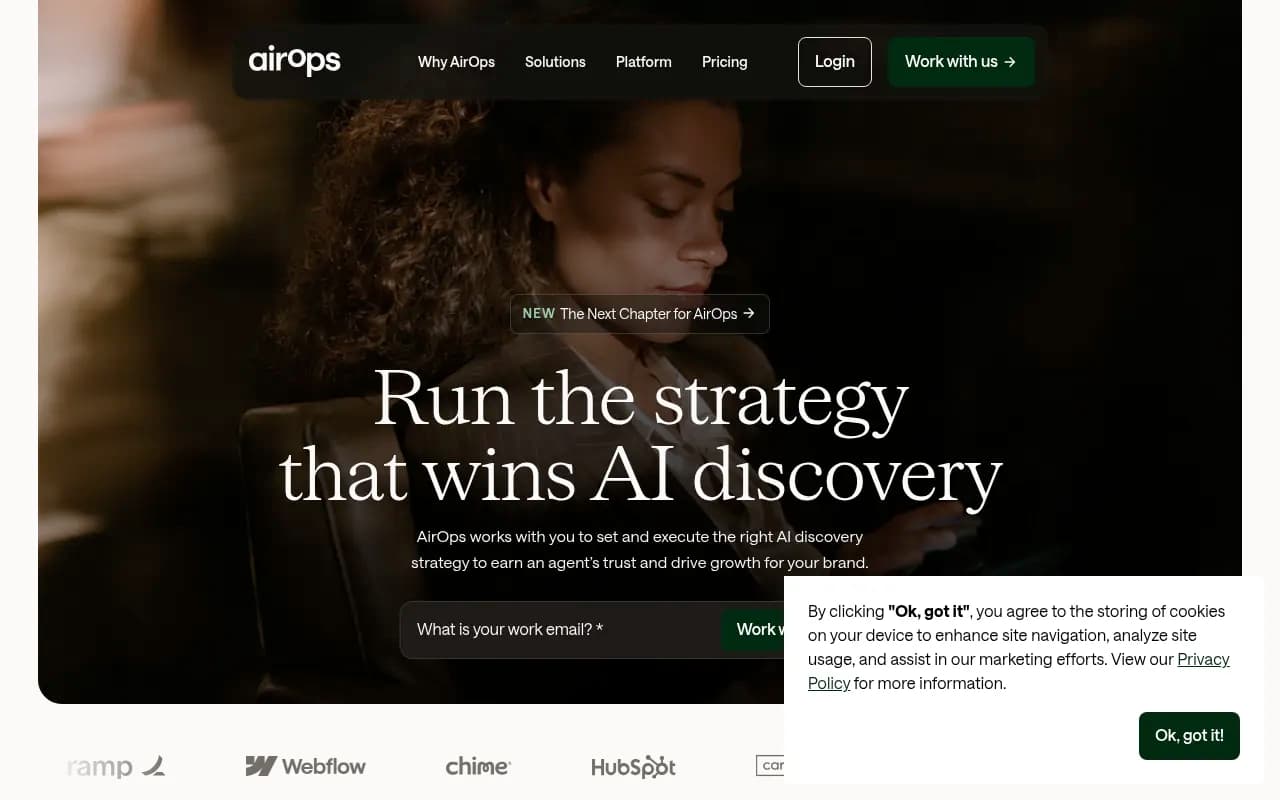
Surfer SEO and AirOps are different animals. Surfer scores on-page content; AirOps builds content workflows. Neither replaces a tracker, and a content score is not a citation. Include them if your test question is "does a rewrite get cited more?" rather than "where are we invisible?"
If you want to see more options in the category, the GEO software directory at bestgeosoftware.com lists a lot more than 12.
Set up the test so the result means something
This is the part that decides whether you learn anything.
Step 1: freeze a prompt set
Pick 30 to 50 prompts your buyers really ask. Mix commercial ("best CRM for small businesses"), informational ("how to migrate from X to Y") and branded ("is Brand any good"). Keep the set fixed for the full 30 days. Changing prompts mid-test is the fastest way to fool yourself.
Step 2: record a baseline for a week
Run the prompts for 7 days before you change anything. Because AI answers vary between runs, a single check proves little. A Medium post titled "Your AEO Score Is a Coin Flip" makes this point well: ask any vendor how many runs per prompt per model sit behind a score. If the answer is one, treat the number as directional at best.
Step 3: split pages into changed and control
Take 10 to 20 pages you plan to update and leave a similar set untouched. If citations rise everywhere, that's a model update, not your work. This is the single most overlooked step. For reference, Promptwatch Data recorded a drop in average citations per ChatGPT response around the GPT-5.3 rollout on March 4, 2026, which would have swamped any small tool-driven change that month.
Step 4: change one thing per page
Rewrite the answer block. Or add an FAQ section. Or add a comparison table. Not all three. If you do everything at once you won't know which recommendation mattered, and you'll just credit whichever tool you like.
Step 5: check crawler access first
Before blaming content, confirm AI bots can read the page. Crawler logs, robots.txt rules and rendering problems account for a surprising number of "nothing changed" results. Promptwatch's AI crawler logs and the free Agentic Readiness Check cover this; your CDN logs work too if you're comfortable filtering them.
Step 6: log three numbers
- Citation rate: share of tracked prompts where your domain appears as a source.
- Mention rate: share where your brand is named, with or without a link. These differ, and the citations vs mentions guide in the Promptwatch Academy explains why.
- Persistence: of the pages cited at day 30, how many are still cited at day 60.
Time to first citation is a nice extra, but with run-to-run variance it's noisy.
What the citation data says to test first
You get the most from a short test by changing the pages models already like to cite. Promptwatch Data's content type report (Sep 28 to Oct 4, 2026) breaks down ChatGPT citations like this:
| Content type | Share of ChatGPT citations |
|---|---|
| Product pages | 22.4% |
| Landing pages | 16.8% |
| Listicles | 13.6% |
| How-to guides | 8.7% |
| Documentation | 7.5% |
| Comparisons | 5.9% |
| News | 5.7% |
| FAQ pages | 3.3% |
| Reviews | 1.7% |
For commercial prompts, product pages, landing pages, listicles and comparisons make up almost 70% of citations. For branded prompts, reviews jump to 5.6%, more than three times their overall share. So a reasonable first experiment for a B2B site is: tighten your product and pricing pages, publish one honest comparison page per top competitor, and see whether those get cited.
A related finding: almost half of ChatGPT responses cite 10 or more unique domains. That's a lot of slots, but also a lot of competition from third-party sites, which is why the "external sources" lesson matters.
The mistake that wastes the most time
Teams rewrite their own pages for weeks, then check citations and nothing changed. The On The Fuze HubSpot write-up describes exactly this: AI was never citing their site in the first place. The answers were being built from review sites, roundups and forum threads.
This is why the source analysis job matters more than the dashboard score. Before you edit anything, look at which domains appear in the answers for your prompts. If the sources are G2, a few listicles and a Reddit thread, your first move is getting listed or mentioned there, not polishing your blog. One caution: social citations vary by engine. Promptwatch Data found ChatGPT drew 0.46% of its citations from social platforms between Sep 28 and Oct 4, 2026, while Google AI Overviews drew 12.2%. A Reddit-heavy plan helps in one place and barely registers in another.
Interpreting your results at day 30
I'd sort outcomes into four buckets.
- Citations up on changed pages, flat on controls, bots confirmed crawling: the change probably worked. Re-check at day 60.
- Citations up everywhere: probably a model or index change. Don't credit the tool.
- No change, bots not crawling: you have an access problem. Fix that before testing content.
- No change, bots crawling, page not cited: a content or authority problem. Look at who is cited instead and what format they use.
One more thing I'd add. Check traffic, not just citations. Similarweb data, as quoted by the Cognizo blog, puts the share of US ChatGPT prompts carrying citations at about 1.6% in June 2025 versus roughly 6.8% by May 2026. I haven't verified that at the source, but even if it's close, a citation without a click is an impression, and you want to know whether any of it turns into visits. Visitor analytics or a UTM-tagged landing page will show that. Note that ChatGPT stopped sending a referrer on October 8, 2026, so referral reports undercount unless you tag or use a tool that handles it.
Which tools I'd pick for which situation
| Your situation | Sensible starting point |
|---|---|
| Want a free baseline today | HubSpot AEO Grader or Promptwatch's free AI visibility report |
| Tight budget, just need to see mentions | Otterly.AI or Peec AI |
| Already in an SEO suite | Semrush, Ahrefs Brand Radar or SE Ranking add-on |
| Need to find and fix gaps, not just report | Promptwatch |
| Content-heavy team that needs better drafts | Surfer SEO or AirOps, paired with a tracker |
| Enterprise procurement, wide monitoring | Profound, Scrunch or Promptwatch Enterprise |
If you want to compare the platforms head to head, Promptwatch publishes a 2026 side-by-side comparison of GEO platforms. It's vendor-made, so read it with that in mind, and cross-check against the other reviews you trust.
A 30-day schedule you can copy
- Days 1 to 7: freeze prompts, baseline, crawler check, pick changed and control pages.
- Days 8 to 14: make one change per page. Publish. Request indexing where it applies.
- Days 15 to 25: monitor. Don't touch anything. Resist the urge.
- Days 26 to 30: compare changed against control, log citation rate, mention rate and traffic.
- Days 60 and 90: re-check persistence. This is the number that tells you what the work was worth.
The honest bottom line
I can't tell you which of these 12 tools will win on your site, and anyone who gives you a clean ranking by percent lift after 30 days is selling something. What I can say: monitoring is cheap and increasingly commoditized, so the tools worth paying for are the ones that show why you're not cited and help you fix it. Run the control-group test above on two or three of them, keep what shows persistent gains at day 60, and cancel the rest.