Key takeaways
- AI search visibility tracking is now a separate discipline from traditional SEO -- you need to monitor brand mentions, citations, and share of voice across platforms like ChatGPT, Perplexity, Gemini, and Claude
- You can start manually with a spreadsheet and 10-20 target prompts, then graduate to automated tools as your needs grow
- The most important metrics are mention rate, citation rate, sentiment, and share of voice vs competitors
- Monitoring alone isn't enough -- the brands winning in AI search are the ones using their visibility data to identify content gaps and fill them
- Dedicated GEO platforms like Promptwatch go beyond tracking to help you actually improve your visibility with content gap analysis and AI-native content generation
The way buyers find products and services has shifted faster than most marketing teams have adapted. Someone asks ChatGPT "what's the best project management tool for remote teams" and gets a direct answer with three brand recommendations. If your brand isn't in that answer, you've lost a high-intent prospect before they ever opened a browser tab.
Traditional rank tracking doesn't capture this. A #3 ranking on Google tells you nothing about whether ChatGPT mentions you at all. That's the gap this guide addresses.
Here's how to build a brand visibility tracker for AI search from scratch -- whether you're starting with a spreadsheet and a free ChatGPT account, or ready to invest in a proper platform.
Step 1: Define what you're actually tracking
Before touching any tool, get clear on the four things you want to measure:
Brand mentions -- Does the AI name your brand when answering relevant questions? This is the baseline. No mention means no visibility.
Citations -- Does the AI link to or reference your website as a source? Mentions and citations are different. A mention gets you in the conversation; a citation builds authority and can drive traffic. Research from AirOps found that brands earning both a mention and a citation in AI-generated answers are up to 40% more likely to maintain ongoing visibility.
Share of voice -- Out of all the times an AI answers a relevant question, what percentage include your brand vs competitors? This is the metric that tells you whether you're winning or losing ground.
Sentiment -- When the AI does mention you, is it positive, neutral, or negative? An AI that says "Brand X is often criticized for poor customer support" is worse than no mention at all.
Write these four metrics down. They're your north star for everything that follows.
Step 2: Build your prompt list
Your prompt list is the foundation of your tracker. These are the questions your potential customers are actually asking AI systems -- and the ones you want to appear in.
Start with two categories:
Category prompts -- broad questions about your industry or product type. Examples: "What's the best email marketing tool for small businesses?" or "How do I choose a CRM for a SaaS company?"
Comparison prompts -- questions that pit brands against each other. Examples: "ChatGPT vs Perplexity for research" or "[Competitor A] vs [Competitor B] -- which is better?"
A good starting list has 10-20 prompts. More than that becomes hard to manage manually. If you're using an automated tool, you can scale to 50-150+ prompts without much extra effort.
A few tips for building your list:
- Talk to your sales team. What questions do prospects ask before buying? Those are your prompts.
- Look at your existing keyword research. High-intent keywords often map directly to AI prompts.
- Check Reddit and Quora for how real people phrase questions in your category.
- Ask ChatGPT itself: "What questions would someone ask when researching [your product category]?"
Step 3: Choose your tracking method
You have two real options: manual or automated. Both work. The right choice depends on your budget and how seriously you're taking this.
The manual approach
This costs nothing but time. You need a spreadsheet, free accounts on the major AI platforms, and about 30-60 minutes per week.
Set up a Google Sheet with these columns:
| Date | Prompt | AI Platform | Brand Mentioned? | Citation? | Sentiment | Competitors Mentioned | Notes |
|---|---|---|---|---|---|---|---|
| 2026-03-11 | Best CRM for startups | ChatGPT | Yes | No | Positive | HubSpot, Salesforce | Listed 3rd |
| 2026-03-11 | Best CRM for startups | Perplexity | No | No | N/A | HubSpot, Pipedrive | Not mentioned |
Run each prompt across ChatGPT, Perplexity, Claude, and Gemini. Log the results. Do this weekly. After a month, you'll have enough data to spot patterns -- which prompts you're winning, which platforms ignore you, which competitors keep showing up.
The manual approach has one underrated benefit: you learn a lot by actually reading AI responses. You start to notice what kind of content gets cited, what language AI uses to describe your category, and where the gaps in your own content are.
The downside is obvious. It doesn't scale. Running 20 prompts across 4 platforms weekly is 80 manual checks. At 50 prompts, it becomes a part-time job.
The automated approach
Dedicated AI visibility tools handle the querying, logging, and analysis automatically. You set up your prompts once, and the platform checks them on a schedule, tracks changes over time, and surfaces insights.
The market for these tools has grown fast. Here's a quick overview of the main options across different use cases and budgets:
| Tool | Best for | Key strength | AI models covered |
|---|---|---|---|
| Promptwatch | Full-cycle optimization | Content gap analysis + AI writing agent | 10+ models |
| Profound | Mid-market brands | Clean UI, solid tracking | 6+ models |
| Otterly.AI | Budget monitoring | Affordable entry point | 4-5 models |
| Peec AI | Multi-language | International tracking | 5+ models |
| AthenaHQ | Monitoring focus | 8+ AI engines | 8+ models |
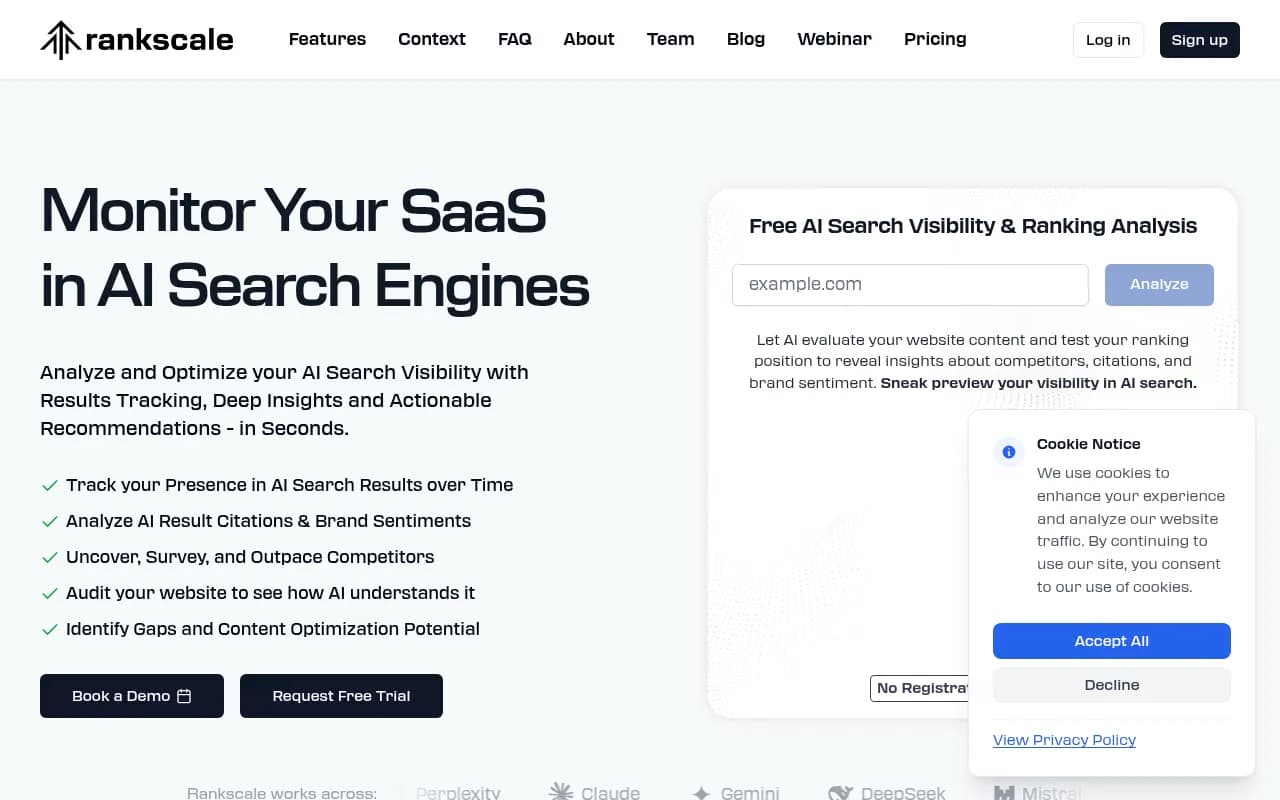
| Rankscale | Rank tracking | AI search rankings | 5+ models |
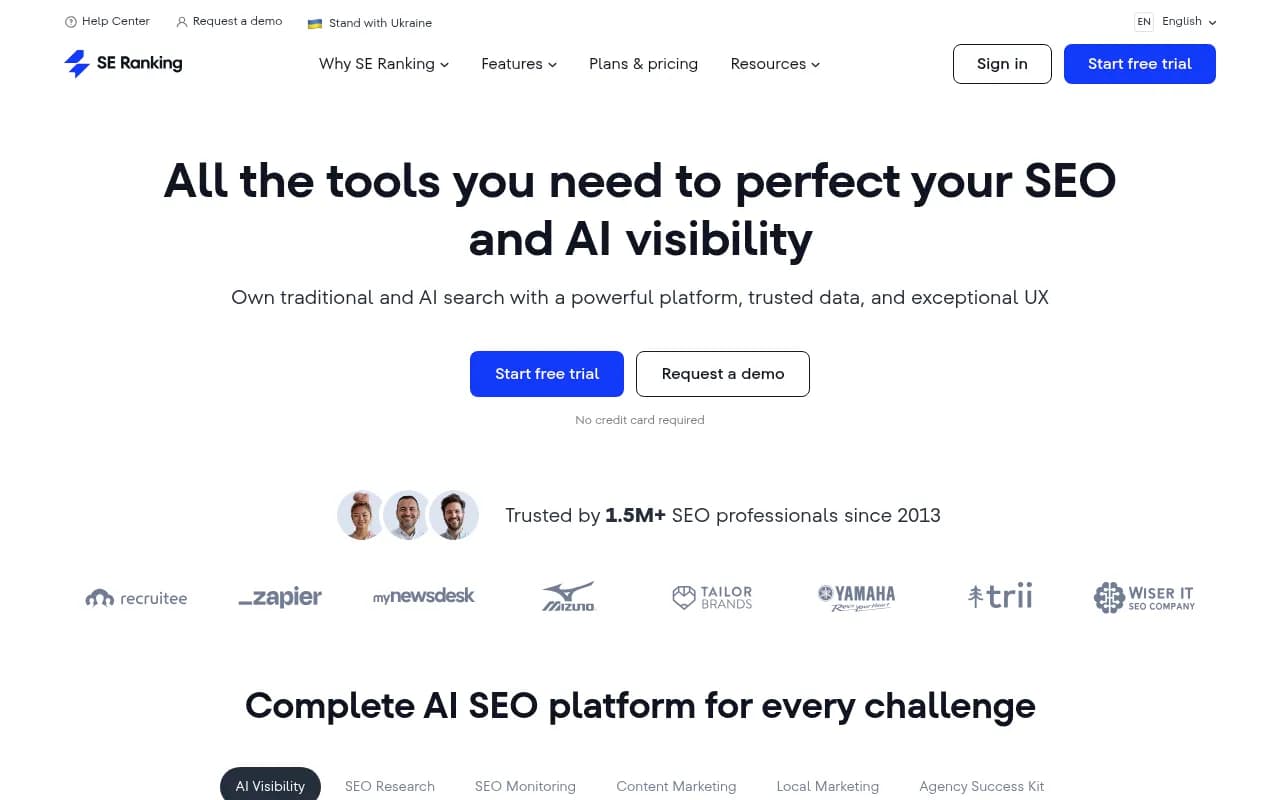
| SE Ranking | SEO + AI combo | All-in-one SEO platform | 4+ models |





Step 4: Set up your baseline measurement
Before you do anything to improve your visibility, you need to know where you stand. This is your baseline.
Run your full prompt list across all the AI platforms you're tracking. For each prompt, record:
- Whether your brand was mentioned (yes/no)
- Your position in the response (1st, 2nd, 3rd, or not mentioned)
- Whether your website was cited as a source
- Which competitors appeared
Calculate your initial mention rate: (number of prompts where you were mentioned) / (total prompts) x 100. If you ran 20 prompts and appeared in 6, your mention rate is 30%.
Do the same for competitors. This gives you your starting share of voice.
These numbers will feel either reassuring or alarming. Either way, they're useful. You now have a real benchmark to measure progress against -- not a gut feeling.
Step 5: Identify your content gaps
Here's where most brands stop. They set up tracking, see their visibility score, and then... wait. That's a mistake.
Your visibility data is most valuable as a diagnostic tool. Low visibility on a specific prompt means one of two things: either AI models don't know about your brand in that context, or they don't have good content from you to cite.
The fix is usually content. If ChatGPT consistently recommends three competitors when someone asks "best [your category] for [your use case]" and you're not in the list, look at what those competitors have published. They probably have dedicated landing pages, comparison articles, or detailed guides on exactly that use case.
This is where the gap between monitoring tools and optimization platforms becomes real. A monitoring-only tool shows you the problem. An optimization platform like Promptwatch shows you the problem and helps you fix it -- with Answer Gap Analysis that identifies exactly which prompts competitors are visible for but you're not, and a built-in AI writing agent that generates content designed to get cited.
For teams doing this manually, the process is:
- Take your lowest-performing prompts
- Run those prompts and read the full AI responses carefully
- Note which sources the AI cites (often visible in Perplexity, sometimes in ChatGPT)
- Check whether you have content that addresses those topics
- Create or update content to fill the gaps
Step 6: Choose which AI platforms to prioritize
You don't need to track every AI platform equally. Different platforms matter more for different audiences.
ChatGPT has the largest user base and is the default for most consumer and B2B queries. It should be in every tracker.
Perplexity is particularly strong for research-heavy queries and shows its sources explicitly, making it easier to understand why certain brands get cited. If your audience skews toward researchers, analysts, or technical buyers, Perplexity matters a lot.
Google AI Overviews and Google AI Mode affect anyone still using Google -- which is still most of the world. These are especially important for brands that rely on organic search traffic.
Claude tends to be used by more technical and enterprise audiences. Gemini is deeply integrated into Google Workspace, making it relevant for B2B brands.
A practical starting point: track ChatGPT, Perplexity, and Google AI Overviews. Add Claude and Gemini once you have the first three under control.
Step 7: Build your reporting cadence
Visibility data is only useful if you review it regularly and act on it. Set up a simple reporting cadence:
Weekly: Check for any sharp drops in mention rate. If a prompt you were winning suddenly shows zero mentions, something changed -- either the AI model updated, a competitor published new content, or your site had a technical issue.
Monthly: Review your share of voice trends. Are you gaining or losing ground vs competitors? Which prompts improved? Which got worse?
Quarterly: Audit your prompt list. Add new prompts that reflect how your category is evolving. Remove prompts that are no longer relevant. Review your content gap analysis and plan new content.
If you're using an automated platform, most of this happens in the dashboard. If you're tracking manually, a monthly review meeting with a shared spreadsheet is enough to start.
Step 8: Track AI crawler activity on your site
This is a step most people skip, and it's a mistake.
AI models don't just use their training data -- they actively crawl the web to find fresh content to cite. ChatGPT, Perplexity, and Claude all have their own crawlers. If those crawlers can't access your site, or if they're hitting errors on your key pages, your content won't get cited no matter how good it is.
You can check your server logs manually to see which AI crawlers are visiting your site and which pages they're reading. Look for user agents like:
GPTBot(OpenAI/ChatGPT)ClaudeBot(Anthropic)PerplexityBot(Perplexity)Google-Extended(Google AI)
If you're seeing crawl errors, 404s, or slow response times on your most important pages, fix those first. No amount of content optimization helps if the crawler can't read the page.
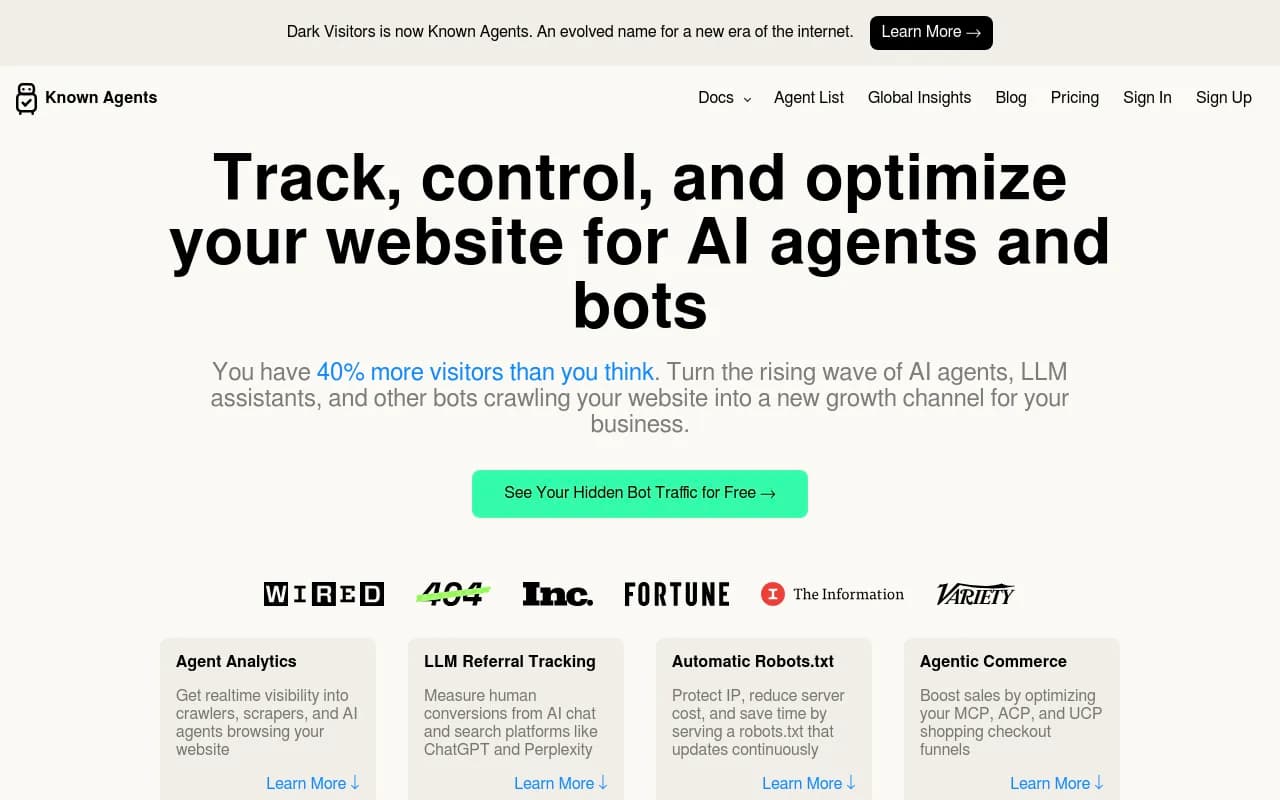
Tools like DarkVisitors can help you understand which AI bots are visiting your site.
Promptwatch's Professional and Business plans include AI Crawler Logs that show exactly which pages each AI crawler reads, how often they return, and any errors they encounter -- which makes this step much less manual.
Step 9: Connect visibility to revenue
The final step is closing the loop between AI visibility and business outcomes. This is harder than it sounds because most AI platforms don't pass referral data in a way that's easy to attribute.
There are three approaches:
UTM tracking via citations: If an AI model cites a specific URL on your site, some of that traffic will show up in Google Analytics with a referral from the AI platform's domain (e.g., perplexity.ai). Set up segments in GA4 to track this.
Direct traffic analysis: A lot of AI-referred traffic shows up as direct traffic because users type your URL after seeing it in an AI response. Look for spikes in direct traffic that correlate with changes in your AI visibility scores.
Server log analysis: The most accurate method. Your server logs capture every visit, including those that GA4 misses due to ad blockers or JavaScript issues.
The goal is to show that improvements in AI visibility lead to measurable increases in traffic and pipeline. Once you can make that connection, the case for investing more in GEO becomes straightforward.
Putting it all together
Here's the full setup checklist:
- Define your four core metrics: mentions, citations, share of voice, sentiment
- Build a prompt list of 10-20 target queries
- Choose manual tracking (spreadsheet) or an automated tool
- Run your baseline measurement across ChatGPT, Perplexity, Google AI Overviews, and Claude
- Calculate your starting mention rate and share of voice vs competitors
- Identify content gaps from low-performing prompts
- Check AI crawler access to your key pages
- Set up weekly/monthly/quarterly review cadence
- Connect visibility data to traffic and revenue metrics
The manual version of this takes about 3-4 hours to set up and 30-60 minutes per week to maintain. It's a legitimate starting point. But if you're serious about competing in AI search, the manual approach will hit a ceiling quickly -- you can't track 50+ prompts across 10 AI platforms by hand.
That's when a platform like Promptwatch makes sense. It handles the monitoring, surfaces the content gaps, generates the content, and tracks whether that content actually gets cited. The loop from "I'm invisible for this prompt" to "I'm now being cited here" becomes something you can actually manage and measure.
The brands that will dominate AI search over the next two years aren't the ones with the biggest budgets -- they're the ones that started tracking early, identified their gaps, and published content that AI models actually want to cite. That process starts with a spreadsheet and a list of prompts. Start there, and build from it.