Summary
- Find the gaps competitors miss: Use answer gap analysis to identify prompts where competitors are visible but you're not -- these are your entry points into the answer space
- Create content engineered for AI citation: Generic SEO content won't cut it. You need articles that directly answer the questions AI models are looking for, structured the way they want to consume it
- Build authority signals AI models trust: ChatGPT and other LLMs rely on external validation -- backlinks, Reddit discussions, YouTube mentions, and citations from trusted domains
- Track what's working and iterate fast: Monitor which pages get cited, by which models, and for which prompts. Double down on what works and kill what doesn't
- Leverage timing and freshness: AI models favor recent, updated content. Refresh existing pages and publish new angles on trending topics to break through
The brutal reality of ranking in ChatGPT
You search for your brand in ChatGPT. Nothing. You try variations of your product category. Still nothing. Meanwhile, your competitors show up in every answer -- recommended, cited, linked.
This is the new battleground. ChatGPT gets 700 million users per week. It's the 5th most visited site on the planet. When people ask it for product recommendations, service comparisons, or advice in your niche, you either exist in that answer or you don't.
The problem: most markets already have established players dominating the answer space. They've been cited thousands of times. Their content is embedded in the training data. Their brands are associated with the category.
Breaking in feels impossible. It's not. But it requires a different approach than traditional SEO.
How ChatGPT decides what to cite (and why you're invisible)
ChatGPT doesn't rank content the way Google does. There's no PageRank algorithm. No keyword density calculations. No backlink counting in the traditional sense.
Instead, ChatGPT uses a retrieval system that pulls from:
- Training data: The corpus of text the model was trained on (mostly pre-2023 for GPT-4, slightly newer for GPT-4o)
- Web search: Real-time searches via Bing when SearchGPT or browsing mode is enabled
- Citation patterns: Which sources other trusted sources cite and reference
- Recency signals: Timestamps, update dates, and freshness indicators
- Authority markers: Domain reputation, author credentials, external validation
If competitors dominate, it's because they've built up signals across all five dimensions. Your content might be good, but if it lacks these signals, the retrieval system never surfaces it.
The gap isn't quality. It's discoverability and trust.
Step 1: Find the cracks in competitor coverage
Competitors can't be everywhere. Even dominant players have gaps -- prompts they don't rank for, angles they haven't covered, questions they've ignored.
Your first move is to map those gaps.
Run answer gap analysis
Answer gap analysis shows you which prompts competitors are visible for but you're not. It's the fastest way to find entry points.
Tools like Promptwatch do this automatically. You input your domain and your competitors' domains, and it shows you:

- Which prompts your competitors rank for
- Which prompts you're missing entirely
- The specific content angles and topics AI models want but can't find on your site
- Prompt volumes and difficulty scores so you can prioritize high-value, winnable queries
This isn't guesswork. It's data from 880M+ citations analyzed across ChatGPT, Claude, Perplexity, Gemini, and other AI models.
Example: A SaaS company selling project management software might discover competitors rank for "best project management tools for remote teams" but not "project management tools for construction companies." That's a gap. Build content for it.
Look for query fan-outs
One prompt branches into dozens of sub-queries. If competitors own the parent prompt ("best CRM software"), they might not own the child prompts ("best CRM for real estate agents," "best CRM with WhatsApp integration," "best CRM under $50/month").
Query fan-outs show you these branches. Target the specific, narrow prompts where competition is thinner.
Check Reddit and YouTube gaps
AI models heavily cite Reddit threads and YouTube videos. If competitors aren't active on these platforms, you have an opening.
Search Reddit for your category keywords. Look for threads with high engagement but no clear winner. Participate authentically -- answer questions, share insights, link to your content when relevant.
Do the same on YouTube. If there are popular videos in your niche but none from your competitors, create one. AI models cite video transcripts.
Step 2: Create content that AI models actually cite
Generic blog posts won't break through. AI models cite content that directly answers the question, provides clear structure, and includes external validation.
Here's what works:
Answer-first formatting
AI models prefer content that delivers the answer immediately, then expands with details.
Bad structure:
Introduction (3 paragraphs)
Background (4 paragraphs)
Finally, the answer (buried)
Good structure:
Direct answer (first paragraph)
Why this answer is correct (supporting evidence)
Alternatives and edge cases
Detailed breakdown
Example: If the prompt is "What's the best CRM for small businesses?" your first paragraph should name 2-3 specific tools and why they're best. Then expand.
Use comparison tables
AI models love structured data. Comparison tables are one of the most cited content formats.
| Tool | Best for | Price | Key feature |
|---|---|---|---|
| HubSpot | Growing teams | Free-$1,200/mo | All-in-one platform |
| Pipedrive | Sales-focused teams | $14-$99/mo | Visual pipeline |
| Zoho CRM | Budget-conscious | $14-$52/mo | Customization |
Tables make information scannable. They also show you've done comparative research, which signals authority.
Include external citations
AI models trust content that cites other trusted sources. Link to:
- Official documentation
- Research studies and data reports
- Industry publications
- Government or educational sources
Don't just link to competitors. Link to neutral, authoritative sources that validate your claims.
Optimize for natural language prompts
People don't prompt ChatGPT with keywords. They ask full questions:
- "What's the best email marketing tool for a small e-commerce store?"
- "How do I set up Google Analytics 4 for my Shopify site?"
- "What are the pros and cons of using Webflow vs WordPress?"
Your content should mirror this language. Use headings that match common prompts. Write in a conversational tone that answers the question directly.
Leverage AI content generation (the right way)
You can use AI to help create content -- but not generic, templated garbage. The key is grounding it in real data.
Promptwatch's AI writing agent generates articles based on:
- Real citation data from 880M+ analyzed citations
- Prompt volumes and difficulty scores
- Competitor analysis
- Persona targeting (how different user types phrase the same question)
This isn't "write me a blog post about X." It's "generate content that targets these 15 specific prompts, matches these citation patterns, and fills these gaps in competitor coverage."
The result is content engineered to get cited, not just published.
Step 3: Build authority signals AI models trust
Even great content won't rank if AI models don't trust your domain. You need external validation.
Get backlinks from high-authority domains
Backlinks still matter -- not for PageRank, but as trust signals. AI models check: "Who else cites this source?"
Target:
- Industry publications and blogs
- Educational institutions (.edu domains)
- Government resources (.gov domains)
- High-traffic forums and communities
- News sites and magazines
One backlink from a trusted domain is worth more than 100 from low-quality directories.
Dominate Reddit discussions
AI models cite Reddit heavily. If your brand or content appears in highly-upvoted Reddit threads, you're more likely to be cited.
How to do this without being spammy:
- Find relevant subreddits in your niche
- Participate authentically -- answer questions, share insights
- Link to your content only when it genuinely helps
- Build a post history so you're not just a drive-by marketer
Example: A developer tools company could participate in r/webdev, r/programming, and r/devops. Answer technical questions. Share tutorials. Occasionally link to your documentation when it's the best answer.
Create and optimize YouTube content
AI models cite YouTube video transcripts. If you have videos explaining your product, tutorials, or thought leadership content, optimize them:
- Use clear, descriptive titles that match common prompts
- Write detailed descriptions with links
- Add timestamps to help AI models find specific sections
- Include transcripts (auto-generated is fine, but manual is better)
Get listed in authoritative directories and listicles
AI models cite "best of" lists and comparison articles from trusted sites. Get your product listed in:
- G2, Capterra, TrustRadius (for B2B software)
- Product Hunt, BetaList (for new products)
- Industry-specific directories
- Comparison sites and review platforms
Each listing is a citation signal.
Step 4: Track what's working and iterate fast
You can't optimize what you don't measure. You need to know:
- Which of your pages are being cited
- By which AI models
- For which prompts
- How often
This is where most companies fail. They publish content, hope for the best, and never know if it's working.
Monitor AI visibility at the page level
Promptwatch tracks exactly which pages on your site are being cited by ChatGPT, Claude, Perplexity, Gemini, and other AI models. You see:
- Page-level citation frequency
- Which prompts trigger citations to each page
- Which AI models cite you most often
- How your visibility changes over time
This tells you what's working. If a page gets cited 50 times in a month, you know that content angle resonates. Create more like it.
If a page gets zero citations, either the content is weak or it's targeting the wrong prompts. Fix it or kill it.
Track AI crawler logs
AI models send crawlers to your site to discover and index content. If they're not crawling you, they can't cite you.
AI crawler logs show:
- Which AI crawlers (ChatGPT, Claude, Perplexity) are hitting your site
- Which pages they're reading
- How often they return
- Errors they encounter (404s, timeouts, blocked resources)
If ChatGPT's crawler hasn't visited your site in weeks, you have a discoverability problem. Fix your robots.txt, submit your sitemap, and build more backlinks.
Connect visibility to revenue
Visibility is nice. Revenue is better. You need to know if AI citations drive actual traffic and conversions.
Options:
- Code snippet tracking: Add a tracking script to your site to capture referrals from AI models
- Google Search Console integration: See which queries from AI-powered search (Google AI Overviews, Bing Chat) drive clicks
- Server log analysis: Parse server logs to identify AI referral traffic
Promptwatch supports all three methods. You can see not just visibility, but actual traffic and conversions from AI search.
Step 5: Leverage timing and freshness
AI models favor recent content. If competitors published their dominant content 2 years ago and haven't updated it, you have an opening.
Refresh existing content
Go through your existing articles and update them:
- Add current year to titles ("Best X Tools in 2026")
- Update statistics and data points
- Add new sections covering recent developments
- Refresh screenshots and examples
- Update the publish date
AI models check timestamps. Fresh content gets prioritized.
Publish on trending topics fast
When something new happens in your industry -- a product launch, a regulatory change, a viral trend -- publish content immediately.
AI models have limited information on brand-new topics. If you're one of the first to publish quality content, you'll get cited.
Example: When a major SaaS tool announces a new feature, publish a breakdown within 24 hours. You'll rank for prompts about that feature before competitors catch up.
Use newsjacking strategically
If a major news event relates to your niche, create content that ties your product or expertise to it.
Example: A cybersecurity company could publish "How to Protect Your Business After the [Recent Data Breach]" within hours of the news breaking. AI models will cite it when users ask about the breach.
Common mistakes that keep you invisible
Mistake 1: Copying competitor content
If you just rewrite what competitors already published, AI models have no reason to cite you. They'll cite the original.
You need unique angles, new data, or better structure.
Mistake 2: Ignoring technical SEO
AI models rely on crawlers. If your site has crawl errors, slow load times, or broken links, crawlers can't index you.
Fix:
- Ensure your robots.txt allows AI crawlers (ChatGPT-User, Claude-Web, PerplexityBot)
- Submit your sitemap to Bing Webmaster Tools (ChatGPT uses Bing)
- Fix 404 errors and redirect chains
- Optimize page speed
Mistake 3: Publishing without promotion
Publishing content isn't enough. You need to promote it so it gets backlinks, social shares, and citations.
Share on:
- LinkedIn (especially in relevant groups)
- Reddit (in appropriate subreddits)
- Twitter/X (tag relevant accounts)
- Industry Slack/Discord communities
- Email newsletters
The more places your content appears, the more likely AI models discover and cite it.
Mistake 4: Giving up too soon
Ranking in ChatGPT takes time. You won't publish one article and immediately dominate. You need to:
- Publish consistently (aim for 2-4 quality articles per month)
- Build backlinks over time
- Participate in communities regularly
- Refresh and update content quarterly
Competitors have a head start. You're playing catch-up. But if you execute this strategy consistently for 3-6 months, you'll start seeing results.
Tools to help you rank in ChatGPT
You can do this manually, but tools make it faster and more effective.
For tracking and optimization
Promptwatch is the most comprehensive platform for AI search visibility. It's the only tool rated as a "Leader" across all categories in a 2026 comparison of 12 GEO platforms.
What makes it different: most competitors are monitoring-only dashboards. Promptwatch shows you what's missing, then helps you fix it with answer gap analysis, AI content generation, and page-level tracking.
Other options:
Otterly.AI -- Affordable monitoring for basic visibility tracking

Peec.ai -- Multi-language tracking if you need international coverage

AthenaHQ -- Tracks 8+ AI search engines but lacks content optimization features

For content creation
If you're creating content manually, use:
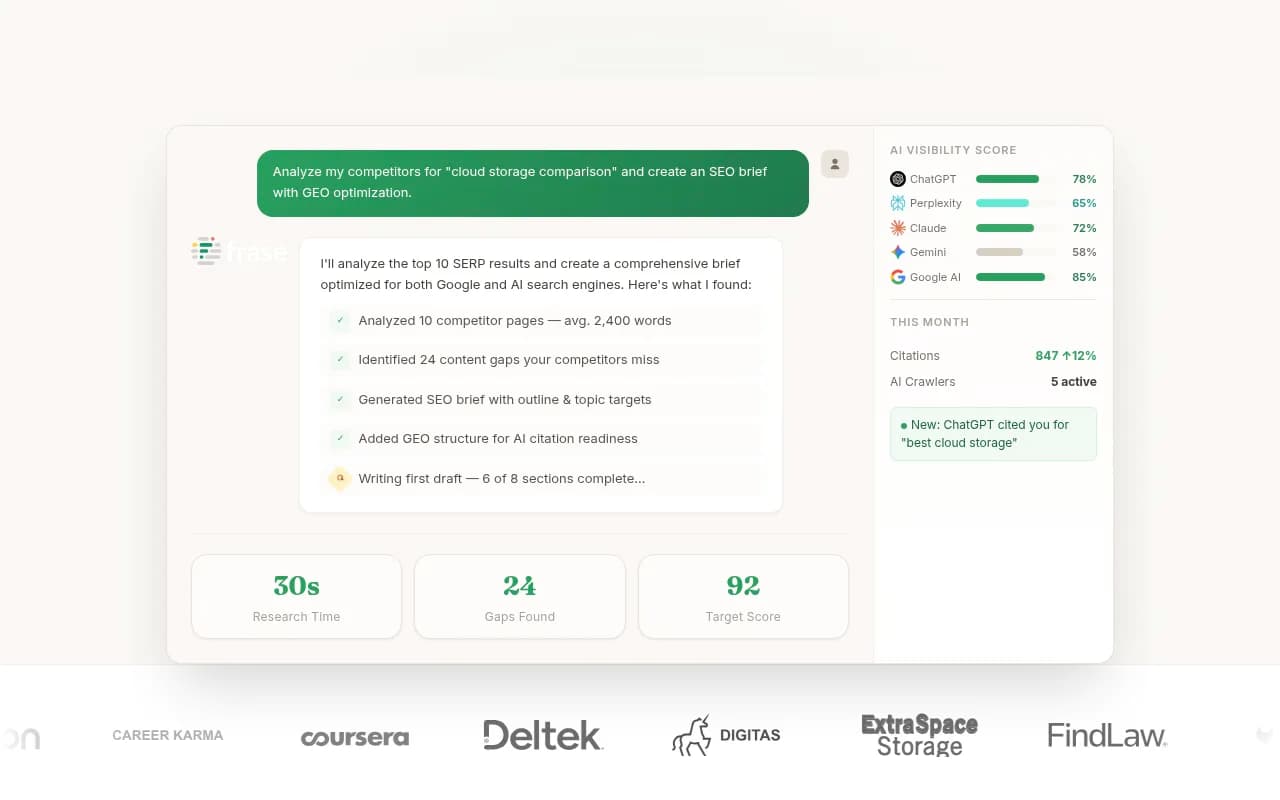
- Frase -- AI-powered SEO and GEO content research and writing
- Surfer SEO -- Content optimization with AI-powered suggestions
For backlink building
- Ahrefs -- Find backlink opportunities and track competitor links
- Semrush -- Link building tools and outreach templates
For Reddit and community monitoring
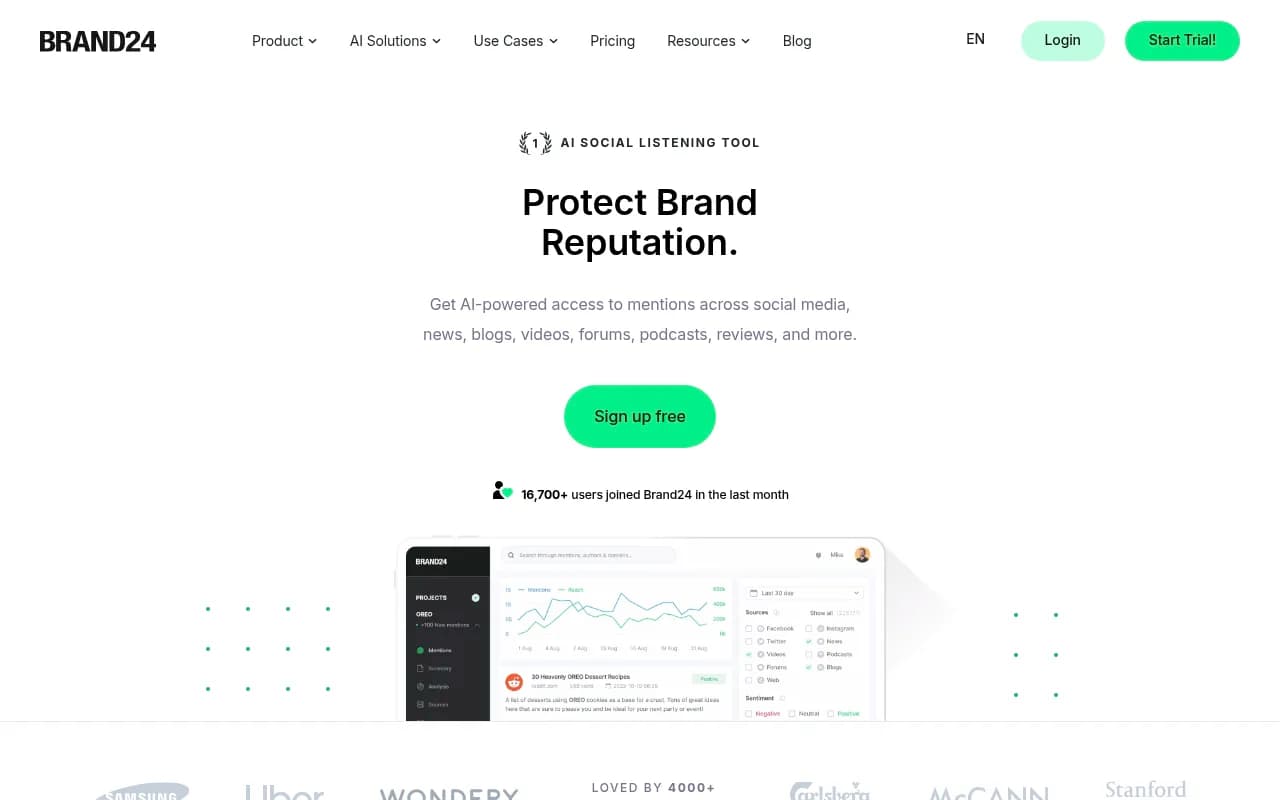
- Brand24 -- Track brand mentions across 25M+ sources including Reddit
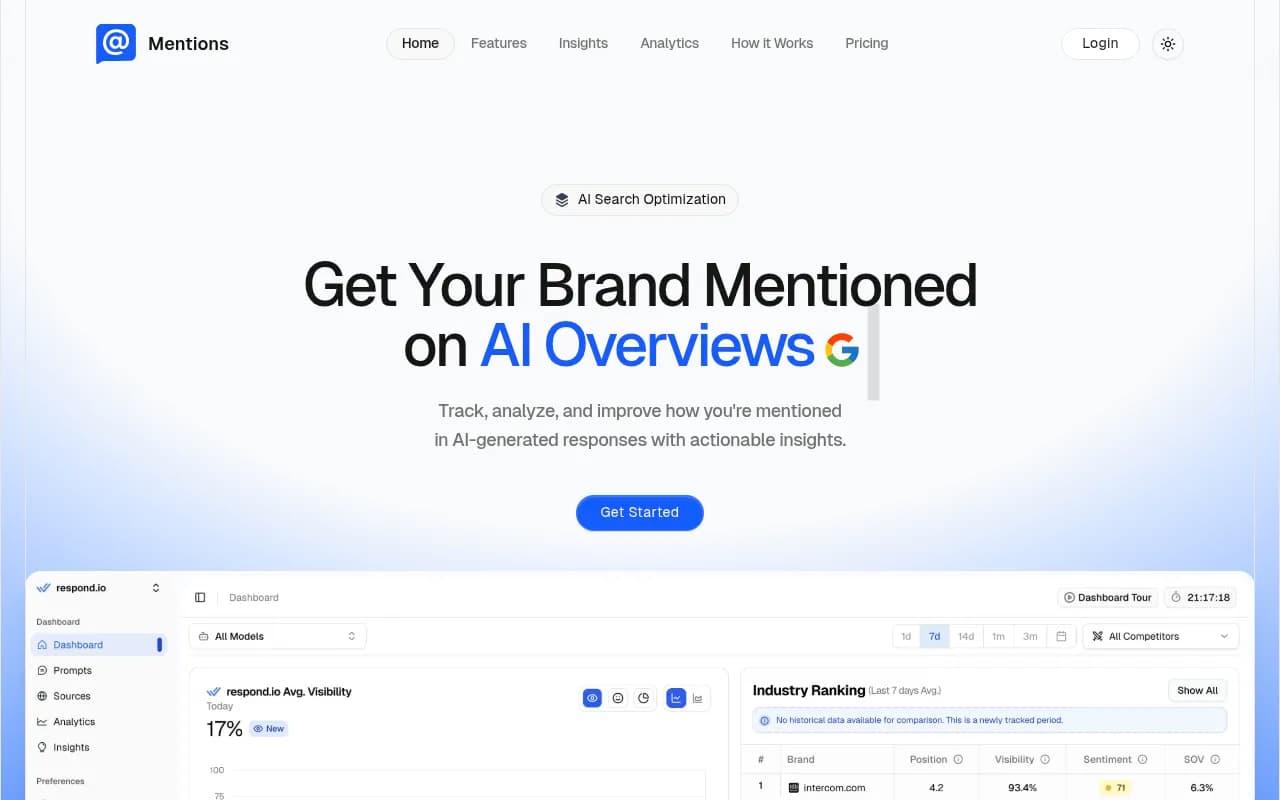
- Mentions.so -- Lightweight brand mention tracking
The reality: this is a long game
Breaking into ChatGPT's answer space when competitors dominate isn't a quick win. It's a 3-6 month effort of consistent content creation, backlink building, and community participation.
But the payoff is massive. ChatGPT is the 5th most visited site on the planet. 700 million users per week. If you're visible there, you're visible to a massive, high-intent audience.
Competitors have a head start. But they're also complacent. Most aren't actively optimizing for AI search. They're coasting on momentum from old content.
You can catch up. You just need to execute the strategy:
- Find the gaps in competitor coverage
- Create content engineered for AI citation
- Build authority signals AI models trust
- Track what's working and iterate fast
- Leverage timing and freshness
Start today. In six months, you'll be the one dominating the answer space.