Key takeaways
- Most teams discover dozens (or hundreds) of AI search gaps but have no system for deciding which to tackle first — this guide gives you one.
- The best gaps to fill combine high prompt volume, strong commercial intent, low competitive difficulty, and alignment with pages that already convert.
- A simple 4-factor scoring model (Volume × Intent × Winability × Business Value) lets you rank gaps and build a prioritized content roadmap.
- Tools like Promptwatch can automate much of the gap discovery and scoring work, surfacing which prompts competitors rank for that you don't.
- Filling gaps without tracking results is wasted effort — close the loop with page-level citation tracking and traffic attribution.
There's a specific kind of paralysis that hits marketing teams when they first audit their AI search visibility. You run the analysis, and suddenly you're staring at a list of 200 prompts where competitors show up and you don't. Every gap feels urgent. None of them feel actionable.
This is the real problem with AI search optimization in 2026: the discovery part is getting easier. The prioritization part is still a mess.
This guide is about fixing that. I'll walk you through a practical scoring framework for ranking AI search gaps by their actual potential to drive clicks and conversions — not just mentions. By the end, you'll have a system you can apply to your own gap list this week.
Why prioritization matters more than volume
The instinct is to fill as many gaps as possible, as fast as possible. More coverage = more citations = more traffic. Sounds right.
But AI search doesn't work like that. A citation in a response to a low-volume, zero-intent prompt ("what is the history of content marketing?") does almost nothing for your business. A citation in a response to a high-intent prompt ("best project management software for remote teams under $50/month") can drive real pipeline.
The gap between those two outcomes is enormous, and if you're treating all gaps equally, you're probably spending most of your content budget on the wrong ones.
There's also a capacity constraint. Most teams can realistically produce 4-10 pieces of AI-optimized content per month. That means every piece needs to count. A scoring framework forces you to be deliberate about where that effort goes.
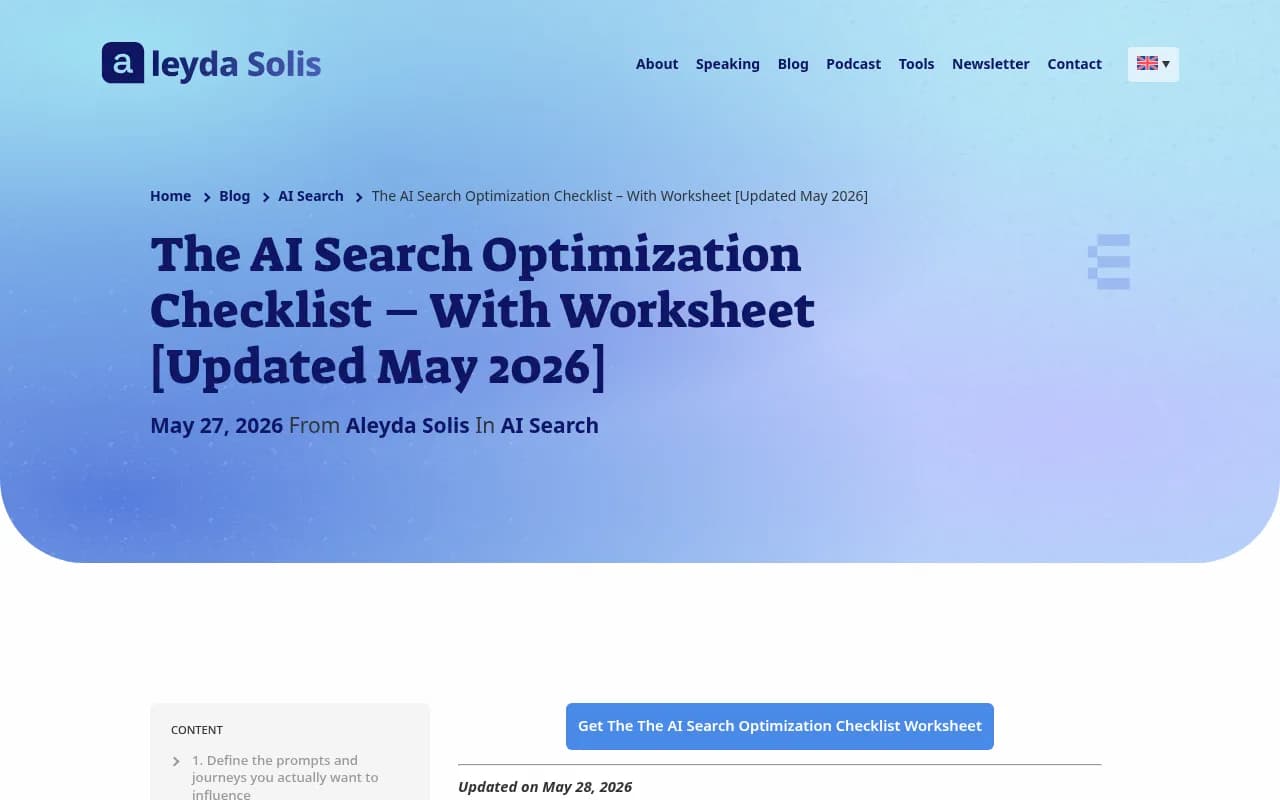
Aleyda Solis's AI search optimization checklist captures the right workflow: identify which prompts and journeys matter before deciding what to fix.
The four factors that actually predict gap value
Before building the scoring model, you need to understand what makes a gap worth filling. There are four factors that consistently predict whether closing a gap will move the needle.
Factor 1: Prompt volume
How often are people actually asking this question? A gap for a prompt that gets asked 50,000 times a month is worth more than one asked 500 times, all else being equal.
The challenge is that AI search prompt volumes are harder to measure than traditional keyword volumes. You can't just pull a number from Google Search Console. You need tools that estimate how frequently specific prompts are submitted to AI models — and that data is still imprecise. Treat volume estimates as directional signals, not exact figures.
Factor 2: Commercial intent
This is probably the most important factor and the one most teams underweight. A prompt's intent tells you what the person asking it is likely to do next.
Prompts fall into rough intent categories:
- Informational ("how does X work") — low conversion potential, high citation value for brand awareness
- Comparative ("X vs Y", "best X for Y") — medium-to-high conversion potential, often mid-funnel
- Transactional ("X pricing", "buy X", "X free trial") — highest conversion potential, bottom-funnel
- Navigational ("X reviews", "X alternatives") — high intent, often close to a decision
Filling gaps in the comparative and transactional categories should almost always come before informational gaps, unless your specific business model depends heavily on top-of-funnel awareness.
Factor 3: Competitive difficulty (winability)
Some gaps are gaps because nobody has written good content on the topic. Others are gaps because five well-resourced competitors have already published authoritative, heavily-cited content. Those are very different situations.
Winability is a function of two things: how strong the existing content is in AI responses, and whether your domain has the authority to compete. A gap where the AI is citing a Reddit thread and a three-year-old blog post is much more winnable than one where it's citing Gartner, Forbes, and the category leader's dedicated landing page.
Factor 4: Business value alignment
Not all conversions are equal. A gap that, if filled, would drive traffic to a page that converts at 8% for a $500 product is worth more than one that drives traffic to a page converting at 1% for a $20 product. You need to factor in the downstream revenue potential of the pages you'd be supporting.
This also includes strategic alignment: some gaps matter more because they're in a product category you're trying to grow, or a market segment you're actively targeting.
The scoring framework
Here's a simple model you can apply to any list of AI search gaps. Score each factor on a 1-5 scale, then multiply them together to get a Priority Score.
| Factor | Score 1 | Score 3 | Score 5 |
|---|---|---|---|
| Prompt volume | Very low (<500/mo est.) | Moderate (2K-10K/mo) | High (>25K/mo) |
| Commercial intent | Informational only | Comparative / research | Transactional / decision |
| Winability | Dominated by authority sources | Mixed competition | Weak or thin existing content |
| Business value | Low-value or misaligned page | Moderate conversion page | High-converting, strategic page |
Priority Score = Volume × Intent × Winability × Business Value
The maximum score is 625 (5×5×5×5). In practice, most gaps score between 20 and 200. Anything above 150 is a strong candidate for your next content sprint. Anything below 30 can wait.
Worked example
Say you're a B2B SaaS company selling HR software. You've identified these gaps:
| Prompt | Volume | Intent | Winability | Biz Value | Score |
|---|---|---|---|---|---|
| "what is an HRIS system" | 4 | 1 | 2 | 2 | 16 |
| "best HRIS for small business 2026" | 4 | 5 | 3 | 5 | 300 |
| "HRIS vs HCM difference" | 3 | 2 | 4 | 3 | 72 |
| "HRIS software pricing" | 3 | 5 | 4 | 5 | 300 |
| "how to implement HRIS" | 2 | 2 | 5 | 3 | 60 |
The two gaps you fill first are obvious: "best HRIS for small business 2026" and "HRIS software pricing." Both score 300. The generic definitional content ("what is an HRIS system") scores 16 and goes to the bottom of the list.
This is exactly the kind of clarity the framework is designed to produce.
How to build your gap list before scoring
You can't score gaps you haven't found yet. Here's how to build a solid gap list to work from.
Start with competitor visibility analysis
The most reliable source of high-value gaps is watching what prompts your competitors appear in that you don't. This is the core of what's called Answer Gap Analysis. You're not guessing what people might ask — you're looking at prompts where there's already proven demand, and your competitors are capturing it.
Promptwatch does this automatically, surfacing the specific prompts where competitors are cited across ChatGPT, Perplexity, Claude, Gemini, and other models while your brand is absent.

Mine your existing analytics
If you have any AI referral traffic (from Perplexity, ChatGPT, etc.), look at which pages are receiving it and work backward to understand what prompts might be driving those visits. Google Search Console's AI performance data and Bing Webmaster Tools both surface some of this.
Also look at your top organic landing pages. Pages that already rank well in traditional search for commercial queries are strong candidates for AI gap analysis — if you're visible in Google but not in AI responses for the same topic, that's a gap worth prioritizing.
Use customer language as a prompt source
Your sales team, support tickets, and customer interviews are gold mines for prompt ideas. The questions customers ask during the evaluation process are often exactly the prompts they (or people like them) are typing into ChatGPT. "How does your software handle payroll taxes?" is both a sales objection and a prompt someone is asking an AI model.
Check Reddit and YouTube
AI models heavily cite Reddit threads and YouTube content when forming answers. If there are active Reddit discussions about your category where you have no presence, those discussions may be shaping AI responses in ways that hurt you. Tools that surface Reddit and YouTube insights as part of AI visibility analysis (rather than just tracking your own site) give you a more complete picture of where influence is actually coming from.
Applying the framework at scale
If you're working with a list of 50+ gaps, scoring each one manually gets tedious. A few ways to make this more manageable:
Batch by intent first. Before scoring anything, sort your gap list into intent buckets. Immediately deprioritize anything that's purely informational and doesn't connect to a commercial journey. This alone usually cuts the list by 30-40%.
Use proxy metrics for volume. If you don't have AI-specific prompt volume data, use traditional keyword search volume as a proxy. It's imperfect but directional. A prompt with 10,000 monthly Google searches probably has meaningful AI query volume too.
Score winability by looking at what AI actually cites. Run the prompt in ChatGPT, Perplexity, and one other model. Look at the sources cited. If they're all authoritative, well-resourced publications, score winability low. If they're thin blog posts, forums, or outdated content, score it high.
Calibrate business value against your conversion data. Pull your top 10 converting pages from Google Analytics or your attribution tool. Any gap that would support those pages gets a 5 for business value. Work outward from there.
Measuring AI search visibility requires tracking across multiple models — the same prompt can produce very different results in ChatGPT vs Perplexity vs Gemini.
Tools that help with gap discovery and scoring
You don't have to do all of this manually. Several tools in the GEO space now help with different parts of the gap identification and prioritization process.
For full-cycle AI visibility work (gap discovery, scoring signals, content generation, and tracking results), Promptwatch covers the most ground. Its Answer Gap Analysis surfaces competitor-visible prompts you're missing, and its prompt intelligence layer provides volume estimates and difficulty scores that map directly to the Volume and Winability factors in this framework.
For teams that want to layer in traditional SEO data alongside AI visibility, SE Ranking has an AI visibility toolkit that connects keyword data with AI monitoring.
Profound is worth considering if you're at the enterprise level and need deep AI monitoring across multiple brands or markets.

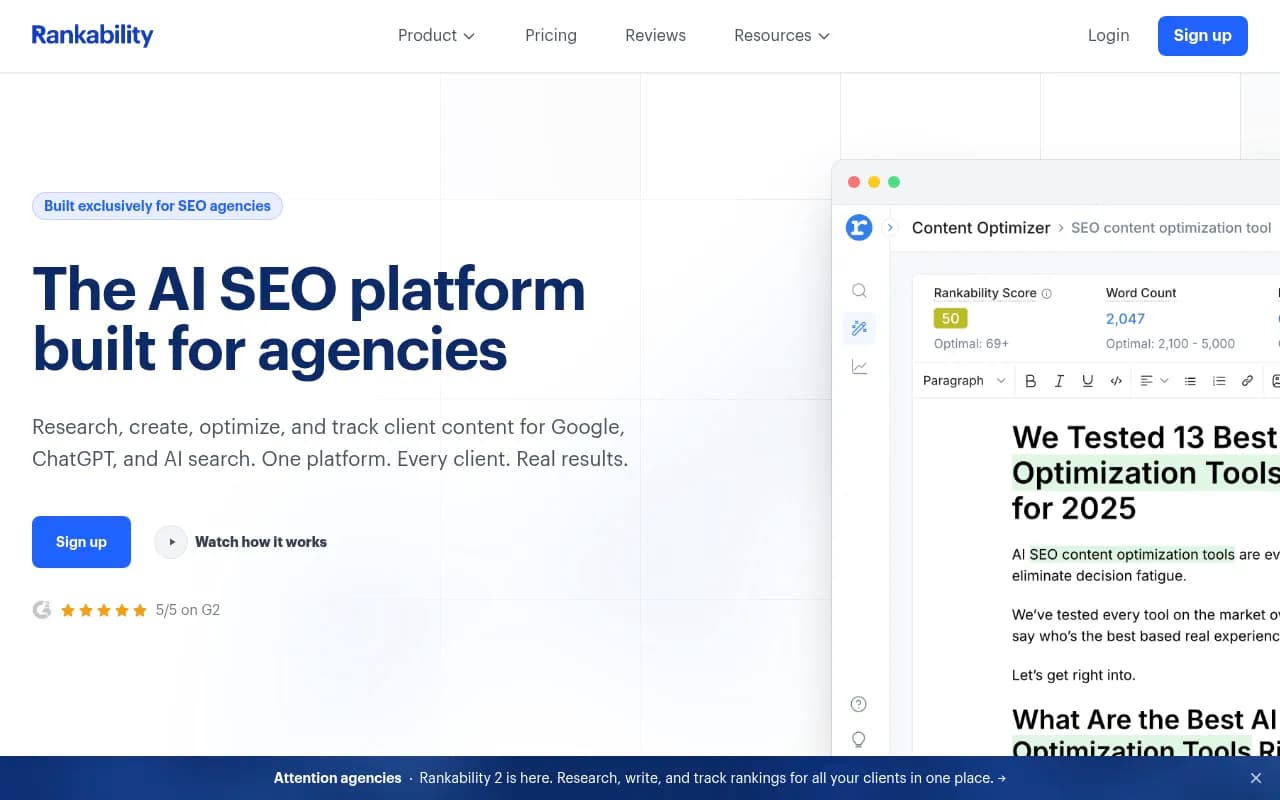
For agencies managing multiple clients, Rankability offers AI visibility analytics with white-label reporting.
| Tool | Gap discovery | Prompt volume data | Content generation | Citation tracking |
|---|---|---|---|---|
| Promptwatch | Yes (Answer Gap Analysis) | Yes | Yes (AI writing agent) | Yes (page-level) |
| SE Ranking | Partial | Via keyword data | No | Limited |
| Profound | Yes | Limited | No | Yes |
| Rankability | Yes | Limited | No | Yes |
| Otterly.AI | Basic | No | No | Basic |
From scoring to content: what to actually create
Once you have your prioritized gap list, the question becomes: what do you build to close each gap?
The content type should match the prompt intent:
- Comparative prompts ("best X for Y") need dedicated comparison pages or listicles that directly address the comparison. These need to be specific, opinionated, and structured so AI models can easily extract and cite them.
- Transactional prompts ("X pricing", "X free trial") need pricing pages, landing pages, or FAQ content that directly answers the question with clear, citable facts.
- Navigational prompts ("X alternatives", "X reviews") need alternatives pages and review-ready content that positions your brand clearly in the competitive landscape.
One thing that consistently gets teams in trouble: writing content that's optimized for human readers but not for AI citation. AI models prefer content that's structured, direct, and answers the specific question quickly. Long preambles, vague claims, and content that buries the answer in the fifth paragraph don't get cited.
The practical test: can you find the direct answer to the prompt within the first 200 words of the page? If not, restructure.
Closing the loop: tracking whether it worked
Filling gaps without measuring results is just content production. The whole point of the framework is to improve your AI search visibility in ways that drive actual business outcomes.
After publishing content targeting a specific gap, track:
- Citation rate: is the new page being cited in AI responses to the target prompt? How often, and by which models?
- Traffic from AI referrers: are you seeing Perplexity, ChatGPT, or other AI sources sending traffic to the new page?
- Conversion performance: are visitors arriving from AI referrers converting at a meaningful rate?
The non-determinism of AI responses makes this tricky. Running a prompt once and seeing your content cited doesn't mean you've "won" that gap. You need to sample across multiple runs, multiple models, and ideally track citation rates over time as the models update their training data and retrieval behavior.
Page-level citation tracking — seeing exactly which of your pages are being cited, how often, and by which AI model — is the most useful signal here. It's more actionable than aggregate brand mention scores, which can mask a lot of variation.
A realistic timeline
Here's what a prioritized gap-filling process looks like in practice over a 90-day cycle:
Weeks 1-2: Run your gap analysis. Build your gap list from competitor visibility data, customer language, and existing analytics. Score each gap using the framework. Identify your top 10 priority gaps.
Weeks 3-6: Create content for your top 5 gaps. Focus on the highest-scoring gaps first. Publish and submit for indexing. Begin monitoring for citations.
Weeks 7-10: Assess early citation data. Are the new pages showing up in AI responses? If not, look at whether the content is structured correctly, whether it's being crawled by AI bots, and whether there are technical issues blocking visibility.
Weeks 11-12: Score your next batch of gaps. Incorporate what you learned from the first cycle. Adjust your scoring weights if needed (for example, if winability turned out to be more important than you expected in your specific category).
This isn't a one-time project. AI models update continuously, competitors publish new content, and the prompt landscape shifts. The teams that build a repeatable gap-scoring process — not just a one-off audit — are the ones that compound their AI visibility over time.
The one mistake to avoid
The most common mistake I see is treating AI search gap analysis as a content volume problem. Teams discover they're invisible for 200 prompts and immediately try to publish 200 pieces of content. The result is thin, generic content that doesn't get cited by anyone.
The framework in this guide is designed to prevent that. Pick the 10 gaps where you have the best combination of volume, intent, winability, and business value. Create genuinely useful, well-structured content for those 10. Measure the results. Then do the next 10.
That's how you build AI search visibility that actually converts — not by flooding the zone, but by being the best answer to the questions that matter most to your business.