Key takeaways
- Grok is the only major AI platform that pulls directly from X (Twitter) in real time, making your social presence a direct ranking signal -- not a nice-to-have.
- DeepSearch, Grok's live web crawling feature, means recently published content can be cited within days, not months.
- Getting cited requires three layers: technical access (robots.txt, schema), content structured for extraction, and an active X presence.
- Tracking Grok visibility requires dedicated AI monitoring tools -- standard analytics and SEO platforms won't capture it.
- The same optimization work that helps Grok visibility also lifts your presence in ChatGPT, Perplexity, and Gemini -- but Grok has unique signals that need specific attention.
Most brands optimizing for AI search are thinking about ChatGPT and Perplexity. That's understandable -- they have the largest user bases. But Grok, xAI's AI search engine, is genuinely different in ways that matter for brand visibility. It has a live feed into X (Twitter), a real-time web crawler called DeepSearch, and a user base that skews toward tech-forward, high-intent audiences.
If you're not appearing in Grok's answers, you're invisible to a growing segment of people who are actively asking it for recommendations.
This guide covers how Grok actually works, what signals it uses to decide who gets cited, and the specific steps you can take to show up more often.
How Grok actually retrieves information
Before optimizing anything, you need to understand what Grok is doing when it generates an answer. It's not a search engine returning a ranked list of URLs. It synthesizes a response and then (sometimes) cites the sources it drew from. Your goal is to become one of those sources.
Grok pulls from three distinct channels:
Training data is the foundation. Like all large language models, Grok was trained on a broad corpus of web content. Brands with consistent, authoritative information spread across multiple credible sources get stronger entity recognition in the model. This is slow to change but important for baseline visibility.
DeepSearch is what makes Grok different from older LLMs. When a user asks a question, DeepSearch can browse the live web, verify sources, and pull content published within the last 24 hours if needed. Grok 3, released in early 2025, made DeepSearch the flagship feature. This means fresh, well-structured content can get cited fast -- sometimes within two to four weeks of publication.
X (Twitter) posts are the channel no other major AI platform has. Grok accesses public X posts, engagement patterns, and verified account content in real time. A brand that's actively discussed on X -- especially with positive sentiment and high engagement -- generates signals that directly influence how Grok talks about it. This is the fastest lever you have.
Understanding these three channels tells you where to focus your effort.
The technical foundation: letting Grok find you
None of the content or social work matters if xAI's crawler can't access your site. This is a surprisingly common problem.
Check your robots.txt
xAI's web crawler is called Grok. Check your robots.txt file and make sure you're not accidentally blocking it. A lot of sites have blanket rules that block unknown crawlers, and Grok's crawler may be caught in those rules.
The minimum you need:
User-agent: Grok
Allow: /
If you want to be thorough, also check for any rules that might block xAI or xai-grok. While you're in there, confirm you're also allowing the crawlers for other AI platforms you want visibility in: GPTBot (OpenAI), ClaudeBot (Anthropic), PerplexityBot, and GoogleBot (for AI Overviews).
Tools like DarkVisitors can help you audit which AI crawlers are currently blocked or allowed on your site.
Add structured data that Grok can extract
Grok's DeepSearch feature is looking for content it can extract and synthesize quickly. Schema markup makes that extraction dramatically easier.
The most useful schema types for Grok citation:
FAQPage-- direct Q&A format that maps cleanly to how Grok generates answersHowTo-- step-by-step content that Grok can pull from for instructional queriesArticlewithauthoranddatePublished-- signals recency and authorityOrganizationwithsameAslinking to your X profile, LinkedIn, and Wikipedia (if applicable)
The sameAs property on your Organization schema is particularly worth noting for Grok. It explicitly connects your web presence to your X account, which helps Grok's model tie together your social signals and your web content as a unified entity.
Page speed and crawlability
DeepSearch is doing real-time crawls under time pressure. Pages that load slowly or have heavy JavaScript rendering that blocks content from appearing quickly are at a disadvantage. Run a basic crawl audit -- tools like Screaming Frog can surface pages with render-blocking issues or slow load times.
Content structure: writing for extraction, not just readers
Getting Grok to cite you isn't about writing longer content. It's about writing content that's easy to extract a specific answer from.
Lead with direct answers
Grok's responses are synthesized answers, not lists of links. When it cites a source, it's usually pulling a specific passage that directly answers the query. Structure your content so that the answer to the question appears in the first two to three sentences of each section -- before any context, caveats, or background.
This is sometimes called the "direct answer block" approach. The idea is simple: if someone asks "what is [your product]", your page should have a sentence that starts with "[Your product] is..." within the first paragraph. Don't make Grok hunt for it.
Use conversational Q&A formatting
Grok handles conversational queries -- the kind people type when they're actually talking to an AI assistant. Your content should match that register. Instead of section headers like "Product Overview," use headers like "What does [product] do?" or "How does [product] compare to [competitor]?"
This isn't just about matching query phrasing. It signals to the model that your content is designed to answer questions, which is exactly what Grok is trying to do.
Cover the questions your competitors aren't answering
One of the most reliable ways to get cited is to be the only source that clearly answers a specific question. Look at the queries where your competitors appear in Grok's responses but you don't. Those are gaps you can close with targeted content.
Promptwatch has an Answer Gap Analysis feature that surfaces exactly this -- the prompts where competitors are visible but you're not, so you can see which content to create first.

Freshness matters more in Grok than in other AI platforms
Because DeepSearch crawls the live web, Grok can and does cite recently published content. A well-optimized article published this week can appear in Grok responses within days. This is a meaningful difference from models that rely primarily on training data with a cutoff months in the past.
Publish regularly. Update existing pages with new information and change the dateModified in your schema. Grok's real-time crawling rewards brands that keep their content current.
The X (Twitter) layer: Grok's unique signal
This is where Grok optimization diverges most sharply from everything else in AI search. No other major AI platform has live access to a social media feed. For Grok, your X presence is a direct input into how it talks about your brand.
What X signals Grok actually uses
Based on how Grok's responses behave, the X signals that appear to matter most are:
- Volume of recent mentions: brands discussed frequently on X in the past days or weeks get stronger signals
- Engagement quality: posts with high engagement (replies, reposts, bookmarks) carry more weight than low-engagement posts
- Verified account presence: having a verified X account for your brand strengthens entity recognition
- Sentiment: Grok appears to pick up on whether X discussions about your brand are predominantly positive, negative, or mixed -- and this influences the tone of its responses
Building an X presence that influences Grok
You don't need to go viral. You need consistent, substantive activity that generates real engagement.
A few specific tactics that work:
Post content that answers the questions your target customers are asking. These posts get saved and shared by people who found them useful, which generates the kind of engagement that matters.
Engage with conversations in your category -- not just your own mentions. When your account appears in threads about your industry, it builds topical association that Grok picks up on.
Get your brand mentioned by accounts with strong engagement. A single post from a well-followed account in your niche mentioning your brand positively can shift your Grok visibility noticeably. This is earned media, not advertising -- reach out to journalists, analysts, and creators who cover your space.
Use your X bio and pinned post strategically. Grok reads profile content. Your bio should clearly state what your brand does, using the same language your customers use when searching.
Monitor what X is saying about you
Before you can influence X sentiment, you need to know what's already there. Tools like Brand24 track mentions across X and the broader web in real time, which gives you a baseline and helps you catch negative sentiment before it compounds.
Establishing authority across the web
Grok's training data and DeepSearch both weight authoritative sources. "Authority" in this context means consistent, accurate information about your brand appearing across multiple credible sources.
Third-party coverage
Get your brand mentioned in publications that Grok's training data includes and that DeepSearch regularly crawls. Industry publications, news sites, and authoritative blogs in your category all count. A single well-placed article in a respected trade publication does more for your Grok visibility than ten posts on your own blog.
When pitching coverage, think about the specific claims you want AI models to associate with your brand. If you want Grok to describe you as "the leading [category] tool for [use case]," that framing needs to appear in third-party sources, not just your own marketing copy.
Wikipedia and knowledge graph presence
If your brand is large enough to warrant a Wikipedia page, having one significantly strengthens entity recognition across all AI models, including Grok. If you don't have one, focus on getting mentioned in existing Wikipedia articles about your category or industry.
Reddit and forum discussions
Grok's DeepSearch crawls the open web, which includes Reddit. Threads where your brand is discussed positively -- especially in comparison to competitors -- can appear in Grok's responses. This is a channel worth paying attention to. Participate genuinely in relevant communities; don't astroturf.
Tracking your Grok visibility
You can't optimize what you can't measure. Standard analytics tools don't capture AI-generated citations. You need dedicated tracking.
The basic approach is to run a consistent set of prompts in Grok on a regular schedule and record whether your brand appears, what position it appears in, and what tone Grok uses when mentioning you. Do this weekly, with the same prompts each time, so you can track changes over time.
For more systematic tracking, dedicated AI visibility platforms handle this automatically across multiple AI models simultaneously. Here's a quick comparison of options worth considering:
| Tool | Tracks Grok | Tracks X signals | Content gap analysis | Content generation | Free tier |
|---|---|---|---|---|---|
| Promptwatch | Yes | Yes | Yes | Yes | No (trial) |
| Trakkr.ai | Yes | No | No | No | Yes |
| Profound | Yes | No | Limited | No | No |
| Otterly.AI | Yes | No | No | No | Yes |
| AthenaHQ | Yes | No | No | No | No |
| Rankability | Yes | No | No | No | No |
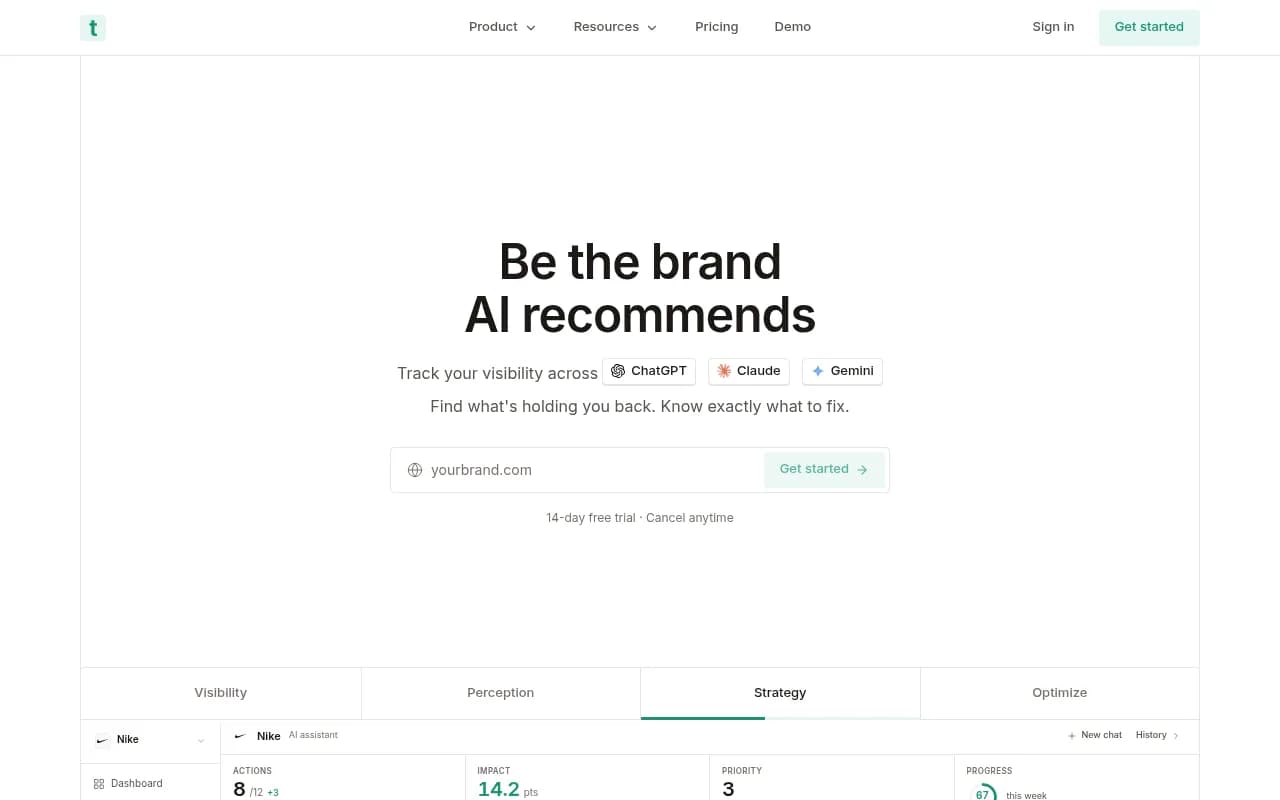



Most of these tools will show you whether you're appearing in Grok responses. The difference is what happens next. Monitoring-only tools tell you your visibility score. Platforms like Promptwatch go further -- they show you which specific prompts you're missing, generate content to fill those gaps, and then track whether your visibility improves after you publish.
What to measure
Beyond simple appearance rate, track:
- Which prompts trigger a Grok citation for your brand
- The tone of those citations (positive, neutral, negative)
- Which competitors appear in the same responses
- Whether Grok cites your website directly, or just mentions your brand name without a source link
That last point matters. A brand mention without a citation link means Grok knows about you from training data but isn't actively pulling from your current content. A citation link means DeepSearch found and used your page -- which is the stronger signal and the one that drives actual referral traffic.
A practical week-one action plan
If you're starting from scratch, here's where to spend your first week:
Day 1-2: Technical audit. Check robots.txt for xAI/Grok crawler access. Run a crawl audit to find pages with slow load times or render-blocking issues. Add or update Organization schema with sameAs linking to your X profile.
Day 3-4: Content audit. Identify your ten most important category queries. Check whether your site has a page that directly answers each one. For any gaps, write a brief for a new page or update an existing one with a direct answer block at the top.
Day 5: X audit. Review your brand's X profile. Update the bio to clearly describe what you do. Check recent mentions and note the sentiment. Set up monitoring so you see new mentions in real time.
Day 6-7: Baseline measurement. Run your core prompts in Grok and record the results. This is your baseline. Set a reminder to run the same prompts again in two weeks.
The longer game
Getting cited in Grok isn't a one-time project. It's an ongoing discipline that combines technical hygiene, content publishing, and social presence.
The brands that will dominate Grok visibility in 2026 are the ones treating it as a distinct channel with its own signals -- not just assuming that Google SEO rankings will carry over. They won't, at least not reliably.
The X integration is the biggest differentiator to internalize. Every other AI search optimization strategy is about making your web content more extractable. Grok adds a live social layer on top of that. Brands that are genuinely active and well-regarded on X have a structural advantage in Grok that no amount of schema markup can replicate.
Start with the technical foundation, build the content layer, and then invest consistently in your X presence. Those three things, done well, will put you ahead of most competitors who are still treating Grok as an afterthought.