Key takeaways
- Most GEO platforms offer competitor benchmarking, but few explain why a competitor is winning in AI search -- they show scores, not causes.
- The platforms that go furthest combine prompt-level competitor analysis, citation source tracking, and content gap identification in one workflow.
- Pricing intelligence in the GEO context isn't about product prices -- it's about understanding what investment in content and optimization your competitors are making, and where they're getting returns.
- A small number of platforms (Promptwatch being the clearest example) close the loop by turning competitor gap data into actionable content, not just a dashboard number.
- For most teams, the right question isn't "which tool has the best competitor data?" -- it's "which tool helps me do something with that data?"
What "competitor intelligence" actually means in GEO
Traditional competitive intelligence in SEO is pretty well-defined: you track keyword rankings, backlink profiles, domain authority, and paid ad spend. Tools like Semrush and Ahrefs have made this a commodity. You can see exactly which keywords a competitor ranks for, what they're spending on ads, and which sites link to them.
GEO competitor intelligence is messier. There's no equivalent of a keyword ranking -- AI models don't publish a list of which brands they recommend for which queries. Instead, you have to infer competitive positioning from the outputs: run a prompt, see who gets cited, repeat across hundreds of prompts, and build a picture of where you stand relative to competitors.
That inference process is where GEO platforms diverge sharply. Some do it well. Most do it superficially.
The "pricing intelligence" angle is also worth unpacking. In e-commerce, price intelligence means tracking what competitors charge for products. In GEO, the equivalent question is: what are competitors investing in to win AI visibility, and where specifically are they beating you? That means understanding:
- Which prompts competitors appear in that you don't
- Which content pieces are being cited on their behalf
- Which AI models favor them and why
- What topics and angles their cited content covers that yours doesn't
That's the competitive intelligence that actually moves the needle in 2026.
The spectrum of competitor features across GEO platforms
Not all GEO tools treat competitor analysis the same way. There's a rough spectrum from "we show you a score" to "we show you exactly what to do about it."
Tier 1: Share-of-voice dashboards
The most basic approach is a share-of-voice metric: out of all the prompts you're tracking, what percentage of AI responses mention your brand vs. competitors? This is useful as a headline number but tells you almost nothing actionable. If your share of voice drops 5 points this month, you don't know if it's because a competitor published new content, because an AI model updated its training data, or because your own content degraded in some way.
Tools in this tier include many of the lighter monitoring platforms. They're fine for executive reporting but don't help you figure out what to actually do.
Tier 2: Prompt-level competitor visibility
A step up: platforms that show you, for each individual prompt, which competitors appear and how often. This is more useful because it lets you identify specific areas where you're losing. If you're a cybersecurity vendor and you can see that a competitor appears in 80% of responses to "best endpoint security for mid-market companies" while you appear in 20%, that's a specific, actionable gap.
Several mid-tier GEO platforms operate at this level. The data is valuable, but you still have to figure out what to do with it yourself.
Tier 3: Citation-level competitor analysis
The most sophisticated approach goes one level deeper: not just which competitors appear, but which specific pages, articles, and sources are being cited when AI models recommend them. This is where competitor intelligence becomes genuinely useful for content strategy.
If you can see that a competitor is getting cited because of a specific comparison article they published, or because they're heavily referenced in Reddit threads that AI models pull from, you have a clear signal about what kind of content to create.
Promptwatch operates at this level, with over 880 million citations analyzed across 10 AI models. The Answer Gap Analysis feature doesn't just show you that a competitor is winning -- it shows you the specific prompts they're winning for, and the content gaps on your own site that explain why AI models prefer them.

How specific platforms handle competitor intelligence
Here's a breakdown of how the major GEO platforms approach this in 2026:
| Platform | Prompt-level competitor tracking | Citation source analysis | Content gap identification | Content generation to close gaps | Reddit/YouTube tracking |
|---|---|---|---|---|---|
| Promptwatch | Yes | Yes (880M+ citations) | Yes | Yes (built-in AI writer) | Yes |
| Profound | Yes | Partial | Limited | No | No |
| AthenaHQ | Yes | No | No | No | No |
| Otterly.AI | Basic | No | No | No | No |
| Peec.ai | Basic | No | No | No | No |
| Search Party | Yes | Partial | No | No | No |
| Semrush | Limited | No | No | No | No |
| Ahrefs Brand Radar | Limited | No | No | No | No |
The pattern is clear: most platforms stop at monitoring. A few get to prompt-level competitor data. Almost none help you understand the why behind competitor performance, and fewer still help you act on it.
Profound
Profound has a solid feature set for enterprise teams. Its competitor tracking is prompt-level, meaning you can see which competitors appear for specific queries. The pricing reflects its enterprise positioning -- it's not a cheap option. What it lacks is the citation-source depth that would tell you why competitors are winning, and there's no content generation capability to help you close identified gaps.

AthenaHQ
AthenaHQ tracks competitor visibility across multiple AI engines and gives you a reasonable view of share-of-voice by competitor. The interface is clean and the data is reliable. But the analysis stops at visibility metrics -- you get the score, not the explanation. No Reddit tracking, no citation source analysis, no content tools.
Otterly.AI
Otterly.AI is one of the more affordable options in the GEO space. It does basic competitor monitoring and share-of-voice tracking. For small teams that just want a dashboard showing how they compare to two or three competitors, it works. For anyone who wants to understand the mechanics of why competitors are winning, it's not the right tool.

Peec.ai
Peec.ai is notable for its multi-language support, which matters if you're operating in non-English markets. Its competitor tracking is functional but basic -- share-of-voice and prompt-level visibility without deeper citation analysis.

Search Party
Search Party takes a more agency-oriented approach. It has some prompt-level competitor tracking but the prompt metrics (volume estimates, difficulty scoring) are limited compared to platforms built specifically around content optimization. No content gap analysis.
The "why" problem: why most competitor data doesn't help
Here's the frustrating reality with most GEO competitor dashboards: they're good at telling you that you're losing, and bad at telling you why.
You can see that Competitor A appears in 70% of responses to your target prompts while you appear in 30%. But without understanding which content pieces are driving those citations, which AI models are favoring them, and what topics those cited pieces cover, you're left guessing at solutions.
The common guesses teams make without good competitor intelligence:
- "We need more content" (maybe, but what kind?)
- "We need to improve our technical SEO" (possibly, but is that really the bottleneck?)
- "We need more backlinks" (traditional SEO thinking that doesn't map cleanly to AI citation patterns)
None of these are necessarily wrong, but they're expensive guesses. A team that spends three months producing content based on a guess, then checks their GEO metrics, has wasted a quarter if the guess was wrong.
The platforms that surface citation-level data short-circuit this problem. If you can see that Competitor A is winning because they have a detailed comparison article that gets cited across ChatGPT, Claude, and Perplexity, and that article covers a specific angle your content doesn't address, you know exactly what to write.
Competitor intelligence for different AI models
One thing that's underappreciated in 2026: different AI models have different citation patterns. A competitor might dominate ChatGPT responses but be relatively weak in Perplexity. Google AI Overviews might favor a completely different set of sources than Claude.
This matters for competitive strategy because it tells you where to focus. If your target audience primarily uses Perplexity for research (common in technical and academic contexts), winning on ChatGPT is less valuable than it looks.
Platforms that break down competitor visibility by AI model give you a much more nuanced picture. You might find that you're actually competitive on four out of five models but losing badly on one -- which is a very different strategic situation than losing uniformly across all models.
Promptwatch's competitor heatmaps do exactly this: they show you which models favor which competitors, so you can prioritize your optimization efforts based on where your audience actually searches.
The content gap angle: where competitor intelligence becomes actionable
The most useful form of competitor intelligence in GEO isn't "they appear more than you" -- it's "here are the specific topics and questions they answer that you don't."
This is what's sometimes called answer gap analysis or content gap analysis in the GEO context. The logic is simple: AI models cite content because it answers a question well. If a competitor is getting cited for a prompt that you're not appearing in, it's usually because their content answers the underlying question better than yours -- or because you don't have content that addresses it at all.
Finding these gaps systematically requires:
- Running a large set of prompts across multiple AI models
- Identifying which prompts competitors appear in that you don't
- Analyzing the content that gets cited in those responses
- Mapping that back to topics and angles missing from your own site
That's a significant data processing task. Doing it manually is possible for a handful of prompts but doesn't scale. Platforms that automate this process and surface the gaps in a usable format save weeks of analyst time.
The next step -- actually creating content to fill those gaps -- is where most platforms leave you on your own. You get a list of gaps and a blank page. A few platforms go further and help generate the content itself, grounded in the citation data that explains what AI models actually want to see.
Pricing considerations: what you're actually paying for
GEO platform pricing in 2026 ranges from around $50/month for basic monitoring tools to well over $1,000/month for enterprise platforms. The price differences roughly track the depth of competitor intelligence and the presence (or absence) of content optimization features.
A few rough tiers:
- $50-150/month: Basic monitoring, share-of-voice dashboards, limited competitor tracking. Fine for brand awareness monitoring, not useful for competitive strategy.
- $150-350/month: Prompt-level competitor tracking, some citation data, maybe basic content suggestions. Useful for teams actively working on GEO.
- $350-600/month: Full competitor intelligence with citation analysis, content gap identification, content generation tools. For teams treating GEO as a primary acquisition channel.
- $600+/month: Enterprise features, multi-site tracking, custom reporting, dedicated support.
The question to ask at any price point: does this platform help me understand why competitors are winning, or does it just show me that they are? The answer to that question determines whether you're buying a reporting tool or an optimization tool.
Promptwatch's pricing sits in the middle tiers ($99/month for Essential, $249/month for Professional, $579/month for Business) and covers the full range from basic monitoring to content generation -- which is unusual at those price points. Most platforms at $249/month are still monitoring-only.
Tools worth evaluating for competitor intelligence in 2026
Beyond the major platforms already covered, a few others are worth knowing about depending on your specific needs:
For agencies managing multiple clients:
Rankability is built with agency workflows in mind and has reasonable competitor tracking across multiple client accounts.
For teams that want deeper citation tracking:
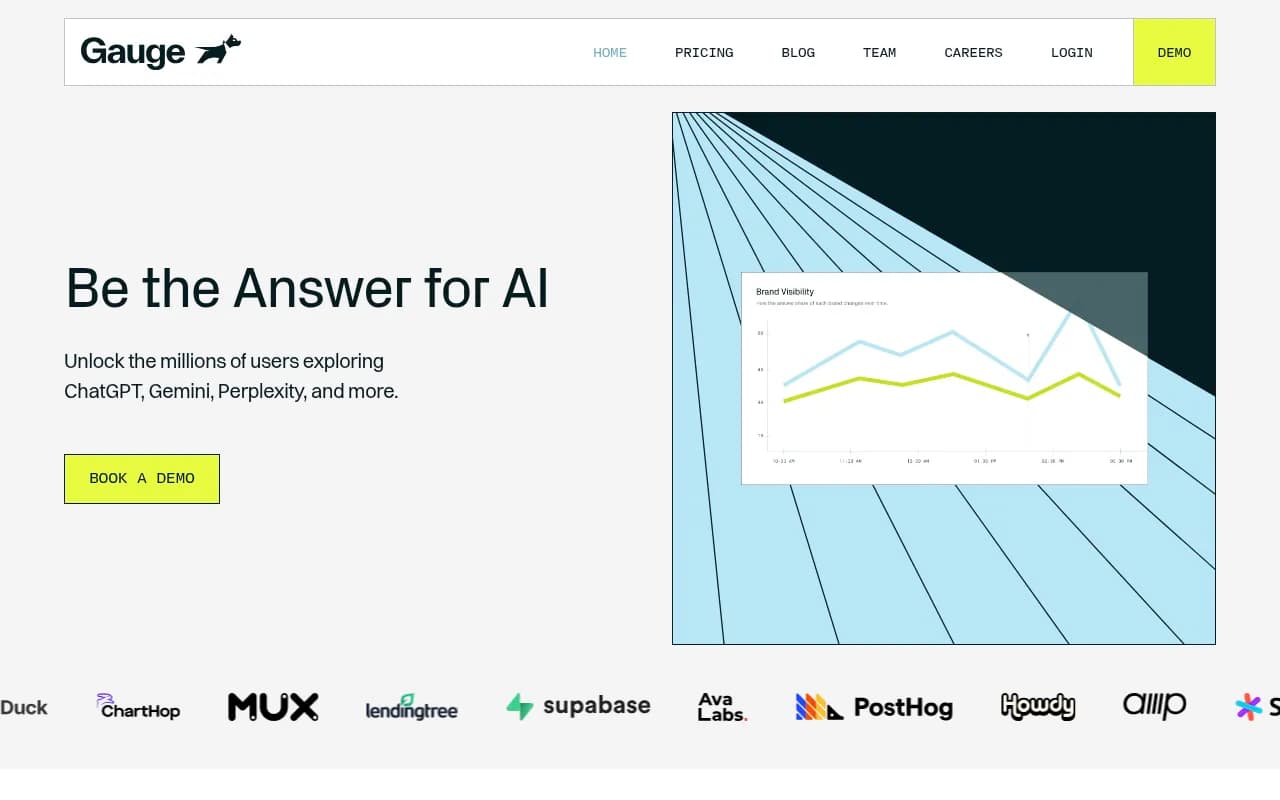
Gauge focuses on strategic competitive intelligence for AI visibility, with an emphasis on understanding the citation dynamics behind competitor performance.
For teams monitoring competitor mentions in real-time:
Scrunch AI provides AI search visibility monitoring with competitor tracking built in.
For enterprise teams needing full-stack SEO plus GEO competitor data:
Semrush One combines traditional SEO competitive intelligence with AI visibility tracking, though its AI competitor features are less deep than dedicated GEO platforms.
Ahrefs Brand Radar adds AI search monitoring to Ahrefs' existing competitive intelligence suite. Useful if you're already an Ahrefs shop, though the AI-specific competitor features are limited compared to dedicated GEO tools.
What good competitor intelligence looks like in practice
To make this concrete: here's what a well-instrumented GEO competitor analysis workflow looks like in 2026.
You start with a set of 50-150 prompts that represent how your target customers search for solutions in your category. You run those prompts across multiple AI models and record which brands get cited in each response. You now have a baseline: your share of voice vs. competitors, broken down by prompt and by model.
Next, you identify the prompts where competitors consistently appear but you don't. For each of those prompts, you look at the specific content being cited -- which pages, which domains, which formats. You notice patterns: competitors are winning on "comparison" queries because they have detailed head-to-head comparison articles. Or they're winning on "how to" queries because they have step-by-step guides that AI models find easy to excerpt.
You now know what to create. You build content that addresses those specific gaps, optimized for the citation patterns you've observed. You track whether your visibility on those prompts improves over the following weeks.
That's the loop. Find gaps, create content, track results. Most GEO platforms support pieces of this. Few support the whole thing without requiring you to stitch together multiple tools.
The bottom line
Competitor intelligence in GEO is genuinely hard to do well. The data is probabilistic, AI models change their citation patterns, and the connection between content and citations isn't always obvious. Any platform that makes it sound simple is probably oversimplifying.
That said, the gap between "we show you a share-of-voice score" and "we show you exactly which content gaps explain your competitor's advantage" is enormous. Teams that have access to citation-level competitor data make better content decisions, faster. Teams that only have share-of-voice scores spend a lot of time guessing.
In 2026, the platforms that have closed that gap -- and gone further to help you act on the data -- are still a minority. But they exist, and the difference in outcomes for teams using them vs. basic monitoring tools is significant enough that the pricing premium is usually justified.
The right question when evaluating any GEO platform's competitor features isn't "how many competitors can I track?" It's "after I see the data, do I know what to do next?"