Key takeaways
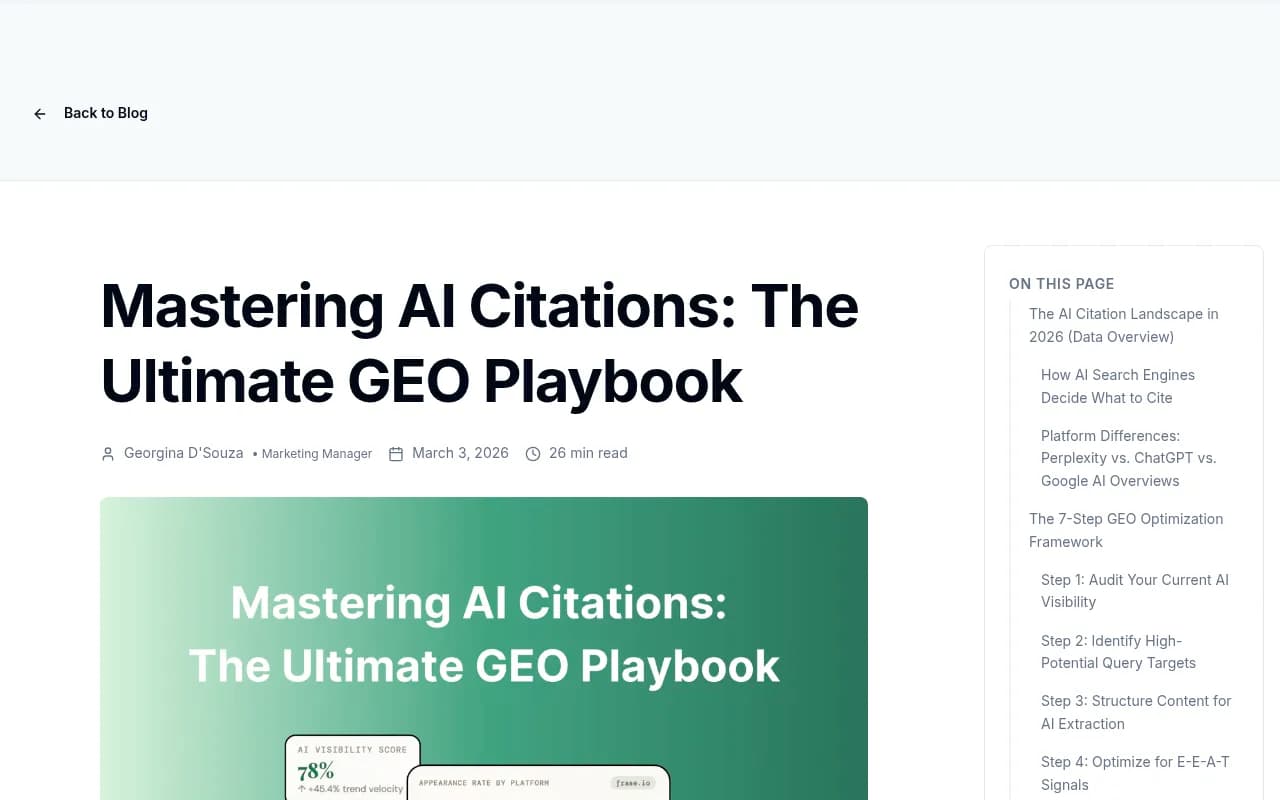
- AI search engines don't rank pages the way Google does -- they use Retrieval-Augmented Generation (RAG) to select sources they can cite with confidence. The bar is higher than traditional ranking.
- The main signals AI systems evaluate include topical authority, content clarity, brand trust, technical accessibility, and cross-source consistency.
- Different AI engines have different citation personalities -- ChatGPT favors Wikipedia and established publishers, Perplexity cites YouTube and niche sources, Google AI Mode cites Google's own index.
- Organic CTR drops 61% when a Google AI Overview appears, but when your brand is cited inside that overview, CTR is 35% higher than traditional organic results.
- Tracking which prompts your competitors get cited for (but you don't) is the fastest way to find actionable gaps.
Why this question matters more than it used to
For most of the internet's history, search visibility meant being findable. You optimized a page, it climbed the rankings, and users clicked through to read it. The user did the synthesizing. The search engine just organized.
That model is breaking down.
When someone asks ChatGPT "what's the best project management software for remote teams" or asks Perplexity "how do I reduce churn in a SaaS product," they get an answer -- not a list of links to evaluate. The AI picks sources, summarizes them, and presents a conclusion. If your brand isn't cited, you effectively don't exist for that query, regardless of where you rank in traditional search.
The shift is real and fast. According to data cited by Frase.io, AI-referred sessions jumped 527% between January and May 2025. AI platforms generated 1.13 billion referral visits in June 2025 alone. And 62% of users now start their search journey with AI tools rather than traditional search engines.
So the question isn't just "how do I rank?" anymore. It's "how do I get cited?"
These are different questions with different answers.
How AI search engines actually select sources
Most AI search engines use a technique called Retrieval-Augmented Generation, or RAG. The short version: when a user asks a question, the AI retrieves a set of candidate documents, then generates an answer grounded in those documents, citing the ones it drew from.
The retrieval step looks a lot like traditional search. The generation step is where things get different.
AI systems aren't just asking "is this page relevant?" They're asking "can I safely quote this page?" That's a stricter test. A page can be relevant to a topic but still be too vague, too promotional, too contradictory, or too hard to summarize cleanly. Those pages get retrieved but not cited.
Think of it this way: AI systems select sources they can represent with confidence. The bar for citation is higher than the bar for ranking.
The signals AI engines evaluate
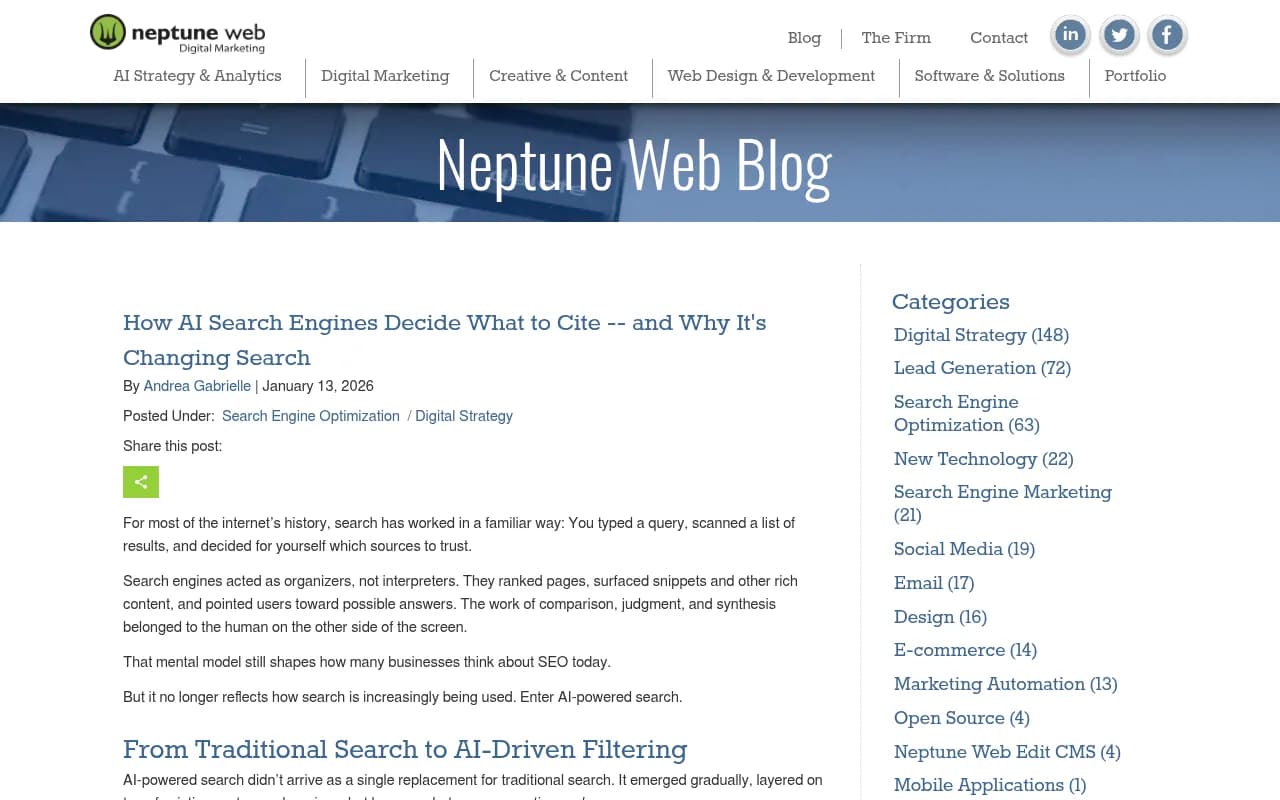
Based on research from Neptune Web, WP Engine, and Conductor's 7-month analysis of citation behavior across 7 AI engines, these are the signals that consistently matter:
Topical authority. AI systems favor sources that cover a topic in depth and consistently, not just pages that mention a keyword. A site that has published 40 pieces on B2B SaaS pricing over three years looks more authoritative on that topic than a site with one well-optimized page.
Content clarity and summarizability. Can the AI condense your content without distorting its meaning? Content that makes clear, specific claims in plain language is easier to cite than content that hedges everything or buries the point in promotional language.
Brand trust and cross-source consistency. AI systems cross-reference information across sources. If your claims align with what other trusted sources say, you're safer to cite. If your content contradicts established understanding without strong evidence, AI models tend to skip it.
Technical accessibility. If AI crawlers can't access your pages -- due to robots.txt rules, JavaScript rendering issues, or slow load times -- they can't cite them. This is more common than people realize.
Fit within a broader conversation. AI models favor sources that appear to belong to an ongoing, coherent body of knowledge. A one-off page that doesn't connect to anything else on your site is less likely to be cited than a page that's part of a clear topical cluster.
Each AI engine has its own citation personality
Here's something most guides miss: different AI engines don't cite the same sources. Conductor ran a 7-month analysis across 7 AI engines using identical queries and found that ChatGPT Search cites Wikipedia heavily, Perplexity cites YouTube and niche sources, and Google AI Mode cites Google's own index. Same user intent. Completely different editorial behavior.
This matters for your strategy. If you're only optimizing for one AI engine, you may be invisible on the others.
A rough breakdown of citation tendencies:
| AI engine | Citation tendencies | What this means for you |
|---|---|---|
| ChatGPT | Wikipedia, established publishers, high-authority domains | Build brand authority; get mentioned on trusted third-party sites |
| Perplexity | Niche sources, YouTube, recent content | Publish on niche platforms; use video content |
| Google AI Overviews | Google-indexed content, structured data, featured snippet candidates | Traditional on-page SEO still matters here |
| Google AI Mode | Google's own index, authoritative domains | E-E-A-T signals, structured markup |
| Claude | Long-form, well-structured content | Depth and clarity over brevity |
| Gemini | Google ecosystem, recent news | Freshness and Google indexing |
| Perplexity (shopping) | Product pages, reviews, comparison content | Structured product data, review schema |
The practical implication: you need to monitor your visibility across multiple AI engines, not just one. What works for ChatGPT citations may not move the needle on Perplexity.
Content formats that get cited
Not all content is equally citable. Some formats consistently perform better in AI citation contexts.
Explanatory, educational content
AI engines are answer engines. Content that clearly explains what something is, why it matters, or how it works aligns naturally with what they're trying to do. Concept overviews, industry explainers, and thought leadership that clarifies rather than promotes tend to get cited more than product pages or thinly-veiled sales content.
AI systems favor clarity over persuasion. A page that says "here's exactly how X works, with specific examples" will outperform a page that says "our solution is the industry-leading approach to X."
Structured, specific content
Vague content is hard to cite. If your page says "there are many factors to consider," an AI can't do much with that. If your page says "the three most common reasons SaaS companies lose enterprise deals are X, Y, and Z," that's citable.
Lists, step-by-step guides, specific statistics, and clear definitions all make content easier for AI systems to extract and attribute.
FAQ and Q&A formats
Questions and answers map directly to how AI engines process queries. A page structured around "what is X," "how does X work," and "when should you use X" is essentially pre-formatted for AI citation.
Original data and research
AI systems prioritize sources that provide information unavailable elsewhere. If you have proprietary data, survey results, or original analysis, that's a strong citation signal. It's something the AI can't get from five other sources, so it has a reason to cite you specifically.
The technical side: can AI crawlers actually reach your content?
This is where a lot of brands have silent problems they don't know about.
AI crawlers -- the bots that ChatGPT, Claude, Perplexity, and others send to read your content -- behave differently from Googlebot. They may not render JavaScript. They may hit rate limits. They may be blocked by your CDN or WAF without your team realizing it.
Common technical issues that prevent AI citation:
robots.txtrules that block AI crawlers (GPTBot, ClaudeBot, PerplexityBot, etc.) -- sometimes added accidentally during security updates- JavaScript-heavy pages that crawlers can't render
- Slow page load times that cause crawler timeouts
- Noindex tags on pages that should be crawlable
- Cloudflare or Fastly security rules that block non-browser user agents
The only way to know if you have these problems is to actually monitor your crawler logs and see which AI bots are hitting your site, which pages they're reading, and whether they're encountering errors.
Tools like Promptwatch provide real-time AI crawler logs -- showing exactly which AI agents are visiting your site, which pages they read, and what errors they hit. That kind of visibility is hard to get any other way.

The gap between ranking and being cited
One of the more counterintuitive findings in recent GEO research: many pages that rank well in traditional Google search never get cited by AI engines. And some pages that don't rank particularly well do get cited.
Why? Because ranking and citation are measuring different things.
Google ranking measures relevance and authority in a document-retrieval context. AI citation measures whether a document is a reliable, clear, summarizable source for a specific claim.
A page optimized for a broad keyword like "content marketing strategy" might rank well because it covers a lot of ground. But an AI engine looking to answer "how do you measure content marketing ROI" might skip that page entirely and cite a more focused piece that directly addresses the question.
This is why content gap analysis has become central to GEO work. You need to know which specific prompts AI engines are answering, which sources they're citing for those prompts, and whether your content is in the running.
What you can actually do about it
1. Audit your technical accessibility
Start by checking whether AI crawlers can reach your content at all. Review your robots.txt for rules blocking GPTBot, ClaudeBot, PerplexityBot, and other AI user agents. Check your CDN and firewall settings. If you have JavaScript-heavy pages, test whether they render properly for non-browser crawlers.
2. Build topical depth, not just breadth
A single well-optimized page rarely beats a site with genuine topical authority. If you want to be cited on a topic, you need multiple pieces of content covering that topic from different angles -- definitions, how-tos, comparisons, case studies, data. AI engines look for sites that clearly know what they're talking about.
3. Make your content specifically citable
Go through your key pages and ask: what specific claim could an AI cite from this page? If the answer is "nothing specific," rewrite it. Add concrete data points, clear definitions, specific recommendations. Remove hedging language that makes claims impossible to attribute.
4. Get cited on third-party sources
AI engines don't just look at your website. They look at the broader web. If your brand appears in industry publications, Reddit discussions, YouTube videos, and authoritative listicles, that off-site presence contributes to your citation likelihood. This is especially true for ChatGPT, which heavily weights established third-party sources.
5. Track which prompts you're missing
This is the part most brands skip. You can't optimize for AI visibility if you don't know which prompts your competitors are getting cited for and you're not. That requires systematic prompt tracking across multiple AI engines -- not a one-time check, but ongoing monitoring.
6. Use structured data
Schema markup helps AI engines understand what your content is about and how to categorize it. FAQ schema, HowTo schema, and Article schema are particularly useful for AI citation contexts.
Tools for tracking and improving AI citation visibility
The market for GEO and AI visibility tools has grown fast. Here are some worth knowing about, depending on what you need:
For comprehensive tracking across multiple AI engines with content optimization built in:
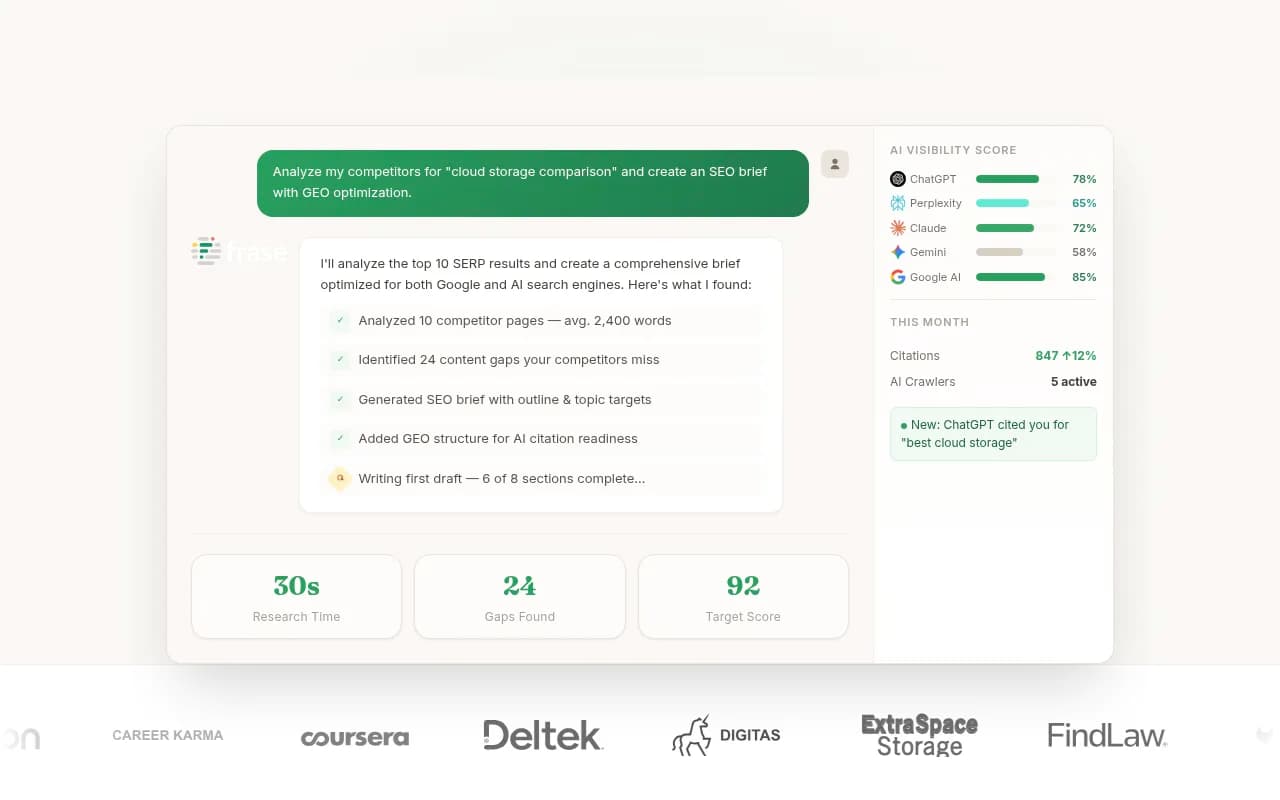
For content optimization and GEO scoring:
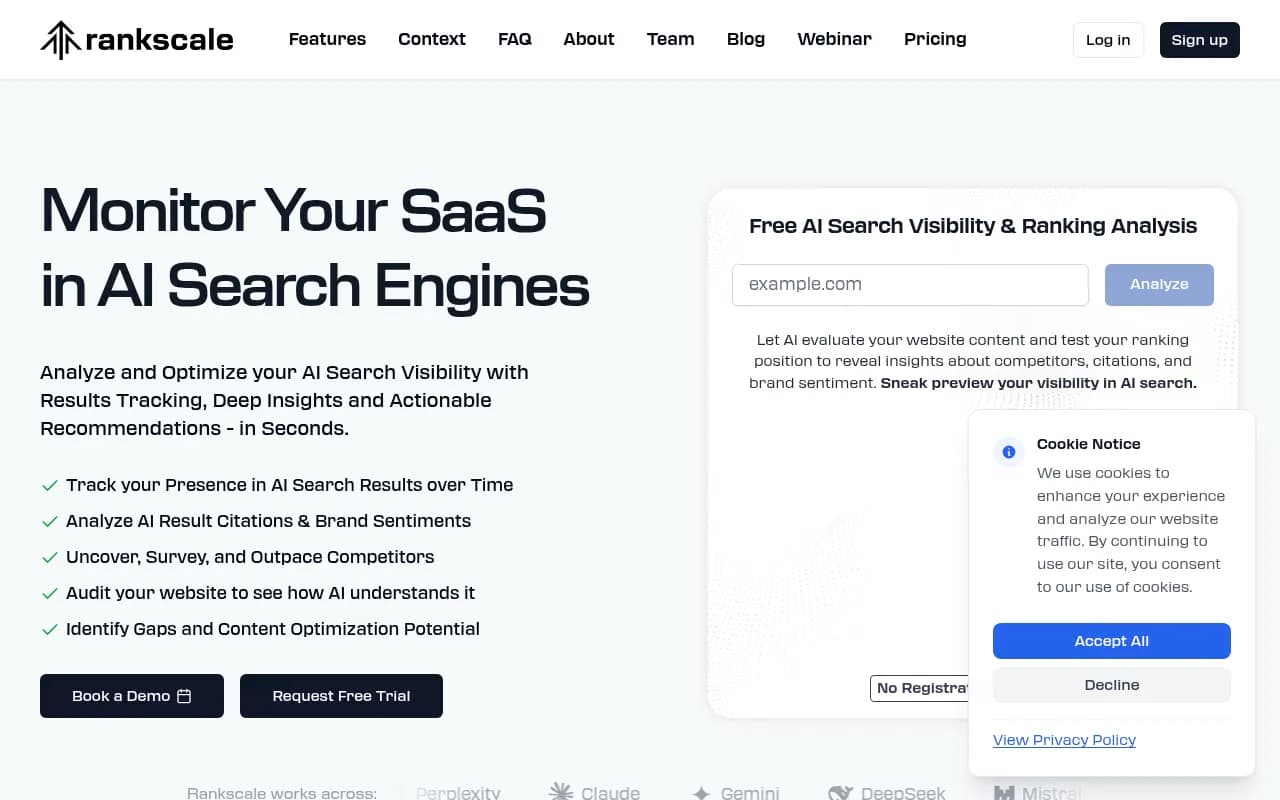
For AI search rank tracking:

For monitoring brand mentions across AI engines:

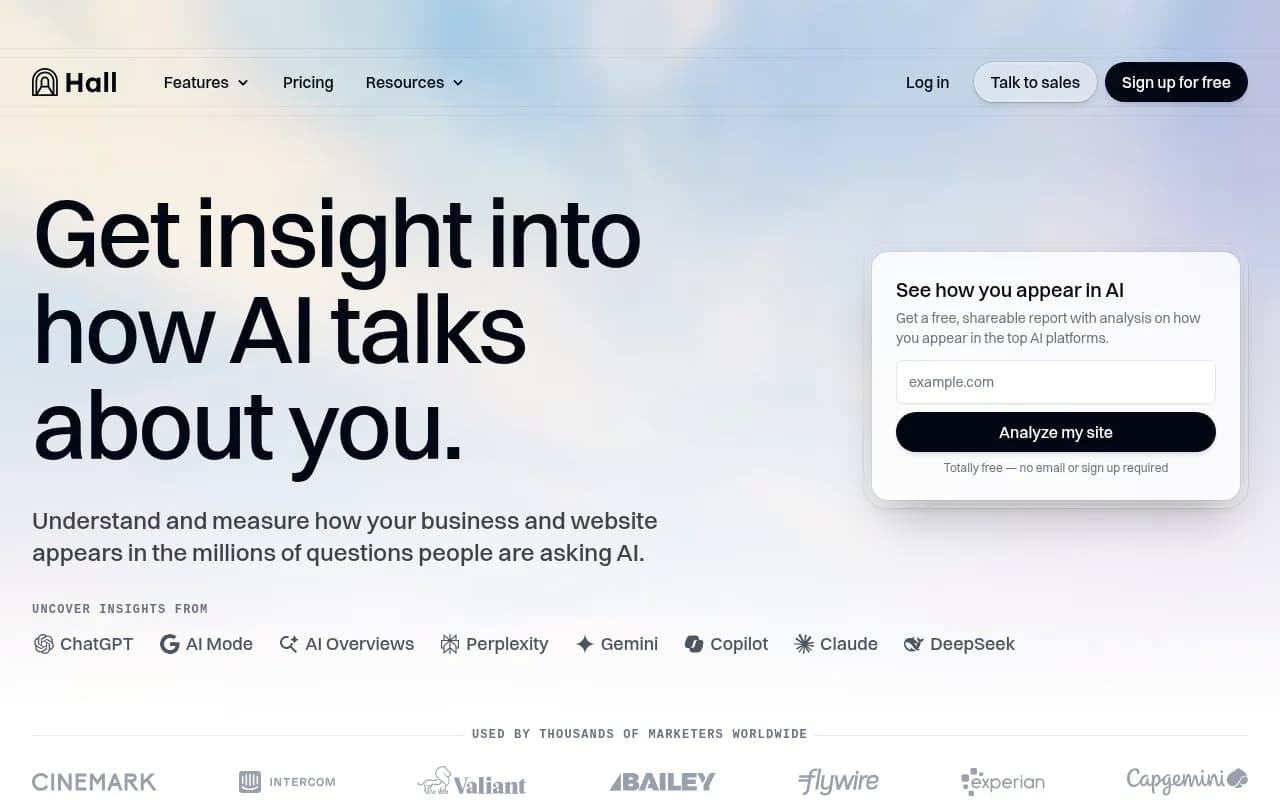
For enterprise-level AI visibility:


A quick comparison of what different tool categories offer:
| Tool type | What it does | What it doesn't do |
|---|---|---|
| Monitoring-only tools | Show where you appear in AI responses | Don't help you fix gaps or create content |
| Content optimization tools | Help you write content that's more citable | Don't track AI-specific citation data |
| Full GEO platforms | Track visibility, find gaps, generate content | Usually more expensive; overkill for small sites |
| Traditional SEO tools | Keyword research, backlinks, rankings | Limited AI search tracking depth |
The honest answer is that most brands need at least two things: a way to track what's happening in AI search right now, and a way to act on what they find. Monitoring without action is just watching yourself lose.
The offsite dimension people underestimate
One thing that surprises brands when they dig into AI citation data: a lot of the citations driving AI visibility don't come from their own website at all.
Reddit threads, YouTube videos, comparison listicles on third-party sites, and industry forum discussions all show up as sources in AI responses. If someone asks ChatGPT "what do users think of [your product]," it may pull from a Reddit thread you've never seen, a YouTube review from two years ago, or a comparison page on a site you don't control.
This means your AI visibility strategy can't stop at your own content. You need to know what's being said about you across the broader web, and whether those offsite mentions are helping or hurting your citation profile.
The bottom line
AI search engines aren't mysterious black boxes, but they do evaluate sources differently than traditional search engines do. They're not asking "is this page relevant?" They're asking "can I cite this page with confidence?"
The brands that will win in AI search over the next few years are the ones building genuine topical authority, making their content specifically citable, fixing their technical accessibility issues, and tracking their visibility across AI engines systematically.
That last part -- the tracking -- is what makes everything else actionable. Without data on where you're visible and where you're not, you're optimizing blind.
The gap between ranking and being cited is real, and it's growing. But it's also closeable, if you know where to look.