Key takeaways
- Shopify's Q1 2026 commerce data shows AI-referred sessions convert at nearly 50% higher rates than organic search on product-page sessions, with 14% higher average order values.
- More than half of AI-referred sessions start on a product page, versus about 20% for organic search. The AI does the research before the click.
- The data shows AI traffic converts better. It does not prove that AI's description of your brand causes the lift. Pre-qualified buyers are a plausible explanation.
- Academic work suggests how an AI advisor behaves (personalized, intrusive, humanlike) changes whether people buy, and that effect varies by product type.
- Measure AI as its own channel, separate paid ad clicks from citation clicks, and audit what AI actually says about you.
Why this question matters now
For years, brand perception was shaped by ads, reviews, and search results a buyer scrolled through themselves. Now a growing share of shoppers ask an assistant, get a short list, and click once. Whatever the assistant says about your product in that moment is the pitch.
I want to be careful here, because most writing on this topic is heavy on predictions and light on behavioral data. So this guide separates three things: what the early traffic data shows, what academic research says about why AI advice influences people, and what you can do about it without overclaiming.
What the early conversion data shows
The best public numbers right now come from Shopify. Its team analyzed storefront traffic and published findings from Q1 2026 in a post titled AI-referred shoppers convert better and spend more.
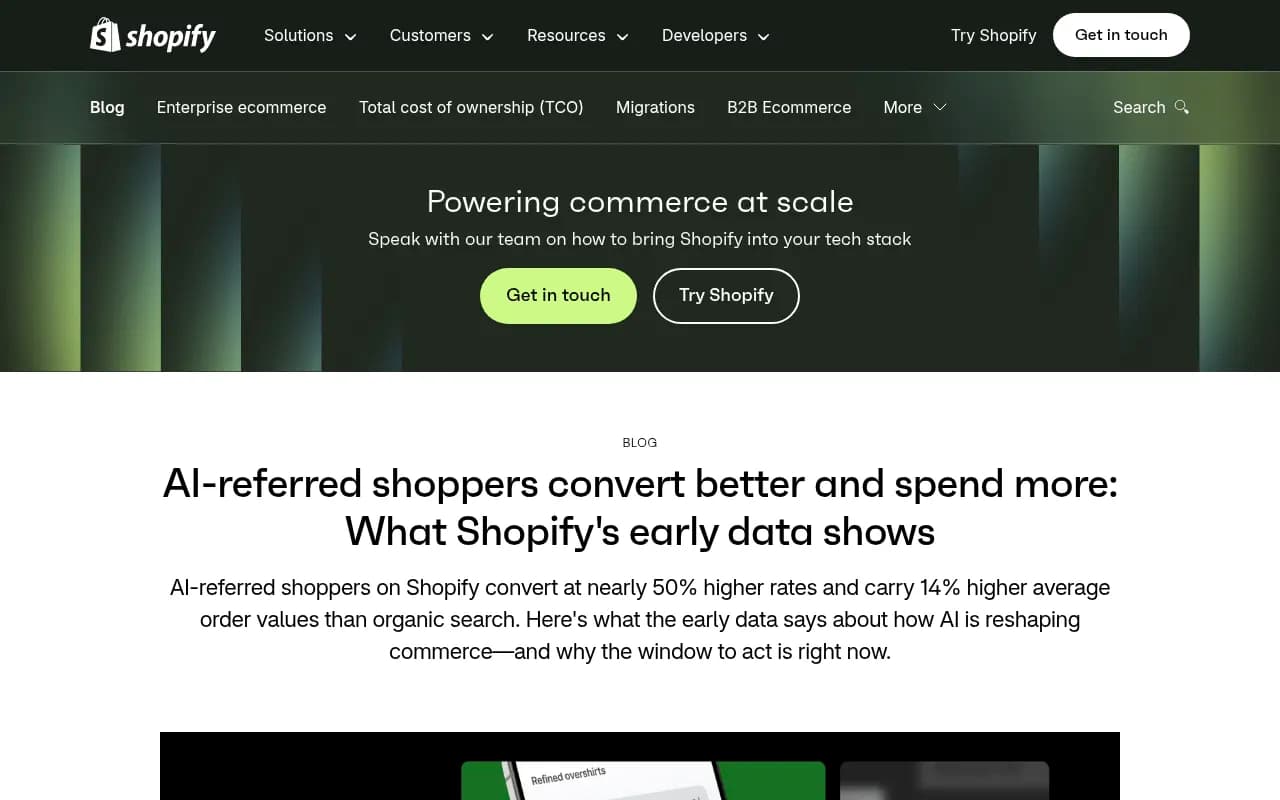
The headline figures:
| Metric | AI-referred | Organic search |
|---|---|---|
| Sessions starting on a product page | More than half (about 55-56%) | About 20% |
| Conversion rate (product-page sessions) | Nearly 50% higher | Baseline |
| Average order value | 14% higher | Baseline |
| Categories where AI converted better | 23 of 25 | n/a |
| Referral session growth, year over year | More than 8x | n/a |
| Order growth, year over year | Nearly 13x | n/a |
Shopify also notes that organic search still drives far more total sessions. AI is small and growing fast, not dominant. Treat it that way.
A second data point comes from retail. TechCrunch reported that on Black Friday 2025, Amazon sessions that ended in a sale rose 100% in the U.S. when shoppers used its Rufus chatbot, against 20% when they did not. Again, that is Amazon's own figure and it describes users who chose to engage with the assistant.
Journey compression, explained plainly
Shopify's explanation for the gap is what it calls journey compression. In a traditional journey, someone might run three to five searches, read eight to twelve pages across several sites, and come back days later to buy. Discovery and consideration are scattered across sessions, and visits often start on a homepage or collection page.
In an AI conversation, the shopper describes what they need, the assistant narrows criteria, and a short list appears. The click that follows lands on a specific product. So the visitor arrives late in the decision, which is exactly where conversion rates are highest.
That is also where perception enters. The assistant has already told the buyer what your product is good at, what it costs relative to alternatives, and whether people like it. You are being evaluated before your page loads.
What the data does not prove
Here is the caveat I would put in front of any executive deck. The Shopify figures show that AI-referred sessions convert better. They do not show that AI's perception of your brand causes the lift. Selection effects are an obvious alternative: people who use AI to shop may already be further along, more decisive, or more affluent. The comparison is also limited to sessions that begin on a product detail page, and it is Shopify's own data without independent verification that I could find.
So the honest claim is narrower: AI is sending pre-qualified, high-intent visitors, and what they were told along the way is probably part of why. Probably. Not provably.
What academic research adds about perception
The academic literature helps with the mechanism, even if it is not about AI search referrals specifically.
Personalization helps until it feels intrusive
A June 2026 field experiment in the Journal of Retailing and Consumer Services, titled When AI advice backfires, compares two AI recommendation styles, personalized and humorous framing, and studies the psychological mechanisms behind their effect on purchases. The title gives away the finding that matters: recommendations that feel too personal or intrusive can reduce buying rather than increase it.
Trust and personalization drive perception of AI-driven ads
A 2025 study in Systems and Soft Computing, The influence of AI on consumer behavior, found that discounts, consumer trust in AI, personalization, and previous buying behavior strongly shaped how people perceived AI-driven personalized ads. Brand familiarity, emotional appeal, and privacy concerns did not show a significant effect in that model. The model explained a large share of variance in perception (R² = 0.643) and a smaller share of impulse buying (R² = 0.449).
Humanlike AI works differently for different products
A systematic review of AI and consumer behavior toward brands pulls several threads together:
- For utilitarian products, lower AI humanization may raise purchase intention. For hedonic products, anthropomorphism improves brand evaluation and intent.
- When consumers see a chatbot as competent, skepticism drops.
- Voice recommendations are perceived as more credible than text ones.
- AI-enabled checkout is accepted more readily when people find it convenient.
The takeaway: perception is not one dial. Trust, competence, tone, and product type all interact, and the same assistant can help one purchase and hurt another.
What AI tends to cite when buyers compare options
If perception is built from what the assistant reads, it helps to know which pages it reads. Promptwatch Data's report on which content types ChatGPT cites (Sep 28 to Oct 4, 2026) found:
- Product pages were the most cited type at 22.4% of classified citations, with landing pages at 16.8%.
- For commercial prompts (comparing options before buying), product pages hit 26.0% and landing pages 20.6%. Listicles were 15.0% and comparisons 7.9%.
- For branded prompts, reviews rose to 5.6%, more than three times their overall share, and social posts reached 3.0%.
That lines up with Shopify's finding that AI sessions land on product pages. The pages that describe what you sell are both what AI cites and where buyers arrive. If those pages are vague on pricing, specs, or who the product is for, the AI has little to work with.
Also note how fast the sources move. In another Promptwatch Data report, Reddit's share of ChatGPT citations collapsed from roughly 4% to 0.5% on August 14, 2026. Perception inputs shift week to week, so a one-time audit goes stale.
A warning: some AI traffic is now paid
If you benchmark AI conversion rates, check how much of the traffic is advertising. According to Promptwatch Data on ChatGPT ads, ChatGPT showed no ads until May 27, 2026, when they appeared in 1.69% of web-search responses. The rate passed 30% on July 1, and the 7-day average stood at 32.4% in the window ending August 17.
That means "AI-referred" may mix organic citation clicks with sponsored clicks. They can convert differently, and only one of them reflects how the assistant perceives you. Tag and report them separately. ChatGPT also stopped sending a referrer on October 8, 2026, so untagged visits may be landing in direct traffic. Attribution is getting harder, not easier, and the attributing AI traffic guide covers the practical setup.
How to measure the effect on your own site
Step 1: Isolate AI as a channel
Shopify merchants can filter existing reports by AI answer engines under Referrer Channel, looking for ChatGPT, Perplexity, Copilot, Claude, and others. Gemini needs a Referrer Host filter for gemini.google.com. Compare conversion rate, AOV, and revenue per session against organic search. Do not bury AI inside organic, even if volume is small today.
Outside Shopify, you need analytics that classify AI referrers and catch UTM-tagged visits. Attribution tools like Triple Whale or Northbeam can help ecommerce teams slice this by source, though how well they classify AI referrers varies.
Step 2: Compare product-page sessions only
Shopify restricted its comparison to sessions starting on a product page for a reason: it removes the mix difference between channels. Do the same. Otherwise you will compare homepage browsers with ready buyers and draw the wrong conclusion.
Step 3: Check whether AI can read your site
High-intent traffic only arrives if the AI can fetch and cite your pages. IP-verified crawler logs show which bots read which pages and where they hit errors. This is a different problem from content quality, and mixing them up wastes months.
Step 4: Audit what AI says about you
Run the prompts your buyers actually use and read the answers. Note which brands appear, in what order, and which claims get repeated: "affordable for small teams," "battery life is weak," and so on. Those claims are the perception layer.
Promptwatch is built for this loop. It tracks how ChatGPT, Gemini, Perplexity, Google AI Overviews, and others mention and cite you, pulls out the individual claims AI makes in its Brand Narrative view, shows AI crawler logs, and ties visitor analytics to AI-referred traffic and conversions. You can start with the free AI visibility report.

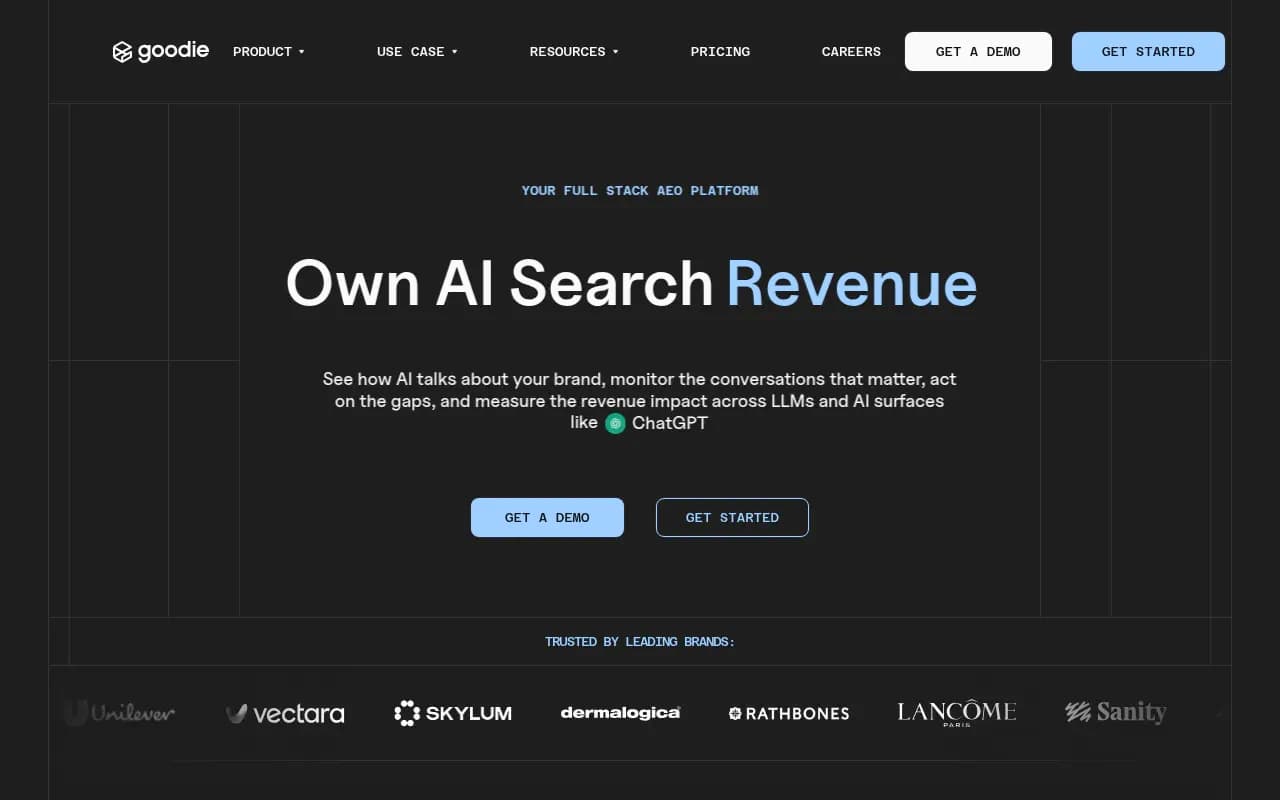
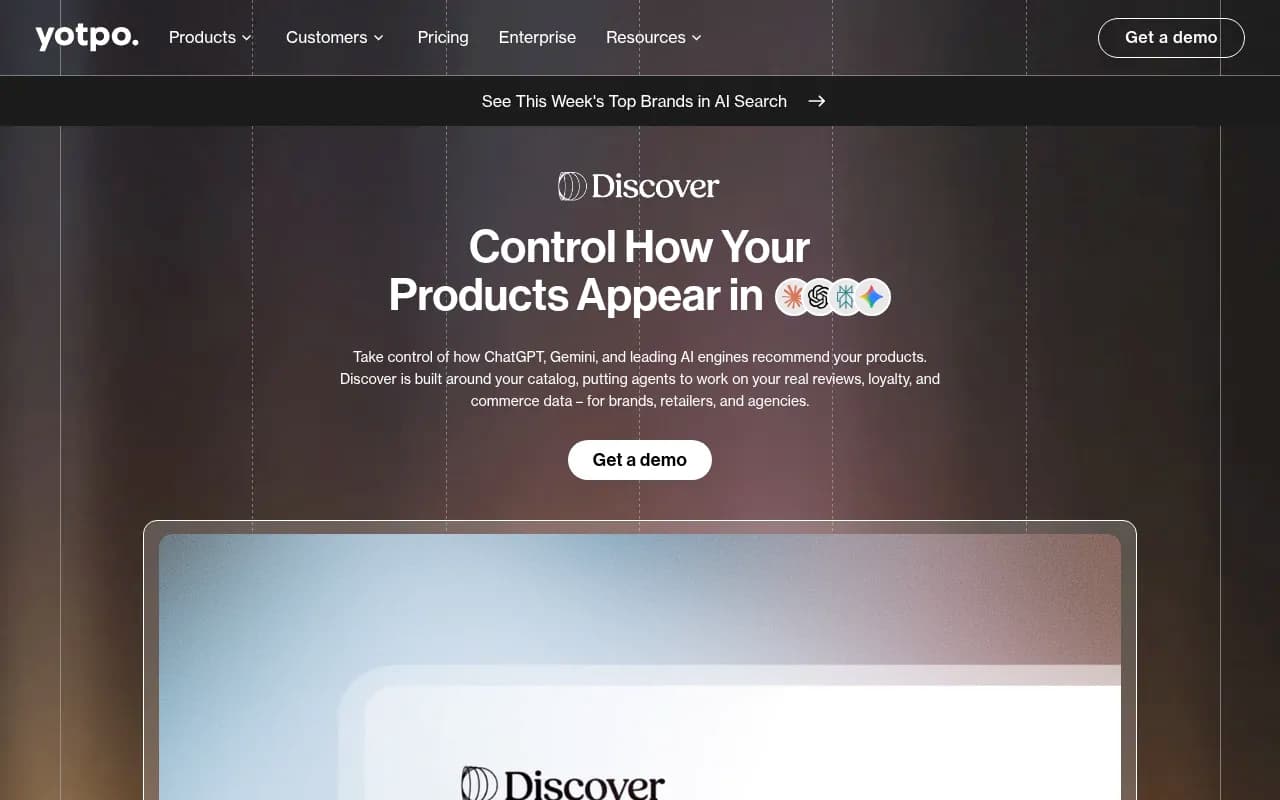
Other tools in this space exist, and the GEO software directory lists many. For ecommerce specifically, Azoma and Goodie AI focus on AI shopping surfaces, and Yotpo Discover targets product discovery.
Comparing the options
| Need | What to look for | Example tools |
|---|---|---|
| Track what AI says and cites | Real interface data, citations, sentiment | Promptwatch, Profound, Peec AI |
| AI shopping visibility | Product card and catalog tracking | Azoma, Goodie AI, Promptwatch |
| Revenue attribution | Source-level conversion and AOV | Triple Whale, Northbeam |
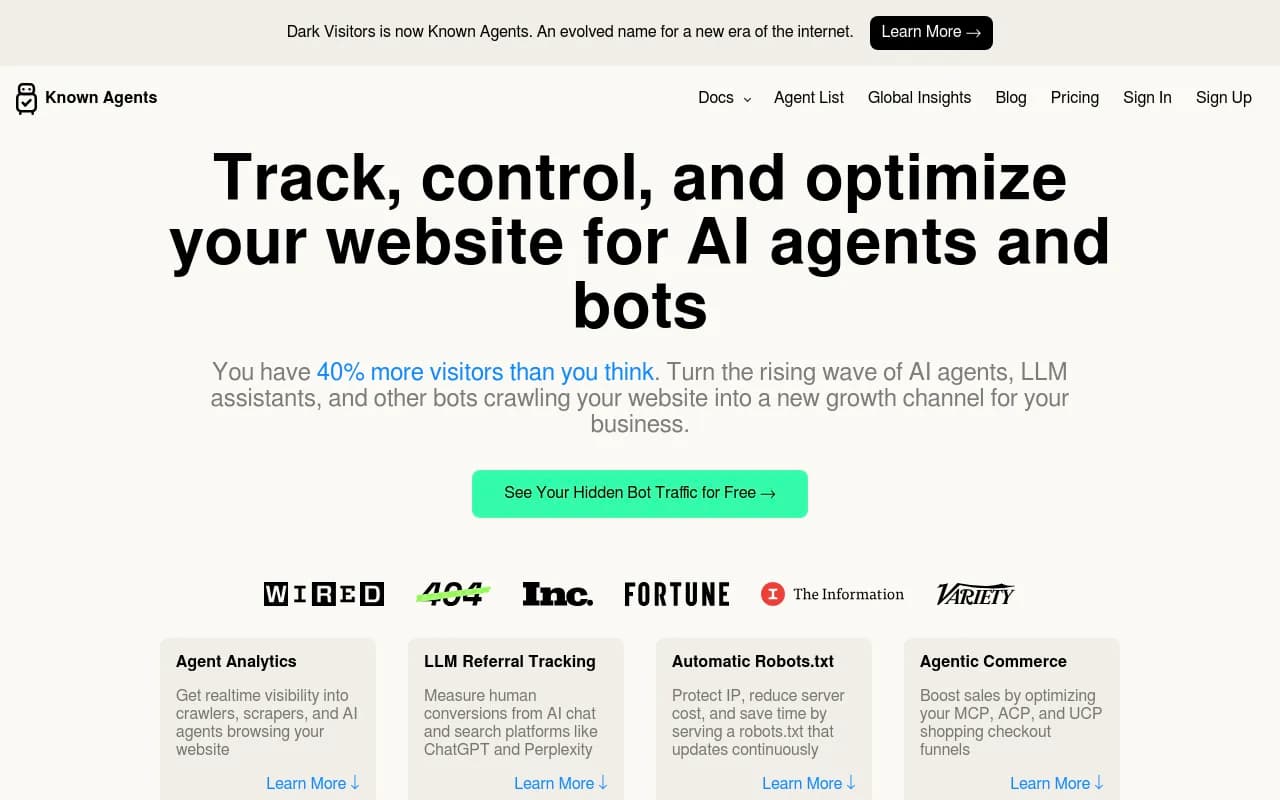
| Crawler and referral detection | Bot logs, AI referrers | Promptwatch, DarkVisitors |


What to do with product pages
Promptwatch Data's advice from the content-type report is practical and worth repeating:
- Make product pages comparable, with clear pricing, specs, and target audience.
- Get listed in the best-of roundups ChatGPT cites.
- Collect reviews on trusted sites, since reviews matter more for branded prompts.
- Add a brand FAQ.
For shopping features specifically, Promptwatch's ChatGPT shopping report recommends complete Product schema, accurate prices and availability, and a clean merchant feed. Its numbers are dated, so check the live page before quoting rates.
And since the research on personalization says too much can backfire, keep product copy factual and specific rather than gimmicky. An AI that summarizes a page full of hype will pass that tone along.
A reasonable stance for 2026
I would not bet the budget on a 50% conversion lift. It comes from one platform, one quarter, and one session type. But the direction is consistent across Shopify and Amazon: shoppers who go through an AI assistant arrive more decided. The cost of treating AI as a measured channel is small. The cost of ignoring it while it grows 8x year over year is harder to recover.
If you want outside help building the measurement and content side, agencies such as 1001 SEO Media work on both classic SEO and AI search visibility. Whoever you choose, start by splitting AI traffic out in your analytics this week, then read ten real AI answers about your category.
FAQ
Do AI-referred shoppers really convert better?
In Shopify's Q1 2026 data, yes: nearly 50% higher on product-page sessions, with 14% higher order values. It is a platform-specific, early finding.
Does AI perception cause the higher conversion?
The data does not establish causation. Pre-qualified buyers are a plausible explanation, and the answer an AI gave them likely contributes.
Which pages matter most for AI-driven buyers?
Product pages and landing pages. They are the most cited content types in ChatGPT and where more than half of AI-referred sessions begin.
How do I tell organic AI traffic from paid?
Tag ad clicks and citation clicks separately, and treat ChatGPT's missing referrer as a gap that UTM tagging has to fill.