Key takeaways
- Hall AI (usehall.com) is shutting down in 2026, leaving users without a way to track how AI platforms cite and discuss their brand
- The shutdown fits a broader pattern: many early AI visibility tools built on thin feature sets couldn't survive as the market matured and user expectations grew
- Your data and monitoring workflows need to move somewhere -- the good news is there are now more capable alternatives than Hall AI ever was
- The best replacements range from lightweight trackers to full-stack GEO platforms, depending on what you actually need
- If you want to go beyond monitoring and actively improve your AI visibility, look for tools that include content gap analysis and optimization, not just dashboards
What Hall AI was, and what it did
Hall AI positioned itself as a brand monitoring tool for the AI era -- specifically tracking how AI platforms like ChatGPT, Perplexity, and Claude cited and talked about your brand. The pitch was simple: as AI search engines started replacing traditional Google queries for millions of users, companies needed to know whether they were showing up in those answers.
It was a real problem worth solving. But "real problem" and "sustainable business" aren't the same thing.
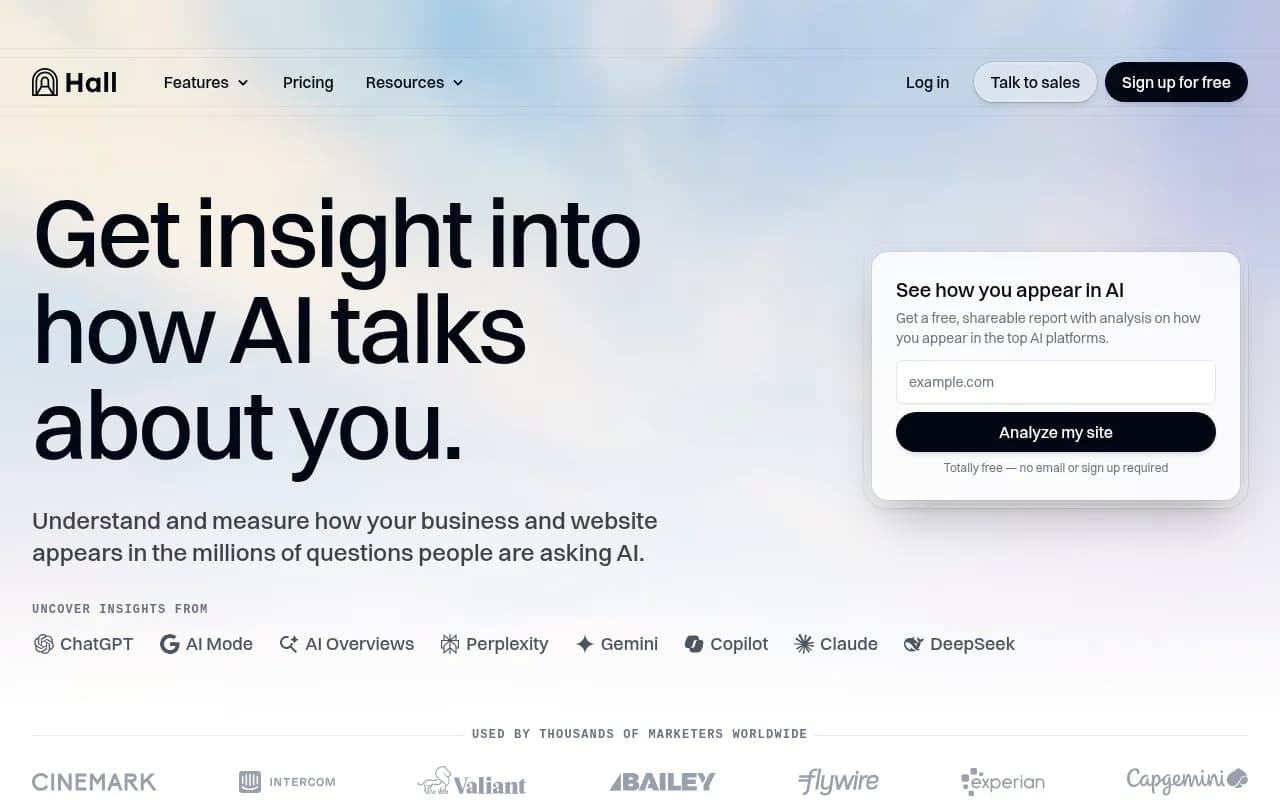
Hall AI's core offering was citation tracking -- you'd set up your brand, run prompts, and see where (and whether) AI models mentioned you. For teams just waking up to the idea that AI search visibility mattered, it was a useful starting point.
The shutdown leaves those users in a bind. If you've been relying on Hall AI for any kind of AI visibility reporting, you need to move quickly. Your historical data may not be exportable forever, and any automated workflows you've built around the tool will stop working.
Why AI tools keep shutting down in 2026
Hall AI isn't an isolated case. The AI tooling space has seen a wave of shutdowns, pivots, and quiet sunsets over the past 18 months. Understanding why helps you pick a replacement that won't leave you in the same position next year.
The core problem is economics. Many early AI monitoring tools were built on top of API calls to OpenAI, Anthropic, or Google -- meaning every query they ran on your behalf cost them money. When you're running hundreds of prompts per day across multiple AI models to track brand mentions, those costs add up fast. Tools that priced too low, or offered generous free tiers to grow their user base, often found themselves subsidizing usage without a clear path to profitability.
There's also a feature depth problem. First-generation AI visibility tools were essentially dashboards that showed you whether your brand appeared in AI answers. That was novel in 2023. By 2026, with Google rolling out AI Mode at scale and ChatGPT handling hundreds of millions of queries daily, "your brand appeared 3 times this week" isn't actionable enough to justify a subscription.
The tools that have survived -- and grown -- are the ones that moved from monitoring to optimization. Showing you data is table stakes. Helping you do something about it is where the value is.
What to look for in a Hall AI replacement
Before jumping to a list of alternatives, it's worth being clear about what you actually need. Hall AI users generally fall into a few categories:
- Teams that wanted basic brand mention tracking in AI answers (are we showing up at all?)
- Marketing or SEO teams that needed to report on AI visibility to stakeholders
- Agencies managing AI visibility for multiple clients
- Teams that wanted to actively improve their AI search presence, not just monitor it
The right replacement depends heavily on which of those describes you. A solo marketer checking in weekly has different needs than an agency running 50 client campaigns.
Here's a comparison of the main alternatives worth considering:
| Tool | Best for | Monitoring | Content optimization | Crawler logs | Pricing starts at |
|---|---|---|---|---|---|
| Promptwatch | Full-stack GEO teams | Yes | Yes (AI content agents) | Yes | $99/mo |
| Otterly.AI | Budget monitoring | Yes | No | No | Low |
| Peec AI | Multi-language tracking | Yes | No | No | Mid |
| Profound | Enterprise monitoring | Yes | Limited | No | High |
| AthenaHQ | Mid-market monitoring | Yes | No | No | Mid |
| Ranksmith | Actionable insights | Yes | Limited | No | Mid |
| GetCito | Tracking + optimization | Yes | Yes | No | Mid |
| Scrunch AI | Brand monitoring | Yes | No | No | Mid |
The best Hall AI alternatives in 2026
For teams that want a direct replacement (monitoring only)
If you just want to know when and how AI models mention your brand, several tools do this well.
Otterly.AI is one of the more affordable options for basic AI visibility monitoring. It covers the major models and gives you a clear view of brand mention frequency. It won't help you improve your visibility, but if reporting is the goal, it works.

Peec AI is worth considering if you operate in multiple languages or regions. Its multi-language tracking is genuinely strong, and the interface is clean.

Scrunch AI focuses on brand monitoring across AI search engines and is a reasonable step up from Hall AI's feature set.
For teams that want more than Hall AI offered
This is where it gets interesting. Hall AI was a monitoring tool. If its shutdown is prompting you to reconsider your whole approach to AI visibility, you have an opportunity to upgrade rather than just replace.
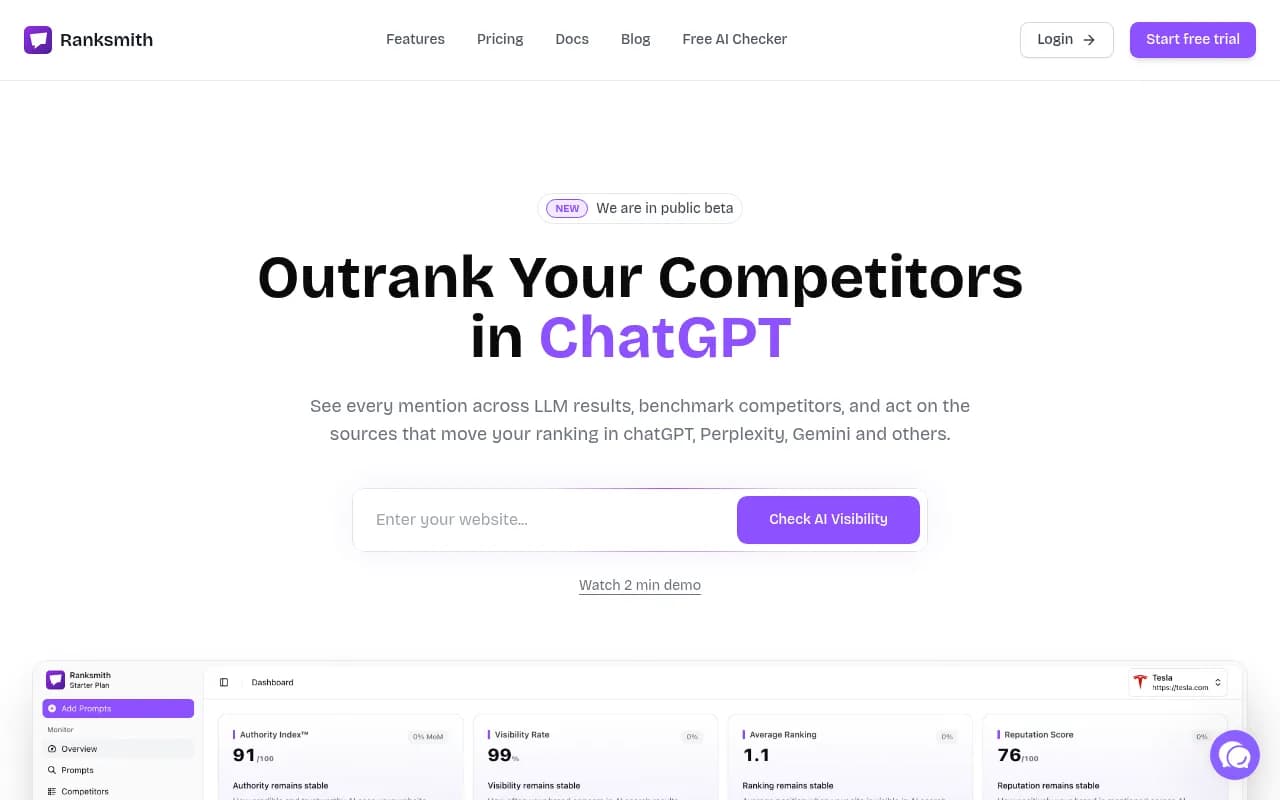
Ranksmith goes beyond raw monitoring by surfacing actionable insights -- it's not just "you appeared 4 times," it's pointing you toward why and what to do about it.
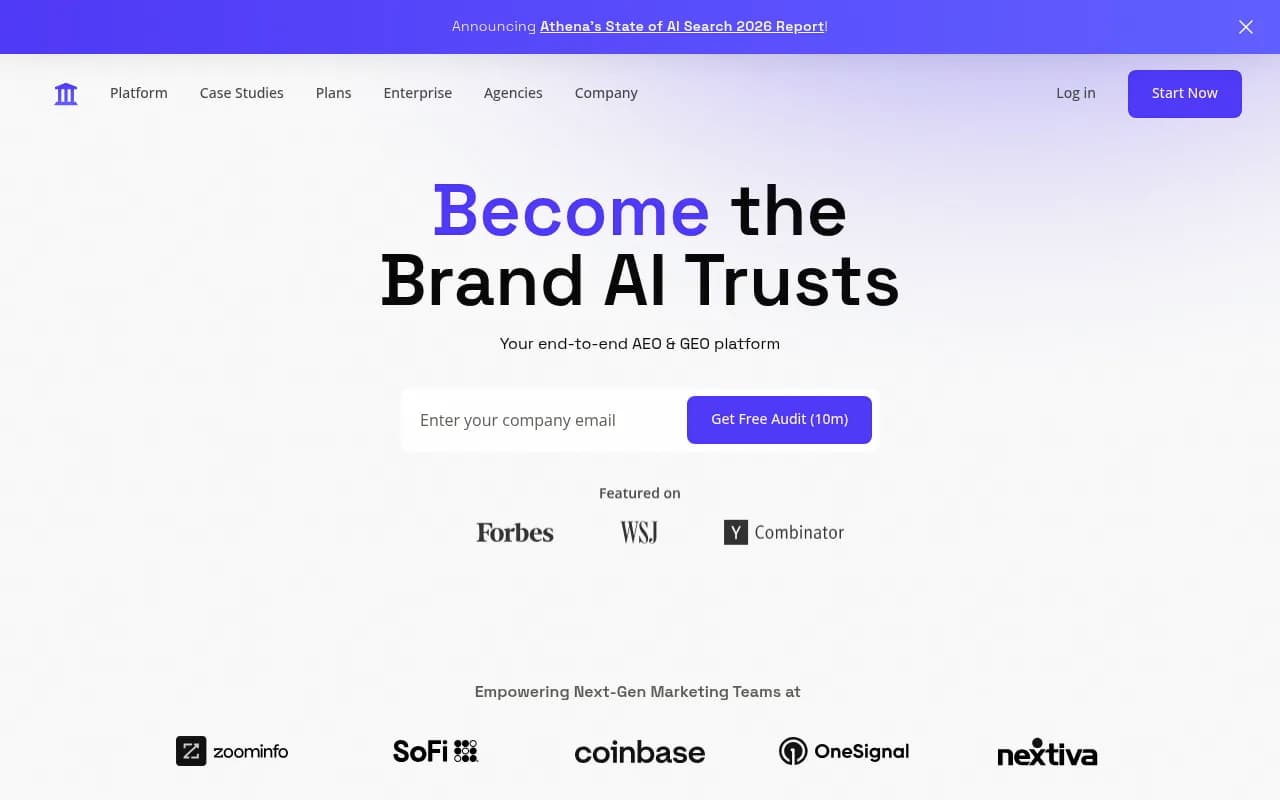
AthenaHQ tracks your brand across 8+ AI search engines and gives you competitive context, which Hall AI largely lacked.
Profound is a solid choice for larger teams that need structured reporting and deeper prompt analytics.

For teams that want to actually improve their AI visibility
Here's the honest take: most Hall AI users probably weren't just monitoring for fun. They wanted to show up more in AI answers. If that's the goal, a monitoring-only tool was always going to be insufficient.
Promptwatch is the most complete option in this category. It covers the full cycle -- finding the specific prompts where competitors appear but you don't, generating content designed to close those gaps, and tracking whether that content actually starts getting cited. The crawler logs feature is particularly useful: you can see when AI crawlers like ChatGPT and Perplexity visit your pages, which ones they read, and when those pages move from crawled to cited.

That's a meaningfully different product from what Hall AI was. If you're going to pay for AI visibility tooling, it's worth asking whether you want a dashboard or an engine.
How to migrate away from Hall AI
A few practical steps before the shutdown completes:
Export everything you can. Pull your historical citation data, prompt lists, and any reports you've generated. Even if you can't import this directly into a new tool, having a baseline is useful for benchmarking.
Document your prompt set. The specific prompts you were tracking in Hall AI represent real knowledge about how your customers search. Don't lose that list. Most alternatives will let you import or manually recreate your tracked prompts.
Run a parallel period. If possible, run your new tool alongside Hall AI for a few weeks before the shutdown. This lets you calibrate -- you'll see whether the new tool is catching the same mentions, and you'll have continuity in your reporting.
Reassess your scope. Hall AI's shutdown is a natural moment to ask whether you were tracking the right prompts in the first place. AI search behavior has changed significantly even in the past year. The prompts that matter for your brand today may be different from the ones you set up when you first signed up.
The bigger picture: AI search is not slowing down
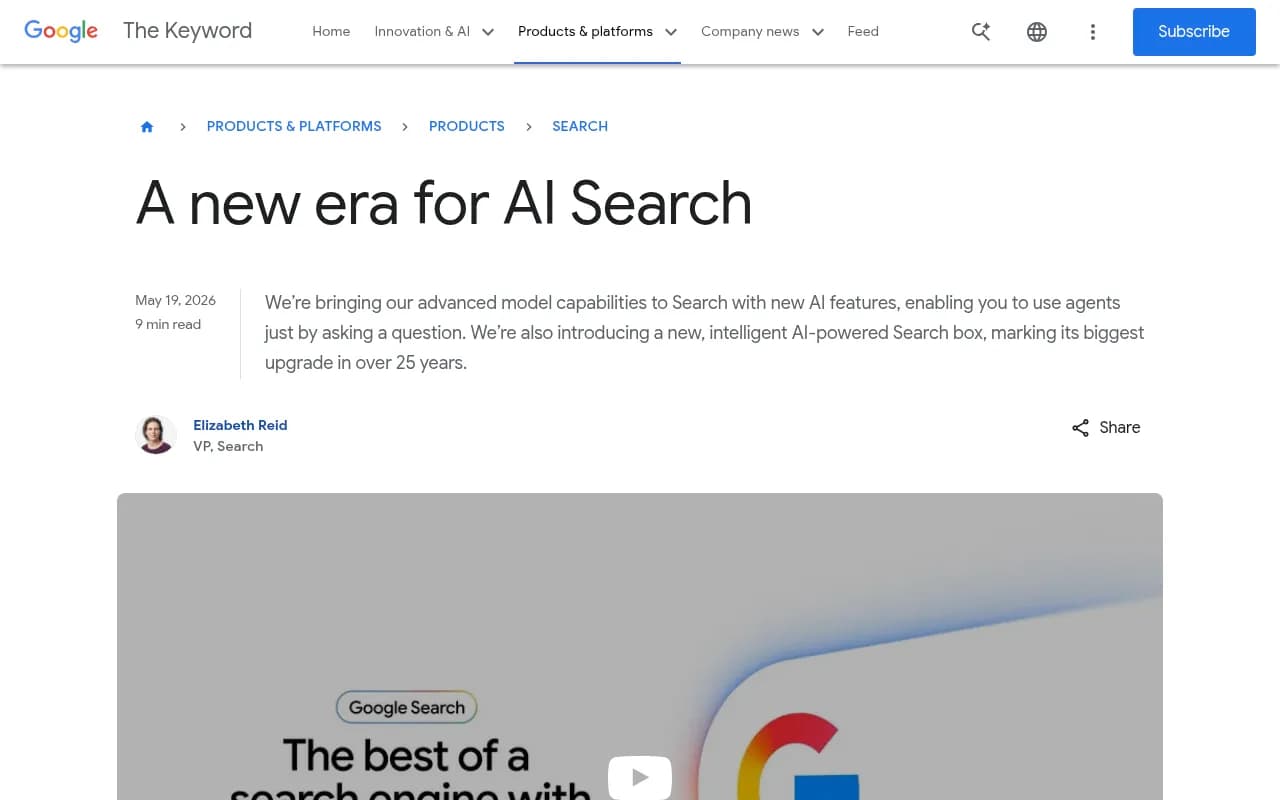
It would be tempting to read a tool shutdown as a sign that AI search visibility is a fad. It isn't. Google's I/O 2026 announcements made clear that AI Mode and AI agents are now central to how Search works -- not a side experiment. ChatGPT's user numbers keep growing. Perplexity has carved out a real user base among researchers and professionals.
What's fading is the first generation of thin tools that were built quickly to capture early demand without a clear path to being genuinely useful. Hall AI appears to be one of those. The tools that survive will be the ones that help teams do something, not just see something.
The market is also consolidating around a smaller number of more capable platforms. That's good news for users -- it means the tools that remain are more likely to be around in another 18 months.
Quick recommendations by use case
If you're trying to figure out which direction to go, here's a direct take:
- You just need basic brand mention tracking and have a small budget: start with Otterly.AI or Peec AI
- You need multi-client reporting for an agency: look at Profound or Promptwatch's agency tier
- You want to understand why competitors appear in AI answers and you don't: Ranksmith or AthenaHQ
- You want to actually fix your AI visibility, not just measure it: Promptwatch is the most complete option, with content gap analysis, AI content generation, and crawler logs all in one place
- You're an enterprise brand with complex needs: Profound or Promptwatch at the Business/Enterprise tier
The Hall AI shutdown is inconvenient, but it's also a forcing function. Most teams that were using it were underinvesting in AI visibility anyway. This is a reasonable moment to set up something more serious.
Final thought
Tool shutdowns are frustrating, especially when you've built reporting workflows around something. But Hall AI's exit from the market is less about AI visibility mattering less and more about the bar for what a useful tool looks like having risen considerably.
The teams that come out of this in a better position are the ones that use the migration as an opportunity to ask harder questions: Are we tracking the right prompts? Do we understand why AI models cite our competitors instead of us? Do we have a plan to actually change that?
Monitoring what's happening is step one. Having a way to act on it is what separates teams that improve their AI search presence from teams that just watch it.