Key takeaways
- Citation rates for the same brand can vary by as much as 46x across different AI platforms — what ranks in ChatGPT often doesn't rank in Grok or Perplexity.
- Each platform has a fundamentally different retrieval philosophy: Perplexity defaults to live web search, ChatGPT blends training data with browsing, and Grok leans on real-time social signals from X.
- AI visibility is genuinely fragmented in 2026 — brands that assume one platform represents "AI search" are likely flying blind on the others.
- Tracking visibility across all three (and more) requires dedicated tooling, not traditional SEO dashboards.
- The brands winning across all three platforms share one trait: they publish content that directly answers the specific questions each model is trained or prompted to retrieve.
The fragmentation problem nobody warned you about
Here's a number worth sitting with: the same brand can see a citation rate of 0.59% on ChatGPT and 27% on Grok. That's a 46x difference, according to data from GEO optimization research published in 2026.
That gap doesn't happen because one platform is "better." It happens because Grok, Perplexity, and ChatGPT are built on completely different retrieval architectures, trained on different data, and optimized for different user intents. A brand that dominates one can be invisible on another — and most marketing teams have no idea which situation they're in.
This guide breaks down why the three platforms diverge so sharply, what that means for brand visibility, and what you can actually do about it.
How each platform decides what to cite
Before you can understand why visibility is fragmented, you need to understand what each model is actually doing when it generates a response.
ChatGPT: the general-purpose workspace
ChatGPT is built as a general-purpose reasoning and writing tool. Its default behavior blends parametric knowledge (what it learned during training) with optional web browsing. When a user asks "what's the best CRM for a 50-person sales team," ChatGPT draws heavily on what it absorbed during training — which means content that was well-indexed, widely cited, and authoritative before the training cutoff has a structural advantage.
This creates a bias toward established brands and well-linked content. New entrants, niche tools, or brands that only recently started publishing substantive content are at a disadvantage, regardless of how good their product is. ChatGPT also holds about 68% of AI chatbot traffic according to 2026 market share data, which makes its citation behavior disproportionately important — but also means its brand recommendations are somewhat frozen in time unless you actively push fresh content into its retrieval layer.
Perplexity: the research engine
Perplexity is different in a meaningful way. It defaults to live web retrieval for almost every query, pulling current sources and citing them inline. This makes it more like a search engine with a synthesis layer than a chatbot with a knowledge base.
For brands, this is both an opportunity and a threat. If you publish high-quality, well-structured content that answers specific questions, Perplexity can surface it quickly — sometimes within days of publication. But if a competitor publishes a better answer to the same question tomorrow, Perplexity can just as quickly drop you from its citations.
The implication: Perplexity rewards recency and specificity. A detailed comparison page, a well-structured FAQ, or a data-backed study can earn citations faster here than on any other major platform.
Grok: the real-time social signal engine
Grok is built on top of xAI's infrastructure and has privileged access to the X (formerly Twitter) firehose. This is not a minor detail — it fundamentally changes what Grok considers authoritative. Brands that are actively discussed, debated, and recommended on X have a structural advantage in Grok's responses that has nothing to do with their website content.
This explains the extreme citation variance. A brand that's popular in tech Twitter circles but has a thin website might show up constantly in Grok while being nearly invisible in ChatGPT. Conversely, a brand with excellent SEO content but no social presence might dominate ChatGPT and Perplexity while barely registering in Grok.
| Platform | Primary retrieval method | Content that wins | Recency bias |
|---|---|---|---|
| ChatGPT | Training data + optional browsing | Authoritative, well-linked, established content | Low (training cutoff) |
| Perplexity | Live web search with synthesis | Specific, well-structured, recently published content | High |
| Grok | Training data + X/Twitter firehose | Socially discussed brands, X-native content | High (real-time) |
| Google AI Overviews | Google index + Knowledge Graph | E-E-A-T content, structured data, Google-trusted sources | Medium |
Why the same brand can rank so differently
The 46x citation gap isn't an anomaly. It's what you'd expect when you understand the mechanics above. A few concrete scenarios:
A B2B SaaS company with a strong content marketing program but no social presence will likely perform well in ChatGPT (established, well-linked content) and Perplexity (structured, specific answers) but poorly in Grok (no X signal).
A consumer brand that's gone viral on X multiple times will show up constantly in Grok responses but may be invisible in Perplexity if their website doesn't have substantive content that answers the questions users are actually asking.
A new startup that launched six months ago with a great product and active community might rank well in Perplexity (recent content) and Grok (social buzz) but barely appear in ChatGPT (training cutoff predates them).
None of these outcomes are permanent. But they require different interventions — and you can't fix what you can't see.
The market share context
ChatGPT still dominates with roughly 68% of AI chatbot traffic. But the gap is closing. Google's Gemini has been eating into ChatGPT's share, and Grok has overtaken Perplexity in overall usage, now sitting at around 3.4% market share compared to Perplexity's slightly lower figure. DeepSeek is at 3.7%.
These numbers matter for prioritization. If you're only tracking one platform, ChatGPT is the obvious choice by volume. But Perplexity punches above its weight for high-intent research queries — the kind where someone is actively evaluating vendors. And Grok's growth trajectory, combined with its X integration, makes it increasingly relevant for consumer brands and anything with a strong community angle.
The practical answer is: you need visibility across all of them, weighted by where your buyers actually research.
 A 2026 comparison of top AI models shows how differently each platform positions itself — which directly affects what content each one cites.
What "winning" looks like on each platform
Winning on ChatGPT
ChatGPT citations tend to favor content that looks authoritative in the traditional SEO sense: well-linked, frequently cited by other sources, structured clearly, and published on domains with established trust. The brands that appear consistently in ChatGPT responses are usually the ones that invested in content marketing two or three years ago and built genuine topical authority.
To improve ChatGPT visibility, the most reliable lever is publishing comprehensive, well-structured content that directly answers the questions your buyers ask. Not thin pages — actual depth. The kind of content that gets cited by other publications, shared in newsletters, and linked from resource pages.
Winning on Perplexity
Perplexity is more meritocratic in the short term. Because it retrieves live, it can surface a new piece of content quickly. The content that wins here tends to be specific and answerable: comparison pages, "best X for Y" articles, data-backed studies, and FAQ content that directly addresses the query.
Structured formatting helps. Perplexity's synthesis layer tends to pull from content that's easy to parse — clear headings, concise answers near the top of sections, and explicit source signals (dates, author names, data citations).
Winning on Grok
Grok is the most unusual of the three to optimize for. Because it weights X signals, the most effective strategies involve genuine community presence: being talked about by credible voices on X, having your brand mentioned in threads that get traction, and building a product that people actually want to recommend publicly.
This doesn't mean gaming X with fake engagement. It means building a product worth talking about and making it easy for happy users to share their experiences. For B2B brands, getting mentioned by influential practitioners in your space on X has a direct (if hard to measure) effect on Grok visibility.
The monitoring gap most brands have right now
Most marketing teams are still running traditional SEO dashboards. They track keyword rankings, organic traffic, and maybe some social mentions. None of that tells you whether ChatGPT is recommending your product, whether Perplexity is citing your content, or whether Grok is even aware you exist.
This is a genuine blind spot. SOCi's 2026 Local Visibility Index research found that AI platforms select brands through mechanisms that are fundamentally different from traditional search — and that visibility is harder to achieve and harder to measure than in conventional SEO.
The brands that are ahead right now are the ones that started tracking AI visibility early and built feedback loops between what they publish and how AI models respond. That's not a coincidence — it's the result of treating AI search as a distinct channel with its own measurement requirements.
Tools like Promptwatch are built specifically for this: tracking how your brand appears across ChatGPT, Perplexity, Grok, and other AI platforms, and showing you the gaps between where you appear and where your competitors do.

Tools for tracking AI visibility across platforms
If you're serious about understanding your brand's position across Grok, Perplexity, and ChatGPT, you need dedicated tooling. Here's a practical overview of what's available:
Full-stack platforms
These tools go beyond monitoring to help you identify gaps and act on them.
Promptwatch monitors 10 AI models including ChatGPT, Perplexity, Grok, Claude, Gemini, and more. Its Answer Gap Analysis shows you which prompts competitors are visible for that you're not — and its built-in AI writing agent generates content designed to earn citations. It's one of the few platforms that closes the loop from "I'm invisible here" to "here's the content that will fix it."

Profound tracks brand visibility across AI search engines with strong analytics for understanding how your content performs across different models.

AthenaHQ covers 8+ AI search engines and is built around monitoring and competitive analysis.
Monitoring-focused tools
These are good for tracking visibility but don't offer content generation or gap analysis.

Otterly.AI is an affordable option for teams that want to start monitoring AI visibility without a large budget.

Peec AI has solid multi-language support, useful for brands operating across multiple markets.
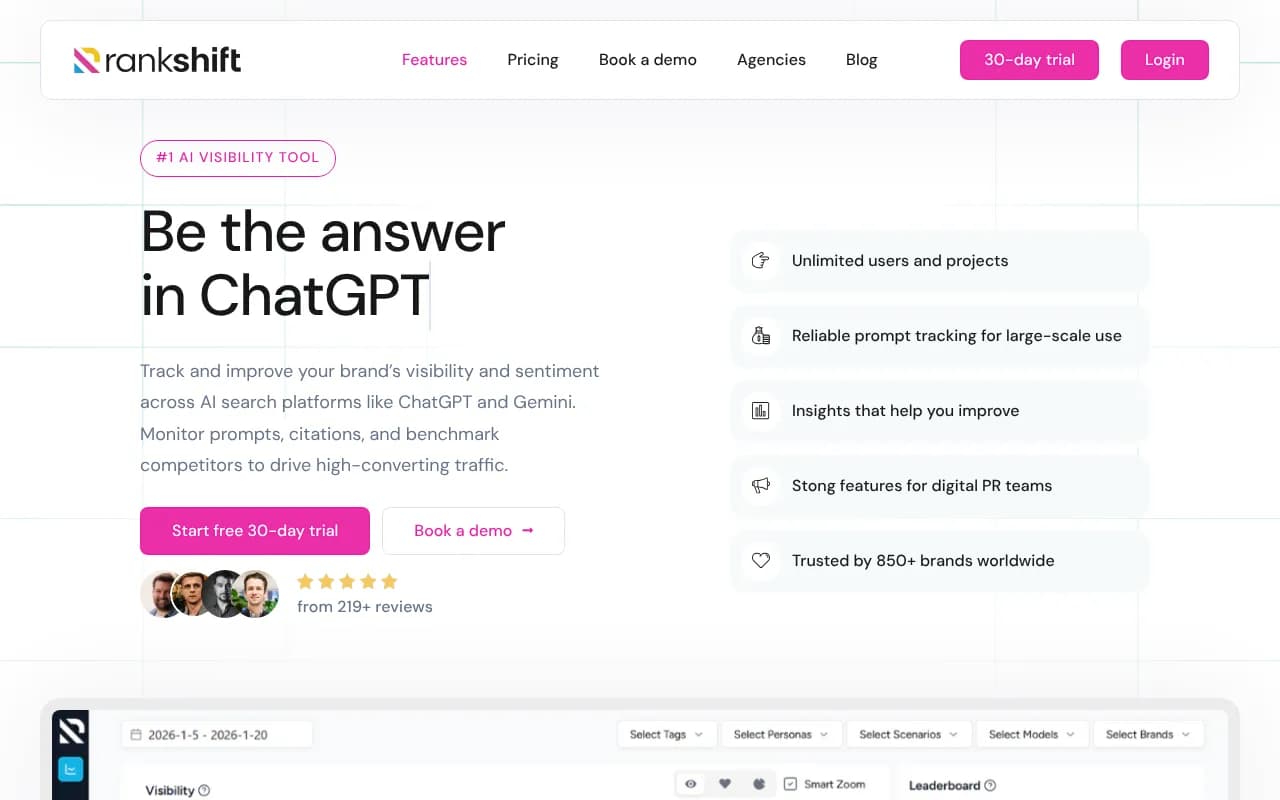
Rankshift focuses on LLM tracking with a GEO-oriented approach.
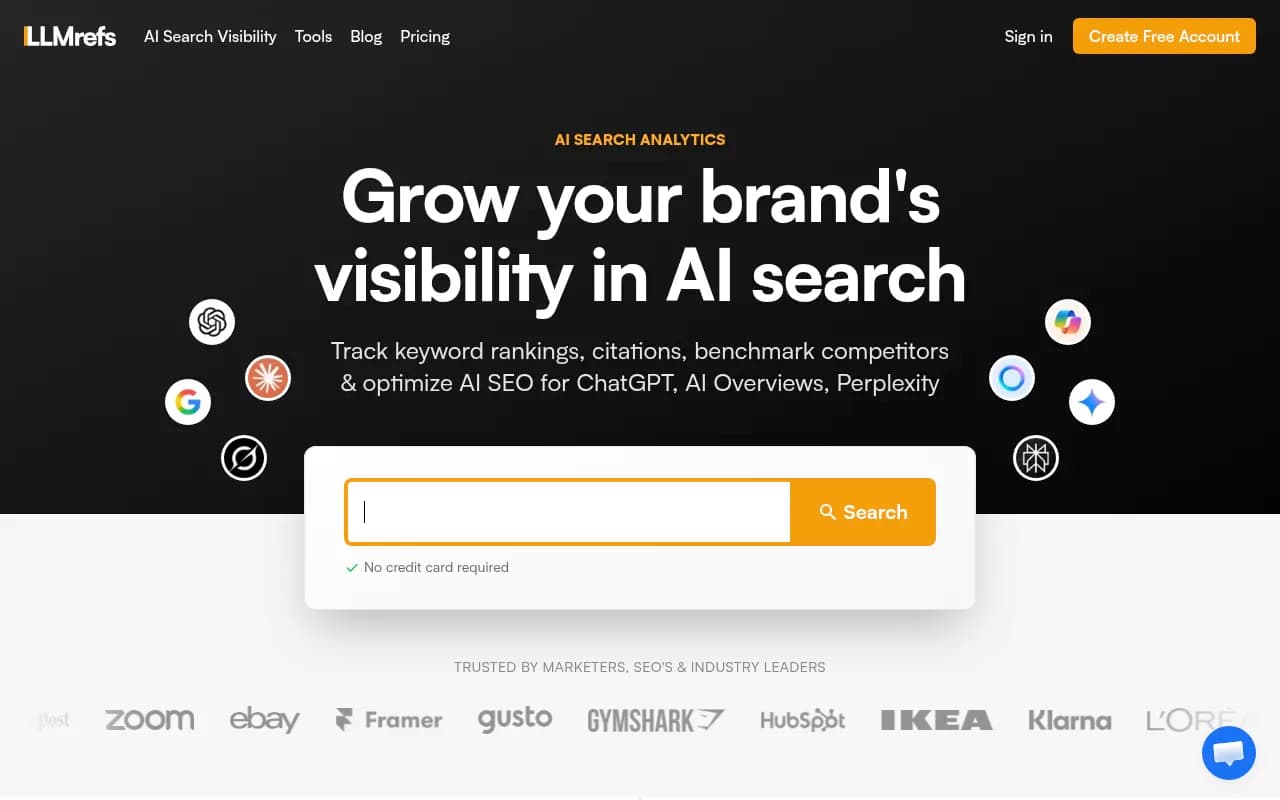
LLMrefs tracks brand visibility specifically across ChatGPT, Perplexity, and other major models.
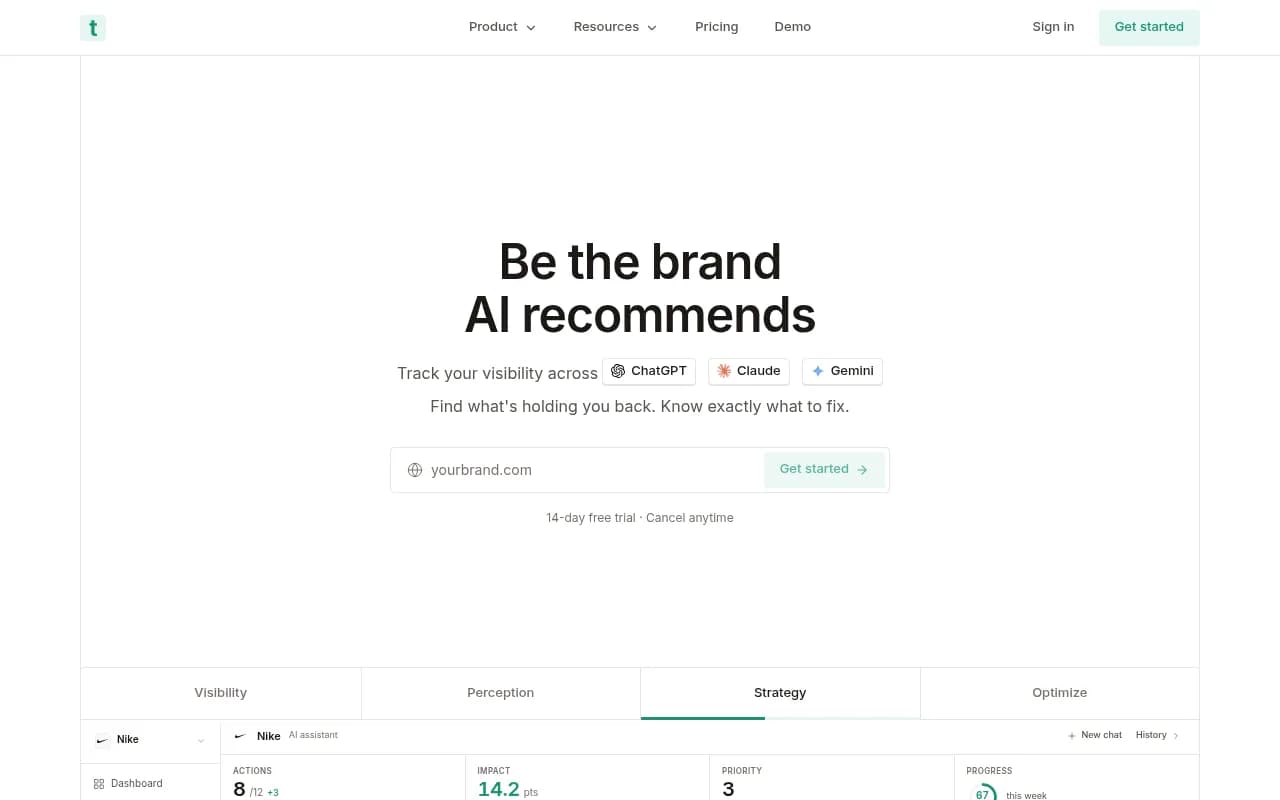
Trakkr.ai covers ChatGPT, Claude, Perplexity, and more with a clean tracking interface.
Comparison table
| Tool | Platforms covered | Content generation | Gap analysis | Crawler logs | Best for |
|---|---|---|---|---|---|
| Promptwatch | 10 (ChatGPT, Perplexity, Grok, Claude, Gemini, etc.) | Yes | Yes | Yes | Full-stack optimization |
| Profound | Multiple | No | Limited | No | Monitoring + analytics |
| AthenaHQ | 8+ | No | No | No | Monitoring |
| Otterly.AI | Multiple | No | No | No | Budget monitoring |
| Peec AI | Multiple | No | No | No | Multi-language tracking |
| LLMrefs | ChatGPT, Perplexity, others | No | No | No | Simple citation tracking |
What a practical multi-platform strategy looks like
Given the fragmentation, a sensible approach in 2026 isn't to optimize for one platform and hope the others follow. It's to understand each platform's retrieval logic and publish content that works across all three.
In practice, that means:
Publishing comprehensive, well-structured content that earns links and builds topical authority (this helps ChatGPT). Writing specific, answerable content with clear formatting and recent data (this helps Perplexity). Building genuine community presence and making it easy for users to talk about you publicly (this helps Grok).
These aren't contradictory strategies. A well-written comparison page that earns links, answers specific questions clearly, and gets shared by practitioners on X is doing all three things at once. The brands that are winning across all three platforms aren't running three separate strategies — they're publishing content that's genuinely useful and making sure it's visible everywhere.
The monitoring piece is non-negotiable. You can't optimize what you can't measure, and the gap between your ChatGPT visibility and your Grok visibility might be telling you something important about where your content strategy has holes.
 Dedicated AI visibility monitoring tools have emerged specifically because traditional SEO dashboards don't capture how AI models cite and recommend brands.
The honest bottom line
AI visibility is fragmented, and that fragmentation is structural. It's not going to resolve itself as the platforms mature — if anything, it will deepen as each model develops a more distinct identity and user base.
The brands that will win across all three platforms are the ones that treat AI search as a distinct channel, measure their visibility systematically, identify the specific gaps between where they appear and where they should appear, and publish content that's engineered to earn citations rather than just rank in traditional search.
That's a different discipline from SEO. It requires different tools, different content formats, and a different feedback loop. The good news is that the tools exist, the methodology is becoming clearer, and the brands that move now have a real first-mover advantage before this becomes table stakes.