Key takeaways
- Google AI Mode is live in more than 200 countries and territories, in roughly 100 languages, and passed 1 billion monthly users one year after launch. France, the last major holdout, switched on July 22, 2026.
- Live does not mean identical. The US gets information agents, commerce features, and ad experiments first. The EEA is excluded from some of those, and French publishers are actively disputing their own launch.
- Google has said twice on the record in 2026 that AI Mode is not the default search experience. It is where new capabilities ship first; classic results pages still carry most queries.
- June 2026 citation data from Promptwatch shows google.com is the single most cited domain inside AI Mode, at 7.31% of citations, and no independent website clears 1%. The open-web opportunity is almost entirely long tail.
- What to do now: verify AI crawlers can read your site, treat Google-owned surfaces (Business Profile, Merchant Center, YouTube) as GEO channels, publish narrow answer-first pages, and set up measurement before the next model update reshuffles citation patterns.
Where AI Mode is live right now
The short answer: almost everywhere. Google's AI Mode availability page in Search Help lists the feature across the Americas, Asia-Pacific, and Europe, the Middle East and Africa, with support for about 98 languages. Fifty-three more were added in February 2026. If you sell in any major market, your customers have AI Mode.
The exceptions are not really AI Mode decisions. Mainland China and North Korea don't have it because Google's core services are blocked at the national infrastructure level. Hong Kong is excluded from some Google AI products. Russia, for what it's worth, is listed as supported on the availability page.
Two nuances matter more than the country list itself.
First, live is not the same as default. A lot of coverage since I/O 2026 has described AI Mode as "the new default search experience." Google has said the opposite, twice, on the record in 2026: AI Mode is not the default. It is where Google ships its newest capabilities first, and classic results pages still carry most of the traffic. That distinction should shape how fast you move budget around.
Second, availability outruns features. The core conversational experience is global. Nearly everything commercial layered on top of it, booking, shopping ads, price tracking, is rolling out market by market, and the US is first in line for almost all of it.
How the rollout unfolded
| Date | Milestone |
|---|---|
| March 2025 | AI Mode launches as a Search Labs experiment in the US |
| May 20, 2025 | Opens to all US users, no Labs signup required |
| June–July 2025 | India (June 24) and the UK follow |
| August 21, 2025 | Expansion to 180 countries and territories |
| October 8, 2025 | 40+ new countries and 35 languages added in about a week, pushing past 200 total |
| February 2026 | 53 new languages added |
| May 19, 2026 (I/O) | 1B+ monthly users confirmed; queries more than doubling every quarter; new Search box rolls out everywhere AI Mode is live; Personal Intelligence reaches nearly 200 countries in 98 languages |
| June 12, 2026 | Information agents go live for AI Ultra subscribers across all AI Mode markets |
| July 22, 2026 | AI Overviews and AI Mode launch in France, the last major market |
| August–September 2026 | Commerce features, shopping ads tests in the US, and worldwide Search Console generative AI reports |
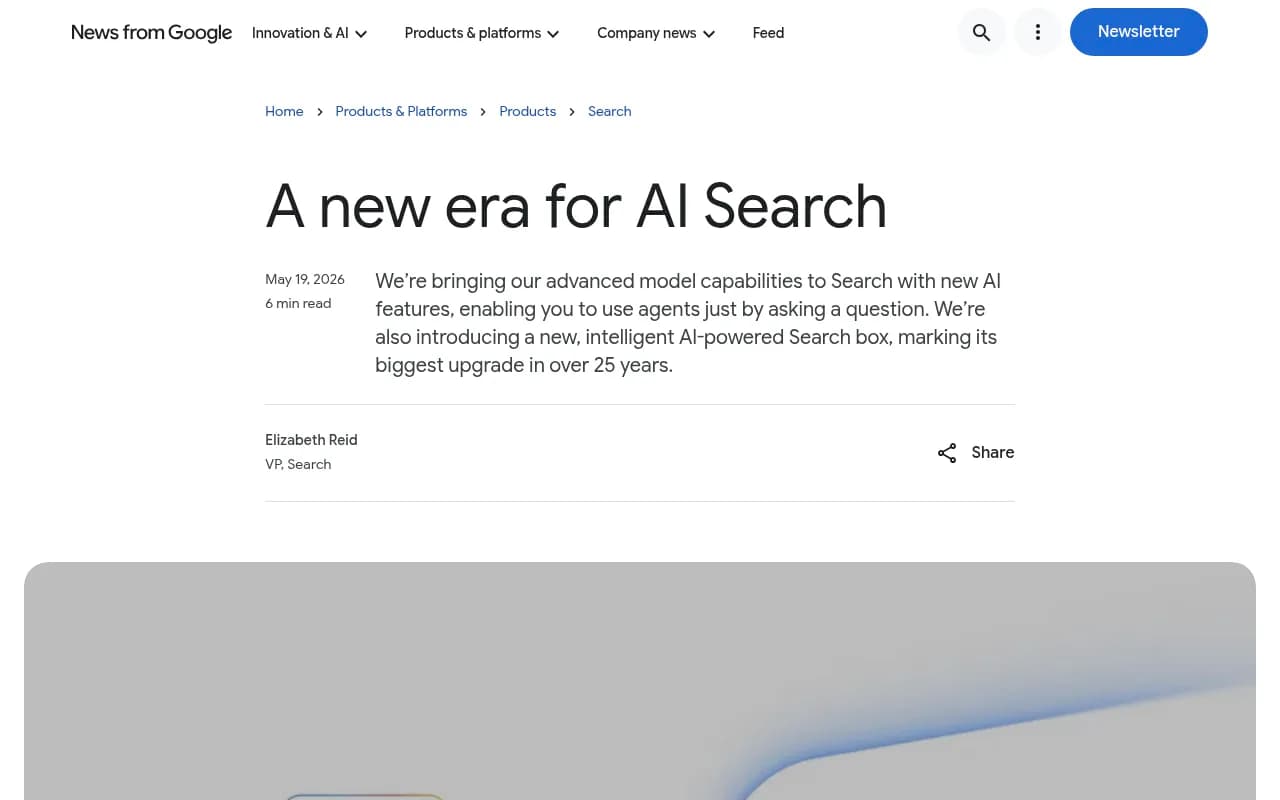
The pace is the story. Classic Search took the better part of a decade to reach its first billion users. AI Mode did it in about a year, and the international rollout compressed what used to be a staged, country-by-country process into a few days. If you market outside the US, you never got a slow ramp to prepare against. The surface arrived fully formed, which is a big part of why so many teams are scrambling to instrument it now.
What actually varies by country
| Region | Core AI Mode | What's different |
|---|---|---|
| United States | Live since May 2025 | Everything first: information agents, agentic booking, shopping ads, keyword ad experiments, hotel and flight features |
| UK, India | Live since mid-2025 | Core experience, longest ramp time |
| 200+ countries | Live since October 2025 | Core experience; Personal Intelligence in 98 languages |
| France | Live since July 22, 2026 | Launch disputed by publisher groups; heavy regulatory scrutiny |
| EEA (rest) | Live | Excluded from some commerce features; open European Commission investigation into AI Overviews and AI Mode |
| China, North Korea | Not available | Google services blocked at infrastructure level, not an AI Mode restriction |
The US gets everything first
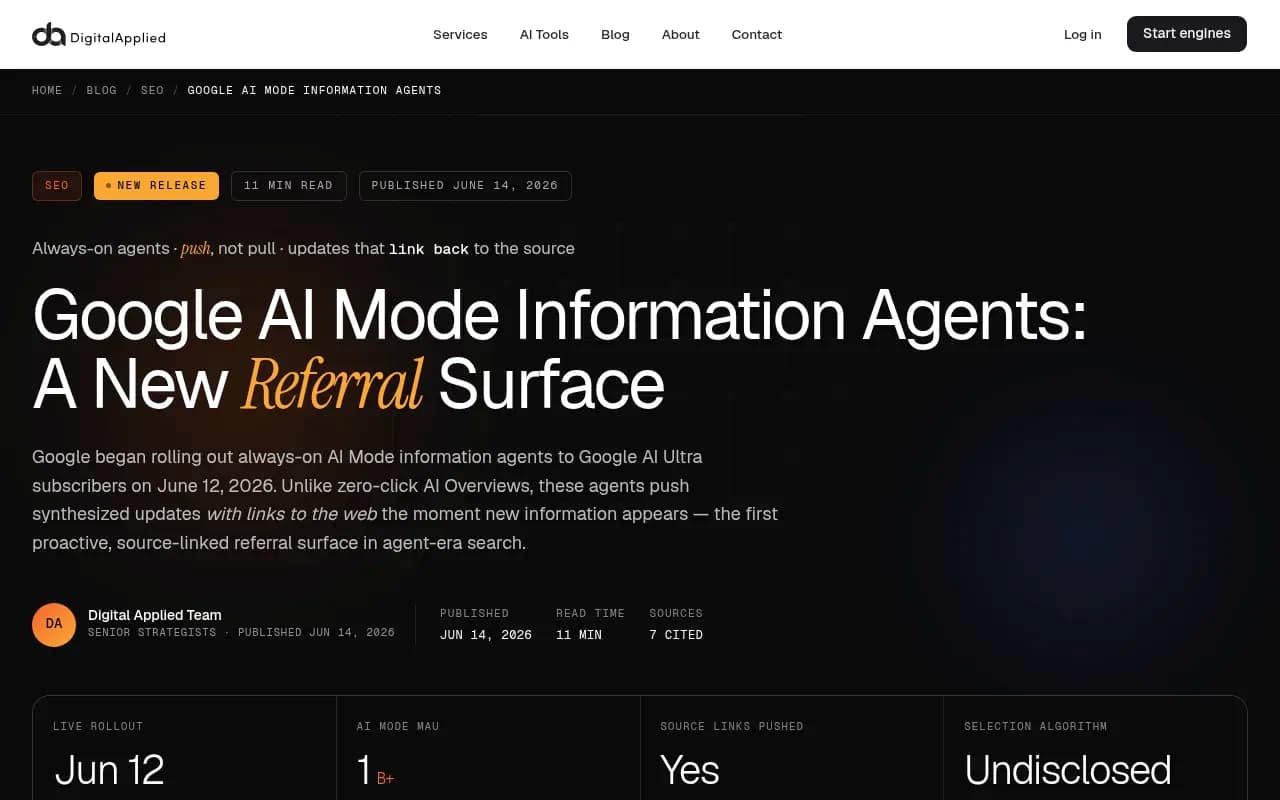
Information agents went live June 12, 2026 for AI Ultra subscribers ($199.99/month) across all AI Mode languages and markets. You set them up conversationally ("keep me updated on...") and they monitor the web continuously, pushing synthesized briefings with source links attached. Expansion to AI Pro was announced for "this summer" with no date attached. Agents link back to the web, so a cited page becomes a proactive referral instead of a zero-click dead end. That inversion is the most interesting thing Google has shipped all year.
The rest of the US-first list: agentic booking for local experiences and services (summer rollout), app linking inside AI Mode with Instacart, Canva, and YouTube (shipped mid-July), hotel booking and flight price tracking (late August), shopping ads rendering inside AI Mode answers (late August, still officially a "US test"), and a September 4 experiment showing exact- and phrase-match keyword ads where intent is explicit.
Europe is live, but complicated
France is the case study. AI Overviews and AI Mode launched there July 22, 2026, two months ahead of the September deadline that had been communicated in connection with publisher negotiations. French publisher groups, led by SEPM, called it a fait accompli: no new agreement was struck for the launch, they say they lack the data to assess impact, and they dispute the opt-out mechanism. They have asked the French government to intervene.
The EU context around it is dense. Google was fined €250 million by France's competition authority in March 2024 over neighboring-rights negotiations. The European Commission's July 23, 2026 DMA fine against Google (€890 million across Search and Play) does not target AI Mode. The one to actually watch is a separate Commission investigation opened December 9, 2025, which explicitly examines whether Google's use of publisher content to power AI Overviews and AI Mode breaches competition law. It is unresolved.
Two practical notes if you operate in Europe. Don't assume the Search Console opt-out protects your commercial position in France; the constituency it was meant to protect is actively disputing whether it does. And expect feature gaps driven by regulation rather than product roadmap, like price tracking shipping in 180+ countries but excluding the EEA.
What AI Mode actually cites
Where AI Mode gets its sources should shape your strategy more than the country list does. Promptwatch's AI Mode citation share report for June 2026 shows google.com as the #1 cited domain at 7.31% of all citations, up 72% from 4.24% in May, on top of a sixfold jump the month before. YouTube sits at 2.88%, Reddit at 2.52%. Google-owned properties combined capture over 10% of AI Mode's citation mix, a degree of self-preferencing no other answer engine shows. In ChatGPT over the same period, the top domain is Reddit at 3.71% (June 2026 data), and google.com is nowhere near the top.
Google citing itself more than anyone else is either an obvious consequence of owning YouTube and Maps or a competition regulator's dream case file. Probably both. Either way, your move is the same: if Google is going to cite Google, make sure the Google surface being cited is yours.
The more encouraging number: no independent website clears 1% of AI Mode citations. The open-web opportunity lives almost entirely in the long tail, which means many narrow, specific pages can win citations where a generic mega-page won't.
One more data point worth knowing. Promptwatch's sources-per-response data shows Google AI Overviews citing roughly 10 sources per answer, about double ChatGPT's 5, and holding steady over time. More citation slots per answer makes Google's AI surfaces the more forgiving entry point if your domain authority is mid-tier.
What marketers should do now
1. Confirm AI crawlers can actually read your site
Retrieval starts with crawl, and crawl failures are embarrassingly common. One published audit found an entire publication archive invisible to AI crawlers because every post returned a 302 redirect. Client-side-rendered content with no server-side fallback is another frequent wall. Check your server logs for Google's AI crawlers (GoogleOther, Google-Agent) and the 400-plus other bots now active, and look at which pages get read but never cited. Visibility platforms with crawler log features turn this into a dashboard question instead of a log-file archaeology project.
2. Treat Google's own surfaces as GEO channels
With google.com and YouTube taking more than 10% of AI Mode citations combined, your Google Business Profile, Merchant Center feed, Maps presence, and a maintained YouTube channel are not side projects. They are direct inputs into the answer engine. For local and e-commerce brands this is the highest-leverage work available, and much of it is unglamorous data hygiene.
3. Publish narrow, answer-first pages
Since no independent site clears 1% of citations, the winning pattern is many pages, each fully answering one specific question, structured so a retrieval system can lift a clean, quotable passage. Entity clarity (consistent naming, schema, a real about page) does the rest. This is also where the "do I need separate GEO work" question lands: Google's Search VP has said plainly that good SEO is good GEO, because AI Mode and AI Overviews run on the same ranking systems. The fundamentals carry over. The formatting and measurement layers are what's new.
4. Add the Preferred Sources button
Since August 20, 2026, publishers can embed a two-line HTML button that lets readers mark a site as a preferred source, and preferred picks get a badge inside AI Mode answers. It is the cheapest item on this list and takes about ten minutes.
5. Set up measurement now, imperfect as it is
Search Console's generative AI reports went worldwide on August 31, 2026. They are impressions-only, show no queries and no clicks, and each follow-up question inside an AI Mode conversation counts as its own query. A weather forecast that only says "cloudy," in other words. Set it up anyway, pair it with analytics tagging on AI referrers so you can at least see visits, and record a baseline now. Citation patterns reshuffle fast: Reddit's share of ChatGPT citations fell about 40% in June alone, and in mid-August it collapsed from roughly 4% to half a percent in a single day (Promptwatch's Reddit citation data). One-off audits age quickly. Continuous tracking doesn't.
None of this is complicated, but it is a real time commitment across SEO, content, and engineering. If your team is thin, this is the kind of program agencies like 1001 SEO Media run end to end, from crawler audits to content production.
Tools for tracking AI Mode visibility
You will want a dedicated visibility platform for the citation and prompt tracking side. Promptwatch, for example, monitors AI Mode alongside AI Overviews, ChatGPT, Perplexity, Claude and the rest, and pairs citation data with AI crawler logs, so you can see which pages AI systems read but never cite, plus the actual traffic and conversions that come back.

A few alternatives, with the caveats that matter for AI Mode specifically:
| Tool | AI Mode coverage | Entry price | Best for |
|---|---|---|---|
| Promptwatch | Yes, plus crawler logs and AI traffic analytics | $95/mo | Teams that want tracking and fixes in one place |
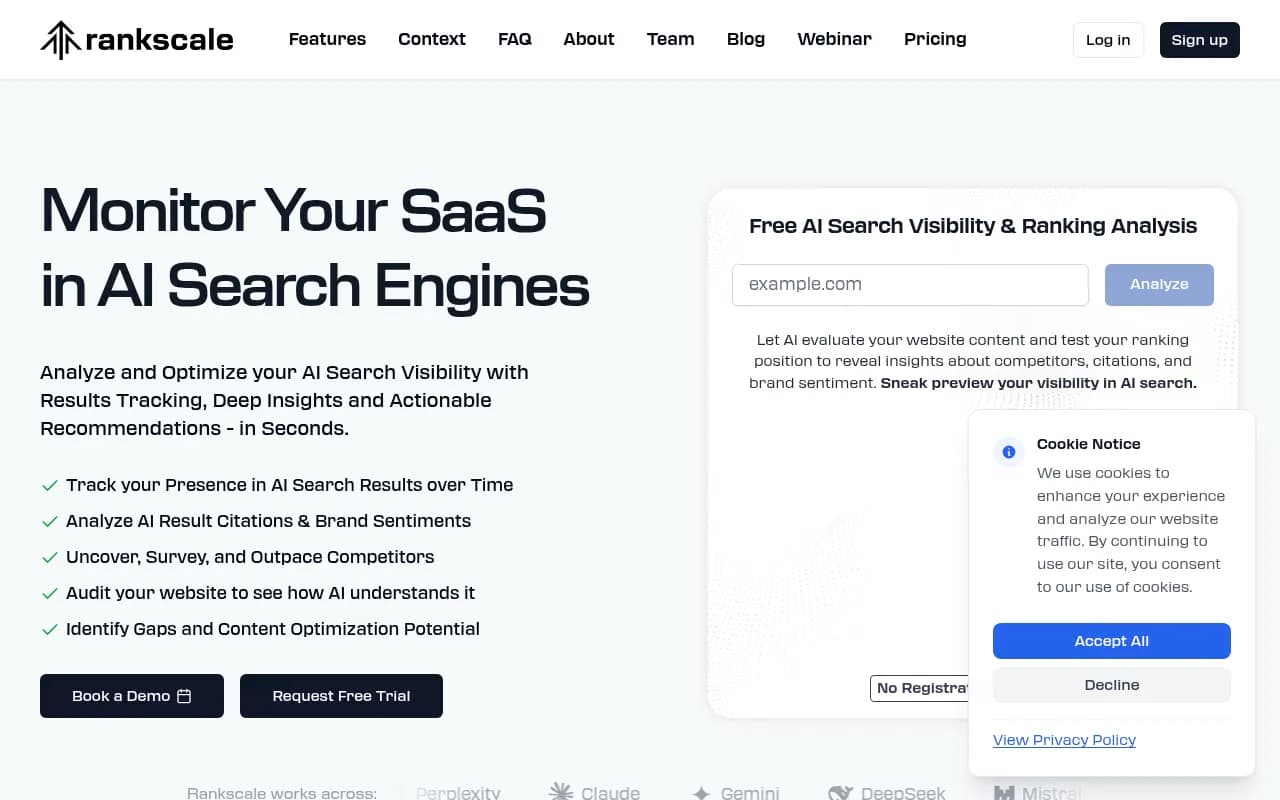
| Rankscale | Yes, 17+ answer engines | €20/mo | Cheapest full AI Mode coverage, with page-level recommendations |
| Otterly.AI | Paid add-on on all plans | $29/mo | Small budgets, if the add-on price still works for you |
| Profound | AI Overviews on Growth; broadest engines at Enterprise | $99/mo | Agencies and enterprise programs |
| Semrush | AI Overviews in the AI toolkit; Gemini tracking listed as coming soon | $99/mo/domain | Teams already in the Semrush ecosystem |
| Ahrefs Brand Radar | Separate dedicated product | $199/mo | Ahrefs shops that want brand tracking |


One warning before you buy anything: a tracker tells you that you are invisible. It does not write the pages that fix it. Either pick a platform with an action layer built in, or budget for the in-house content capacity to act on what the tracker finds. For browsing the full category, the AI rank tracking tools directory at ai-rank-tools.com is a solid starting point.
The honest traffic picture
The click data is genuinely mixed, and anyone telling you AI Mode is uniformly catastrophic or uniformly harmless is selling something.
The best causal evidence so far is a randomized field experiment by Saharsh Agarwal (Indian School of Business) and Ananya Sen (Carnegie Mellon), run January–February 2026 with 1,065 US Chrome desktop participants and posted to SSRN. AI Overviews appeared on 42% of queries. Removing them raised outbound clicks from 0.38 to 0.61 per search, a 38% cut in outbound clicks on the queries where an overview appeared. Zero-click search rose from 54% to 72%. Notably, user satisfaction scores were nearly identical between the group that saw overviews and the group that didn't. The AI Mode arm showed even lower outbound clicks and lower satisfaction, though the authors flag that result as exploratory due to participant attrition.
A separate August experiment found that forcing AI Mode on users cut clicks by 18.8 percentage points and pushed 11.2 points more of them to try a competing search engine. Users, it turns out, did not love being forced into anything. Keep that in mind when the doom posts circulate.
Publisher-level variance is the part most summaries skip. The Wall Street Journal's July 2026 report on publisher declines was corrected within a day, with Business Insider's cited decline revised down from "over 85%" to 43%. Across named outlets the range runs roughly 20% to 43% down year over year. Meanwhile the Guardian and the BBC gained traffic, up 16% and 15% respectively. Talk of blocking Google entirely from the CEOs of USA Today and People remains rhetoric for now, and Reddit is reportedly rethinking its roughly $60M/year licensing deal, but nothing has actually been pulled.
The pattern in that variance: strong brands with broad entity coverage and quotable content held or gained. Averages will not tell you which side you land on. Your own baseline will.
Frequently asked questions
Is AI Mode the default search experience in my country?
No, and Google has said so twice on the record in 2026. AI Mode is live in 200+ countries, but classic results still carry most queries. AI Mode is simply where new features appear first.
Which countries still don't have AI Mode?
Mainland China and North Korea, because Google services are blocked there at the infrastructure level. Hong Kong is excluded from some Google AI products. Everyone else on Google's availability list has it, including, curiously, Russia.
Are there ads in AI Mode?
In the US, yes, in tests: shopping ads in carousels inside AI Mode answers (late August 2026) and a small experiment with exact- and phrase-match keyword ads confirmed September 4. Google still officially calls AI Mode ads a US test. Ads in AI Overviews are live in a longer list of countries, including Australia, Canada, India, Indonesia, and Kenya.
Can I opt out?
Search Console's AI control setting went worldwide on August 31, 2026. French publishers dispute how much protection it actually gives, and opting out also removes you from citations. For most commercial sites, staying in and competing is the better math.
Do I need a separate GEO strategy for AI Mode?
Not a separate one. Google's Search VP has said "good SEO is good GEO" because AI Mode and AI Overviews run on the same ranking systems. What changes is measurement (citations and AI traffic instead of only rankings) and content formatting (retrievable, quotable, narrow pages).
The rollout question is settled. Whether AI Mode becomes a traffic problem or a traffic opportunity for you gets decided by what you instrument and publish over the next two quarters.