Key takeaways
- The useful question isn't "which tool tracks AI mentions" but "which tool writes the fix, publishes it, and tells you whether it worked."
- GetMint pitches strategy plus a content studio, but its pricing is "sized on a call" on its own site, and third-party figures conflict. Verify before you buy.
- Promptwatch is the most complete closed-loop option here: tracking, content agents, CMS publishing, crawler logs and traffic measurement in one product.
- Entry plans are misleading. Many cover one AI engine only, so compare by prompts, engines and seats, not headline price.
- Avoid tools built on fragile access (the Shield App shutdown is the cautionary tale) and export your data before switching.
What "closing the loop" actually means
Most AI visibility tools answer one question: was my brand mentioned? That's useful for about a week. Then you have a dashboard full of red numbers and no pages to fix them.
A closed loop has four steps, and each one feeds the next:
- Monitor which prompts you lose on.
- Find out why (which sources get cited, which of your pages are missing).
- Write and publish the content that fills the gap.
- Measure whether AI crawled it, cited it, and sent traffic.
Plenty of tools do step one. A few do step three. Very few do step four, and that's the step that tells you whether any of it worked. That's the lens for this list.
Where GetMint fits
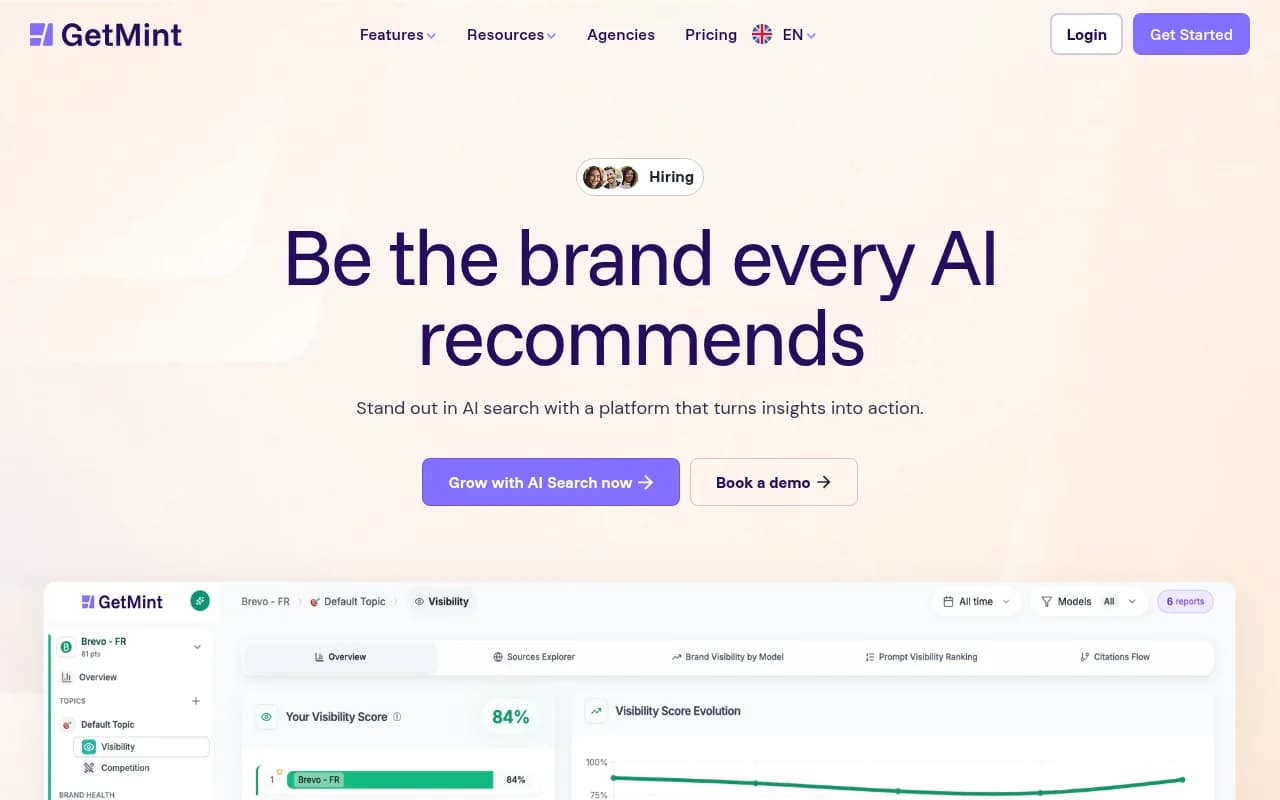
GetMint positions itself as an AI visibility and reputation platform for content teams. In its own January 2026 comparison post, it says it helps teams "close the loop between finding the gap and publishing the fix without leaving the platform." It lists unlimited seats, 300+ prompts and a Content Studio for drafting, with a GEO agent and expert support on top.
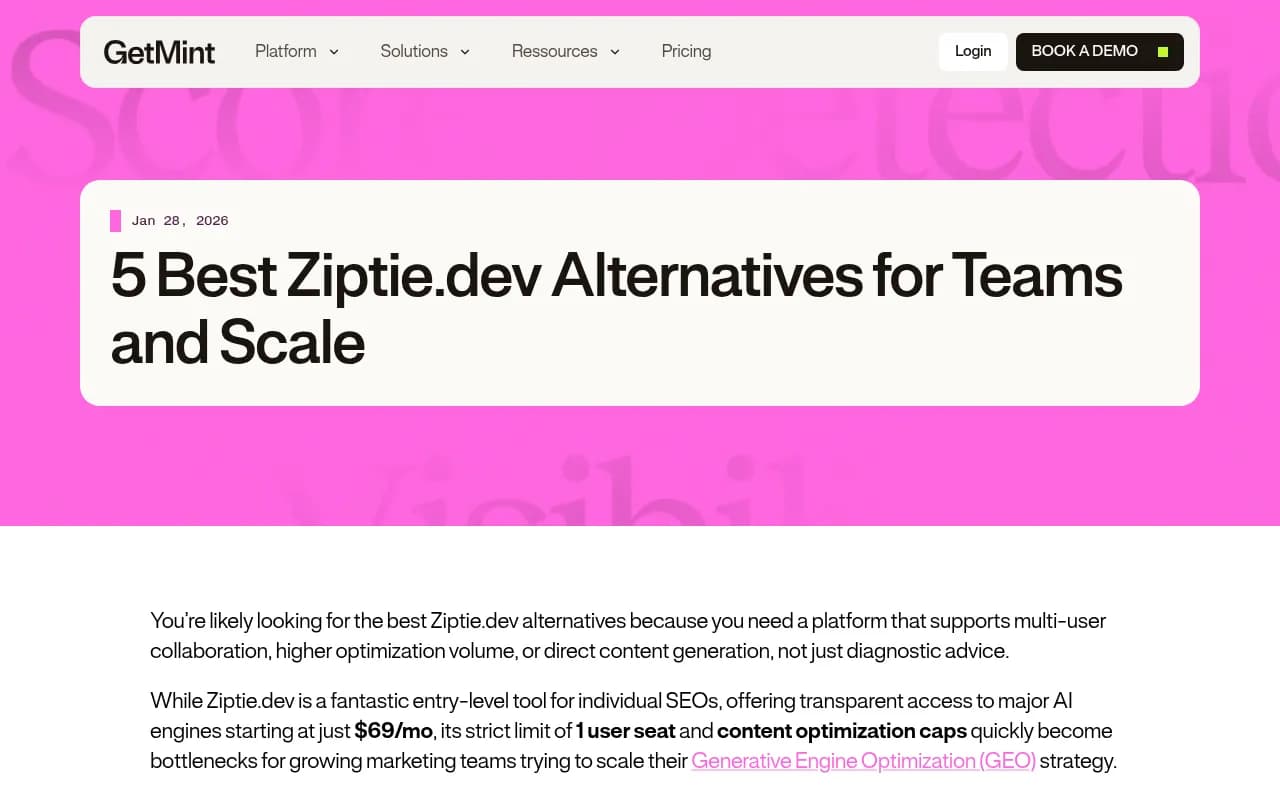
Two things to flag before you shortlist it, because the sources disagree:
- Pricing. GetMint's own post says pricing is sized on a call, with no free trial. A competitor article (DeepSmith, dated Oct 26) lists $80/mo for 50 prompts and $349/mo for 300 prompts. I couldn't verify either, so treat both as unconfirmed.
- Engine coverage. GetMint says it tracks ChatGPT, Alexa for shopping, Gemini, Perplexity, Claude and AI Overviews. An aioseo.fr article says it follows three engines: ChatGPT, Perplexity and Claude. Ask for the current list in a demo.
I also couldn't confirm how autonomous its publishing really is, meaning whether it pushes to your CMS on a schedule or hands you a draft to paste. That distinction is the whole point of this guide, so ask directly.
Why people look for alternatives
The usual reasons are practical rather than dramatic:
- Pricing that requires a sales call makes it hard to compare against self-serve tools.
- Drafting inside a studio isn't the same as publishing to WordPress or Webflow on a schedule.
- Teams want measurement on their own site: crawler logs, AI-referred visits and conversions.
- Engine coverage matters. If your buyers use Gemini or Google AI Overviews, a three-engine tool leaves gaps.
What the data says you should be publishing
Before picking a tool, it helps to know what the tool should be producing. Promptwatch Data's report on which content types ChatGPT cites most (Sep 28 to Oct 4, 2026) breaks citations down like this:
| Content type | Share of ChatGPT citations |
|---|---|
| Product pages | 22.4% |
| Landing pages | 16.8% |
| Listicles | 13.6% |
| How-to guides | 8.7% |
| Documentation | 7.5% |
| General articles | 6.1% |
| Comparisons | 5.9% |
| News | 5.7% |
| FAQ pages | 3.3% |
| Reviews | 1.7% |
For commercial prompts, product pages take 26.0% and landing pages 20.6%. For branded prompts, reviews rise to 5.6% and FAQ pages to 4.8%. So a tool that only churns out blog posts is solving a narrower problem than it looks like. You want something that can plan content per prompt intent, and that keeps product, landing and docs pages crawlable.
Longevity matters too. Promptwatch's content half-life data shows landing pages and docs stay cited for months, while news pages lose half their citations in about five weeks. Content you publish automatically should skew toward the durable formats.
The alternatives, compared
| Tool | Tracks AI visibility | Writes content | Publishes to CMS | Measures crawls and traffic | Pricing signal |
|---|---|---|---|---|---|
| Promptwatch | Yes, real UI data across ChatGPT, Gemini, Perplexity, AI Overviews, AI Mode, Copilot, Claude and more | Yes, Content Agent | WordPress, Webflow, Framer | Yes, crawler logs and visitor analytics | From $95/mo, Business $579/mo |
| DeepSmith | Yes, engines depend on tier | Yes, Autowrite | WordPress, Webflow, Strapi, Sanity, Contentful, webhooks | Not verified | $99/mo ($80 annual), ChatGPT only at entry |
| AirOps | Yes | Yes, workflow automation | Not verified | Not verified | Custom, free trial |
| GEOforge | Yes | Yes | Closed-loop claim | Not verified | Not verified |
| Peec AI | Yes | No | No | No | $95/mo |
| Profound | Yes | No | No | Limited | Entry plan ChatGPT only |
| Otterly.AI | Yes | No | No | No | $29/mo |
Prices for DeepSmith, Peec AI and others come from DeepSmith's own comparison article, so treat them as vendor-reported. Confirm on each pricing page.
Promptwatch: the full loop in one product
Promptwatch is the option I'd start with if closing the loop is the actual requirement, not a nice-to-have. It covers all four steps inside one product.

Monitoring runs against the real interfaces of ChatGPT, Google AI Overviews, Google AI Mode, Gemini, Perplexity, Copilot and others, in the country and language you choose. That matters because user-facing answers and citations can differ from API outputs. From there it traces which pages and third-party sources get cited, including Reddit, YouTube and LinkedIn.
The acting part is where it separates from dashboards. The Action Board gives a prioritized to-do list. The Content Agent plans, writes and publishes pages against your visibility gaps, with a review inbox if you want approval or a hands-off mode if you don't. It publishes to WordPress, Webflow or Framer, as a draft or live. Content Refresh gives diff-style updates for existing pages.
Then it checks the result. IP-verified AI crawler logs show whether bots read the page. Page Tracker shows whether AI cites it. Visitor analytics show traffic and conversions. Pages that underperform come back as new actions. That last bit is what most competitors skip.
Some proof points: Crisp reported 2x higher conversion rates from AI traffic than from traditional channels and scaled to 5-10 articles a day (case study). TreeHouse grew AI search to roughly 25% of organic conversions (case study).
Pricing, to confirm at promptwatch.com/pricing: Essential is $95/mo, Professional $245/mo, and Business $579/mo. One caveat worth knowing: the automated Content Agent starts at Business, and Professional includes 5 AEO articles a month. Agency plans start at $199/mo but don't include the Content Agent.
If you want to test it, there's a 7-day free trial on monthly billing, plus a free AI visibility report. For a head-to-head view, see Promptwatch vs GetMint.
DeepSmith: best when the report has to become published work
DeepSmith is the closest in spirit on the writing side. Per its own site, it has Discover Prompts, a Content Map that crawls your site and competitors, Opportunity Agents, a Content Studio and Autowrite, which writes a scheduled article on its date without anyone in the app. Publishing goes to WordPress, Webflow, Strapi, Sanity, Contentful and webhooks, and an Apps Library repackages posts for LinkedIn, X, Medium, Substack, newsletters and Reddit.
The catch is engine coverage by tier. The entry plan ($99/mo, or $80/mo billed yearly, with 50 prompts, 20 articles and 5 seats) tracks ChatGPT only. Perplexity arrives at the next tier, Gemini at the one after, and all ten engines only at Enterprise. I'd want to see what it offers for measuring crawls and conversions before calling it a full loop. All of this is the vendor's own description.
AirOps: content scale and workflows
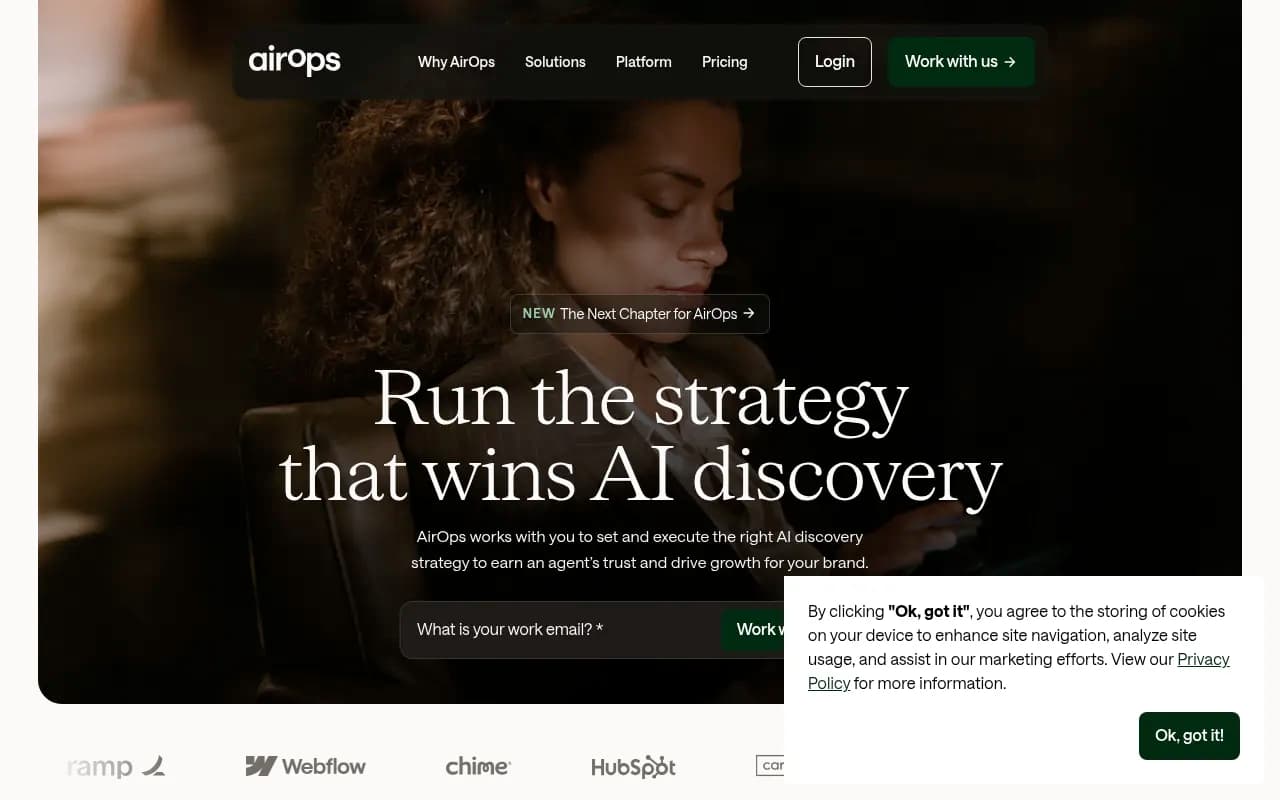
AirOps is positioned as a content engineering platform. GetMint's own comparison lists it with custom pricing, a free trial, unlimited seats and 250 prompts plus 75,000 tasks, built around automation logic grids. It's strong if you want to build repeatable content workflows. I didn't verify its current pricing or publishing integrations, so check both. It's a content-first tool that has added visibility tracking, rather than a measurement-first one.
Closed-loop specialists in the catalog
A handful of newer tools explicitly pitch publishing alongside tracking. I haven't tested these, so read them as a shortlist to evaluate rather than recommendations.
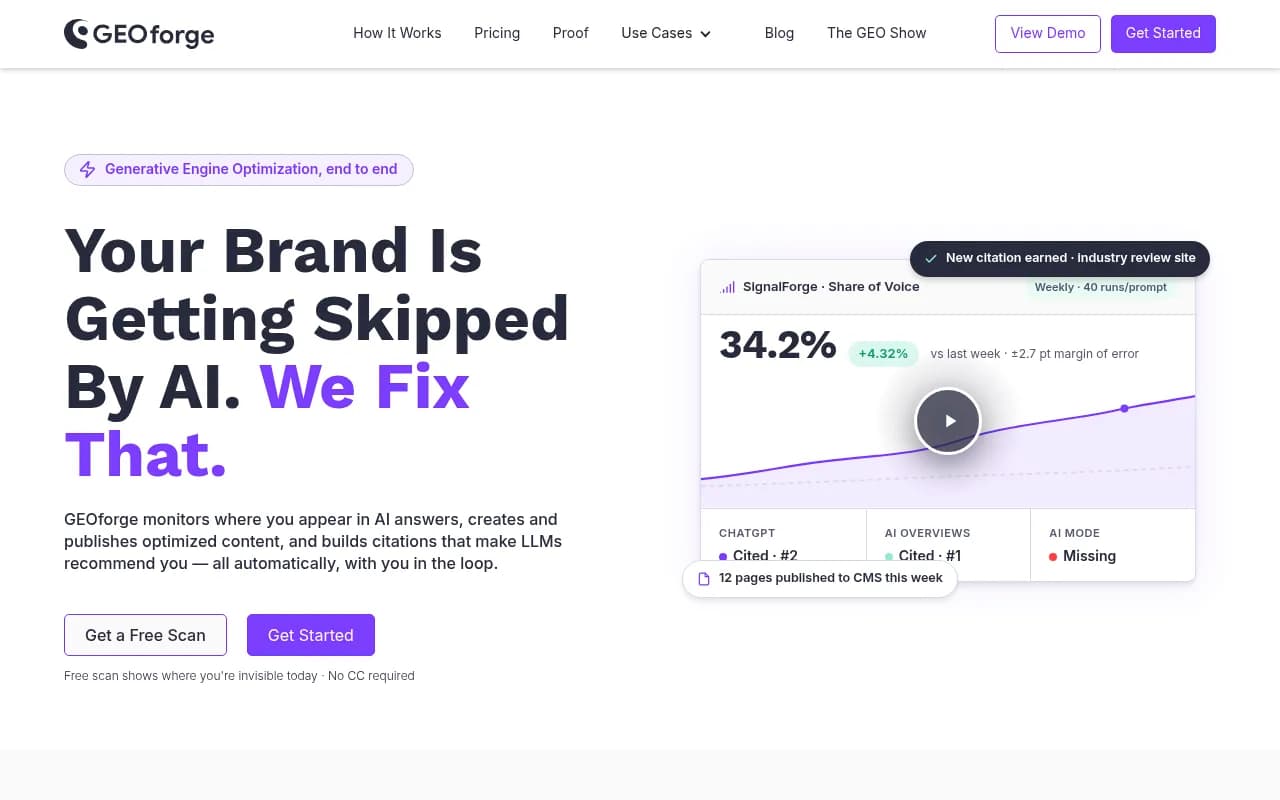
GEOforge describes itself as closed-loop GEO from monitoring to published content.
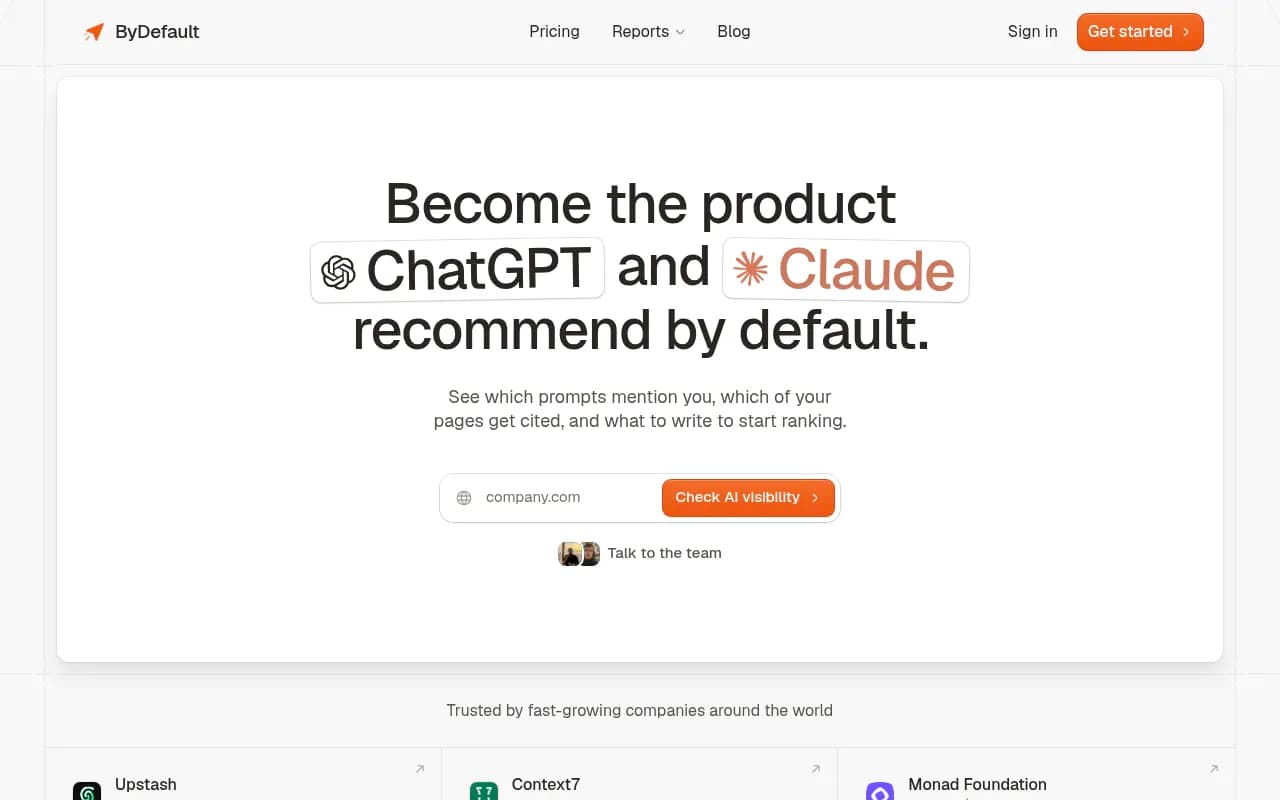
bydefault tracks AI citations and publishes the content meant to win them in one workflow.
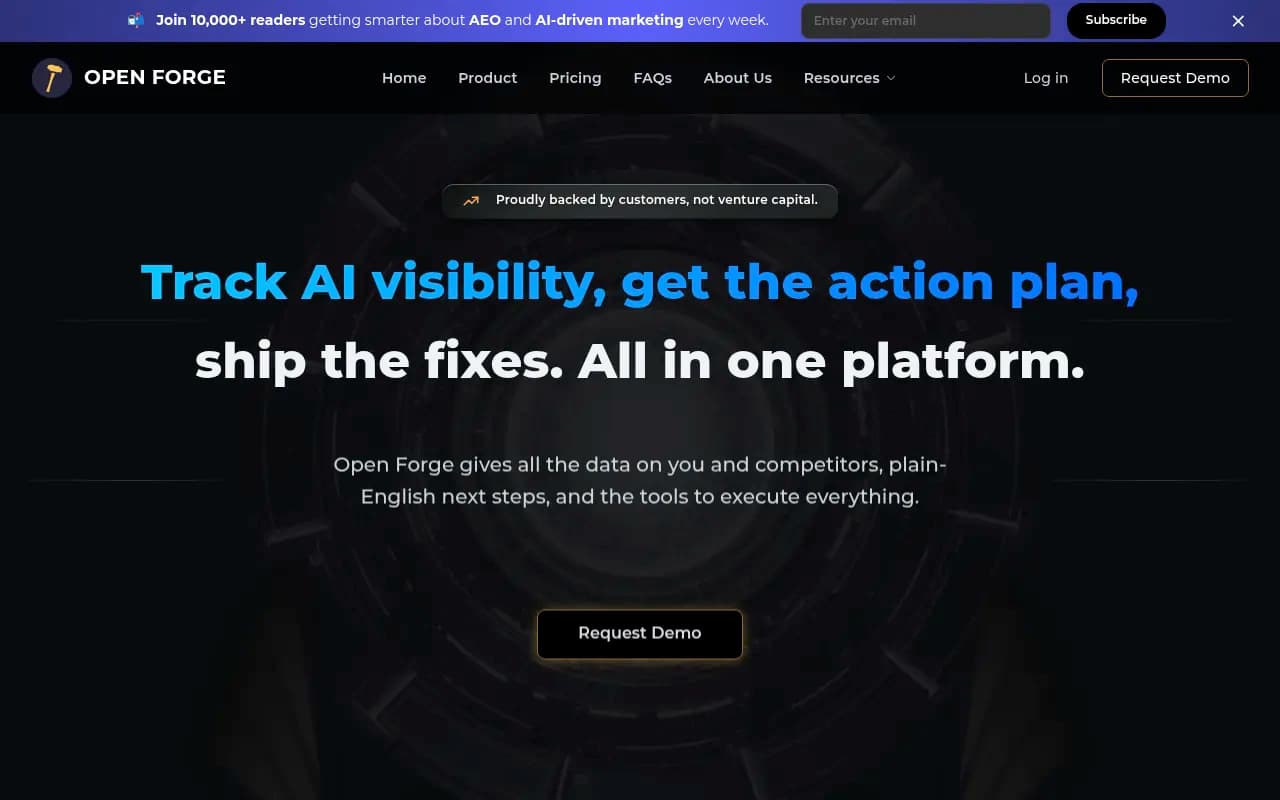
Open Forge finds AI gaps, drafts briefs and publishes to your CMS.
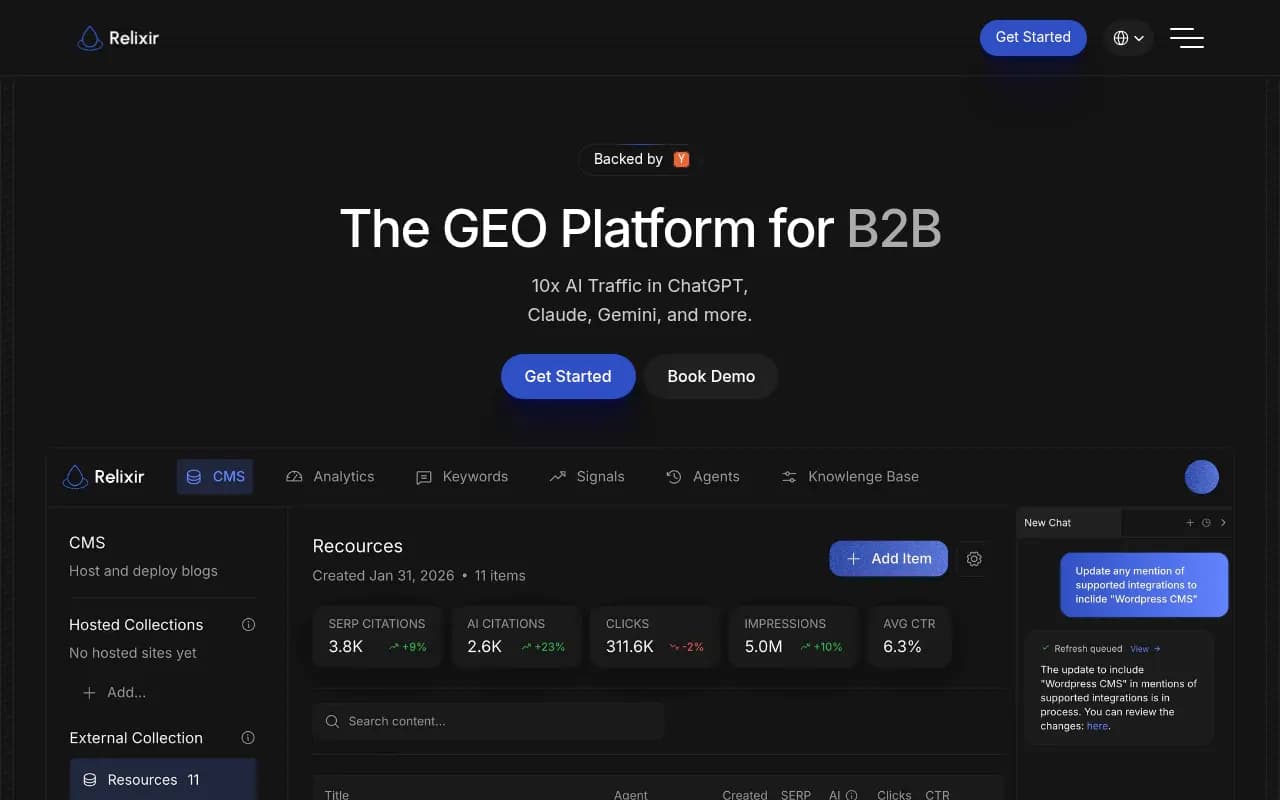
Relixir bundles an AI-native CMS with autonomous content creation.
Others with a similar pitch include Whitebox, Nuwtonic, Frizerly and Slate. The GEO software directory at bestgeosoftware.com lists many more if you want to browse.
Monitoring-only tools worth knowing
If you decide you only need tracking and will handle content elsewhere, these are the common picks.

Peec AI is strongest on analytics and agency reporting, at $95/mo for 50 prompts, 3 models and 1 country, per DeepSmith's comparison.

Otterly.AI is the cheapest on the list at $29/mo ($25 annual) for 15 prompts and 4 engines.

Profound is a strong monitoring product, though the $99/mo yearly entry plan is ChatGPT only with 1 seat.
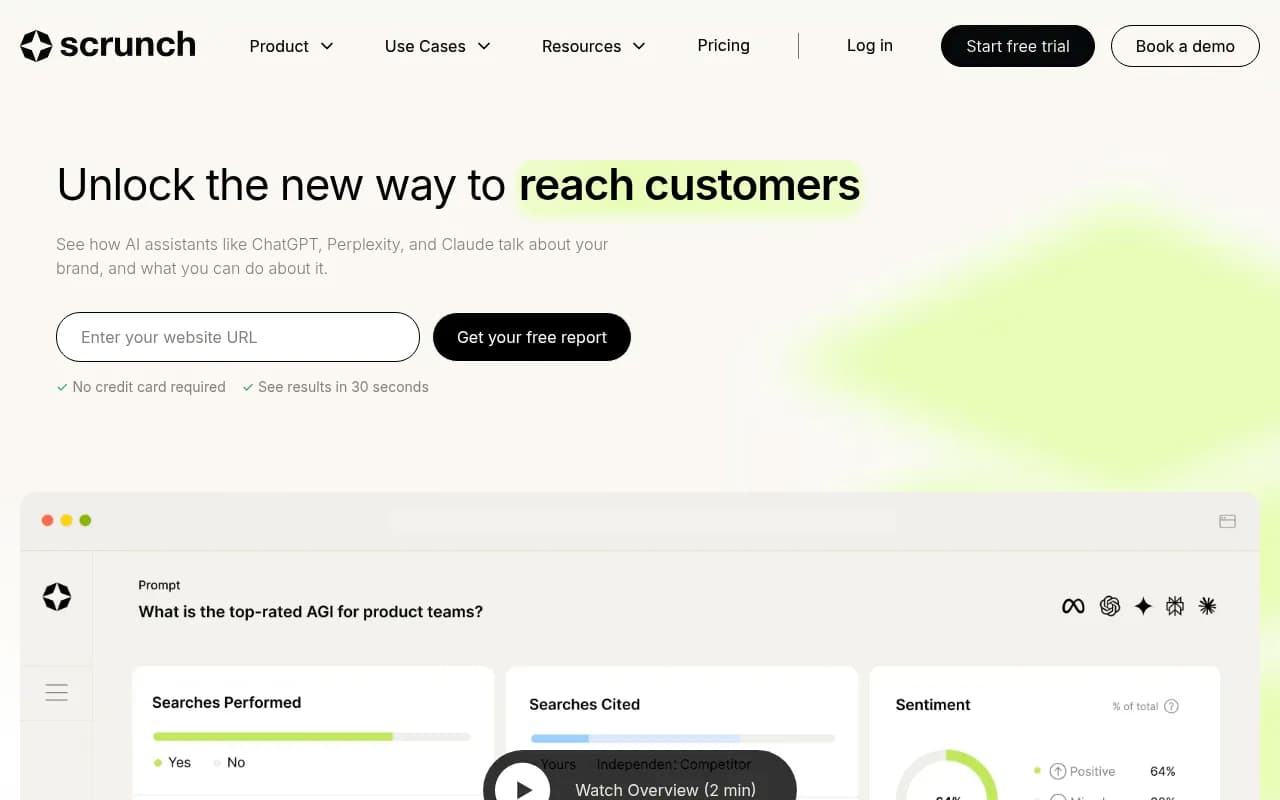
Scrunch runs $250/mo for 125 prompts, 5 site audits a month, 4 LLMs and 5 users.
None of these publish content for you. If that's your bottleneck, pair them with a writing tool or pick one of the platforms above. The ones I'd steer away from for this particular goal are tools that stop at a score.
How to compare plans without getting fooled
Vendors price by prompts, credits or domains, so sticker prices tell you little. DeepSmith makes the same point in its article, and it's right. Check these before comparing:
- How many AI engines are included at your tier, not at the top tier.
- Prompts and seats. A cheap plan with 1 seat and 15 prompts gets used up in a day.
- Whether publishing is push-to-CMS or copy-paste.
- Whether you can see crawler activity and AI referral traffic on your own site.
- Content volume limits per month.
Also don't compare visibility scores across vendors. Prompt sets, geography, cadence and weighting all differ, and no independent head-to-head accuracy study exists. Pick one tool and compare against yourself over time.
A lesson from Shield App
Shield App, a LinkedIn analytics tool, is shutting down in 2026 after LinkedIn and Google restricted the Chrome-extension access it relied on, according to ContentIn's write-up. It's a different category, but the lesson transfers. Tools built on browser extensions or scraping that platforms can cut off carry risk. Prefer vendors that use official APIs and published integrations, and keep a regular export of your data so a shutdown costs you a weekend, not your history.
A simple evaluation checklist
Run a two-week trial with these tests:
- Load 30 to 50 real prompts your buyers use, across at least two engines.
- Ask the tool to produce one page for a prompt you're losing on. Is it usable, on-brand, and grounded in your facts?
- Publish it to your CMS. Count the manual steps.
- Wait for crawls. Can the tool tell you whether a bot read it?
- Check whether the page got cited and whether any visits arrived.
If a tool can't do step 4 or 5, you're back to guessing. For more tools by category, see the directories at ai-rank-tools.com for trackers and bestgeosoftware.com for GEO platforms.
Which one should you pick?
| If you need | Start with |
|---|---|
| Full loop including crawler logs and traffic | Promptwatch |
| Scheduled auto-written articles, many CMS targets | DeepSmith |
| Custom content workflows at scale | AirOps |
| Cheapest possible tracking, no content | Otterly.AI |
| Agency reporting on analytics | Peec AI |
My honest take: GetMint may be fine if its demo shows real CMS publishing and the price works. But the tools that measure what happens after publishing are the ones that let you prove the work paid off. Start with the Promptwatch trial, run the checklist above, and compare it with one other platform on your shortlist.