Key takeaways
- Many AI visibility tools offer a 7-day trial in 2026, but trials differ a lot in what you can test. Profound's trial reportedly runs 50 prompts that Profound picks, not yours.
- A trial only counts if you can load your own brand, your own competitors and your own prompts. Otherwise you're looking at a demo.
- Prompt tracking alone shows where you're invisible. Crawler logs, visitor analytics and content tools show why, and whether a fix worked.
- Run your whole evaluation inside the 7 days: plan 5 starter prompts on day one, check the data against a manual search on day three, and test the action side before day seven.
- Most roundups of these tools are written by vendors or earn affiliate commissions. Confirm trial length and price on each vendor's pricing page.
What counts as real data in an AI visibility trial
An AI visibility tool runs prompts through engines like ChatGPT, Gemini, Perplexity and Google AI Overviews, records which brands and sources appear, and reports how often yours shows up. That's the easy part to demo. The hard part is whether the numbers mean anything.
Two things separate real data from filler.
First, the source of the answers. Some tools call model APIs. Others collect responses from the actual user interfaces, which is what your customers see. User-facing answers and citations can differ from API output, so this matters more than most dashboards let on.
Second, sample size. The Strategi roundup cites SparkToro and Gumshoe.ai: 600 volunteers ran 12 prompts 2,961 times, and there was less than a 1 in 100 chance of getting the same list of brands twice. Rand Fishkin's working number was 60 to 100 runs per prompt before you can trust the set of recommendations. A 7-day trial with a handful of prompts won't give you that, so treat trial numbers as directional, not final.
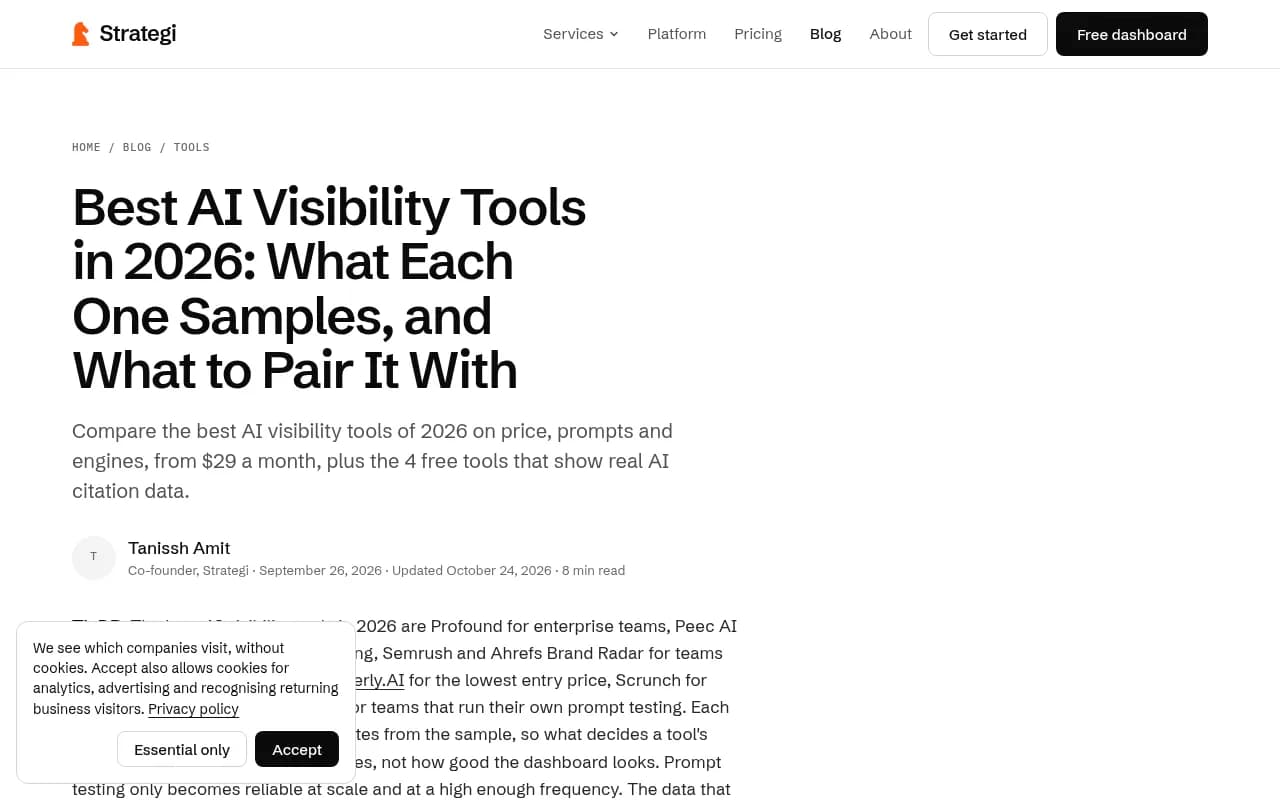
The Strategi guide above is a useful reference for pricing and sample-size reasoning. It's also a good reminder to separate what a tool estimates from what you can measure directly, such as GA4, Search Console and Bing Webmaster Tools.
Which AI visibility tools offer a 7-day free trial
The trial terms below come from third-party roundups (Arobis, DeepSmith, Data-Mania, KIME, Strategi). Several of those are vendor-written or affiliate-linked, so verify before you sign up. Prices for Promptwatch come from its own pricing page.
| Tool | Trial | Entry price | What the trial covers |
|---|---|---|---|
| Promptwatch | 7-day free trial on monthly billing | $95/mo (Essential) | Your own brand, prompts and competitors, all AI models |
| Profound | 7 days | Custom Enterprise | 50 prompts Profound picks, daily on ChatGPT, Gemini and AI Overviews |
| Scrunch AI | 7 days | Core at $250/mo | Full tracking per roundup reports |
| Semrush AI Visibility | 7 days | $99/mo add-on | Tracking inside the Semrush ecosystem |
| Goodie AI | 7 days | Core at $399/mo | Per roundup reports |
| Rankscale | 7 days (Pro plan) | Essentials about $17/mo, billed yearly | Pro features during trial |
| KIME | 7 days | EUR 99/mo (Explorer) | Full features on both self-serve plans |
| Knowatoa | 7 days, no card | Starter $59/mo | Three core engines |
| Searchable | 14 days | Not verified | Per Strategi |
| Otterly.AI | Not confirmed | From $29/mo | Cheapest entry among the paid options |
Two takeaways. Seven days is the standard, so plan around it. And cheap isn't the same as complete: the $17 to $59 tools track mentions, while the pricier ones add the work that happens after you find a gap.
Promptwatch: the trial that lets you test the whole loop
Promptwatch is an end-to-end AI visibility platform, which is why it's worth testing differently from a plain tracker. The 7-day free trial is available on monthly billing for Essential, Professional and Business, and the setup takes a brand URL and 5 starter prompts.

What you can check inside a week:
- Prompts run on the real interfaces of ChatGPT, Google AI Overviews, Google AI Mode, Gemini, Perplexity, Copilot and others, in the country and language you choose.
- Visibility Score, Share of Voice, position and sentiment per prompt and per competitor, so you can see whether a problem is coverage or prominence. The Visibility Score docs explain how each is calculated.
- Brand Narrative, which pulls the individual claims AI makes about you (like "affordable for small teams") out of every response.
- Prompt volumes and difficulty, so you aren't tracking prompts nobody asks.
- IP-verified AI crawler logs, which tell you whether bots even read your pages. Most trackers don't have this.
Agent Chat, MCP and API access are included on every plan, so you can also ask your data questions instead of building dashboards.
Pricing, quoted from the pricing page:
| Plan | Price | Prompts | Responses | Notable extras |
|---|---|---|---|---|
| Essential | $95/mo | 50 | 6,000 | Daily tracking, 500 Agent Credits, country tracking |
| Professional | $245/mo | 150 | 18,000 | 5 AEO articles, Knowledge Base, 25M crawler logs, custom reports |
| Business | $579/mo | 350 | 42,000 | Content Agent, hourly tracking, state/city tracking, Fact Check, Shopping, Ads Radar |
Note what the trial can and can't show. Essential has no crawler logs or AEO articles, so if you want to test the full write, publish and measure loop, start the trial on Professional or Business. Confirm everything at promptwatch.com/pricing.
If you'd rather look before committing, the free AI visibility report scans how ChatGPT, Gemini and Perplexity talk about your brand with no login. When you're ready, start the 7-day trial.
The other trials worth your week
Profound
Profound is a strong enterprise monitor with API, SSO and SOC 2. The catch is the trial: according to Strategi, it's 50 prompts that Profound picks, run daily on ChatGPT, Gemini and AI Overviews. You'll see the product, but you won't learn much about your own brand. Pricing beyond the trial is custom. For a side-by-side, see Promptwatch vs Profound.

Scrunch
Scrunch pairs tracking with site audits. The 7-day trial leads into a Core plan at $250 a month per the Arobis roundup.
Semrush AI Visibility
If your team already lives in Semrush, the 7-day trial and the $99 a month add-on are the lowest-friction way to start. The tradeoff is depth: traditional SEO suites bolting on AI tracking tend to use fixed prompt sets and lack crawler logs or AI traffic attribution. See Promptwatch vs Semrush.
Rankscale
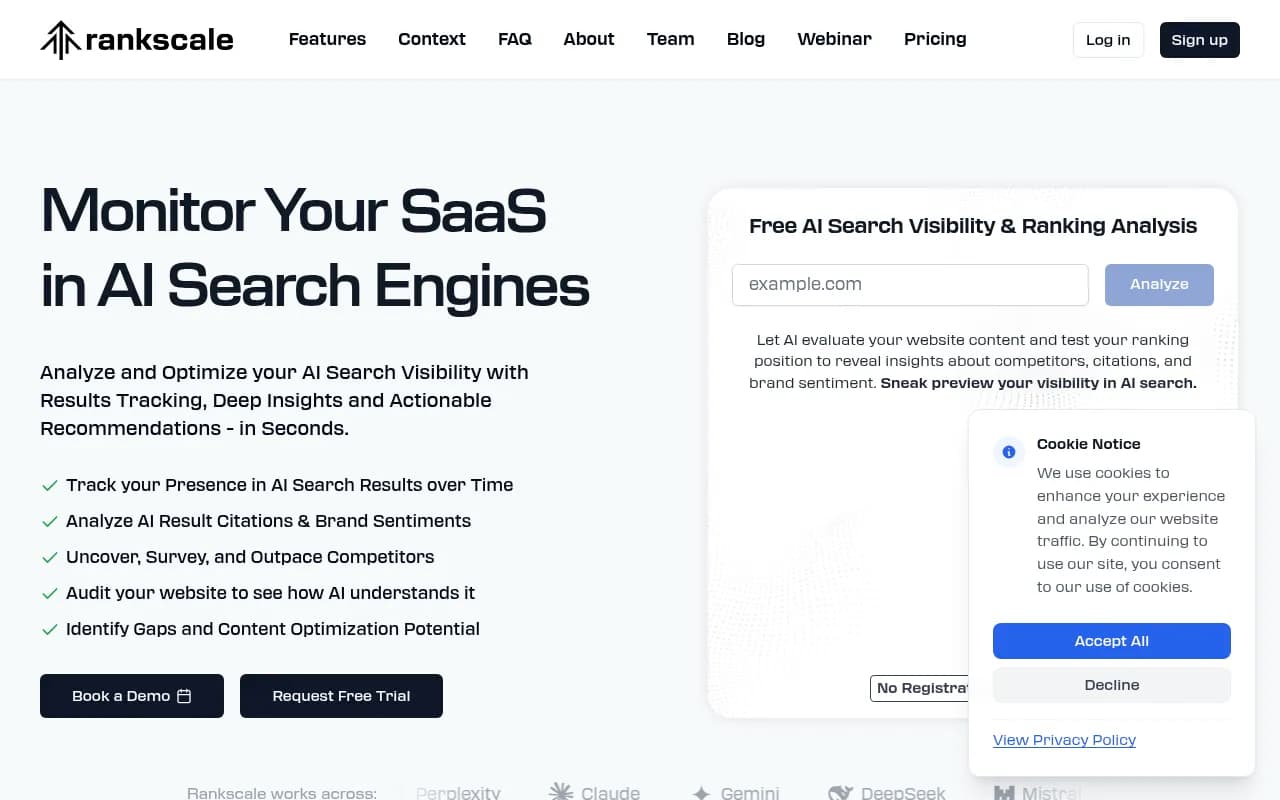
Rankscale gives a 7-day trial of its Pro plan, and the Essentials plan works out to about $17 a month when billed yearly. It's a good budget pick if all you need is monitoring.
Otterly.AI and Peec AI
Otterly.AI starts at $29 a month, the cheapest paid option in the KIME roundup. Peec AI is popular with European agencies. Both are basic prompt trackers: no crawler logs, no visitor analytics, no content generation. That's fine if monitoring is the whole job.


Knowatoa and KIME
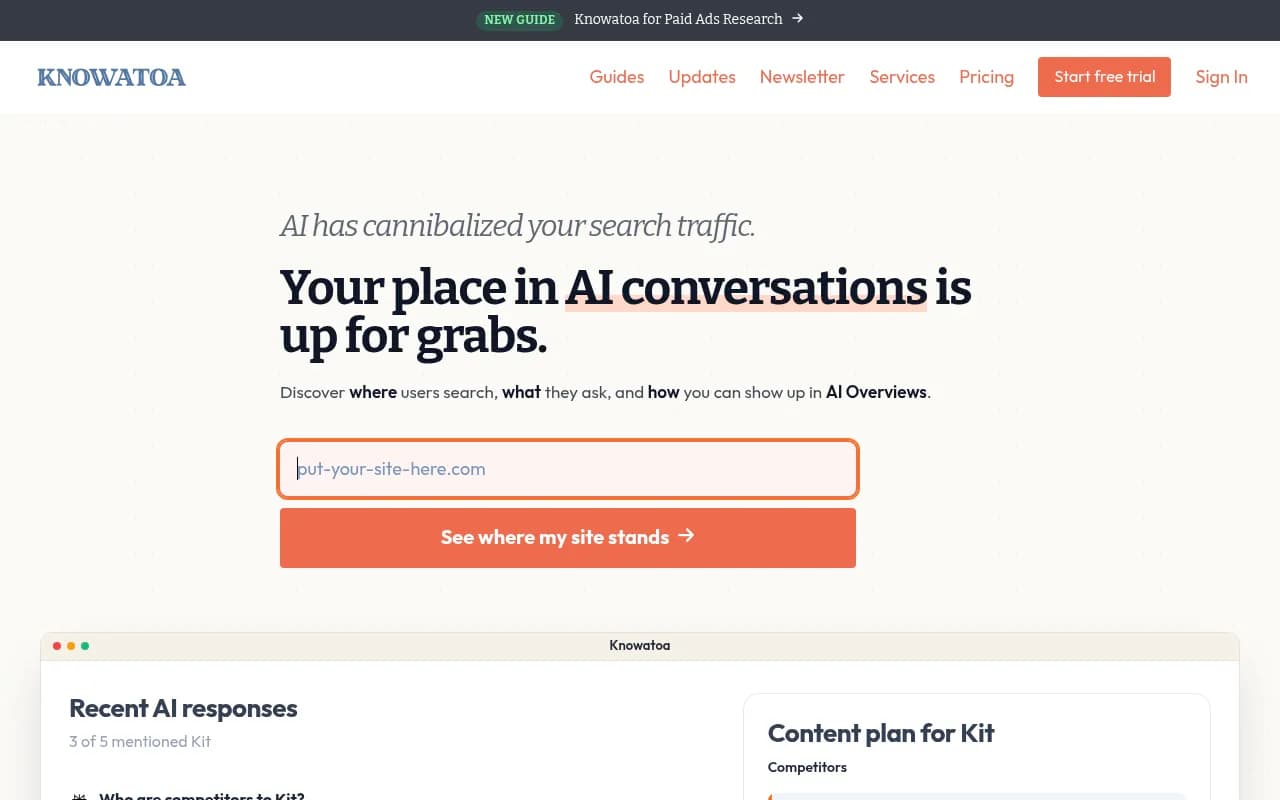
Knowatoa offers a no-card 7-day trial with Starter at $59 a month on three engines. KIME, a vendor-written roundup's own pick, offers a 7-day trial on its EUR 99 Explorer plan and tracks up to nine engines.
For more options by category, the GEO software directory at bestgeosoftware.com and the AI rank tracker listings at ai-rank-tools.com are good places to keep browsing.
How to run a useful 7-day trial
Seven days goes fast. Here's a schedule that works for any tool on the list.
Day 1: load real inputs
Add your brand, 3 to 5 competitors and 5 to 10 prompts that your buyers actually type. Include a mix: commercial ("best X for Y"), informational ("how do I...") and branded. If the tool refuses custom prompts, that's your answer about the trial.
Promptwatch's data shows why the mix matters. In ChatGPT, product pages earn 26.0% of citations on commercial prompts versus 22.4% overall, and branded prompts lean on landing pages (22.8%). See the full breakdown in Promptwatch Data on ChatGPT citation share by content type (Sep 28 to Oct 4, 2026). A tool that can't split results by intent will blur those differences.
Day 3: sanity-check against a manual search
Pick two prompts and run them yourself in ChatGPT and Perplexity. The tool's answer won't match exactly, since AI answers vary run to run, but the brands and sources should overlap. If they don't, ask whether the tool is using APIs instead of the real interface.
Tip: Perplexity is the steadiest engine for testing. Promptwatch Data on sources per response shows Perplexity citing almost exactly 10 sources per answer with little day-to-day movement, while Copilot's average swung from under 2 to nearly 17 within weeks. Trust trial data on Perplexity more than on Copilot.
Day 5: test the action side
This is where tools diverge. Ask three questions:
- Can it tell you which of your pages AI cites, and where they land in the source list?
- Can it show whether AI crawlers can read your site at all? The AI crawler logs feature is built for this, and the free Agentic Readiness Check gives a quick read without any trial.
- Can it help you write or refresh content for the gaps, and publish it?
A tracker that stops at a dashboard leaves you with a to-do list and no way to do it. Promptwatch's Action Board, content gap analysis and Content Agent exist for that step, then Page Tracker and visitor analytics check whether the published page got crawled, cited and clicked.
Day 7: decide with a checklist
| Question | Why it matters |
|---|---|
| Did it use my prompts and competitors? | Demo data tells you nothing |
| Are answers from real interfaces? | API output can differ from what users see |
| How many responses per month? | Sample size drives reliability |
| Can it show crawler or traffic data? | Separates access problems from content problems |
| Does it cover the engines my buyers use? | Entry plans sometimes limit engines |
| What does it cost after the trial? | Prices jump quickly at enterprise tiers |
One more thing: after the trial, ask whether your visibility is even the bottleneck. A tool that shows weak sentiment or late position is pointing at different problems than one that shows no mentions at all. The metrics overview walks through how to read them together.
Match the tool to the job
| If you are... | Start with |
|---|---|
| A brand or SEO team that wants to fix gaps, not just see them | Promptwatch (Professional or Business trial) |
| An enterprise with SSO and SOC 2 requirements | Profound or Promptwatch Enterprise |
| Already on Semrush | Semrush AI Visibility add-on |
| Watching budget, monitoring only | Otterly.AI, Rankscale or Knowatoa |
| An agency managing clients | Promptwatch agency plans (Kick-off $199, Growth $399, Scale $799), see the agency page |
A reasonable approach is to trial two tools at once: one monitoring-only budget pick and one full platform. Run the same prompts through both and compare what each helps you do next, not just what each reports.
A note on the roundups themselves
Be careful with listicles in this category. The KIME and DeepSmith guides are written by vendors that rank themselves highly, and the Data-Mania and Semrush links are affiliate-driven. They're useful for finding names and trial lengths, but check each vendor's pricing page before you rely on a number.
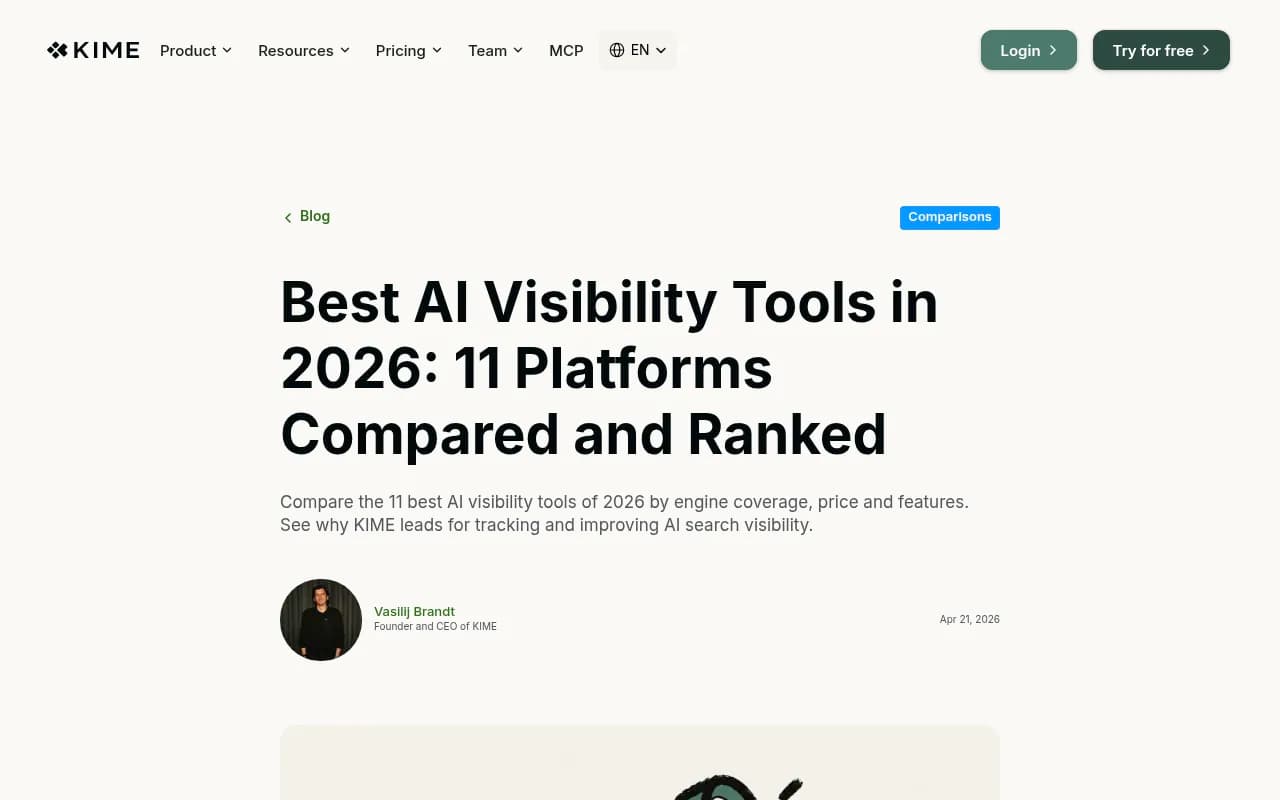
The screenshot above is a good example: useful as a source of tool names and trial lengths, but the author is also number one on its own list.
Bottom line
Every tool here will give you seven days. What matters is what you can learn in them. Load your own prompts, check the data against a manual search, and push each tool past the dashboard to see whether it helps you fix what it finds. Start with the Promptwatch 7-day trial if you want to test monitoring, tracing, content and measurement in one place, and pair it with a cheaper tracker if you want a second opinion. Check current prices at promptwatch.com/pricing before you commit.