Key takeaways
- Large brands usually pick an AI visibility platform on SSO, SOC 2 or ISO 27001, role-based access, and support, not on engine count or sticker price.
- Pricing and compliance claims in third-party roundups are often pulled from snippets. Ask each vendor for the report, DPA, and SSO documentation before you sign.
- Engines cite very different numbers of sources, so enterprise tools need per-engine reporting rather than one blended score.
- Promptwatch combines ISO/IEC 27001 certification and GDPR compliance with agents that fix visibility gaps. Profound and Scrunch are the closest monitoring-first enterprise rivals.
- Pick tools by what happens after the dashboard: do you need monitoring only, or a system that plans, writes, publishes, and measures?
Why enterprise teams look beyond Gauge
Gauge is a competitive intelligence tool for AI visibility. It does what it says, and plenty of mid-sized teams are happy with it. The friction tends to show up when a security team or procurement gets involved.
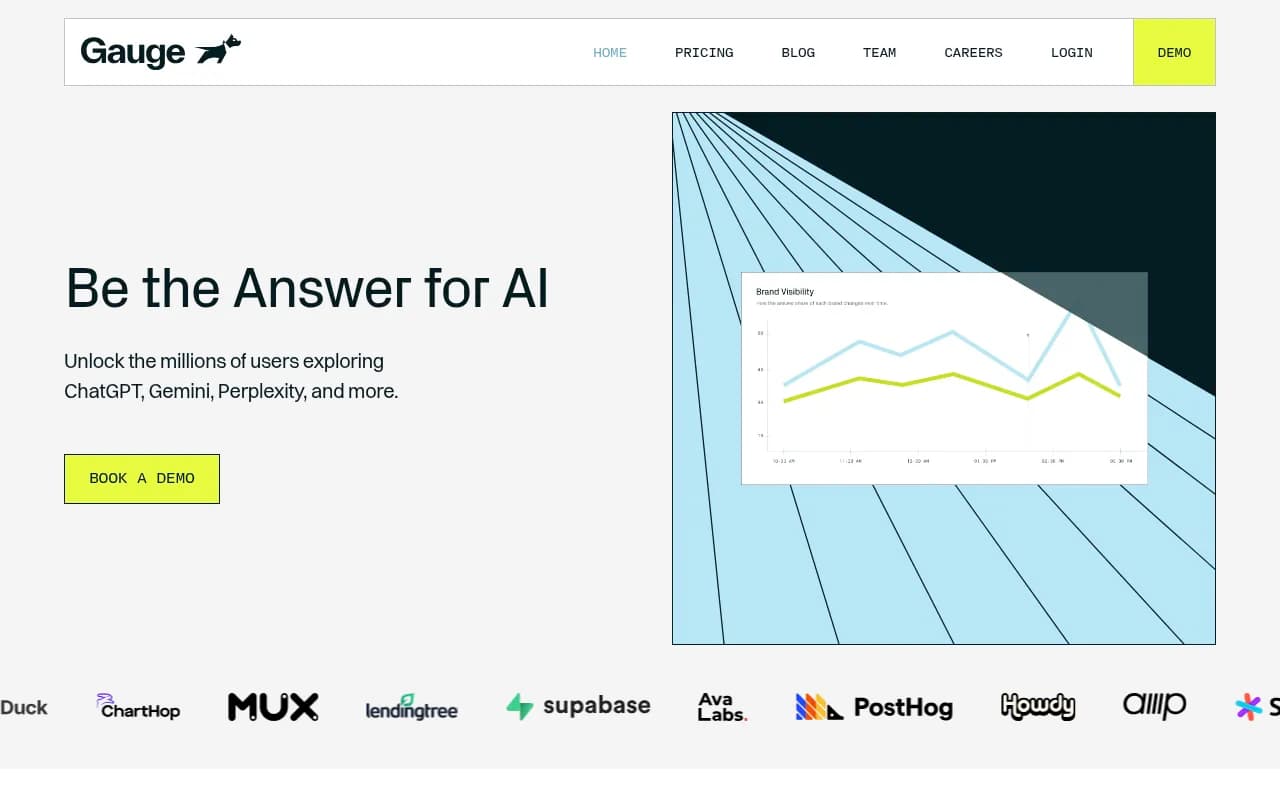
At that stage the questions change. Does it support SAML or OIDC SSO? Is there a SOC 2 Type II report or ISO 27001 certificate you can actually read? Can you give 40 people different permissions per brand? What does the contract look like at 10 brands and 5,000 prompts? I could not verify Gauge's SSO and compliance status from its own site while preparing this guide, so treat that as a question for their sales team, not a conclusion.
The other reason teams move is the gap between monitoring and action. A dashboard that says you are invisible in ChatGPT is useful for a week. Then somebody has to write the content, fix crawler access, and prove it worked.
What enterprise buyers should check first
One buying guide from GrowByData argues that SSO, SOC 2, role-based access, and account support matter more than engine count and price for large brands. That matches what I see. It also says certification status is not always public, so verify it directly. Good advice.
A practical checklist:
- SSO: SAML or OIDC, and which plan tier it sits on. Several vendors gate it behind Enterprise.
- Certification: ask for the actual SOC 2 Type II report or ISO 27001 certificate, not a badge on a pricing page.
- Access control: roles, per-brand permissions, audit logs, scoped API keys.
- Data handling: GDPR terms, DPA, data residency, subprocessors.
- Scale: prompts, responses, projects, seats, and how overages work.
- Data source: real user interfaces or API calls. User-facing answers can differ from API output.
- Action layer: does anything happen after the report?
Why per-engine reporting matters at scale
Promptwatch Data's Average Sources Per Response report shows how different the engines are. ChatGPT cites about 5 sources per web-search answer, while Google AI Overviews cites about 10 and Perplexity sits almost exactly at 10 every day. Microsoft Copilot swung from under 2 to nearly 17 sources within a few weeks before settling low, as Microsoft kept reworking its retrieval.
So a single blended visibility number hides a lot. An enterprise team reporting to a CMO needs to see each engine separately, by country and language.
Gauge alternatives compared
| Tool | Enterprise security signals | SSO | Starting price (verify) | Best for |
|---|---|---|---|---|
| Promptwatch | ISO/IEC 27001 certified, GDPR compliant, audit log on Business and up | SSO on Enterprise | $95/mo, Business $579/mo | Teams that want to fix visibility, not just watch it |
| Profound | SOC 2 Type II stated on its enterprise page | SAML/OIDC, RBAC | Reported from $399/mo | Large brands that want a monitoring-first tool |
| Scrunch | SOC 2 on enterprise tier | SAML/OIDC on Enterprise only | Reported $250 to $417/mo annual | Per-brand permissions and multi-brand setups |
| Otterly.AI | SOC 2/ISO not publicly confirmed | Enterprise tier with SSO | Enterprise reported from about $1,000/mo | Budget monitoring that grows into enterprise |
| Goodie | SOC 2 referenced, unverified | Check with vendor | Not verified | Managed, agency-style service |
| Searchable | SOC 2 and SSO/SAML reported on Enterprise | Enterprise | Starter reported $99/mo | Entry-level plus enterprise upgrade |
Third-party pricing and compliance details come from roundups and search snippets, so confirm them with each vendor.
Promptwatch: the one that acts on the data
Promptwatch is where I would start for an enterprise team that is tired of dashboards. It is rated 4.7/5 on G2, used by 1,840+ brands and agencies, and holds ISO/IEC 27001 certification with GDPR compliance, which matters when your security review is the bottleneck.

On the scale and security side, the Business plan ($579/mo) gives 5 projects, 5 seats, 350 prompts, 42,000 responses, an audit log, state and city tracking, and local GEO/SEO targeting. Enterprise adds custom prompt and crawler volume, SSO, a dedicated success manager, and priority support. Roles are owner, editor, and viewer, API keys are scoped, and agencies get white-label workspaces and branded read-only client access.
What separates it from monitoring-first tools:
- It tracks the real interfaces of ChatGPT, Google AI Overviews, AI Mode, Gemini, Perplexity, Copilot, Meta AI, Alexa, and coding agents, by country and language.
- IP-verified AI crawler logs show whether GPTBot, ClaudeBot, and others can read your pages and where they hit errors. Most competitors skip this.
- Visitor analytics tie AI platforms to real traffic and conversions.
- The Content Agent plans, writes, and publishes to WordPress, Webflow, or Framer, with a review inbox if legal wants sign-off. The Action Board prioritizes what to fix next.
The honest caveats: the automated Content Agent starts at the Business tier, and agency plans do not include it. Check promptwatch.com/pricing for current numbers.
Crisp reported 2x higher conversion from AI traffic than from traditional channels, and TreeHouse (Pararius) grew AI search to roughly 25% of organic conversions after fixing crawler access and publishing proprietary data.
Profound
Profound is the most common enterprise comparison. It lists 9 to 10 engines depending on tier, SOC 2 Type II, SAML/OIDC SSO, and RBAC. LightSite noted it did not inspect the SOC 2 report itself, and that data residency, DPA terms, and API and multi-brand entitlements were not publicly verified. That is exactly the kind of thing to ask for in procurement.

The trade-off is price, with a reported $399/mo entry, and a product centered on monitoring. There is no Reddit tracking or ChatGPT Shopping, and no agentic execution, as far as I can tell from public material.
Scrunch
Scrunch covers 9 engines, with SOC 2 and SAML or OIDC SSO on the Enterprise tier only. Lower tiers get Google sign-in. Per-brand permissions are a real plus for holding companies and agencies. Reported Starter is $250/month on annual billing ($300 monthly), Growth $417 or $500.
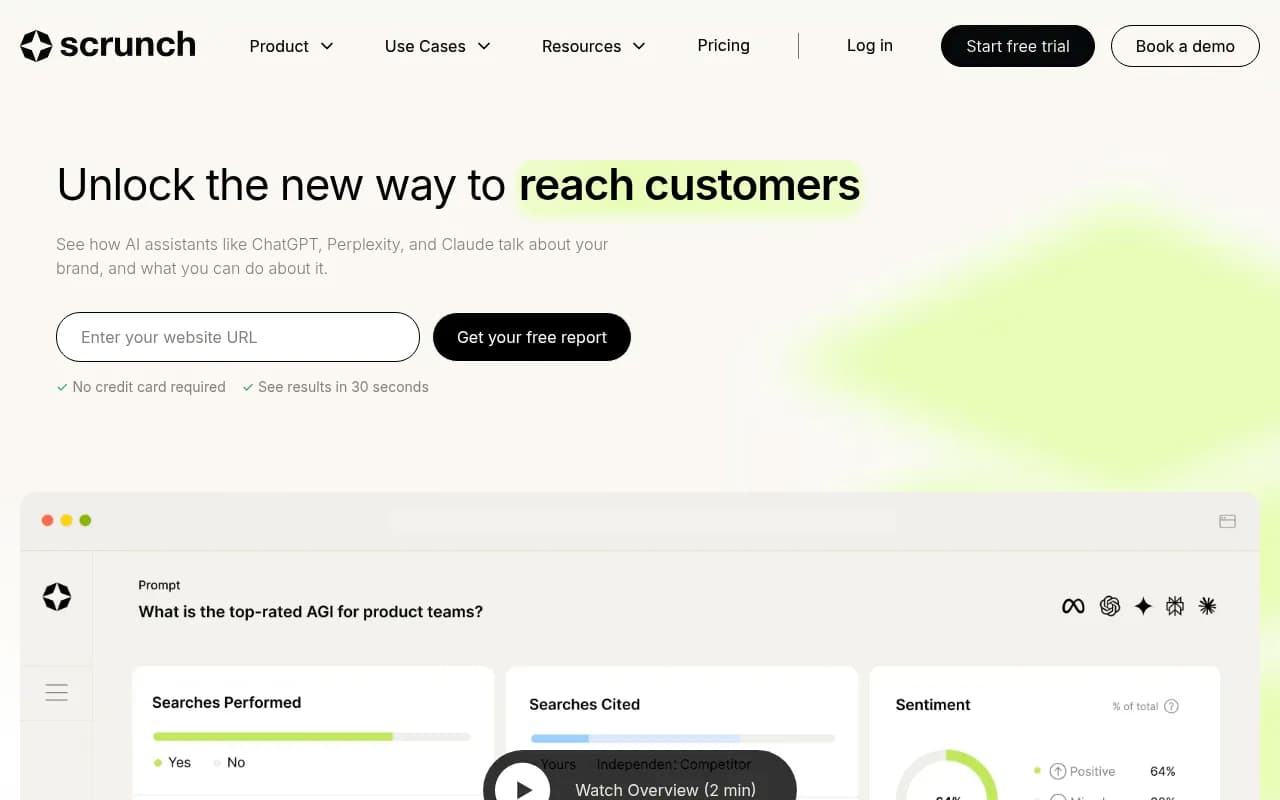
If you need SSO, you are buying Enterprise from the start. Plan for that in the budget.
Otterly.AI and Rankscale
Otterly.AI is the affordable choice, with basic monitoring from a low price and an Enterprise tier from about $1,000/month that adds SSO and dedicated support. Its SOC 2 and ISO status is not publicly confirmed. Rankscale has also added an Enterprise tier with SSO.

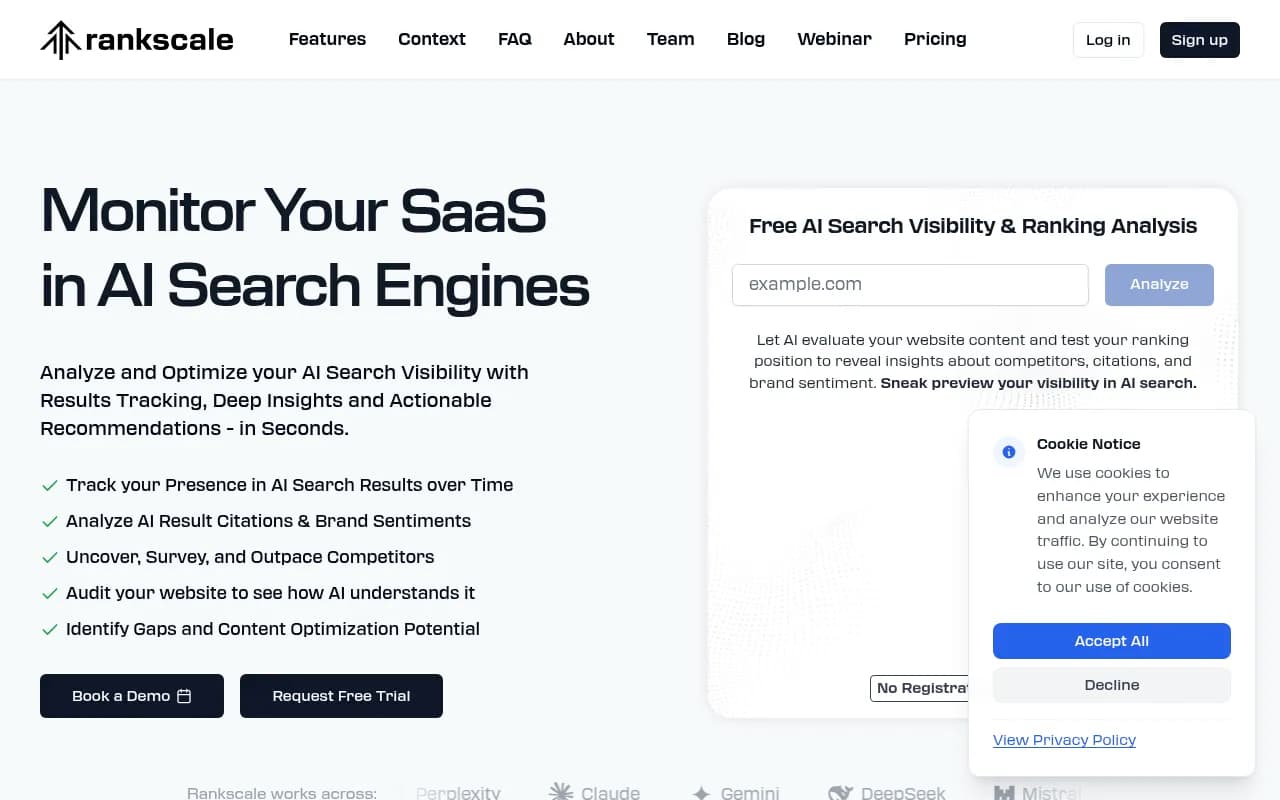
Both are fine if monitoring is the job. Neither gives you crawler logs or content generation to close the loop.
Other options worth a look
- AthenaHQ tracks 8+ engines, monitoring-focused.
- Brandlight and Bluefish target large brands, though their feature sets are narrower.
- Semrush and Ahrefs Brand Radar bolt AI tracking onto SEO suites. Useful if you already pay for them, but prompt sets are fixed and the AI data is shallower.
- seoClarity and BrightEdge suit teams that want AI visibility inside an existing enterprise SEO platform.
For more options, the GEO software directory at bestgeosoftware.com lists many more tools in this category.
How to run a procurement check
- Ask for the SOC 2 Type II report or ISO 27001 certificate under NDA. A badge is not evidence.
- Confirm which tier includes SSO. Write it into the quote.
- Request the DPA, subprocessor list, and data residency options.
- Test with 50 of your real prompts across 3 engines and 2 countries.
- Check whether data comes from real UIs or APIs.
- Ask what happens after a gap is found. If the answer is "export a CSV", price in the labor.
- Model the cost at 3x your current prompt count. Per-response pricing is where surprises hide.
Which one fits which team
| Your situation | Likely pick |
|---|---|
| Security-gated, want monitoring plus execution | Promptwatch |
| Large brand, monitoring-first, existing vendor review done | Profound |
| Many brands, per-brand permissions | Scrunch |
| Tight budget, light monitoring | Otterly.AI |
| Already in an enterprise SEO suite | seoClarity or BrightEdge |
Bottom line
Switching from Gauge is justified when your security team, scale, or need for action outgrows a monitoring dashboard. Start with the compliance documents, run a real-prompt pilot, and choose the platform that can show you the fix and then prove it worked. Run Promptwatch's free AI Visibility Report first if you want a no-login baseline before any sales call.