Key takeaways
- Dashboards go live in a day or a week. Real value (citations, traffic, conversions) arrives over a phased 30 to 90 day journey.
- I found no independent, verified enterprise onboarding timelines for Profound, Scrunch or other large GEO platforms. Most numbers are vendor claims, so ask for them in writing.
- Evergreen pages (landing, docs, pricing, comparison) stay cited for months, so early fixes keep paying off. News-style content fades in about five weeks.
- Crawler access is a day-one task. If AI bots are blocked, nothing else you do matters.
- A 30-day parallel pilot with a fixed prompt set is the fairest way to compare platforms.
Why onboarding timelines are hard to compare
Every GEO vendor says some version of "fast." Peec shows "data at signup, live in a day with a 7-day free trial" and AthenaHQ shows "tracking within about a week" in a comparison table published by AirOps. AirOps sells a competing product, and the page is titled "2027", which looks like a typo, so treat that as a soft data point.
Here is the problem. "Live" means a dashboard is showing numbers. It does not mean your brand is being cited more often, or that AI traffic is converting. Those are separate milestones with separate clocks.
An enterprise GEO platform, as Meikai defines it, is software (sometimes paired with a managed service) that works across many brands, markets, languages and AI models at once, with the access controls and integrations a large organization needs. Those last words are where the weeks go: SSO, security review, procurement, CDN access for crawler logs, CMS permissions, and getting five regional teams to agree on a prompt list.
I will be upfront about a gap. I could not verify enterprise implementation timelines for Profound, Scrunch or the other big names from public sources. The snippets simply don't state them. Anyone giving you a precise number for those vendors without a source is guessing.
What the adjacent evidence says
GEO-specific onboarding data is thin, but neighboring software categories give a useful shape.
Moveworks frames enterprise search time to value as a phased journey where each phase builds on the last. Early productivity gains come soon after launch, and measurable operational improvements follow over weeks or months, depending on integrations, rollout scope and adoption. That is vendor content, but the phasing matches what I would expect from GEO.
On the digital adoption side, Perspective's comparison says self-serve tools like Userpilot, Appcues or Arcade ship in days, while enterprise rollouts of WalkMe or Whatfix take 4 to 12 weeks because of change management, content authoring and identity integration.
The lesson transfers cleanly. The software is rarely the slow part. Identity, governance, content workflows and people are.
Customer onboarding vendors like GUIDEcx make the same point from the other direction: complex B2B implementations need project plans, shared tasks and portfolio visibility. Treat your GEO rollout like one of those projects, with an owner and dated milestones.
A realistic phased timeline
This is my synthesis, not a measured benchmark. Use it as a starting plan and adjust with your vendor's written commitments.
| Phase | Typical window | What happens | What you can claim |
|---|---|---|---|
| Procurement and security | 2 to 8 weeks before kickoff | Security review, SSO, contracts, data processing terms | Nothing yet |
| Setup | Days 1 to 7 | Projects, brands, competitors, prompt monitors, market and language settings, crawler log connection | Baseline visibility numbers |
| Baseline and diagnosis | Weeks 2 to 4 | Citation sources, content gaps, crawler access issues, sentiment and claims about your brand | A ranked list of fixes |
| First fixes shipped | Weeks 3 to 8 | Technical access fixes, updates to high-value pages, first new content | Pages crawled and re-cited |
| Measurable movement | Weeks 6 to 12 | Visibility, share of voice, and AI-referred visits change | Early trend evidence |
| Revenue attribution | Months 3 to 6 | AI traffic tied to conversions, content programs at scale | Business case for renewal |
Notice that the platform's own onboarding is a small slice. Most of the elapsed time is your organization shipping changes.
Day one: audit crawler access
The single most useful first-week task is checking whether AI crawlers can read your site at all. Promptwatch Data's AI crawler traffic report (IP-verified requests, June 8 to September 6, 2026) shows OpenAI at 79.8% of verified AI crawler requests in the week of August 31 to September 6, down from 94.8% in the week of June 8 to 14. The report's advice is blunt: check robots.txt, CDN and WAF rules for every provider, and if a provider is a large share in the chart but near zero in your own logs, you are likely blocked.
That makes a crawler audit a day-one onboarding task. It is also the fix with the shortest path to value, because it costs a config change rather than a content program. Free tools help here, such as the AI crawler URL inspector and the robots.txt generator for AI. For ongoing visibility, look for platforms with IP-verified crawler logs that work with your CDN (Cloudflare, Vercel, Fastly or raw server logs).
How long do your fixes keep paying off?
Onboarding timelines should account for how long an improvement lasts. Promptwatch Data tracked every page ChatGPT cited on July 6, 2026 for 90 days, through October 4, 2026:
- After 30 days, ChatGPT still cited 78% of landing pages and 76% of docs. After 60 days it still cited 69% and 67%.
- Comparisons held at 72% after 30 days and 63% after 60.
- Product pages, reviews and how-tos sat around 55% at day 60, reaching their half-life at 74 to 77 days.
- News was the outlier: half of pages were gone after 36 days, and almost a quarter were never cited again after day 0.
Pricing pages are classified as landing or product pages, so accurate prices and positioning are long-lived assets. For onboarding, this means your first 30 days should go to evergreen pages: landing, docs, pricing, comparison. Press and news content is fine for bursts, but it won't carry a quarterly business case. Pages in the long-lived groups only cross 50% in the final week because the window ends, so their real half-life is probably at or beyond 90 days.
Vendor claims versus what you can verify
Here is what I could find on specific platforms, with honest caveats.
| Platform | Claim found | Source type | Caveat |
|---|---|---|---|
| Peec AI | Data at signup, live in a day, 7-day trial | Competitor comparison (AirOps) | Third party with its own product |
| AthenaHQ | Tracking within about a week, no sales process | Same comparison | Same caveat |
| AthenaHQ vs Profound vs Peec | 30-day parallel pilot, Athena +45% answer share, Peec +8%, Profound -1% | Athena's own blog | Self-run test, biased |
| Profound | Unlimited prompts, 5-minute support SLA (versus 2 hours for Athena) | Profound-affiliated comparison | Affiliated source |
| Scrunch and others | No timeline found | n/a | Ask the vendor |
The AthenaHQ pilot is biased, but it points at something useful: a 30-day window against 1,000 buyer questions is a common benchmark shape. I would copy the structure and ignore the winner.



Where the large platforms differ in time to value
Speed to a dashboard is roughly equal across the category. Speed to impact depends on whether the platform helps you act. Three broad groups:
- Monitoring-first tools. Fast signup, lighter workflows. You get numbers quickly, then you need your own team or agency to turn them into pages. Peec, Otterly and similar tools sit here.
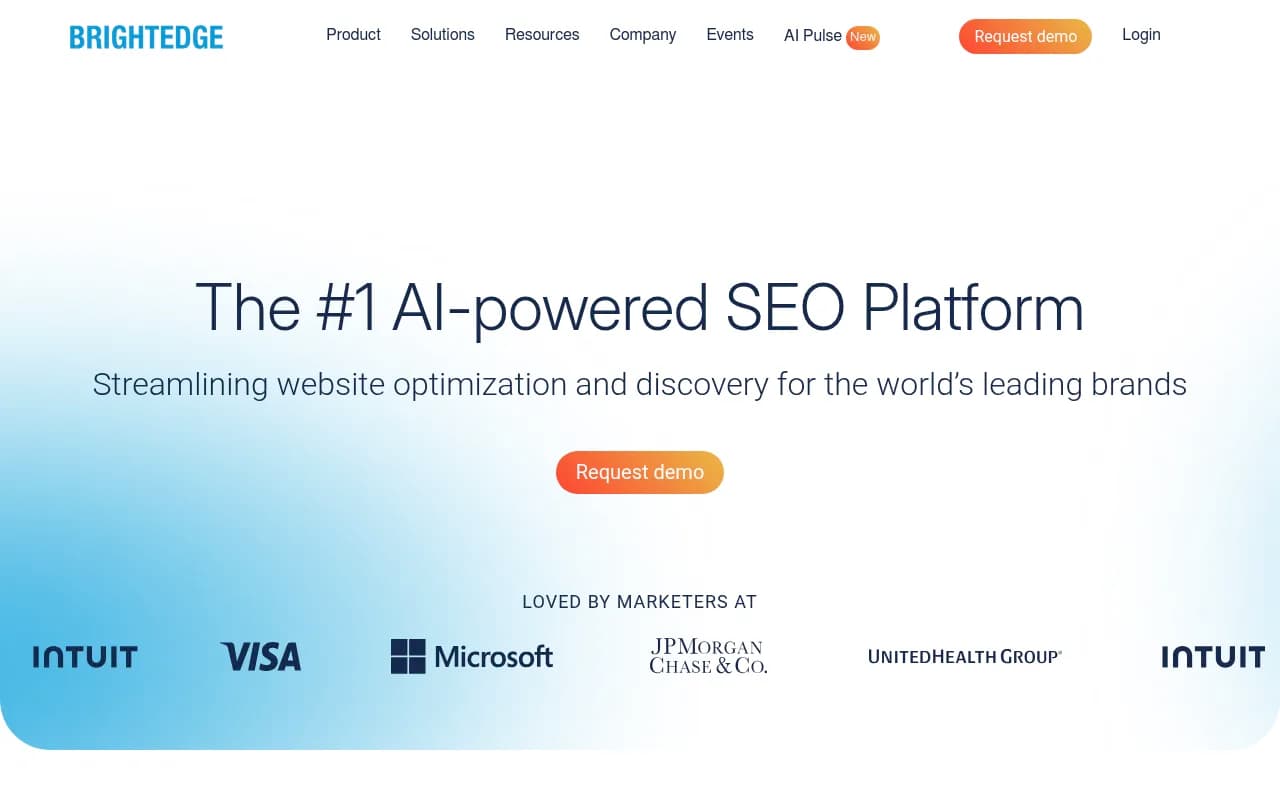
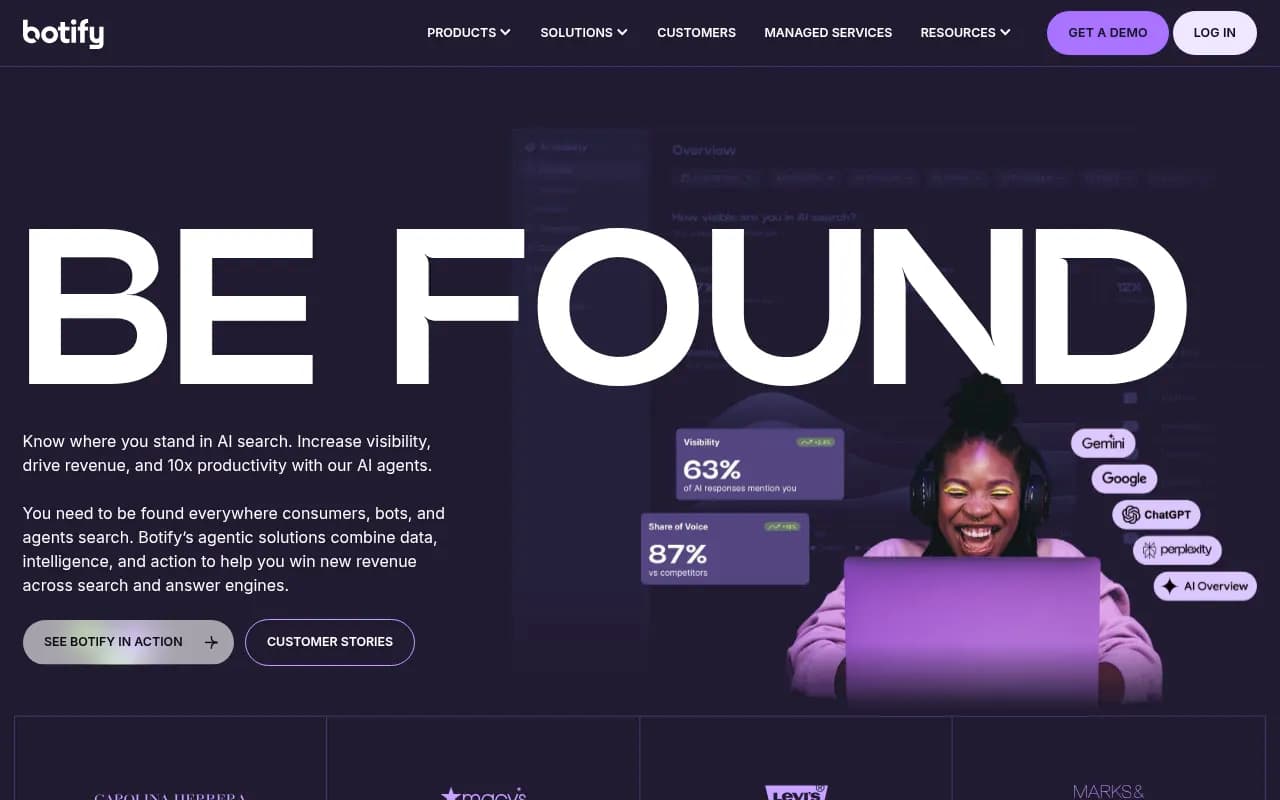
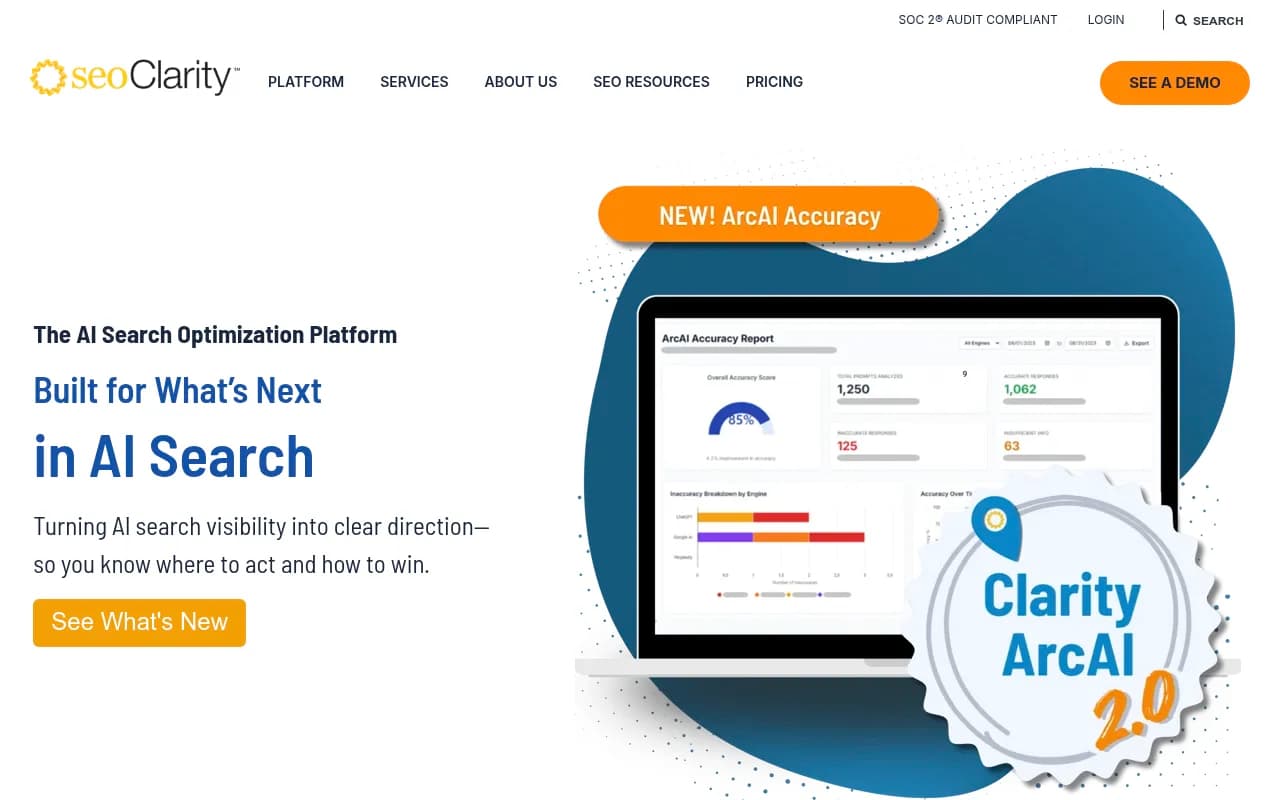
- Enterprise suites. Tools like BrightEdge, Botify and seoClarity add AI visibility to existing SEO deployments. If you already run one, the data connections may already exist, which can shorten setup.
- Action-oriented platforms. These connect tracking to content creation and publishing, which shortens the gap between diagnosis and shipped fixes.

Promptwatch sits in the third group. It tracks prompts across the real interfaces of ChatGPT, Google AI Overviews, Gemini, Perplexity and others, then connects crawler logs, citations and visitor analytics so you can see whether a fix was read, cited and clicked. The Content Agent and CMS publishing (WordPress, Webflow, Framer) shorten the fix phase, and the Action Board ranks what to do first. It has a 7-day free trial on monthly billing and a free AI visibility report if you want a baseline before any procurement conversation. Check current pricing before you plan, since the Content Agent, faster-than-daily tracking and local targeting start on the Business plan.

If you want to browse more options, the GEO software directory lists a wide range of platforms by category.
How to run a 30-day pilot that actually tells you something
Most pilots fail because the criteria were fuzzy. Here is a tighter approach.
- Freeze a prompt set. Use 100 to 300 prompts split across branded, comparison and category prompts, in your real markets and languages. Do not let anyone edit it mid-test.
- Capture a baseline in week one. Visibility, share of voice, position, sentiment, and self-citation rate. Pull them before you change anything.
- Audit crawler access on day one. Fix blocks before measuring, or you will be measuring your own robots.txt.
- Ship a fixed number of changes. For example, update ten evergreen pages and publish five new comparison pages. Same plan whichever platform you test.
- Score the platform on workflow, not just numbers. How many days from "we found a gap" to "the page is live"? That is the metric that predicts time to value.
- Measure by week four, but do not overreact. Given the content half-life data, evergreen fixes keep compounding after the pilot ends. Judge direction and speed of diagnosis, not final lift.
If you run parallel pilots, use the same prompts across tools and watch for prompt volume limits and credit caps. Promptwatch Data on query fanouts is a good reference for how many web searches ChatGPT triggers per response, which affects how you build your prompt set.
Questions to put in the contract
Because public timelines are scarce, make vendors commit:
- How many business days from signed contract to first data in each market and language?
- Which integrations are included at setup (CDN logs, CMS, Search Console, SSO), and who does the work?
- What is the support SLA, in hours, for the first 90 days?
- Is there a named success manager, and what does onboarding include?
- What are the limits on prompts, responses and seats, and what happens when you pass them?
- Can you export raw data (CSV, API) so a failed pilot doesn't strand your baseline?
If your team lacks the capacity to ship the fixes, a specialist agency is a legitimate shortcut. 1001 SEO Media is an SEO and GEO agency that works this way and is the publisher of this directory, so weigh that disclosure as you like.
What I would expect, honestly
If your security review is quick and your CMS access is simple, you can have a platform live in a week and a baseline within two. First shipped fixes by week four. Visible movement between weeks six and twelve. Revenue attribution takes a quarter or more, mostly because it depends on AI-referred visits piling up in your analytics.
Anyone promising enterprise-level results in 30 days is selling the dashboard, not the outcome. The honest question for any vendor is how quickly they help you go from a gap to a published, crawled, cited page. Ask for that number in writing.
Frequently asked questions
How long does enterprise GEO onboarding take?
Setup can take days, but procurement and security often add weeks. Plan on 30 days to a baseline and diagnosis, and 6 to 12 weeks to see measurable movement. These are my planning estimates, not verified vendor benchmarks.
Is a 30-day pilot long enough?
It is long enough to compare workflow and data quality. It is usually too short to judge final lift, especially since evergreen pages can stay cited for 60 days or more.
What should I fix first?
Crawler access, then evergreen pages such as pricing, landing, docs and comparison pages. Those are the page types that stayed cited longest in Promptwatch Data's content half-life study.
Do I need a managed service?
Only if you can't ship content and technical changes at the pace the data demands. Many large platforms offer one, and agencies can fill the gap.