Key takeaways
- Enterprise retail GEO is a product-level problem. Knowing your domain was cited matters less than knowing whether your hero SKUs made the shortlist in a shopping answer.
- Promptwatch Data shows product pages (22.4%) and landing pages (16.8%) take 39% of ChatGPT citations (Sep 28 to Oct 4, 2026). Your catalog pages are the main citation surface.
- Security and governance are the part most GEO buying guides skip. Verified crawler logs, access controls, audit trails and data residency belong in the procurement checklist.
- Scale means thousands of SKUs, several markets, several retail partners and several AI surfaces. Pick tooling that handles all four without a spreadsheet in the middle.
- Paid placement is arriving in AI answers. Promptwatch Data recorded ads in 20.1% of ChatGPT web-search responses between May 20 and Aug 17, 2026.
Why retail needs its own GEO playbook
Most GEO advice is written for SaaS companies and publishers. They want to be mentioned in an article-style answer. Retailers want something harder: a specific product, at a specific price, in stock, recommended by name when a shopper asks "what's the best running shoe for flat feet under $150?"
The traffic is small but the quality is high. Adobe data cited by Hello Retail says AI-referred traffic to US retail sites grew 393% year over year in Q1 2026, and by March 2026 it converted 42% better than non-AI sources. Treat those as third-party figures, since I haven't verified them independently, but they match what we hear from retail teams: low volume, strong intent.
The other half of the story is what's happening to classic search. Hello Retail, citing SparkToro, reports that 68% of US Google searches ended without a click in the first four months of 2026. If you built your catalog traffic on category pages ranking in the blue links, that is the exposure.
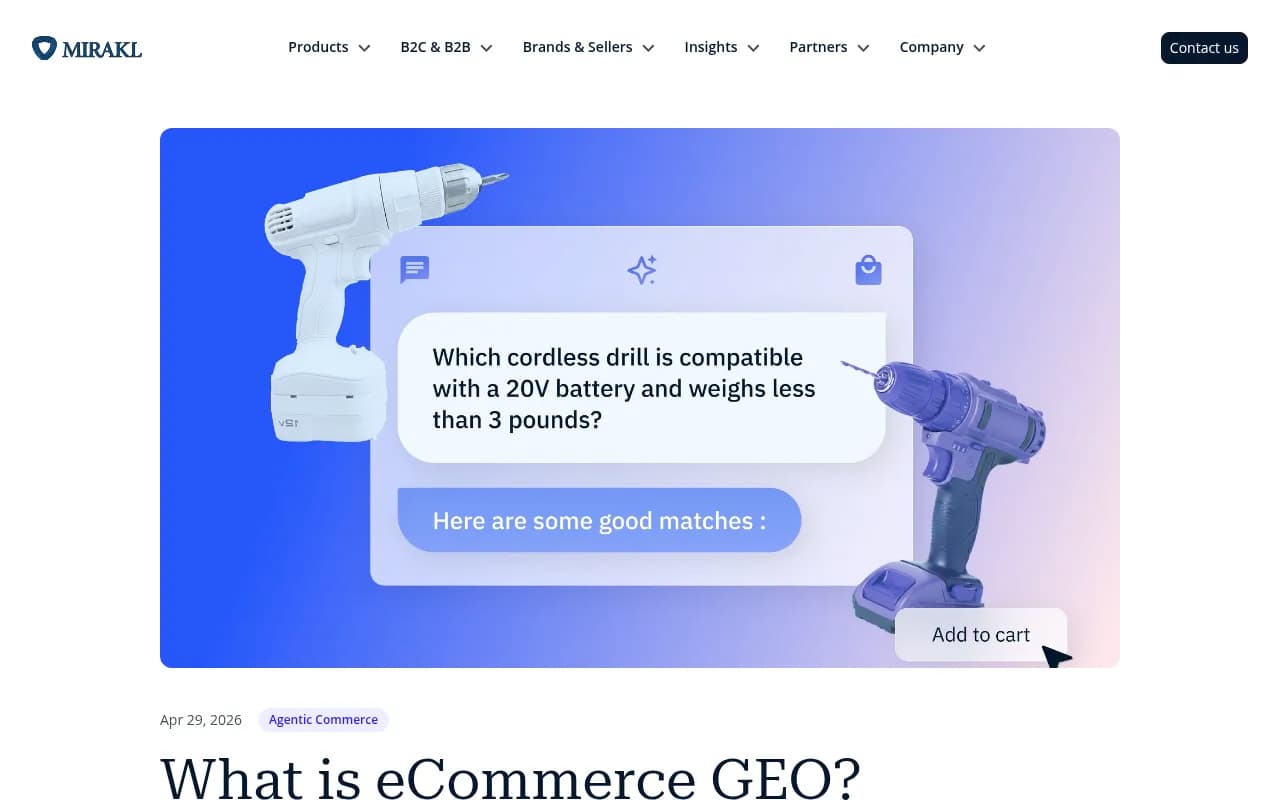
Mirakl frames the shift as a data problem: GEO is about enriching and structuring commerce data so models can discover, compare and recommend products. I think that's the right framing for enterprise. It is less about clever copywriting and more about whether your product data is clean, consistent and machine-readable across every place a model might read it.
What real shopping data looks like
"Real shopping data" gets thrown around loosely. In practice there are four layers, and an enterprise program needs all of them.
Layer 1: what AI actually says in the real interface
Answers, citations and shopping cards in the consumer interface can differ from what an API returns. If your tracker only calls APIs, you may be measuring an answer no shopper ever sees. Ask vendors whether they collect from the real UI of ChatGPT, Google AI Overviews, AI Mode, Perplexity and Copilot, per country and language.
Layer 2: what gets cited, and what type of page it is
Promptwatch Data on ChatGPT citation share by content type (Sep 28 to Oct 4, 2026) gives a useful baseline. Across all prompts, product pages were 22.4% of citations and landing pages 16.8%. Listicles were 13.6%, how-tos 8.7%, comparisons 5.9%, reviews 1.7%.
The commercial-prompt breakdown matters more for retail. When people compare options, product pages rise to 26.0%, landing pages to 20.6%, listicles to 15.0%, and comparisons to 7.9%. Those four types make up almost 70% of commercial citations. Read the full ChatGPT citation share by content type report for the branded and informational splits.
The practical read: your PDPs and category landing pages do most of the work, and third-party "best of" roundups do the rest. Reviews are tiny overall (1.7%) but jump to 5.6% on branded prompts, so reputation pages matter once a shopper already knows your name.
Layer 3: shopping features and ads
ChatGPT attaches product cards and price comparisons to only a low single-digit percentage of web-search responses, and the rate moves in steps. Promptwatch's ChatGPT shopping usage data shows it roughly doubled overnight in late May and then fell back, which reads like OpenAI tuning when cards appear. Trigger rates are far higher on commercial and transactional prompts.
Ads are the newer variable. According to Promptwatch Data on ChatGPT ads, ChatGPT served no ads until May 27, 2026, then showed them in 20.1% of web-search responses across the May 20 to Aug 17 window, with a daily peak of 43.9%. The mix of ad-bearing responses was mostly organic prompts (73.3%), with brand-specific at 18.0% and competitor comparison at 8.6%. That mix reflects the prompts monitored, not how likely each type is to trigger an ad, so don't read it as a targeting rule. The retail takeaway is simpler: paid placement now competes with your organic citation in a large share of commercial answers.
Layer 4: what happens after the click
Visibility without revenue attribution is a vanity metric. You need AI-referred sessions, conversions and revenue per visit tied back to the prompts and pages that earned them. One wrinkle: ChatGPT stopped sending a referrer on October 8, 2026, so tagging links with utm_source=chatgpt.com and counting those visits has become necessary to avoid undercounting.
Who gets cited: the retail citation pattern
There is no retail-specific Promptwatch citation report yet. The closest analog is the automotive one, and it's instructive. In August 2026 automotive data, marketplaces like Autotrader and Cars.com outrank every car brand, and Chevrolet is the top manufacturer site. Travel looks similar: booking and search sites earn more than half of ChatGPT citations.
I'd expect retail to rhyme: marketplaces, comparison sites and review aggregators competing with your own domain. Treat that as a hypothesis to test with your own prompts, not a finding.
A few other data points shape the plan:
- Almost half of ChatGPT responses cite 10 or more unique domains (source), so you're competing for one slot among many, not for the single answer.
- Mid-authority sites (DR 46 to 75) earned almost half of ChatGPT citations in August 2026, while DR 91 to 100 fell to about 3% (source). Brand size isn't a moat.
- ChatGPT cited social platforms in just 0.46% of citations from Sep 28 to Oct 4, 2026, versus 12.2% for AI Overviews (source). Reddit's share of ChatGPT citations fell from about 4% to 0.5% on August 14 (source). Don't build a ChatGPT strategy on community seeding, though it still matters for Google's AI surfaces.
- ChatGPT began using the site: operator at scale on August 8, 2026, going from about 0.4% to about 17% of fan-out queries (source). For retailers, that means the model increasingly searches inside specific domains, so your own site search-ability and crawlability matter more.
Security: the section most GEO guides skip
Enterprise buyers have a security review. GEO vendors and GEO programs both touch things security teams care about, and the research I pulled for this guide did not cover this area, so treat the following as a working checklist rather than a survey of the market.
Know which bots are actually hitting your catalog
AI crawlers are a growing slice of your traffic, and user agents are easy to spoof. IP-verified logs separate real GPTBot, ClaudeBot or PerplexityBot visits from imposters. Promptwatch's AI crawler traffic data tracks verified requests from OpenAI, Anthropic, Google, Perplexity and Mistral over three months, and the Meta-WebIndexer report shows how quickly the mix can shift: from about 2% to nearly 38% of tracked requests in under a month.
For a retailer, the decision isn't "block or allow." It's "allow the crawlers that feed citations and shopping answers, rate-limit the rest, and be able to prove which is which." Pricing and inventory scraping by competitors is the same traffic category and a different threat. The AI crawler URL inspector and the AI bots directory are useful for working out which user agents to treat how.
Governance questions for any GEO vendor
- Certifications. ISO/IEC 27001 and GDPR compliance are table stakes for EU retailers. Promptwatch holds ISO/IEC 27001 and is GDPR compliant, with data handled by an EU-based company.
- Access control. Role-based access with project-level permissions, SSO for larger orgs, and scoped API keys.
- Audit trail. A log of every change, including whether it came from the dashboard, an API, or an AI agent. This matters once agents start publishing content.
- Publishing guardrails. Review inboxes and approval steps before AI-written content reaches a live PDP or category page.
- Data residency. Where prompts, responses and your uploaded catalog data are stored.
Scale: SKUs, markets and retail partners
A 50-SKU DTC brand and a 200,000-SKU retailer need different tools. The scale dimensions I'd check are:
- Catalog size. Can you group prompts and pages by category, brand or collection rather than tracking one by one?
- Markets and languages. Monitors should be pinned to a country and language so results from different markets never blend.
- Retail partners. If you sell through Amazon, Walmart or Target, you may care about retail assistants as well as general answer engines.
- Tracking frequency. Daily is fine for most. Launches and promotions may justify hourly.
- Reporting and API access. Large teams need to push data into BI tools, not screenshot dashboards.
- Local intent. Multi-location retailers need "near me" answers tracked at the store level.
One caution on market numbers. A commercetools figure puts agentic commerce at $8 billion globally in 2026, growing to $3.5 trillion by 2031. I couldn't verify that, and forecasts like it swing wildly. Plan around the measured traffic you can see in your own analytics.
The tool landscape for enterprise retail
Tools split into three rough groups: general AI visibility platforms, commerce-native tools, and enterprise SEO suites adding AI tracking. A Raccoon AI roundup (Sep 2026) lists starting prices for several; I've reproduced the ones it gives.

| Tool | Type | Best for | Starting price |
|---|---|---|---|
| Promptwatch | End-to-end AI visibility and GEO | Tracking, fixing and measuring AI visibility, with shopping and crawler data | $95/mo (Essential); Business $579/mo |
| Profound | Enterprise monitoring | Analytics and governance-heavy reporting | $99/mo per Raccoon AI |
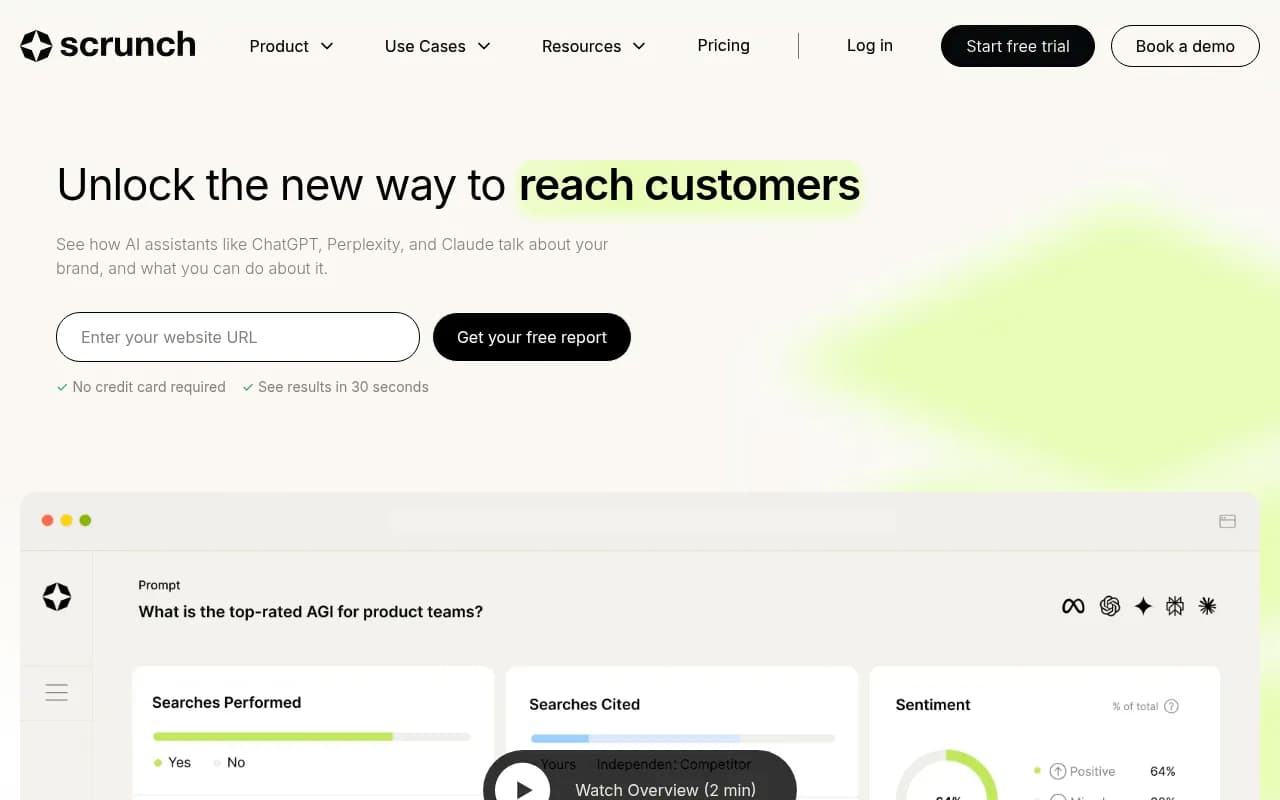
| Scrunch | Agent experience layer | LLM-friendly pages and citation audits | $250/mo per Raccoon AI |
| Azoma | Commerce-native | Listing optimization across retail assistants | Custom quote |
| Goodie AI | Commerce-native | Agentic commerce across AI shopping surfaces | Check vendor |
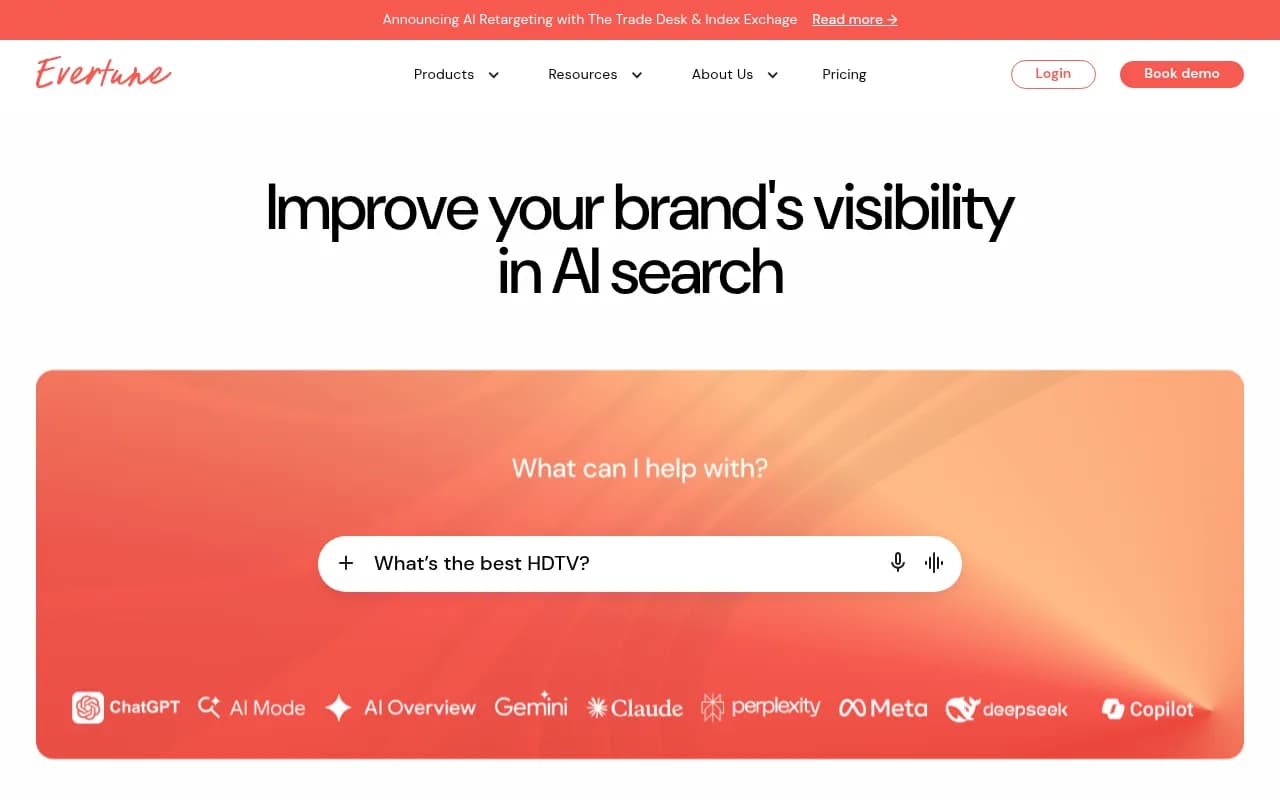
| Evertune | Enterprise GEO | Fortune 500 brand programs | Check vendor |
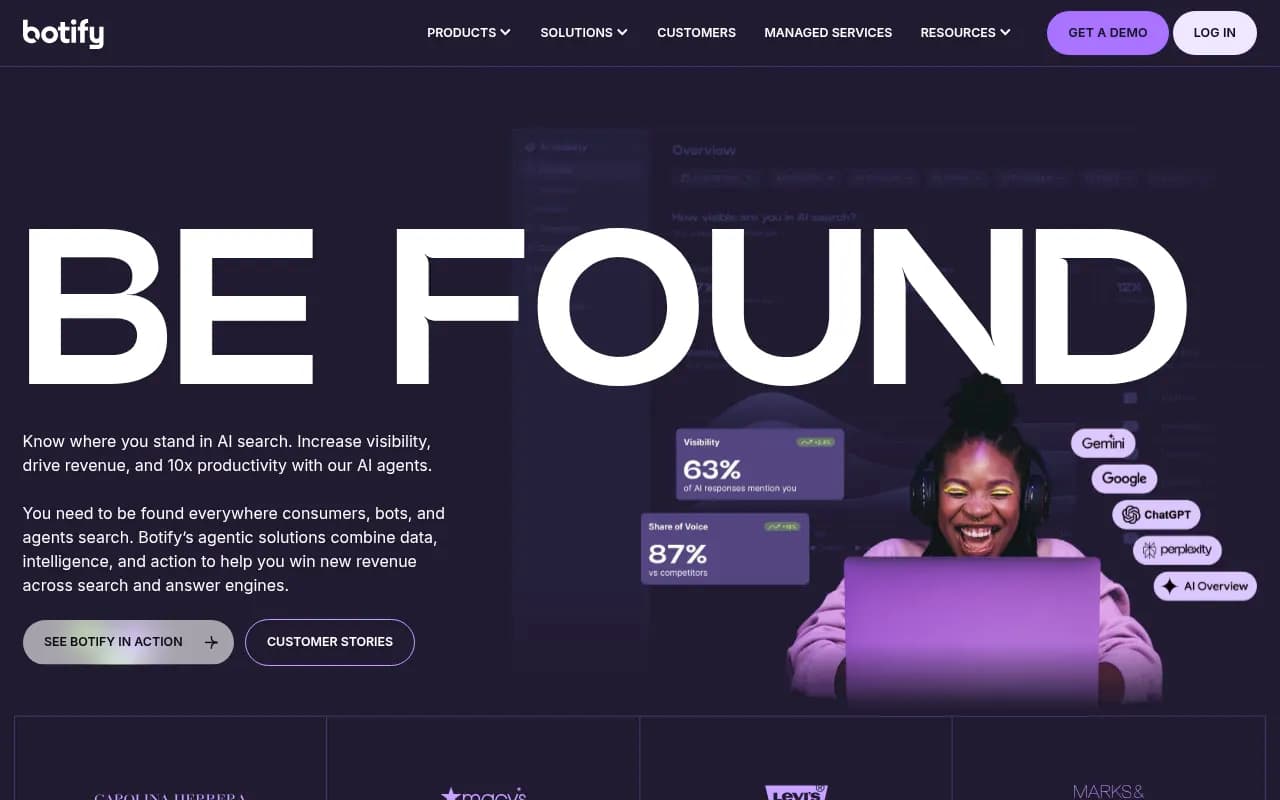
| Botify | Enterprise SEO and GEO | Large-site crawling and AI search | Check vendor |
Promptwatch for end-to-end visibility
For retail teams that want monitoring and action in one place, Promptwatch is the option I'd shortlist first. It collects from the real interfaces of ChatGPT, AI Overviews, AI Mode, Gemini, Perplexity, Copilot, Alexa and Meta AI, and it includes ChatGPT Shopping insights showing which products AI recommends and which competitors fill the cards. Ads Radar shows which advertisers bid on your prompts and what their copy claims.
The security-relevant pieces are IP-verified AI crawler logs, weekly site audits, an audit log on Business and above, SSO on Enterprise, and ISO/IEC 27001. Business ($579/mo) is the first plan with the Content Agent, hourly tracking, state and city tracking, local targeting, Shopping and Ads Radar. Confirm current pricing at promptwatch.com/pricing. Most competitors stop at monitoring; Promptwatch's agents write and publish content, then check whether the page gets crawled, cited and clicked. If you want a no-commitment look, run the free AI visibility report or start the 7-day trial.

Head-to-head pages exist for the usual suspects, such as Promptwatch vs Profound and Promptwatch vs Scrunch.
Commerce-native tools
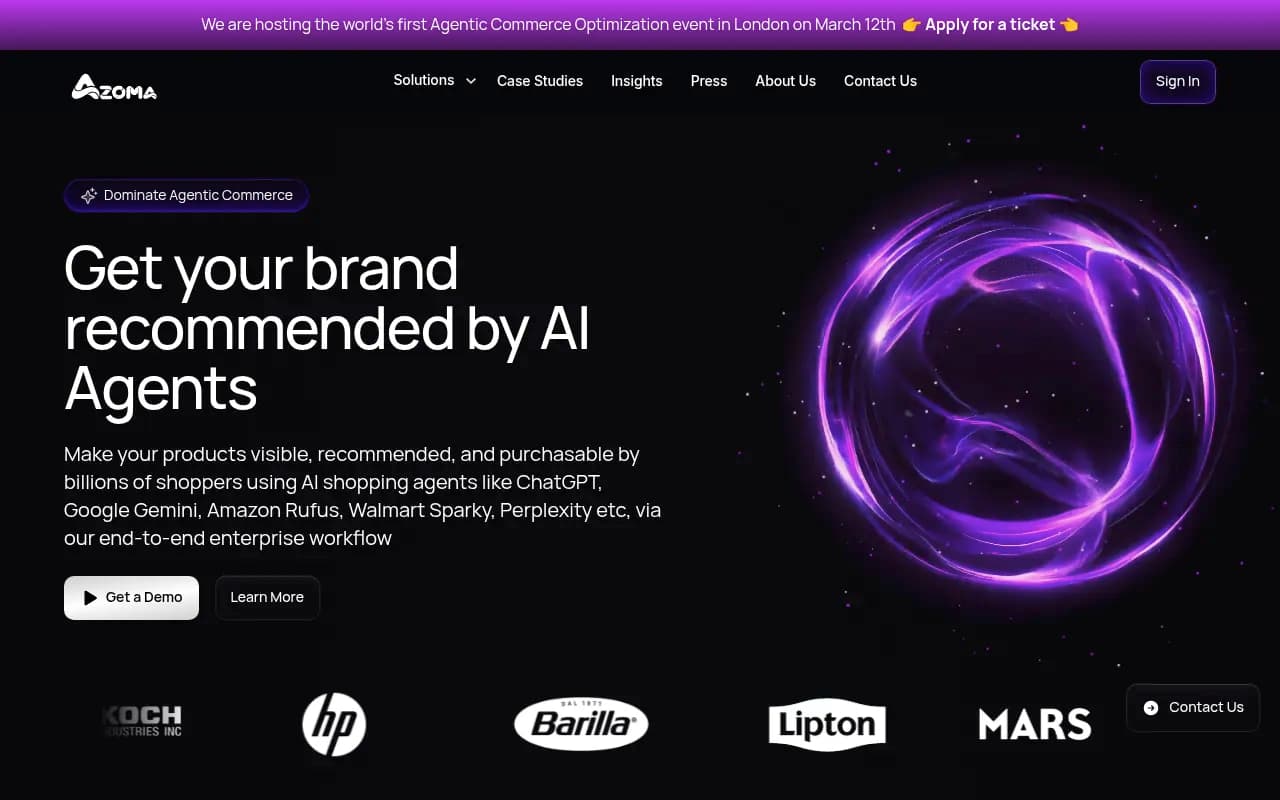
Azoma is built around optimizing listings at scale across retail assistants and general answer engines. It's a fit if your sales run heavily through marketplace listings where product data is the lever.
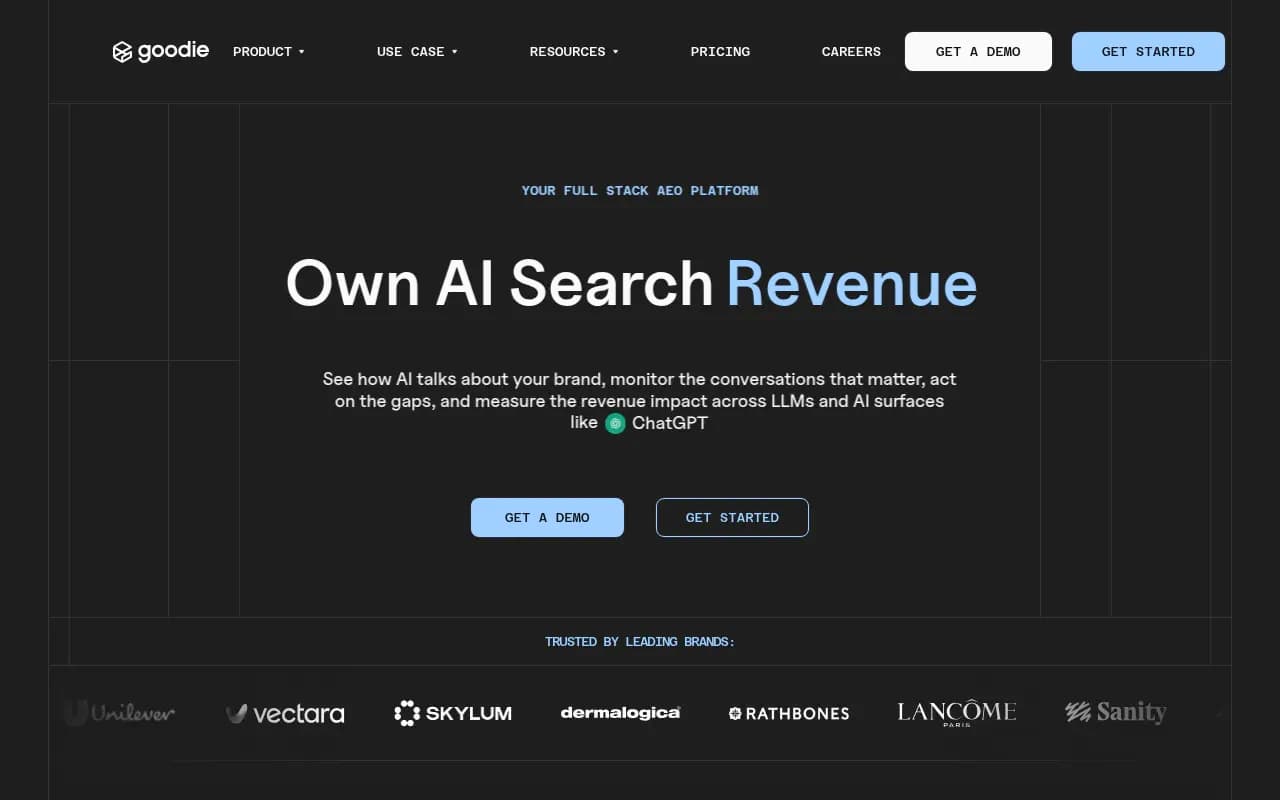
Goodie AI positions itself as agentic commerce optimization for AI shopping surfaces. One review of the category called it heavier than a small store needs, which is the point if you have thousands of SKUs.
Evertune targets Fortune 500 brands with an enterprise GEO platform.
Monitoring-first enterprise platforms
Profound has deep analytics and governance safeguards, which suits large reporting teams, though it is monitoring-led rather than execution-led.

Scrunch focuses on an agent-facing experience layer and citation audits.
Enterprise SEO suites with AI tracking
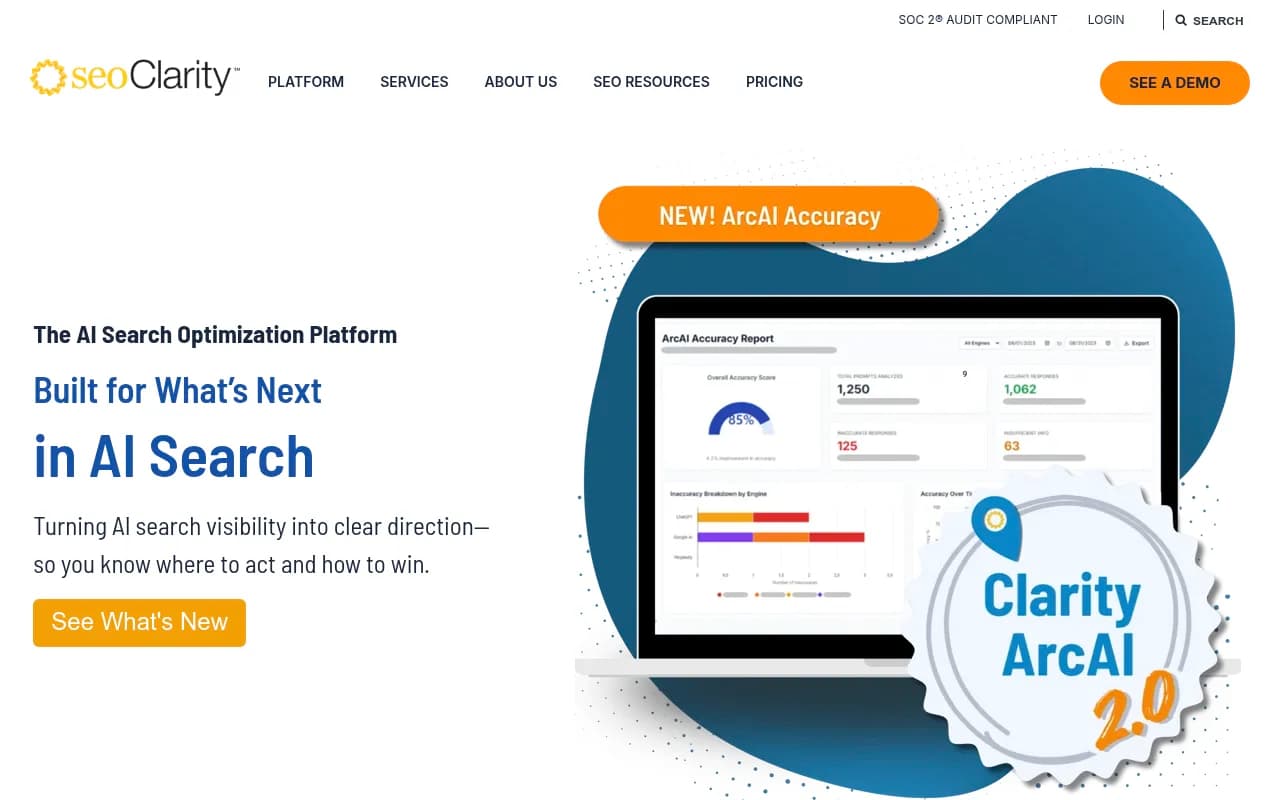
If you already run a big technical SEO platform, Botify and seoClarity both add AI search tracking on top of crawling and rank data. They're a sensible extension when procurement wants fewer vendors, though AI-native depth varies.
For a wider view, the GEO software directory at bestgeosoftware.com lists many more options.
A practical 90-day plan for a retail team
Days 1 to 30: baseline
Build prompt sets around real buyer questions: category discovery, "best X for Y", brand vs brand, and price-qualified prompts. Use personas if your buyers differ (gift buyers vs enthusiasts). Run them in the markets you sell in. Record which brands fill the shopping cards and which domains get cited. Check crawler logs to confirm AI bots can read your PDPs at all. Promptwatch's Agentic Readiness Check is a quick free first pass.
Days 31 to 60: fix the data
Start with the basics Promptwatch's shopping data recommends: complete Product schema, accurate price and availability, and a clean merchant feed. Make product pages easy to compare, with specs in tables rather than buried in images. Add FAQ blocks to category pages. Fix crawler errors found in the logs before writing anything new.
Days 61 to 90: close gaps and measure
Use content gap analysis to find prompts where competitors are cited and you aren't. Publish your own comparison pages, and pursue inclusion in the roundups ChatGPT already cites. Refresh news-style content often: Promptwatch's content half-life data shows news loses half its citations in about five weeks while landing pages and docs keep theirs for months. Then tie sessions and conversions back to the pages that earned them.
The 90-day GEO program in the Promptwatch Academy covers this sequence in more depth, and the GEO for D2C guide is the closest match for brand-led retail.
Questions to ask in vendor evaluation
| Question | Why it matters |
|---|---|
| Is data collected from the real consumer UI? | API answers can differ from what shoppers see |
| Can it track products, not just domains? | Hero SKUs are the unit of value |
| Does it include shopping cards and ads? | Both now compete with organic citation |
| Are crawler logs IP-verified? | Spoofed bots poison your analysis |
| Does it connect to traffic and revenue? | Proves the channel pays |
| What security certifications and audit logs exist? | Procurement will ask |
| Can it publish, or only report? | Reports don't fix product pages |
| What's the cost per response at your volume? | Enterprise prompt counts add up fast |
What I'd do first
Pick ten hero products and thirty commercial prompts that should surface them. Run them across two markets. Look at who fills the shopping cards, which of your pages get cited, and whether AI bots can even read those pages. Everything else in an enterprise GEO program follows from what that first pass shows, and the answer is usually that the data on the product page is the problem, not the AI.
If you also need hands-on help rather than software, an SEO and GEO agency such as 1001 SEO Media, which uses Promptwatch for its own AI visibility work, can run the program alongside your team.