Key takeaways
- ChatGPT visibility varies significantly by query type -- product, service, and comparison prompts each behave differently and need separate testing approaches.
- Manual testing gives you a starting point, but it's inconsistent and doesn't scale; structured logging and dedicated tools are necessary for ongoing tracking.
- Appearing in ChatGPT responses depends on your content structure, third-party citations, and entity signals -- not just traditional SEO rankings.
- Comparison queries ("X vs Y", "alternatives to X") are often the highest-intent category and the most overlooked by brands.
- Tracking visibility once is useless; AI responses shift frequently, so you need a repeatable testing loop.
Buyers are skipping Google more often than most marketing teams realize. They open ChatGPT, type something like "best project management tool for a 10-person agency" or "what's a good alternative to Salesforce for a small team," and they get an answer. A confident, structured answer. One that names specific brands.
If your brand isn't one of them, you've lost that buyer before they ever reached your website.
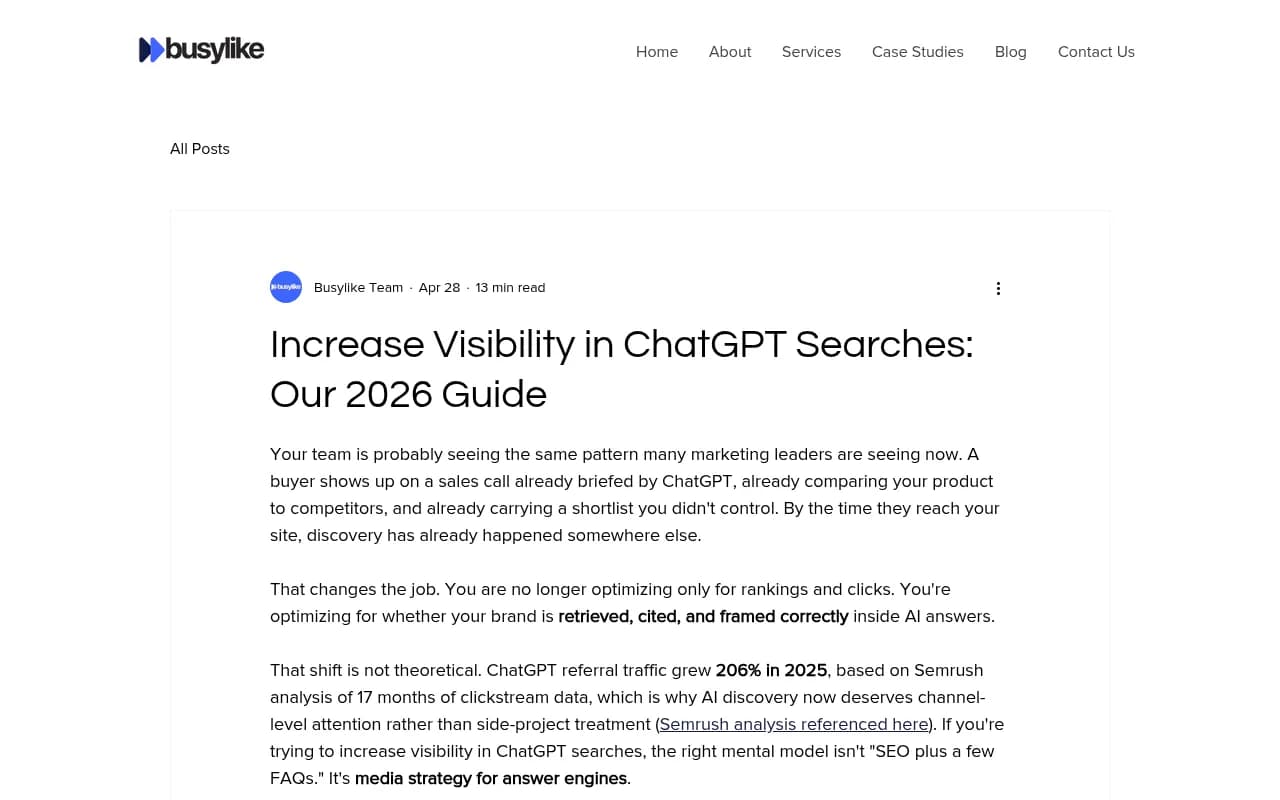
According to Semrush's analysis of 17 months of clickstream data, ChatGPT referral traffic grew 206% in 2025. G2's 2025 Buyer Behavior Report found that generative AI chatbots are now the number one influence on vendor shortlists, ahead of review sites. These aren't fringe statistics -- they describe where purchase decisions are actually forming right now.
The problem is that most brands have no idea whether they appear in ChatGPT responses, let alone for which query types. This guide gives you a concrete, category-by-category framework to find out.
Why query category matters more than you'd think
ChatGPT doesn't treat all queries the same way. A product recommendation prompt ("best noise-cancelling headphones under $200") pulls from different signals than a service discovery prompt ("which SEO agency should I hire for a B2B SaaS company") or a comparison prompt ("HubSpot vs Salesforce for a startup").
Each category has its own logic:
- Product queries tend to surface brands with strong review site presence, structured product data, and clear category signals.
- Service queries lean heavily on third-party editorial coverage, case studies, and niche authority.
- Comparison queries often cite dedicated comparison pages, Reddit discussions, and review aggregators.
Testing all three categories separately gives you a much more accurate picture of where your visibility actually stands -- and where the gaps are.
How to manually test your ChatGPT visibility
Before you automate anything, do this manually. It takes about an hour and gives you a real baseline.
Step 1: Build a prompt list by category
Write out 10-15 prompts that a real buyer in your market would actually type. Don't make them generic. Think about what someone would ask when they're 70% of the way through a decision.
For a B2B SaaS company selling project management software, that might look like:
Product prompts:
- "Best project management software for remote teams"
- "What project management tools are best for agencies?"
- "Top project management apps for small businesses in 2026"
Service prompts (if you offer services, or if you sell to buyers evaluating service providers):
- "Best project management consulting firms for enterprise"
- "Who should I hire to implement Asana for my team?"
Comparison prompts:
- "Asana vs Monday.com vs Notion for a marketing team"
- "Alternatives to Jira for non-technical teams"
- "[Your brand] vs [Competitor] -- which is better?"
The more specific the prompt, the more useful the test. "Best software" tells you almost nothing. "Best project management software for a 20-person creative agency" tells you a lot.
Step 2: Run the prompts and log what you find
Open a fresh ChatGPT session (use a new conversation each time to avoid context contamination) and run each prompt. For each response, log:
- Whether your brand appears at all
- Where it appears (first mention, third mention, buried at the bottom)
- How it's described (accurate? outdated? missing key differentiators?)
- Which competitors appear alongside or instead of you
- Whether any sources or citations are included
A simple spreadsheet works fine. Columns for prompt, presence (yes/no), position (1-5+), sentiment (positive/neutral/negative), competitors mentioned, and any notes on framing.
Step 3: Repeat across query categories and note the patterns
After running all your prompts, look for patterns across categories. You might find you appear consistently in product queries but are completely absent from comparison queries. Or you show up for broad prompts but disappear when the prompt gets specific about use case or company size.
Those patterns tell you exactly where to focus your content and optimization efforts.
Testing product queries: what to look for
Product queries are the most straightforward category to test. They follow a predictable structure: "best [product type] for [use case or audience]."
Run at least five variations with different audience qualifiers. "Best CRM for startups" and "best CRM for enterprise sales teams" will often return completely different brand sets. If you only test one, you're missing half the picture.
What good visibility looks like in product queries:
- Your brand appears in the top three recommendations
- The description matches your actual positioning (not a two-year-old feature set)
- You're mentioned in the context of the right use case
What bad visibility looks like:
- You don't appear at all
- You appear but with a generic or inaccurate description
- A competitor is described in terms that actually apply to your product
If you're invisible in product queries, the most common causes are: no presence on major review sites (G2, Capterra, Trustpilot), thin or unstructured product pages, and no third-party editorial content that clearly places you in your category.
Testing service queries: the harder category
Service queries are trickier because ChatGPT has less structured data to work from. There's no G2 for consulting firms or agencies in the same way there is for software. The model relies more on editorial content, case studies, and community discussions.
For service businesses, test prompts like:
- "Best [your service type] agencies for [your target industry]"
- "Who are the top [your service type] consultants for [specific problem]"
- "How do I find a good [your service type] provider?"
Service businesses that appear well in ChatGPT tend to have a few things in common: they've been mentioned in industry publications, they have detailed case studies that describe specific outcomes, and they show up in relevant Reddit or Quora discussions. ChatGPT pulls from all of these.
If you're a service business and you're invisible, the fix usually isn't more blog posts -- it's getting mentioned in the right places. Think: industry roundups, podcast appearances, contributed articles in trade publications, and active participation in communities where your buyers ask questions.
Testing comparison queries: the highest-stakes category
This is where most brands are completely blind, and it's arguably the most important category to get right.
Comparison queries represent buyers who are actively deciding. They're not browsing -- they're evaluating. "HubSpot vs Salesforce" or "alternatives to Mailchimp" are prompts from people who are close to a purchase.
Test these prompt formats:
- "[Your brand] vs [Competitor]"
- "[Competitor] vs [Your brand]" (order matters -- try both)
- "Alternatives to [Competitor]" (where you should appear as an option)
- "Best [category] alternatives to [Competitor]"
- "[Your brand] alternatives" (to see how ChatGPT frames your competitors)
What you're looking for:
- Do you appear in "alternatives to [Competitor]" prompts?
- When someone searches "[Your brand] vs [Competitor]", is the framing fair and accurate?
- Are your key differentiators mentioned, or does ChatGPT describe you in generic terms?
One thing that often surprises brands: ChatGPT sometimes describes your product using language from a competitor's marketing, or from an outdated review. The framing problem is just as important as the presence problem.
If you're missing from comparison queries, the most direct fix is creating dedicated comparison content on your own site. Pages like "[Your brand] vs [Competitor]: which is right for you?" give ChatGPT clear, structured content to pull from. Reddit threads and review site comparisons also feed directly into these responses.
Moving from manual testing to systematic tracking
Manual testing is a good start, but it has real limits. ChatGPT responses aren't static -- they shift as the model is updated, as new content gets indexed, and as competitor activity changes. A test you ran in January may not reflect what buyers see in June.
To track visibility properly over time, you need either a structured manual cadence (running your prompt set monthly and logging results consistently) or a dedicated tool that automates this.
Several tools now handle this specifically for AI search visibility:
Promptwatch is built around exactly this kind of systematic tracking. It monitors your brand's visibility across ChatGPT, Claude, Perplexity, Gemini, and other AI models, tracks which prompts you appear for (and which you don't), and shows how your visibility changes over time. The answer gap analysis is particularly useful for the comparison query problem -- it shows you which prompts competitors appear for that you're missing entirely.

For teams that want to start simpler, there are lighter-weight options worth knowing about:


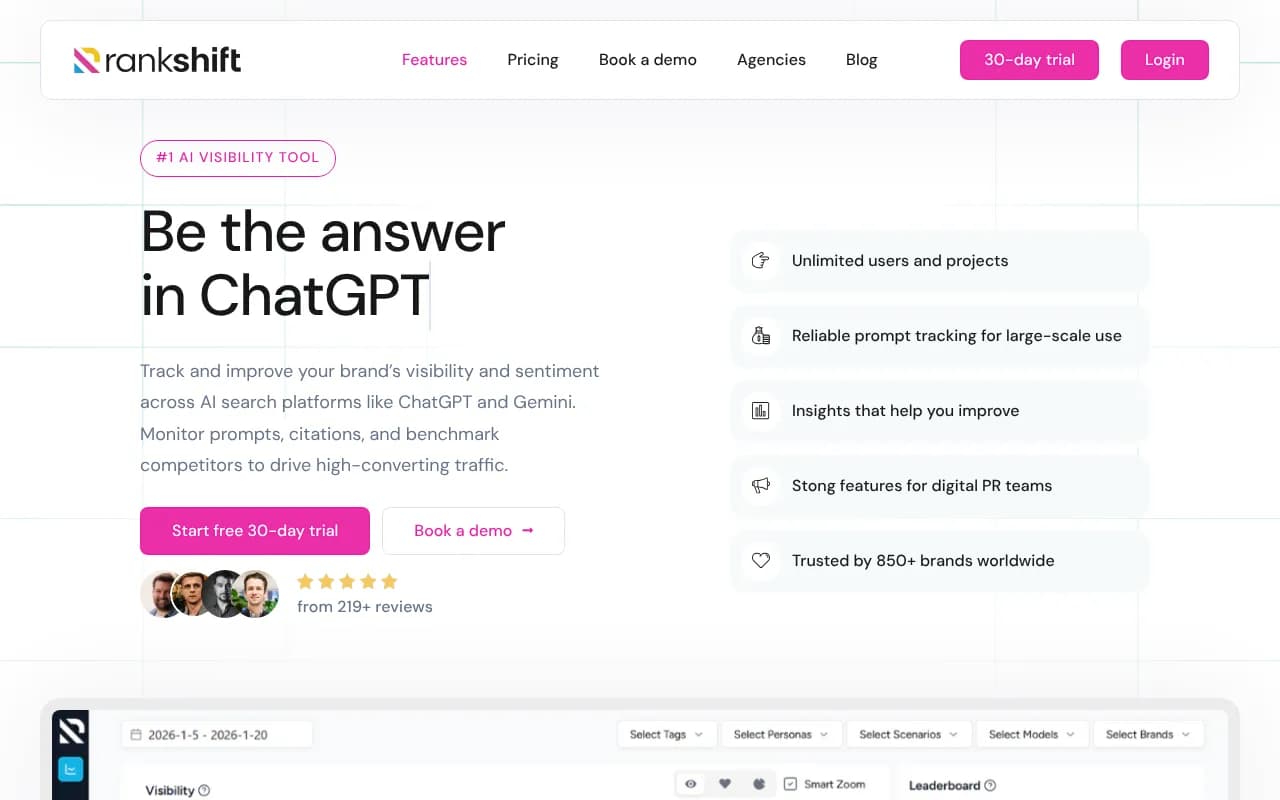
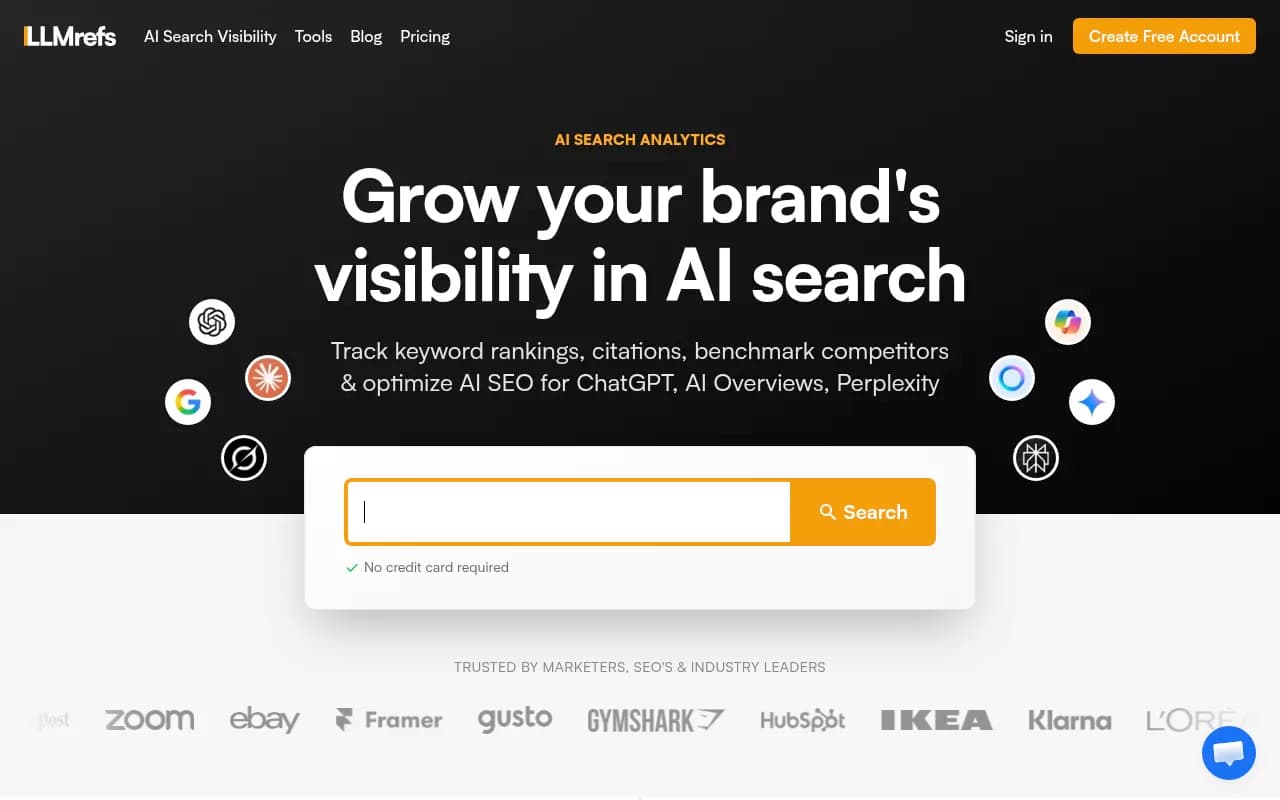
These tools vary in depth. Some focus on monitoring (showing you where you appear), while others go further into helping you understand why and what to do about it. The comparison table below gives a quick overview:
| Tool | Query categories tracked | Comparison query support | Content gap analysis | AI content generation |
|---|---|---|---|---|
| Promptwatch | Product, service, comparison | Yes | Yes (answer gap analysis) | Yes |
| Otterly.AI | Product, service | Limited | No | No |
| Peec AI | Product, service | Limited | No | No |
| Rankshift | Product, service, comparison | Partial | No | No |
| LLMrefs | Product, service | Limited | No | No |
| SE Ranking | Product, service | Partial | No | No |
What actually drives ChatGPT visibility
Once you've tested your visibility and found gaps, the question is: what do you do about it?
The short answer is that ChatGPT visibility is driven by a combination of your own content, third-party mentions, and entity signals. Here's what actually moves the needle:
Your own content
ChatGPT can crawl and retrieve content from your website. Pages that are structured clearly, answer specific questions directly, and use natural language that matches how buyers actually phrase queries tend to perform better.
For product queries: make sure your product pages clearly state what category you're in, who you're for, and what problems you solve. Don't bury this in marketing language.
For comparison queries: create dedicated comparison pages. Not just "[Your brand] vs [Competitor]" but also "[Competitor] alternatives" pages where you position yourself as an option.
For service queries: publish detailed case studies with specific outcomes, and make sure your service descriptions use the same language your buyers use when they're looking for help.
Third-party mentions
This is where a lot of brands underinvest. ChatGPT doesn't just read your website -- it reads everything. Review sites, industry publications, Reddit, YouTube, podcasts, and community forums all feed into what the model knows about your brand.
Getting mentioned in the right places matters more than publishing more content on your own site. A single mention in a well-read industry roundup can do more for your ChatGPT visibility than ten blog posts.
Entity and category signals
ChatGPT needs to understand what category you belong to. If your content doesn't clearly signal "this is a CRM" or "this is a content marketing agency," the model may not surface you for relevant queries even if you're well-known.
Schema markup, consistent category language across your site and third-party profiles, and clear "what we do" statements all help establish these signals.
Building a repeatable testing loop
The brands gaining ground in AI search aren't running one-off tests. They're treating ChatGPT visibility like a managed channel with regular measurement.
A practical cadence looks like this:
- Define your core prompt set (20-30 prompts across all three categories). Review and update this quarterly.
- Run the full prompt set monthly. Log results consistently so you can track changes over time.
- After each testing round, identify the top three gaps (prompts where competitors appear and you don't).
- Create or update content to address those specific gaps.
- Re-test those prompts after 4-6 weeks to see if visibility has improved.
This loop -- test, identify gaps, create content, re-test -- is the core discipline of what's now called Generative Engine Optimization (GEO). It's not complicated, but it requires consistency.
Tools like Promptwatch automate most of this loop, which matters once you're tracking more than a handful of prompts. At 30+ prompts across multiple competitors, manual tracking becomes genuinely painful.
Common mistakes brands make when testing
A few things that consistently trip people up:
Running prompts in the same conversation. Context from earlier messages affects later responses. Always start a fresh session for each prompt you're testing.
Testing only broad prompts. "Best CRM" tells you almost nothing useful. Test specific, qualified prompts that match real buyer intent.
Ignoring the framing, not just the presence. Appearing in a response with an inaccurate or outdated description can actually hurt you. A buyer who reads "Brand X is good for enterprise but has a steep learning curve" when you've completely redesigned your onboarding is getting bad information that shapes their decision.
Testing once and moving on. AI responses change. A test from three months ago is not a reliable picture of your current visibility.
Only testing your own brand. You need to know where competitors appear so you can understand the full competitive landscape. Run prompts that don't mention your brand at all and see who shows up.
Where to start if you're doing this for the first time
Pick one category and go deep rather than trying to cover everything at once.
If you sell a product, start with product queries. Build a list of 10 prompts, run them today, log the results, and see where you stand. That baseline is more valuable than any strategy document.
If you're a service business, start with comparison and alternative queries. These are where buyers are most actively evaluating, and they're often the most neglected.
Once you have a baseline, you'll know exactly where to focus. The gaps are usually obvious once you see them.
The brands that will win in AI search over the next two years aren't necessarily the ones with the biggest budgets or the most content. They're the ones that started testing early, built a systematic approach, and kept iterating. That process starts with a spreadsheet and 10 prompts. Start there.