Summary
- AI search engines like ChatGPT, Claude, and Perplexity are reshaping how people discover brands -- tracking your visibility in these platforms is now as critical as traditional SEO
- The best AI visibility tools go beyond monitoring: they show you content gaps, help you create citation-worthy content, and connect visibility to actual traffic and revenue
- Promptwatch leads the market with its action-oriented approach -- it doesn't just show you where you're invisible, it helps you fix it with content gap analysis, AI writing tools, and crawler log monitoring
- Most competitors (Otterly.AI, Peec.ai, AthenaHQ) are monitoring-only dashboards that leave you stuck with data but no clear path forward
- Pricing ranges from $99/month for basic tracking to $500+ for enterprise features -- but the real cost is missing citations that could drive thousands in revenue
Why tracking ChatGPT citations matters in 2026
ChatGPT usage has exploded. Google's AI Overviews appear in nearly half of all search results. Claude, Perplexity, Gemini -- they're all citing sources, recommending products, and shaping opinions about brands. If your company isn't showing up in these responses, you're losing traffic, trust, and sales to competitors who are.
Traditional SEO focused on ranking in Google's blue links. That's still important, but it's no longer enough. AI search engines don't just rank pages -- they synthesize information from across the web and cite specific sources. One hallucinated fact, one competitor-favoring answer, and your brand's reputation takes a hit. Or worse: you're simply not mentioned at all.
The shift is real. I've seen brands lose 30% of their organic traffic because ChatGPT started recommending a competitor's tool instead of theirs. I've also seen companies double their inbound leads by optimizing for AI citations. The difference? They tracked their visibility, identified gaps, and created content that AI models actually want to cite.
What makes a good AI visibility tool
Not all AI tracking tools are built the same. Some just show you a dashboard of mentions. Others help you understand why you're not being cited and what to do about it. Here's what separates the useful tools from the noise:
Prompt-level tracking: You need to see exactly which prompts trigger citations for your brand vs competitors. "Best project management tools" might cite you, but "Best project management tools for remote teams" might not. That granularity matters.
Multi-model coverage: ChatGPT is huge, but people also use Claude, Perplexity, Gemini, Google AI Overviews, and others. A tool that only tracks one model gives you an incomplete picture.
Content gap analysis: The best tools don't just show you where you're invisible -- they tell you what content you're missing. Which topics do competitors own that you don't? Which questions are AI models asking that your website doesn't answer?
Citation source tracking: When AI models cite you, where are they pulling from? Your homepage? A blog post? A Reddit thread? Knowing the source helps you double down on what's working.
Crawler log monitoring: AI models send crawlers to your website to gather information. If those crawlers are hitting errors or missing key pages, you're invisible by default. Tools that surface crawler activity help you fix indexing issues before they cost you citations.
Traffic attribution: Visibility is great, but revenue is better. The best tools connect AI citations to actual website traffic so you can measure ROI.
The action loop: find gaps, create content, track results
Most AI visibility tools stop at monitoring. They show you a dashboard, maybe some charts, and leave you to figure out what to do next. That's where Promptwatch stands out -- it's built around an action loop that actually helps you improve.

Here's how it works:
-
Find the gaps: Answer Gap Analysis shows exactly which prompts competitors are visible for but you're not. You see the specific content your website is missing -- the topics, angles, and questions AI models want answers to but can't find on your site.
-
Create content that ranks in AI: The built-in AI writing agent generates articles, listicles, and comparisons grounded in real citation data (880M+ citations analyzed), prompt volumes, persona targeting, and competitor analysis. This isn't generic SEO filler -- it's content engineered to get cited by ChatGPT, Claude, Perplexity, and other AI models.
-
Track the results: See your visibility scores improve as AI models start citing your new content. Page-level tracking shows exactly which pages are being cited, how often, and by which models. Close the loop with traffic attribution (code snippet, GSC integration, or server log analysis) to connect visibility to actual revenue.
This cycle -- find gaps, generate content, track results -- is what makes Promptwatch an optimization platform, not just another tracker. It monitors 10 AI models (ChatGPT, Perplexity, Google AI Overviews, Google AI Mode, Claude, Gemini, Meta/Llama, DeepSeek, Grok, Mistral, Copilot) and includes features most competitors lack entirely: AI crawler logs, Reddit/YouTube tracking, ChatGPT Shopping monitoring, prompt volume estimates, and query fan-outs that show how one prompt branches into sub-queries.
Pricing starts at $99/month for the Essential plan (1 site, 50 prompts, 5 AI-generated articles), $249/month for Professional (2 sites, 150 prompts, 15 articles, crawler logs, state/city tracking), and $579/month for Business (5 sites, 350 prompts, 30 articles). Agency and enterprise plans are available with custom pricing.
Other tools worth considering
Promptwatch is the clear leader, but other tools have their place depending on your needs and budget.
Otterly.AI: affordable monitoring for small teams

Otterly.AI is one of the most affordable options on the market, starting around $49/month. It tracks ChatGPT, Perplexity, and a few other models, and gives you basic visibility metrics: how often you're cited, sentiment analysis, and competitor comparisons.
What it doesn't have: crawler logs, content gap analysis, or any tools to help you actually improve your visibility. It's monitoring-only. If you're just starting to explore AI visibility and want a low-cost entry point, Otterly.AI works. But you'll outgrow it fast once you realize you need more than dashboards.
Peec.ai: multi-language tracking with smart suggestions

Peec.ai is strong on multi-language support -- if you're tracking AI visibility across different countries and languages, it's one of the better options. It also surfaces "smart suggestions" for content improvements, though these tend to be fairly generic ("add more FAQs", "create comparison pages").
Pricing is mid-range, around $200-300/month depending on the number of prompts and sites you're tracking. Like Otterly.AI, it's primarily a monitoring tool. The suggestions are helpful but not as actionable as Promptwatch's content gap analysis.
AthenaHQ: solid monitoring, limited optimization

AthenaHQ tracks 8+ AI search engines and provides clean, easy-to-read dashboards. It's popular with marketing teams who want to keep an eye on AI visibility without diving too deep into optimization.
The problem: it's monitoring-focused. You get data on where you're cited, how often, and by which models. But there's no content generation, no crawler log analysis, no real path forward when you discover you're invisible for a high-value prompt. Pricing starts around $150/month.
SE Ranking: AI visibility as part of a broader SEO suite
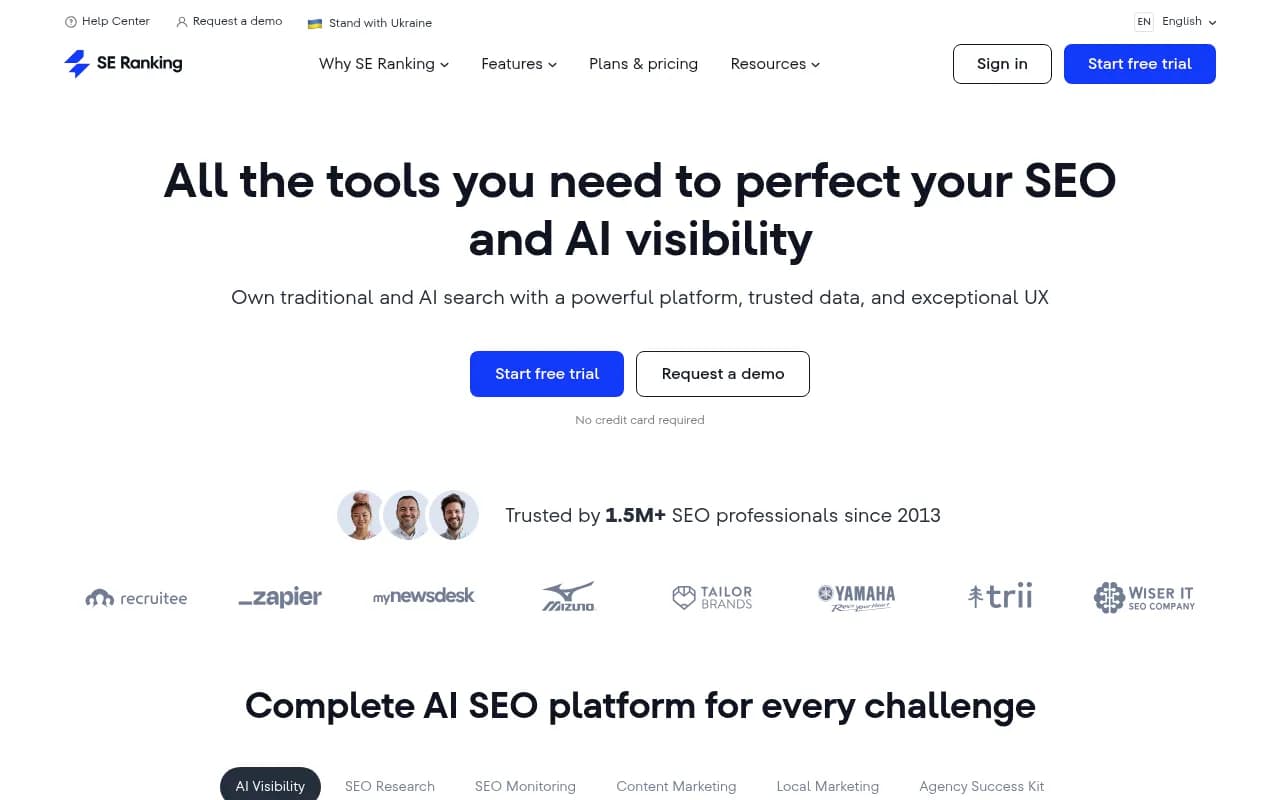
SE Ranking is a full-scale SEO platform that added AI visibility tracking in 2025. If you're already using SE Ranking for traditional SEO, the AI toolkit is a nice add-on. It tracks ChatGPT, Google AI, Gemini, and a few others.
The AI features are solid but not as deep as dedicated platforms like Promptwatch. You won't get crawler logs, Reddit tracking, or content gap analysis. But if you want one tool for both SEO and AI visibility, SE Ranking is a reasonable choice. Pricing starts at $99/month with an annual plan.
ZipTie: deep analysis and custom reporting
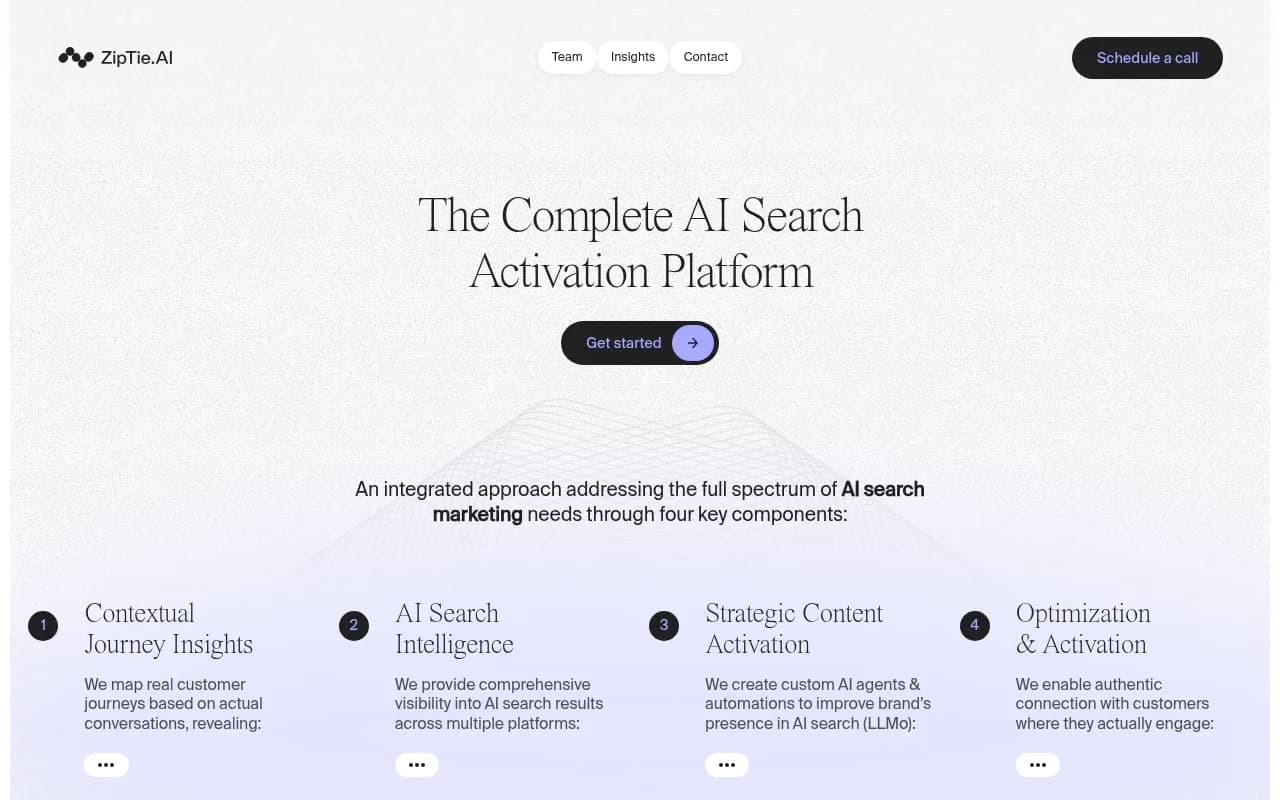
ZipTie is built for teams that want deep analysis and custom reporting. It tracks citations across multiple AI models and provides detailed breakdowns of which pages are being cited, how often, and in what context.
The interface is more technical than most competitors -- it's not as plug-and-play as Promptwatch or Otterly.AI. But if you have an analytics team that wants to dig into the data and build custom reports, ZipTie is worth a look. Pricing is custom, typically starting around $500/month for enterprise features.
Comparison table: key features and pricing
| Tool | Starting price | Models tracked | Content gap analysis | AI writing tools | Crawler logs | Traffic attribution |
|---|---|---|---|---|---|---|
| Promptwatch | $99/mo | 10 (ChatGPT, Claude, Perplexity, Gemini, etc.) | Yes | Yes | Yes | Yes |
| Otterly.AI | $49/mo | 3-4 | No | No | No | No |
| Peec.ai | $200/mo | 5-6 | Limited | No | No | No |
| AthenaHQ | $150/mo | 8+ | No | No | No | No |
| SE Ranking | $99/mo | 4-5 | No | No | No | Limited |
| ZipTie | $500/mo | 6-8 | Limited | No | No | Yes |
How to improve your ChatGPT citations
Tracking visibility is step one. Improving it is step two. Here's what actually works based on testing with dozens of brands:
Create citable blocks of content: AI models love short, clear answers. FAQs, comparison tables, step-by-step guides, and listicles get cited far more often than long-form narrative content. Structure your pages with scannable sections that directly answer common questions.
Optimize for prompt-level queries: Don't just target broad keywords like "project management software". Target the specific prompts people ask AI models: "best project management software for remote teams", "project management tools with Gantt charts", "free project management apps for startups". Tools like Promptwatch surface these exact queries and show you which ones you're missing.
Fix crawler issues: If ChatGPT's crawler can't access your key pages, you're invisible by default. Check your crawler logs (Promptwatch surfaces these automatically) and fix any 404s, 500s, or robots.txt blocks that are preventing AI models from indexing your content.
Get cited on Reddit and YouTube: AI models pull heavily from Reddit discussions and YouTube transcripts. If your brand is being discussed positively in these channels, your citation rate goes up. If you're not being discussed at all, you're missing a major source of visibility.
Monitor competitor citations: See which prompts competitors dominate and reverse-engineer their content. What angles are they covering that you're not? What format are they using (listicle, comparison, guide)? What sources are they citing? Use this intel to create better, more citation-worthy content.
Track and iterate weekly: AI search is moving fast. A prompt that cited you last week might cite a competitor this week. Weekly tracking (not monthly) helps you catch shifts early and respond before you lose significant visibility.
Common mistakes that kill AI visibility
I've seen brands make the same mistakes over and over. Here's what to avoid:
Treating AI visibility like traditional SEO: AI models don't care about keyword density or backlinks. They care about clear, authoritative answers to specific questions. If your content is optimized for Google's algorithm but not for how people actually prompt AI models, you're invisible.
Ignoring crawler logs: If AI crawlers are hitting errors on your site, no amount of content optimization will help. Check your logs regularly and fix indexing issues immediately.
Only tracking ChatGPT: ChatGPT is huge, but Claude, Perplexity, Gemini, and Google AI Overviews are all growing fast. If you're only tracking one model, you're missing a big chunk of the market.
Focusing on vanity metrics: Citation count is interesting, but it doesn't pay the bills. Track traffic attribution and revenue impact. A tool that shows you 500 citations but can't connect them to actual website visits is giving you incomplete data.
Not creating new content: Monitoring is useless if you don't act on it. When you discover a content gap -- a prompt where competitors are cited but you're not -- create the content that fills that gap. Promptwatch's AI writing agent makes this fast, but even manual content creation works if you're consistent.
The future of AI visibility tracking
AI search is still early. The tools are improving fast, and the platforms themselves (ChatGPT, Claude, Perplexity) are evolving constantly. Here's what I expect to see in the next 12-18 months:
More granular attribution: Right now, most tools can tell you if a citation led to a website visit, but not if that visit converted to a lead or sale. Expect tighter integration with CRMs and analytics platforms to close this loop.
Real-time alerts: Instead of checking a dashboard daily, you'll get instant notifications when your visibility drops for a high-value prompt or when a competitor starts dominating a category you own.
Automated content optimization: Tools like Promptwatch already generate AI-optimized content, but the next step is automated publishing and updating. You'll set rules ("if visibility drops below X for this prompt, generate and publish an updated article") and the platform will handle it.
Cross-platform citation tracking: AI models are starting to cite each other. ChatGPT might cite a Perplexity response, which cites a Reddit thread, which links to your website. Tracking these citation chains will become critical for understanding how information flows through the AI ecosystem.
Which tool should you choose?
If you're serious about AI visibility and want a platform that helps you take action (not just monitor), Promptwatch is the clear choice. It's the only tool that combines monitoring, content gap analysis, AI writing, crawler logs, and traffic attribution in one platform. The pricing is competitive, the feature set is unmatched, and the action loop (find gaps, create content, track results) actually works.
If you're on a tight budget and just want basic monitoring, Otterly.AI is a decent starting point at $49/month. But you'll outgrow it quickly once you realize you need more than dashboards.
If you're already using SE Ranking for SEO and want to add AI visibility tracking without switching platforms, their AI toolkit is a solid add-on. Just know you're missing some of the deeper features (crawler logs, Reddit tracking, content generation) that dedicated platforms offer.
For enterprise teams that need custom reporting and deep analysis, ZipTie is worth the higher price tag. But for most brands, Promptwatch delivers better value and a more complete feature set at a lower cost.
Getting started with AI visibility tracking
Here's a simple three-step process to start tracking and improving your ChatGPT citations:
-
Sign up for a tool: Start with Promptwatch's free trial to get a baseline of your current visibility. Set up tracking for your brand name, your top competitors, and 10-20 high-value prompts related to your product or service.
-
Identify your biggest gaps: Run an Answer Gap Analysis to see which prompts competitors dominate but you're invisible for. Prioritize prompts with high volume and low difficulty -- these are your quick wins.
-
Create and publish content: Use the AI writing agent (or write manually) to create content that directly answers the prompts you're missing. Publish, wait 1-2 weeks for AI models to re-crawl your site, and track the results.
Repeat this cycle weekly. AI visibility isn't a one-time project -- it's an ongoing optimization process. The brands that win are the ones that track consistently, act on the data, and iterate fast.