Key takeaways
- AI-referred traffic to e-commerce sites grew 393% year over year in Q1 2026 (Adobe), and visitors from ChatGPT convert 42% better than paid search traffic -- making AI visibility a genuine revenue lever, not just a vanity metric.
- Searchable covers basic brand monitoring but lacks ChatGPT Shopping tracking, SKU-level visibility, and content generation -- the three things e-commerce brands need most right now.
- The best alternatives split into two camps: monitoring-focused tools (good for tracking share of voice) and full-cycle platforms (monitoring + gap analysis + content creation + traffic attribution).
- For most e-commerce teams, the gap between "we know we're invisible" and "we fixed it" is where platforms fail. Look for tools that help you act on data, not just collect it.
- Promptwatch is the only platform in this comparison rated as a Leader across all categories, with ChatGPT Shopping tracking, crawler logs, and a built-in AI writing agent that generates content grounded in citation data.
If you've been using Searchable and started wondering whether it's enough, you're not alone. The platform does a reasonable job of tracking brand mentions across a handful of AI engines, but e-commerce brands have specific needs that basic monitoring tools weren't built for: tracking when your products appear in ChatGPT's shopping carousels, understanding which SKUs are getting cited vs. ignored, and actually doing something about the gaps.
This guide breaks down the best Searchable alternatives in 2026 for e-commerce and DTC brands, with a focus on ChatGPT Shopping tracking and product-level visibility. I've organized them by what they're actually good at, so you can match the tool to your situation.
What Searchable does (and where it falls short for e-commerce)
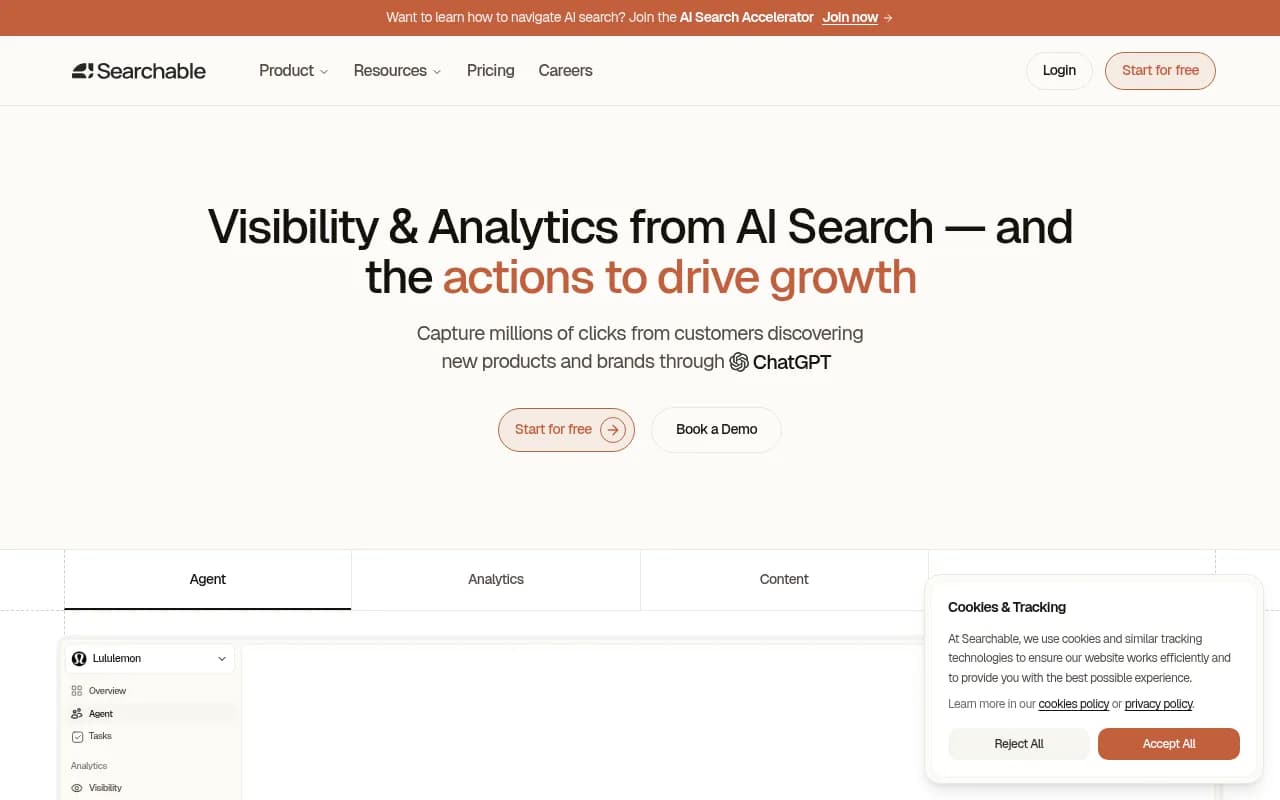
Searchable is a solid entry-level AI visibility platform. It monitors brand mentions across ChatGPT, Perplexity, Gemini, and Claude, gives you share-of-voice metrics, and surfaces which competitors are getting cited more often than you.
That's useful for brand teams. But e-commerce brands need more:
- Product-level tracking (not just brand mentions, but specific SKUs or product lines)
- ChatGPT Shopping carousel monitoring -- when your product appears in ChatGPT's shopping recommendations with images and pricing
- Content gap analysis that shows which prompts competitors rank for but you don't
- A way to actually fix those gaps, not just observe them
- Traffic attribution that connects AI visibility to revenue
Searchable doesn't offer most of these. It's a monitoring dashboard, and for many e-commerce teams, that's only half the job.
The e-commerce AI visibility landscape in 2026
Before diving into alternatives, it's worth understanding what's changed. In 2024, most AI visibility tools were essentially brand mention trackers. In 2026, the category has split into three tiers:
- Basic monitors: Track brand mentions and share of voice. Good for awareness, not optimization.
- Mid-tier trackers: Add competitor analysis, citation source tracking, and some prompt customization.
- Full-cycle platforms: Monitor visibility, identify content gaps, generate optimized content, and attribute traffic to revenue.
E-commerce brands -- especially DTC brands competing on product discovery -- need tier 3. The question is which platform gets you there without requiring a six-figure enterprise contract.
Best Searchable alternatives for e-commerce brands
Promptwatch -- best overall for e-commerce AI visibility
Promptwatch is the most complete platform in this comparison. It's the only tool that covers the full cycle: find gaps, create content, track results.

For e-commerce specifically, the standout features are:
ChatGPT Shopping tracking. Promptwatch monitors when your brand appears in ChatGPT's product recommendation carousels -- the ones with images, pricing, and ratings. Most competitors don't track this at all. For DTC brands, this is increasingly where purchase intent lives.
Answer Gap Analysis. This shows you exactly which prompts competitors are visible for but you're not. Not vague category-level data -- specific questions like "best moisturizer for oily skin under $30" where a competitor is getting cited and you're not. You see the content your site is missing.
AI writing agent. Once you know the gaps, Promptwatch's built-in content generator creates articles, listicles, and comparison pages grounded in citation data from 880M+ analyzed citations. This isn't generic SEO content -- it's engineered to get cited by ChatGPT, Claude, and Perplexity.
AI crawler logs. Real-time logs showing when ChatGPT, Claude, Perplexity, and other AI crawlers visit your site, which pages they read, and what errors they hit. If your product pages aren't being crawled, you'll see it here.
Reddit and YouTube tracking. AI models cite Reddit threads and YouTube videos heavily when making product recommendations. Promptwatch surfaces which discussions are influencing AI recommendations in your category -- a channel most competitors ignore entirely.
Pricing starts at $99/month for the Essential plan (1 site, 50 prompts, 5 articles). The Professional plan at $249/month adds crawler logs, city/state tracking, and 15 articles per month. Free trial available.
The honest caveat: if you only need basic brand monitoring and have no interest in content creation or traffic attribution, Promptwatch has more features than you'll use. But for e-commerce teams serious about AI search as a revenue channel, it's the most capable option available.
Profound -- best for enterprise e-commerce teams
Profound is a strong platform with deep LLM coverage (up to 10 models on enterprise plans) and solid competitor analysis. It's well-suited to larger e-commerce brands with dedicated SEO teams.

Where it shines: detailed share-of-voice tracking, persona-based monitoring (you can configure prompts to match how different customer segments search), and clean reporting that works well for stakeholder presentations.
Where it falls short vs. Promptwatch: no ChatGPT Shopping tracking, no Reddit/YouTube insights, and no built-in content generation. You get excellent data, but you're on your own to act on it. Pricing is also higher, making it harder to justify for mid-market brands.
Semrush -- best if you're already in the Semrush ecosystem
Semrush's AI Optimization module monitors product visibility across ChatGPT, Perplexity, Claude, Gemini, and DeepSeek. If your team already uses Semrush for traditional SEO, adding AI visibility tracking without switching platforms is genuinely convenient.
The limitation for e-commerce is that Semrush uses fixed prompt sets rather than letting you define custom prompts around your specific product categories. That matters if you sell in a niche where the default prompt library doesn't cover your use cases well. It also lacks AI traffic attribution and ChatGPT Shopping tracking.
Good choice for: teams that want one platform for traditional SEO + AI visibility and don't need deep product-level tracking.
Otterly.AI -- best budget option for smaller DTC brands
Otterly.AI starts at $29/month, which makes it the most accessible entry point in this category. It covers 4 AI engines on the base plan and gives you brand mention tracking and basic share-of-voice data.

For a small DTC brand that just wants to know whether it's showing up in AI search at all, Otterly is a reasonable starting point. But it's firmly in the monitoring-only camp -- no content generation, no crawler logs, no ChatGPT Shopping tracking. Think of it as a temperature check, not an optimization tool.
SE Visible (SE Ranking) -- best for teams that want AI + traditional SEO in one place
SE Visible is SE Ranking's AI visibility module, and it's one of the more polished mid-tier options. It tracks brand mentions across major LLMs, gives you sentiment analysis, and integrates with SE Ranking's broader SEO data.
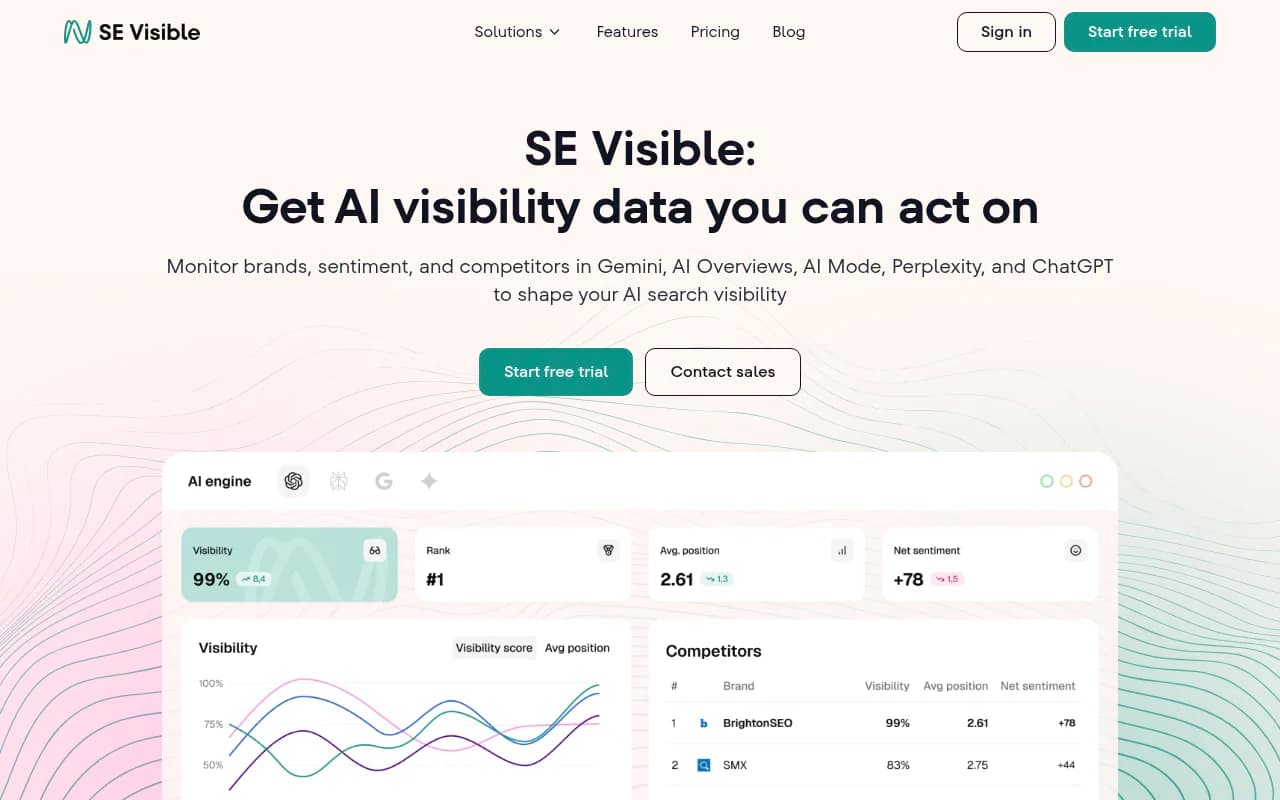
For e-commerce teams that care about both traditional search rankings and AI visibility, the integration is genuinely useful -- you can see how your organic rankings correlate with AI citations without jumping between tools. It doesn't have ChatGPT Shopping tracking or content generation, but it's a solid monitoring platform at a reasonable price.
Peec AI -- best for multi-language e-commerce
If you're running an e-commerce operation across multiple markets and languages, Peec AI is worth a look. It's one of the few platforms with strong multi-language support for AI visibility monitoring.

The trade-off: it's monitoring-focused, and the feature set is thinner than Profound or Promptwatch. But for international DTC brands that need to track how they appear in AI search in French, German, Spanish, and other languages, Peec AI fills a gap that most competitors don't address well.
Azoma -- specialized for AI shopping optimization
Azoma deserves a mention because it's purpose-built for AI shopping contexts -- specifically ChatGPT's Rufus and other AI shopping assistants. If your primary concern is product feed optimization and appearing in AI-powered shopping recommendations, it's a specialized tool worth evaluating.
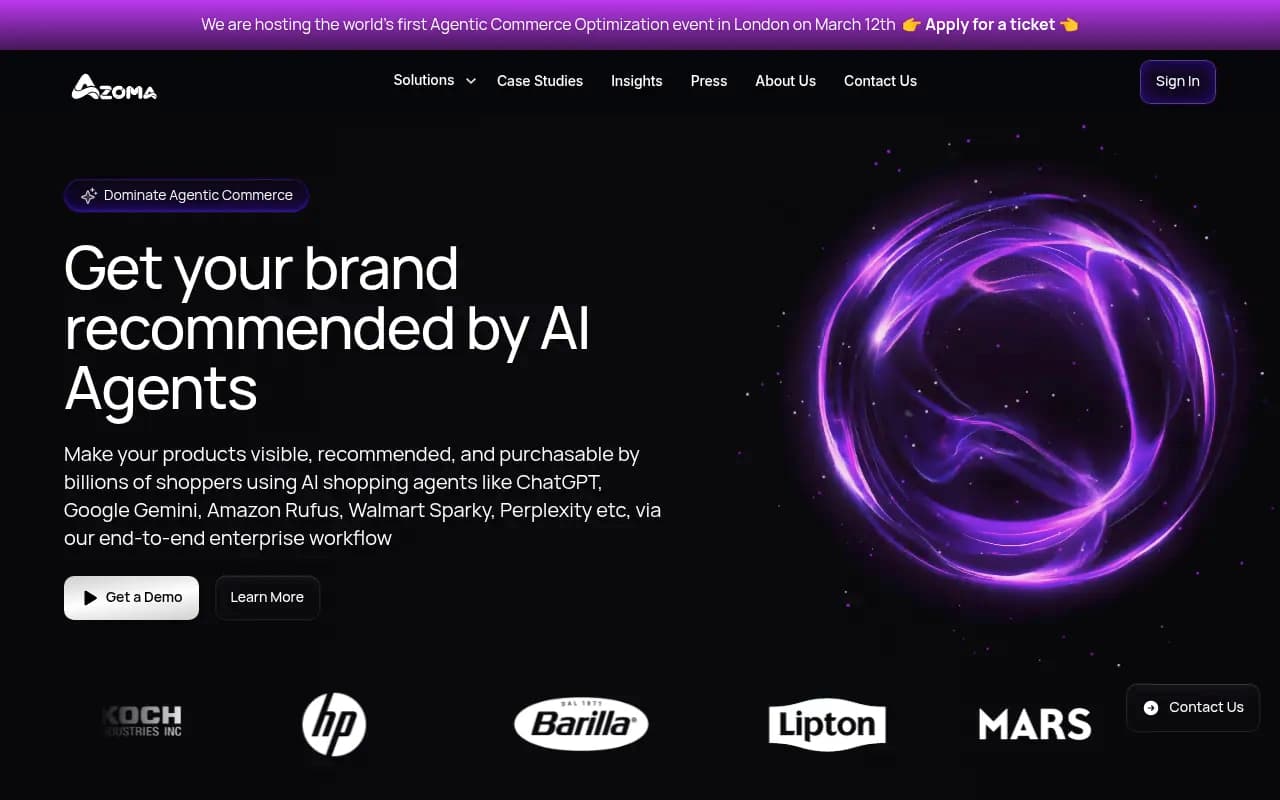
It's narrower in scope than a full AI visibility platform, but that focus means it goes deeper on product-level optimization than any general-purpose monitoring tool.
AthenaHQ -- solid monitoring, limited action
AthenaHQ tracks brand visibility across 8+ AI search engines with clean dashboards and good competitor benchmarking. It's a monitoring-focused platform that works well for brand teams that need to report on AI visibility to leadership.
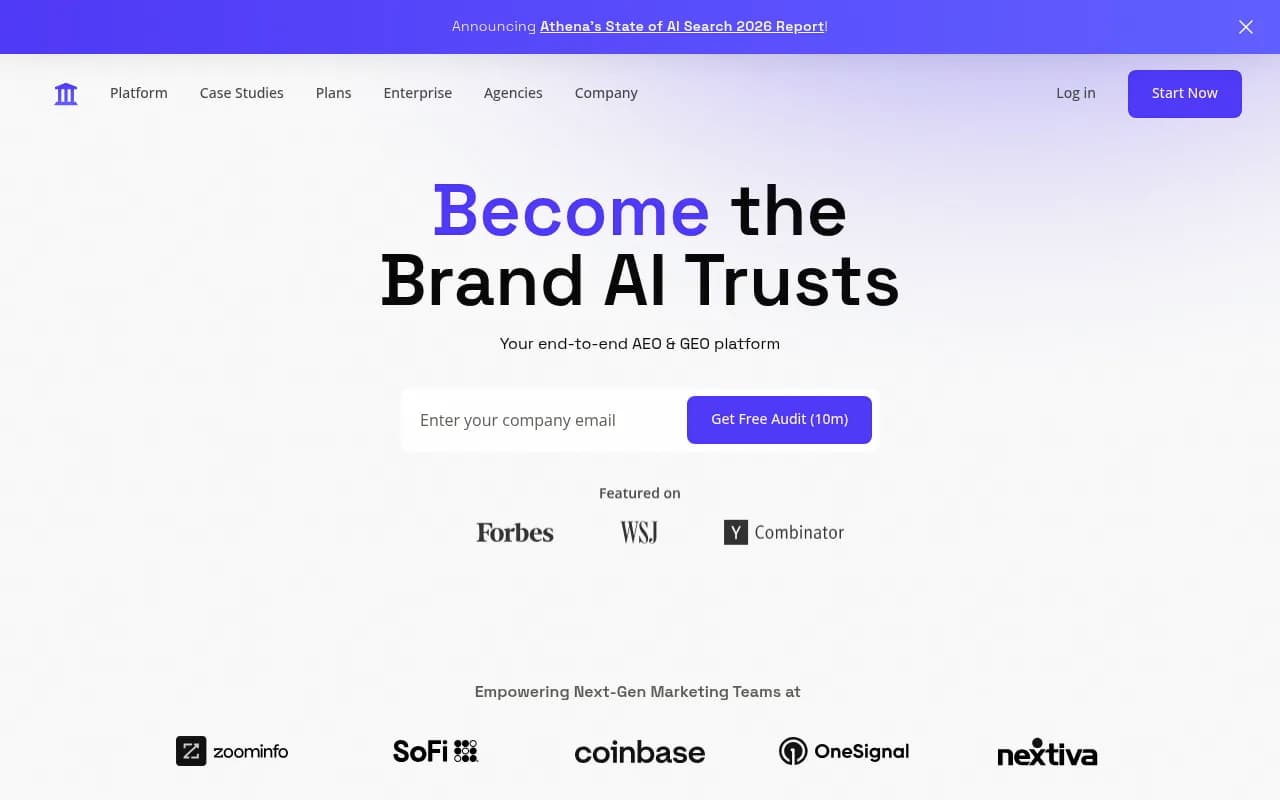
The gap: like most monitoring tools, it shows you where you stand but doesn't help you improve. No content generation, no gap analysis, no crawler logs. Useful for tracking, not for optimizing.
Feature comparison table
| Platform | ChatGPT Shopping tracking | Content generation | Crawler logs | Reddit/YouTube tracking | Traffic attribution | Starting price |
|---|---|---|---|---|---|---|
| Promptwatch | Yes | Yes (AI writing agent) | Yes | Yes | Yes | $99/mo |
| Profound | No | No | No | No | Limited | Custom |
| Semrush AI | No | No | No | No | No | Bundled |
| Otterly.AI | No | No | No | No | No | $29/mo |
| SE Visible | No | No | No | No | No | Bundled |
| Peec AI | No | No | No | No | No | €85/mo |
| Azoma | Yes (specialized) | Limited | No | No | No | Custom |
| AthenaHQ | No | No | No | No | No | Custom |
| Searchable | No | No | No | No | No | Custom |
What to actually look for when evaluating these tools
Product-level vs. brand-level tracking
Most AI visibility tools track brand mentions. That's useful, but e-commerce brands need to know whether specific products are being recommended. "Nike" appearing in an AI response is very different from "Nike Air Zoom Pegasus 41" appearing in a response to "best running shoes for marathon training."
Ask any vendor: can I track visibility for specific product names, SKUs, or product categories? Can I set up prompts that mirror how my customers actually search for products like mine?
ChatGPT Shopping specifically
ChatGPT's shopping carousels are a distinct surface from regular text responses. When ChatGPT recommends products with images, prices, and buy links, that's a different kind of citation than a text mention. Only a handful of platforms track this separately -- and for e-commerce brands, it's increasingly where high-intent traffic comes from.
The gap between data and action
This is the most important thing to evaluate. A lot of platforms will show you a dashboard with your share of voice, your competitor's share of voice, and a red arrow pointing down. That's data. What you need is a path from "I'm invisible for this prompt" to "I published content that got cited."
Platforms that only monitor are useful for reporting. Platforms that help you act are useful for growth.
Traffic attribution
Knowing you're visible in AI search is one thing. Knowing that AI visibility is driving revenue is another. Look for platforms that can connect AI citations to actual site traffic and conversions -- either through a code snippet, Google Search Console integration, or server log analysis.
How to make the switch from Searchable
If you're moving off Searchable, the practical steps are:
- Export your current prompt list and benchmark data before canceling. You'll want a baseline to compare against in your new platform.
- Set up your new platform with the same prompts first, so you have continuity in your tracking data.
- Add product-specific prompts that Searchable probably wasn't running -- things like "[your product category] under $[price point]" or "best [product type] for [specific use case]."
- If your new platform has crawler logs (Promptwatch does), check them in the first week. You'll often find that AI crawlers are hitting your site but encountering errors on product pages -- a quick technical fix that can meaningfully improve visibility.
- Run a gap analysis in week two to identify which prompts competitors are winning that you're not. That list becomes your content roadmap.
The bottom line
Searchable is fine for basic brand monitoring. But in 2026, with AI-referred traffic growing faster than any other channel and ChatGPT Shopping becoming a real product discovery surface, "fine" isn't enough for e-commerce brands that want to compete.
The platforms that matter most are the ones that close the loop: they show you where you're invisible, help you create content that fixes it, and track whether that content is actually getting cited. Most tools in this category stop after step one.
For e-commerce teams that want to treat AI visibility as a growth channel rather than a reporting exercise, Promptwatch is the most complete option available. For teams with tighter budgets or simpler needs, Otterly.AI and SE Visible are reasonable starting points -- just go in knowing you'll outgrow them quickly if AI search becomes a meaningful traffic source for your business.