Key takeaways
- Ranketta is strongest for online stores that want to fix product data and export corrected feeds to Amazon, Google Merchant Center, Heureka and Zboží. If that is not your problem, you will probably outgrow it or never use half of it.
- The real split in this category is between tools that report a number and tools that help you change it. Ask what happens after the dashboard shows a gap.
- Promptwatch is the pick if you want monitoring, AI crawler logs, traffic attribution and content creation in one loop. Peec AI, Otterly and Profound cover narrower jobs. Semrush and Ahrefs suit teams already living in those suites.
- Several comparison posts you will find (including Ranketta's own agency guide) are vendor-written and rank their author first. This one is too, in a sense: Promptwatch is a vendor in this space, and I say so below.
- Pricing in this market changes constantly. Check each vendor's pricing page before you buy.
What Ranketta actually is
Ranketta positions itself as an AI visibility platform for agentic commerce. It tracks which products AI engines recommend, then fixes the product data behind the gaps, with a confidence score on every change. It can export the corrected feed to Amazon, Google Merchant Center, Heureka and Zboží, per its own agency blog post (published July 2026, updated October 2026).
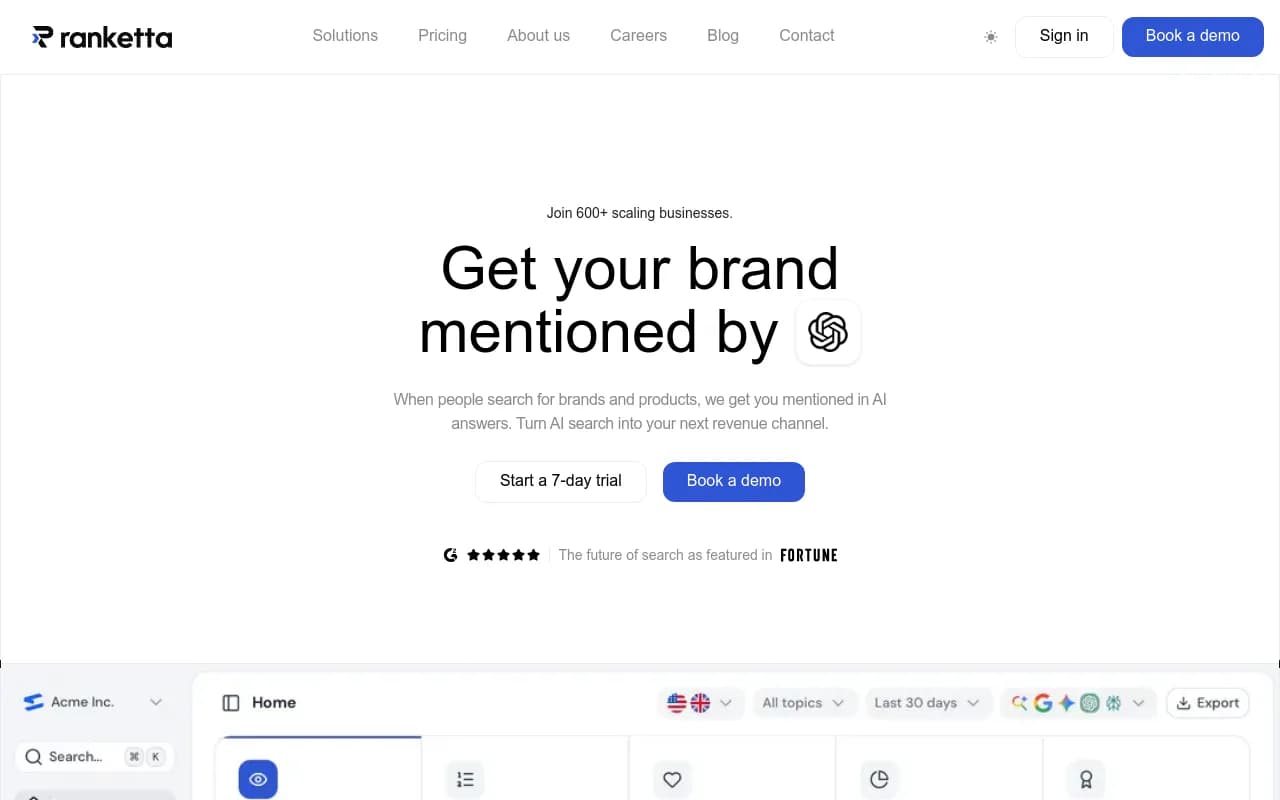
Pricing on its official page is in euros, with a 7-day free trial and separate tabs for Online Stores, Brands and Agencies. The Online Stores plans:
| Plan | Price | Models | Prompts per model | Other limits |
|---|---|---|---|---|
| Tracker | EUR 29/mo | 2 | 30 | 1 website, 1 country |
| Starter | EUR 79/mo | 3 (your choice) | 50 | Merchandising, 5k credits, 1 country |
| Growth | EUR 199/mo | 4 | 100 | 15k credits, 2 websites, 3 countries |
| Scale | EUR 449/mo | 5 | 300 | 45k credits, 5 websites, 10 countries |
| Enterprise | Custom | 10+ | 1,000+ | Custom feeds, dedicated AEO specialist |
Annual billing gives two months free. Google AI Overviews, AI Mode, ChatGPT, Gemini and Perplexity are the base models. Alexa, Claude, Copilot, Grok and Meta are marked Premium and start at Starter.
That is a sensible product for a Shopify or WooCommerce store. It is a narrower fit for a B2B SaaS company, a publisher, a bank or an agency whose clients are mostly services businesses.
Why people look for alternatives
In conversations and comparison posts, the reasons come up again and again:
- You are not an online store, so feed export and merchandising features sit unused.
- You need more AI engines, more prompts or more countries than the cheaper tiers allow.
- You want to know whether AI crawlers can even read your site, which is a separate question from what AI says about you.
- You want to connect AI answers to visits and conversions on your own site.
- You need content produced and published, not only a list of gaps.
One caution from Ranketta's own agency post: product-level tracking is now standard. It names Peec AI, Profound, AthenaHQ and Scrunch AI as all reporting on individual products (checked October 2026). So the product-tracking angle alone no longer separates tools. What each tool does after it finds the gap does.
Why the fix matters more than the finding
Promptwatch Data looked at what ChatGPT cites between Sep 28 and Oct 4, 2026. Product pages were the most cited content type at 22.4%, with landing pages at 16.8%. Together that is roughly 39% of citations. For commercial prompts, product pages hit 26.0% and landing pages 20.6%.
Two things follow. Ranketta is right that product data matters. But the same logic applies to any commercial site: the pages AI cites are mostly your own product and landing pages, so a tool that only shows a score leaves the useful work undone.
Fan-out behavior shifts too. Promptwatch's query fan-out data shows average fanouts per ChatGPT response fell from about 2.15 in December 2025 to roughly 1.0 by April 2026, and average query length dropped from about 117 characters to about 53. Short, entity-first queries reward pages whose headings read like the question. And on August 8, 2026, ChatGPT began using the site: operator at scale, jumping from about 0.4% to about 17% of fanout queries overnight. Your own site's structure matters more than it did.
The alternatives at a glance
| Tool | Best for | Starting price (verify) | Acts after the finding? |
|---|---|---|---|
| Promptwatch | Monitoring plus crawler logs, traffic and content creation | $95/mo | Yes, Content Agent and Action Board |
| Peec AI | Clean multi-country monitoring, agency plans | Check site | Mostly recommendations |
| Profound | Enterprise rosters, real-user prompt volume | $99/mo (ChatGPT only) per a 2026 third-party list | Limited |
| Otterly.AI | Budget monitoring | Check site | Light |
| Semrush One | Teams already on Semrush | Check site | Via the SEO suite |
| Ahrefs Brand Radar | Data quality, existing Ahrefs users | $50/mo and up per a 2026 third-party list | No |
| Scrunch | Enterprise, machine-readable site delivery | Check site | Yes, technical layer |
Promptwatch
Promptwatch is the one I would start with if the complaint about Ranketta is that it stops short of a full workflow, and I should be upfront that it is a vendor in this category, as is Ranketta. It is also the platform 1001 SEO Media, which publishes this site, uses for its own GEO work.

The idea is a loop. It monitors what ChatGPT, Gemini, Perplexity, Google AI Overviews, AI Mode, Copilot, Meta AI, Alexa and others say about you, collected from the real interfaces rather than only APIs. Then it traces where answers come from: which of your pages are cited, which Reddit threads and YouTube videos, and which third-party pages name you without linking. Then it acts. The Action Board produces a prioritized to-do list, content gap analysis maps your pages against prompts AI answers, and the Content Agent writes and publishes to WordPress, Webflow or Framer on a schedule you control. Finally it measures: IP-verified AI crawler logs show whether bots read a page, Page Tracker shows whether AI cites it, and visitor analytics show whether it sent traffic.
The crawler logs are the feature I would weigh most against Ranketta. They let you tell an access problem (bots hitting errors) from a content problem (bots read it, AI still ignores it). See the AI crawler logs feature page.
On the e-commerce side, there is ChatGPT Shopping insights, covering product visibility in shopping carousels and Alexa results, plus Ads Radar for sponsored placements in AI answers. These need the Business plan. Ranketta's feed-export tooling is more specialized for marketplaces, so a store selling mainly on Amazon and Merchant Center should test both.
Pricing, as listed on the pricing page:
- Essential $95/mo: 1 project, 50 prompts, daily tracking
- Professional $245/mo: 2 projects, 150 prompts, 5 AEO articles, 25M crawler logs
- Business $579/mo: 5 projects, 350 prompts, Content Agent, local GEO targeting, Fact Check, Shopping, Ads Radar
- Agencies: Kick-off $199/mo, Growth $399/mo, Scale $799/mo, with unlimited projects and team seats
Every plan includes unlimited team seats, all AI models, Agent Chat and Brand Narrative. Confirm everything at promptwatch.com/pricing. There is no free plan, but there is a 7-day free trial on monthly billing and a free AI visibility report.
Trade-offs: the Content Agent starts at Business, and agency plans exclude it. Agencies needing content generation go to Enterprise. If you only want a cheap dashboard, it is more than you need.
Side-by-side pages exist if you want detail: Promptwatch vs Profound, vs Peec, vs Otterly.
Peec AI
Peec AI is the clean, focused monitoring option, with strong multi-country and multi-language benchmarking. Ranketta's agency post says Peec offers credit-based agency plans, pitch projects and unlimited users on brand plans, though that is a vendor claim about a competitor, so check it. Several third-party roundups, including the LinkedIn piece in the research set, call it the strongest for regional competitor benchmarking.

It is a good fit when you want reliable numbers across markets and you will do the content work elsewhere. It does not give you crawler logs or built-in content generation.
Profound
Profound is the well-known enterprise name. Its distinctive pieces are real-user prompt volume data, front-end response capture and an Amazon Rufus shopping module. Per the Tim Soulo roundup of Profound alternatives, the Starter plan at $99/mo covers ChatGPT only, Growth at $399/mo adds Perplexity and Google AIO with a 100-prompt and 3-seat cap, and Enterprise pricing is not published. That article's date is unclear, so treat the numbers as indicative.

It suits large brands and agency rosters (Ranketta's post cites its isolated client workspaces and up to 9 engines on Enterprise). Price climbs fast for anyone who wants broad model coverage.
Otterly.AI
Otterly is the budget entry point. Zapier's 2026 roundup recommends it for affordability. You get prompt monitoring and brand mentions without the heavier workflow tooling.

It works for a small team that wants to see whether AI mentions it at all. Plan to add other tools the moment you need to act on the data.
Semrush One and Ahrefs Brand Radar
If your team already pays for one of these suites, the cheapest move is often to switch on its AI module. Semrush's AI visibility toolkit is described in the Soulo list as best for teams that want unified SEO and AI tracking without another vendor.
Ahrefs Brand Radar is interesting on data origin. Soulo's piece notes its 243M+ prompts come from real search data, including People Also Ask questions with measurable volume, rather than prompts invented by the vendor. Pricing in that article runs from $50/mo (2,500 checks) to $699/mo for all six AI indexes plus 2,500 custom prompt checks.

Both are monitoring-first. Neither gives you AI crawler logs or AI-traffic attribution to the depth of a dedicated platform.
Scrunch
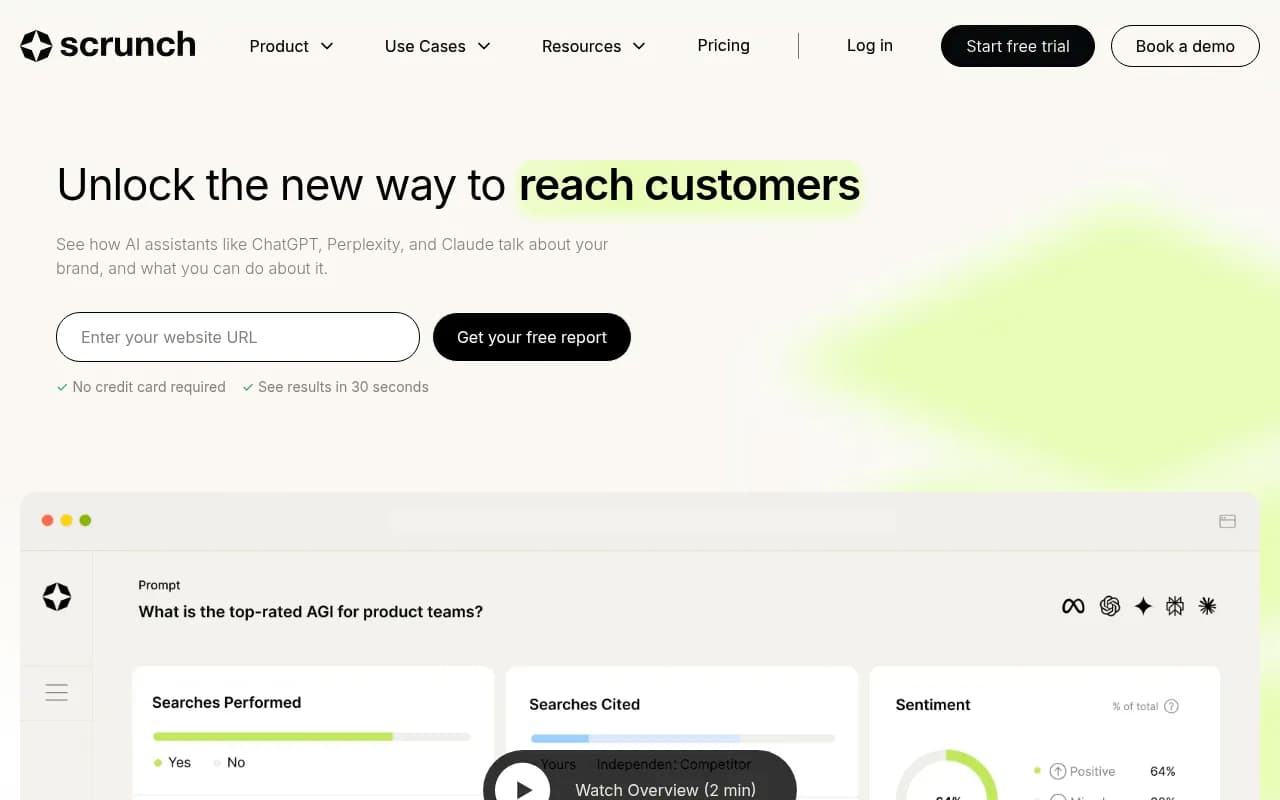
Scrunch is enterprise-focused. Data Ally's review says its Agent Experience Platform serves AI crawlers a machine-readable version of a site, which is closer to a technical-SEO fix than a dashboard. I could not verify that against Scrunch itself, so confirm in a demo. Ranketta's post also mentions a partner program with up to 20% referral commission.
Other names worth a look
- AthenaHQ tracks 8+ AI engines and reports on individual products.
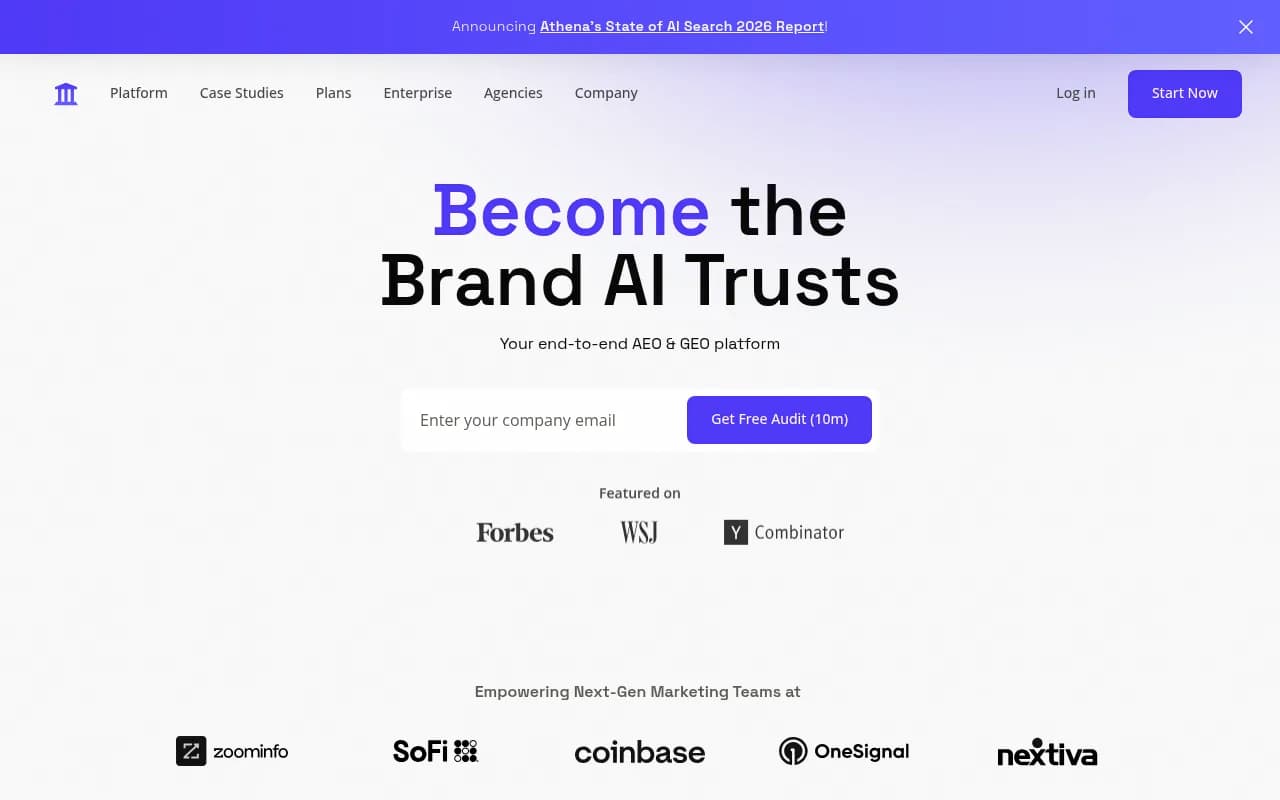
- Dageno AI publishes a Ranketta alternative comparison, though it ranks itself first, so read it as marketing.
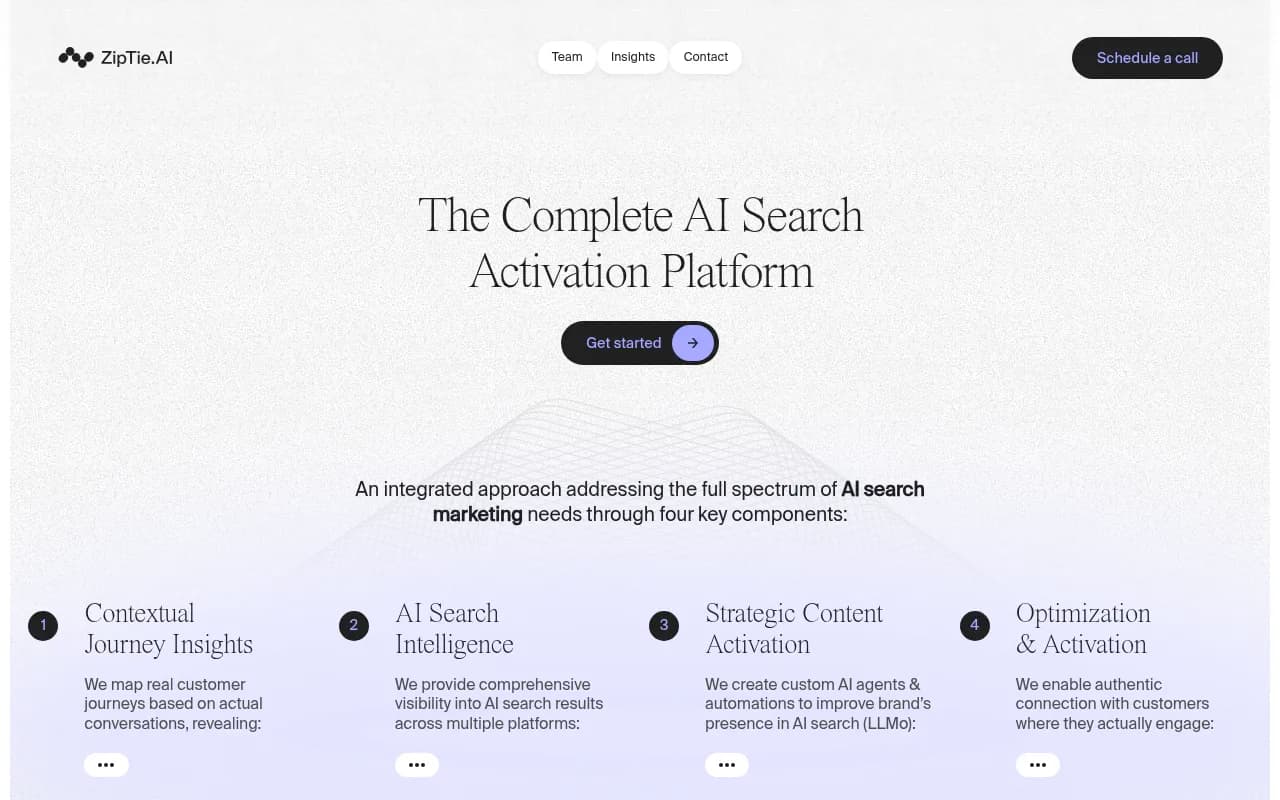
- ZipTie is praised in Zapier's roundup for deep analysis and reporting.
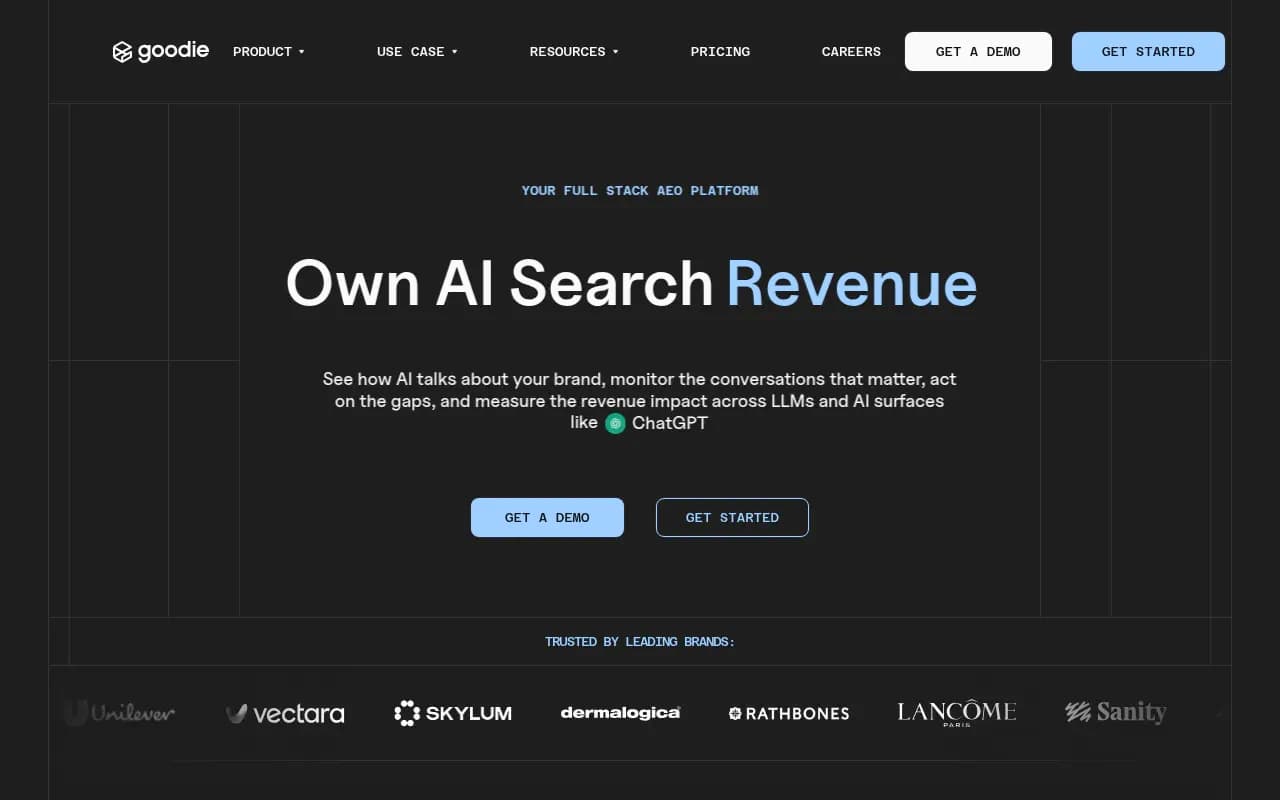
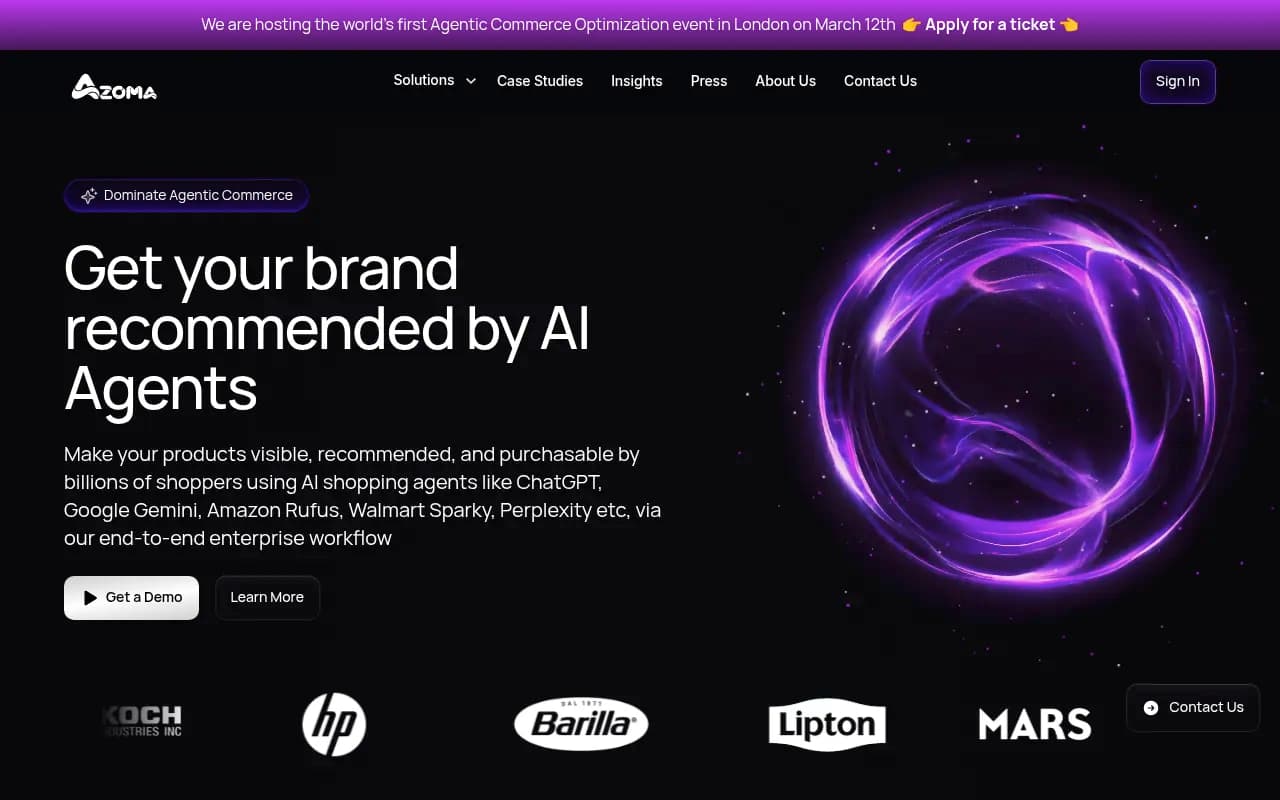
- Goodie AI and Azoma are the closest in spirit to Ranketta, with a focus on AI shopping surfaces.
The category has hundreds of entries. The GEO software directory at bestgeosoftware.com and the AI rank tracking directory at ai-rank-tools.com are useful for filtering beyond this list.
How to pick
If you run an online store
Test Ranketta and Promptwatch on the same product set for a week. Ranketta's feed export is its edge. Promptwatch's edge is seeing whether bots reach your product pages and whether your traffic converts. If Amazon and Merchant Center feeds are your main channel, Ranketta may be enough.
If you are an agency
Look at unlimited projects and seats, white-label reporting and pitch projects. Promptwatch's agency plans (Kick-off, Growth, Scale) include unlimited projects, pitch projects and seats. Peec AI and Profound both target agencies too. Be sure to ask each about client reporting a non-expert can read.
If you are B2B or services
Pick based on the data you need to prove ROI. Software prompts in ChatGPT lean heavily on documentation, GitHub and review sites, per Promptwatch's software citation report. A tool that tracks which of your pages are cited, and lets you publish the missing ones, beats a pure score.
If budget is tight
Start free. GA4 can show which AI platforms send referral traffic. One catch: ChatGPT stopped sending a referrer on October 8, 2026, so tag links with utm_source=chatgpt.com where you can. Then pay for monitoring (Otterly, Peec, Ranketta's Tracker at EUR 29) once you know there is something to measure.
Questions to ask any vendor
- Does data come from real front-end responses or only APIs? The two can differ.
- Can I see AI crawler activity on my own site, verified by IP?
- What does the tool do after it shows a gap: recommend, write, publish?
- How are prompts chosen: invented, or based on real search behavior?
- What are the real caps on prompts, countries and seats at the tier I need?
- Is the comparison article I am reading written by a vendor?
My take
Ranketta is a focused product, and for a store whose problem is bad product data it makes sense. The alternatives matter when your problem is wider: crawlability, content gaps, off-site mentions, traffic. Most tools stop at the report. If you want the work done and then checked, Promptwatch is the one I would put through a trial first, and I would run it next to whichever monitoring-only tool you are considering, on the same prompts, for seven days. The difference shows up quickly.
For the numbers behind any of these claims, the Promptwatch Data hub is updated regularly.