Key takeaways
- Peec.ai covers only three AI models on standard plans and offers no content creation, traffic attribution, or crawler logs -- a real ceiling for B2B SaaS teams with niche, long-tail prompts
- The best alternatives go beyond monitoring: they help you find gaps, generate content that gets cited, and connect AI visibility to actual pipeline
- For teams that need the full loop (find gaps, fix them, track results), Promptwatch is the most complete option in 2026
- If budget is the main constraint, Otterly.AI and SE Visible are solid entry points
- Enterprise teams with complex competitive landscapes should look at Profound or Scrunch AI
Peec.ai does a few things well. Clean setup, prompt-level tracking, decent citation data. For a lot of teams, it's a fine starting point.
But B2B SaaS companies have a specific problem: their buyers don't search for generic terms. They ask things like "best project management tool for remote engineering teams under 50 people" or "which CRM integrates with HubSpot and Salesforce without a middleware layer." These are niche, high-intent prompts -- and tracking whether you show up for them is only half the battle. You also need to know why you're not showing up, and what to do about it.
Peec.ai's standard plans cap you at three AI models. There's no content generation, no traffic attribution, no crawler logs. You can see the problem. You can't fix it from inside the platform.
That's the gap this guide addresses. Below are eight alternatives worth considering in 2026, with honest notes on where each one fits.
Why B2B SaaS teams hit Peec.ai's ceiling faster
Most AI visibility tools were built with brand monitoring in mind. Track your name, see if ChatGPT mentions you, done. That works fine for consumer brands with broad awareness goals.
B2B SaaS is different. Your prompts are longer, more specific, and tied to buying decisions. A prospect asking Perplexity "what's the best data pipeline tool for Snowflake users" is much closer to a purchase than someone asking "what is a data pipeline." You need to know if you're appearing for the specific, high-intent queries -- and if you're not, you need to understand why and create the content that fixes it.
Peec.ai's monitoring-only model leaves you with data and no clear next step. The alternatives below vary in how well they solve this.
The 8 best Peec.ai alternatives for B2B SaaS teams
1. Promptwatch
Promptwatch is the most complete option on this list if you want to close the full loop: find where you're invisible, understand why, create content that gets cited, and track the results.

The feature that matters most for B2B SaaS teams is Answer Gap Analysis. It shows you exactly which prompts your competitors are appearing for that you're not -- the specific questions AI models are answering without citing your content. For niche SaaS categories, this is genuinely useful. You're not guessing at content topics; you're seeing the actual prompts where you're losing to competitors.
From there, Promptwatch's built-in writing agent generates articles, listicles, and comparisons grounded in citation data from over 880 million sources analyzed. This isn't generic SEO content -- it's engineered around what AI models actually cite. The Professional plan ($249/month) adds AI crawler logs, which show you exactly which pages ChatGPT, Claude, and Perplexity are reading on your site, how often, and what errors they're hitting. Most competitors don't have this at all.
Prompt Intelligence gives you volume estimates and difficulty scores per prompt, plus query fan-outs that show how one broad question branches into sub-queries. For B2B SaaS teams trying to prioritize a content roadmap, that's a meaningful advantage over tools that just show you a list of prompts with no context.
Coverage spans 10 AI models: ChatGPT, Perplexity, Claude, Gemini, Google AI Overviews, Google AI Mode, Grok, DeepSeek, Copilot, and Meta AI.
Pricing: Essential at $99/month (1 site, 50 prompts), Professional at $249/month (2 sites, 150 prompts, crawler logs), Business at $579/month (5 sites, 350 prompts). Free trial available.
2. Profound
Profound is the other serious option for teams that need depth. It's particularly strong on enterprise analytics -- competitive heatmaps, share of voice over time, and detailed source attribution.

Where Profound pulls ahead of basic trackers is in the quality of its competitive intelligence. You can see not just whether you're cited, but which sources AI models are pulling from in your category -- which is useful for understanding where to publish and what third-party content to pursue.
The tradeoff is price. Profound sits at a higher price point than most alternatives here, and it's more analytics-heavy than action-oriented. You'll still need a separate content workflow to act on what you find. For enterprise teams with dedicated SEO or content resources, that's fine. For smaller B2B SaaS teams wearing multiple hats, it can feel like another dashboard to interpret.
3. Scrunch AI
Scrunch AI targets enterprise-scale monitoring. If you're managing AI visibility across a large brand with multiple product lines, regional variations, or a complex competitive set, Scrunch handles that breadth well.
The platform covers a solid range of AI engines and gives you good visibility into how your brand is being represented across different models. The UI is clean and the reporting is detailed enough for executive-level presentations.
The limitation for B2B SaaS teams is similar to Profound: it's primarily a monitoring tool. You get excellent data on where you stand. Acting on it requires work outside the platform.
4. AthenaHQ
AthenaHQ tracks brand visibility across 8+ AI search engines with a focus on sentiment and brand control. For B2B SaaS companies where how you're described matters as much as whether you're mentioned, this is worth a look.
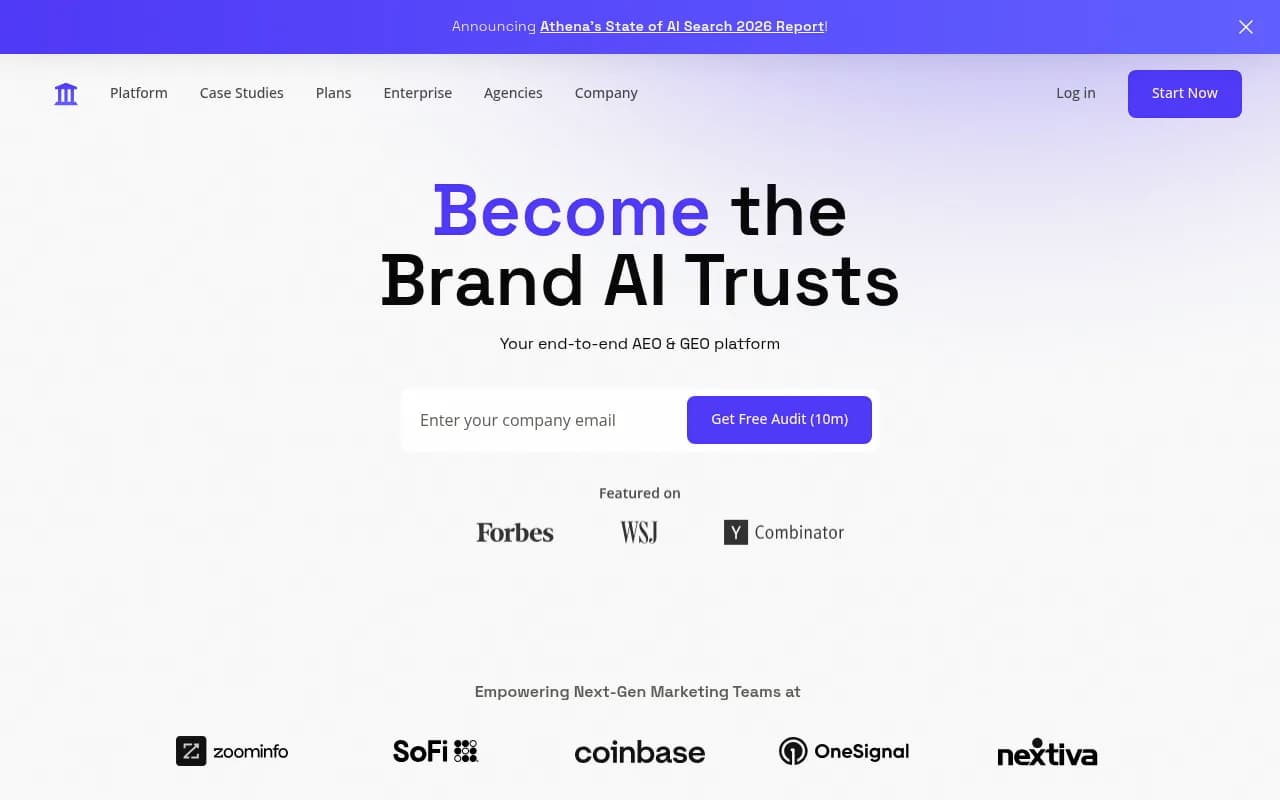
The sentiment angle is genuinely differentiated. If AI models are describing your product in ways that don't match your positioning -- or worse, associating you with problems you've solved -- AthenaHQ surfaces that. For category leaders trying to protect their narrative, that's valuable.
Like most tools in this space, it's monitoring-focused. Content optimization happens elsewhere.
5. Otterly.AI
Otterly.AI is the most accessible entry point on this list. It's affordable, straightforward, and covers the core use case: tracking whether your brand shows up in AI answers across the main engines.
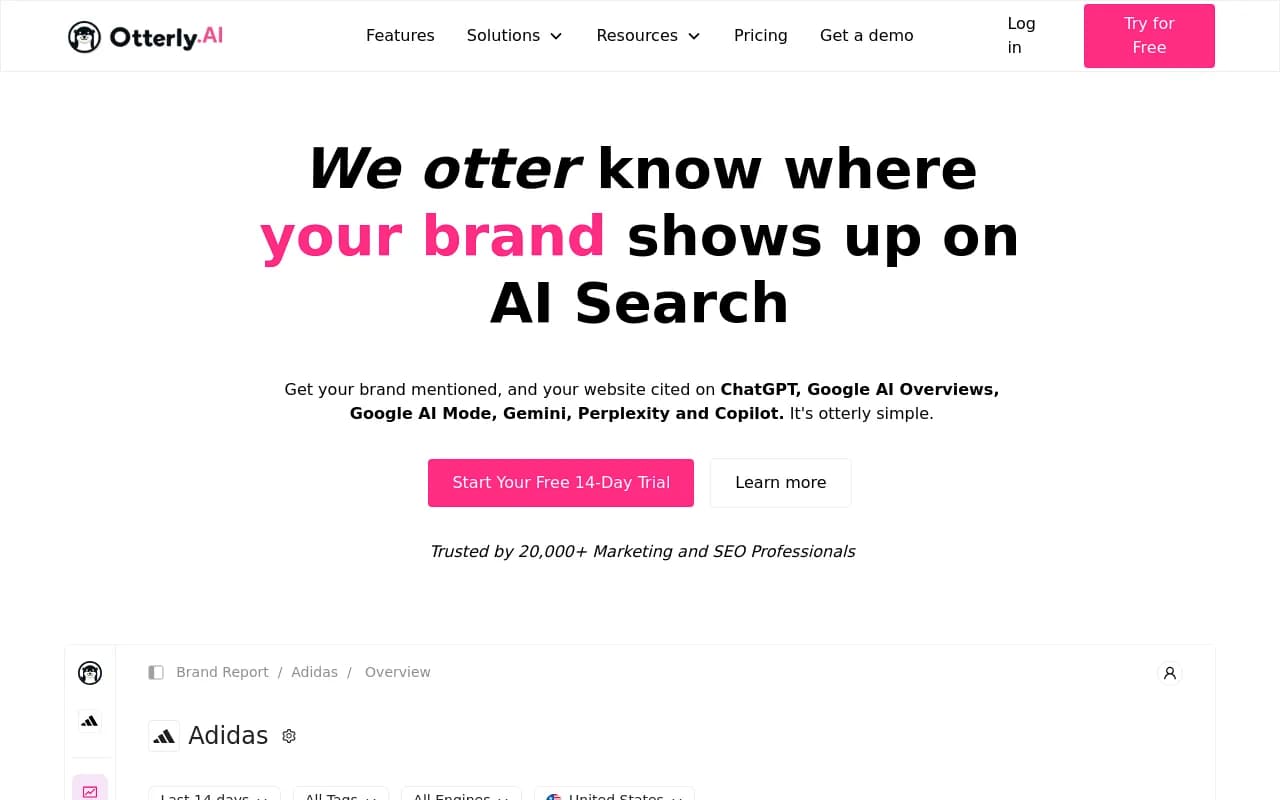
For B2B SaaS teams that are just starting to think about AI visibility and want to get a baseline before investing in a more complete platform, Otterly makes sense. Setup is fast, the interface is clean, and the price won't raise eyebrows in a budget conversation.
The ceiling is real, though. No content generation, no crawler logs, no traffic attribution. It's a monitoring tool. Once you've established your baseline and want to start improving your numbers, you'll likely outgrow it.
6. SE Visible
SE Visible is SE Ranking's dedicated AI visibility module. If your team already uses SE Ranking for traditional SEO, this is the most natural extension -- you get AI visibility data alongside your existing keyword rankings, site audits, and backlink data in one place.
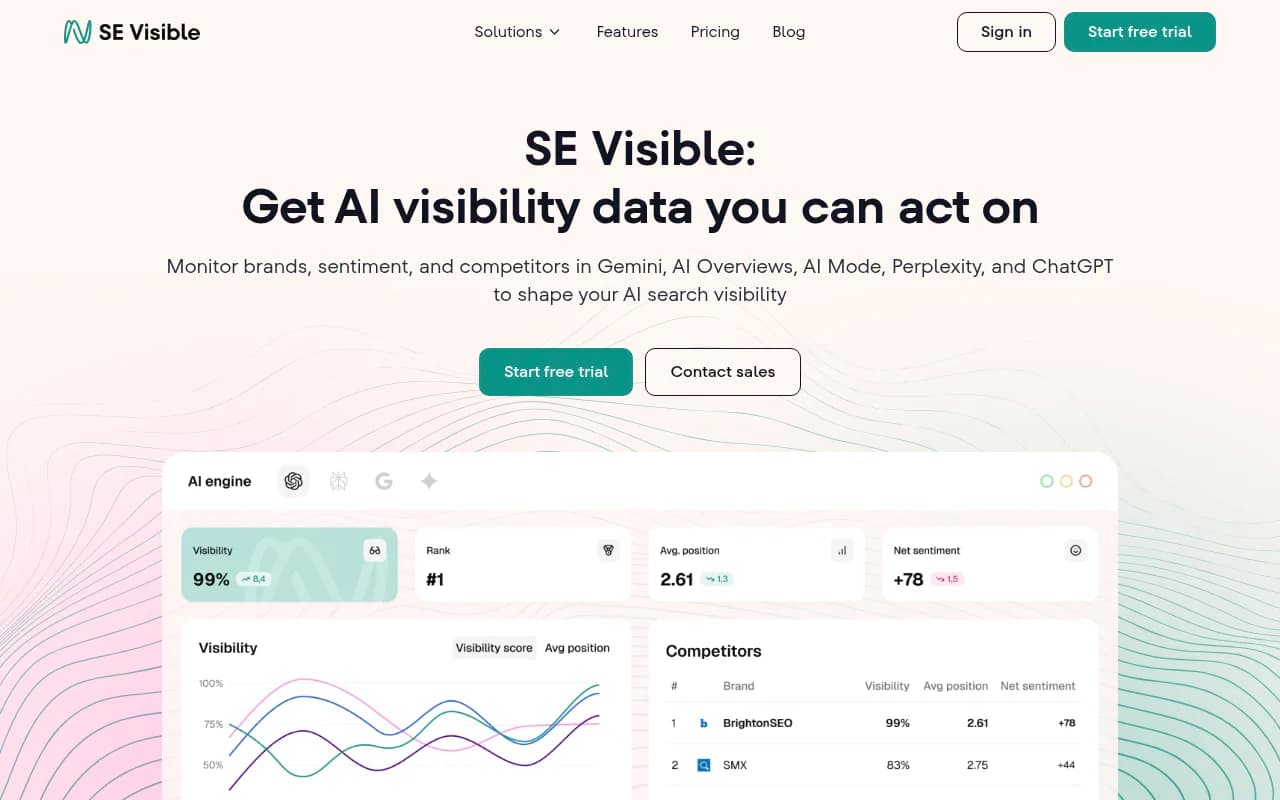
The integration value is real. Being able to cross-reference which pages rank in Google and which get cited in AI answers in the same dashboard saves context-switching. For B2B SaaS teams where SEO and AI visibility are owned by the same person or small team, that matters.
Standalone, it's a competent tracker. The prompt depth and competitive intelligence aren't as rich as Promptwatch or Profound, but for teams that want "good enough" AI visibility data without adding another tool to their stack, it works.
7. Rankscale AI
Rankscale AI focuses on competitive benchmarking -- how your AI visibility compares to specific competitors across different models and prompt categories.
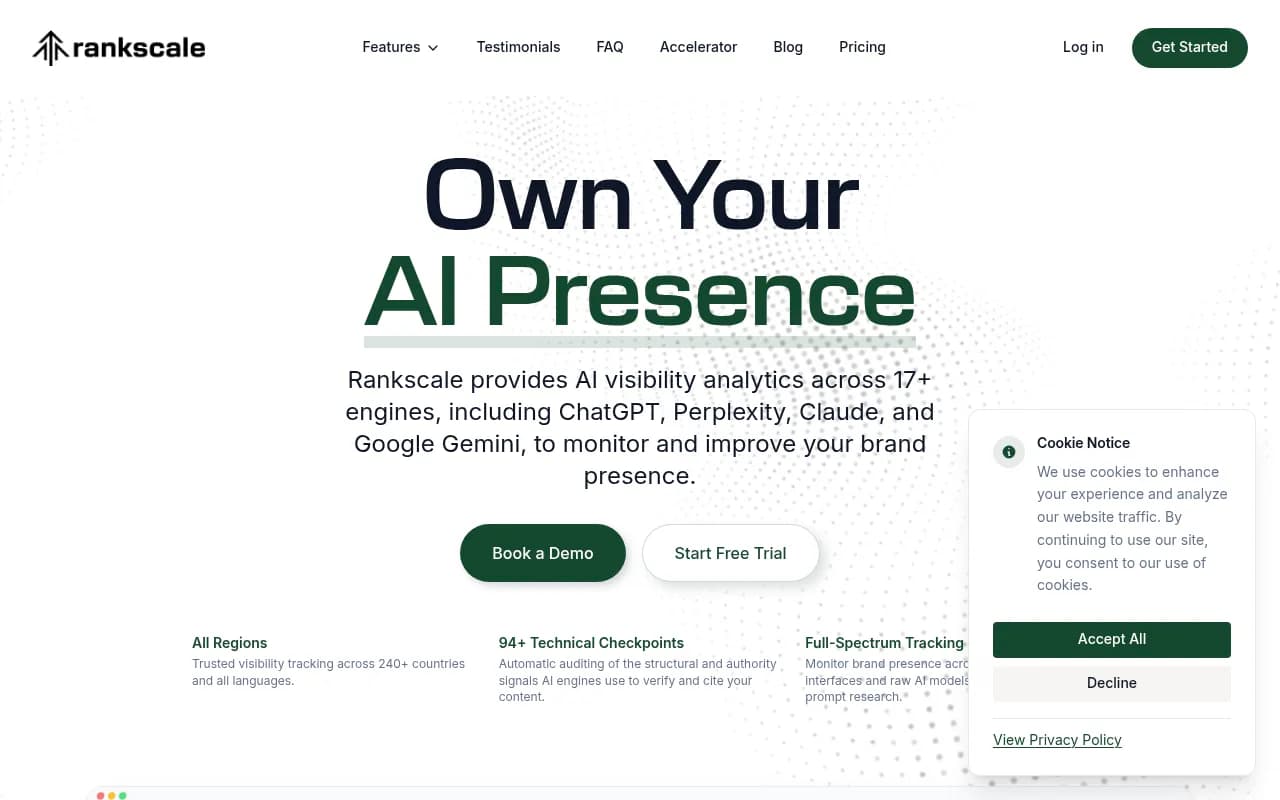
For B2B SaaS teams in competitive categories, this framing is useful. Rather than just tracking your own visibility in isolation, you're seeing your share of voice relative to the two or three competitors you actually care about. That makes it easier to prioritize: focus on the prompts where you're close to overtaking a competitor, not the ones where you're starting from zero.
The depth of per-prompt data is more limited than the top-tier options, but the competitive angle is genuinely useful for teams that think in terms of market share rather than absolute visibility scores.
8. LLMrefs
LLMrefs is purpose-built for citation and source tracking. It answers a specific question: when AI models cite sources in your category, which domains and pages are they pulling from?
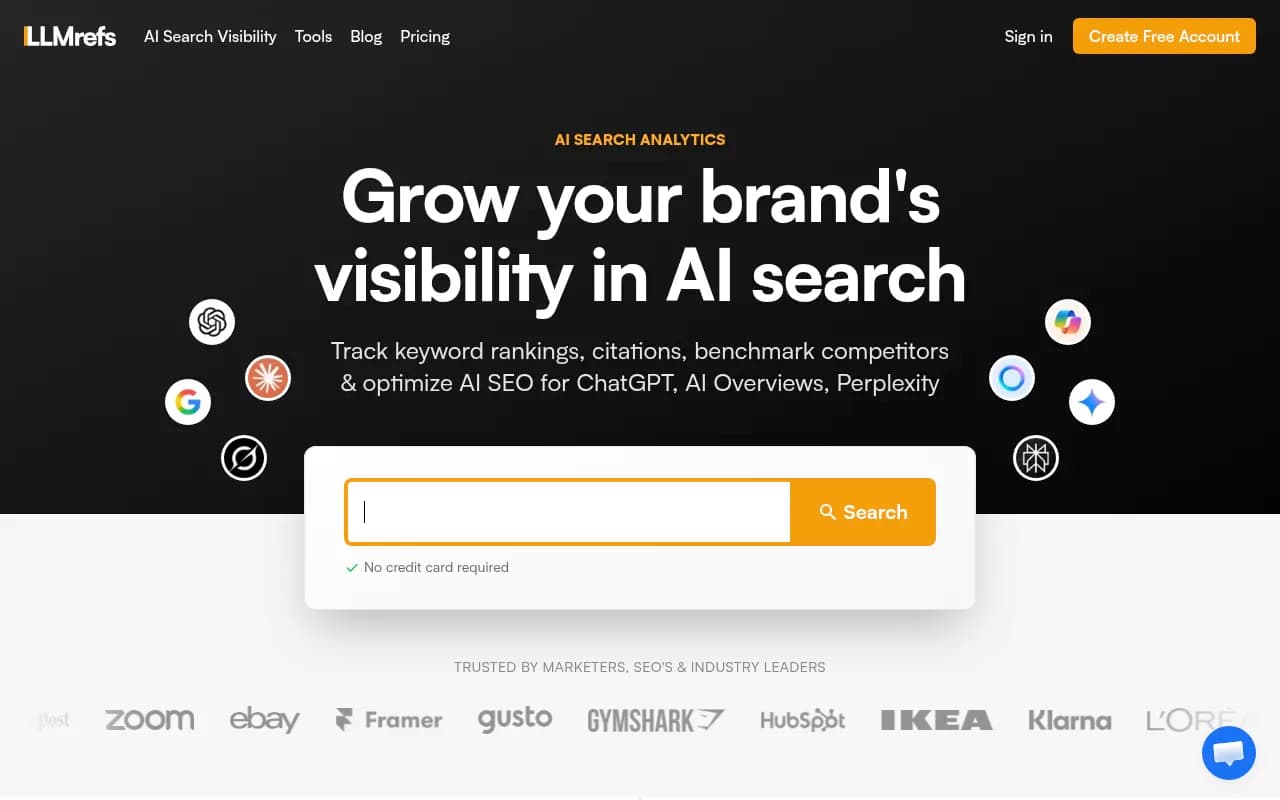
For B2B SaaS content teams trying to understand where to publish -- whether that's your own blog, a third-party review site, a Reddit community, or an industry publication -- LLMrefs gives you data that most other tools don't surface clearly. You can see that Perplexity is heavily citing G2 reviews for your category, or that Claude is pulling from a specific industry blog you hadn't considered.
It's a narrower tool than most on this list, but for teams with a specific "where should we publish" question, it's the most direct answer.
Head-to-head comparison
| Platform | AI models covered | Content generation | Crawler logs | Traffic attribution | Prompt gap analysis | Best for |
|---|---|---|---|---|---|---|
| Promptwatch | 10 | Yes | Yes | Yes | Yes | Full-loop optimization |
| Profound | 6+ | No | No | Limited | Partial | Enterprise analytics |
| Scrunch AI | 6+ | No | No | No | No | Enterprise monitoring |
| AthenaHQ | 8+ | No | No | No | Partial | Brand sentiment |
| Otterly.AI | 4-5 | No | No | No | No | Entry-level tracking |
| SE Visible | 5+ | No | No | No | No | SE Ranking users |
| Rankscale AI | 5+ | No | No | No | Partial | Competitive benchmarking |
| LLMrefs | 4+ | No | No | No | No | Citation source research |
| Peec.ai | 3 (standard) | No | No | No | No | Basic monitoring |
What to look for when evaluating alternatives
Prompt specificity. Generic brand monitoring tools track prompts like "what is [brand]." B2B SaaS buyers ask "what's the best [category] tool for [specific use case]." Make sure the platform you're evaluating can handle long-tail, niche prompts -- and ideally gives you volume or difficulty data to prioritize them.
Model coverage. Three models isn't enough in 2026. Your buyers are using ChatGPT, Perplexity, Claude, and increasingly Gemini and Google AI Overviews. A platform that covers only a subset is giving you an incomplete picture.
The monitoring vs. optimization gap. Most tools on this list will tell you where you're invisible. Fewer will help you fix it. If you have a content team that can act on monitoring data, that's fine. If you need the platform to help generate and prioritize content, that narrows the field considerably.
Traffic attribution. Knowing you're cited in AI answers is useful. Knowing that those citations are driving actual pipeline is better. Look for platforms that can connect AI visibility to traffic and conversions -- either through a code snippet, GSC integration, or server log analysis.
Crawler visibility. AI crawler logs are an underrated feature. Knowing which pages ChatGPT or Perplexity are actually reading on your site -- and which they're ignoring or hitting errors on -- tells you a lot about why your content isn't getting cited. Most platforms don't offer this.
Which one should you pick?
If you're a B2B SaaS team that wants to move beyond monitoring and actually improve your AI visibility, Promptwatch is the most complete option. The combination of Answer Gap Analysis, AI-grounded content generation, crawler logs, and traffic attribution means you can close the full loop without stitching together multiple tools.
If budget is tight and you just need a baseline, Otterly.AI gets you started without a big commitment. SE Visible is the right call if you're already in the SE Ranking ecosystem.
For enterprise teams with dedicated analytics resources and complex competitive landscapes, Profound or Scrunch AI are worth evaluating -- just know you'll need a separate content workflow to act on what you find.
And if your specific question is "where are AI models citing sources in my category," LLMrefs gives you that answer more directly than anything else on this list.
The monitoring-only tools aren't bad. They're just incomplete for teams that need to move the needle, not just measure it.