Key takeaways
- Google AI Mode is a different surface from AI Overviews and ChatGPT. A tracker that only covers one engine can mislead you, and agencies need AI Mode checked directly, not inferred.
- Promptwatch's data from May 31 to Jun 26, 2026 shows google.com took 7.31% of AI Mode citations, more than YouTube (2.88%) and Reddit (2.52%) combined. Pick a tracker that records cited sources and domains, not just brand mentions.
- For agency work, the deciding features are isolated client workspaces, unlimited seats, white-label or scheduled reports, and a per-client price that doesn't collapse your margin.
- Most "best AI Mode tracker" lists are written by vendors who rank themselves first. Treat the rankings as marketing and verify pricing on official pages before you quote anything.
- Shortlist: Promptwatch for end-to-end work, AccuRanker for high-volume tracking, SE Visible and Nightwatch for SEO-first shops, Rankability and Otterly.AI for budget multi-client setups, Profound for enterprise accounts.
Why AI Mode needs its own line in your agency stack
AI Mode is Google's conversational search tab. It uses Gemini to produce multi-turn answers, and it behaves differently from the AI Overviews box above the classic results. One vendor guide cites a 2025 Search Engine Land study saying brands appear in roughly 90% of AI Mode responses versus about 43% in AI Overviews. I'd treat that as directional, since it comes from a vendor blog quoting a study, but the point holds: AI Mode is where a lot of brand exposure now happens.
The agency problem is scale. You aren't tracking one brand, you're tracking twelve, fifty or a hundred. One vendor's own opening scenario describes an agency where three of twelve clients dropped out of AI answers and nobody noticed for a week. That is exactly the failure a proper multi-client tracker prevents.
What the citation data tells you about tracker design
Promptwatch Data's Google AI Mode citation share report for June 2026 (May 31 to Jun 26, month-to-date) shows how lopsided AI Mode sources are:
- google.com took 7.31% of all AI Mode citations, up from 4.24% in May.
- YouTube slipped from 3.42% to 2.88%, the first decline in that series.
- Reddit rose from 2.36% to 2.52%.
- No independent site in the top list cleared 1%.
Two things follow. First, a tracker that only reports "was my client mentioned" misses that Google's own surfaces (Business Profile, Maps, YouTube) are soaking up citations. Second, the open-web opportunity sits in the long tail, which the report says favors tightly scoped pages that answer one question each. Your clients' reports should show which domains get cited, so you can explain where the share is going.
It also matters that engines disagree. In Promptwatch's ChatGPT data for the same month, Reddit leads and google.com is nowhere near the top (see ChatGPT citation share, June 2026). A tracker built around one engine will give clients a skewed picture.
A fair warning about the listicles
I read the main comparison posts for this guide: KIME, SE Visible, LLM Pulse, Rankability, Profound, Ranketta, RankMonster, Leapd. Nearly all are written by vendors, and nearly all put the author first or close to it. That isn't a scandal, it's how the category works, but it means "best for agencies" labels are claims, not test results.
Some specifics worth knowing:
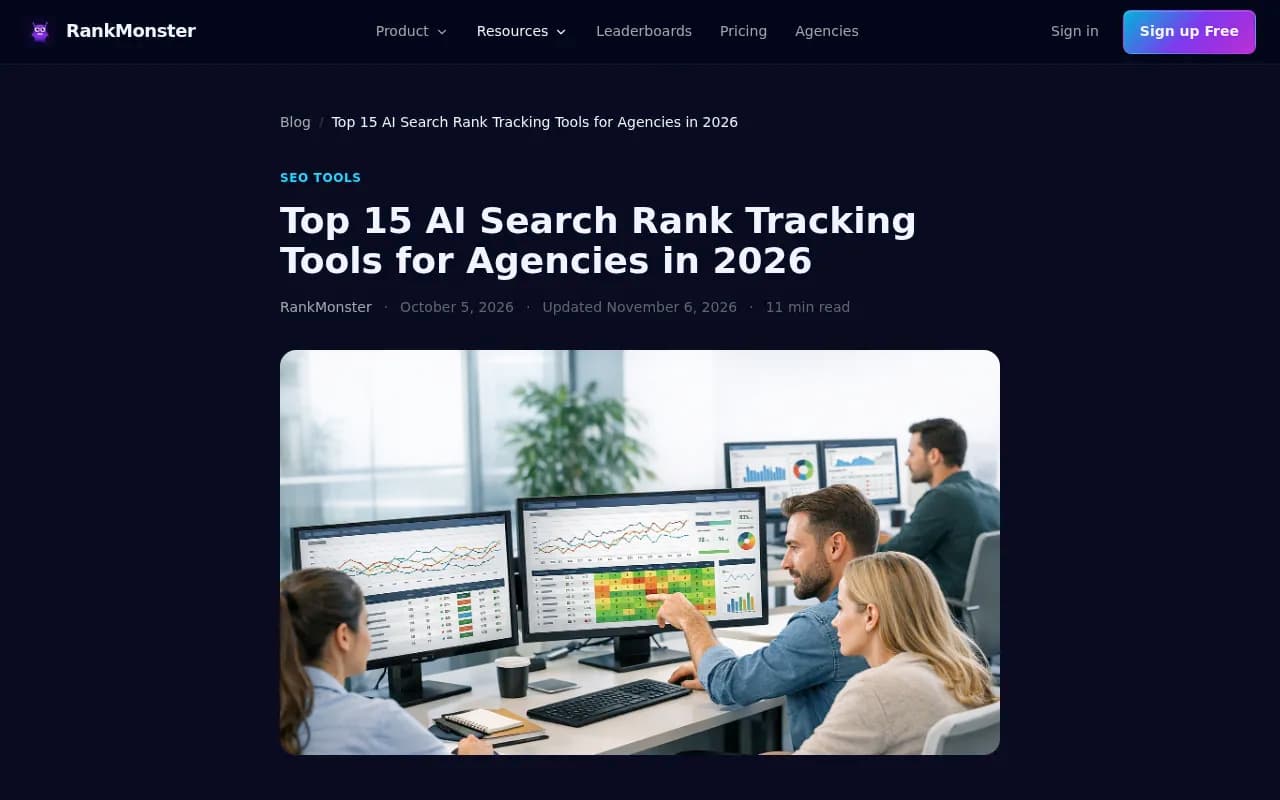
- RankMonster's agency list was published Oct 5, 2026 and updated Nov 6, 2026. It lists paid plans from $87/mo and up to 200 prompts per brand. Its coverage list (ChatGPT, Claude, Gemini, Perplexity, AI Overviews, Grok) does not mention AI Mode, which is a notable gap in an article about AI search tracking.
- Prices below come from vendor or third-party posts. I haven't verified them on official pricing pages, and you shouldn't quote them to clients without checking.
What agencies should actually evaluate
Before comparing tools, write down your own criteria. Mine would be:
- Direct AI Mode coverage in the base plan, not an add-on you discover at checkout.
- Isolated client workspaces with access controls, so one client never sees another.
- Unlimited or cheap seats. Agencies have account managers, strategists and sometimes the clients themselves logging in.
- White-label or scheduled PDF reporting, ideally with a data export for your own dashboards.
- Citation and source reporting, not only mention counts.
- Refresh cadence. Daily is fine for most clients, faster matters during launches.
- Cost per client, calculated honestly across your whole portfolio.
- What happens after you find a gap. A dashboard that reports a problem leaves the work to you.
Quick comparison table
Prices are as reported in vendor or third-party roundups and need checking against each vendor's pricing page.
| Tool | Best for (per vendor claims) | AI Mode coverage | Reported starting price |
|---|---|---|---|
| Promptwatch | End-to-end AI visibility and action for agencies | Yes, tracked from the real interface | Agency plans from $199/mo |
| AccuRanker | High-volume agency tracking | Yes, in base plan | $224/mo |
| SE Visible | Agencies expanding beyond classic SEO | Yes | Check vendor |
| Nightwatch | Multi-client portfolios with detailed reporting | Yes, add-on | $39/mo + AI add-on |
| Rankability | Mid-market agencies with 20 to 100 clients | Check vendor | $124/mo |
| Otterly.AI | Multiple client brands, low entry cost | Add-on | $29/mo |
| Peec AI | B2B and SaaS agencies | Yes | EUR 85/mo |
| Profound | High-profile enterprise clients | Enterprise tier | $99/mo (reported) |
| Keyword.com | Verified ranking data | Yes | $4/mo (reported) |
| LLM Pulse | Brand recommendations and sentiment | Limited | EUR 49/mo |
The tools, one by one
Promptwatch
Promptwatch is the one I'd start with if your agency wants more than a score to paste into a deck. It tracks AI Mode, AI Overviews, ChatGPT, Gemini, Perplexity, Copilot and others from the real interfaces, in the country and language you set per monitor. For agency work, that matters because a monitor's location and language are fixed at creation, so client markets never mix.

The agency plans (see the agency solution page) include unlimited projects, prompts and team seats, with country, state and city tracking, Brand Narrative, Ads Radar, crawler logs, visitor analytics, site audits, custom reports, and MCP and API access. Pricing is Kick-off at $199/mo, Growth at $399/mo and Scale at $799/mo; confirm on promptwatch.com/pricing. PDF reports can be scheduled to a client inbox, and Enterprise adds a white-label dashboard and client portal.
What separates it from most trackers is the follow-through. IP-verified crawler logs show whether AI bots can read a client's pages, citation reporting shows which pages and domains get cited, and Agent Chat plus the Action Board turn that into a to-do list. Monks, a WPP-sized network agency, uses the Answer Gap Report and Visibility Score to build client content roadmaps (case study).
Tradeoffs: agency plans don't include the Content Agent, Knowledge Base or ChatGPT Shopping. If you want automated content generation for clients, you'll need Business or Enterprise. See Promptwatch vs Profound for a head-to-head, or run the free AI visibility report on one client first. There's also a 7-day free trial on monthly billing.
AccuRanker
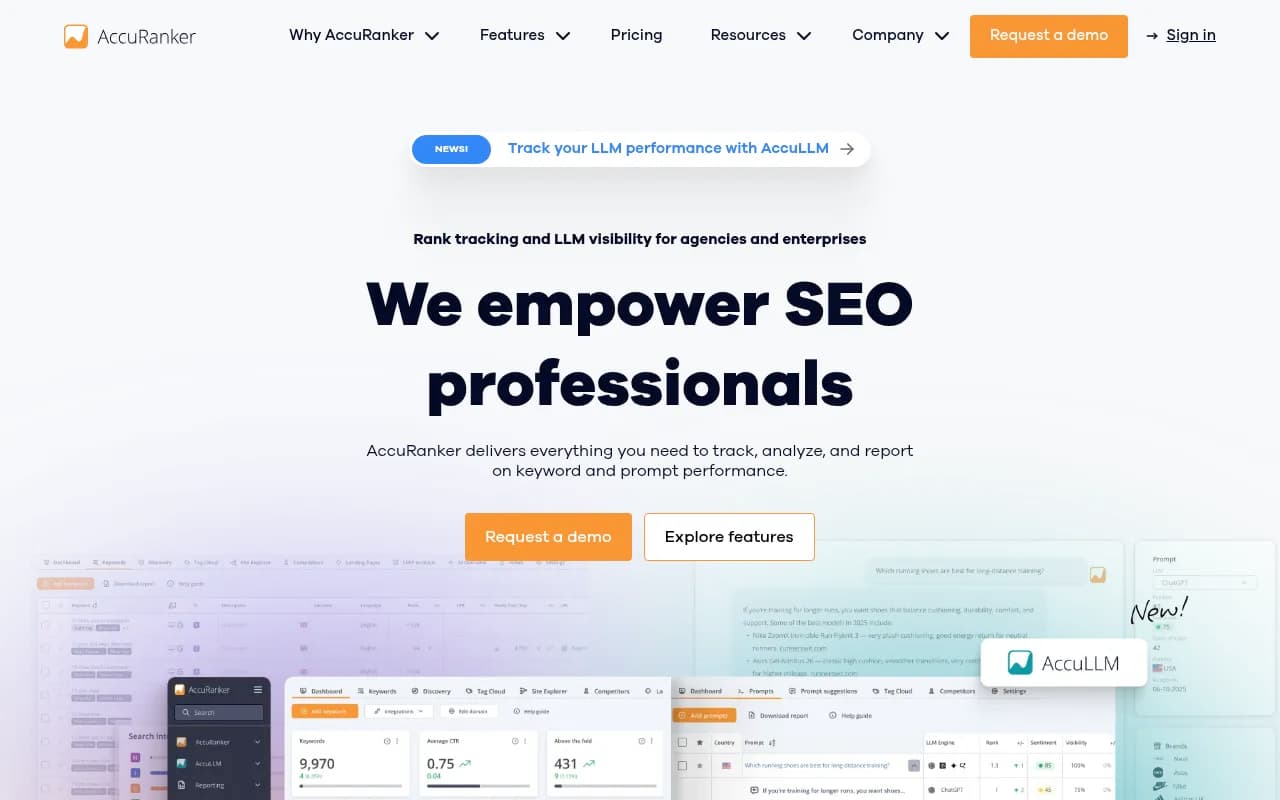
AccuRanker is a classic rank tracker that added AI search monitoring. LLM Pulse's roundup lists it as best for agencies with high-volume tracking, with AI Mode in the base plan, on-demand refresh, and multi-client management with segregated reporting, at a reported $224/mo. That's a vendor competitor describing another vendor, so verify it.
It suits agencies whose core product is still keyword rank tracking and who want AI Mode alongside it, not a separate platform.
SE Visible by SE Ranking
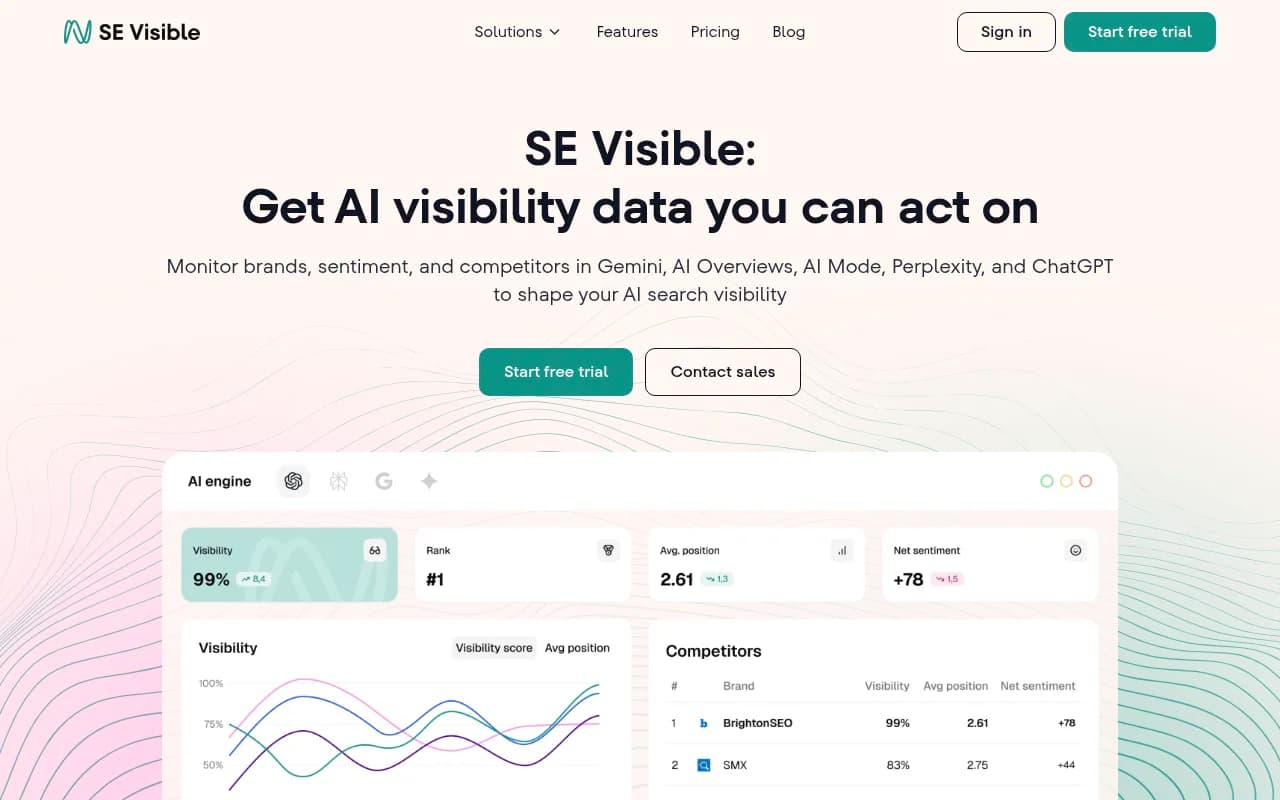
SE Visible gets praise in Rankability's roundup for transparent scoring, three-response sampling, prompt limits, unlimited users and its SE Ranking integration. Its own blog, naturally, ranks it first for agency owners expanding beyond traditional SEO. If your team already lives in SE Ranking, the integration is the real draw.
Nightwatch
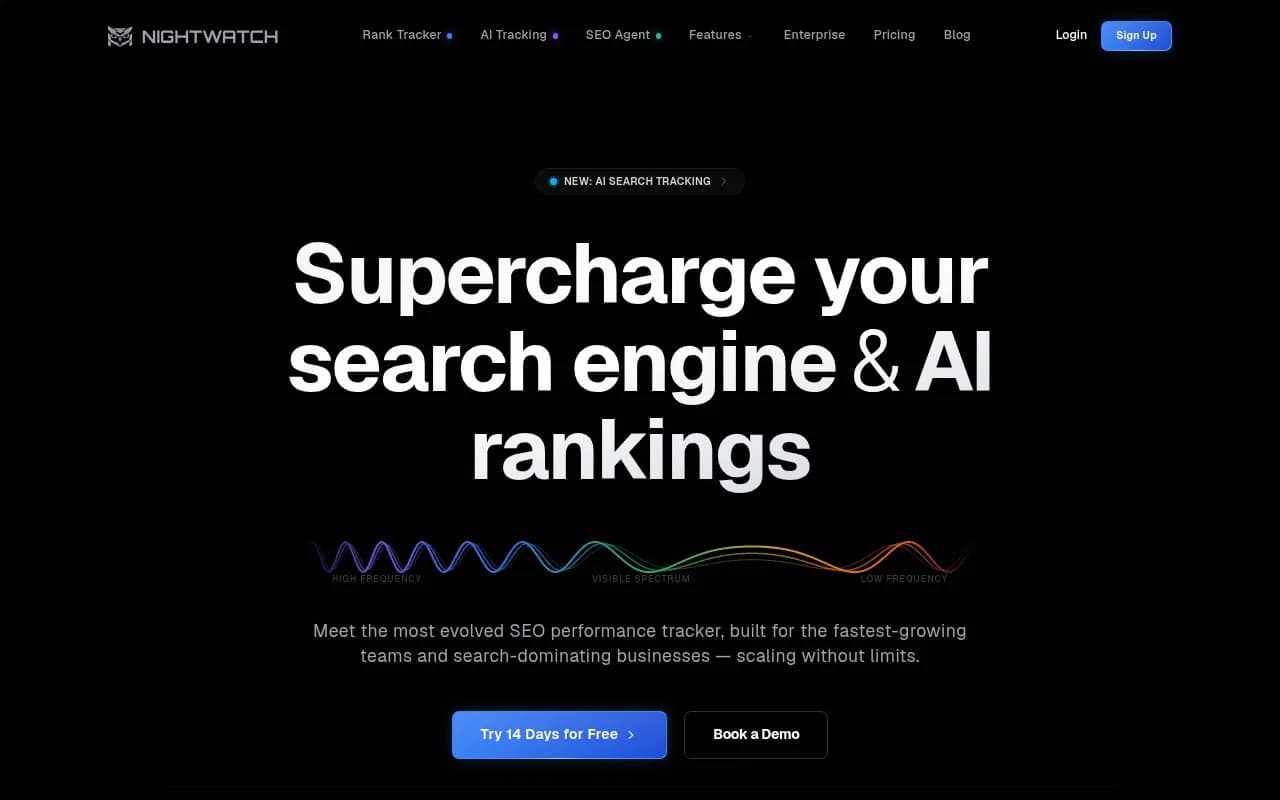
Nightwatch mixes traditional rank tracking with AI monitoring, and appears in multiple lists as a fit for agencies with several client portfolios and detailed reporting needs. AI Mode is reportedly an add-on, so price the full bundle.
Rankability
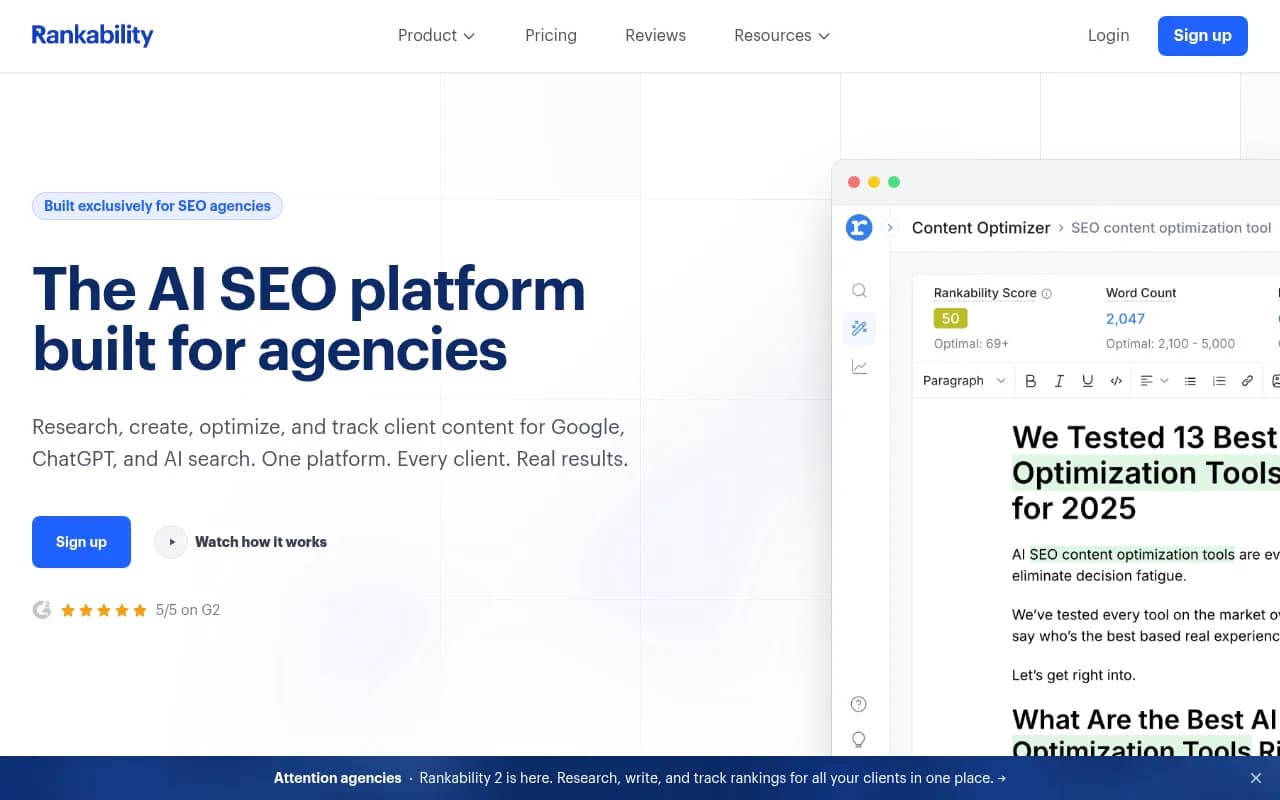
Rankability is positioned around agency multi-client management, with a reported starting price of $124/mo and coverage of 4+ platforms. RankMonster's roundup frames it for mid-market agencies with 20 to 100 clients. Check whether AI Mode specifically is covered on your plan.
Otterly.AI and Peec AI
Both are prompt-based trackers priced for smaller budgets. Otterly.AI (reported from $29/mo, AI Mode as an add-on) is repeatedly pitched at agencies managing multiple client brands. Peec AI (reported from EUR 85/mo) leans toward SaaS and B2B agencies and offers multi-language tracking. They report mentions well; they don't give you crawler logs or content workflows.


Profound
Profound targets agencies handling high-profile enterprise clients. Its own blog names itself the best AI visibility tool for marketing agencies, so weigh that accordingly. AI Mode appears to sit in an enterprise tier.

Keyword.com and LLM Pulse
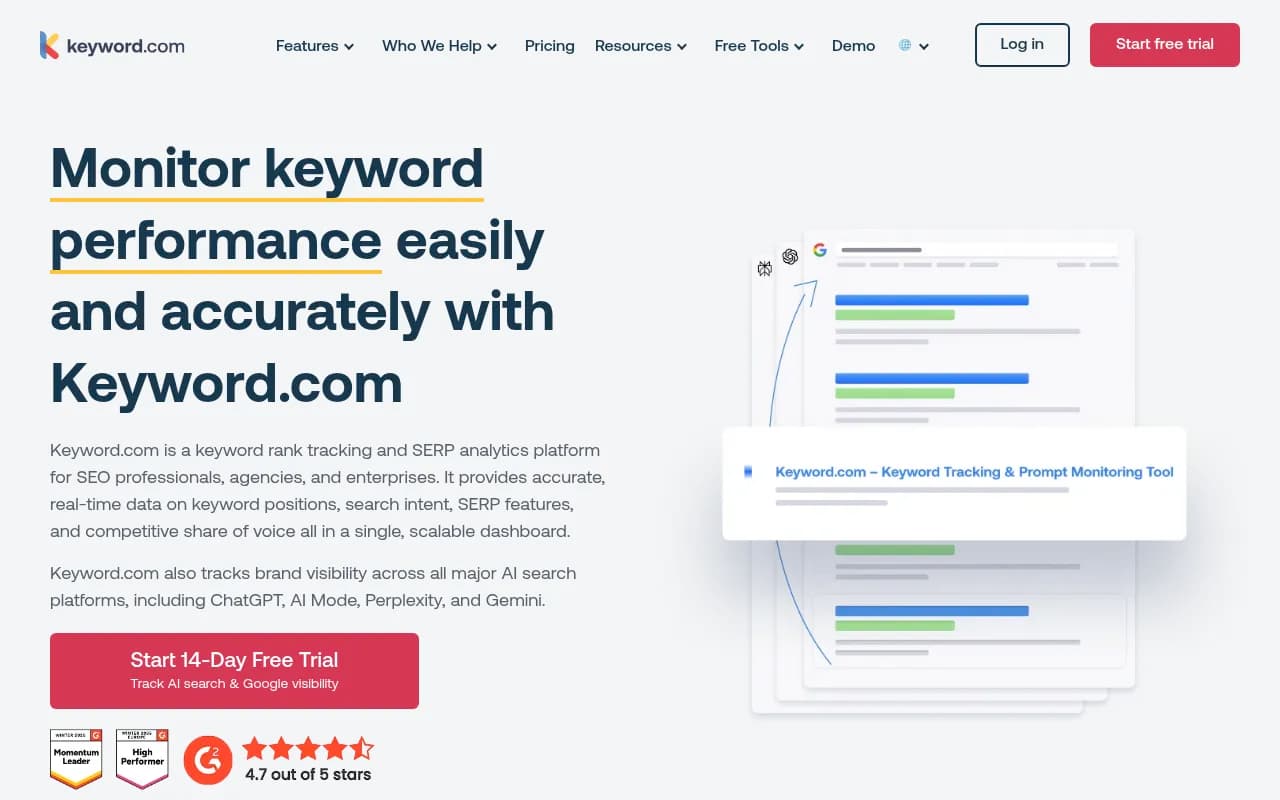
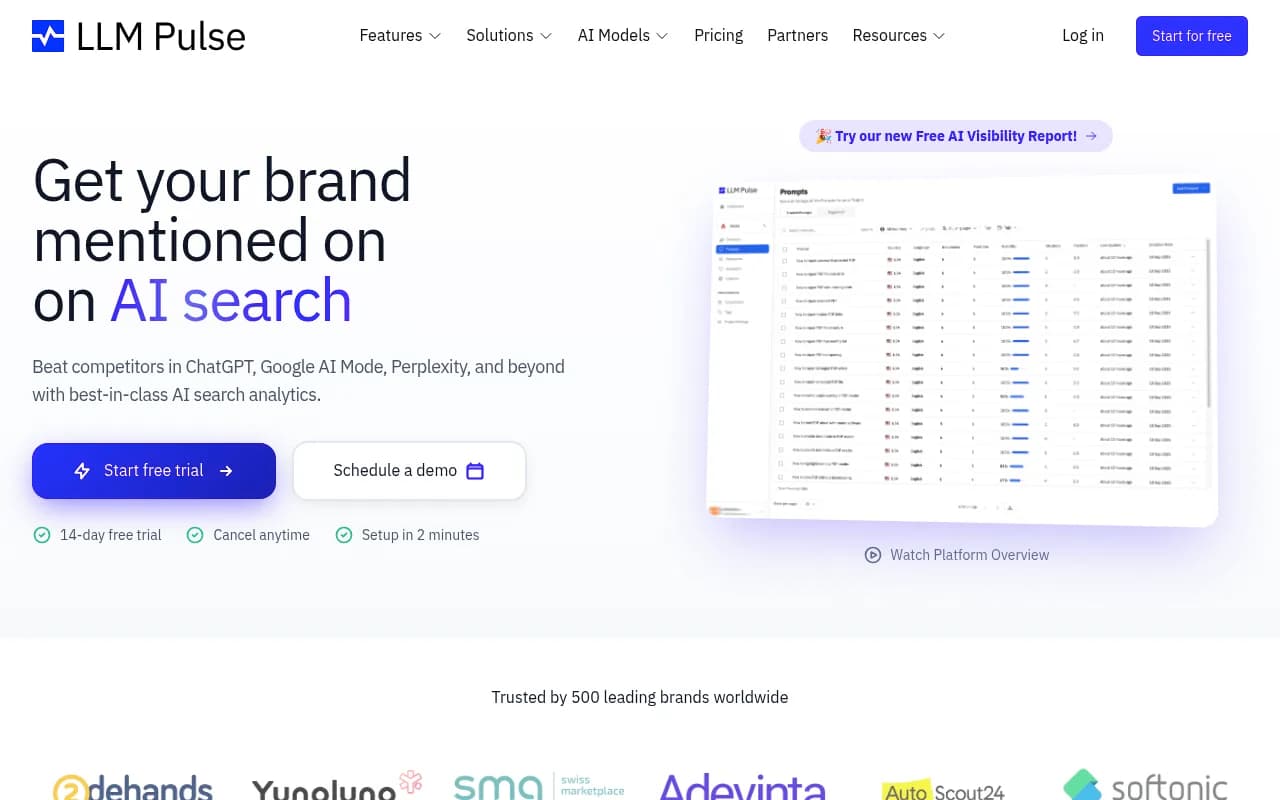
Keyword.com pitches verified ranking data for agencies that need third-party verification, at a very low reported entry price. LLM Pulse focuses on brand recommendations and sentiment, with AI Mode coverage described as limited in one roundup.
Which one fits which agency
| Agency situation | Lean toward |
|---|---|
| You want tracking, diagnosis and fixes in one place | Promptwatch |
| Rank tracking is your core service and AI Mode is an add-on to it | AccuRanker or Nightwatch |
| You already pay for SE Ranking | SE Visible |
| 20 to 100 small clients, tight margin | Rankability, Otterly.AI |
| A few big enterprise accounts | Profound or Promptwatch Enterprise |
For wider browsing, the GEO software directory and AI rank tracking directory list many more options, including newer agency-focused entrants.
How to run a fair trial
- Pick two real clients in different industries.
- Load the same 20 to 30 prompts into each tool, including AI Mode.
- Compare the AI Mode answers against what you see manually in a clean browser session. Real-interface tools should match; API-based ones often won't.
- Check whether the report shows cited domains, not just a mention yes/no.
- Export a client report and ask yourself if you'd send it unedited.
- Count seats, client workspaces and prompt limits against your full portfolio before trusting the headline price.
I'd also ask each vendor directly about sampling. One response per prompt is noisy; tools that sample several responses per prompt (SE Visible says it uses three) give steadier numbers. I found no independent data on tracker accuracy or refresh cadence, so your own test is the best evidence you'll get.
Agency or in-house
If you'd rather not build the AI visibility service yourself, 1001 SEO Media runs GEO and AI search work for brands and uses Promptwatch as its platform. That's also who publishes this site, so apply the same skepticism to this recommendation that I'm asking you to apply to every vendor list above.
Bottom line
Pick a tracker that covers AI Mode directly, reports cited sources, and prices sensibly across your whole client list. Start with a two-client trial, verify every price on the vendor's own page, and favor tools that help you fix gaps rather than only report them.