Key takeaways
- Couples are using AI to build vendor shortlists. Zola's 2026 First Look Report puts AI use among engaged couples at 54%, and a 5W report found most individual vendors have close to zero AI citation share in their own metro.
- A GEO tool should do three things for a wedding business: show whether you appear in AI answers for "best wedding photographer in [city]" prompts, show which pages and directories AI cites instead of you, and tell you what to fix.
- Package and pricing pages, FAQ pages, reviews and roundup listings matter more than blog volume, based on Promptwatch's ChatGPT citation data.
- Solo photographers on a tight budget can start with a free AI visibility check and a cheap tracker. Multi-photographer studios, venues and agencies benefit from a platform that also helps produce and measure content.
- Planning tools like Storyflow, Framekit or HoneyBook run your business. They do not make AI recommend you. Treat them as a separate category.
Why wedding vendors need GEO now
GEO (generative engine optimization) is the work of getting your business named and cited in answers from ChatGPT, Perplexity, Gemini, Claude and Google's AI Overviews. For wedding vendors it is no longer optional.
Two things changed at once. First, search results answer more questions without a click. The Wedy Pro guide on wedding vendor SEO cites a 2025 report saying 60% of Google searches now end without a click to any site, and an Ahrefs update saying AI Overviews cut click-through for top-ranked content by 58%. Second, couples plan with AI. Per Zola's 2026 First Look Report, 54% of engaged couples use AI tools during planning, and 40% use AI to draft emails to vendors.
So a couple types "who are the best wedding photographers in Chicago under $5,000" into ChatGPT and gets a shortlist. If you are not on it, you never get the inquiry. You will not even see the lost lead in your analytics.
The aggregator problem
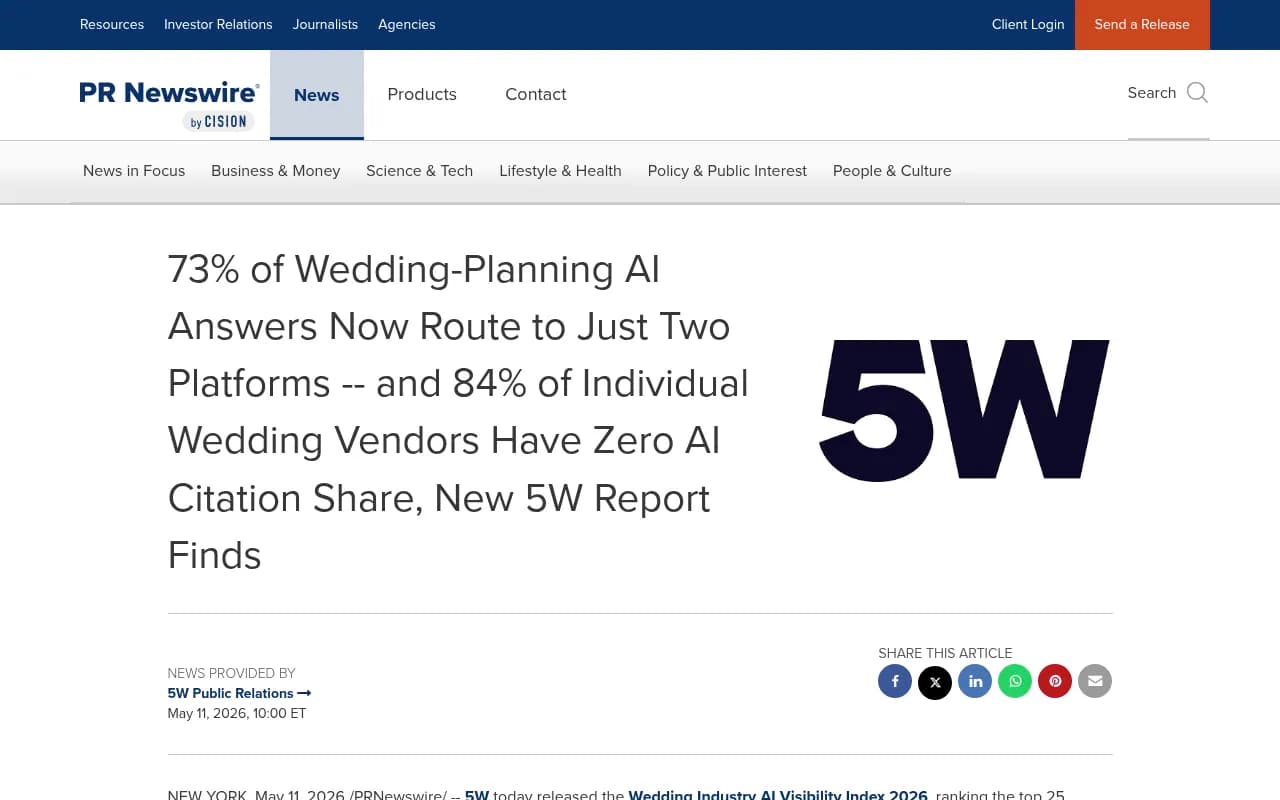
The 5W Wedding Industry AI Visibility Index 2026 ran 65+ consumer-intent prompts through ChatGPT, Claude, Perplexity and Google AI Overviews in Q1 2026. The headline: The Knot, Zola and WeddingWire together appear in roughly 73% of wedding-planning AI responses, and around 84% of individual vendors have effectively zero AI citation share in their own metro and specialty. The Knot led at an estimated 13.0%, Zola second at 9.5%, WeddingWire at 7.0%.
That is 5W's own research, and a PR firm's index is not the same as a controlled study. But the direction matches what you see if you test prompts by hand: generic "best photographer in [city]" questions route to platforms and editorial sites first.
The practical read: you rarely beat The Knot for the generic prompt. You win by being listed and reviewed on the platforms AI already cites, and by owning the narrower prompts, such as your city plus your style, venue type or budget.
What a GEO tool should do for a wedding business
Most GEO tools are built for SaaS companies. A wedding photographer has different needs, so judge tools on these points.
- Local and city-level prompts. "Best wedding photographer near me" and "documentary wedding photographer in Austin" are the prompts that matter. Check whether the tool lets you set a location, not just a country.
- Citation sources, not just mentions. You need to see which sites AI cites in your market (directories, roundups, venue blogs, review sites), because that is your to-do list.
- Competitor tracking. Know which local vendors and which platforms win your prompts.
- A path to action. A dashboard that only reports a score leaves the work to you. For a one-person studio, that gap is the whole problem.
- Price that fits. A solo photographer will not pay enterprise rates. A venue group or agency might.
- Crawler and traffic data. Useful if you want proof that AI bots can read your site and that AI sends you real inquiries.
What AI actually cites: lessons for wedding vendors
Promptwatch publishes first-party research on what AI engines cite. Two reports are useful for wedding vendors. Neither is wedding-specific, so treat the takeaways as informed inference.
Page types that get cited
Promptwatch's data on which content types ChatGPT cites (Sep 28 to Oct 4, 2026) found product pages are the most cited type at 22.4% of classified citations, with landing pages at 16.8%. Listicles were 13.6%, how-tos 8.7%, FAQ pages 3.3% and reviews 1.7%. For commercial prompts, where people compare options, product pages hit 26.0%, landing pages 20.6% and listicles 15.0%. For branded prompts, reviews reached 5.6%, more than three times their overall share.
For a photographer, the equivalent of a product page is a clear packages and pricing page. The equivalent of a landing page is a page for "Chicago wedding photographer" or "elopement photography in Colorado". My inference, not the report's: these pages and your listings on roundup sites matter more than a pile of generic blog posts. The report's own advice is to keep pricing and positioning complete, get listed in "best of" roundups, collect reviews on trusted sites, and add an FAQ page.
Also check how long ChatGPT keeps citing different content. News pages lose half their citations within about five weeks, while landing pages and docs hold most of theirs for months. Evergreen service pages beat seasonal posts.
Social platforms are not equal
Photographers lean on Instagram and Reddit. Promptwatch's social media citations report (Sep 28 to Oct 4, 2026) shows why that needs care:
- ChatGPT got only 0.46% of its citations from the seven tracked social platforms, down from 5.8% in the earlier report. Reddit fell from 5.19% to 0.09% after the August drop.
- Google AI Overviews got 12.2% of citations from social platforms, about 26 times ChatGPT's share. YouTube was 4.28%, Facebook 2.38%, Reddit 2.15%, Instagram 1.61%.
- Perplexity sat at 2.7%.
So a complete, active public Facebook page and Instagram profile helps for Google. A wedding video on YouTube helps even more. Reddit threads will not move ChatGPT much anymore.
Best GEO tools for wedding vendors in 2026
Pricing changes often, and I have not verified plans for most tools below, so confirm on each vendor's site. Promptwatch's prices are quoted from its own published plans.
Promptwatch
Promptwatch is the one I would look at first for a studio that wants to fix visibility, not just watch it. It tracks how ChatGPT, Gemini, Claude, Perplexity, Google AI Overviews, Google AI Mode, Copilot and others mention and cite you, using the real interfaces of those engines. It shows which pages and third-party sources AI cites, then helps you act: the Action Board lists prioritized fixes, content gap analysis shows which prompts your site does not answer, and the Content Agent can write and publish pages to WordPress, Webflow or Framer. Visitor analytics then show whether AI sends you traffic.

For wedding vendors, the useful details are local targeting and prompt control. Business plans can pin a monitor to exact coordinates so ChatGPT and Google's AI surfaces answer as if asked from your city, and every plan can track by country. IP-verified AI crawler logs show whether AI bots can read your site at all, which matters when your portfolio is image-heavy and script-heavy.
Pricing: Essential is $95/mo (50 prompts, 1 project), Professional is $245/mo, and Business is $579/mo (the first plan with the Content Agent, city-level tracking and local targeting). Agencies serving several vendors can look at the Kick-off plan at $199/mo. Check promptwatch.com/pricing. There is a 7-day free trial on monthly billing, and a free AI visibility report that scans how ChatGPT, Gemini and Perplexity talk about you without a login.
Honest take: Essential is a stretch for a solo photographer doing 15 weddings a year. It makes sense for a multi-photographer studio, a venue group or a planning agency where one booked wedding pays for months.
Frizerly
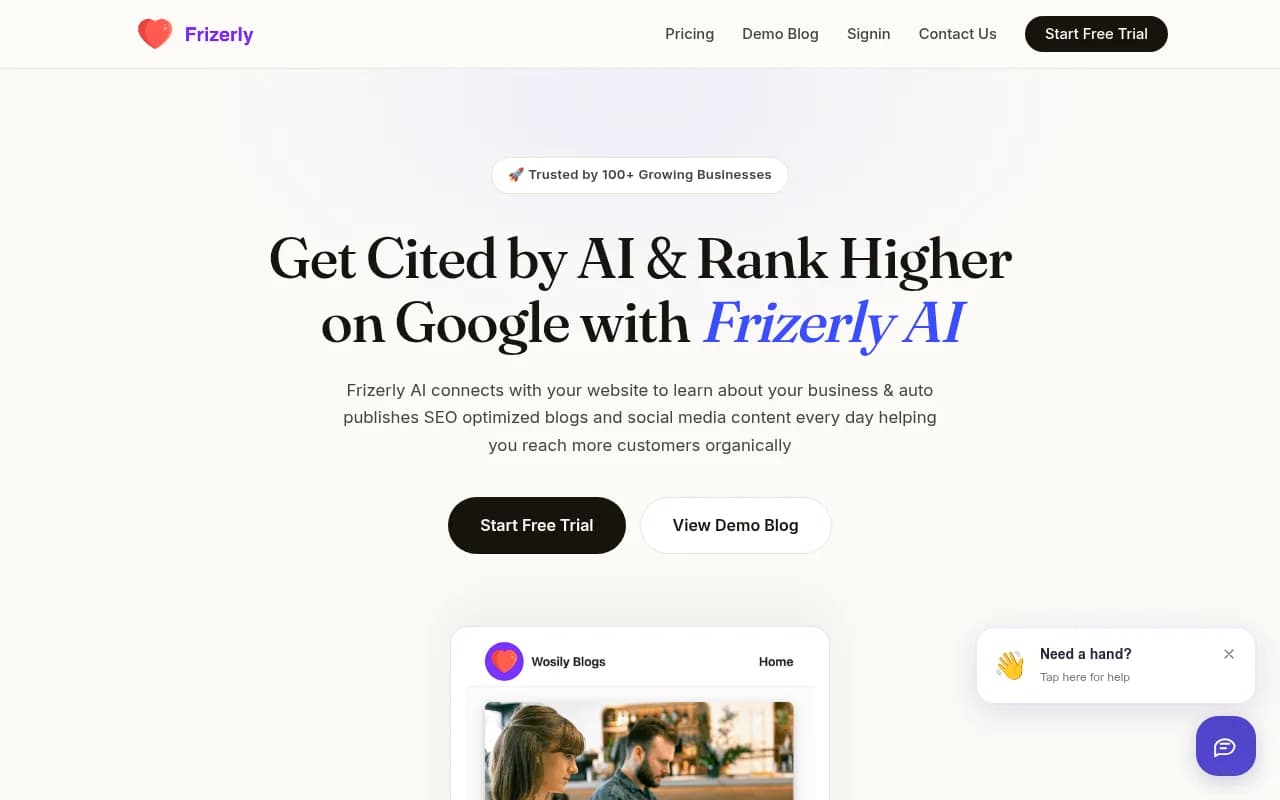
Frizerly appears in a roundup titled "6 Best SEO & GEO Tool for Wedding Venues in 2026" on its own blog, so treat that ranking as vendor-written. It pairs automated blog publishing with local search and AI citation tracking, and it is listed as an affordable option. I have not verified its pricing or output quality. It could suit a venue that wants light automation, but given the content-type data above, I would be careful about letting an auto-publisher flood your site with generic blog posts.
Peec AI and Otterly.AI
Both are monitoring-first trackers. You enter prompts, they report whether and where your brand shows up, and you decide what to do. That is fine if you already have a marketer or an SEO who acts on the data. For a solo vendor it leaves the hardest part undone. Peec AI is known for multi-language tracking, Otterly.AI for lower prices.


Profound and Scrunch
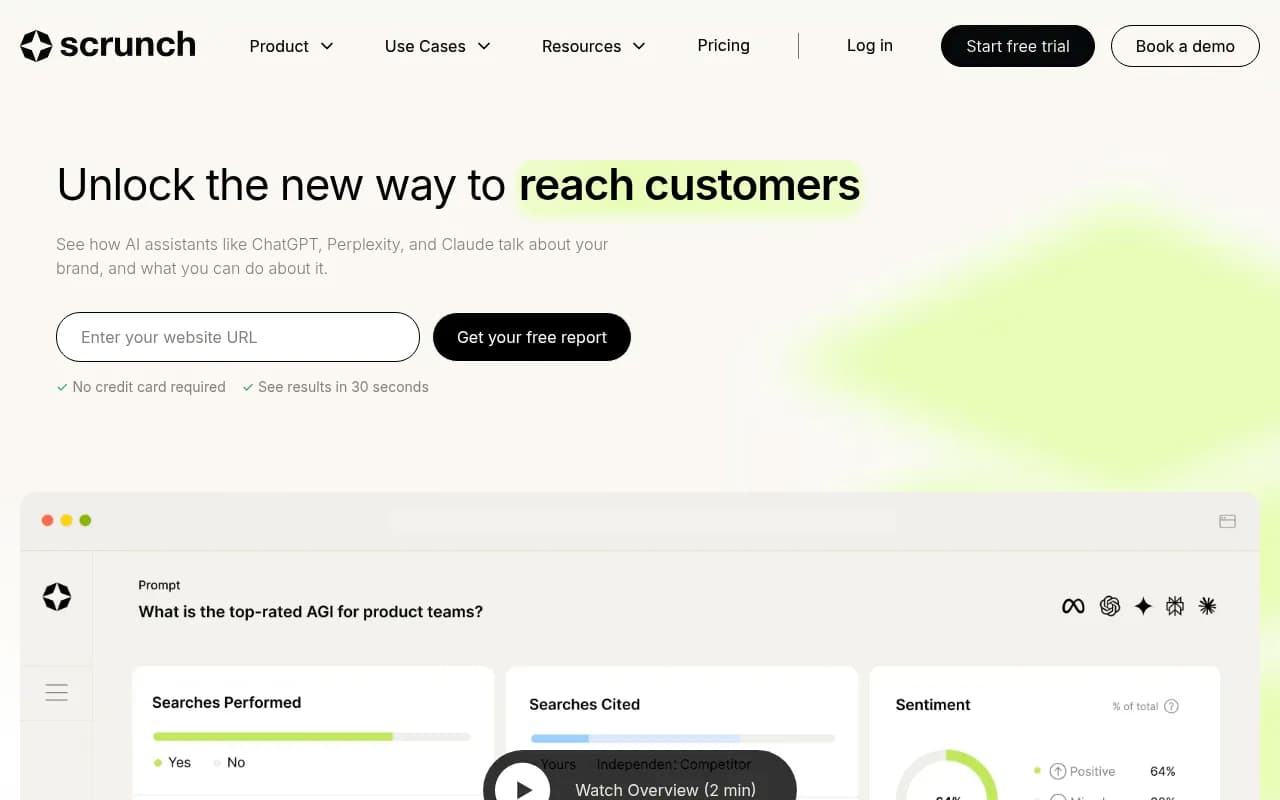
Strong, enterprise-leaning platforms. They are overbuilt and overpriced for most wedding businesses. A national bridal brand or a big venue group could justify them. A local photographer will not.

Semrush and Ahrefs Brand Radar
If you already pay for an SEO suite, the AI visibility add-ons are the easy first step. Semrush and Ahrefs Brand Radar track AI mentions with fixed prompt sets. The depth is shallower than a dedicated GEO platform, and neither gives you crawler logs.
BrightLocal and Reputation.com
These are not GEO trackers, but they solve a real part of the problem. AI engines lean on directories and review sites, and your listings and reviews feed that. BrightLocal covers local rankings, listings and reviews. Reputation.com covers reviews, listings and local AI visibility. Consistent business details across listings and a steady flow of reviews are cheap wins.
Small-business options
A few catalog tools target small budgets and small teams: Snezzi (fully managed GEO for small businesses), Legible (control how AI reads a small business site), BrandAxis (lower-cost tracking) and FalconRank (a free instant check). I have not tested them for wedding use, so run a free scan first and compare against what you see by typing your own prompts into ChatGPT.
Comparison table
| Tool | Best for | Local targeting | Helps you fix gaps | Entry price |
|---|---|---|---|---|
| Promptwatch | Studios, venues, agencies that want tracking plus action | Country on all plans, city and exact coordinates on Business | Yes: Action Board, content gaps, Content Agent | $95/mo |
| Frizerly | Venues wanting auto-published content | Local search features claimed | Auto-publishing | Verify on vendor site |
| Peec AI | Teams with an in-house marketer | Multi-language | Monitoring only | Verify on vendor site |
| Otterly.AI | Budget monitoring | Basic | Monitoring only | Verify on vendor site |
| Semrush / Ahrefs Brand Radar | Existing suite users | Limited | Limited | Add-on to suite |
| BrightLocal / Reputation.com | Listings and reviews | Yes | Reviews and listing cleanup | Verify on vendor site |
For wider comparisons, the GEO software directory at bestgeosoftware.com lists more options than fit here.
What about Storyflow, Framekit and HoneyBook?
The research for this guide turned up a Storyflow roundup of wedding photographer tools. It ranks Storyflow first for planning, Framekit second for galleries, websites and stores, then HoneyBook and Tave for contracts and invoices, PhotoPills for light planning and Milanote for references. Storyflow is the publisher and owns two of the tools it ranks, so read its ranking with that in mind.
These are good tools for running a shoot and a studio. They are not GEO tools, and none of them will get you cited by ChatGPT. But one piece is relevant: your website. Framekit's website builder, for example, has a free tier (10 pages, 100 AI credits, unlimited galleries with 3GB storage) and paid plans at $19/mo (Pro) and $39/mo (Business), per Storyflow's post. A fast site with clear package pages is the base layer GEO builds on. Just check that whatever builder you pick lets AI crawlers read your pages, and test it with the free Agentic Readiness Check.
A practical workflow for a solo wedding photographer
You do not need a big stack. Here is a version that fits a weekend of work plus a monthly check-in.
- Test by hand first. Ask ChatGPT, Gemini and Perplexity ten real prompts a couple would use: "best wedding photographer in [city]", "affordable documentary wedding photographer [city]", "wedding photographer for [venue name]". Write down who appears and which sources are cited.
- Run a free scan. Use the free AI visibility report or a similar free check to see a baseline score and whether AI crawlers can access your site.
- Fix the base pages. Make a clear packages and pricing page, one landing page per city or region you serve, and a short FAQ page (travel fees, timelines, what's included). Use the real title "Wedding Photographer" and your city. Keep them updated, since the half-life data favors evergreen pages.
- Get on the sources AI cites. Claim and complete profiles on The Knot, WeddingWire and Zola where they apply, plus regional directories and venue preferred-vendor lists. Ask for reviews after every wedding.
- Post where Google AI looks. A few YouTube videos (a highlight film, a venue walkthrough), plus an active public Facebook page and Instagram profile.
- Track monthly. Re-run your prompts and watch whether you show up, whether position improves and which sources win instead of you.
A tool earns its price when step 6 shows you what to do next. If you are weighing monthly cost against a few booked weddings, start with free scans and pay only when you can act on the data.
When to hire help
A studio with several photographers, a venue group or a planning company often lacks someone to run this work. An agency that handles GEO, content and digital PR together can take it off your plate. 1001 SEO Media is one such full-service SEO and GEO agency, and the team uses Promptwatch for AI visibility work. For a single photographer it is probably more than you need.
Mistakes to avoid
- Chasing the generic prompt. You will not beat The Knot for "best wedding photographer". Go narrower: city plus style plus budget.
- Relying on Reddit and X. Reddit citations in ChatGPT collapsed in August 2026, and X barely registers on any engine.
- Publishing generic blog posts at volume. Landing pages, package pages and FAQs are cited more than general articles (6.1% of ChatGPT citations).
- Ignoring the basics. Inconsistent business names, missing listings and no reviews hurt more than missing a GEO dashboard.
- Paying for dashboards you do not act on. A score is not a plan.
Bottom line
For most wedding vendors, start free: test prompts by hand, run a free visibility check, then fix your package, city and FAQ pages. If you want a tool that tracks AI answers and helps you act on the gaps, Promptwatch is the one to try first, especially for studios, venues and agencies. Budget monitors like Otterly.AI and Peec AI work if you have someone to act on the data. BrightLocal or Reputation.com cover the listings and reviews that AI leans on. Whatever you pick, confirm current pricing on the vendor's site, and recheck your prompts monthly, because the answers change.