Key takeaways
- GEO (Generative Engine Optimization) is no longer optional -- ChatGPT, Perplexity, and Google AI Overviews are already sending traffic to your competitors
- Most enterprise GEO platforms cost $500-$2,000+/month and are overkill for early-stage startups; several solid options exist under $100/month
- The most important thing to look for isn't just monitoring -- it's whether the tool helps you act on what it finds
- Start with prompt tracking and citation analysis, then layer in content gap tools once you know where you're losing
- A few platforms (notably Promptwatch) close the full loop from gap identification to content creation to traffic attribution -- most others stop at the dashboard
Why startups can't afford to ignore AI search in 2026
Here's the uncomfortable truth: if someone asks ChatGPT "what's the best [your category] tool for small teams," and your brand doesn't appear, you've lost a potential customer before they ever visited your site. No click, no impression, no retargeting. Just gone.
This is happening at scale. Perplexity alone processes hundreds of millions of queries per month. Google AI Overviews appear on a significant portion of commercial searches. ChatGPT has become a product discovery engine for millions of buyers. And the brands showing up in those responses didn't get there by accident -- they got there because AI models found their content credible and citable.
For startups, this is both a threat and a real opportunity. Enterprise incumbents are slow to adapt. If you move now, you can claim AI visibility in your category before the big players figure out their GEO strategy.
The catch is that most GEO platforms are priced for enterprises. You'll see $800/month plans, annual contracts, and sales calls just to see a demo. That's not realistic for a seed-stage startup or a small marketing team running lean.
This guide focuses on what actually works at startup scale -- tools with real pricing, real features, and a clear path to improving your AI search visibility without burning your runway.
What GEO tools actually do (and what to look for)
Before picking a tool, it helps to understand what you're actually buying. The GEO tool market in 2026 splits into a few distinct categories:
Monitoring-only platforms track whether your brand appears in AI responses. You set up prompts, the tool runs them across models like ChatGPT, Perplexity, and Gemini, and you get a visibility score. Useful for benchmarking, not much else.
Monitoring + analysis platforms go a step further -- they show you which competitors are appearing, what content is being cited, and where your gaps are. This is where most mid-tier tools sit.
Full optimization platforms do all of the above and then help you fix the gaps. They generate content, track which pages AI models are actually crawling, and connect visibility to real traffic and revenue. These are rarer and generally more expensive, but they're the ones that actually move the needle.
For a startup, the minimum viable GEO stack looks like this:
- Track 20-50 prompts relevant to your category
- See which competitors appear and why
- Identify content gaps (topics you should cover but don't)
- Some way to act on those gaps -- either built-in content tools or clear enough data to brief a writer
If a tool doesn't give you at least the first three, it's not worth paying for.
The best GEO tools for startups in 2026
Promptwatch -- best overall for startups that want to actually improve visibility
Promptwatch sits at the top of this list because it's one of the few platforms that closes the full loop. Most tools show you a dashboard and leave you to figure out what to do next. Promptwatch shows you which prompts your competitors rank for that you don't, generates content designed to get cited by AI models, and then tracks whether that content is working.
The Essential plan at $99/month covers one site, 50 prompts, and 5 AI-generated articles per month. For a startup in a focused niche, that's enough to get meaningful data and start producing content that improves your AI visibility. The Professional plan at $249/month adds crawler logs (so you can see which pages ChatGPT and Perplexity are actually reading), city-level tracking, and 15 articles/month.
The crawler logs feature is genuinely underrated. Most startups have no idea whether AI models are even indexing their content. Seeing real-time logs of AI crawlers hitting your pages -- and any errors they're encountering -- is the kind of operational insight that turns vague "improve your AI visibility" advice into concrete fixes.

Otterly.AI -- best for budget-conscious monitoring
Otterly.AI is a straightforward monitoring tool with an accessible price point. It tracks your brand mentions across ChatGPT, Perplexity, and Google AI Overviews, gives you a share-of-voice view against competitors, and surfaces which prompts you're winning or losing.
It won't help you create content or diagnose why you're invisible -- but if you're at the very beginning and just need to establish a baseline, it's a reasonable starting point. The interface is clean and the onboarding is fast.

Peec AI -- best for multi-language startups
If your startup operates in multiple markets or languages, Peec AI is worth a look. It's one of the few GEO tools with genuine multi-language support, letting you track AI visibility in French, German, Spanish, and other languages rather than just English.
The feature set is monitoring-focused -- you're not getting content generation or deep gap analysis -- but the multi-language coverage is a real differentiator for international teams.

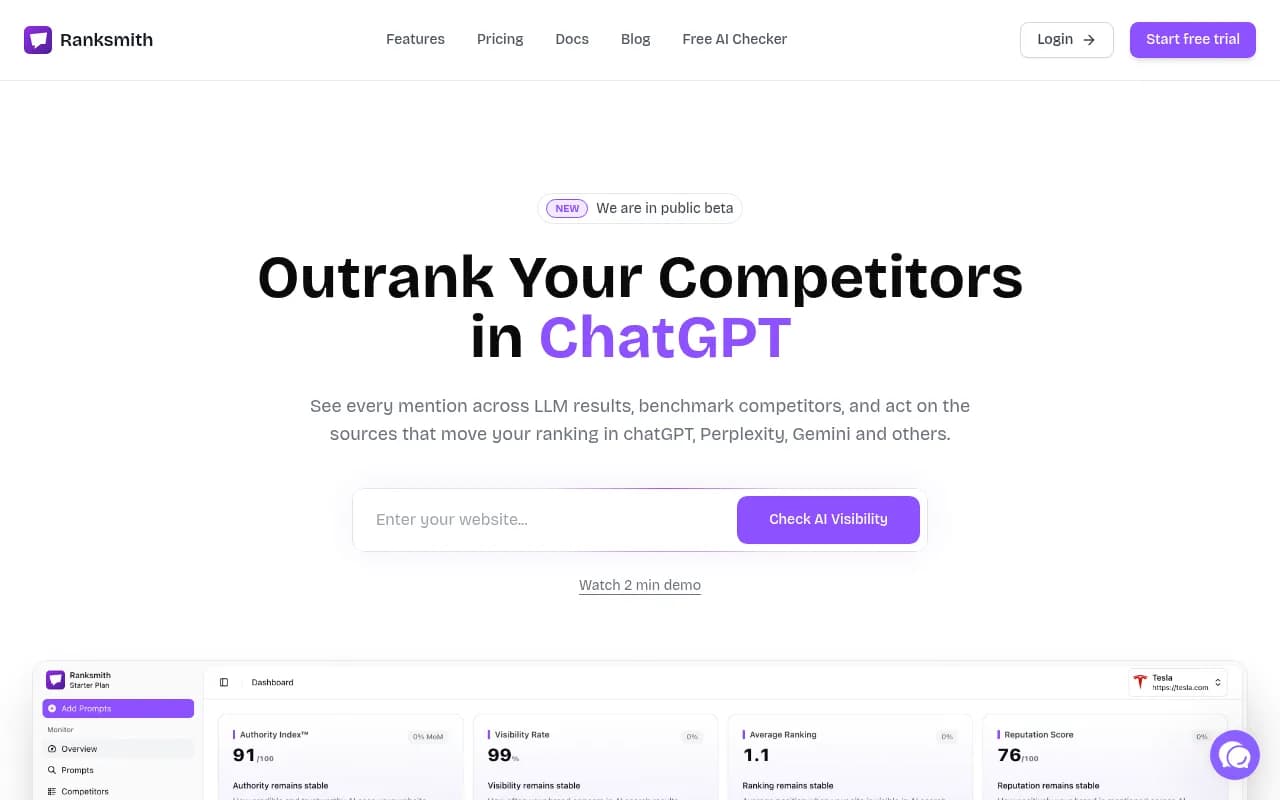
Ranksmith -- best for actionable insights without the complexity
Ranksmith positions itself around actionable insights rather than raw data dumps. The interface surfaces specific recommendations rather than leaving you to interpret charts. For a startup founder or a small marketing team without a dedicated SEO analyst, that's genuinely useful.
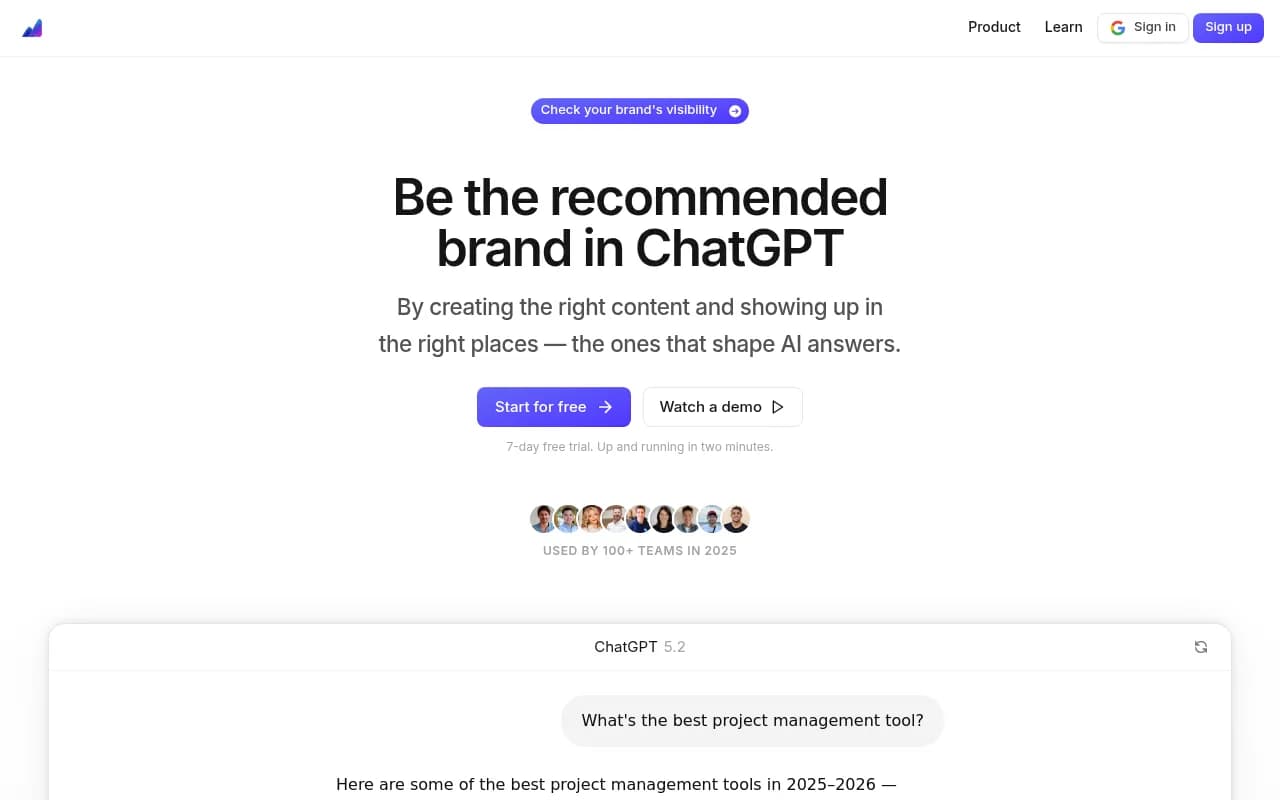
Airefs -- best for solo founders and very early-stage teams
Airefs is one of the more affordable options in the market, designed for teams that need basic AI visibility tracking without a lot of overhead. If you're a solo founder or a two-person team and you just want to know whether ChatGPT is mentioning your product in relevant conversations, Airefs covers that ground without requiring a significant budget commitment.
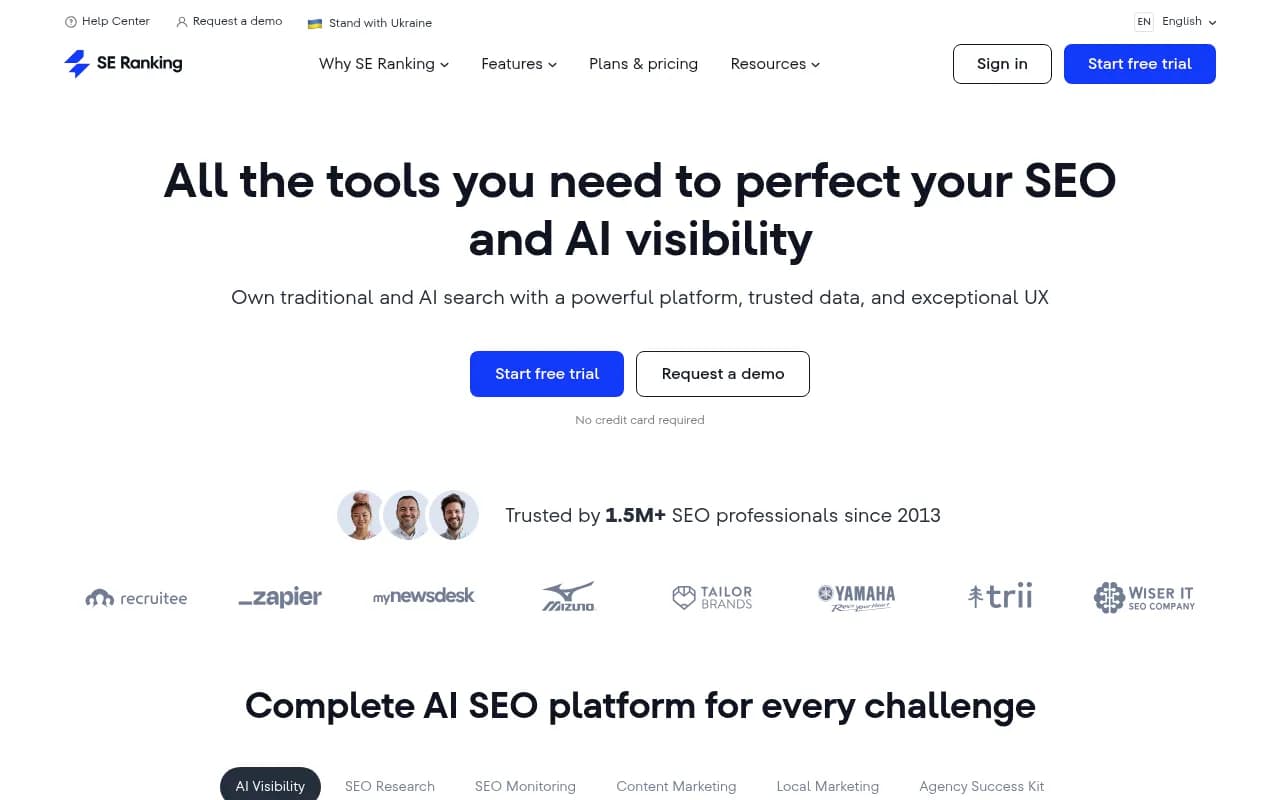
SE Ranking -- best if you want traditional SEO + AI visibility in one place
SE Ranking has been a solid mid-market SEO platform for years, and in 2026 it's added an AI visibility toolkit that tracks your brand across AI search engines. If you're already paying for keyword tracking, rank monitoring, and site audits, consolidating into SE Ranking makes financial sense. You get AI visibility data alongside your existing SEO workflow rather than managing two separate subscriptions.
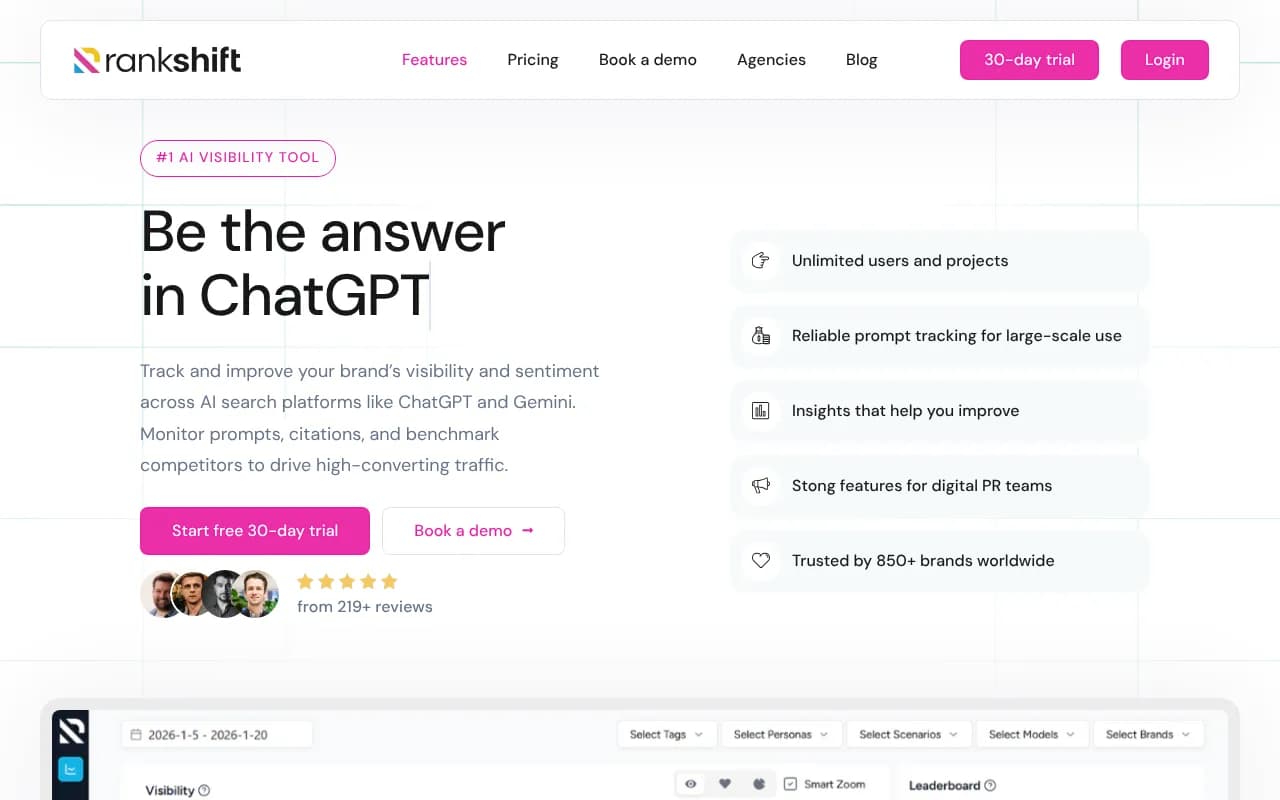
Rankshift -- best for teams focused on LLM-specific tracking
Rankshift is built specifically for tracking how LLMs talk about your brand -- not just whether you appear, but the sentiment, context, and framing of those mentions. For startups in competitive categories where brand perception in AI responses matters (think fintech, health tech, SaaS), understanding the narrative around your brand is as important as raw visibility scores.
GetCito -- best for startups that want monitoring plus optimization guidance
GetCito combines visibility tracking with optimization guidance, sitting somewhere between a pure monitoring tool and a full optimization platform. It's a reasonable middle ground for startups that have outgrown basic monitoring but aren't ready to invest in a full-stack platform.
Comparison: startup-friendly GEO tools at a glance
| Tool | Starting price | Monitoring | Content gaps | Content generation | Crawler logs | Multi-language | Best for |
|---|---|---|---|---|---|---|---|
| Promptwatch | $99/mo | Yes | Yes | Yes | Yes (Pro+) | Yes | Full optimization loop |
| Otterly.AI | Low | Yes | Limited | No | No | Limited | Budget monitoring |
| Peec AI | Mid | Yes | No | No | No | Yes | International teams |
| Ranksmith | Mid | Yes | Yes | No | No | No | Actionable insights |
| Airefs | Low | Yes | No | No | No | No | Solo founders |
| SE Ranking | Mid | Yes | Limited | No | No | Limited | SEO + AI in one tool |
| Rankshift | Mid | Yes | No | No | No | No | LLM sentiment tracking |
| GetCito | Mid | Yes | Yes | No | No | No | Monitoring + guidance |
What to avoid when picking a GEO tool as a startup
A few patterns to watch out for:
Tools that only show you a score. A single "AI visibility score" with no breakdown of which prompts, which models, or which competitors is nearly useless. You can't act on a number without context.
Enterprise tools with startup pricing tiers that are actually just demos. Some platforms advertise a $99/month plan but cap it at 5 prompts and 1 AI model. That's not enough data to make decisions. Check the actual limits before signing up.
Tools that don't cover the models your customers use. If your target audience is B2B buyers who use Perplexity for research, a tool that only tracks ChatGPT is missing the point. Make sure the platforms you care about are covered.
Annual-only contracts at the entry level. Legitimate startup-friendly tools let you start monthly. If a tool requires an annual commitment before you've seen any results, that's a red flag.
A practical GEO strategy for startups with limited resources
Having the right tool matters less than having a clear process. Here's a simple approach that works even with a small team:
Step 1: Define your 20 most important prompts
Think about how your ideal customer would describe their problem to an AI. Not "what is [your product]" -- that's a brand query. Focus on category-level and problem-level prompts: "best tools for [use case]," "how do I solve [specific problem]," "alternatives to [competitor]." These are the prompts where you can realistically win visibility.
Step 2: Establish your baseline
Run those prompts through your chosen tool and document where you appear, where competitors appear, and what content is being cited. This is your starting point. Without a baseline, you can't measure progress.
Step 3: Find the content gaps
Look at the prompts where competitors appear but you don't. What content do they have that you lack? Comparison pages, use case guides, FAQ content, and "best of" listicles tend to get cited heavily by AI models. If you're missing these, that's your content roadmap.
Step 4: Create content designed to be cited
This is where most startups underinvest. Writing generic blog posts won't get you cited by AI models. You need content that directly answers the questions AI models are trying to answer -- specific, factual, well-structured, and covering the exact topics that appear in high-volume prompts. Tools like Promptwatch generate content grounded in citation data from hundreds of millions of AI responses, which is a meaningful advantage over writing from scratch.
Step 5: Track what's working
Check your visibility scores monthly, not daily. AI models update their training and retrieval patterns on their own schedules, so week-to-week noise is normal. What you're looking for is a directional trend over 60-90 days. If new content isn't improving visibility after three months, revisit the content quality and the prompts you're targeting.
How much should a startup spend on GEO tools?
A reasonable budget for an early-stage startup is $100-$300/month for GEO tooling. That's enough to get meaningful data and start optimizing without it becoming a significant line item.
If you're pre-revenue or very early, start with the cheapest option that covers your key AI models and gives you competitor data. Once you're generating revenue and have a content team (even one person), move to a platform that includes content gap analysis and ideally some form of content generation.
Spending $500+/month on GEO tools before you've published 10-15 pieces of AI-optimized content is probably premature. The tools are only as valuable as the actions you take with them.
The bottom line
AI search visibility is becoming a real acquisition channel, and the startups that establish it now will have a compounding advantage over the next few years. The good news is that you don't need an enterprise budget to get started.
Pick a tool that fits your current stage, define the prompts that matter for your category, and start publishing content that AI models can actually cite. The monitoring data is only useful if it leads to action -- so prioritize tools that make that action as easy as possible.
For most startups, Promptwatch at the $99-$249/month range hits the right balance of depth and affordability. If budget is the primary constraint, Otterly.AI or Airefs give you a starting point. And if you're operating internationally, Peec AI's multi-language support is worth the trade-off on features.
The worst move is waiting. Every month you're not tracking AI visibility is a month your competitors are building a lead you'll have to close later.