Key takeaways
- Budget-friendly AI visibility tools start at $29/month (Otterly.AI) to $99/month (Promptwatch, Semrush), making AI search monitoring accessible for startups
- Most affordable tools focus on basic brand mention tracking across 3-5 AI engines, while mid-tier options ($99-249/month) add content optimization and crawler logs
- Startups should prioritize tools that offer actionable insights over raw data dashboards -- look for content gap analysis, prompt intelligence, and optimization recommendations
- Free trials and annual billing discounts (typically 15-20% off) can significantly reduce costs for early-stage companies
- The real ROI comes from tools that help you create content that ranks in AI search, not just monitor where you currently stand
Why startups need AI visibility tools in 2026
Search has fundamentally changed. When someone asks ChatGPT for recommendations or uses Perplexity to research solutions, traditional Google rankings don't matter. What matters is whether AI models cite your brand in their responses.
For startups competing against established players, AI search is a leveling field. You don't need years of backlinks or domain authority. You need content that answers the specific questions AI models are trained to respond to. But first, you need to know where you stand.
That's where AI visibility tools come in. They track how often your brand appears in responses from ChatGPT, Claude, Gemini, Perplexity, and other AI engines. More importantly, the good ones tell you what's missing and help you fix it.
The challenge: most AI visibility platforms were built for enterprise budgets. Monthly costs of $500-2000+ put them out of reach for early-stage startups. But a new wave of affordable tools has emerged specifically for smaller teams.
What to look for in a budget AI visibility tool
Not all cheap tools are worth using. Here's what actually matters:
Monitoring vs optimization. Most budget tools are monitoring-only dashboards. They show you data but leave you stuck. Better tools include content gap analysis, prompt suggestions, or even AI writing features to help you improve visibility.
Number of AI engines tracked. At minimum, you want ChatGPT, Perplexity, and Claude. Bonus points for Google AI Overviews, Gemini, and Meta AI. Some tools track 8-10+ engines.
Prompt flexibility. Fixed prompt lists are useless. You need to track the specific queries your customers actually use. Look for custom prompt tracking with volume estimates.
Page-level tracking. Knowing your brand was mentioned is nice. Knowing which specific pages are being cited is actionable. You can optimize those pages or replicate what's working.
Competitor benchmarking. See where competitors are visible but you're not. This reveals content gaps and high-value prompts to target.
Evidence and screenshots. Some tools just show numbers. Better ones store the actual AI responses or screenshots as proof. Useful for audits and reporting.
The most affordable AI visibility tools compared
Here's a realistic comparison of tools that won't destroy a startup budget:
| Tool | Starting price | AI engines | Custom prompts | Content features | Best for |
|---|---|---|---|---|---|
| Otterly.AI | $29/mo | 3-5 | Limited | None | Testing if AI visibility matters |
| Airefs | $49/mo | 5+ | Yes | Basic | Simple brand monitoring |
| Promptwatch | $99/mo | 10 | 50 prompts | AI writing, gap analysis | Startups that want optimization |
| SE Visible | $99/mo | 5+ | Yes | Recommendations | User-friendly tracking |
| Rankscale | $120/mo | 4-6 | Yes | None | Simple query monitoring |
| Peec AI | $149/mo | 8+ | Yes | Multi-language | International startups |
Otterly.AI: the cheapest entry point
At $29/month, Otterly.AI is the most affordable paid option for AI visibility tracking. It monitors basic brand mentions across ChatGPT, Perplexity, and a few other engines.

What you get: daily tracking of how often your brand appears in AI responses, sentiment analysis, and basic competitor comparison. The interface is straightforward -- no learning curve.
What's missing: no content optimization features, limited prompt customization, no crawler logs or traffic attribution. It's a monitoring-only tool.
Who it's for: startups that want to dip their toes into AI visibility without commitment. Use it to establish a baseline, then upgrade to a more robust tool once you see the value.
Airefs: affordable with more flexibility
Airefs sits in the middle ground at $49/month. It tracks 5+ AI engines and allows custom prompt tracking, which Otterly doesn't offer.
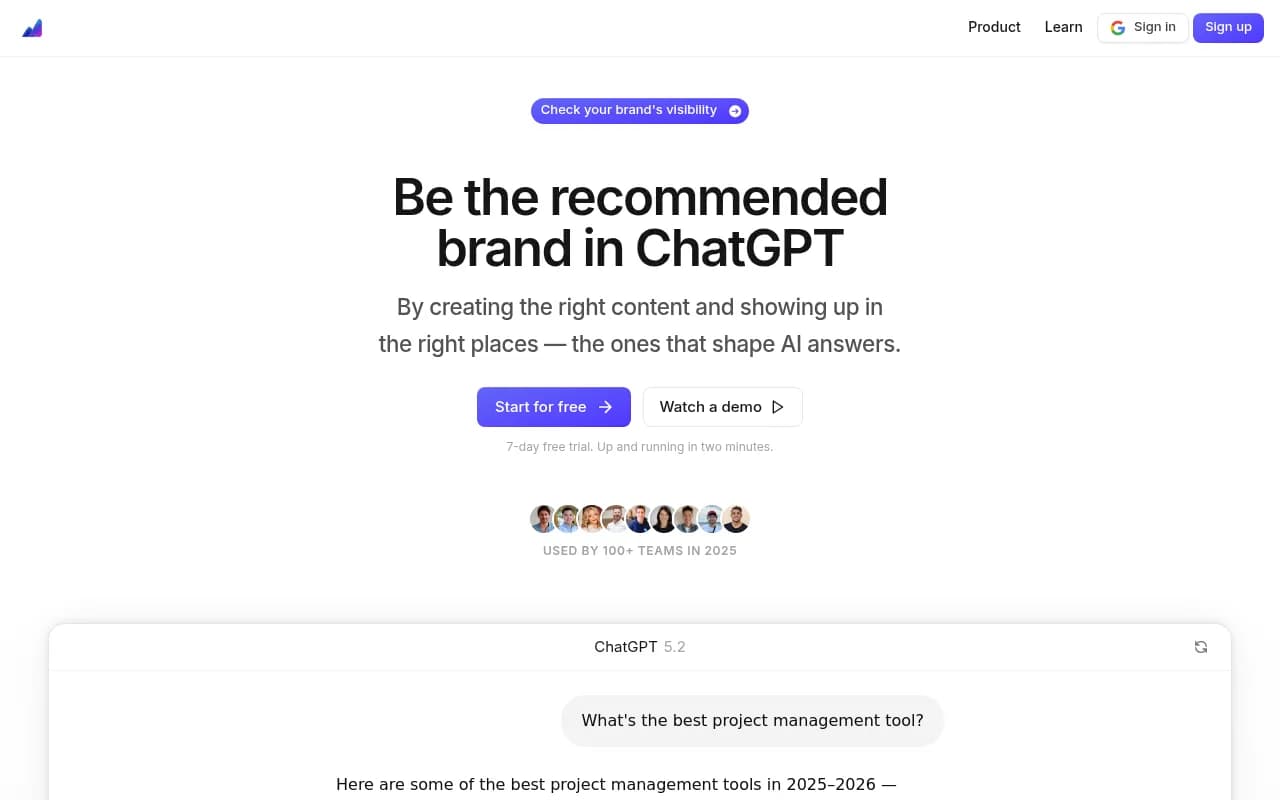
The interface is clean and the data export options are solid. You can track specific product names, competitor brands, and custom queries relevant to your niche.
Downside: still no content optimization tools. You'll know where you're invisible but won't get help fixing it. For pure monitoring at a reasonable price, it's a strong option.
Promptwatch: optimization at startup-friendly pricing
At $99/month, Promptwatch is the first tool on this list that goes beyond monitoring to actually help you improve visibility.

The core difference: Answer Gap Analysis shows exactly which prompts competitors are visible for but you're not. You see the specific content your website is missing -- the topics, angles, and questions AI models want answers to but can't find on your site.
Then the built-in AI writing agent generates articles, listicles, and comparisons grounded in real citation data (880M+ citations analyzed), prompt volumes, and competitor analysis. This isn't generic SEO filler -- it's content engineered to get cited by ChatGPT, Claude, and Perplexity.
You also get AI crawler logs showing which pages ChatGPT, Claude, and other models are reading on your site, prompt intelligence with volume estimates and difficulty scores, and page-level tracking showing exactly which URLs are being cited.
The Essential plan ($99/mo) includes 1 site, 50 prompts, and 5 AI-generated articles. Professional ($249/mo) adds crawler logs and state/city tracking. Business ($579/mo) scales to 5 sites and 350 prompts.
Who it's for: startups that want to actively improve AI visibility, not just track it. The content generation alone justifies the cost if you're publishing regularly.
SE Visible: user-friendly with recommendations
SE Visible (from the SE Ranking team) also starts at $99/month and focuses on ease of use. The dashboard is intuitive and the onboarding is smooth.
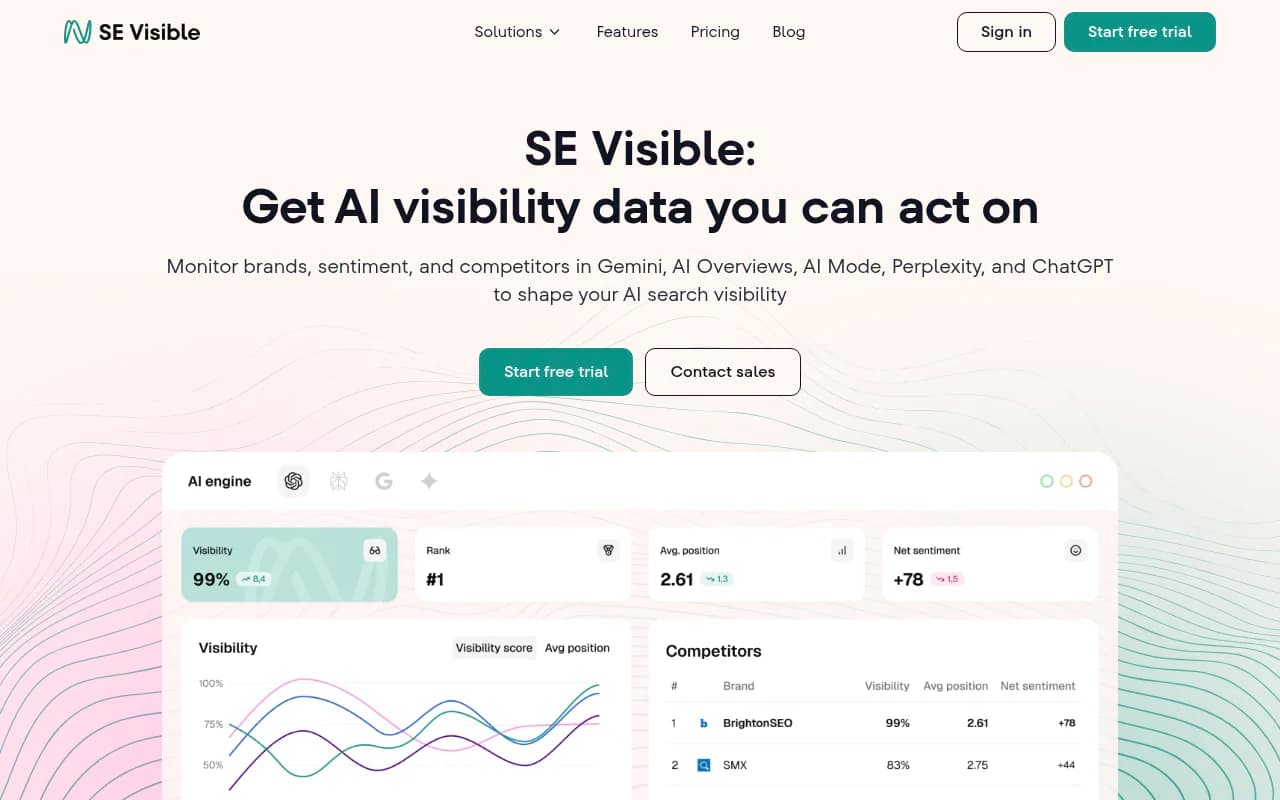
It tracks 5+ AI engines, allows custom prompts, and provides optimization recommendations based on what's working for competitors. The reporting is solid for client presentations.
What it lacks compared to Promptwatch: no AI content generation, no crawler logs, and the recommendations are more generic ("create content about X") rather than specific gap analysis.
Who it's for: marketing teams that prioritize a clean interface and straightforward reporting over advanced optimization features.
Rankscale: simple monitoring for basic needs
Rankscale is one of the newer, simpler tools at around $120/month. It monitors 4-6 AI engines and tracks basic queries.
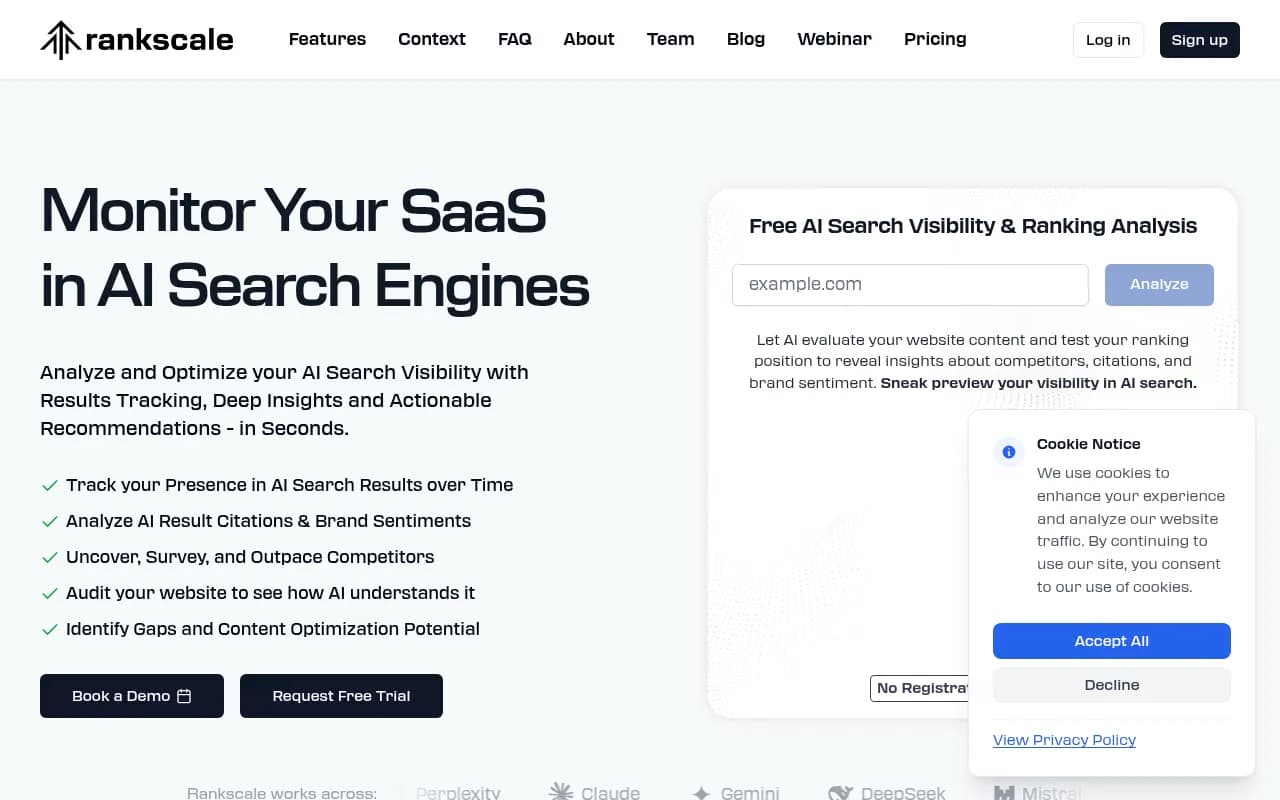
The value proposition is simplicity. No overwhelming dashboards or complex features. Just track your brand mentions and see how you compare to competitors.
The limitation: no content optimization, no advanced prompt intelligence, no crawler logs. It's monitoring-only at a price point where competitors offer more.
Who it's for: startups that want dead-simple tracking and don't need optimization features yet.
Peec AI: multi-language tracking
Peec AI starts at $149/month and stands out for multi-language support. If you're targeting non-English markets, it's one of the few affordable options.

It tracks 8+ AI engines across multiple languages and regions, with customizable personas that match how different audiences prompt. The competitor analysis is solid.
Downside: still monitoring-focused with limited content optimization features. The price is higher than Promptwatch but with fewer actionable tools.
Who it's for: international startups or companies targeting non-English speaking markets where multi-language tracking is essential.
Tools to skip (and why)
Some "budget" tools aren't worth the money:
Semrush AI Visibility ($99/mo). The price looks competitive but the implementation is weak. Fixed prompt lists mean you can't track the queries that actually matter to your business. The data is shallow compared to dedicated AI visibility platforms.
Ahrefs Brand Radar. Similar issue -- fixed prompts, limited customization, and it's bolted onto a traditional SEO platform rather than purpose-built for AI search.
Generic social listening tools. Brand24, Meltwater, and similar platforms have added "AI monitoring" features, but they're really just scraping AI-generated content from the web. They don't actually query AI models directly, so the data is incomplete and delayed.
How to maximize ROI on a tight budget
Buying a tool is step one. Getting value from it requires a process:
Start with a baseline. Track 20-30 core prompts related to your product category for 2-4 weeks. Understand where you currently stand before making changes.
Identify the biggest gaps. Use competitor comparison features to find prompts where competitors are cited but you're not. Prioritize high-volume, low-difficulty prompts.
Create targeted content. Write articles, guides, or comparison pages that directly address those prompts. If you're using a tool with AI content generation (like Promptwatch), use it to speed up production.
Track the results. Monitor how your visibility scores change as you publish new content. Page-level tracking shows exactly which pages are working.
Iterate based on data. Double down on what's working. If listicles get cited more than long-form guides, make more listicles. If certain topics consistently get you mentioned, expand coverage.
The mistake most startups make: they buy a monitoring tool, look at the dashboard once, feel overwhelmed, and never log in again. The tools that justify their cost are the ones that push you to take action.
Free alternatives and workarounds
If $29/month is still too much, here are some free options:
Manual spot checks. Open ChatGPT, Claude, and Perplexity. Ask 10-20 prompts related to your product category. Note when your brand appears. Repeat weekly. It's tedious but free.
Google Alerts for AI content. Set up alerts for your brand name + "ChatGPT" or "Perplexity" to catch when people share AI-generated content mentioning you. Not comprehensive but better than nothing.
Reddit and Twitter monitoring. Search for screenshots of AI responses in your industry. See which brands are being recommended. Free tools like Reddit search and Twitter advanced search work.
Competitor content analysis. Look at which pages on competitor sites are getting cited in AI responses (you can find this by manually checking). Reverse-engineer their content strategy.
These workarounds are time-intensive. The ROI calculation: is your time worth more than $29-99/month? For most startups, paying for a tool makes sense once you're serious about AI visibility.
Pricing strategies that save money
Annual billing. Most tools offer 15-20% discounts for annual commitments. Promptwatch, SE Visible, and Peec AI all have annual options that bring monthly costs down.
Start small, scale up. Begin with the cheapest plan that meets your needs. Upgrade only when you hit limits. Don't pay for 500 prompts if you're only tracking 50.
Share accounts (carefully). Some tools allow multiple users on a single account. If you're part of a startup community or have a co-founder, splitting costs can work. Check the terms of service first.
Negotiate. Especially for newer tools, reach out and ask for a startup discount. Many companies offer 20-50% off for early-stage startups or YC companies.
Use free trials strategically. Most tools offer 7-14 day trials. Use that time to run a complete audit: track all your core prompts, identify gaps, create a content roadmap. Then decide if the ongoing cost is worth it.
When to upgrade to a more expensive tool
You'll know it's time to spend more when:
- You're tracking 50+ prompts and hitting plan limits
- You need advanced features like crawler logs, traffic attribution, or API access
- You're managing multiple brands or clients
- Content creation is a bottleneck and AI writing features would save time
- You need white-label reporting for clients or investors
At that point, tools like Promptwatch Professional ($249/mo), Profound ($299/mo), or AthenaHQ ($399/mo) become worth the investment. But for most early-stage startups, the $29-149/month range is the sweet spot.


The real cost of ignoring AI visibility
The counterargument to "AI visibility tools are expensive" is that invisibility is more expensive.
If your competitors are being recommended by ChatGPT and you're not, you're losing customers. If Perplexity cites three alternatives but never mentions you, that's revenue walking away.
Traditional SEO takes 6-12 months to show results. AI visibility can improve in weeks if you target the right prompts with the right content. For startups that need traction fast, that speed matters.
The tools that justify their cost are the ones that help you move from "we're invisible" to "we're being cited" in a measurable, repeatable way. Monitoring-only tools show you the problem. Optimization tools help you fix it.
Final recommendation
If you're a startup with a tight budget:
Start with Otterly.AI ($29/mo) for 1-2 months to establish a baseline and prove that AI visibility matters for your business. Track core prompts and see how often you're mentioned.
Upgrade to Promptwatch ($99/mo) once you're ready to actively improve visibility. The content gap analysis and AI writing features will help you create content that actually gets cited, not just monitor where you currently stand.
Consider Peec AI ($149/mo) if you're targeting non-English markets and need multi-language tracking.
Skip the expensive enterprise tools until you're at a scale where the advanced features justify the cost. Skip the traditional SEO platforms (Semrush, Ahrefs) that bolted on AI monitoring as an afterthought.
The goal isn't to buy the fanciest tool. It's to find the one that helps you get cited by AI models without burning through your runway. For most startups in 2026, that means spending $99-149/month on a tool that combines monitoring with actionable optimization features.