Key takeaways
- Large catalogs break most AI visibility tools. Prompt trackers built around a brand name cannot tell you which of your 5,000 products AI recommends, so you need product-level or category-level tracking plus something that turns gaps into fixes.
- Product pages are the top citation surface in ChatGPT. In Promptwatch Data for Sep 28 to Oct 4, 2026, they earned 22.4% of all citations, and 26.0% for commercial prompts.
- Most "best of" lists on this topic are written by vendors who rank themselves first. Treat them as feature checklists, not verdicts.
- Pick based on three things: how it handles product data, whether it shows crawler and traffic evidence, and whether it helps you ship fixes at scale.
- Pricing and SKU-level claims change fast. Verify on each vendor's site before you commit.
Why large catalogs need a different kind of tool
A brand with 40 products can get by with a prompt tracker. Type in 50 prompts, check whether you show up, and move on. A retailer with 30,000 SKUs cannot do that. The shopper asking "best running shoes under $150 for flat feet" is not asking about your brand. They are asking about a product category, and AI may recommend three products from three brands.
Two outside numbers show why this matters. Yotpo's October 2026 guide cites Adobe Analytics data showing AI-referred traffic to US retail sites grew 138% year over year in May 2026. It also cites BrightEdge: only 16.7% of sources in AI Overviews overlap with the organic top 10. So ranking well in Google does not mean AI will pick your products.
The problem for big catalogs is scale and granularity. You need to know which categories you win, which you lose, which individual products get cited, and which pages are being ignored. Then you need a way to fix hundreds of pages without hiring a team to hand-edit them.
What the data says about product pages
Before comparing tools, it helps to know what AI actually cites when shoppers ask buying questions. Promptwatch Data broke down ChatGPT citations by content type for Sep 28 to Oct 4, 2026:
| Content type | Share of all ChatGPT citations | Share for commercial prompts |
|---|---|---|
| Product pages | 22.4% | 26.0% |
| Landing pages | 16.8% | 20.6% |
| Listicles | 13.6% | 15.0% |
| Comparisons | 5.9% | 7.9% |
| Reviews | 1.7% | n/a (5.6% for branded prompts) |
Product and landing pages together are 39% of citations overall. For commercial prompts, those two plus listicles and comparisons make up almost 70%. If you run a big catalog, that is good news and a warning. Your product pages are the main way in, but only if specs, prices and positioning are complete and easy to compare.
Persistence matters too. Promptwatch's content half-life report found landing pages and docs stay cited for months, while news loses half its cited pages within 36 days. Evergreen product and category pages are a better investment than campaign content.
Shopping cards are a separate story. According to Promptwatch's ChatGPT shopping data, product cards and price comparisons appear on only a low single-digit percentage of web-search responses, and the rate moves in steps rather than smoothly. They concentrate on commercial and transactional prompts. Promptwatch's suggested prep is simple: complete Product schema, accurate prices and availability, a clean merchant feed, and regular testing of commercial prompts to see which brands fill the cards.
Query fan-out also shapes how you write. Promptwatch's fanout data showed average query length falling from about 117 characters in December 2025 to roughly 53 in April 2026, six to eight words. Short, entity-first headings and focused pages for sub-questions (X vs Y, pricing, alternatives) match how ChatGPT searches.
What to look for in a platform
Here is the checklist I would use, in rough order of importance.
- Prompt coverage that scales. Large catalogs need hundreds or thousands of prompts across categories, not 25. Check prompt limits, response limits and cost per response.
- Product-level or page-level tracking. Can you see which individual URLs get cited, and which products never do? Some vendors claim live product-feed sync. Ask for a demo with your own catalog, because I could not verify those claims independently.
- Real interface data. ChatGPT's shopping carousel and AI Overviews can differ from API output. Tools that only call APIs miss what shoppers see.
- Crawler and traffic evidence. If AI bots cannot read your product pages, no amount of prompt tracking helps. Crawler logs and AI visitor analytics tell you why and what it is worth.
- Execution. With thousands of pages, a dashboard of problems is not enough. Look for content gap analysis, prioritized to-do lists, and publishing to your CMS.
- Shopping and ads surfaces. ChatGPT product cards, Amazon Alexa product results and sponsored placements in AI answers are catalog-specific.
- Revenue attribution. Visibility is not revenue. You still need ecommerce analytics to connect it to sales.
The platforms worth considering
Promptwatch
Promptwatch is the one I would start with for catalog-heavy brands that want to act, not just watch. It tracks the real interfaces of ChatGPT, Google AI Overviews, Google AI Mode, Gemini, Perplexity, Copilot, Alexa and Meta AI, and has an AI Shopping module that follows product visibility in ChatGPT shopping carousels and Alexa results. You can upload your catalog to track your own products. The Ads Radar shows which advertisers bid on your prompts.
The part that matters at scale is what comes after the tracking. IP-verified crawler logs show whether GPTBot, OAI-SearchBot and friends are hitting your product pages and hitting errors. Page-level tracking and content gap analysis map your pages against the prompts AI answers. The Action Board prioritizes fixes, and on Business and Enterprise plans the Content Agent plans, writes and publishes to Webflow, Framer or WordPress. Local GEO targeting at exact coordinates helps multi-location retailers answer "near me" queries.
Pricing starts free (10 prompts, ChatGPT only), with Essential at $95/month, Professional at $245 and Business at $579, the tier with Shopping Insights and the Content Agent. Check promptwatch.com/pricing for current numbers.

Profound
Profound is the enterprise name most people mention first. Third-party roundups describe it as best for large brands and agencies that need enterprise reporting, SOC 2 compliance and prompt-demand intelligence. It is a strong monitoring product. The trade-offs are a higher price point and, from what I have seen, less emphasis on crawler logs and publishing than an execution-first platform.

Scrunch
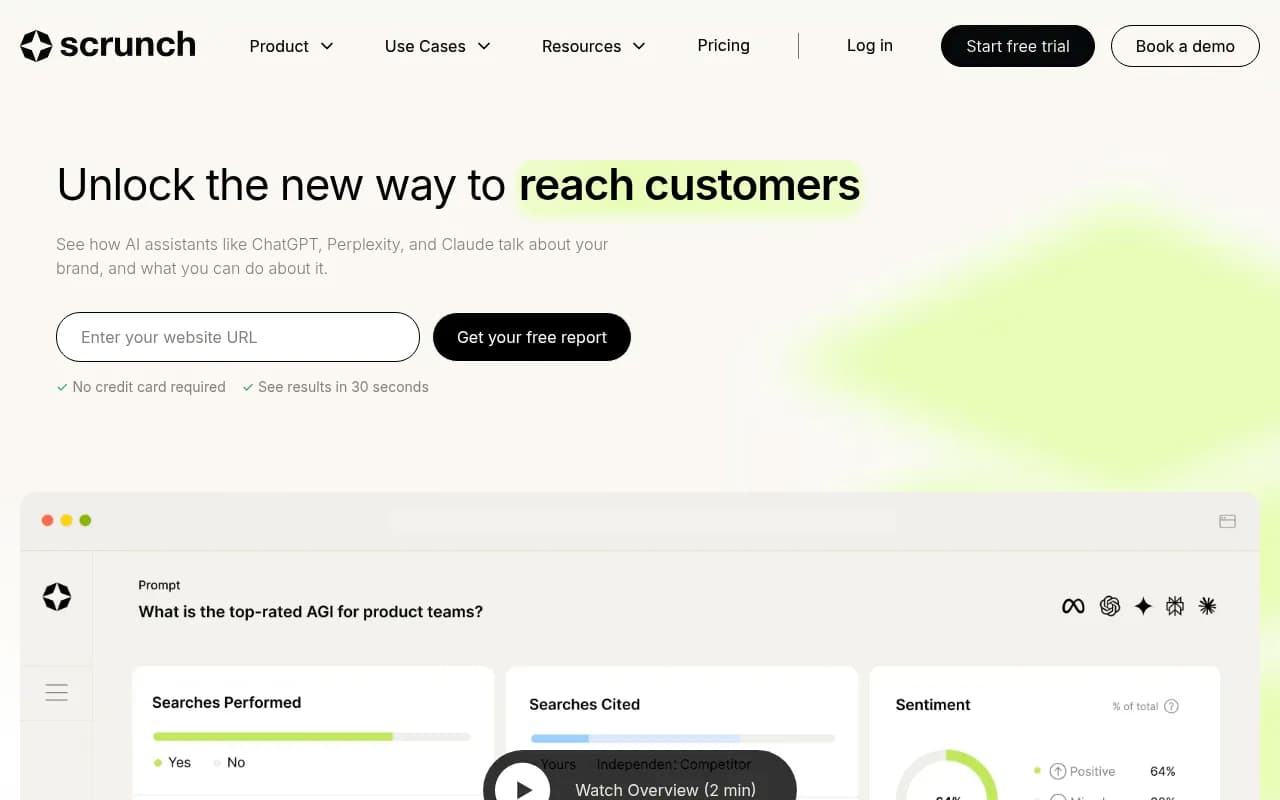
Scrunch pitches enterprise AI visibility plus an "agent experience" angle, meaning how AI agents read and interact with your site. Vizby's guide lists it as general plus shopping. Worth a demo if agent-readable site delivery is a priority.
Azoma
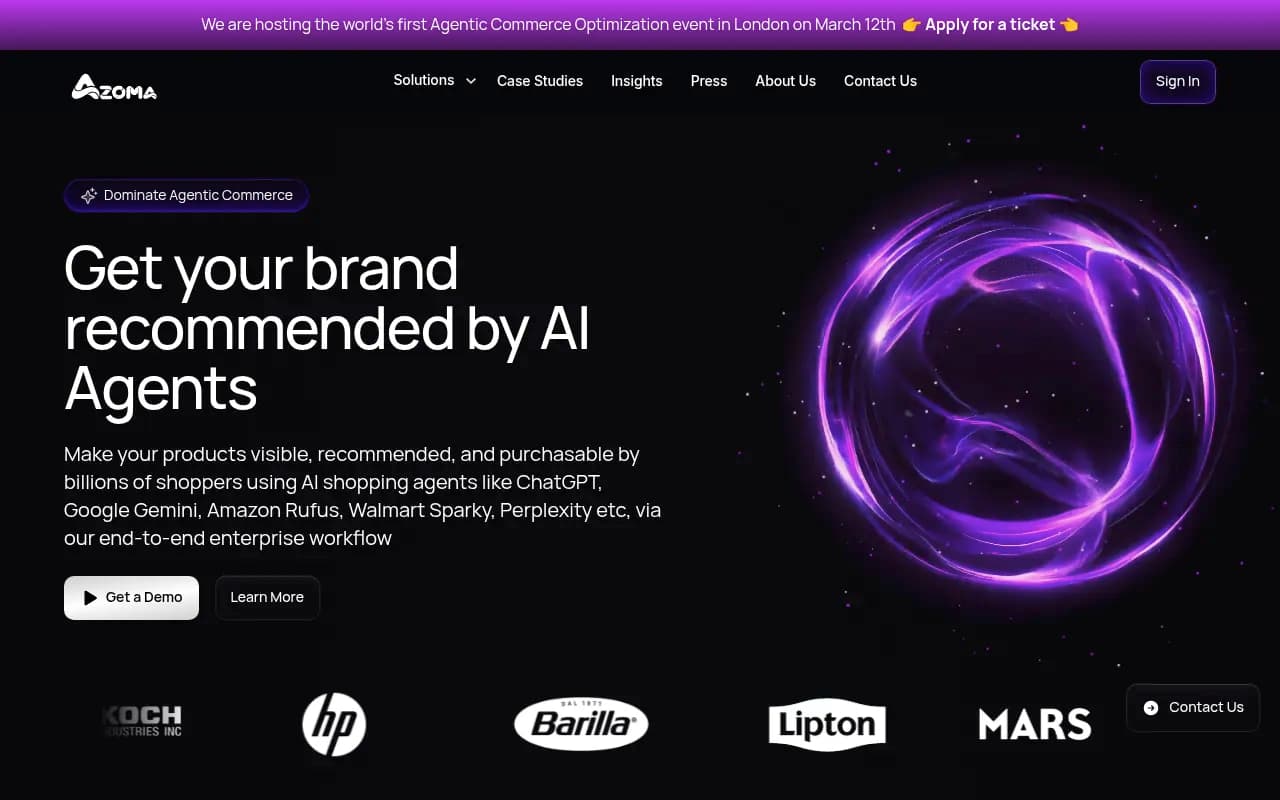
Azoma is built specifically for enterprise AI shopping optimization across ChatGPT, Rufus and other shopping surfaces. If your catalog lives largely on marketplaces, a specialist like this can complement a general visibility platform.
Yotpo Discover
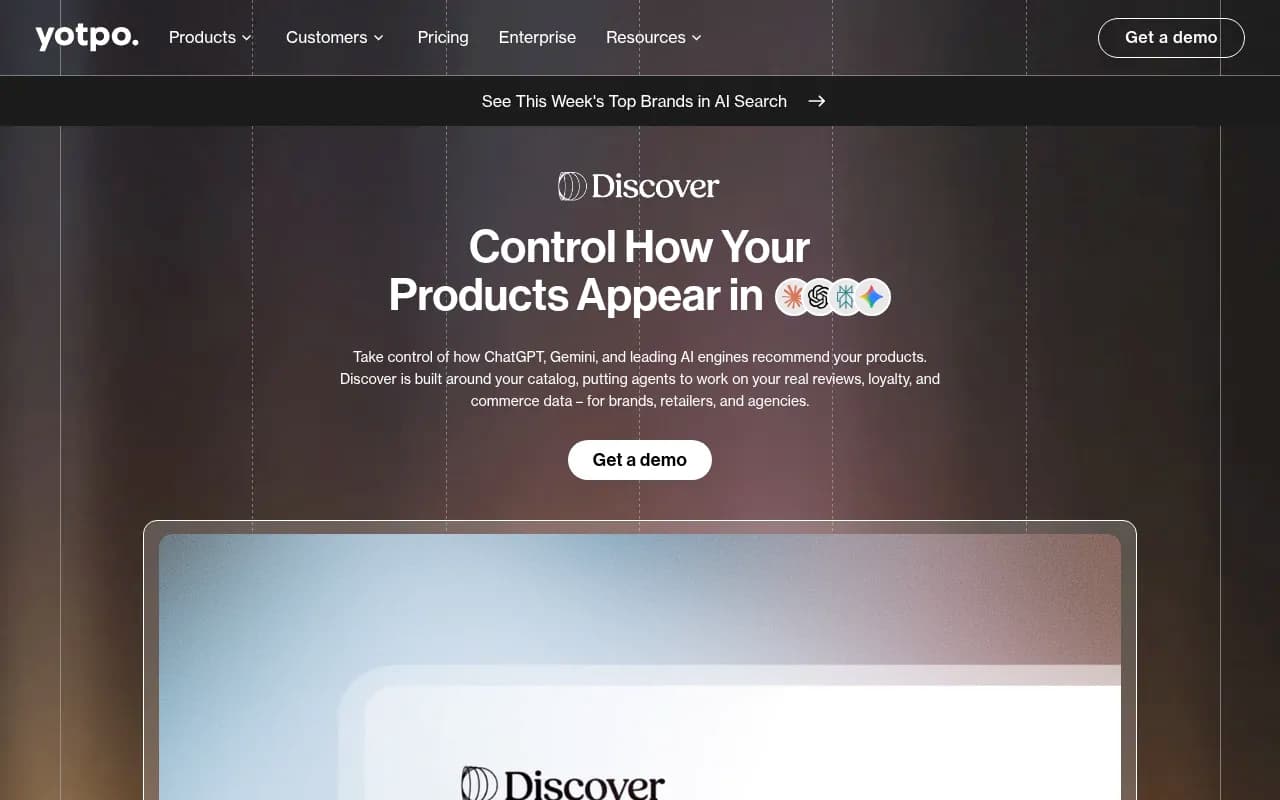
Yotpo Discover is aimed at ecommerce product discovery and pairs SKU-level data with review-backed content. Yotpo's own guide ranks it first for agencies, so apply the usual salt. It makes most sense if you already use Yotpo for reviews and loyalty.
Triple Whale
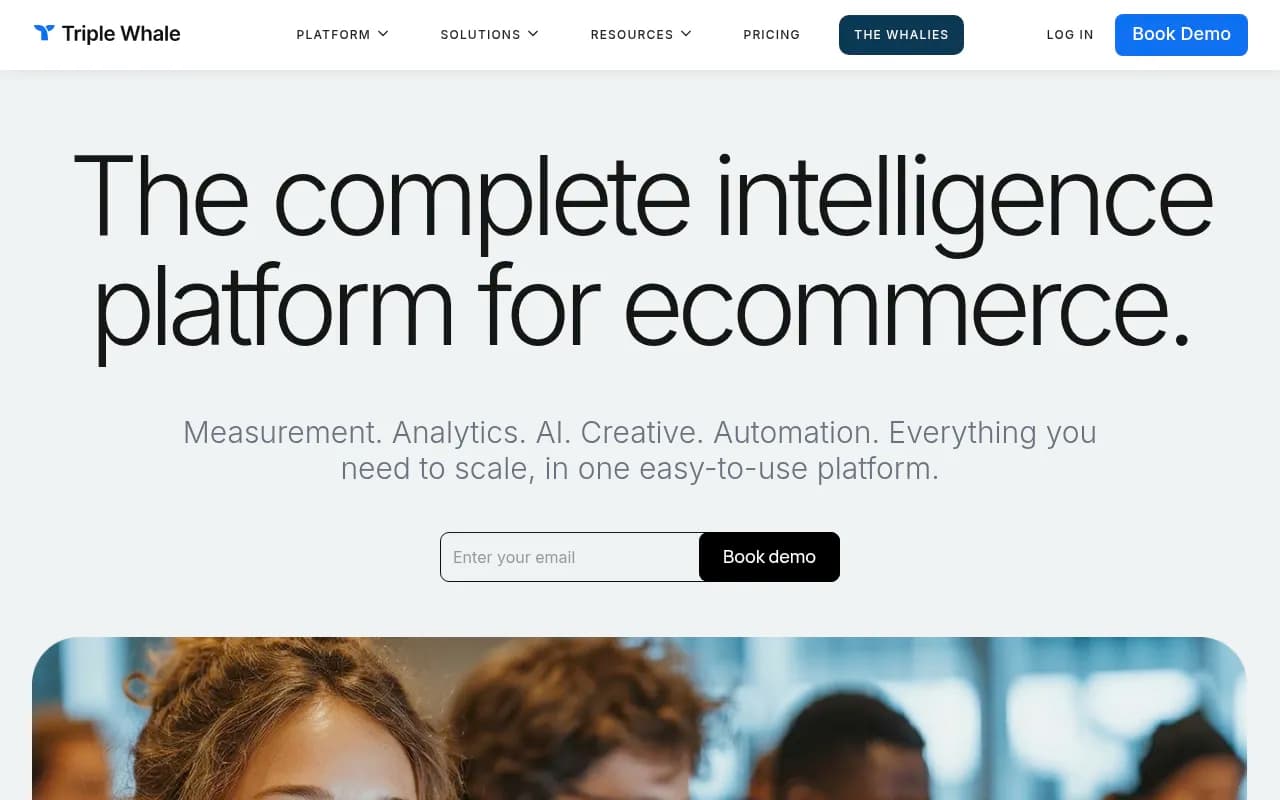
Triple Whale is an ecommerce analytics platform, and its pitch is tying AI visibility to measurable revenue for Shopify and DTC brands. It is not a dedicated GEO tool, but it is relevant for the attribution problem.
Alhena AI and Ranketta
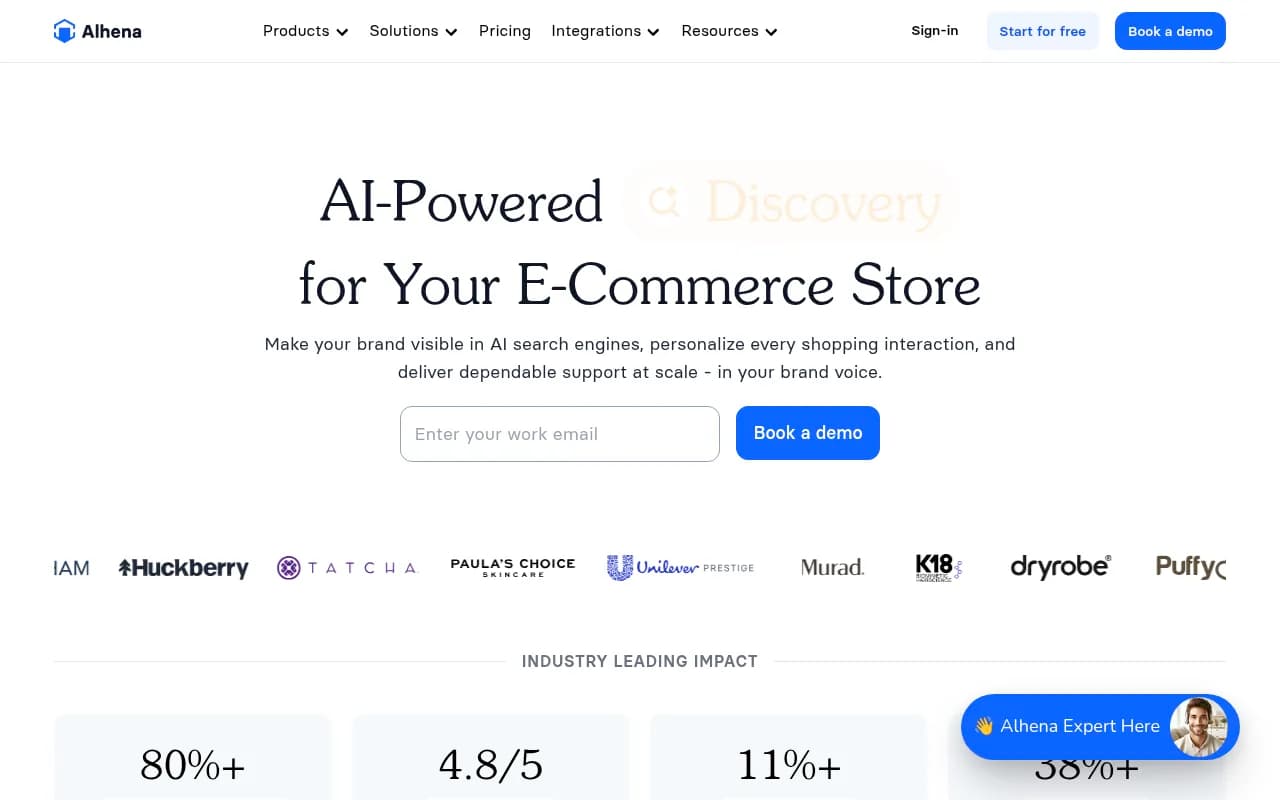
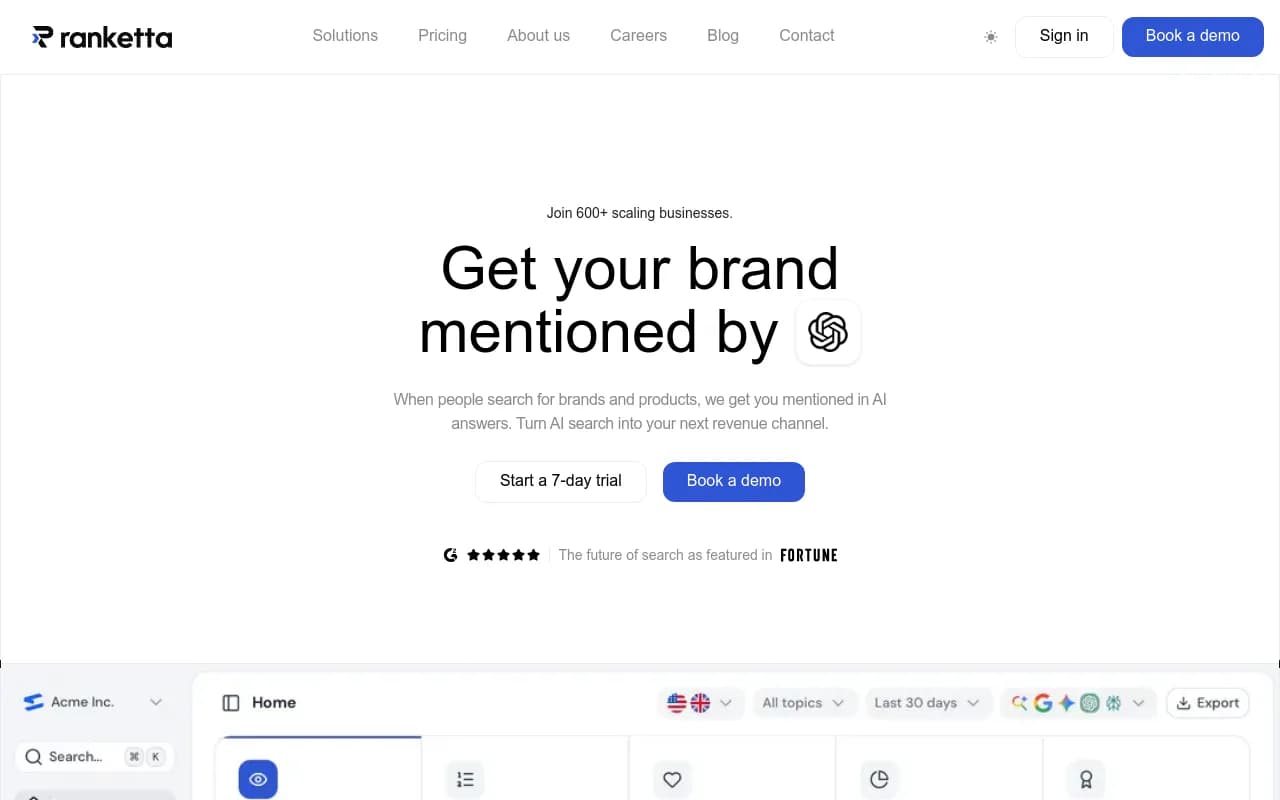
Alhena AI says its visibility product syncs a live product feed and tracks individual products across ChatGPT, AI Overviews, Perplexity and Gemini. Ranketta positions itself around agentic commerce for retailers and marketplaces. Both claims come from vendor pages and I did not test them.
Goodie AI and Opttab
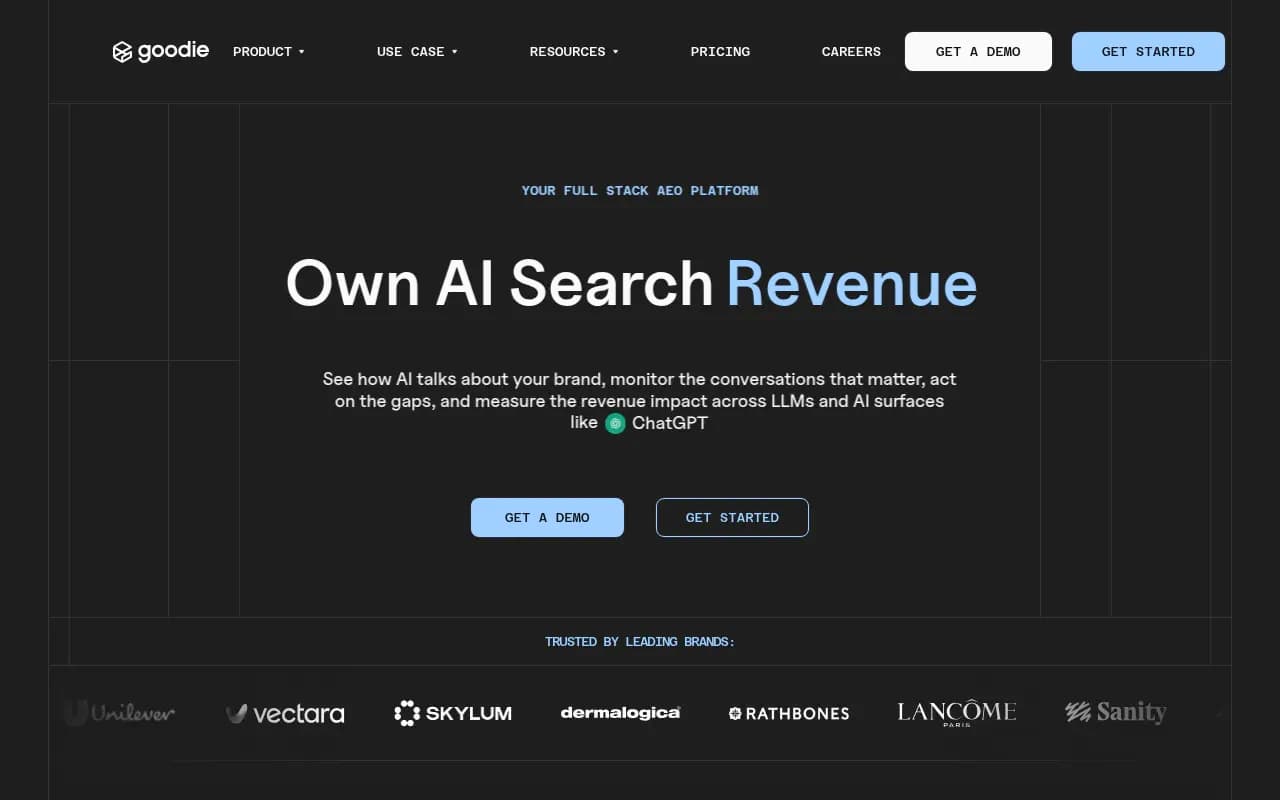
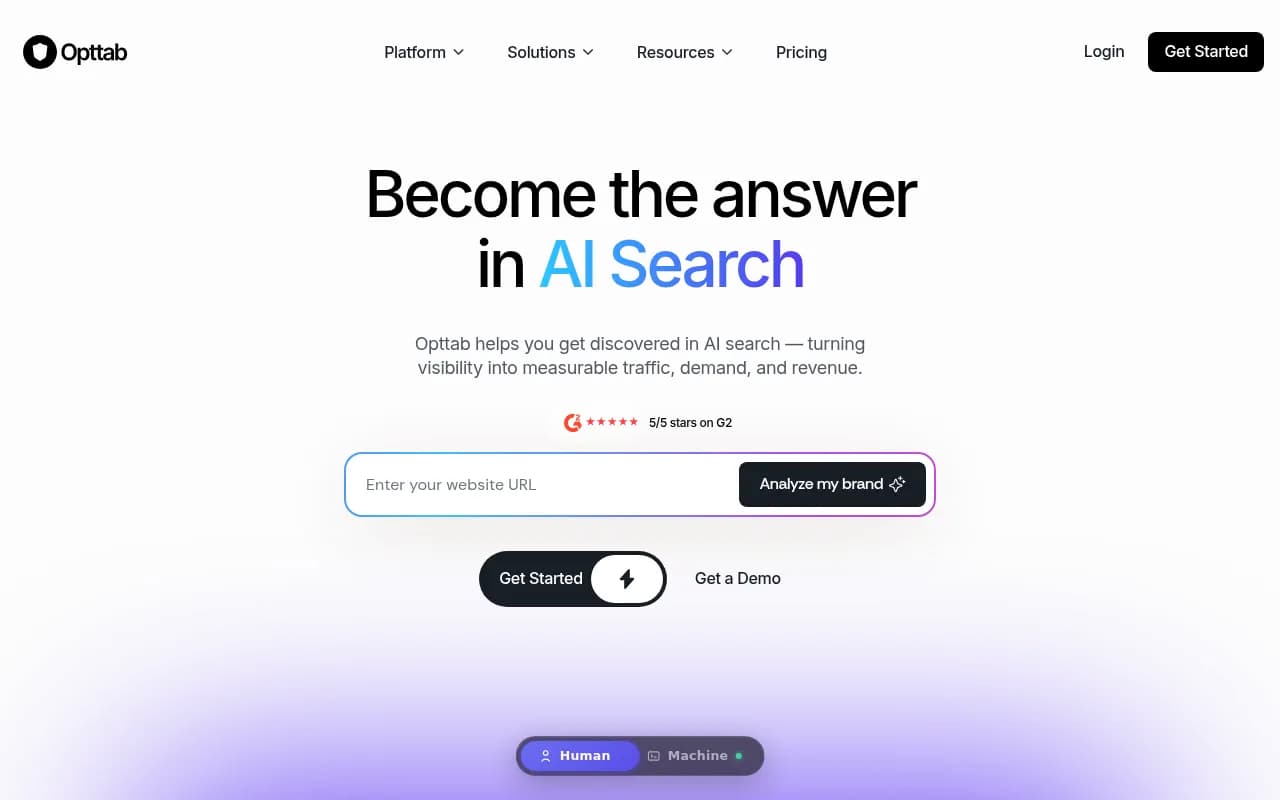
Both target agentic commerce and AI shopping surfaces. Newer players, so ask hard questions about data sources and coverage.
Peec AI, AthenaHQ and Otterly.AI
These three are the common mid-market monitoring picks. Vizby's comparison describes them as giving recommendations rather than executing fixes. They are useful for tracking a defined prompt set at a lower price, but for a huge catalog you will likely outgrow them without crawler logs, traffic attribution or content automation.


Enterprise SEO suites
If your team already lives in BrightEdge, Botify, seoClarity or Semrush, their AI modules are the path of least resistance. Expect shallower AI-specific data than dedicated platforms, and often fixed prompt sets.
Side-by-side comparison
| Platform | Best for | Product or shopping tracking | Crawler logs | Executes fixes |
|---|---|---|---|---|
| Promptwatch | Catalog brands that want to monitor and act | Yes (ChatGPT shopping, Alexa, Ads Radar) | Yes, IP-verified | Yes (Content Agent, Action Board) |
| Profound | Large enterprise programs | General | Verify with vendor | Yes |
| Scrunch | Enterprise plus agent experience | General plus shopping | Verify with vendor | Yes |
| Azoma | Marketplace and shopping surfaces | Yes | Verify with vendor | Verify with vendor |
| Yotpo Discover | Yotpo ecommerce customers | Yes (SKU-level claims) | Verify with vendor | Yes (agents) |
| Triple Whale | Revenue attribution for DTC | Limited | No | No |
| Peec AI / AthenaHQ / Otterly | Lower-cost monitoring | General | Generally no | Recommendations |
| SEO suites | Teams already on the suite | Shallow | Varies | Limited |
"Verify with vendor" means I could not confirm it from the sources I reviewed.
How the vendor guides compare
Most of the roundups you will find on this topic are written by the vendors themselves. Vizby's guide, for instance, puts Vizby first and is honest about one thing worth repeating: if you are not on Shopify, its strongest advantage disappears. That is a useful way to read any of them. Look for the stated limits.
Triple Whale's guide is more useful on method. Its key point is that AI visibility is not revenue attribution, so pair these tools with ecommerce analytics.
A practical rollout for a big catalog
Do not try to track everything on day one.
- Segment your catalog. Group SKUs into 10 to 30 categories by revenue and margin. Build prompts per category, using commercial and transactional phrasing.
- Fix the foundation. Check that AI crawlers can reach product pages, schema is complete, prices and availability are accurate, and your merchant feed is clean.
- Baseline for two weeks. Record visibility, position, citations and which competitors fill the answers. Note whether shopping cards appear.
- Prioritize gaps. Start with high-revenue categories where you are absent. Look at which listicles, comparisons and review pages AI cites instead of yours.
- Ship in batches. Refresh product and category pages first, then comparison pages and FAQs. Re-check after each batch.
- Connect to revenue. Use AI visitor analytics and your ecommerce platform to see whether AI-referred sessions convert.
For more options in this category, the GEO software directory at bestgeosoftware.com lists dozens of platforms with filters.
What I would avoid
Tools that only report a single brand-level visibility score are the biggest trap here. A score of 38 tells a retailer nothing about which categories are losing. Also be wary of any vendor claiming precise SKU-level tracking without showing it on your own data, and of any single study used as proof that one format always wins. The numbers above are weekly snapshots and ChatGPT behavior changes in steps.
Bottom line
For a large catalog, choose the platform that shows you what AI cites at the page and category level, proves whether bots can read your site, and gets fixes live without a manual slog. Promptwatch covers that full loop and is the one I would trial first. Shortlist one enterprise monitoring tool and one shopping specialist for comparison, run the same 100 category prompts through each during a trial, and pick the one whose output your team would actually act on.