Key takeaways
- A 2026 PR stack needs four layers: monitoring, sentiment, outreach, and reporting. AI search visibility is a fifth layer most teams still lack.
- Traditional monitoring suites like Meltwater, Talkwalker, and Brandwatch track press and social. None of them tell you what ChatGPT says about your brand.
- Promptwatch's data shows ChatGPT cites product and landing pages far more than press releases, so coverage on your own site and in listicles, reviews and comparisons matters more than raw placement count.
- Social seeding works differently per engine. ChatGPT cites social platforms in 0.46% of citations, Google AI Overviews in 12.2%.
- Pick tools by the job. Don't buy a suite to cover a gap that a single specialist tool fills.
Why PR teams need a different stack in 2026
PR used to end at the clip. You earned the coverage, logged it, reported impressions, done. That workflow is still necessary, but it no longer covers where your audience actually forms opinions.
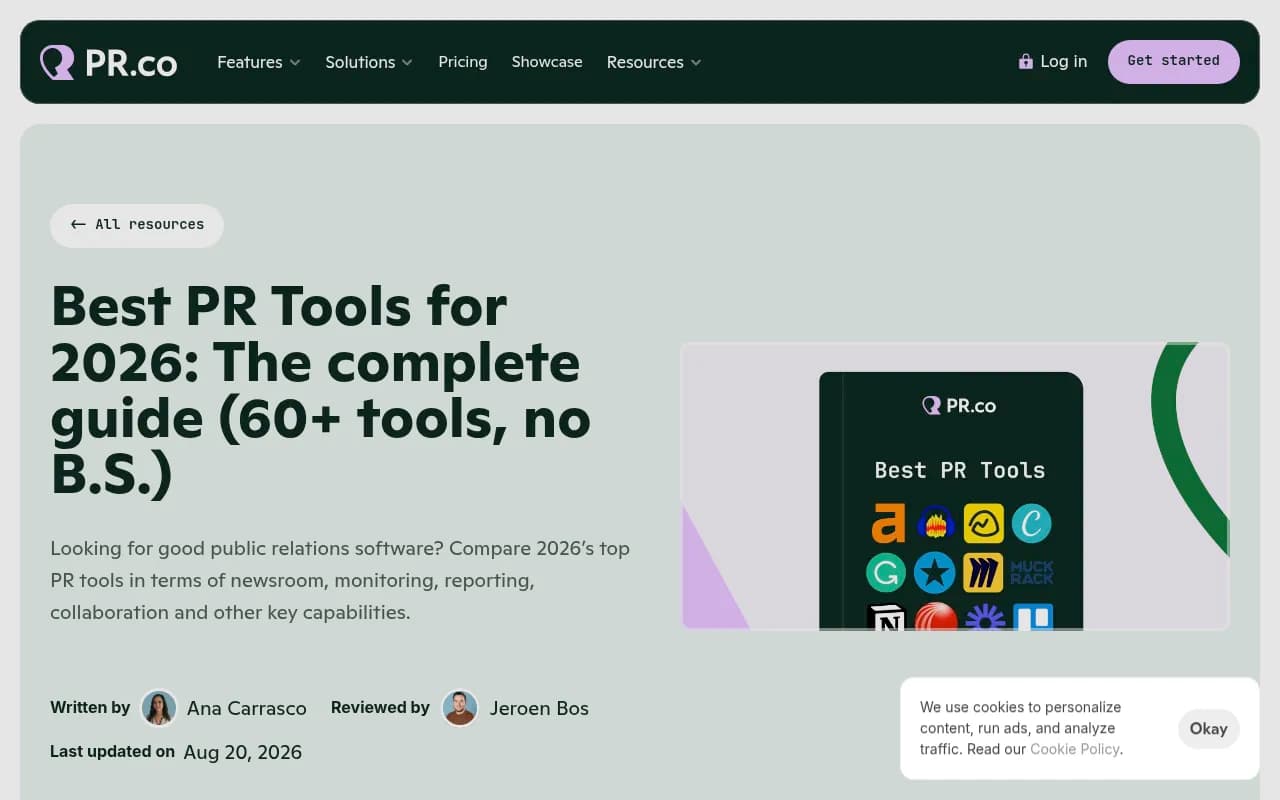
PR.co's 2026 tool guide makes the same point: no single best PR tool exists, and AI visibility should strengthen PR fundamentals rather than replace them. I agree with both halves. Don't rip out your media database. But do add something that tells you what the answer engines say once your coverage is out in the world.
The PRCoverage guide on analytics cites Muck Rack's State of Journalism 2026: 82% of journalists use at least one AI tool, with ChatGPT used by 47%. If reporters research with chatbots, your brand's description in those chatbots is effectively a pre-interview. That is a PR problem, not just an SEO one.
The five layers of the stack
Here is the structure I'd use when auditing a PR team's tools.
| Layer | Job to be done | Typical tools |
|---|---|---|
| Traditional monitoring | Find press, broadcast and web mentions | Meltwater, Talkwalker, Mention, Brand24 |
| Social and sentiment | Understand tone and conversation | Brandwatch, Sprinklr, Awario |
| AI search monitoring | See what ChatGPT, Gemini, Perplexity, AI Overviews say | Promptwatch, Profound, Peec AI, Otterly.AI |
| Outreach and relationships | Media lists, pitching, CRM | CisionOne, Muck Rack, Prowly |
| Reporting | Tie coverage to traffic and pipeline | Looker-style dashboards, Whatagraph, HubSpot |
Most teams have layers one, two, and four sorted. Layer three is where the gap is.
Layer 1: traditional media monitoring
This is the part of the stack that works fine and mostly needs maintenance. You want to know when you're mentioned, by whom, and how prominently. Truescope's review of monitoring tools says the same: look for accurate sentiment tagging and the ability to tell a passing reference from a headline mention.
Meltwater is the enterprise default for media intelligence and social listening.
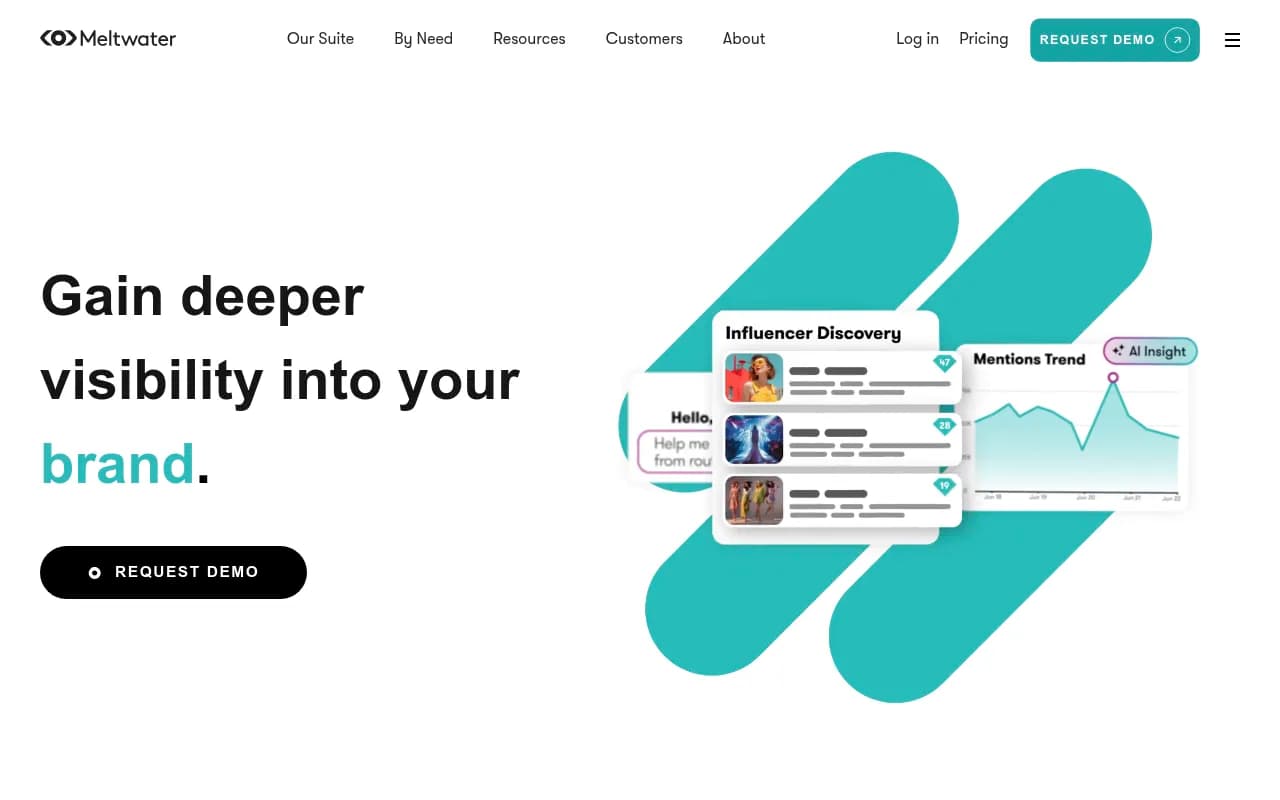
Talkwalker now markets AI visibility alongside consumer intelligence, which is worth testing if you already own it.
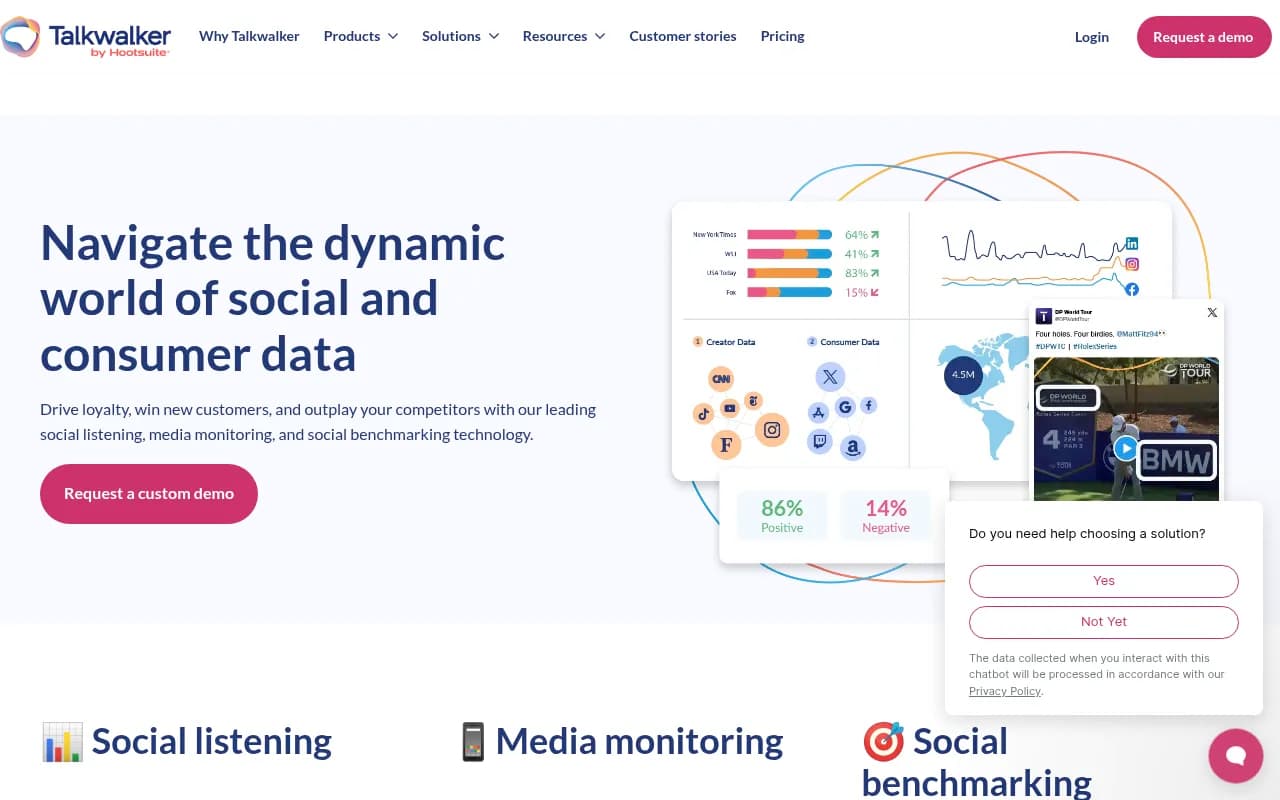
For smaller budgets, Mention and Brand24 cover real-time alerts without enterprise contracts.
A note on pricing: I haven't verified current prices for the enterprise suites, and they change often and are usually quote-based. Check vendor pages before you build a budget.
Layer 2: sentiment and social listening
Sentiment is where PR tools disagree most. Handraise's evaluation checklist flags the main trap: overall article tone can differ from how the brand itself is positioned. A negative article about your industry that mentions you favorably is not a negative hit.
For deep social listening, Brandwatch and Sprinklr are the heavyweights. Awario and Mentionlytics are lighter options.
Brandwatch Consumer Intelligence
Here's the new wrinkle. Sentiment now exists in two places: what people say about you, and what AI models say about you. They diverge. A model can describe your brand with stale or flat language based on old coverage, even when current social sentiment is good. You need a tool that scores the AI side separately.
Layer 3: AI search visibility monitoring
This layer answers: when someone asks ChatGPT, Perplexity or Google AI Overviews about your category, are you named, how are you described, and which sources does the model lean on?
The last question is the one PR teams should care about most, because the cited sources are the coverage you earned (or didn't).
What the citation data says about PR
Promptwatch's data on ChatGPT citation share by content type (Sep 28 to Oct 4, 2026) is humbling for anyone who treats press coverage as the whole game. Product pages were 22.4% of ChatGPT citations and landing pages 16.8%. Listicles were 13.6%, comparisons 5.9%, news 5.7%, and reviews 1.7%.
For branded prompts, press releases reached 2.1% of citations, higher than their share across all prompts but still small. Reviews hit 5.6% for branded prompts, more than three times their overall share.
The practical read: a wire release is not going to move how ChatGPT describes you. Placement in roundups, review sites, and comparison pieces does more. And your own product and landing pages need to be factual and complete, because they're the most cited thing.
Shelf life matters too. Promptwatch's content half-life study found news pages lose half their citations within about 36 days, while landing pages and docs stay cited for months. Earned news coverage is a spike. Evergreen pages are the base.
Social seeding is engine-specific
PR teams love Reddit and social amplification. The data says treat each engine differently. In Promptwatch's social media citations report for Sep 28 to Oct 4, 2026:
| Engine | Social share of citations | Top platforms |
|---|---|---|
| ChatGPT | 0.46% | LinkedIn (0.3%), Reddit (0.09%) |
| Google AI Overviews | 12.2% | YouTube 4.28%, Facebook 2.38%, Reddit 2.15% |
| Perplexity | 2.7% | LinkedIn and Reddit (0.86% each) |
Reddit's collapse in ChatGPT is documented separately: its share of citations fell from about 4% to 0.5% on August 14, 2026. If your playbook still leans on Reddit threads to influence ChatGPT, that playbook is out of date. YouTube, Facebook and Instagram matter more for AI Overviews.
Tools for this layer
Promptwatch is the one I'd start with for PR teams because it goes beyond counting mentions. It tracks the real interfaces of ChatGPT, AI Overviews, AI Mode, Gemini, Perplexity and others, scores sentiment per response, and shows which pages and Reddit, YouTube and LinkedIn posts get cited. Its Offsite Mentions feature catches third-party pages that name your brand without linking, which is exactly the unlinked coverage PR earns. Then the Action Board and Content Agent help close gaps instead of just reporting them.

Other options, with honest positioning:
- Profound is a strong monitoring platform at a higher price point.
- Peec AI and Otterly.AI are simpler prompt trackers, fine for a first pilot.
- Ahrefs Brand Radar and Semrush bolt AI tracking onto SEO suites.



If you want to browse the field, the GEO software directory at bestgeosoftware.com lists dozens more.
Comparison: what to ask of an AI visibility tool
| Capability | Why PR cares | Promptwatch | Basic trackers |
|---|---|---|---|
| Real-UI tracking across engines | API answers differ from what users see | Yes | Varies |
| Cited source list | Shows which coverage the model trusts | Yes | Usually |
| Sentiment per response | Catches AI describing you badly | Yes | Sometimes |
| Unlinked offsite mentions | Measures coverage without backlinks | Yes | Rare |
| AI traffic attribution | Proves business impact | Yes | Rare |
| Content creation and publishing | Fixes the gaps found | Yes | No |
Layer 4: outreach and relationships
Nothing about AI search changes the basics here. Good media relationships and targeted pitching beat mass distribution, as PR.co's guide says. Your tools still need a clean media database, pitch tracking, and a CRM.
CisionOne is the legacy database and distribution option.
Muck Rack and Prowly show up repeatedly in the comparison guides I reviewed, though neither is in our catalog, so check their sites directly. PRLab's review also names AgilityPR as an option for customizable AI-assisted workflows across outreach and monitoring.
What has changed in outreach is targeting. Use your AI visibility data to pick pitch targets. If the cited-sources report shows ChatGPT repeatedly pulling a specific listicle or review site for your category, that outlet goes to the top of the list. This is the most useful bridge between GEO data and PR work I know of.
HubSpot is the CRM many teams already run, so keep it as your system of record for relationships.
Layer 5: reporting
OBA PR's framework compares manual monthly reports (3-6 hours, vanity metrics like impressions and AVE) with automated dashboards that report referral traffic and influenced pipeline. I'd quibble with their claim that AI reporting is 100% accurate; it isn't, and the numbers need a human to sanity check them. But the direction is right. Stop reporting AVE.
PRCoverage's three-layer measurement framework is a useful skeleton: traditional reach, digital authority, and AI visibility. Most tools cover the first, some the second, few the third.
A reporting setup that works:
- Reach and share of voice from your monitoring suite.
- Authority and backlinks from your SEO tool.
- AI visibility score, share of voice, sentiment and citations from your AI tracker.
- AI referral traffic and conversions from visitor analytics, so you can say what the coverage produced.
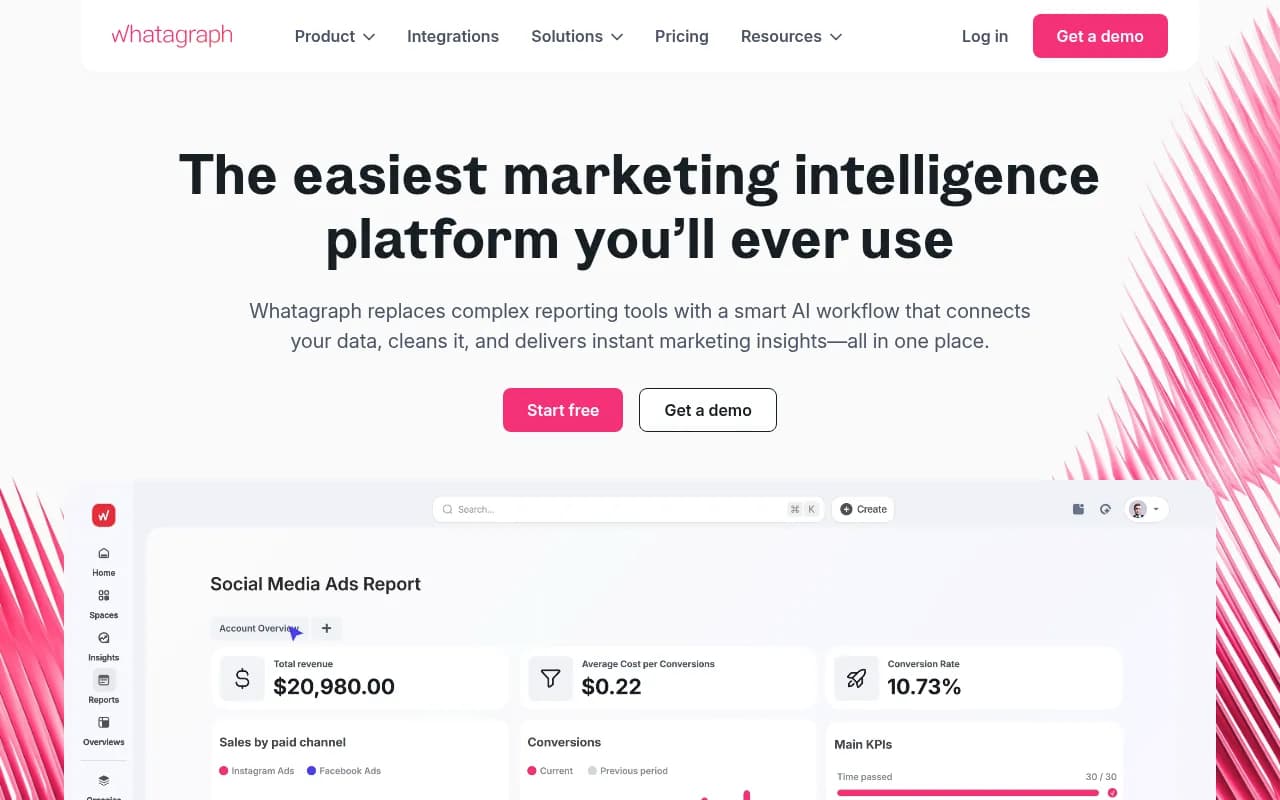
For agencies producing client decks, Whatagraph handles multi-source reporting. Promptwatch also exports white-label PDF reports and scheduled reports.
Recommended stacks by team size
| Team | Monitoring | Sentiment | AI visibility | Outreach | Reporting |
|---|---|---|---|---|---|
| In-house, small | Mention or Brand24 | Built into monitor | Promptwatch Essential or Otterly.AI | Spreadsheet plus HubSpot | Native dashboards |
| In-house, mid-size | Meltwater | Meltwater plus AI sentiment | Promptwatch Professional | CisionOne or Muck Rack | Looker Studio |
| Agency | Meltwater or Talkwalker | Brandwatch | Promptwatch agency plan | Muck Rack | White-label PDFs |
| Enterprise | Meltwater, Brandwatch | Sprinklr | Promptwatch Enterprise | CisionOne | Custom BI |
Promptwatch's published plans start free (10 prompts, ChatGPT only), then $95/month for Essential, with agency tiers from $199/month. Confirm current pricing at promptwatch.com/pricing.
A 30-day rollout
Week one: run a free scan of what ChatGPT, Gemini and Perplexity say about your brand. Promptwatch has a free AI Visibility Report that needs no login. Write down what is wrong or missing.
Week two: pick 30 to 50 prompts that mirror how journalists and buyers ask about your category. Include branded, competitor comparison and generic ones.
Week three: read the cited sources. Which outlets and page types does each engine trust? Match that against your last year of earned coverage.
Week four: update your pitch list, fix your own product and landing pages, and set a monthly report that includes AI metrics next to the old ones.
If you'd rather not run it yourself
Some teams don't have the bandwidth to run GEO alongside the usual PR calendar. An agency that combines digital PR with AI search work can help; 1001 SEO Media does both and uses Promptwatch for AI visibility tracking.
What to do first
If you buy one thing this quarter, buy visibility into what the answer engines say and cite about you. Keep your monitoring suite, keep your media database, and change what you pitch for. Coverage in listicles, reviews and comparisons, plus strong product pages, is what the citation data rewards. Press releases and Reddit threads are not.