Summary
- AI search is replacing traditional search: 60% of searches now end without clicks because AI delivers direct answers. If your brand isn't visible in ChatGPT, Perplexity, or Google AI Overviews, you're losing customers.
- Monitoring alone isn't enough: Most tools only show you data. The best platforms (like Promptwatch) help you find content gaps, generate optimized content, and track the results -- closing the loop from insight to action.
- Start with a baseline audit: Use tools to see how often AI cites your brand today, identify high-value prompts where competitors appear but you don't, and prioritize fixes.
- Pricing ranges widely: Free options exist for basic tracking. Professional platforms start around $99-249/month. Enterprise suites with content generation and optimization run $500-2000+/month.
- Key features to prioritize: Multi-LLM tracking (ChatGPT, Claude, Perplexity, Gemini), competitor benchmarking, content gap analysis, and ideally AI content generation to fix what's broken.
Why AI search visibility matters in 2026
Your customers aren't just Googling anymore. They're asking ChatGPT for software recommendations, querying Perplexity for product comparisons, and trusting Claude to summarize research. AI doesn't show ten blue links -- it gives one answer. If your brand isn't in that answer, you don't exist.
The numbers tell the story. ChatGPT processes 2 billion queries daily. Google AI Overviews reaches 2 billion monthly users. AI referral traffic grew 527% year-over-year in 2025. Yet only 22% of marketers are actively tracking their AI visibility. That gap is an opportunity.
Traditional SEO metrics don't capture this shift. You can rank #1 on Google and still be invisible in AI search. Why? Because AI models pull from different sources, weight authority differently, and synthesize answers from multiple pages instead of just linking to the top result. Websites only make it into 25% of AI responses, even when they rank high on Google.
The stakes are real. 58.5% of U.S. Google searches now end without a click. AI Overviews reduce click-through rates for top-ranking results by 58%. And 93% of Google AI Mode searches end without a click at all. The brands that AI recommends win. Everyone else is invisible.
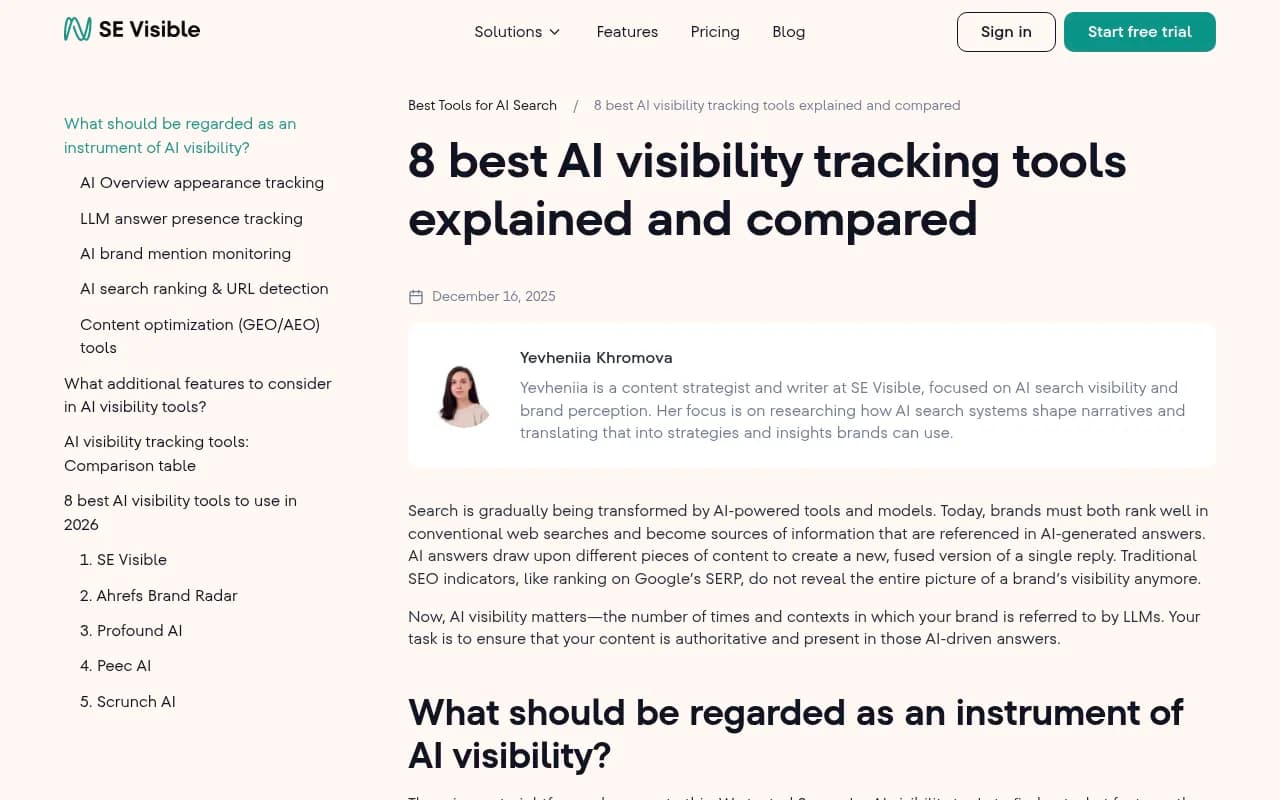
What AI search visibility tools actually do
AI search visibility tools track and improve how often your brand appears in AI-generated answers from platforms like ChatGPT, Perplexity, Google Gemini, Claude, and others. Think of them as the AI equivalent of traditional SEO rank trackers -- except instead of monitoring your Google rankings, they monitor whether AI recommends your brand when someone asks a relevant question.
These tools typically fall into three categories:
Monitoring tools track where and how often your brand appears in AI answers. They run queries on LLM chatbots (ChatGPT, Claude, Gemini, Perplexity) and record the number of times and contexts in which your brand or content is referenced. Some take screenshots or store raw AI responses as evidence. Others provide sentiment analysis or location tracking for each mention.
GEO platforms (Generative Engine Optimization) help you optimize content specifically for AI engines. They compare your data with the demands of AI search and show inconsistencies in your content. The best ones perform audits on how "AI-ready" a website is, suggest new topics or prompts for targeting, and even generate content optimized for AI visibility.
Enterprise suites combine AI visibility with traditional SEO in a single platform. They typically include competitive benchmarking, API access, multi-language support, and integrations with existing marketing stacks.
The core features you'll find across most tools:
- AI Overview appearance tracking: Monitors answers from Google's AI Overviews and Bing Chat to see how your brand or URLs appear in AI-generated search results.
- LLM answer presence tracking: Runs queries on ChatGPT, Claude, Gemini, Perplexity, and other chatbots to track brand mentions and citations.
- AI search ranking & URL detection: Ranks your pages and prompts, locates which URLs AI is referencing, tracks citation frequency and position.
- Competitive AI visibility tracking: Benchmarks against competitors to find where others are getting citations but you're not.
- Content optimization: Identifies content gaps, suggests topics, and in some cases generates or rewrites content to improve AI visibility.
The best tools don't just show you data -- they help you act on it. Promptwatch, for example, combines monitoring with Answer Gap Analysis (showing exactly which prompts competitors are visible for but you're not) and an AI writing agent that generates content grounded in real citation data. Most competitors stop at monitoring.

The action loop: monitoring vs optimization
Most AI visibility tools are monitoring-only dashboards. They show you data but leave you stuck. You see that competitors are mentioned in AI responses, but you don't know what content you're missing or how to fix it. That's the difference between a tracker and an optimization platform.
The best platforms follow an action loop:
-
Find the gaps: Answer Gap Analysis shows exactly which prompts competitors are visible for but you're not. You see the specific content your website is missing -- the topics, angles, and questions AI models want answers to but can't find on your site.
-
Create content that ranks in AI: Built-in AI writing agents generate articles, listicles, and comparisons grounded in real citation data, prompt volumes, persona targeting, and competitor analysis. This isn't generic SEO filler -- it's content engineered to get cited by ChatGPT, Claude, Perplexity, and other AI models.
-
Track the results: See your visibility scores improve as AI models start citing your new content. Page-level tracking shows exactly which pages are being cited, how often, and by which models. Close the loop with traffic attribution to connect visibility to actual revenue.
This cycle -- find gaps, generate content, track results -- is what makes a platform an optimization tool, not just another tracker. When evaluating tools, ask: does this just show me data, or does it help me fix what's broken?
Key features to look for
When comparing AI search visibility tools, these features separate the useful from the useless:
Multi-LLM tracking: The tool should monitor multiple AI models -- ChatGPT, Claude, Perplexity, Gemini, Google AI Overviews, Grok, DeepSeek, Meta AI, Copilot. Tracking only one or two models gives you an incomplete picture. Your customers use different AI tools for different tasks.
Competitor benchmarking: You need to see not just your own visibility, but how you compare to competitors. Heatmaps showing who's winning for each prompt, side-by-side visibility scores, and citation frequency comparisons are essential.
Content gap analysis: The tool should identify prompts where competitors are cited but you're not. It should show you the specific content you're missing -- the topics, angles, and questions AI models want answers to but can't find on your site.
AI crawler logs: Real-time logs of AI crawlers (ChatGPT, Claude, Perplexity) hitting your website -- which pages they read, errors they encounter, how often they return. This helps you understand how AI engines discover your content and fix indexing issues. Most competitors lack this entirely.
Prompt intelligence: Volume estimates and difficulty scores for each prompt, plus query fan-outs that show how one prompt branches into sub-queries. This helps you prioritize high-value, winnable prompts instead of guessing.
Citation & source analysis: See exactly which pages, Reddit threads, YouTube videos, and domains AI models cite in their responses. Know where to publish and what to optimize.
Content optimization or generation: Does the tool just show you problems, or does it help you fix them? The best platforms include AI writing agents that generate content optimized for AI visibility, or at least provide specific recommendations on what to change.
Evidence logs & screenshots: Some tools take screenshots or store raw AI responses. This confirms visibility and helps with audits or client reporting.
API access & integrations: An API or data export (CSV/JSON) makes it possible to build custom workflows or integrate with your existing marketing stack.
Multi-language & multi-region support: If you operate in multiple markets, you need to monitor AI responses in different languages and from different countries, with customizable personas that match how your actual customers prompt.
Comparison of top AI search visibility tools
Here's how the major platforms stack up across key features and pricing:
| Tool | Starting price | LLMs tracked | Content generation | Crawler logs | Best for |
|---|---|---|---|---|---|
| Promptwatch | $99/mo | 10 (ChatGPT, Perplexity, Claude, Gemini, etc.) | Yes (AI writing agent) | Yes | Teams that want to optimize, not just monitor |
| Profound | ~$500/mo | 8+ | No | No | Enterprise teams with budget for comprehensive tracking |
| Peec AI | ~$300/mo | 6+ | No | No | Multi-language tracking |
| Otterly.AI | $99/mo | 5+ | No | No | Budget-conscious teams needing basic monitoring |
| AthenaHQ | ~$200/mo | 4+ | No | No | Mid-market brands focused on monitoring |
| Semrush | $139/mo (add-on) | Limited (fixed prompts) | No | No | Existing Semrush users |
| Ahrefs Brand Radar | $129/mo (add-on) | Limited (fixed prompts) | No | No | Existing Ahrefs users |
| SE Ranking | ~$150/mo | 5+ | No | No | Teams wanting user-friendly dashboards |
Promptwatch is the only platform rated as a "Leader" across all categories in a 2026 comparison of 12 GEO platforms. The core difference: most competitors are monitoring-only dashboards that show you data but leave you stuck. Promptwatch is built around taking action -- it shows you what's missing, then helps you fix it with Answer Gap Analysis and an AI writing agent that generates content grounded in 880M+ citations analyzed.
Profound and Scrunch offer strong feature sets but higher price points, no Reddit tracking, and no ChatGPT Shopping monitoring. Otterly.AI and Peec AI provide basic monitoring only -- no crawler logs, no visitor analytics, no content generation. AthenaHQ is monitoring-focused and lacks content optimization capabilities.
Semrush and Ahrefs are traditional SEO tools that don't support AI search monitoring in depth. Semrush uses fixed prompts, and Ahrefs Brand Radar has fixed prompts with no AI traffic attribution. Both are useful if you're already paying for their SEO suites, but they're not purpose-built for AI visibility.
Detailed tool reviews
Promptwatch: The optimization platform
Promptwatch is an end-to-end AI Search Visibility platform used by 6,700+ brands and agencies -- including Booking.com, Center Parcs, Wortell, and Elaboratum. It helps companies understand, track, and improve how they appear in AI search engines like ChatGPT, Claude, Gemini, Perplexity, Grok, DeepSeek, Copilot, Mistral, Meta AI, and Google AI Overviews.
What makes Promptwatch different: it's the only platform that combines monitoring with optimization. Most tools show you where you're invisible. Promptwatch shows you what's missing, then helps you fix it.
The action loop:
-
Find the gaps: Answer Gap Analysis shows exactly which prompts competitors are visible for but you're not. You see the specific content your website is missing -- the topics, angles, and questions AI models want answers to but can't find on your site.
-
Create content that ranks in AI: The built-in AI writing agent generates articles, listicles, and comparisons grounded in real citation data (880M+ citations analyzed), prompt volumes, persona targeting, and competitor analysis. This isn't generic SEO filler -- it's content engineered to get cited by ChatGPT, Claude, Perplexity, and other AI models.
-
Track the results: See your visibility scores improve as AI models start citing your new content. Page-level tracking shows exactly which pages are being cited, how often, and by which models. Close the loop with traffic attribution (code snippet, GSC integration, or server log analysis) to connect visibility to actual revenue.
Additional capabilities:
- AI Crawler Logs: Real-time logs of AI crawlers hitting your website -- which pages they read, errors they encounter, how often they return. Understand how AI engines discover your content and fix indexing issues.
- Prompt Intelligence: Volume estimates and difficulty scores for each prompt, plus query fan-outs that show how one prompt branches into sub-queries.
- Citation & Source Analysis: See exactly which pages, Reddit threads, YouTube videos, and domains AI models cite in their responses.
- Reddit & YouTube Insights: Surface discussions that directly influence AI recommendations.
- ChatGPT Shopping Tracking: Monitor when your brand appears in ChatGPT's product recommendations and shopping carousels.
- Competitor Heatmaps: Compare your AI visibility vs competitors across LLMs.
- Multi-language & Multi-region: Monitor AI responses in any language, from any country, with customizable personas.
Pricing: Essential $99/mo (1 site, 50 prompts, 5 articles), Professional $249/mo (2 sites, 150 prompts, 15 articles, crawler logs, state/city tracking), Business $579/mo (5 sites, 350 prompts, 30 articles). Agency/Enterprise custom pricing available. Free trial available.
Profound: Enterprise-grade monitoring
Profound is an all-in-one enterprise AI visibility platform with strong tracking capabilities across 8+ LLMs. It offers competitive benchmarking, evidence logs, and API access. The interface is polished and the data is reliable.

What it lacks: content optimization and generation. Profound shows you problems but doesn't help you fix them. No Answer Gap Analysis, no AI writing agent, no crawler logs. It's a monitoring dashboard, not an optimization platform. Pricing starts around $500/mo, making it one of the more expensive options.
Best for: Enterprise teams with budget for comprehensive tracking who have separate resources for content creation.
Peec AI: Multi-language tracking
Peec AI specializes in multi-language AI visibility tracking across 6+ LLMs. If you operate in multiple markets and need to monitor AI responses in different languages, Peec is a solid choice.
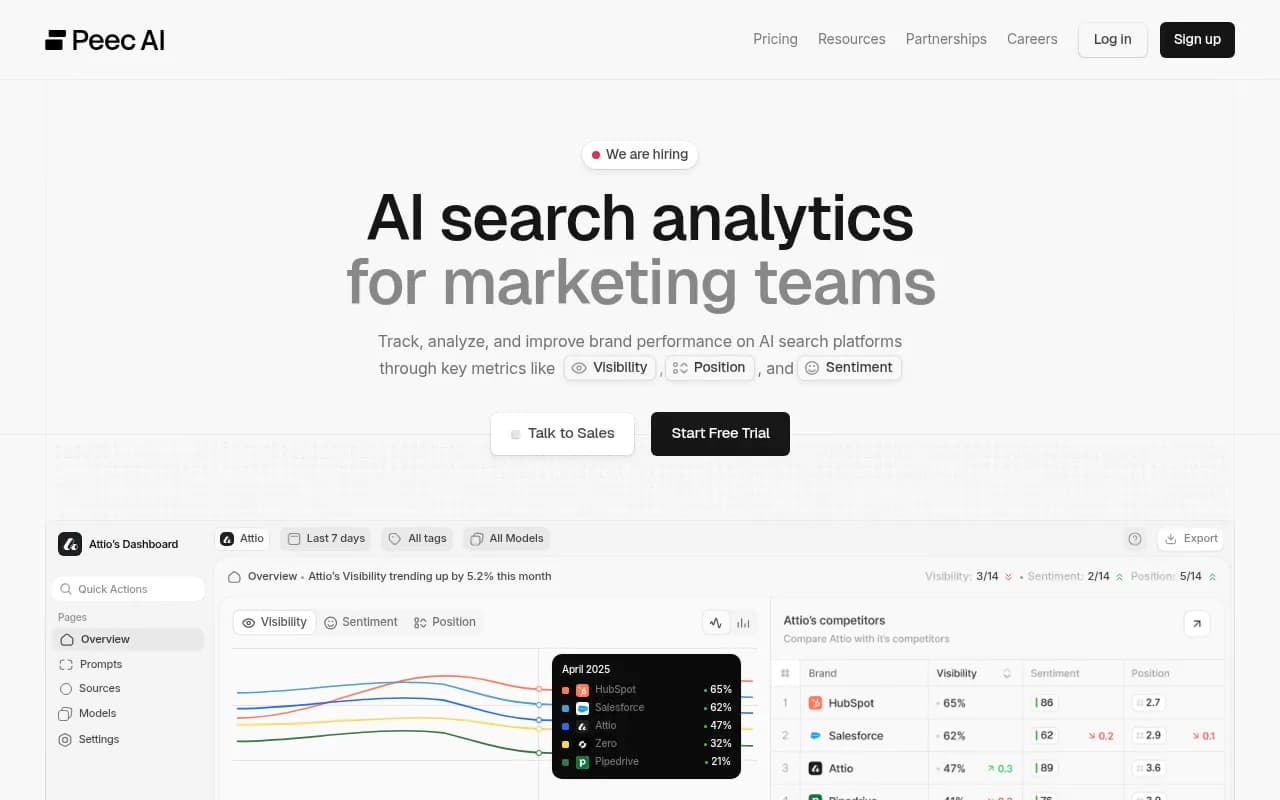
What it lacks: content optimization, crawler logs, and Reddit/YouTube tracking. Like most competitors, it's monitoring-only. Pricing starts around $300/mo.
Best for: Multi-market brands that need language-specific tracking.
Otterly.AI: Budget-friendly monitoring
Otterly.AI offers affordable AI visibility monitoring across 5+ LLMs. The interface is straightforward and the pricing is accessible for smaller teams.
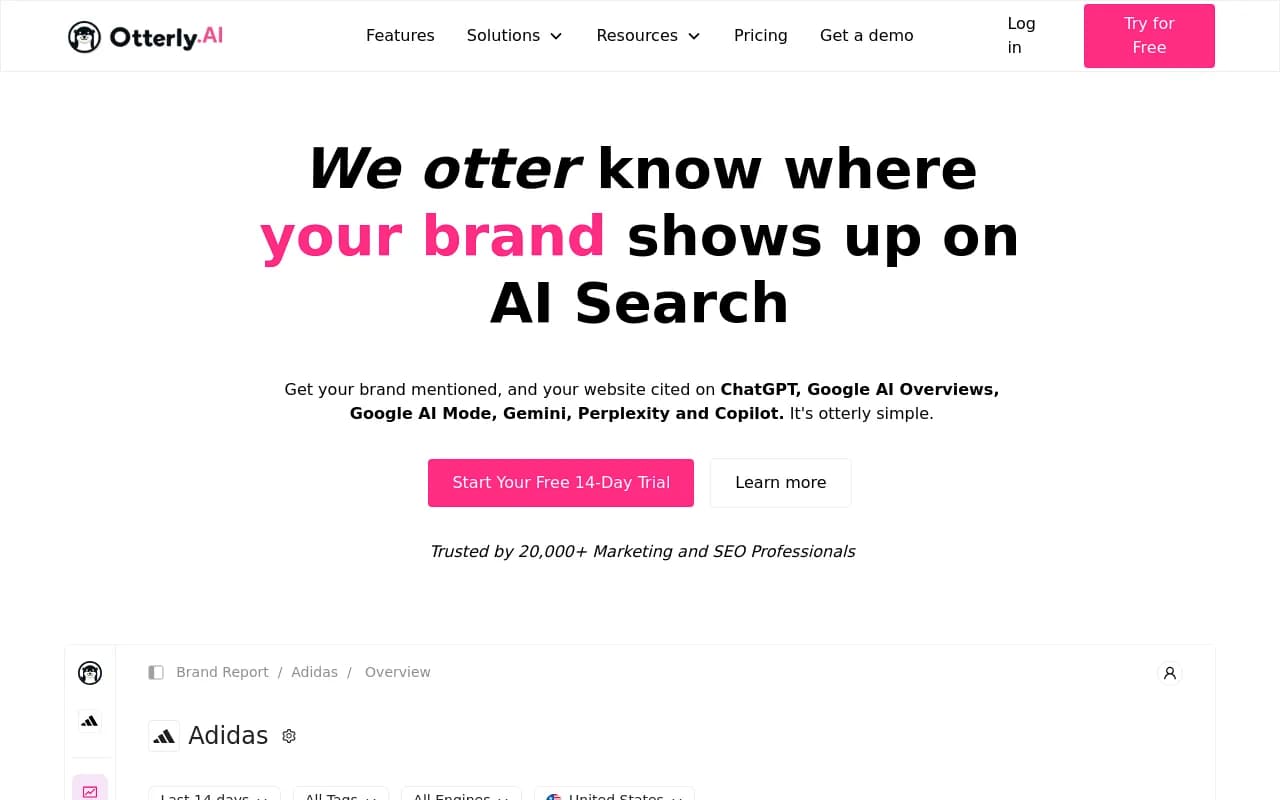
What it lacks: advanced features like crawler logs, content generation, and prompt intelligence. It's a basic tracker. Pricing starts at $99/mo.
Best for: Budget-conscious teams needing basic monitoring without optimization.
AthenaHQ: Mid-market monitoring
AthenaHQ is a monitoring-focused platform that tracks brand mentions across 4+ LLMs. It offers competitive benchmarking and sentiment analysis.
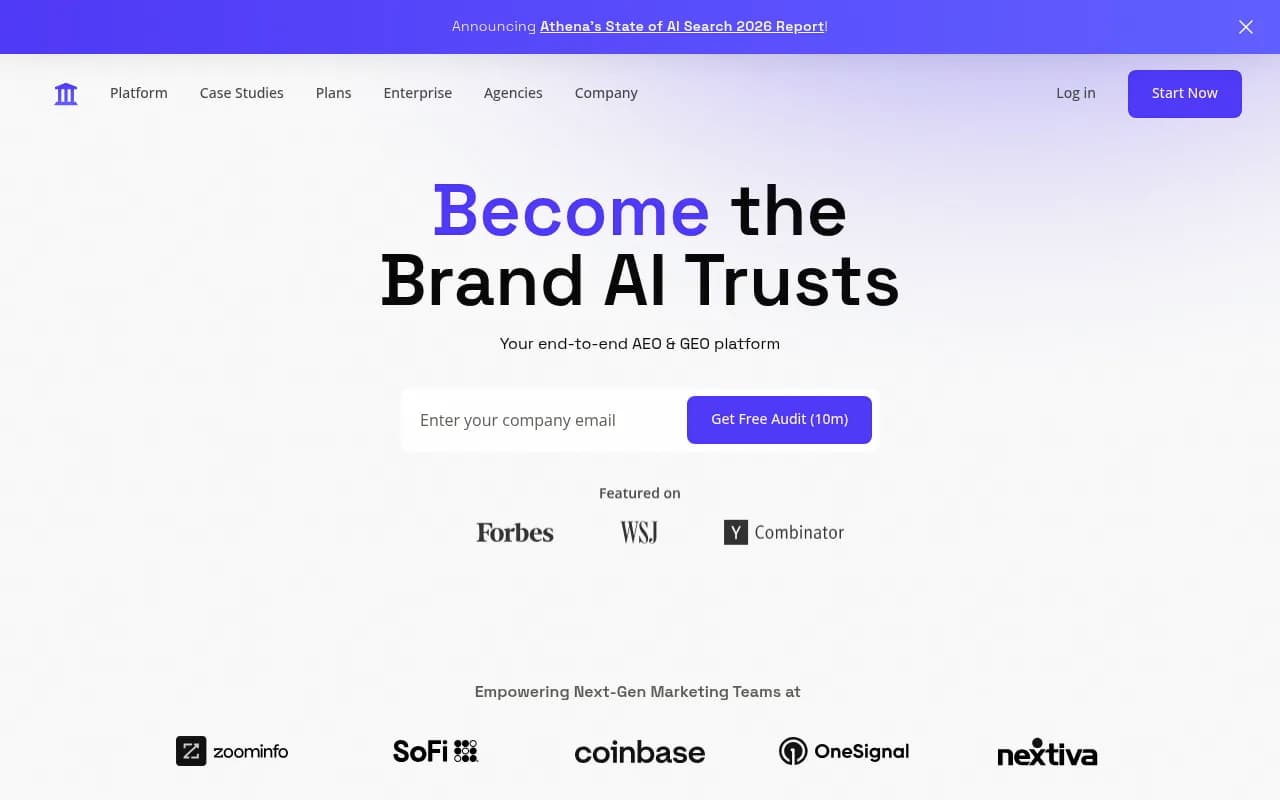
What it lacks: content optimization, crawler logs, and generation capabilities. Pricing starts around $200/mo.
Best for: Mid-market brands focused on monitoring without optimization.
Semrush & Ahrefs: Traditional SEO tools
Semrush and Ahrefs both offer AI visibility tracking as add-ons to their traditional SEO suites. Semrush's AI Overview tracking uses fixed prompts and costs $139/mo on top of your existing subscription. Ahrefs Brand Radar also uses fixed prompts and costs $129/mo.
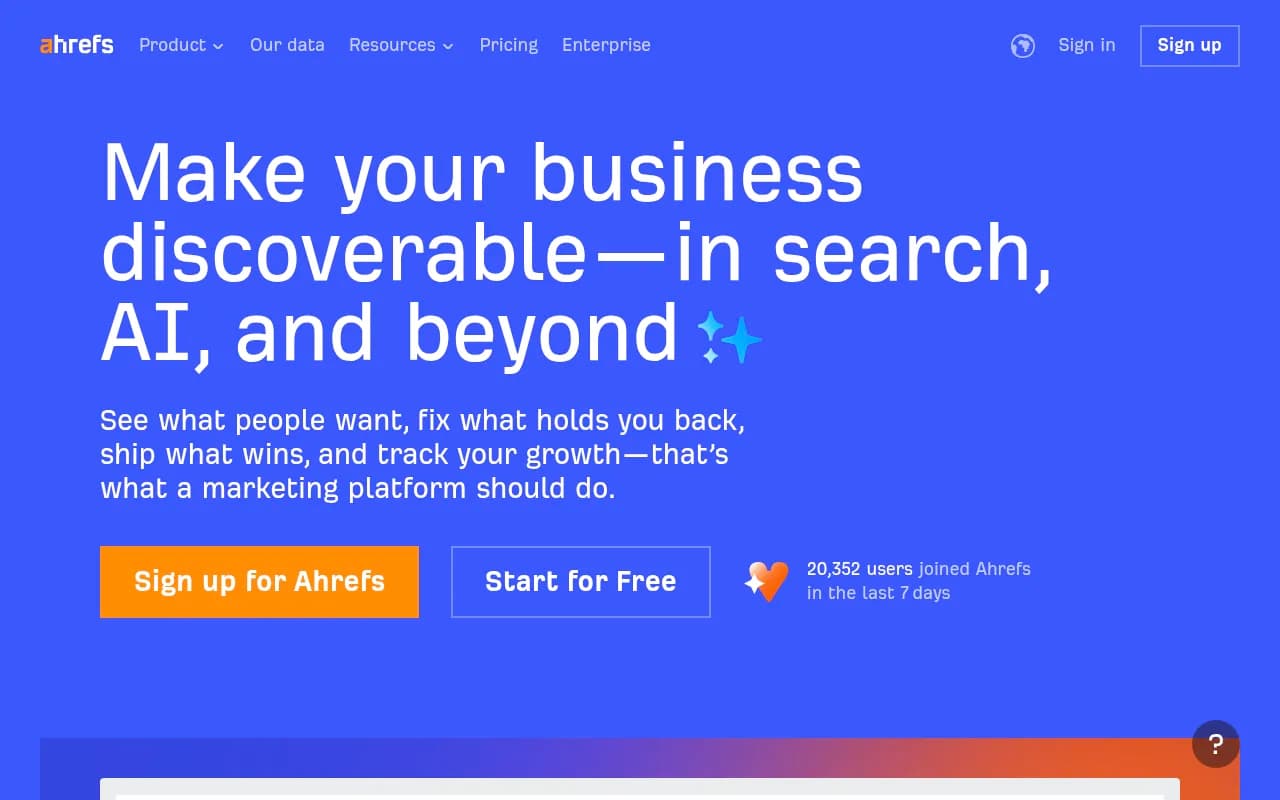
What they lack: depth. These are traditional SEO tools that bolted on AI visibility as an afterthought. No crawler logs, no content generation, no Answer Gap Analysis, limited LLM coverage. The fixed prompts mean you can't customize tracking to your specific use cases.
Best for: Existing Semrush or Ahrefs users who want basic AI visibility data without switching platforms.
SE Ranking: User-friendly dashboards
SE Ranking offers AI visibility tracking with a focus on user-friendly dashboards and visualizations. It tracks 5+ LLMs and provides competitive benchmarking.
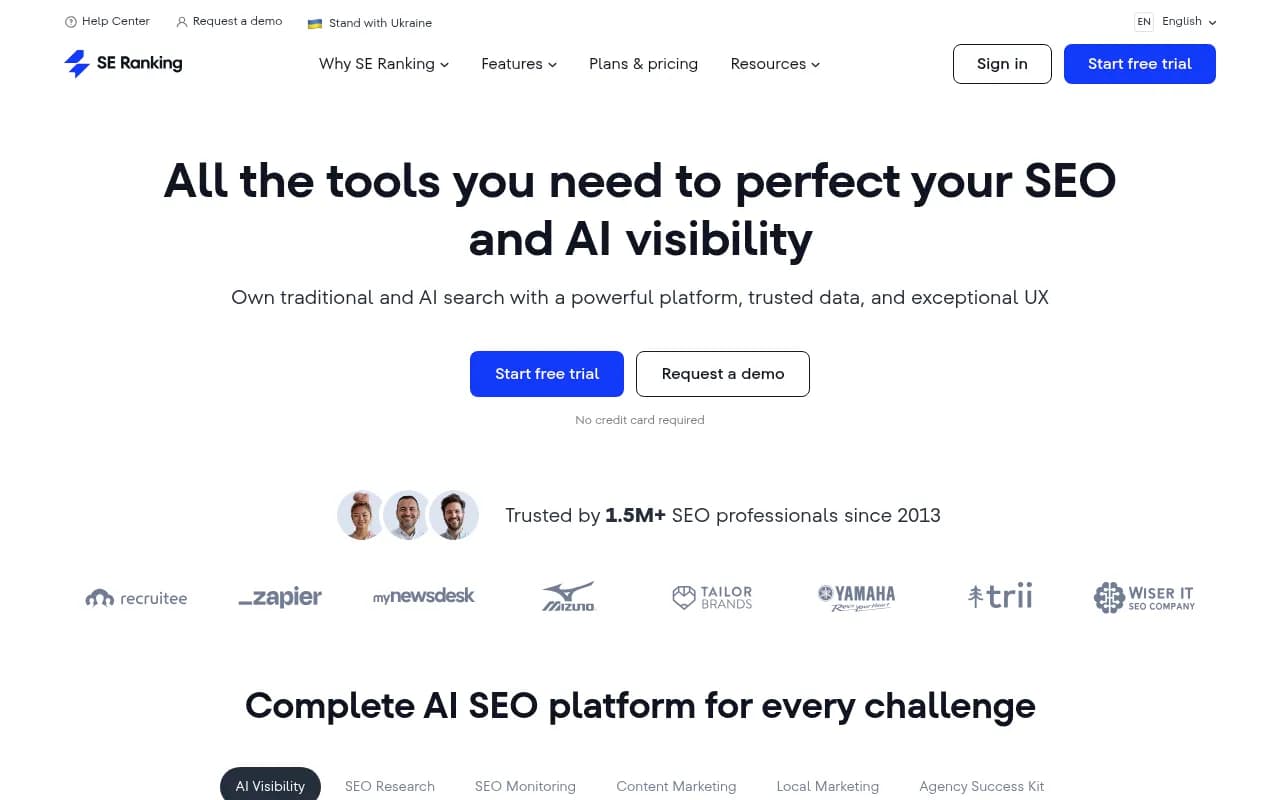
What it lacks: content optimization and generation. Pricing starts around $150/mo.
Best for: Teams wanting user-friendly dashboards without optimization features.
Free and budget options
If you're just starting to explore AI visibility, a few free or low-cost options exist:
Mangools AI Search Grader: Free tool that provides basic insights into how your brand appears in AI search. Limited to a few queries, but useful for a baseline audit.
Adamigo: Offers a free tier with limited tracking. Good for small businesses or solopreneurs testing the waters.
Otterly.AI: At $99/mo, this is one of the most affordable paid options for basic monitoring across multiple LLMs.
The tradeoff with free and budget tools: you get monitoring only. No content optimization, no Answer Gap Analysis, no AI writing agent. You'll see problems but won't have tools to fix them.
How to choose the right tool for your needs
Start by asking what you actually need:
If you just want to monitor: Tools like Otterly.AI, Peec AI, or AthenaHQ will show you where your brand appears in AI responses. They're monitoring dashboards. You'll see data but won't have tools to act on it.
If you want to optimize: Promptwatch is the only platform that combines monitoring with optimization. It shows you content gaps, generates optimized content, and tracks the results. This is the action loop -- find gaps, create content, track results.
If you're already using Semrush or Ahrefs: Their AI visibility add-ons are cheap ways to get basic data without switching platforms. But they're limited -- fixed prompts, shallow LLM coverage, no optimization features.
If you operate in multiple languages: Peec AI specializes in multi-language tracking.
If you have enterprise budget and just need tracking: Profound offers comprehensive monitoring with a polished interface.
Questions to ask before buying:
- Does this tool just show me data, or does it help me fix what's broken?
- Can I track all the LLMs my customers actually use (ChatGPT, Claude, Perplexity, Gemini, etc.)?
- Does it include competitor benchmarking so I can see where I'm losing ground?
- Can I customize prompts to match my specific use cases, or am I stuck with fixed queries?
- Does it track AI crawler logs so I can fix indexing issues?
- Does it provide content gap analysis or generation to help me create content that ranks in AI?
- Can I attribute AI visibility to actual traffic and revenue?
Getting started: Your first 30 days
Here's how to get started with AI visibility tracking:
Week 1: Baseline audit
Run a baseline audit using a tool like Promptwatch or Otterly.AI to see how often your brand is cited by AI today. Track 20-30 prompts that represent how your customers actually search. Include competitor brands in your tracking to see where you stand.
Week 2: Identify gaps
Use Answer Gap Analysis (available in Promptwatch) to identify high-value prompts where competitors are mentioned but you're not. Focus on prompts with high volume and low difficulty -- these are your quick wins.
Week 3: Create content
Generate or optimize content for the top 5-10 prompts you identified. If you're using Promptwatch, the AI writing agent can generate articles grounded in real citation data. If you're using a monitoring-only tool, you'll need to create content manually based on the gaps you found.
Week 4: Track results
Monitor your visibility scores to see if AI models start citing your new content. Page-level tracking shows exactly which pages are being cited, how often, and by which models. Close the loop with traffic attribution to connect visibility to revenue.
Repeat this cycle monthly. AI search is evolving fast -- what works today might not work in three months. Continuous optimization is the only way to stay visible.
The future of AI search visibility
AI search is still early. The tools are immature, the best practices are still being figured out, and the landscape changes every month. But the direction is clear: AI-generated answers are replacing clicks. The brands that AI recommends win. Everyone else is invisible.
What to watch in 2026:
- AI traffic attribution: Tools are starting to connect AI visibility to actual traffic and revenue. Expect this to become table stakes.
- Real-time optimization: The best platforms will move from monthly tracking to real-time monitoring and optimization.
- AI-native content creation: Tools like Promptwatch are already generating content optimized for AI visibility. Expect this to become standard.
- Reddit and YouTube integration: AI models increasingly cite Reddit discussions and YouTube videos. Tools that surface these sources (like Promptwatch) have an edge.
- ChatGPT Shopping tracking: As ChatGPT becomes a shopping platform, tracking product recommendations and shopping carousels will matter more.
The brands that win in AI search are the ones that start now. Not in six months. Not when the tools are "ready." Now. Run a baseline audit. Find your gaps. Create content. Track results. Repeat.
If you want to optimize, not just monitor, Promptwatch is the platform to start with. It's the only tool that closes the loop from insight to action.