Key takeaways
- No single AI writer wins every brief. ChatGPT and Claude are the strongest general drafting engines, while Surfer, Frase and Byword are better when the job is SEO-driven articles.
- Many paid writers run on the same OpenAI or Anthropic models underneath. You are mostly paying for the interface, the templates and the workflow. Buffer's May 2026 roundup makes the same point.
- Pick tools by brief type, not by brand. A paid tool has to beat free ChatGPT on something specific, such as brand voice, SERP data or publishing.
- Plan content by what AI actually cites. In Promptwatch Data, product pages, landing pages and listicles earn the most ChatGPT citations, so a writer that handles those formats well matters more than one that is good at essays.
- Always keep a human on the final draft. Every roundup I read, including Buffer's, says the same thing: these tools give you a starting point, not a publish-ready piece.
How I approached this
A quick honesty note first. I did not run a lab-grade test with AI-detection scores or factual error counts, and I found no independent head-to-head data that does. What follows is a brief-by-brief evaluation: I sorted the tools by the jobs content teams hand them, leaned on published hands-on roundups (Buffer's May 2026 piece, the Rework list updated in July 2026), and flagged where you should run your own test.
The four briefs I used as the yardstick:
- A 1,500-word SEO blog post with a keyword, a target audience and competitor pages to beat.
- A short-form social or email piece in a defined brand voice.
- A rewrite or edit of an existing draft that keeps the author's meaning.
- A batch of articles published on a schedule with minimal human steps.
That is the useful split. A tool that is brilliant at brief 3 can be mediocre at brief 4, and most reviews blur this.
The nine tools at a glance
| Tool | Best brief | Strength | Watch out for |
|---|---|---|---|
| ChatGPT | Flexible first drafts, outlines, repurposing | Cheapest way to start, huge range | Generic voice unless you feed it examples |
| Claude | Long-form reasoning, careful rewrites | Handles long context and nuance well | No built-in SEO data |
| Jasper | Marketing teams with brand voice rules | Brand voice and campaign workflows | Priced above the raw models it wraps |
| Surfer SEO | SEO articles against live SERPs | Content scoring from real ranking pages | Scores can push you toward sameness |
| Frase | Research-to-brief-to-draft | Pulls SERP and GEO data into the brief | Drafts need editing |
| Writesonic | Mixed content plus AI search tracking | Now leans into AI visibility | Pricing has shifted, so verify |
| Wordtune | Editing and rewriting | Sentence-level polish | Not a drafting engine |
| Byword | Volume SEO articles | Researches, writes and publishes | Hands-off output needs spot checks |
| Promptwatch | Content planned around AI citation gaps | Writing grounded in prompt and citation data | Business plan needed for the Content Agent |
ChatGPT: the baseline every paid tool has to beat
Buffer's author sets a rule I like: a paid tool must beat free ChatGPT to earn a place in your stack. That is a fair bar. ChatGPT drafts outlines, blog posts, captions and repurposed copy competently, and if you paste in two or three samples of your own writing it gets noticeably closer to your voice.
Where it falls short is process. It has no idea what currently ranks, it does not publish anything, and long sessions drift. For a one-off brief it is hard to beat. For a repeatable content operation you will end up bolting other tools onto it.
Claude: the one I would hand a messy brief
Buffer's pick for deep reasoning is Claude, and that matches how people describe it in writing communities: it keeps context across a long document and is less likely to flatten a nuanced argument into bullet-point mush. It is a strong second pass too. Draft in one tool, then ask Claude to tighten the argument and flag unsupported claims.
Like ChatGPT, it is a general assistant. It will not tell you which keywords the top ten pages cover. Treat it as the thinking layer, not the SEO layer.
Jasper: worth it only if brand voice is your bottleneck

Jasper has moved toward agents that run marketing workflows, with brand voice and campaign templates as the main selling point. If you have five writers who all need to sound like the same company, that structure is useful. If you are a solo blogger, you are mostly paying for an interface on top of models you could access directly.
One third-party comparison put Jasper at around $49 a month, but I could not verify that on the vendor page, so check current pricing before you decide.
Surfer SEO: for briefs that start with a keyword
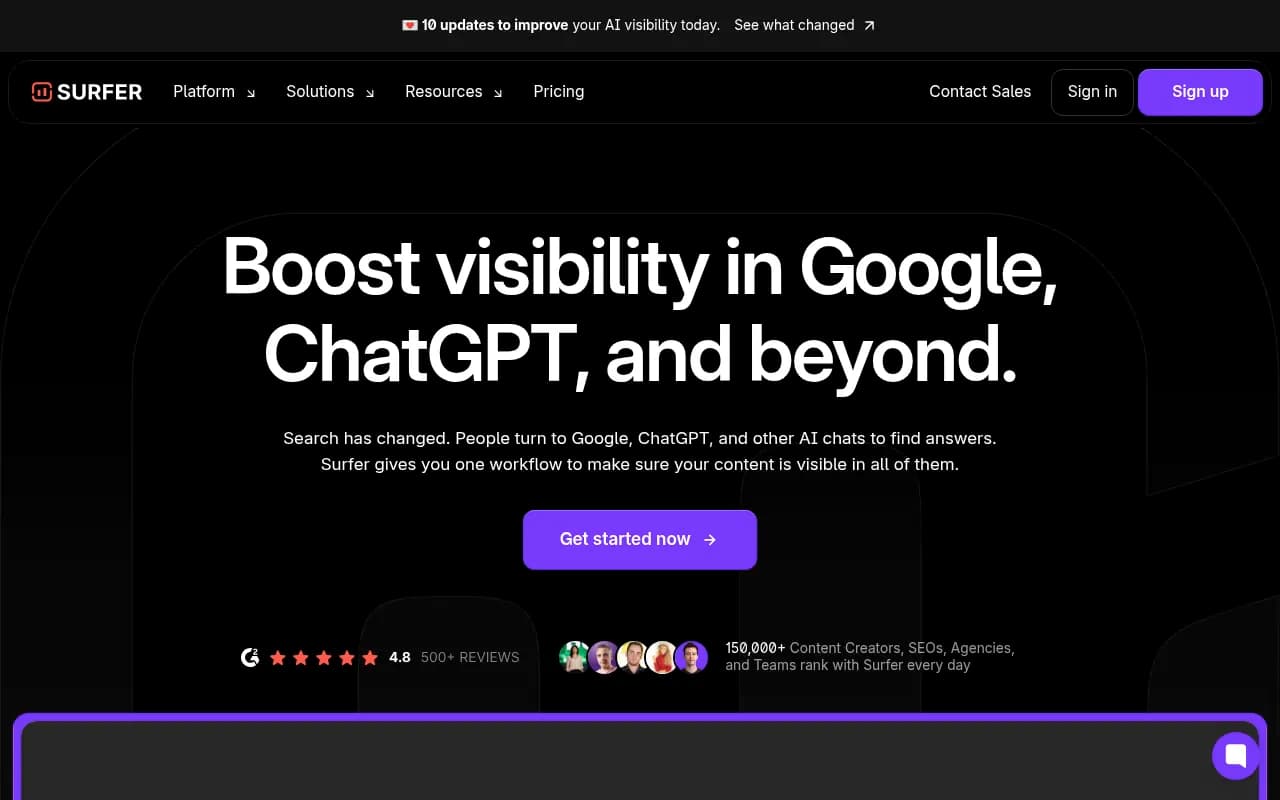
Surfer builds an outline and a content score from the pages that already rank for your term. For brief 1 (the SEO blog post) this is the clearest value. You see which topics, headings and terms the winners cover, and you can write or generate against that.
The risk is obvious once you have used it: chasing the score makes every article look like every other article. Use it to find gaps, not to match the average.
Frase: research and brief in one place
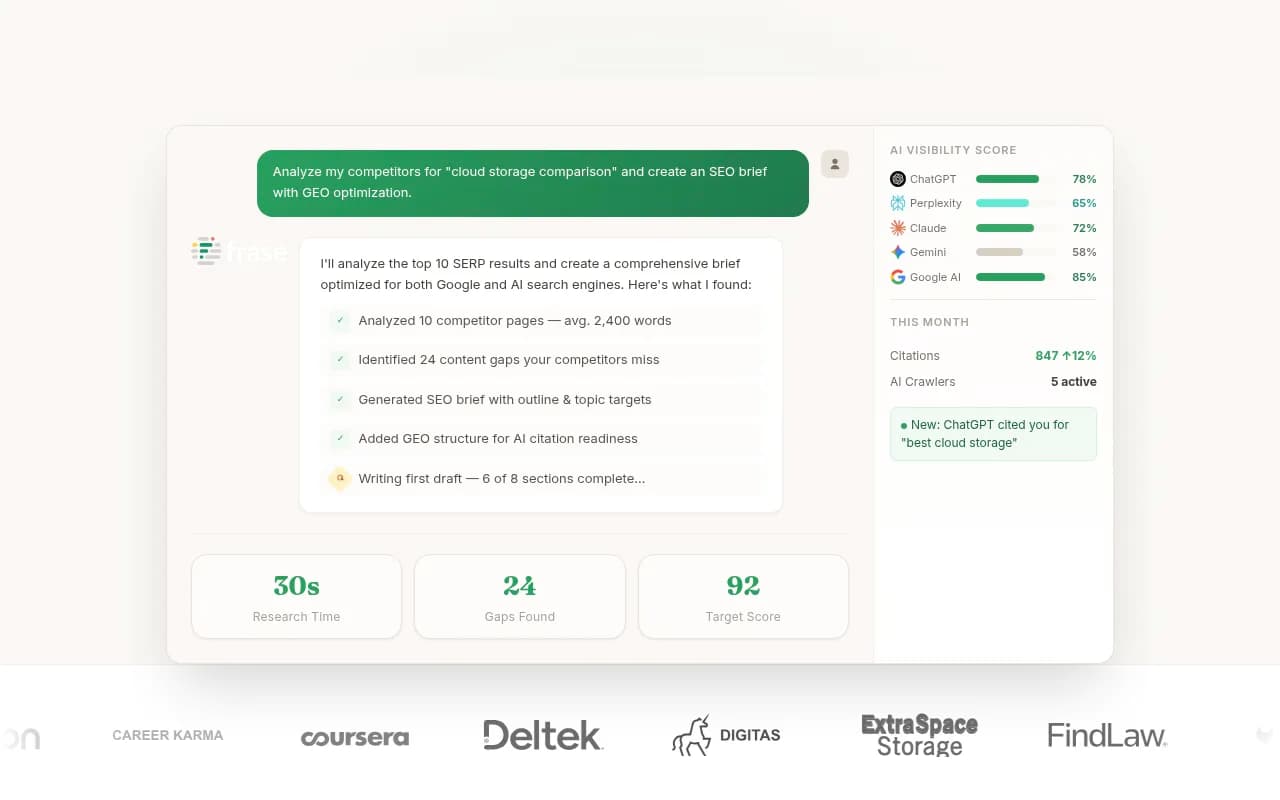
Frase is positioned as an SEO and GEO platform that researches, writes and optimizes. Its strength is the front end of the process, where it turns a topic into a brief backed by SERP data. The Rework roundup groups Surfer and Frase together for the same reason: they turn a blank page into a data-backed brief before any drafting begins.
Expect to edit the draft. The brief is the more valuable output.
Writesonic: changing shape

Writesonic is the one I would double-check before buying. Its pricing page now leads with an AI Search Visibility plan, reportedly $79 a month billed annually, covering brand tracking across ChatGPT, Gemini and Google AI Overviews alongside AI articles and site audits. A third-party snippet listed a $16 monthly writer tier, but that may be out of date. If you want a pure writing tool, confirm the tier still exists. If you want writing plus visibility tracking in one subscription, it is worth a look.
Wordtune: the editor, not the author

Wordtune rewrites sentences and adjusts tone. It earns its place for brief 3. Run your own draft, or an AI draft, through it to loosen stiff phrasing. Grammarly and Wordtune both appear in roundups as the layer that catches what a first-pass edit misses. Do not use it to write from scratch.
Byword: for volume SEO articles
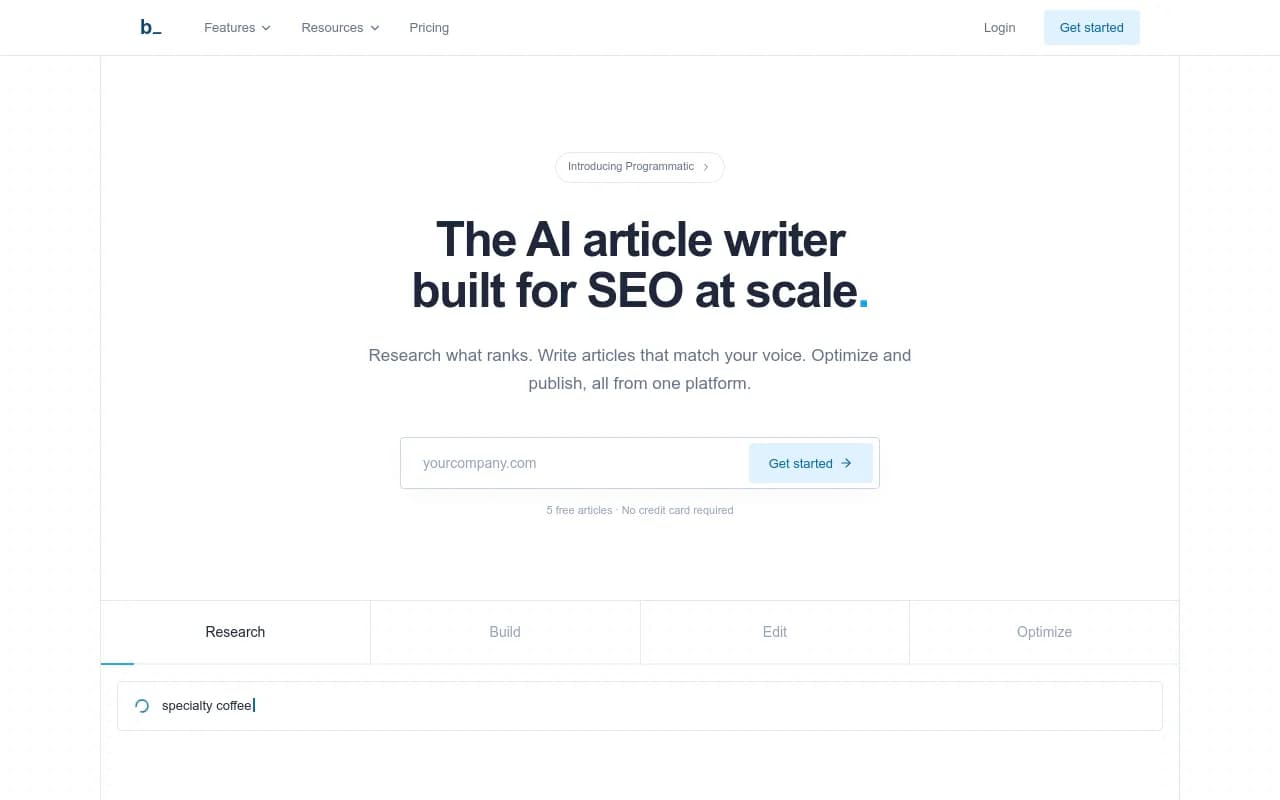
Byword researches, writes, optimizes and publishes articles, which makes it the closest match for brief 4. The tradeoff is the usual one with hands-off tools: the more automated the pipeline, the more important your spot checks. Read a sample of everything it ships, especially claims, numbers and product comparisons.
Promptwatch: when the brief is driven by what AI cites
Promptwatch is a different kind of entry. It is not a general writing assistant. It is an AI visibility platform whose Content Agent writes against gaps it finds in the prompts AI models answer, then publishes to WordPress, Webflow or Framer and tracks whether the page gets crawled and cited. Content Refresh and a Brand Book keep updates on-voice.

That matters for a simple reason: what you write should depend on what gets cited. Promptwatch Data's ChatGPT citation share by content type report (Sep 28 to Oct 4, 2026) shows product pages at 22.4% of ChatGPT citations, landing pages at 16.8% and listicles at 13.6%. For commercial prompts, product pages, landing pages, listicles and comparisons together make up almost 70% of citations. For informational prompts, how-tos (10.7%) and documentation (8.5%) join the mix.
Longevity differs too. Promptwatch's content half-life data shows news pages losing half their citations in about five weeks, while landing pages and docs hold on for months. If an AI writer is cranking out news-style posts, you are building on sand.
The Content Agent is on the Business plan and up (around $579 a month, per the current pricing at promptwatch.com/pricing, so confirm there). The cheaper Essential and Professional tiers include content gap analysis and a limited number of AEO articles.
Match the tool to the brief
| Brief | First choice | Pair it with |
|---|---|---|
| SEO blog post from a keyword | Surfer SEO or Frase | Claude for the argument, a human for the final read |
| Brand-voice marketing copy | Jasper | Wordtune for polish |
| Messy, nuanced long-form | Claude | ChatGPT for variations |
| Edit an existing draft | Wordtune | Claude for structural feedback |
| Scheduled, high-volume articles | Byword | Spot-check sampling |
| Content aimed at AI citations | Promptwatch | Human editor on the review inbox |
| Quick one-off anything | ChatGPT | Nothing, start here |
Buffer's roundup also names Koala as its pick for SEO-focused content and Sudowrite for fiction-style creative writing. Neither is in our tool catalog, so I have not detailed them, but they are worth a trial if those are your use cases.
Does AI-written content actually work?
It does when the human work happens in the right places. In my read of the sources, the pattern holds:
- Decide the format from the prompt intent before you generate anything. A listicle, comparison or how-to is where AI drafting saves the most time, and together those formats earn about 28% of ChatGPT citations in the report above.
- Feed the tool facts it cannot invent. Product specs, original data and quotes are what make a page worth citing. A model with nothing new to say produces the same page that already exists.
- Check every number and claim. I found no independent data on factual error rates across these tools, so assume nonzero.
- Edit for voice last. Sentence-level tools are fastest after the structure is right.
One other thing. AI-detection scores are a poor yardstick. Detectors disagree with each other, and readers do not care about a percentage. They care whether the page tells them something useful.
What to check before you pay
Pricing is the weakest part of the public research. I could not confirm current vendor pricing for Jasper, Copy.ai, ChatGPT, Claude, Koala, Sudowrite or Lex, and Writesonic's plans have clearly changed. Before subscribing:
- Run the same real brief through two or three tools on a free trial.
- Compare the first draft and the edit time, not just the draft.
- Check whether the output needs a separate SEO or publishing tool anyway.
- Confirm the current price on the vendor's own page.
If your goal is visibility in AI answers rather than just publishing more pages, the GEO software directory at bestgeosoftware.com lists tools built for that job.
The short version
Start with ChatGPT or Claude. Add Surfer or Frase when rankings matter, Wordtune when editing is the choke point, and Byword when volume is. Use Promptwatch when you want the writing driven by citation data and tracked after publishing. Whatever you pick, a human still signs off on the final draft.