Key takeaways
- Ecommerce brands need visibility below the brand level: which products AI recommends, in what position, and which competitor product takes the slot when yours is skipped.
- AthenaHQ covers a lot (11 models on its Starter plan, Shopping Insights, a Content Hub), but its documented product write-back reaches Shopify only, on Enterprise and Agency plans, per a vendor-authored comparison from Ranketta.
- The strongest alternatives split by job: Promptwatch for end-to-end tracking plus action, Profound for enterprise depth, Peec AI for lean per-SKU tracking, Ranketta and WorkDuo for product-level focus, AirOps for content scale.
- ChatGPT shows shopping cards on only a low single-digit share of web-search responses, but they concentrate on commercial prompts, and product pages are the most cited content type at 22.4%.
- Run a two-week trial on your own catalog prompts before committing. Vendor listicles (including several cited here) are self-promotional, so treat their claims as unverified.
Why ecommerce teams outgrow generic AI visibility tracking
Most AI visibility tools were built to answer one question: was my brand mentioned? That works for a SaaS company with one product. It works badly for a retailer with 4,000 SKUs, where the brand shows up fine and the individual products get skipped.
The gap shows up in three places. First, shopping surfaces. ChatGPT product cards, Google AI Mode carousels and Amazon Alexa product results each pick products on their own logic. Second, product data. AI engines read your feed, your Product schema and your product pages, so a thin description or a missing GTIN quietly costs you recommendations. Third, attribution. If AI sends visitors, you want to know which products and pages converted them.
So when ecommerce teams look past AthenaHQ, they usually aren't asking for a prettier dashboard. They want product-level data and a way to fix what the data shows.
What AthenaHQ does well, and where ecommerce teams hit limits
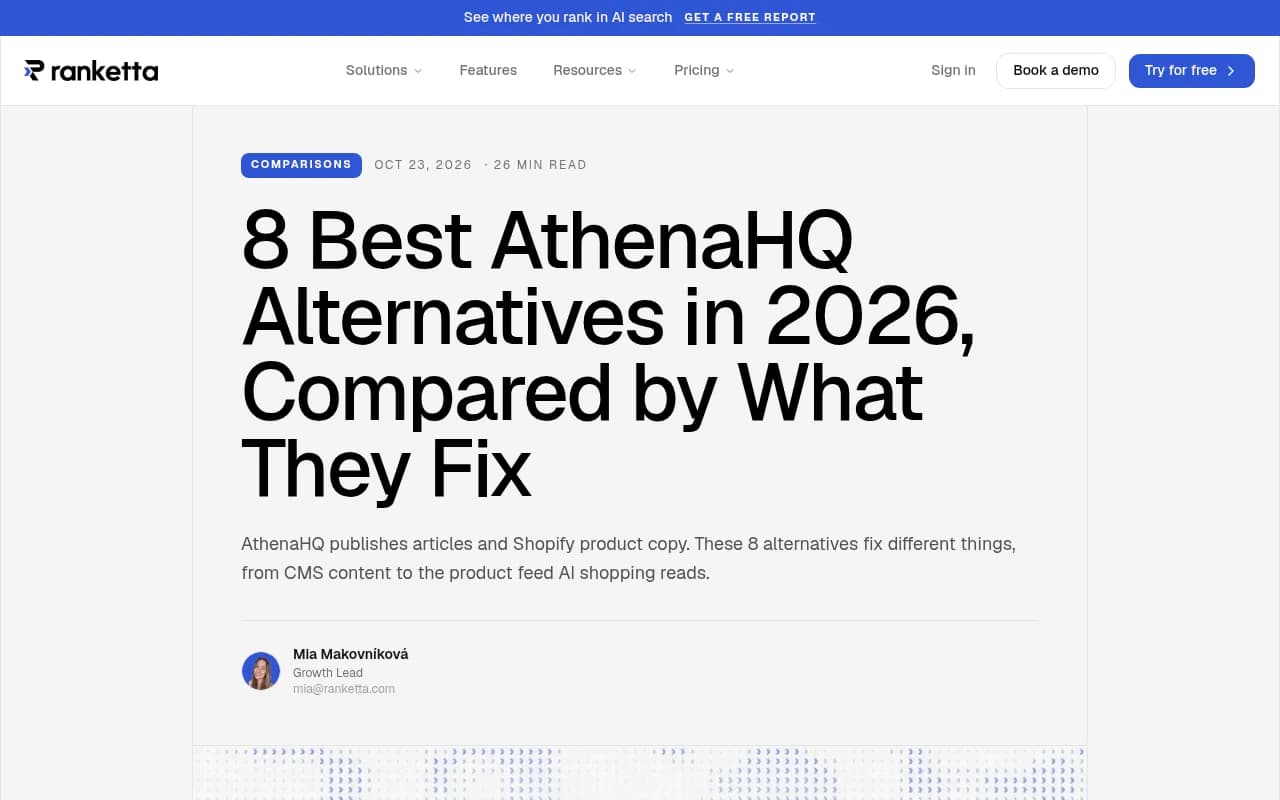
AthenaHQ tracks how AI engines answer your buyers' prompts. According to Ranketta's October 2026 comparison, its Starter plan covers 11 models, including ChatGPT, Perplexity, AI Overviews, AI Mode, Gemini, Claude, Copilot, Grok, DeepSeek, Meta AI and Mistral, with usage metered in credits (one credit per AI response). Its Content Hub drafts articles and publishes to Shopify, Webflow, Wix, Framer, WordPress and a few headless CMSes. Shopping Insights shows which of your products appear in shopping carousels. A Raccoon AI comparison also credits it with Shopify-centered revenue attribution.

The friction points for ecommerce, as reported in those comparisons:
- Catalog Optimization, the feature that rewrites product titles, descriptions and FAQs, sits on Enterprise and Agency plans.
- Product write-back is documented for Shopify only. If you run WooCommerce, BigCommerce or Magento, you work around it.
- The content engine is article-oriented. When the problem is that AI skips your products, another blog post doesn't fix a weak product feed.
I haven't verified AthenaHQ's current pricing, and both sources are competitors' blogs, so check the details yourself before you decide anything. The point is not that AthenaHQ is bad. It's that ecommerce needs differ enough that a shortlist is worth building.
What the data says about product visibility in AI answers
Before comparing tools, it helps to know what you're trying to move.
Promptwatch Data's ChatGPT Shopping report finds that ChatGPT attaches shopping features (product cards, recommendations, price comparisons) to only a low single-digit percentage of web-search responses across all prompts. The rate moves in steps. In the window shown it roughly doubled overnight in late May, then fell back weeks later, which the report reads as OpenAI tuning when cards appear. Shopping features concentrate on commercial and transactional prompts, where trigger rates are far higher than the average.
The citation side matters just as much. In Promptwatch's data on ChatGPT citation share by content type (Sep 28 to Oct 4, 2026), product pages were the most cited type at 22.4%, followed by landing pages at 16.8% and listicles at 13.6%. For commercial prompts, product pages hit 26.0% and landing pages 20.6%. Those four commercial types (product pages, landing pages, listicles, comparisons) make up almost 70% of commercial citations.
What that means in practice:
- Your product pages are the asset. Complete Product schema, accurate prices and availability, and a clean merchant feed come first.
- Get listed in "best of" roundups and publish your own comparison pages.
- Track commercial prompts, record whether cards appear, and note which brands fill them.
- Treat ChatGPT shopping like early Google Shopping: modest traffic today, but early visibility is hard to displace.
Branded prompts lean on reviews more (5.6% of citations, over 3x the all-prompt share), so third-party review presence matters too. And the content half-life report shows news pages lose half their citations in about five weeks, while landing pages and docs keep most of theirs for months. Evergreen product and category pages beat reactive content here.
How to evaluate an AthenaHQ alternative for ecommerce
Skip the generic feature checklist. For a retailer, these questions separate the tools:
- Does it report at the product level, or only the brand level? Can you import a catalog?
- Does it capture shopping carousels and product cards, and on which engines?
- How are answers collected? Real browser sessions can differ from API output, and shopping results often do.
- Where does the fix land? Dashboard only, article drafts, or product data changes?
- Can it tie AI visits to revenue, and see whether AI bots can crawl your product pages at all?
- Does it cover your markets, languages and, for local retail, locations?
AthenaHQ alternatives compared
| Tool | Best for | Product-level tracking | Where the fix lands |
|---|---|---|---|
| Promptwatch | End-to-end tracking, fixing and measuring | ChatGPT Shopping and Alexa product results, uploaded catalog performance | Content Agent, CMS publishing, Action Board |
| Profound | Enterprise brand teams | Shopping visibility, placements, sentiment | Content published via connected CMSes |
| Peec AI | Lean per-SKU tracking | Catalog import from Shopify, CSV or Merchant Center | Mostly monitoring |
| Ranketta | Teams fixing the product feed | Yes, with catalog import | Shopify products or Google Merchant Center |
| WorkDuo | SMB and product teams, agencies | Product, category and offer level | Reporting-focused |
| AirOps | Content production at scale | Limited | 13 CMSes, Shopify product updates |
| Scrunch AI | Controlling what AI bots read | Not the focus | Bot-friendly page versions at the CDN |
| seoClarity | Enterprise with millions of pages | Via enterprise SEO suite | Revenue impact reporting |
The rows for Profound, Peec, Ranketta, WorkDuo, AirOps, Scrunch and seoClarity come from vendor and third-party comparisons, not hands-on testing, so confirm specifics in a trial.
The alternatives, one by one
Promptwatch: tracking plus the fix, with shopping coverage
Promptwatch is an AI visibility platform built around a loop: monitor what AI says, trace where it gets answers, act on the gaps, and measure the result. For ecommerce, the relevant pieces are ChatGPT Shopping tracking, which shows which products AI recommends, which competitors it picks instead, and how your own uploaded catalog performs, plus Amazon Alexa product results. Its Ads Radar also shows which advertisers bid on your prompts in AI search.

What I like for retail teams is that the diagnosis doesn't stop at the carousel. IP-verified AI crawler logs show whether GPTBot, OAI-SearchBot or PerplexityBot can actually read your product pages and where they hit errors, and the crawl-to-citation path tells you whether you have an access problem or a content problem. Visitor analytics then measure the traffic and conversions AI sends. Prompts are collected from the real interfaces of ChatGPT, AI Overviews, AI Mode, Gemini, Perplexity and others, by country and language, which matters because shopping answers differ from API output.
On the fix side, the Content Agent plans, writes and publishes pages to WordPress, Webflow or Framer, and the Action Board prioritizes what to do next. For local retailers, local GEO targeting lets you pin a monitor to exact coordinates for "near me" queries (Business plan and up).
Pricing (confirm at promptwatch.com/pricing): Essential is $95/mo, Professional $245/mo, Business $579/mo. Shopping insights, Ads Radar and the Content Agent start on Business. Agencies get Kick-off ($199/mo), Growth ($399/mo) and Scale ($799/mo), though agency plans exclude ChatGPT Shopping. There is a 7-day free trial on monthly billing, and a free AI visibility report if you want a quick read first. See also Promptwatch vs AthenaHQ.
Profound: enterprise depth
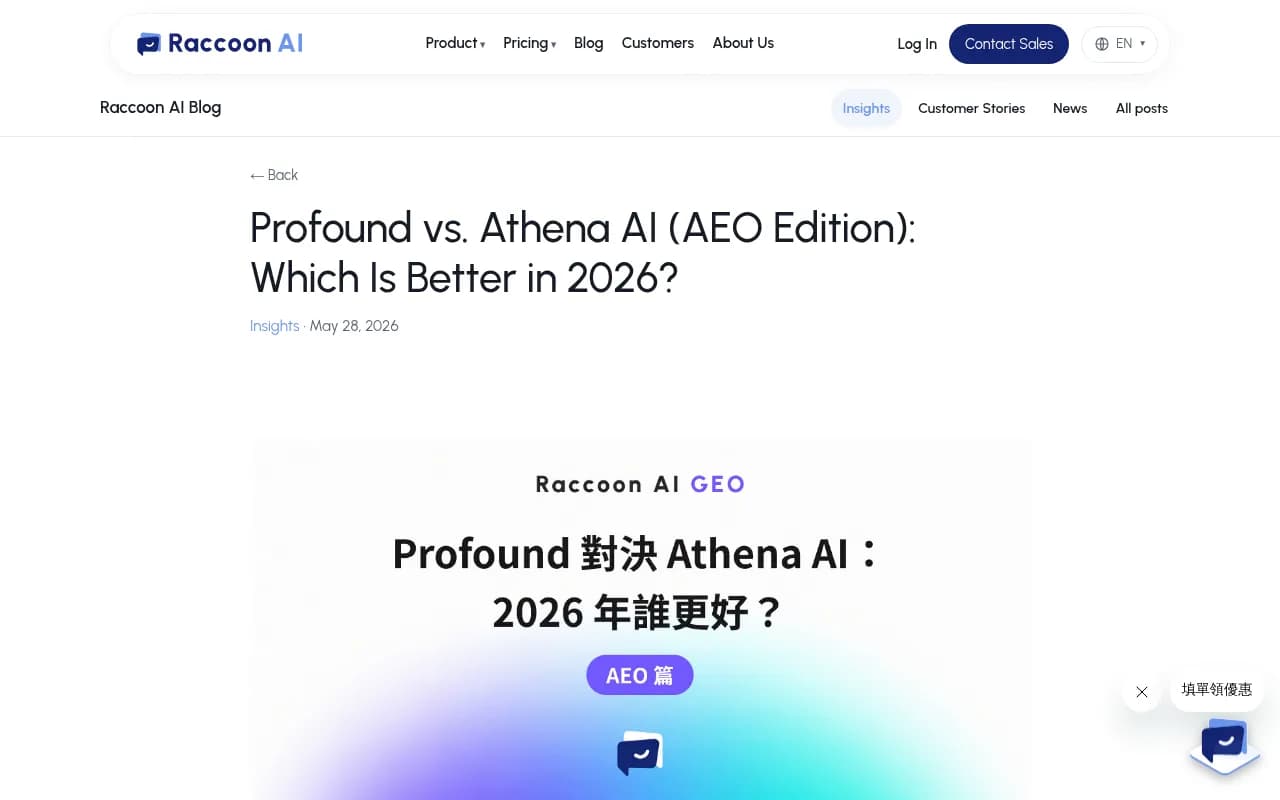
Profound is the usual pick for large brand teams. Per the Raccoon AI comparison, it covers visibility, citations, sentiment and share of voice, with product visibility, placement and competitor exposure in AI shopping results. Expect a higher price point and heavier onboarding. If you have a dedicated AEO team and procurement process, it deserves a demo.

Peec AI: lean tracking per SKU
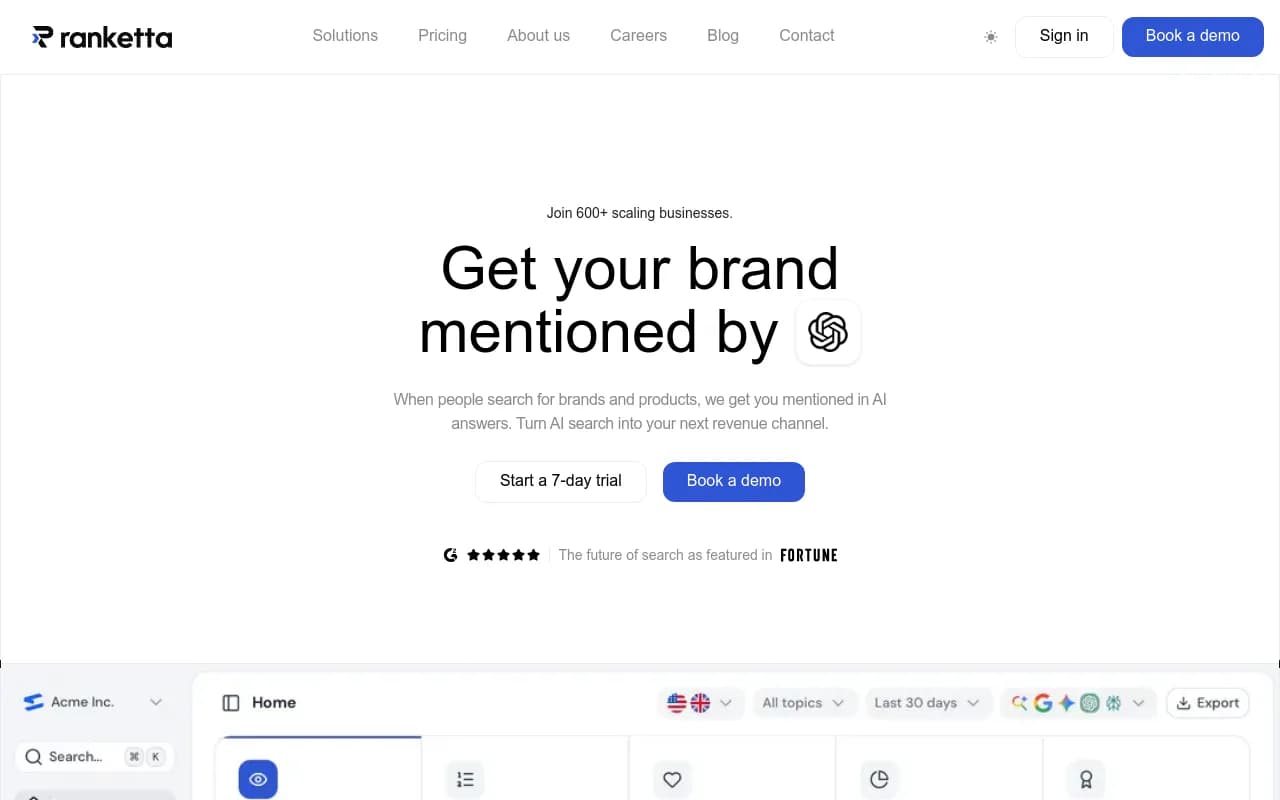
Peec AI imports your catalog from Shopify, a CSV or Merchant Center and reports visibility per SKU, per Ranketta's comparison. It's a monitoring tool at heart, so pair it with your own content and feed workflow. Good for smaller catalogs and teams that want numbers without a big platform.

Ranketta: fixing the product feed
Ranketta tracks which products and brands AI engines recommend from browser sessions, then rewrites product titles, descriptions, categories and GTINs with a confidence score per change. Fixes write back to Shopify products or go out through Google Merchant Center. Its own case study claims a supplements retailer moved from average position #6 to #3, but that comes from the vendor, so test it yourself. The honest caveat: it's a newer, narrower tool, and the comparison I'm citing is Ranketta's own.
WorkDuo: product-level recommendation data
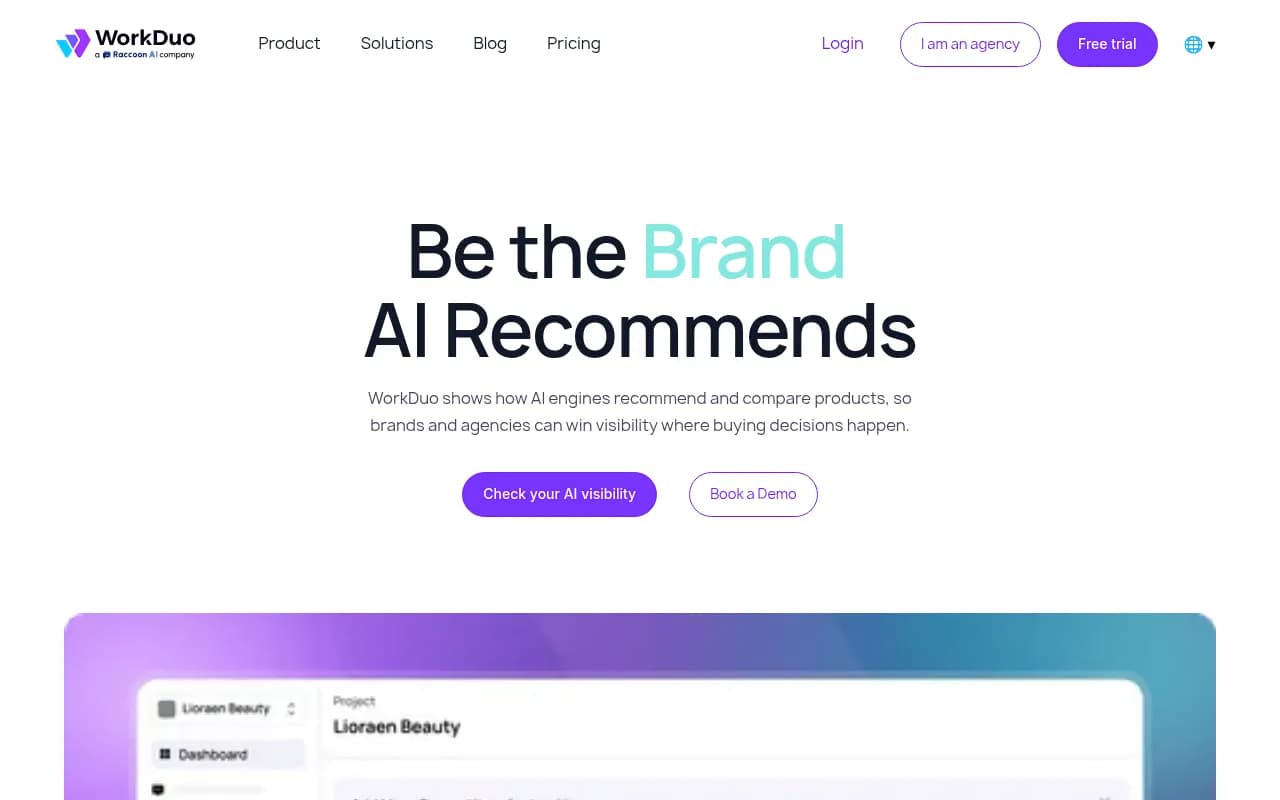
WorkDuo focuses on which specific products AI recommends and which competing option replaces yours, with real-time browser-based tracking and multi-market coverage. The Raccoon AI piece positions it for SMBs, product teams and growing agencies that want flexible pricing. That article is published on a site with a commercial interest in WorkDuo, so read it with that in mind.
AirOps: content engineering at scale
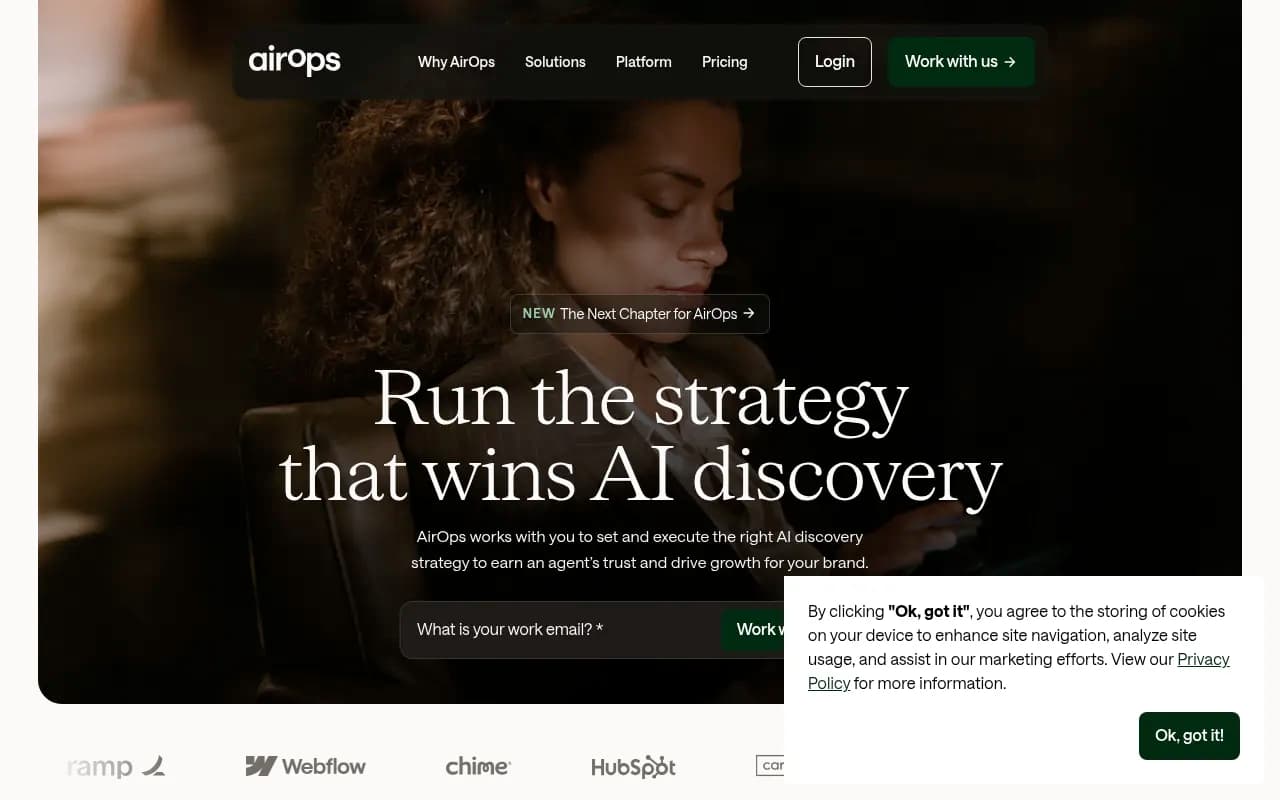
AirOps publishes to 13 CMSes and can update Shopify products, according to Ranketta's summary. It suits teams whose bottleneck is producing and refreshing hundreds of category pages and buying guides rather than measuring visibility.
Scrunch AI and seoClarity: control and scale
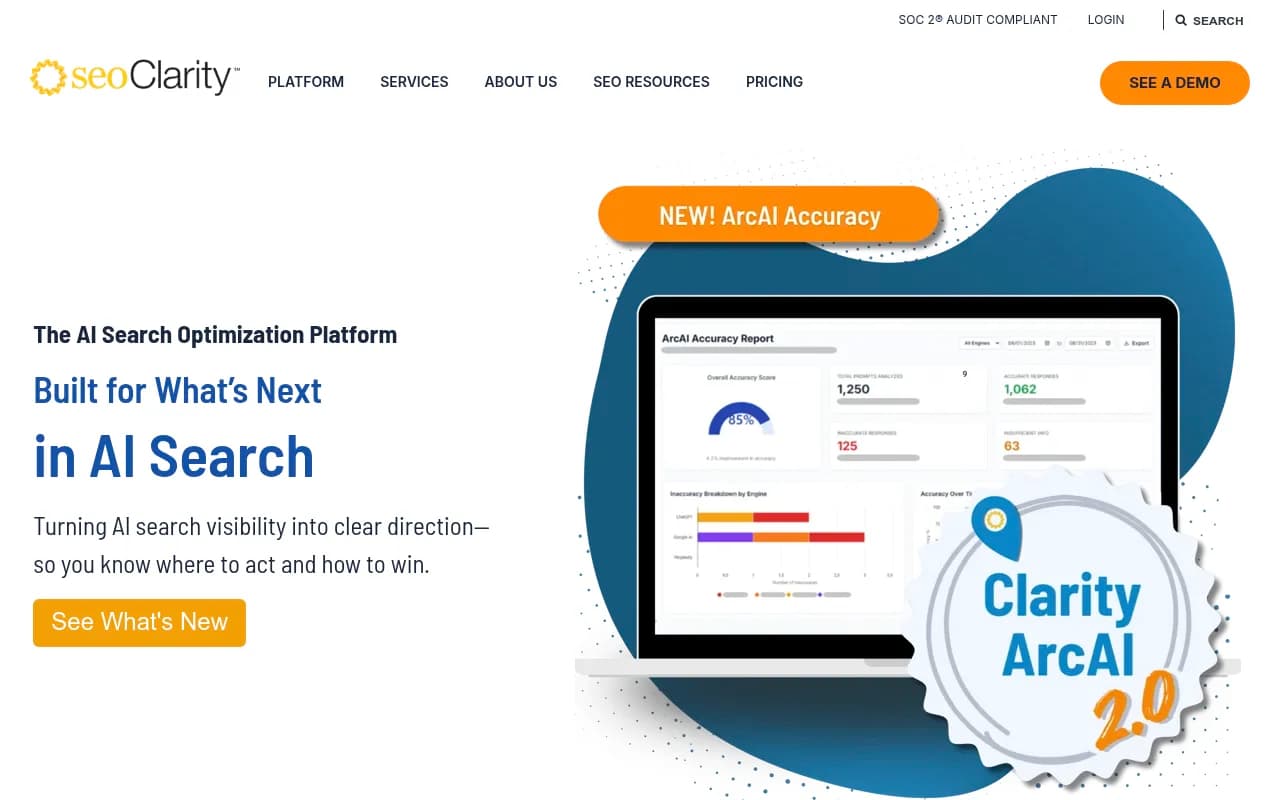
Scrunch AI serves a JavaScript-free version of your pages to AI bots at the CDN, which helps if your storefront is heavy on client-side rendering. seoClarity is the uncapped enterprise option for brands with millions of pages that must prove revenue impact.
Ecommerce-specific tools worth a look
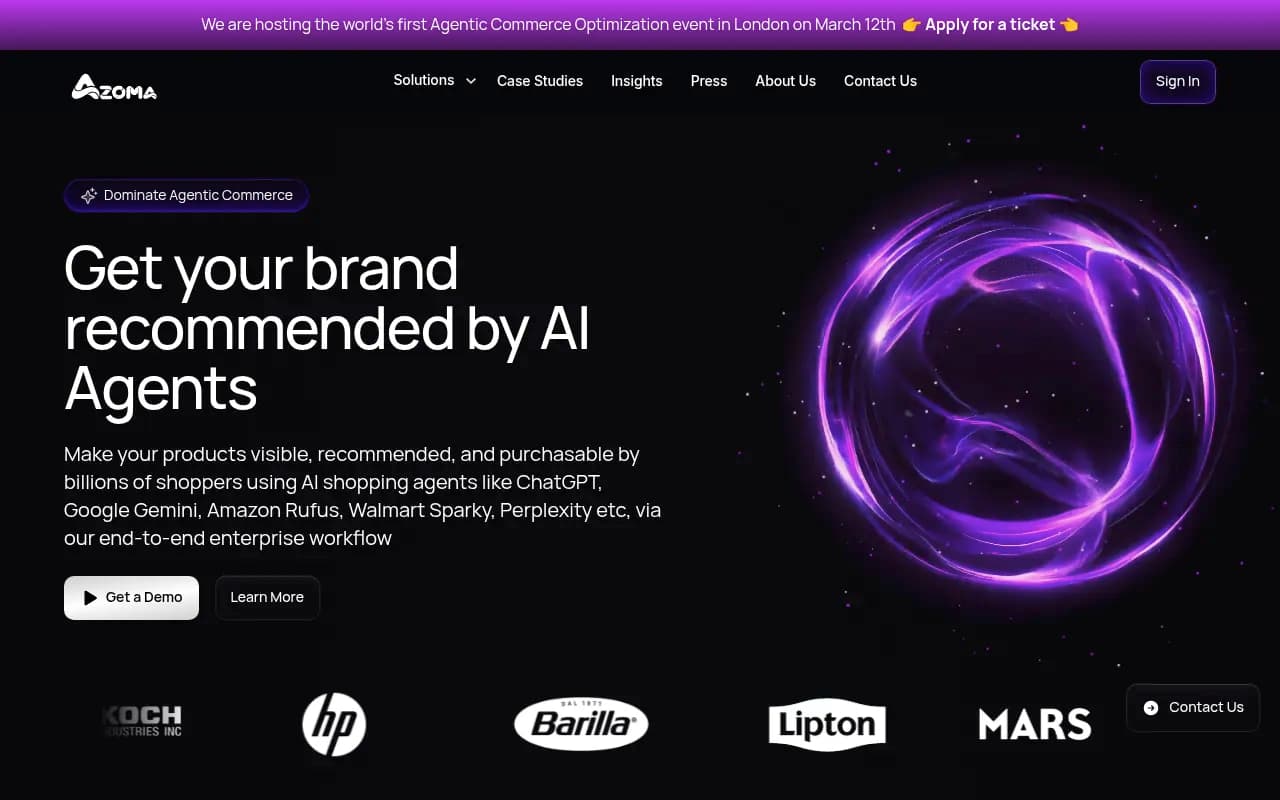
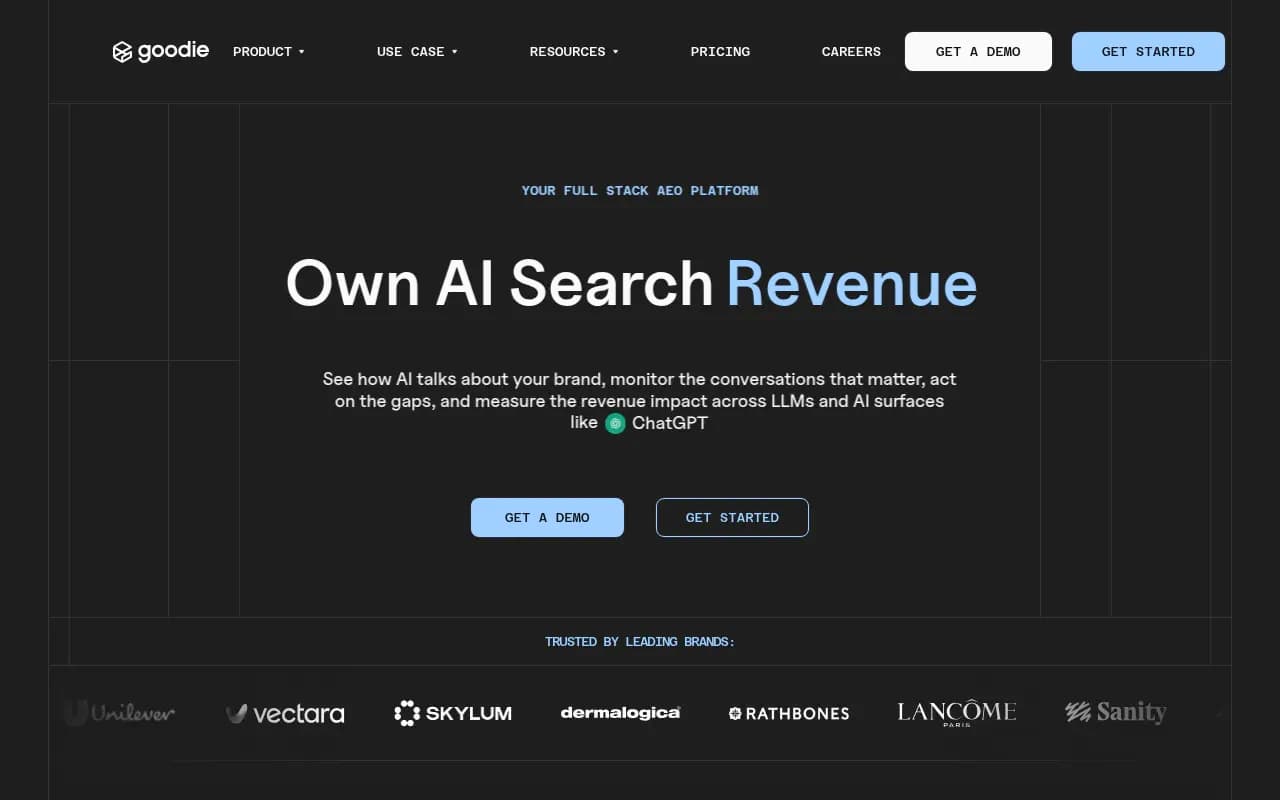
The catalog also lists a few tools aimed squarely at commerce: Azoma for enterprise AI shopping optimization across ChatGPT and Rufus, Goodie AI for agentic commerce optimization, Yotpo Discover for ecommerce product discovery, and ShopOS for ecommerce GEO practices. I haven't tested these, so treat them as shortlist candidates, not recommendations.
For a wider scan of the category, the GEO software directory lists far more options.
Which one should you pick?
| If your situation is... | Start with |
|---|---|
| You want tracking, content, crawler diagnostics and AI traffic in one place | Promptwatch |
| Enterprise team, dedicated AEO budget | Profound or seoClarity |
| Small catalog, minimal budget, just need numbers | Peec AI |
| The product feed is the problem | Ranketta |
| Agency or SMB wanting product-level reporting | WorkDuo |
| Hundreds of pages to write or refresh | AirOps, or Promptwatch's Content Agent |
| JavaScript-heavy storefront | Scrunch AI, plus a crawler-log check |
A two-week trial plan
Don't compare dashboards. Compare what each tool tells you about the same 40 prompts.
- Build a prompt set: 15 commercial prompts ("best X under $Y"), 10 comparison prompts, 10 branded prompts, and 5 "near me" or market-specific prompts if relevant.
- Load your top 50 products or categories as the catalog, where supported.
- Run the same set in two tools and check whether they agree on which products appear in shopping cards. If they disagree, look at how each collects answers.
- Check crawler access to your product pages. If AI bots hit errors, no content fix will matter yet.
- Pick five products AI skips, fix schema, descriptions and feed data, and re-check in two to three weeks.
- Count visits and conversions from AI referrers. ChatGPT stopped sending a referrer on October 8, 2026, so tag links with utm_source=chatgpt.com where you can.
If you want a second opinion on the strategy side, an agency like 1001 SEO Media works on GEO and AI search visibility for brands, though you can run this trial in-house.
Bottom line
AthenaHQ is a reasonable choice if you're on Shopify and want content plus attribution in one tool. The alternatives matter when your problem is product-level: who gets recommended, why your SKUs get skipped, and whether the fix lives in articles, feeds or crawler access. Pick two tools, test them on your own prompts, and judge them on whether product visibility actually moves.