Key takeaways
- Most GEO/AEO platforms in 2026 are monitoring-only dashboards. They show you visibility data but stop there, leaving you to figure out what to do next.
- The 12 capabilities that separate real optimization platforms from trackers include: multi-model coverage, content gap analysis, AI content generation, crawler logs, traffic attribution, prompt volume data, Reddit/YouTube tracking, and ChatGPT Shopping monitoring.
- Only a handful of platforms score well across all 12 dimensions. Most tools excel in one or two areas and fall short elsewhere.
- Price does not reliably predict capability depth. Some $29/mo tools outperform $500/mo platforms on specific features.
- If you want to actually improve AI visibility (not just measure it), you need a platform that closes the loop from gap identification to content creation to result tracking.
Why this comparison exists
The GEO tool market has exploded. In early 2025, you could count the serious platforms on one hand. By mid-2026, there are well over 50 tools claiming to help you "dominate AI search." Most of them are tracking dashboards with a fresh coat of paint.
That creates a real problem for marketing teams trying to make a purchasing decision. The feature pages all look similar. Everyone claims to monitor ChatGPT, Perplexity, and Google AI Overviews. Everyone has a "visibility score." The differences only become obvious when you dig into what the tool actually does with that data.
This guide scores 20 platforms across 12 specific capabilities. Not vibes, not G2 ratings -- specific features that determine whether a tool helps you get cited in AI answers or just tells you that you aren't.
The 12 capabilities we scored
Before getting into the matrix, here's what each capability means and why it matters:
-
Multi-model coverage -- How many AI engines does the tool monitor? ChatGPT alone is not enough. Perplexity, Claude, Gemini, Grok, DeepSeek, Copilot, and Google AI Overviews all have different citation behaviors.
-
Prompt volume and difficulty data -- Can you see how often a given prompt is asked and how hard it is to rank for? Without this, you're optimizing blind.
-
Answer gap analysis -- Does the tool show you which prompts competitors appear in that you don't? This is the core of any optimization workflow.
-
AI content generation -- Can the tool generate articles, listicles, or FAQs designed to earn citations? Not generic AI writing -- content grounded in citation data.
-
Citation and source analysis -- Can you see exactly which pages, domains, Reddit threads, or YouTube videos AI models are citing? Knowing where AI pulls from tells you where to publish.
-
AI crawler logs -- Does the tool show you when ChatGPT, Claude, Perplexity, and other AI crawlers visit your site, which pages they read, and what errors they hit?
-
Traffic attribution -- Can you connect AI visibility to actual website traffic and revenue? This requires a code snippet, GSC integration, or server log analysis.
-
Reddit and YouTube tracking -- AI models heavily cite Reddit and YouTube. Does the tool surface relevant discussions that influence AI recommendations?
-
ChatGPT Shopping tracking -- For e-commerce and product brands, does the tool monitor when your products appear in ChatGPT's shopping carousels?
-
Competitor heatmaps -- Can you compare your AI visibility against specific competitors across different models and prompt categories?
-
Multi-language and multi-region -- Can you monitor AI responses in different languages and from different geographic locations?
-
API and integrations -- Can you export data, connect to Looker Studio, or build custom workflows on top of the platform?
The 2026 GEO platform feature matrix
The table below scores 20 platforms across all 12 capabilities. Scores are: Full (the feature is robust and purpose-built), Partial (the feature exists but is limited or basic), and No (the feature is absent).
| Platform | Multi-model | Prompt volume | Answer gap | AI content gen | Citation analysis | Crawler logs | Traffic attribution | Reddit/YouTube | ChatGPT Shopping | Competitor heatmaps | Multi-language | API/integrations |
|---|---|---|---|---|---|---|---|---|---|---|---|---|
| Promptwatch | Full (10+) | Full | Full | Full | Full | Full | Full | Full | Full | Full | Full | Full |
| Profound | Full (10+) | Partial | Partial | No | Full | No | Partial | No | No | Full | Partial | Partial |
| AthenaHQ | Full (8+) | Partial | Partial | No | Full | No | No | No | No | Full | Partial | Partial |
| Scrunch AI | Full (9+) | No | Partial | No | Full | No | No | No | No | Full | Partial | Partial |
| Peec AI | Full | No | No | No | Partial | No | No | No | No | Partial | Full | Partial |
| Otterly.AI | Full (6+) | No | No | No | Partial | No | No | No | No | Partial | Partial | No |
| Airefs | Partial | No | No | No | Partial | No | No | Partial | No | Partial | No | No |
| SE Ranking | Partial | No | No | No | Partial | No | No | No | No | Partial | Partial | Partial |
| Semrush | Partial | No | No | No | Partial | No | No | No | No | Partial | Partial | Full |
| Ahrefs Brand Radar | Partial | No | No | No | Partial | No | No | No | No | Partial | No | Partial |
| LLMrefs | Full | Partial | Partial | No | Full | No | No | No | No | Partial | Partial | Partial |
| Writesonic | Partial | No | No | Partial | Partial | No | No | No | No | No | Partial | Partial |
| Search Party | Partial | No | No | No | Partial | No | No | No | No | Partial | No | Partial |
| Brandlight | Partial | No | No | No | Partial | No | No | No | No | Partial | No | No |
| Rankscale | Partial | No | No | No | Partial | No | No | No | No | No | No | No |
| Gauge | Partial | No | Partial | No | Full | No | No | No | No | Full | Partial | Partial |
| Bluefish | Partial | No | No | No | Partial | No | No | No | No | Partial | No | No |
| Searchable | Partial | No | No | No | Partial | No | No | No | No | Partial | Partial | No |
| ZipTie | Partial | No | No | No | Partial | No | No | No | No | No | No | No |
| Trakkr.ai | Partial | No | No | No | Partial | No | No | No | No | Partial | No | No |
Tier 1: Full-stack optimization platforms
These tools go beyond monitoring. They help you identify what's missing, create content to fix it, and measure whether it worked.
Promptwatch
Promptwatch is the only platform in this comparison that scores "Full" across all 12 capabilities. The core workflow is built around a loop: find gaps, generate content, track results.
The Answer Gap Analysis shows you exactly which prompts competitors rank for in AI answers that you don't. The built-in AI writing agent then generates articles and comparisons grounded in citation data from over 880 million analyzed citations -- not generic SEO filler. And the traffic attribution layer (via code snippet, GSC integration, or server log analysis) connects AI visibility to actual revenue.
What sets it apart from every other tool in this list: the AI crawler logs. You can see in real time when ChatGPT, Claude, Perplexity, and other AI crawlers visit your site, which pages they read, and what errors they encounter. Most competitors don't have this at all. Reddit and YouTube tracking, ChatGPT Shopping monitoring, and query fan-outs (showing how one prompt branches into sub-queries) round out a feature set that no other platform matches end-to-end.
Used by 6,700+ brands and agencies including Booking.com and Center Parcs. Pricing starts at $99/mo.

Tier 2: Strong monitoring with partial optimization
These platforms have real depth in visibility tracking and competitive analysis, but they stop short of helping you act on what they find.
Profound
Profound has solid multi-model coverage and good citation analysis. The competitive heatmaps are genuinely useful for understanding share-of-voice across AI engines. Where it falls short: no AI content generation, no crawler logs, and the traffic attribution is limited to higher-tier plans. It's a strong choice for enterprise teams that already have content production resources and just need the intelligence layer. Pricing starts at $99/mo for ChatGPT-only monitoring; full multi-model coverage requires the Growth plan.

AthenaHQ
YC-backed and focused on mid-market growth teams. AthenaHQ covers 8+ AI models and has decent competitor analysis. The platform has documented cases of 10x citation growth for customers, which suggests the monitoring data is actionable even without built-in content tools. The $295/mo starting price is steep for what is essentially a monitoring platform, but the data quality is high.

Scrunch AI
Scrunch positions itself as an "Agent Experience Platform" -- the idea being that AI agents are a new audience you need to optimize for, not just a channel to track. The monitoring is solid across 9+ models. No content generation, no crawler logs, no traffic attribution. At $250/mo it's priced like a full-stack tool but delivers a monitoring-focused experience.
LLMrefs
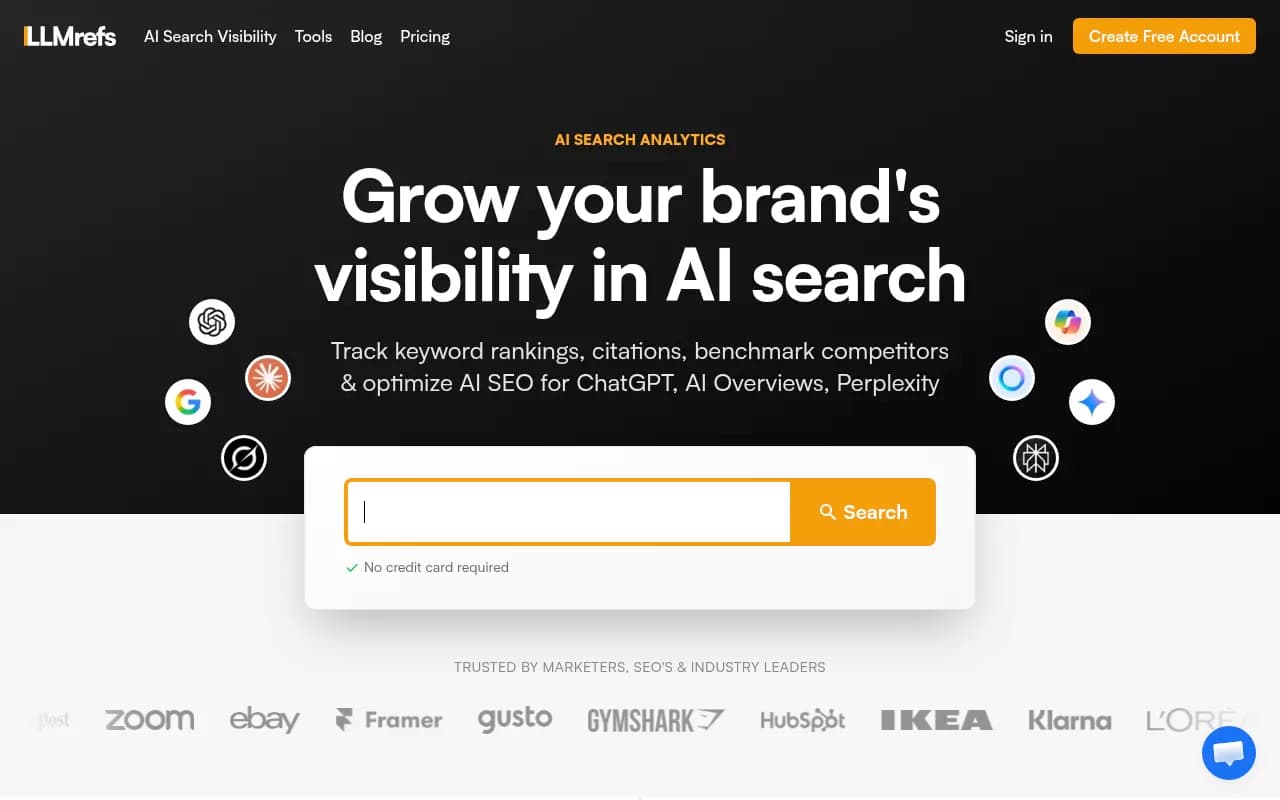
LLMrefs takes an interesting approach: it centers the workflow on keywords you already track, then auto-generates conversational prompts around those keywords and aggregates results into share-of-voice metrics. The citation analysis is strong. Multi-model coverage is good. The gap is on the action side -- there's no content generation and no traffic attribution. Good fit for SEO teams that want to translate existing keyword work into AI visibility data.
Tier 3: Budget monitoring tools
These platforms do the basics well and are priced accordingly. They're useful for teams that want to start tracking AI visibility without a major budget commitment, but they won't help you improve what you're tracking.
Otterly.AI
One of the most affordable options at $29/mo with a 4.9/5 rating and Gartner Cool Vendor recognition. Covers ChatGPT, AI Overviews, AI Mode, Perplexity, Gemini, and Copilot. The monitoring is clean and the UI is well-regarded. No prompt volume data, no gap analysis, no content generation, no crawler logs. It's a tracker, not an optimizer -- but it's a good tracker for the price.

Peec AI
Strong on multi-language support (115+ languages) and uses UI scraping rather than API calls, which means it captures what users actually see rather than what the API returns. That's a meaningful technical distinction. The trade-off: limited competitive analysis and no optimization features. Good for global brands that need accurate multi-language monitoring.

Airefs
Priced at $24/mo, Airefs is the most affordable option in this comparison. It has some Reddit monitoring built in, which is unusual at this price point. Coverage is primarily ChatGPT with other LLMs available on request. No gap analysis, no content generation, no crawler logs. There's also a done-for-you agency option for teams that don't want to manage the tool themselves.
Rankscale
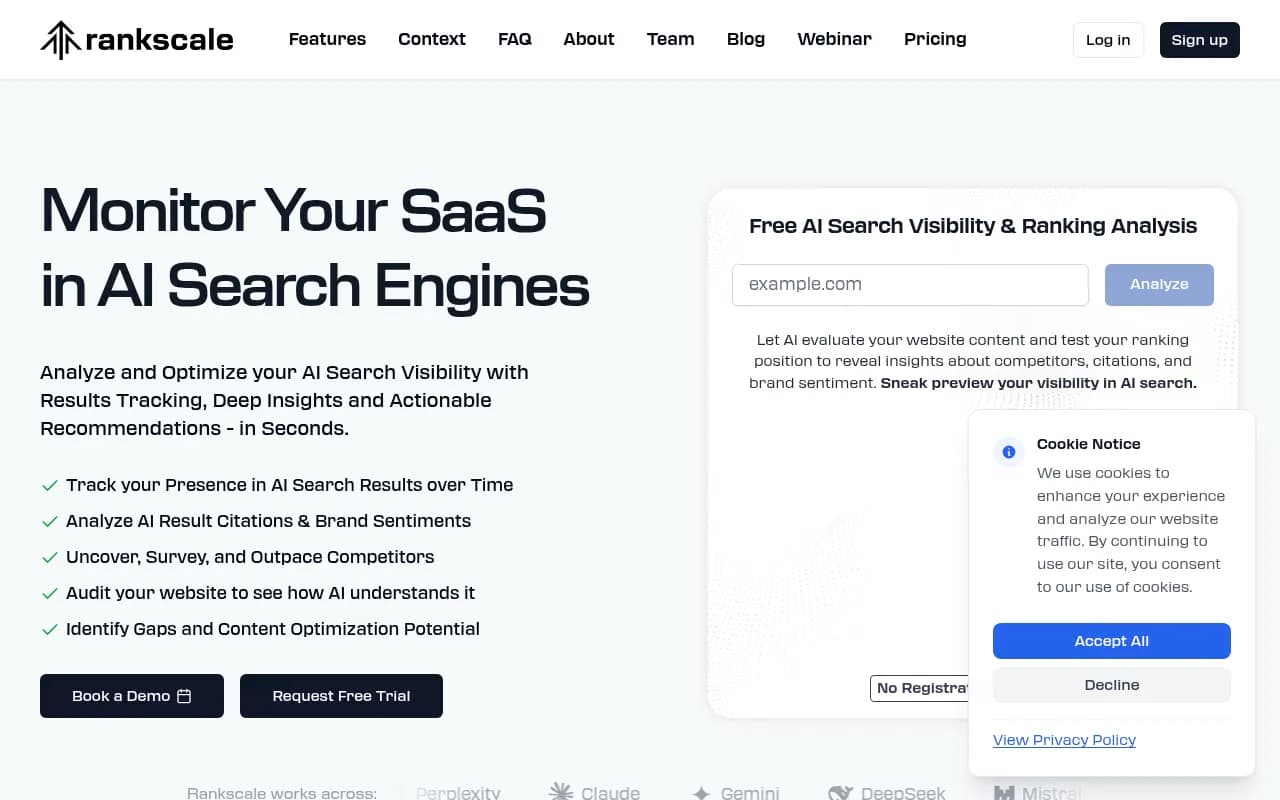
Minimal feature set at a minimal price ($20/mo). Covers basic AI rank tracking. No competitive analysis, no content tools, no attribution. Fine as a starting point for very small teams or solo operators who just want to know if their brand is showing up.
Tier 4: Traditional SEO tools with AI add-ons
These are established SEO platforms that have added AI visibility features. The monitoring capabilities are real but limited compared to purpose-built GEO tools.
Semrush
Semrush added AI visibility tracking to its platform, which makes sense given its existing keyword and competitive intelligence data. The limitation: prompts are fixed rather than customizable, and there's no AI traffic attribution. If you're already a Semrush user, the AI features are worth exploring. If you're buying specifically for GEO, the purpose-built tools are more capable.
Ahrefs Brand Radar
Similar story to Semrush. Ahrefs Brand Radar is in beta and covers AI visibility monitoring with the brand equity Ahrefs has built in traditional SEO. Fixed prompts and no AI traffic attribution are the main limitations. Worth watching as it matures.
SE Ranking
SE Ranking's AI visibility toolkit sits inside a broader SEO platform. The monitoring is functional. Multi-language support is decent. Like the other traditional SEO tools, it lacks the depth of purpose-built GEO platforms on gap analysis and optimization.
Other tools worth knowing about
Several tools in the catalog cover specific niches or are worth tracking as the market develops.
Gauge has strong competitive intelligence features and good citation analysis. It's more of an enterprise research tool than a day-to-day optimization platform, but the depth of competitive data is impressive.
Writesonic is primarily an AI writing platform that has added GEO features. The content generation is solid (it's the core product), but the monitoring side is limited. An interesting option if content creation is your primary need and monitoring is secondary.
Search Party is agency-oriented and covers the monitoring basics. Limited prompt metrics and no content gap analysis make it less useful for teams that want to go beyond reporting.
Trakkr.ai covers the core tracking use case across ChatGPT, Claude, Perplexity, and others. Early-stage but worth watching.
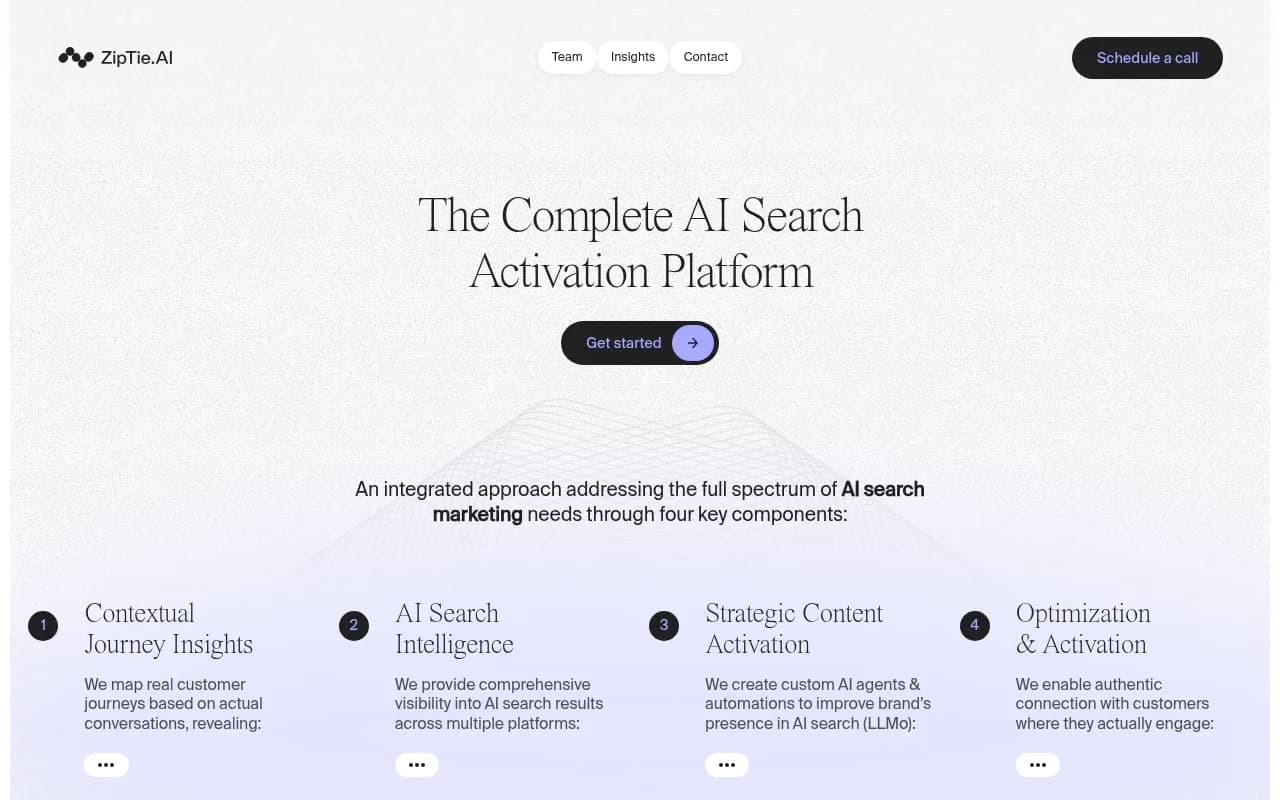
ZipTie focuses on deep diagnostic analysis for AI search visibility. More of a diagnostic tool than an ongoing monitoring platform.
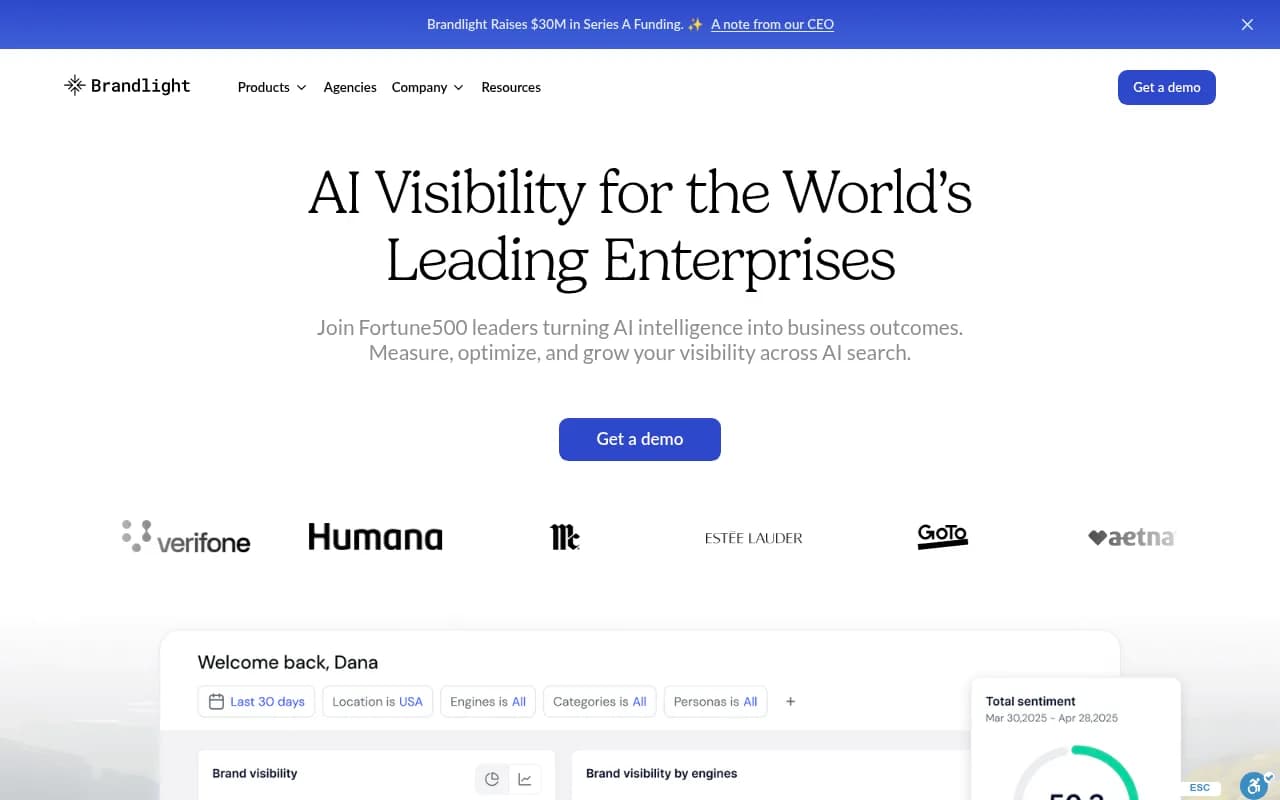
Brandlight covers brand visibility tracking with a clean interface. Limited feature depth compared to Tier 1 and Tier 2 platforms.
How to choose the right platform
The right tool depends on where you are in your GEO journey and what you actually need to do.
If you're starting from zero and want to understand your current AI visibility, any Tier 3 tool will get you there. Otterly.AI is the best combination of coverage and price at this stage.
If you need competitive intelligence and share-of-voice data, Profound, AthenaHQ, or Gauge give you the depth to understand how you compare to competitors across AI models.
If you want to actually improve your AI visibility (not just measure it), you need a platform with answer gap analysis and content generation. That narrows the field significantly. Promptwatch is the only platform in this comparison that closes the full loop from gap identification to content creation to traffic attribution.
If you're an enterprise team with existing content resources, Profound or AthenaHQ give you the intelligence layer without paying for content generation you won't use.
If you're an agency managing multiple clients, look for multi-site support, white-label options, and API access. Promptwatch's agency and enterprise tiers are built for this. Search Party is also agency-oriented, though with more limited feature depth.
If multi-language monitoring is critical, Peec AI's 115+ language support is hard to beat at its price point.
The monitoring vs. optimization gap
The most important thing to understand about this market: there's a fundamental difference between tools that monitor AI visibility and tools that help you improve it.
Monitoring tells you that you're invisible for a prompt. Optimization tells you why, shows you what content would fix it, helps you create that content, and then confirms whether it worked. Most tools in this comparison do the first thing. Very few do the second.
That gap matters because AI visibility is not static. The models are constantly updating their citation patterns. A brand that was well-cited in January 2026 might have lost ground by April if competitors published better content. Monitoring without optimization is like checking your blood pressure without having any way to treat it.
The platforms that will matter most by end of 2026 are the ones that treat GEO as an ongoing optimization cycle rather than a reporting function. The feature matrix above is a snapshot of where things stand now -- but the direction of the market is clearly toward action, not just observation.
Pricing summary
| Platform | Starting price | Free trial | Best for |
|---|---|---|---|
| Promptwatch | $99/mo | Yes | Full-stack optimization, agencies |
| Profound | $99/mo (ChatGPT only) | Free report | Enterprise monitoring |
| AthenaHQ | $295/mo | Yes (67% off first month) | Mid-market competitive intelligence |
| Scrunch AI | $250/mo | 7 days | Enterprise monitoring |
| LLMrefs | Varies | Yes | SEO teams, keyword-based monitoring |
| Otterly.AI | $29/mo | 14 days | Budget monitoring |
| Peec AI | €89/mo | 14 days | Multi-language monitoring |
| Airefs | $24/mo | 7 days | Startups, budget-conscious teams |
| Rankscale | $20/mo | No | Solo operators, basic tracking |
| Semrush (AI features) | $99/mo | No | Existing Semrush users |
| Ahrefs Brand Radar | $129/mo+ | Beta free | Existing Ahrefs users |
| SE Ranking | Varies | Yes | All-in-one SEO + AI monitoring |
Annual billing typically reduces these prices by 15-25% across most platforms.
The GEO platform market is still sorting itself out. The tools that survive the next 18 months will be the ones that prove they can move the needle on actual AI visibility, not just measure it. The feature matrix above gives you a starting point for that evaluation -- but the real test is whether the tool you choose helps you show up in AI answers six months from now.