Key takeaways
- You cannot edit ChatGPT's answer directly. You can change what it reads (the sources) and use the platform's feedback and privacy channels for claims that have no source.
- Document first. Save the exact prompt, the full answer, the date, the model, and every cited URL before you touch anything, because answers change between runs.
- Different damaging sources decay at different speeds. A news story may fade from ChatGPT citations in about five weeks, while a bad review or landing-type page can persist for months.
- The source mix differs by engine. A damaging Reddit thread matters much less in ChatGPT now than in Google AI Overviews or Perplexity, so your response should differ by engine.
- Monitoring is what keeps a one-off fix from turning into a repeat incident.
Why this needs its own plan
A classic PR crisis has a visible cause: a headline, a viral post, a bad review. An AI reputation crisis is stranger. Someone asks ChatGPT "is [your company] legit?" and gets a confident, tidy two-paragraph answer that is wrong, outdated, or built from a competitor's reviews. Nobody at your company posted anything. There is no thread to reply to.
The answer still shapes decisions. Buyers, recruiters, investors, and journalists now ask these tools before they call. And the answer is not stable: the same question can produce different text tomorrow.
So you need a plan that works like incident response. Know who owns it, what you capture, where you look, and which levers you can actually pull. Most of the pain here comes from people reaching for the wrong lever, like arguing with the chatbot.
A note on sources: much of the public advice on this topic comes from reputation-management vendors who sell removal services. Their core idea, that you fix the sources and the answer follows, is useful but incomplete. I will flag where it holds and where it does not.
First, sort the problem into a type
The response path depends on what kind of damage you are looking at. Roughly four patterns show up.
| Type | What it looks like | Typical cause | Main lever |
|---|---|---|---|
| Sourced and true but outdated | Old lawsuit, resolved complaint, discontinued pricing | A real page the model cites or learned from | Update or add context at the source, publish a current page |
| Sourced and false | Fake review, defamatory article, wrong forum claim | A real third-party page | Removal request, correction request, legal route |
| Unsourced hallucination | Invented scandal, fake product, made-up quote | The model fabricated or merged facts | Platform feedback, privacy channel, counsel for serious claims |
| Mistaken identity | Your company confused with a similarly named one | Entity ambiguity | Clear entity pages, structured data, platform report |
Triage this in the first hour. If it is an unsourced claim of fraud, crime, or malpractice, skip ahead to the legal section. If it is a sourced claim, your effort goes into the source.
Hour 0 to 4: document before you do anything
The worst first move is to start fixing things and lose the evidence. Answers shift, and you will want a record for platform reports, for counsel, and for measuring whether your fixes worked.
Capture, for every damaging answer:
- The exact prompt, word for word, and the model or product (ChatGPT, Gemini, Perplexity, AI Overviews, Copilot).
- The full response, as text and as a screenshot with the date visible.
- Every cited source URL, and where each one sits in the source list.
- Whether web search was on. Answers with live search cite pages. Answers from training data alone often do not.
- The country, language, and account state you used. Logged-out and logged-in answers can differ.
Then run the same prompt several times and with variations that real people use. "Is X a scam?", "X reviews", "X vs [competitor]", "who owns X". Record how often the damaging claim appears. A claim that shows up in 1 of 10 runs is a different severity from one that shows up in 9 of 10.
Assign one owner. Usually that is a comms or brand lead with legal on call. Everybody else sends screenshots to that person instead of posting about it internally in five Slack channels.
Hour 4 to 24: trace where the claim comes from
In most cases a false answer points back to something real: an article, a review, a court listing, a forum post, a competitor's comparison page. Tracing it is the single most valuable step, because it turns a vague "AI is saying bad things" into a concrete list of pages.
The approach:
- Open every cited URL from your captured answers and find the passage the claim came from.
- If there are no citations, run the prompt again with search-enabled mode and note what it fetches.
- Search the exact wording of the claim in Google and Bing. Models often paraphrase, so also search two or three distinctive phrases.
- Check whether the source is about you at all. Namesake confusion is common.
- Note the source type: news, review site, forum, social post, your own site, a data broker, a competitor.
The type matters because of how long each one tends to stay in play. According to Promptwatch Data's content half-life report (pages ChatGPT cited on July 6, 2026, tracked through October 4, 2026), news pages decay fastest: half were gone after 36 days. Product pages, reviews, and how-tos reached half-life at roughly 74 to 77 days, and landing pages and docs were still cited at 78% and 76% after 30 days. So a negative news story may fade by itself in about five weeks, while a bad review or a landing-style page can keep feeding answers for months.
That changes your priorities. Do not burn a week of legal effort on a news item that is already losing citations if a review page is quietly doing more damage.
Check each engine separately
Do not assume ChatGPT's sources are Google AI Overviews' sources. In Promptwatch Data's social media citations report (September 28 to October 4, 2026), social platforms made up just 0.46% of ChatGPT citations, and Reddit had fallen to 0.09%. Google AI Overviews, in the same period, drew 12.2% of its citations from social platforms, with YouTube at 4.28%, Facebook at 2.38%, and Reddit at 2.15%. Perplexity sat at 2.7%. Reddit's slide in ChatGPT began with an August 2026 collapse in its citation share.
Practical meaning: a damaging Reddit thread is a lower priority for ChatGPT today but still a real problem in AI Overviews and Perplexity. These numbers move, so re-check them rather than treating them as permanent.
Day 1 to 3: pick the lever that fits
Here is the part vendors blur. There are only a handful of things you can actually do.
Fix or update the source
If the source is yours, this is easy and fast. Update the page, remove stale claims, and make sure the current truth is stated plainly. If the source belongs to someone else, you have options in descending order of cleanliness:
- Ask the publisher to correct or update the piece. Be specific, polite, and attach evidence. Journalists and site owners correct factual errors more often than people expect.
- Use the platform's own removal or reporting process for reviews and posts that break its rules (fake reviews, doxxing, harassment).
- Where a legal basis exists (defamation, privacy law), involve counsel for takedown notices or formal requests.
- If the source is accurate but old, ask for an update note or context rather than removal. Publishers rarely delete true reporting.
Telling ChatGPT it is wrong in a chat only changes that conversation. Fixing or correcting the page it cites changes what it can retrieve for everyone, though not instantly. Models re-crawl and re-weight on their own schedule.
Build the corrective page
You are not only removing bad material. You are giving the model something better to cite. Promptwatch Data's content type report (September 28 to October 4, 2026) found that for branded prompts, the kind that name your company, product pages were 23.3% of ChatGPT citations and landing pages 22.8%, almost half combined. Reviews rose to 5.6% of branded citations, more than 3x their share across all prompts, and social posts to 3.0%.
That is useful. When someone asks about you by name, ChatGPT leans heavily on pages that describe what you sell, and noticeably on review sites. So:
- Make your homepage, product pages, and docs answer the questions people ask about you, in plain language.
- Add a brand FAQ page that directly addresses the rumor or confusion, without being defensive. State the facts, dates, and ownership.
- Collect genuine reviews on trusted third-party sites. Do not buy them. Fake reviews are the fastest way to turn a small incident into a large one.
- Publish a short, dated statement page if there was a real incident (a breach, a recall, a lawsuit). Landing-type pages stay cited longest, so a clear, factual one can become a durable asset.
Use the platform's channels for unsourced claims
Sometimes there is no page to fix because the model invented the claim or merged two unrelated facts. Save the answer and report it through the platform's feedback or privacy channel.
- ChatGPT: OpenAI has a personal data removal request route for information that is inaccurate, excessive, irrelevant, or no longer appropriate, submitted through privacy.openai.com with examples and identification. It is discretionary, it handles removal rather than correction, and it does not touch other websites or search engines. It is built around personal data, so it fits named individuals (a founder, an executive) better than a company claim. I have not verified the current details of the process, so read OpenAI's help article before relying on it.
- Google AI Overviews: use the Feedback link on the overview to report inaccurate or harmful content, and Google's legal removal forms for material that meets legal criteria.
- Perplexity, Gemini, Copilot: each has a feedback mechanism. Use it and keep the confirmation.
Expect slow, inconsistent responses. Reports are worth filing because they create a record and sometimes work, but they are not a plan on their own.
When to bring in lawyers
False claims of crimes, fraud, malpractice, or safety problems can cost deals and customers. If the claim is false, specific, and damaging, talk to counsel early. A lawyer can tell you whether you have a defamation or privacy basis, whether the source publisher or the AI operator is the realistic target, and how to word a demand so it does not backfire.
Good reputation-management firms say the same thing: if your situation may warrant legal action, they will tell you and coordinate with counsel. Be wary of any vendor that promises to "edit ChatGPT" or guarantees outcomes. Nobody can do that. Results-based pricing, where removals are billed only after they are confirmed, is a fairer model than retainers for pure removal work.
Communicating while it is live
Internally, give sales, support, and executives a one-paragraph brief: what the AI is saying, what is true, and the line to use if a customer raises it. People will bring it up on calls.
Externally, be proportionate. For a niche wrong answer seen by a handful of people, quiet source-fixing beats a public statement that amplifies it. If the claim is spreading, or journalists are asking, publish the factual statement page, link it from your newsroom, and respond to inquiries with the same facts and dates. Do not screenshot the bad answer and post it unless you want more people to see it.
Day 3 onward: monitor so it does not recur
One fix is not the end. Models update, new sources appear, and a corrected claim can resurface from a different page. You need a repeating check on the prompts that matter.
Minimum viable monitoring:
- A saved set of 20 to 50 prompts covering your brand name, key executives, products, pricing, trust questions, and competitor comparisons.
- Runs on each engine you care about, in the countries and languages where you operate.
- Tracking of the specific claims AI makes about you, not only whether you are mentioned.
- Sentiment over time, and which cited pages drive it.
- Alerts when a new damaging claim or a new damaging source shows up.
You can do a crude version by hand, monthly, in a spreadsheet. Past a few dozen prompts, that stops being realistic.
Tools worth knowing
For dedicated monitoring, Promptwatch is built for this loop. It tracks how ChatGPT, Gemini, Claude, Perplexity, Google AI Overviews, and others describe your brand from the real interfaces, and its Brand Narrative feature pulls out the individual claims AI makes about you and groups them by theme like Pricing, Reputation, or Support. Fact Check (on Business and above) lets you mark a claim inaccurate and then finds which pages on your own site state it or its opposite. Its AI crawler logs show whether AI bots can actually read your corrective page, and the citation reports show which third-party pages feed the answer. Check current pricing before you commit, and the free AI visibility report is a no-login way to see a first snapshot.

Other platforms in this space handle parts of the job. Profound and Scrunch are monitoring-heavy options at higher price points.

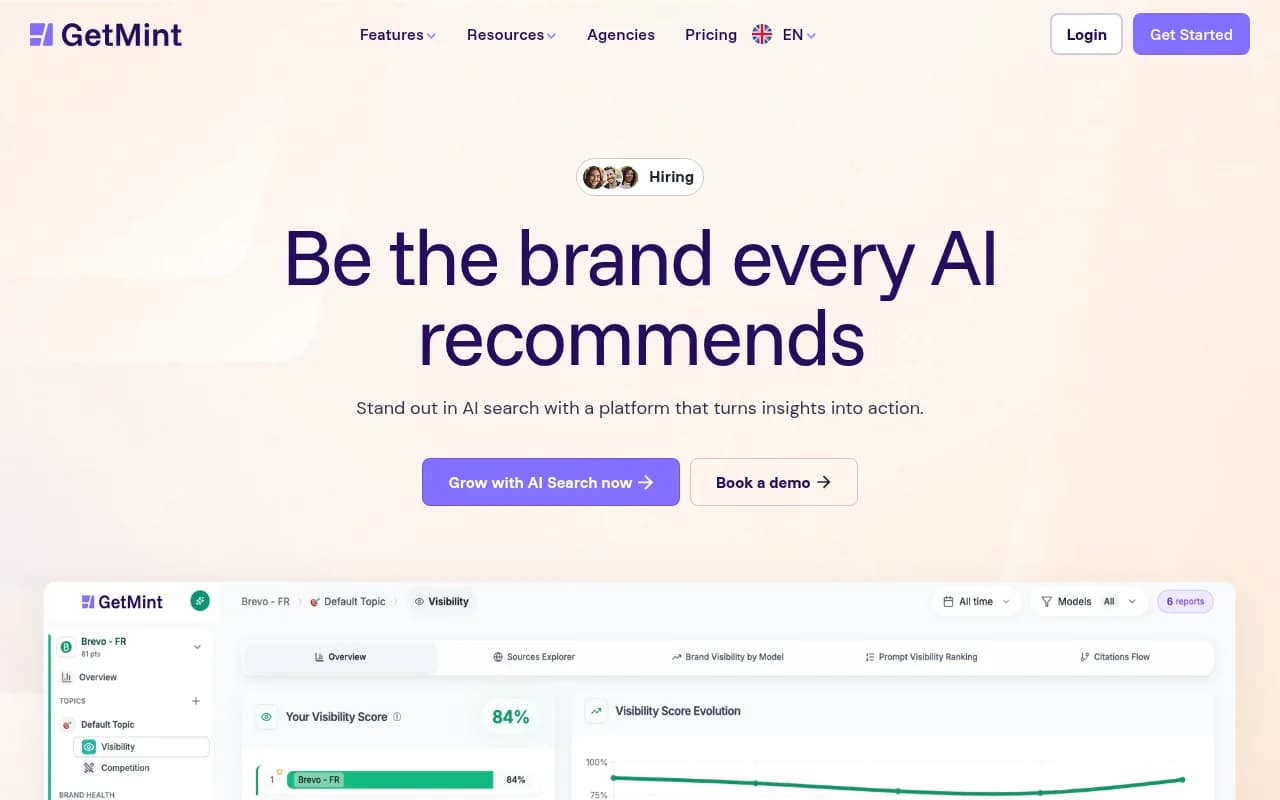
GetMint positions itself around AI reputation management specifically.
For lighter or cheaper tracking, Otterly.AI and Peec AI cover basic prompt monitoring.


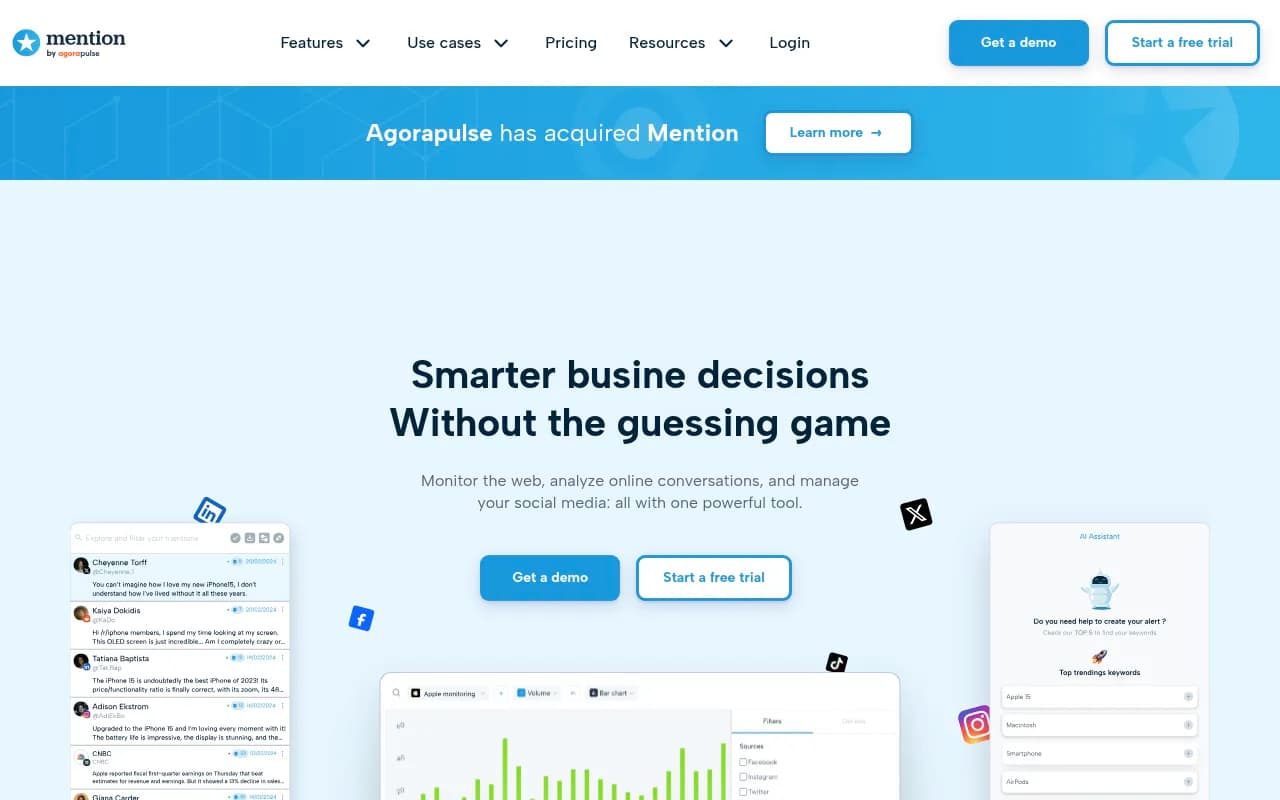
Traditional brand monitoring still matters, because the sources AI cites are usually normal web pages. Mention, Brand24, and Meltwater catch new articles, reviews, and posts that could become tomorrow's citation.
For local businesses where reviews drive branded answers, review platforms such as Birdeye and GatherUp help you collect and respond to genuine reviews.

| Need | Tool type | Examples |
|---|---|---|
| Track what AI says, claims, citations, sentiment | AI visibility platform | Promptwatch, Profound, Scrunch AI, GetMint |
| Cheap basic prompt checks | Prompt trackers | Otterly.AI, Peec AI |
| Catch new articles, posts, reviews | Brand monitoring | Mention, Brand24, Meltwater |
| Collect and manage reviews | Reputation and review tools | Birdeye, GatherUp, Reputation.com |
| Removal, suppression, legal coordination | Reputation firms and counsel | Specialist ORM agencies, lawyers |
For wider browsing, the GEO software directory at bestgeosoftware.com lists more options by category.
A one-page crisis checklist
Copy this into your incident doc.
- Capture prompt, answer, model, date, citations. Run it 10 times and log frequency.
- Classify: outdated, sourced and false, unsourced, or mistaken identity.
- Name an owner and loop in legal if the claim alleges crime, fraud, or harm.
- Trace each claim to a source URL and check each engine, because source mixes differ.
- Rank sources by how long they will persist: reviews and landing-type pages first, news second.
- Fix your own pages. Publish a plain-language FAQ or statement page.
- Request corrections or removals at third-party sources. Use legal routes where warranted.
- File platform feedback or privacy requests for unsourced claims.
- Brief sales, support, and execs with one agreed paragraph.
- Set up recurring monitoring and re-run the original prompts weekly for the first month.
Mistakes that make it worse
- Arguing with the chatbot and assuming that fixes it. It changes one conversation at most.
- Posting fake positive reviews or sockpuppet content. It gets found and quoted.
- Demanding removal of true, newsworthy reporting. It rarely works and can create a second story.
- Ignoring the engines you do not personally use. Your buyers may use Perplexity or AI Overviews.
- Treating vendor claims as guarantees. Nobody controls model output.
Bottom line
You cannot rewrite what ChatGPT says, but you can document it, trace it, change what it reads, and keep watching. Start with evidence capture today, rank the sources by how long they will linger, and publish one clear page that states the facts. Then check the same prompts weekly until the answer stabilizes.
If you want a cross-check on how sources feed AI answers at scale, the Promptwatch Data hub publishes regularly updated citation research.