Key Takeaways
- Whitebox is enterprise-focused with custom pricing and an "agentic" approach that generates optimization fixes automatically -- Airefs starts at $24/month with transparent pricing tiers
- Airefs offers a 7-day free trial and public pricing; Whitebox requires a demo call and doesn't publish pricing publicly
- Whitebox emphasizes automated solution generation and strategic influence; Airefs focuses on visibility tracking and content gap identification across platforms like Reddit, LinkedIn, G2, and YouTube
- Both track ChatGPT, Perplexity, and Google AI Overviews, but Whitebox positions itself as a full "AI narrative control" platform while Airefs is a straightforward monitoring and content guidance tool
- For small teams and startups, Airefs is the accessible option; for enterprises with budget and complex needs, Whitebox targets that segment
- Neither platform publicly shares detailed feature lists or customer counts, making direct feature comparison difficult
Overview
Whitebox
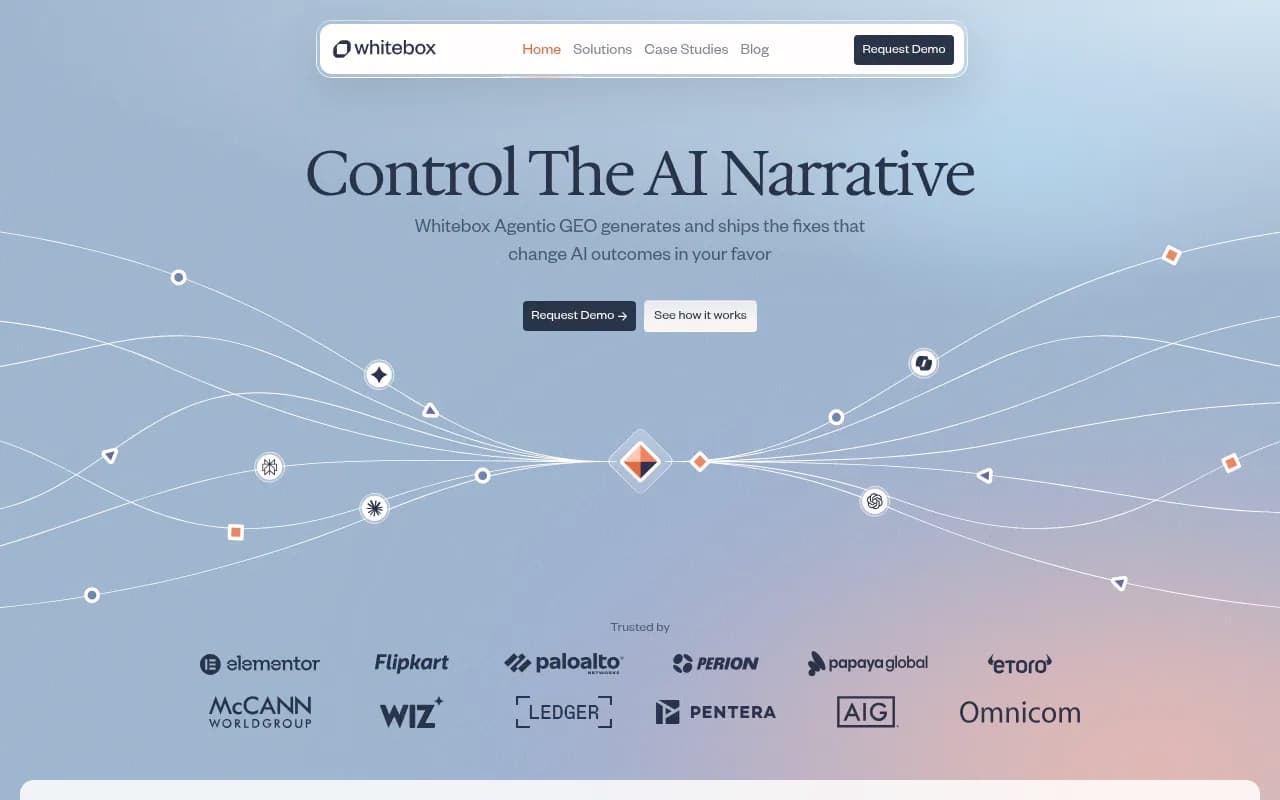
Whitebox calls itself an "end-to-end AI presence management platform" with a focus on "Agentic GEO" -- the idea that the platform doesn't just show you problems but generates and ships fixes that change AI outcomes in your favor. The homepage emphasizes "control the AI narrative" and lists enterprise clients like Elementor, Flipkart, Palo Alto Networks, eToro, Wiz, and AIG. The positioning is high-touch, strategic, and aimed at brands that need white-glove service. Pricing is custom and requires a demo call.
Whitebox's core promise: see the truth about how AI systems interpret your brand, get the solutions automatically, and influence outcomes strategically. The website is light on specifics about which AI engines are tracked or what the interface looks like, but the messaging is clear -- this is a premium, enterprise-grade tool.
Airefs
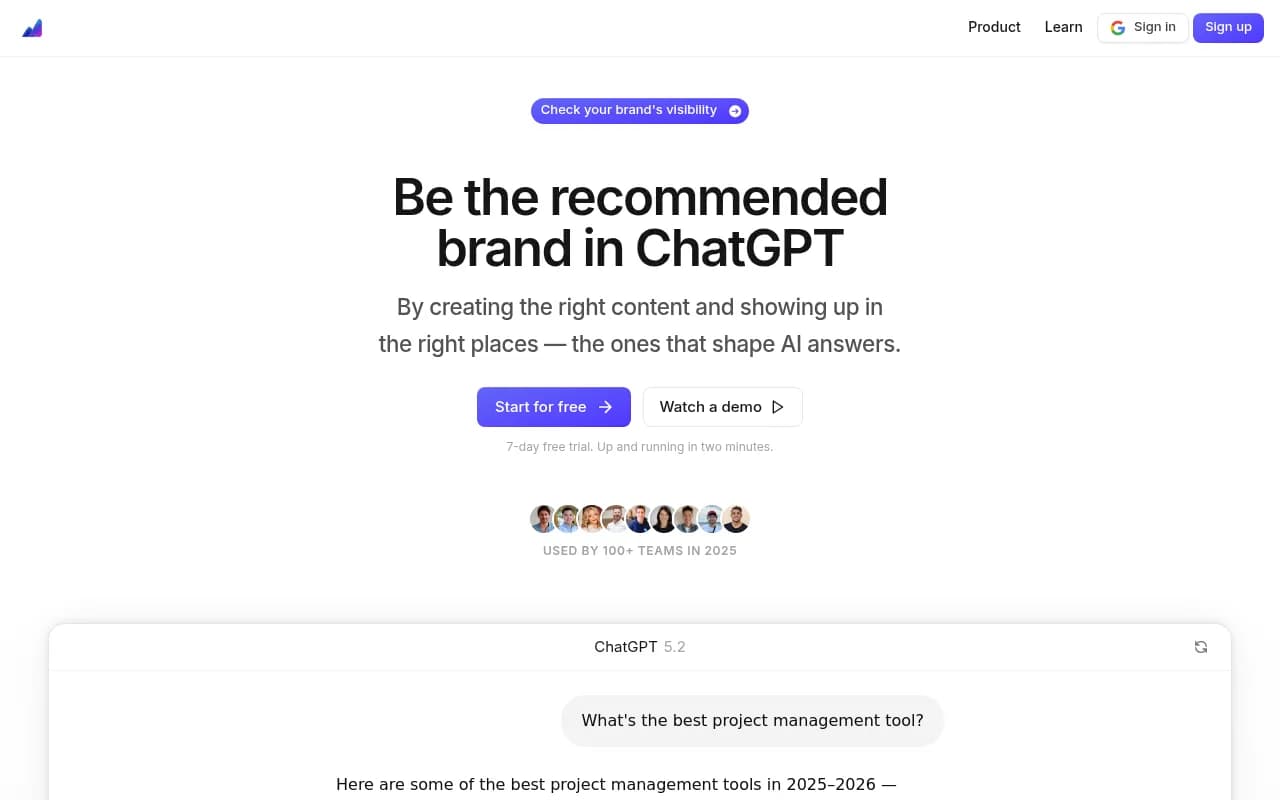
Airefs positions itself as the affordable, accessible option for tracking brand visibility in AI search. Pricing starts at $24/month (Lite plan) with a 7-day free trial, and you can be up and running in two minutes. The homepage highlights real results from users: Resend calls it their #3 biggest traffic source, Tally reports 25% of signups come from AI search, Vercel sees 10% of signups, and DataFast calls it their #1 conversion channel.
Airefs tracks whether your brand appears in ChatGPT, Perplexity, and Google AI Overviews for important user questions. It shows you which competitors get recommended instead of you and helps you understand which content (Reddit threads, LinkedIn posts, G2 reviews, YouTube videos, Quora answers) shapes those AI answers. The focus is on visibility tracking and content gap identification -- not automated fixes or content generation.
Side-by-side comparison
| Feature | Whitebox | Airefs |
|---|---|---|
| Pricing | Custom (enterprise) | $24/mo (Lite), $49/mo (Pro), $83/mo (Expert), $249/mo (Agency) |
| Free trial | Demo required | 7-day free trial |
| Target audience | Enterprise brands, agencies | Startups, small teams, indie makers |
| AI engines tracked | Not publicly specified | ChatGPT, Perplexity, Google AI Overviews |
| Core approach | Agentic GEO (automated fix generation) | Visibility tracking + content guidance |
| Content creation | Automated solution generation | Manual (shows you gaps, you create content) |
| Competitor tracking | Yes (details unclear) | Yes (shows who gets recommended instead) |
| Source analysis | Yes ("see the truth") | Yes (Reddit, LinkedIn, G2, YouTube, Quora) |
| Setup time | Demo call required | 2 minutes (self-serve) |
| Public case studies | Enterprise logos shown | Specific user results shared |
| Transparency | Low (no public pricing or features) | High (pricing, features, results public) |
| Best for | Large brands with budget | Budget-conscious teams |
Pricing comparison
| Plan | Whitebox | Airefs |
|---|---|---|
| Free tier | No | 7-day trial |
| Starter/Lite | N/A | $24/mo |
| Pro | N/A | $49/mo |
| Expert | N/A | $83/mo |
| Agency | Custom | $249/mo |
| Enterprise | Custom | Custom (likely available) |
Whitebox doesn't publish pricing. Based on the enterprise client list and "request demo" positioning, expect pricing in the thousands per month range. Airefs is transparent: $24/month gets you started, and even the Agency plan at $249/month is accessible for small agencies or growing brands.
Target audience and positioning
Whitebox is going after enterprise brands and large agencies. The client logos (Palo Alto Networks, AIG, Omnicom, McCann) signal a high-touch, high-budget tool. If you're a Fortune 500 brand or a major agency managing multiple enterprise clients, Whitebox wants your business. The "Agentic GEO" framing -- where the platform generates and ships fixes automatically -- suggests a managed service component or at least a very hands-on approach.
Airefs targets startups, indie makers, and small marketing teams. The homepage testimonials are from companies like Resend, Tally, Vercel, and DataFast -- fast-moving tech startups, not enterprises. The 7-day free trial, $24/month entry point, and "up and running in two minutes" messaging all scream self-serve. If you're a solo founder or a 3-person marketing team, Airefs is built for you.
The positioning gap is massive. Whitebox is selling strategic narrative control to CMOs and VPs of Marketing. Airefs is selling visibility tracking to growth hackers and SEO leads.
Feature depth: tracking and monitoring
Both platforms track brand visibility in AI search engines, but the details are murky for Whitebox.
Airefs explicitly tracks ChatGPT, Perplexity, and Google AI Overviews. You can see whether your brand appears in answers to important user questions, track changes over time, and compare yourself to competitors. The platform shows you which sources (Reddit threads, LinkedIn posts, G2 reviews, YouTube videos, Quora answers) are shaping AI answers. This is straightforward monitoring with a focus on third-party content platforms.
Whitebox's website says it helps you "see the truth" about how AI systems interpret your brand and "measure real-time shifts in AI perception and ranking with precision." But it doesn't specify which AI engines are tracked or how granular the tracking is. The emphasis is on interpretation and strategic influence, not raw data dashboards.
For pure visibility tracking, Airefs is more transparent about what you're getting. Whitebox's lack of specifics makes it hard to evaluate unless you book a demo.
Content optimization and action
This is where the two platforms diverge sharply.
Whitebox's "Agentic GEO" promise is that the platform generates the fixes for you. The homepage says "We Generate The Fixes" and talks about getting "the solutions" automatically. The implication is that Whitebox doesn't just tell you what's wrong -- it creates content, suggests edits, or even ships changes on your behalf. The website mentions "strategically influence outcomes," which suggests a level of automation or AI-driven content generation.
Airefs takes the opposite approach. It shows you the gaps -- which competitors are getting recommended, which sources are shaping AI answers, which content you're missing -- but you create the content yourself. Airefs is a diagnostic tool, not a content engine. The value is in understanding where to focus your efforts (Reddit? LinkedIn? G2 reviews?) and what topics to cover.
If you want a platform that does the work for you (or at least generates drafts), Whitebox's positioning suggests that capability. If you want visibility data and are happy to create content yourself, Airefs is the straightforward choice.
Worth noting: tools like Promptwatch sit between these two approaches -- they show you content gaps with Answer Gap Analysis, then help you generate optimized articles with a built-in AI writing agent. Promptwatch's content is grounded in 880M+ citations analyzed and designed to rank in AI search, not just generic SEO filler.

Transparency and trust signals
Airefs wins on transparency. Pricing is public, the homepage shares specific user results ("#3 biggest traffic source," "25% of all signups"), and the 7-day free trial lets you test before committing. The messaging is clear: this is a self-serve tool for tracking AI visibility.
Whitebox is opaque. No public pricing, no detailed feature list, no case studies with numbers -- just enterprise logos and high-level messaging about "controlling the AI narrative." The "request demo" gate makes sense for enterprise sales, but it also means you can't evaluate the platform without talking to a salesperson.
For buyers who value transparency and want to try before they buy, Airefs is the obvious choice. For enterprise buyers who expect a consultative sales process, Whitebox's approach is standard.
Ease of use and setup
Airefs claims you can be "up and running in two minutes." The self-serve onboarding and low entry price suggest a simple, intuitive interface. You sign up, connect your brand, add competitor brands, and start tracking visibility. No hand-holding required.
Whitebox requires a demo call. The enterprise positioning and "Agentic GEO" framing suggest a more complex setup -- possibly involving integrations, custom configurations, or onboarding support. This isn't a criticism; enterprise tools often need custom setup. But it's a barrier if you want to test the platform quickly.
For speed and simplicity, Airefs is the clear winner. For white-glove onboarding and strategic guidance, Whitebox likely delivers that (though the website doesn't say so explicitly).
Competitor tracking
Both platforms offer competitor tracking, but the implementation differs.
Airefs shows you which competitors get recommended instead of you in AI answers. The homepage screenshot shows a list of competitors with visibility scores and source counts. You can see who's winning and which sources (Reddit, G2, YouTube) are driving their visibility. This is actionable data: if a competitor is dominating Reddit threads, you know where to focus.
Whitebox mentions competitor tracking in the context of "seeing the truth" and "measuring shifts in AI perception," but doesn't provide specifics. The enterprise positioning suggests more sophisticated competitive intelligence -- possibly including sentiment analysis, share-of-voice metrics, or strategic recommendations. But without a demo, it's impossible to know.
For transparent, actionable competitor data, Airefs delivers. For deeper competitive intelligence (maybe), Whitebox might offer more, but you'll need to ask.
Integration and workflow
Neither platform publicly details integrations or API access.
Airefs is a standalone tool. You log in, check your visibility, identify content gaps, and create content elsewhere. There's no mention of integrations with CMS platforms, analytics tools, or content creation workflows. This keeps the tool simple but also means it's another dashboard to check.
Whitebox's "Agentic GEO" framing suggests deeper integrations -- possibly with content management systems, publishing workflows, or analytics platforms. The "ships the fixes" language implies some level of automation or integration with your existing stack. But again, the website doesn't specify.
For most users, the lack of integrations isn't a dealbreaker. Both platforms are primarily monitoring tools. You check visibility, identify gaps, and create content. The workflow is manual either way.
Pros and cons
Whitebox pros
- Enterprise-grade positioning with major client logos
- "Agentic GEO" approach suggests automated fix generation
- Likely offers white-glove onboarding and strategic support
- Emphasizes narrative control and strategic influence, not just monitoring
Whitebox cons
- No public pricing (requires demo call)
- Minimal feature transparency on the website
- No free trial or self-serve option
- Likely expensive (enterprise pricing)
- Unclear which AI engines are tracked or how granular the data is
Airefs pros
- Transparent pricing starting at $24/month
- 7-day free trial with no credit card required
- Self-serve setup in 2 minutes
- Clear focus on visibility tracking and content gap identification
- Tracks Reddit, LinkedIn, G2, YouTube, Quora sources explicitly
- Real user results shared publicly (traffic, signups, conversions)
Airefs cons
- No automated content generation (you do the work)
- Limited to ChatGPT, Perplexity, and Google AI Overviews (no Claude, Gemini, etc.)
- Less sophisticated than enterprise tools for large-scale tracking
- No mention of API access or integrations
Who should pick which tool
Pick Whitebox if:
- You're an enterprise brand with a marketing budget in the five or six figures
- You want a strategic partner, not just a monitoring tool
- You need automated fix generation or white-glove support
- You're managing AI presence for multiple brands or a large portfolio
- You're comfortable with custom pricing and a consultative sales process
Pick Airefs if:
- You're a startup, indie maker, or small marketing team
- You want to test AI visibility tracking without a big commitment
- You're comfortable creating content yourself based on gap analysis
- You need transparent pricing and a self-serve tool
- You're tracking a single brand or a small set of competitors
- You want to start today, not after a demo call
Consider alternatives if:
- You need deeper AI visibility tracking across 10+ AI engines (ChatGPT, Claude, Gemini, Perplexity, Grok, DeepSeek, etc.) -- Promptwatch tracks all major models and offers content gap analysis plus AI-powered content generation
- You want a middle ground between Airefs' simplicity and Whitebox's enterprise complexity
- You need API access, integrations, or custom reporting
Final verdict
Whitebox and Airefs aren't really competitors. They're targeting completely different buyers.
Whitebox is an enterprise play. The opaque pricing, "request demo" gate, and emphasis on strategic narrative control all signal a high-touch, high-budget tool for large brands. If you're a CMO at a Fortune 500 company or an agency managing enterprise clients, Whitebox is positioning itself as your strategic partner. The "Agentic GEO" framing is compelling -- who wouldn't want a platform that generates and ships fixes automatically? -- but the lack of transparency makes it hard to evaluate without a demo.
Airefs is the accessible option. Transparent pricing, a 7-day free trial, and a 2-minute setup make it easy to test. The focus on visibility tracking and content gap identification is straightforward and actionable. You see where you're invisible, you see which competitors are winning, you see which sources matter, and you create content to close the gaps. For startups and small teams, this is the right level of complexity and cost.
If you're choosing between these two, the decision is simple: What's your budget, and do you want to do the work yourself? If you have enterprise budget and want a strategic partner, book a Whitebox demo. If you're budget-conscious and happy to create content yourself, start with Airefs' free trial. There's no overlap between the two -- they're solving the same problem (AI visibility) for completely different audiences.