Key Takeaways
- Pricing difference is massive: Airefs starts at $24/mo for 25 prompts, Meteoria at €75/mo (~$82) for the same -- Airefs is 70% cheaper at entry level
- Meteoria offers sentiment analysis: Tracks implicit and explicit sentiment toward your brand in AI responses, which Airefs doesn't mention
- Airefs focuses on content creation: Emphasizes creating content in the right places (LinkedIn, Reddit, YouTube) to influence AI answers, not just monitoring
- Geographic and persona targeting: Meteoria explicitly supports location-based and persona-specific prompt tracking; Airefs doesn't detail this
- Both track the same core AI models: ChatGPT, Perplexity, Google AI Overview, Gemini -- coverage is nearly identical
- French vs global positioning: Meteoria is French-built with 1,000+ French enterprise clients; Airefs targets English-speaking startups and agencies
Overview
Meteoria
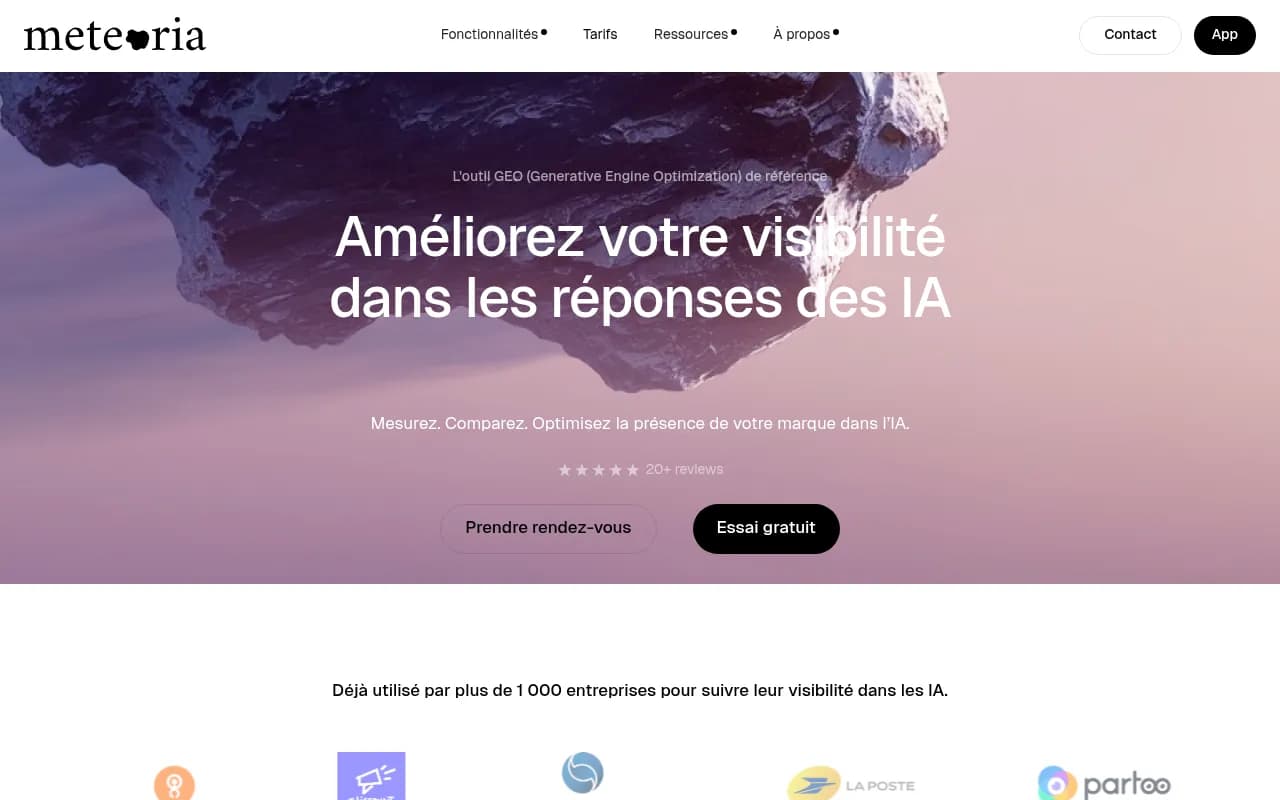
Meteoria is a French Generative Engine Optimization (GEO) platform launched for marketing teams and agencies managing brand presence across AI search engines. It tracks how brands appear in responses from ChatGPT, Google AI Overview, Perplexity, Gemini, and Grok. The platform measures visibility rates, competitor positioning, citation sources, and sentiment analysis across hundreds of daily prompts. Meteoria is used by 1,000+ companies including Pierre Fabre, La Poste, Cdiscount, and Partoo. Pricing starts at €75/mo with a 7-day free trial.
Airefs
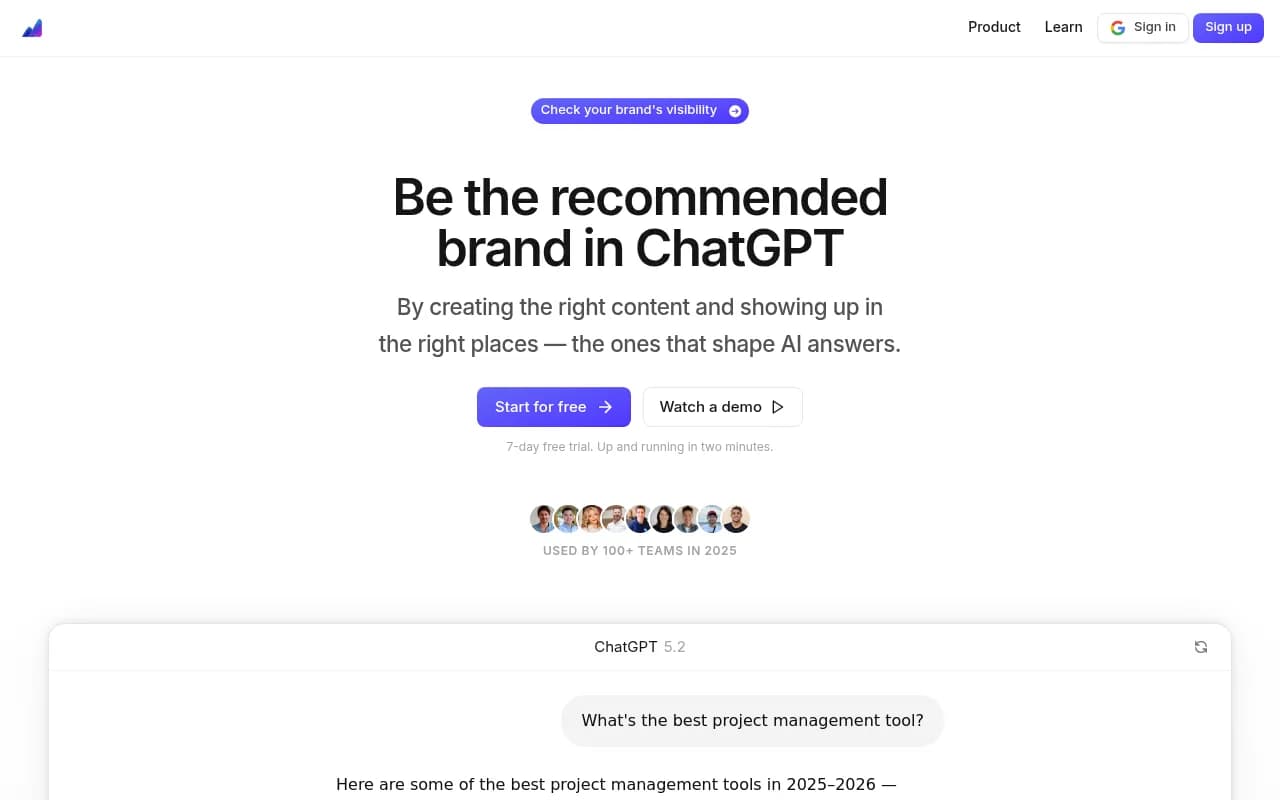
Airefs positions itself as the budget-friendly AI visibility tracker, starting at $24/mo. It monitors brand mentions in ChatGPT, Perplexity, and other AI-powered search results, with a focus on helping brands understand where they need to create content to influence AI recommendations. Airefs emphasizes that AI answers are shaped by LinkedIn posts, Reddit threads, G2 reviews, YouTube videos, and Quora answers -- not just your website. The platform tracks visibility changes over time and competitor positioning. Used by 100+ teams in 2025, Airefs offers a 7-day free trial.
Side-by-Side Comparison
| Feature | Meteoria | Airefs |
|---|---|---|
| Starting price | €75/mo (~$82) | $24/mo |
| Entry-level prompts | 25 prompts/mo | 25 prompts (implied) |
| Free trial | 7 days | 7 days |
| AI models tracked | ChatGPT, Perplexity, Google AI Overview, Gemini, Grok | ChatGPT, Perplexity, Google AI Overview, Gemini |
| Sentiment analysis | Yes (implicit & explicit) | Not mentioned |
| Citation source tracking | Yes | Yes |
| Competitor comparison | Yes | Yes |
| Geographic targeting | Yes (by zone) | Not detailed |
| Persona-based prompts | Yes | Not detailed |
| Content creation guidance | Not emphasized | Core focus |
| Traffic analysis | Yes (content compatibility with LLMs) | Not mentioned |
| Primary market | France, French enterprises | Global, English-speaking startups |
Pricing comparison
| Plan | Meteoria | Airefs |
|---|---|---|
| Free tier | 7-day trial only | 7-day trial only |
| Starter/Lite | €75/mo (25 prompts) | $24/mo (Lite, 25 prompts implied) |
| Mid-tier | €175/mo (100 prompts, Pro) | $49/mo (Pro) |
| Advanced | €300+/mo (200+ prompts, Enterprise) | $83/mo (Expert) |
| Agency | Custom pricing | $249/mo |
| Annual discount | Not specified | Not specified |
Airefs is significantly cheaper across the board. At the entry level, you're paying $24 vs €75 (~$82) -- a 70% price difference for similar prompt volumes. Even Airefs' Agency plan at $249/mo likely includes more prompts than Meteoria's €300+ Enterprise tier, though exact limits aren't public for either.
Feature deep-dive
AI model coverage
Meteoria tracks five AI models: ChatGPT, Google AI Overview, Perplexity, Gemini, and Grok. Airefs covers four: ChatGPT, Perplexity, Google AI Overview, and Gemini. The difference is Grok (X's AI), which Meteoria includes but Airefs doesn't mention.
For most brands, this gap doesn't matter much -- Grok has a fraction of ChatGPT or Perplexity's usage. Both platforms cover the models that actually drive traffic and recommendations in 2026.
Verdict: Tie. Meteoria has one extra model, but it's not a dealbreaker.
Prompt tracking and customization
Meteoria explicitly supports persona-based prompts (e.g. "What CRM should a SaaS startup use?") and geographic targeting (track prompts by country or region). This is useful if you operate in multiple markets or serve distinct customer segments.
Airefs doesn't detail persona or geographic customization on its site. The focus is on tracking "important user questions" and understanding which content sources (Reddit, YouTube, G2) shape those answers. You can add prompts, but there's no mention of persona or location filters.
Verdict: Meteoria wins for teams that need granular segmentation. Airefs is simpler but less flexible.
Sentiment analysis
Meteoria tracks both implicit and explicit sentiment in AI responses toward your brand. This means you can see if ChatGPT is recommending you neutrally, positively, or with caveats (e.g. "Brand X is good but expensive"). This is a branding tool -- it helps you understand tone, not just visibility.
Airefs doesn't mention sentiment tracking at all. It focuses on binary visibility (are you mentioned or not?) and citation sources.
Verdict: Meteoria wins. Sentiment analysis is a differentiator if you care about how AI models frame your brand, not just whether they mention it.
Citation source analysis
Both platforms track which sources AI models cite when they mention your brand or competitors. Meteoria surfaces these sources so you can "understand where to get mentioned according to your business and branding goals." Airefs emphasizes that AI answers are shaped by LinkedIn, Reddit, G2, YouTube, and Quora -- and shows you which specific pages are being cited.
The difference: Airefs makes content creation the next step. It's not just "here are the sources" but "here's where you need to publish to influence AI answers." Meteoria treats source analysis as an insight; Airefs treats it as a to-do list.
Verdict: Tie, but different philosophies. Meteoria is analytics-first. Airefs is action-first.
Traffic and content analysis
Meteoria includes a feature to "analyze your content and traffic to understand your compatibility with LLMs and your concrete results." This suggests it connects visibility data to actual traffic or conversions, though the site doesn't detail how (GA integration? Server logs? Unclear).
Airefs doesn't mention traffic analysis. It tracks visibility and citations, but there's no indication it ties this back to your analytics.
Verdict: Meteoria wins if you need to prove ROI. Airefs is pure visibility tracking.
Competitor benchmarking
Both platforms let you track competitors and see who gets recommended instead of you. Meteoria shows "your position relative to competitors" and lets you filter by strategic criteria (product category, geography, etc.). Airefs shows which competitors appear in AI answers and which sources are citing them.
The execution feels similar. Both give you a heatmap of who's winning for which prompts.
Verdict: Tie. Both do this well.
Content creation and optimization
Airefs explicitly positions itself around content creation: "Create the right content, in the right places, to be the default answer." The platform tells you which content types (LinkedIn posts, Reddit threads, YouTube videos) are shaping AI answers, so you know where to publish.
Meteoria's site focuses on measurement and comparison. There's an "Optimiser" section teased in the navigation, but the content is cut off in the provided data. It's unclear if Meteoria offers content recommendations or if it's purely a monitoring tool.
Verdict: Airefs wins for teams that want actionable next steps. Meteoria is stronger on diagnostics.
User interface and ease of use
Both platforms claim quick setup. Airefs says "up and running in two minutes." Meteoria doesn't specify, but the screenshots show a clean dashboard with visibility scores, competitor heatmaps, and source breakdowns.
Airefs' site has a more startup-friendly vibe -- simple pricing, clear CTAs, testimonials from recognizable SaaS brands (Resend, Tally, Vercel). Meteoria feels more enterprise-oriented, with French corporate logos and a focus on "thousands of data points."
Verdict: Airefs likely has a gentler onboarding for small teams. Meteoria is built for larger orgs with more complex needs.
Pros and cons
Meteoria pros
- Sentiment analysis gives you qualitative insights, not just visibility numbers
- Geographic and persona-based prompt tracking for segmented markets
- Traffic analysis connects AI visibility to actual business results
- Tracks Grok in addition to the big four AI models
- Used by major French enterprises (social proof for larger deals)
Meteoria cons
- Significantly more expensive: €75/mo vs $24/mo at entry level
- Less emphasis on actionable content recommendations
- French-first platform (could be a pro or con depending on your market)
- No clear details on how traffic analysis works
Airefs pros
- 70% cheaper at every pricing tier
- Strong focus on content creation and where to publish to influence AI answers
- Clean, startup-friendly interface and messaging
- Testimonials from well-known SaaS brands (Resend, Tally, Vercel)
- Emphasizes speed: "up and running in two minutes"
Airefs cons
- No sentiment analysis (you only see if you're mentioned, not how)
- No geographic or persona-based prompt customization mentioned
- Doesn't track Grok
- No traffic or conversion attribution
- Less robust for enterprise use cases
Who should pick which tool
Pick Meteoria if:
- You're a French company or operate heavily in French-speaking markets
- You need sentiment analysis to understand how AI models frame your brand
- You operate in multiple geographies or serve distinct personas and need segmented tracking
- You want to tie AI visibility back to traffic and conversions
- Budget isn't a constraint and you need enterprise-grade features
Pick Airefs if:
- You're a startup, small business, or agency watching costs closely
- You want actionable guidance on where to create content (LinkedIn, Reddit, YouTube) to influence AI answers
- You need basic visibility tracking and competitor benchmarking without the bells and whistles
- You're targeting English-speaking markets and don't need French-language support
- You want to get started fast without a complex setup
If you're also looking to track AI search visibility but want a platform that goes beyond monitoring to help you actually fix gaps and create content that ranks in AI, Promptwatch is worth checking out. It combines visibility tracking with content gap analysis and an AI writing agent that generates articles grounded in real citation data.

Final verdict
Airefs wins on price and simplicity. If you're a small team that needs to understand AI visibility without breaking the bank, it's the obvious choice. The $24/mo entry point is 70% cheaper than Meteoria, and the focus on content creation gives you clear next steps.
Meteoria wins on depth and enterprise features. Sentiment analysis, geographic segmentation, and traffic attribution make it a better fit for larger teams that need to justify AI visibility spend with hard ROI numbers. The French market positioning is a bonus if that's your audience.
For most startups and agencies: Airefs. For French enterprises or teams that need advanced analytics: Meteoria. Both are solid tools -- the decision comes down to budget and how much complexity you actually need.