Key Takeaways
- Meteoria costs €75/mo for 25 prompts while AIClicks starts at $59/mo for 30 prompts -- AIClicks is cheaper for small teams
- Meteoria tracks 5 AI models (ChatGPT, Google AI Overview, Perplexity, Gemini, Grok) vs AIClicks' 3 (ChatGPT, Perplexity, Gemini) -- Meteoria has broader coverage
- Both are monitoring-focused platforms that show you visibility data but lack built-in content generation or optimization tools
- Meteoria includes sentiment analysis (explicit and implicit) which AIClicks doesn't offer
- AIClicks has a 3-day free trial vs Meteoria's 7-day trial -- Meteoria gives you more time to test
- Neither platform offers AI crawler logs, traffic attribution, or the content gap analysis you'd get from action-oriented platforms like Promptwatch
Overview
Meteoria
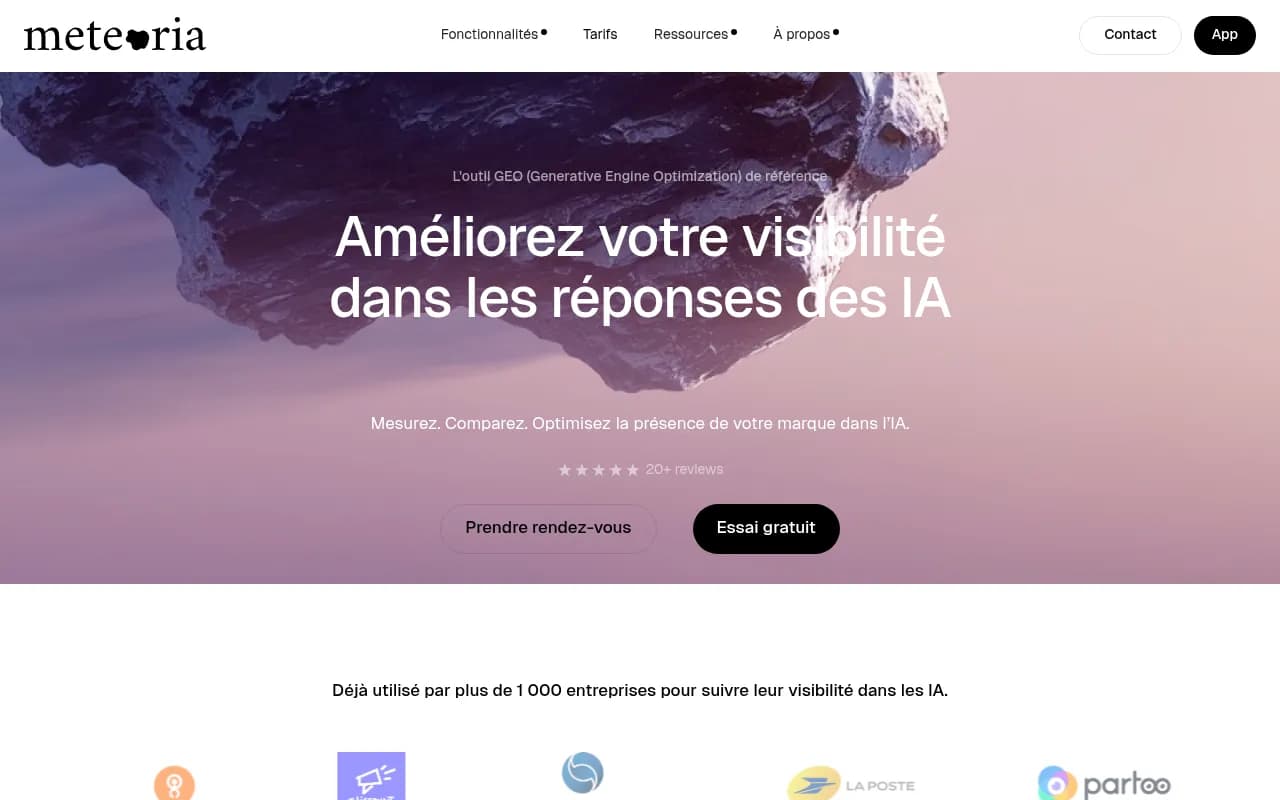
Meteoria is a French GEO platform that measures how brands appear in AI-generated responses. It tracks ChatGPT, Google AI Overview, Perplexity, Gemini, and Grok across hundreds of daily prompts. The platform focuses on measurement and comparison -- you can track your visibility score, see competitor positioning, identify citation sources, and analyze sentiment. It's designed for marketing teams and agencies managing brand presence in AI search, with a particular strength in European markets. Over 1,000 companies use it to monitor their AI visibility.
AIClicks
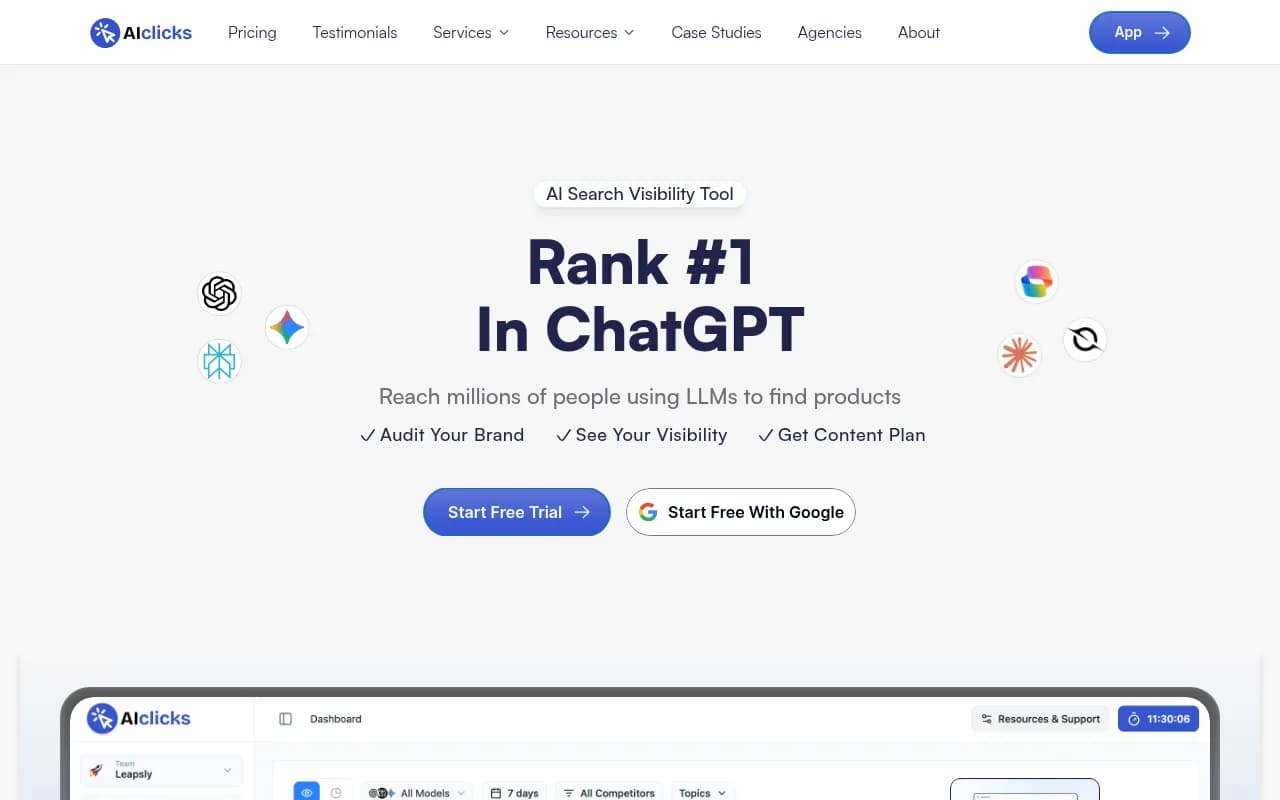
AIClicks monitors brand visibility in ChatGPT, Perplexity, and Gemini. It tracks prompts, analyzes competitor mentions, and provides recommendations to improve AI visibility. The platform positions itself as an "AI search visibility tool" with a focus on helping brands "rank #1 in ChatGPT." Used by 1,000+ brands and agencies, AIClicks offers prompt tracking and visibility scoring but stops short of content generation or deep optimization features.
Side-by-Side Comparison
| Feature | Meteoria | AIClicks |
|---|---|---|
| Starting price | €75/mo (25 prompts) | $59/mo (30 prompts) |
| Free trial | 7 days | 3 days |
| AI models tracked | 5 (ChatGPT, Google AI Overview, Perplexity, Gemini, Grok) | 3 (ChatGPT, Perplexity, Gemini) |
| Sentiment analysis | Yes (explicit + implicit) | No |
| Competitor tracking | Yes | Yes |
| Citation source analysis | Yes | Yes |
| Content generation | No | No |
| AI crawler logs | No | No |
| Traffic attribution | Yes (basic) | No |
| Multi-language support | Yes | Not specified |
| API access | Not specified | Not specified |
| Target market | European focus | Global |
Platform coverage
Meteoria tracks five AI models: ChatGPT, Google AI Overview, Perplexity, Gemini, and Grok. That's broader than most competitors in this price range. Google AI Overview coverage is particularly valuable since it's integrated directly into Google Search results -- millions of people see AI Overviews without even realizing they're using an LLM.
AIClicks covers three models: ChatGPT, Perplexity, and Gemini. No Google AI Overview, no Grok, no Claude, no Meta AI. For a platform that promises to help you "rank #1 in ChatGPT," the limited model coverage is a gap. If your audience uses multiple AI tools (and they do), you're flying blind on several major platforms.
Verdict: Meteoria wins on coverage. Five models vs three isn't close.
Pricing breakdown
| Plan | Meteoria | AIClicks |
|---|---|---|
| Entry tier | €75/mo (25 prompts) | $59/mo (30 prompts) |
| Mid tier | €175/mo (100 prompts) | $199/mo (100 prompts) |
| High tier | €300+/mo (200+ prompts) | $499/mo (300+ prompts) |
| Enterprise | Custom | Custom |
| Free trial | 7 days | 3 days |
AIClicks is cheaper at the entry level -- $59/mo vs €75/mo (roughly $80 USD). But Meteoria gives you a 7-day trial vs AIClicks' 3-day trial, which matters when you're evaluating a monitoring tool that needs time to collect data.
At the mid tier, Meteoria is €175/mo for 100 prompts while AIClicks is $199/mo for the same prompt count. Meteoria edges ahead slightly here.
At the high end, AIClicks charges $499/mo for 300+ prompts while Meteoria starts at €300/mo for 200+ prompts. AIClicks gives you more prompts per dollar at this tier, but you're also getting fewer AI models tracked.
Verdict: AIClicks is cheaper for small teams. Meteoria offers better value at mid-tier when you factor in the broader model coverage.
Prompt tracking and visibility scoring
Both platforms let you define custom prompts that match your business -- product names, use cases, buyer personas, geographic regions. They run these prompts daily across their supported AI models and calculate a visibility score based on how often your brand appears.
Meteoria emphasizes "hundreds of prompts each day" and shows your visibility percentage, position relative to competitors, and the sources cited. The interface (based on their screenshots) uses heatmaps and trend charts to surface patterns across thousands of data points.
AIClicks promises to "discover what AI gets asked" and find "the real prompts your buyers ask." Their pitch is that they'll identify the prompts for you rather than requiring you to define everything upfront. In practice, both platforms require you to configure your prompt list -- AIClicks just frames it differently.
Verdict: Functionally similar. Both are prompt-based monitoring tools with visibility scoring.
Competitor analysis
Meteoria lets you compare your visibility and position against competitors across all tracked LLMs. You can filter by strategic criteria (product category, region, persona) and see who's winning for each prompt. The sentiment analysis feature also shows how AI models talk about your brand vs competitors -- whether the tone is positive, negative, or neutral.
AIClicks offers competitor mention tracking and shows you where competitors appear in AI responses. The depth of competitive analysis isn't as clear from their marketing materials, but the core feature exists.
Verdict: Meteoria's sentiment analysis gives it an edge here. Knowing that ChatGPT mentions your competitor with a positive tone while mentioning you neutrally is actionable intelligence.
Citation and source analysis
Both platforms identify the sources AI models cite when they mention brands. This is table stakes for any GEO tool -- you need to know whether you're being cited from your own website, a review site, Reddit, YouTube, or a competitor's content.
Meteoria surfaces citation sources and helps you understand "where to get mentioned according to your business and branding issues." Their interface shows which domains AI models trust for different types of prompts.
AIClicks provides "actionable recommendations" based on citation analysis but doesn't specify the depth of source tracking or whether they break down citations by source type (owned content vs third-party mentions vs social platforms).
Verdict: Meteoria is more explicit about citation source analysis. AIClicks mentions it but doesn't detail the implementation.
Content optimization and generation
Neither platform offers built-in content generation or optimization tools. They're both monitoring dashboards -- they show you the data, but you're on your own to create content that improves your visibility.
This is where monitoring-only tools hit a wall. You can see that you're invisible for 200 high-value prompts, but then what? You still need to figure out what content to create, write it, publish it, and wait weeks to see if it moves the needle.
If you're serious about improving AI visibility (not just tracking it), you'll want a platform that closes the loop. Promptwatch handles this with Answer Gap Analysis (shows you exactly which prompts competitors rank for but you don't) and a built-in AI writing agent that generates articles grounded in 880M+ citations analyzed. You see the gap, generate the content, publish it, and track the results -- all in one platform.

Verdict: Both platforms are monitoring-only. Neither helps you create content that ranks.
Traffic attribution and ROI tracking
Meteoria mentions analyzing "your content and your traffic to understand your compatibility with LLMs and your concrete results." This suggests some level of traffic attribution, though the implementation isn't detailed on their site.
AIClicks doesn't mention traffic attribution or ROI tracking at all. You can see visibility scores, but connecting that to actual website traffic or revenue is unclear.
This is a major gap in both platforms. Visibility scores are interesting, but CMOs want to know: "How many visitors did we get from AI search this month? Which pages are driving that traffic? What's the conversion rate?" Without traffic attribution, you're guessing.
Verdict: Meteoria at least acknowledges traffic analysis. AIClicks doesn't address it.
Sentiment analysis
Meteoria tracks both explicit sentiment (when an AI model directly says "X is good" or "Y has problems") and implicit sentiment (the tone and framing around your brand even when no explicit judgment is stated). This is valuable for brand management -- you want to know if ChatGPT is subtly positioning your competitor as the safer choice even when it mentions both of you.
AIClicks doesn't offer sentiment analysis at all.
Verdict: Meteoria wins. Sentiment tracking is a differentiator.
User interface and experience
Meteoria's screenshots show a clean, data-dense interface with heatmaps, trend charts, and comparison tables. The French origin shows in some of the marketing copy ("Mesurez. Comparez. Optimisez") but the platform itself appears to support multiple languages.
AIClicks has a modern, minimalist design with bold typography and a focus on simplicity. The onboarding promises "no setup, no long forms -- just the link." The interface screenshots show prompt tracking and visibility scores but less visual density than Meteoria.
Verdict: Preference-dependent. Meteoria is more data-dense, AIClicks is more streamlined.
Geographic and language support
Meteoria explicitly supports multi-language and multi-region tracking. You can define prompts for different geographic markets and personas, which matters if you operate in multiple countries or languages.
AIClicks doesn't specify language or region support in their marketing materials. The platform appears to be English-focused with a global audience.
Verdict: Meteoria is stronger for international brands.
What's missing from both platforms
Neither Meteoria nor AIClicks offers:
- AI crawler logs (real-time tracking of ChatGPT, Claude, Perplexity bots crawling your site)
- Content generation tools (you see the gaps but can't create content to fill them)
- Prompt intelligence (volume estimates, difficulty scores, query fan-outs)
- Reddit or YouTube citation tracking (both platforms mention "sources" but don't break out social platforms)
- ChatGPT Shopping tracking (monitoring product recommendations in ChatGPT's shopping features)
- Deep traffic attribution (connecting AI visibility to actual revenue)
These are all features you'd get from a more comprehensive platform. If you're choosing between monitoring-only tools, fine -- but know what you're giving up.
Pros and cons
Meteoria pros
- Tracks 5 AI models including Google AI Overview and Grok
- Sentiment analysis (explicit and implicit)
- 7-day free trial
- Multi-language and multi-region support
- Strong European market presence
- Traffic analysis mentioned (though implementation unclear)
Meteoria cons
- More expensive than AIClicks at entry level (€75 vs $59)
- No content generation or optimization tools
- No AI crawler logs
- Limited documentation on traffic attribution depth
AIClicks pros
- Cheaper entry price ($59/mo for 30 prompts)
- Clean, simple interface
- Easy onboarding ("just drop in your URL")
- More prompts at high tier (300+ vs 200+)
AIClicks cons
- Only tracks 3 AI models (no Google AI Overview, Grok, Claude, etc.)
- No sentiment analysis
- Shorter free trial (3 days vs 7)
- No traffic attribution mentioned
- No content generation tools
- Less detail on citation source breakdown
Who should pick Meteoria
Pick Meteoria if you need broader AI model coverage, sentiment analysis, or multi-language tracking. It's a better fit for:
- European brands or agencies with multi-country operations
- Teams that care about brand sentiment in AI responses (PR, brand management)
- Companies that want to track Google AI Overview (integrated into Google Search)
- Organizations that need 7 days to properly evaluate a monitoring tool
- Brands with complex geographic or persona-based tracking needs
Meteoria is the more feature-complete monitoring platform, but you're paying for that breadth.
Who should pick AIClicks
Pick AIClicks if you want the cheapest entry point and don't need extensive model coverage. It works for:
- Small teams or solo marketers on a tight budget
- Brands that only care about ChatGPT, Perplexity, and Gemini
- Companies that want a simple, streamlined interface without data overload
- Teams that need more prompts at the high tier (300+ vs 200+)
AIClicks is fine for basic monitoring, but the limited model coverage is a real constraint.
Final verdict
Meteoria is the stronger monitoring platform. It tracks more AI models (5 vs 3), includes sentiment analysis, offers better geographic and language support, and gives you a longer free trial. AIClicks is cheaper at the entry level but gives you less.
That said, both platforms are monitoring-only tools. They show you where you're invisible, but they don't help you fix it. You'll spend hours analyzing visibility scores and then still need to figure out what content to create, write it yourself (or hire writers), and wait weeks to see if it works.
If you want to actually improve your AI visibility (not just track it), you need a platform that closes the action loop. Find the gaps, generate the content, track the results. That's the difference between a dashboard and an optimization platform.