Key Takeaways
- Promptscout is 6.6x cheaper at entry level ($15/mo vs $99/mo) and offers a free tier -- Gauge does not
- Gauge covers 7 AI models (ChatGPT, Claude, Gemini, Perplexity, Copilot, AI Mode, AI Overviews) while Promptscout covers 3 (ChatGPT, Gemini, AI Overviews)
- Gauge includes AI content generation (3-18 articles/month depending on plan) -- Promptscout is monitoring-only with no content creation tools
- Promptscout's free tier lets you test the platform before paying; Gauge requires paid commitment from day one
- Gauge targets 600 prompts on Growth plan vs Promptscout's unclear prompt limits -- Gauge is built for scale
- Both lack crawler log analysis and real-time indexing insights that platforms like Promptwatch provide for understanding how AI engines discover your content
Overview
Gauge
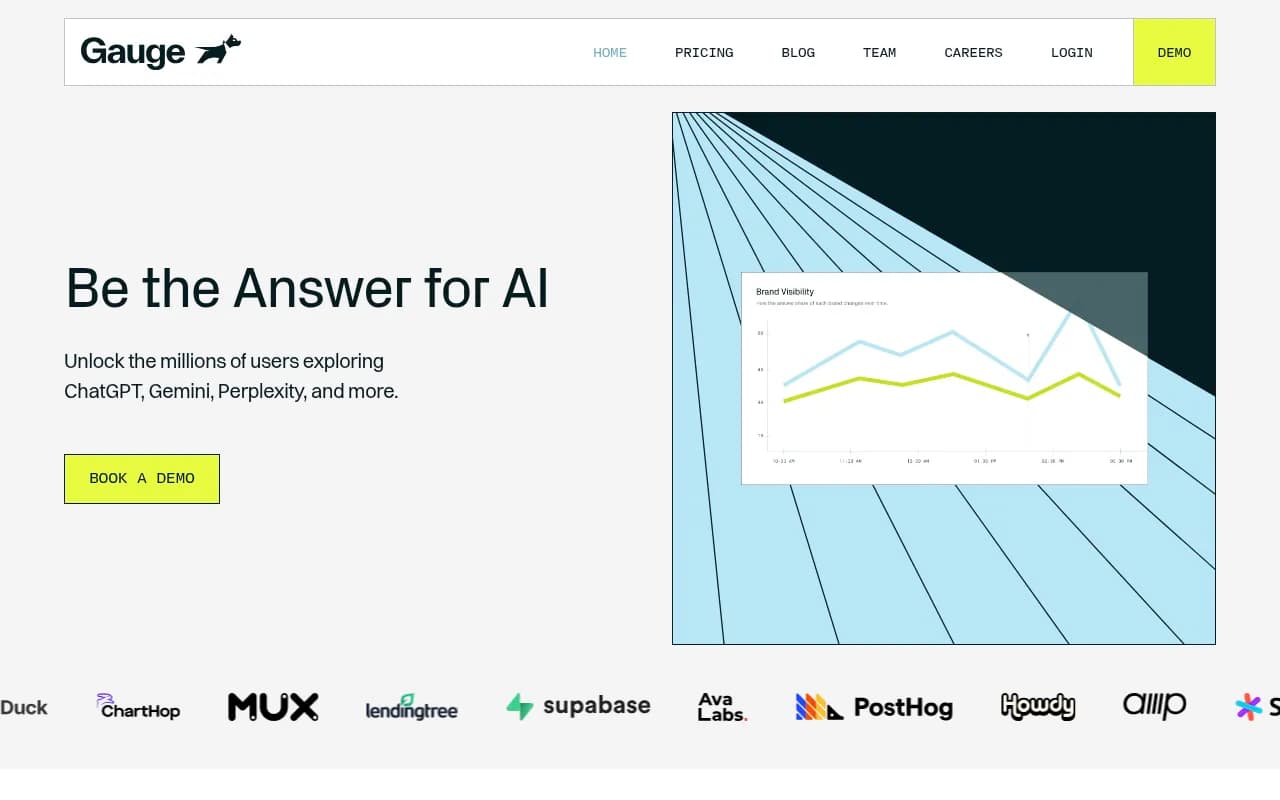
Gauge positions itself as a strategic competitive intelligence platform for AI visibility. It tracks your brand across ChatGPT, Claude, Gemini, Perplexity, Copilot, AI Mode, and Google AI Overviews, then provides roadmaps to improve your presence. The platform includes AI-powered content generation to help you create articles that rank in AI search results. Gauge is aimed at teams that want both monitoring and optimization in one package.
Promptscout
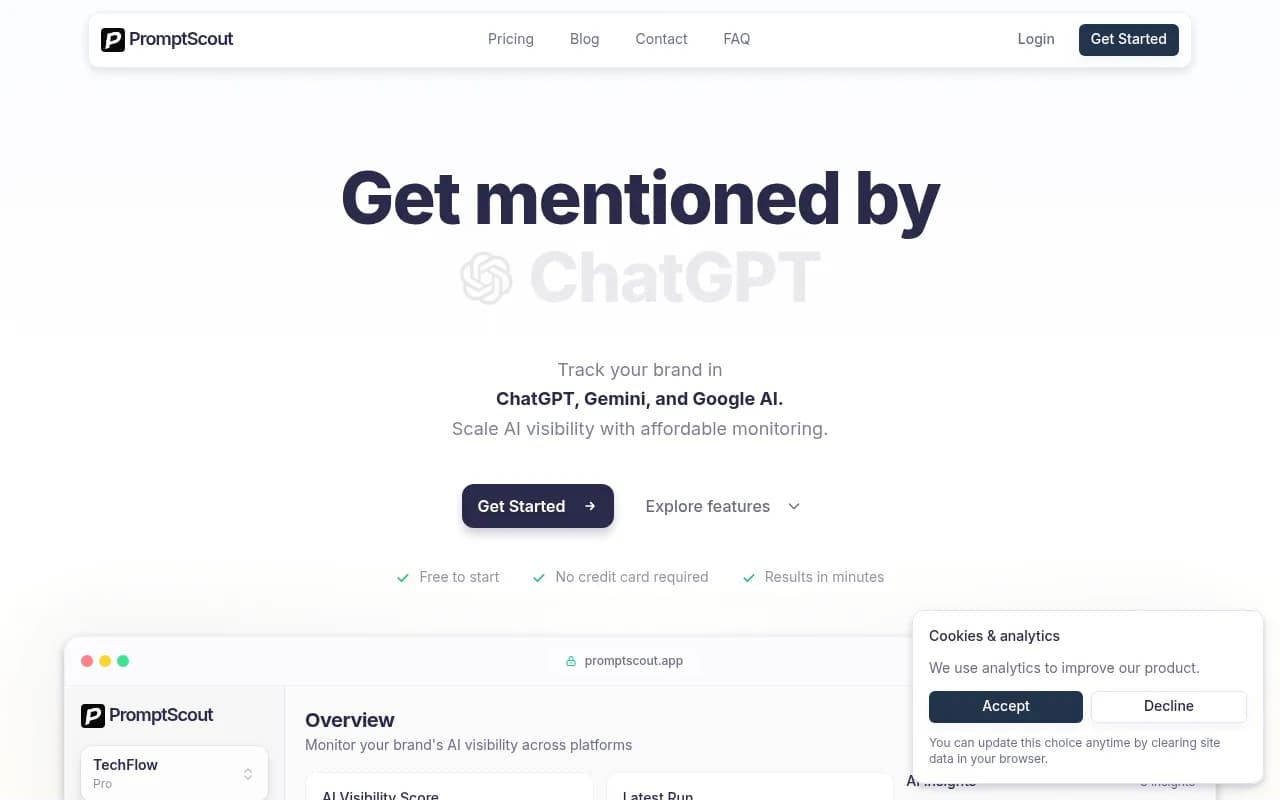
Promptscout takes a simpler approach: monitor how ChatGPT, Gemini, and Google AI Overviews mention your brand, benchmark against competitors, and analyze which sources get cited. It's a pure monitoring tool with no content creation features. The appeal here is affordability and ease of use -- you can start for free and scale up as needed. Promptscout targets founders and small teams who want visibility data without the complexity.
Side-by-Side Comparison
| Feature | Gauge | Promptscout |
|---|---|---|
| Starting price | $99/mo (Starter) | $15/mo (Starter) |
| Free tier | No | Yes |
| AI models tracked | 7 (ChatGPT, Claude, Gemini, Perplexity, Copilot, AI Mode, AI Overviews) | 3 (ChatGPT, Gemini, AI Overviews) |
| Prompt volume (entry tier) | 100 prompts | Not specified |
| Content generation | Yes (3-18 articles/mo) | No |
| Competitor tracking | Yes | Yes |
| Citation analysis | Yes | Yes |
| Reddit/social tracking | Yes | Limited |
| API access | Enterprise only | Not mentioned |
| Multi-language support | Not specified | Not specified |
| Crawler log analysis | No | No |
| Traffic attribution | Not specified | No |
AI model coverage
Gauge monitors seven AI platforms: ChatGPT, Claude, Gemini, Perplexity, Copilot, AI Mode, and Google AI Overviews. This is comprehensive coverage of the major AI search engines people actually use. If someone asks Claude or Perplexity for a recommendation, Gauge will catch it.
Promptscout covers three: ChatGPT, Gemini, and Google AI Overviews. That's the big three in terms of user volume, but you're blind to Claude (increasingly popular with professionals), Perplexity (the go-to for research-heavy queries), and Copilot (Microsoft's enterprise play). For many brands, missing Claude and Perplexity means missing a chunk of high-intent searches.
Verdict: Gauge wins on breadth. If you need full-spectrum AI visibility, Promptscout's three-model limit is a real constraint.
Pricing and value
| Plan | Gauge | Promptscout |
|---|---|---|
| Free tier | None | Yes (limited features) |
| Entry paid | $99/mo (100 prompts, ChatGPT only, 3 articles) | $15/mo (Starter) |
| Mid-tier | $599/mo (600 prompts, all models, 18 articles) | $39/mo (Growth) |
| High-tier | Enterprise (custom) | $99/mo (Pro) |
| Agency tier | Enterprise (custom) | Custom pricing |
Promptscout is dramatically cheaper. At $15/month, you're paying less than a Netflix subscription for basic AI brand monitoring. Gauge's $99/month entry point only gives you ChatGPT tracking and 100 prompts -- you need the $599/month Growth plan to unlock all seven AI models and 600 prompts.
The catch: Gauge includes content generation. Those 3-18 AI-written articles per month have real value if you're actively trying to improve your AI visibility. Promptscout gives you the data but leaves you to create content yourself.
Verdict: Promptscout wins on pure monitoring cost. Gauge justifies its price if you need the content generation tools, but that's a big "if" for teams with existing content workflows.
Content optimization and generation
Gauge's standout feature is its AI content generator. The platform analyzes gaps in your AI visibility, then creates articles designed to get cited by AI engines. You get 3 articles/month on Starter, 18 articles/month on Growth. The content is grounded in what AI models are actually citing -- not generic SEO filler.
Promptscout has no content creation tools. It shows you the data (which competitors are winning, which sources get cited), but you're on your own to act on it. For some teams, that's fine -- they have writers and a content process. For others, it's a missing piece.
Worth noting: tools like Promptwatch take this a step further with Answer Gap Analysis that shows exactly which prompts competitors rank for but you don't, then generates content specifically targeting those gaps. If content optimization is your priority, that's worth exploring.

Verdict: Gauge wins if you want an all-in-one solution. Promptscout is monitoring-only, which limits its usefulness for teams without dedicated content resources.
Competitor tracking and benchmarking
Both platforms let you track competitors and see how often they get mentioned relative to your brand. Gauge shows competitor mentions across all seven AI models and breaks down which prompts trigger competitor recommendations. Promptscout displays a competitor leaderboard with mention counts and lets you compare share of voice.
The difference is depth. Gauge's competitor analysis ties into its content recommendations -- it tells you not just that a competitor is winning, but what content gaps are causing it and how to close them. Promptscout gives you the scoreboard but not the playbook.
Verdict: Gauge provides more actionable competitor insights. Promptscout's leaderboard is useful but surface-level.
Citation and source analysis
Both platforms show which domains AI models cite when mentioning your brand or competitors. Gauge highlights Reddit threads, review sites, and editorial sources that influence AI recommendations. Promptscout displays top cited domains with favicon previews and categorizes them (Editorial, UGC, Other).
Neither platform offers the depth of citation analysis you'd get from a tool like Promptwatch, which tracks 880M+ citations and shows exactly which pages, Reddit threads, and YouTube videos drive AI recommendations. But for basic "where are these mentions coming from" insights, both Gauge and Promptscout deliver.
Verdict: Roughly tied. Both give you enough citation data to understand what's driving AI mentions.
Prompt tracking and intelligence
Gauge lets you track specific prompts (100 on Starter, 600 on Growth) and see how AI models respond over time. The platform uses keyword-based prompt tracking, so you can monitor variations of the same query. This is useful for tracking category-level visibility ("best CRM software", "top project management tools", etc.).
Promptscout doesn't clearly specify prompt limits or how prompt tracking works. The interface shows "AI Visibility Score" based on responses, but the mechanics of how many prompts you can track and how they're selected are unclear from the available data.
Verdict: Gauge is more transparent and offers higher prompt volumes. Promptscout's lack of clarity here is a red flag.
User interface and ease of use
Promptscout's interface (based on the screenshots) is clean and straightforward. You get a dashboard with your AI visibility score, competitor leaderboard, latest run status, top cited sources, and AI-generated insights. It's designed for quick scanning -- you can see your status in 30 seconds.
Gauge's interface emphasizes the Track → Understand → Act workflow. The design is more complex because the platform does more (monitoring + content generation + recommendations). This means a steeper learning curve but more power once you're up to speed.
Verdict: Promptscout is easier to pick up. Gauge requires more onboarding but rewards the investment.
Limitations and gaps
Neither platform offers:
- Crawler log analysis: You can't see when ChatGPT, Claude, or Perplexity crawlers hit your site, which pages they read, or errors they encounter. This is a blind spot for understanding how AI engines discover your content.
- Traffic attribution: No way to connect AI visibility to actual website traffic or conversions. You're optimizing in the dark without knowing if improved AI mentions drive business results.
- Prompt volume estimates: Neither platform shows how many people are actually asking each prompt. You might be optimizing for queries nobody uses.
- Multi-language/multi-region tracking: Both appear to be English-only and US-focused.
These are table-stakes features in more mature platforms. If you need them, you're looking at a tool like Promptwatch that covers the full optimization loop.
Pros and cons
Gauge pros
- Comprehensive 7-model coverage including Claude and Perplexity
- Built-in AI content generation (3-18 articles/month)
- High prompt volumes (600 on Growth plan)
- Actionable competitor insights tied to content recommendations
- Track → Understand → Act workflow guides optimization
Gauge cons
- Expensive ($99/mo entry, $599/mo for full features)
- No free tier to test before committing
- Starter plan only covers ChatGPT (need Growth for all models)
- No crawler logs or traffic attribution
- Steeper learning curve
Promptscout pros
- Very affordable ($15/mo entry, free tier available)
- Simple, scannable interface
- Covers the big three AI models (ChatGPT, Gemini, AI Overviews)
- Competitor leaderboard is easy to understand
- Low barrier to entry for small teams
Promptscout cons
- Only 3 AI models (missing Claude, Perplexity, Copilot)
- No content creation or optimization tools
- Unclear prompt tracking limits
- Monitoring-only -- you get data but no help acting on it
- Limited depth in competitor and citation analysis
Who should pick which tool
Choose Gauge if:
- You need coverage across all major AI models including Claude and Perplexity
- You want content generation built into the platform
- You're tracking 100+ prompts and need high volume capacity
- You have budget ($599/mo+) for a comprehensive solution
- You want a platform that guides you from data to action
Choose Promptscout if:
- You're a founder or small team with limited budget
- You only care about ChatGPT, Gemini, and Google AI Overviews
- You already have a content creation process and just need monitoring
- You want to test AI visibility tracking with a free tier first
- You prefer simplicity over depth
Consider Promptwatch if:
- You need the full optimization loop: gap analysis → content generation → crawler logs → traffic attribution
- You want to track 10+ AI models including DeepSeek, Grok, and Meta AI
- You need multi-language and multi-region tracking
- You want Reddit and YouTube insights that directly influence AI recommendations
- You need prompt volume estimates and difficulty scoring to prioritize high-value queries
Final verdict
Gauge and Promptscout serve different audiences. Gauge is a power tool for teams serious about AI visibility -- you pay more but get broader coverage, content generation, and deeper insights. Promptscout is a budget-friendly monitoring dashboard that covers the basics without the complexity or cost.
The real question is whether monitoring alone is enough. If you just want to know where you stand, Promptscout's $15/month is hard to beat. But if you need to actually improve your AI visibility, Gauge's content generation and optimization features justify the higher price.
For most brands, the gap both tools leave is the action loop. You get data, maybe some content, but no way to track how AI engines crawl your site, no traffic attribution to prove ROI, and no prompt intelligence to prioritize what matters. That's where platforms built around the full optimization cycle (find gaps → create content → track results) pull ahead.
One-liner summary: Promptscout is the budget monitoring option for small teams; Gauge is the comprehensive platform for teams that need content generation and multi-model coverage; neither closes the full optimization loop from discovery to revenue.