Key Takeaways
- Gauge is AI-first with deeper competitive intelligence and content generation -- Indexly splits focus between traditional SEO and AI search monitoring
- Indexly starts at $29/mo and covers 20 sites on the Advanced plan ($59/mo) -- Gauge starts at $99/mo but includes only ChatGPT on the Starter tier
- Gauge covers 7 AI models (ChatGPT, Claude, Gemini, Perplexity, Copilot, AI Mode, AI Overviews) -- Indexly adds Bing AI but has less depth per model
- Indexly includes full SEO features (indexing, audits, backlinks, keyword tracking) that Gauge doesn't touch -- if you need both SEO and AI visibility in one tool, Indexly wins on breadth
- Gauge provides actionable content roadmaps and gap analysis for improving AI visibility -- Indexly focuses more on monitoring and reporting
- For pure AI search optimization with strategic guidance, Gauge is the stronger choice. For a unified SEO + AI visibility dashboard at a lower price, Indexly makes sense.
Overview
Gauge
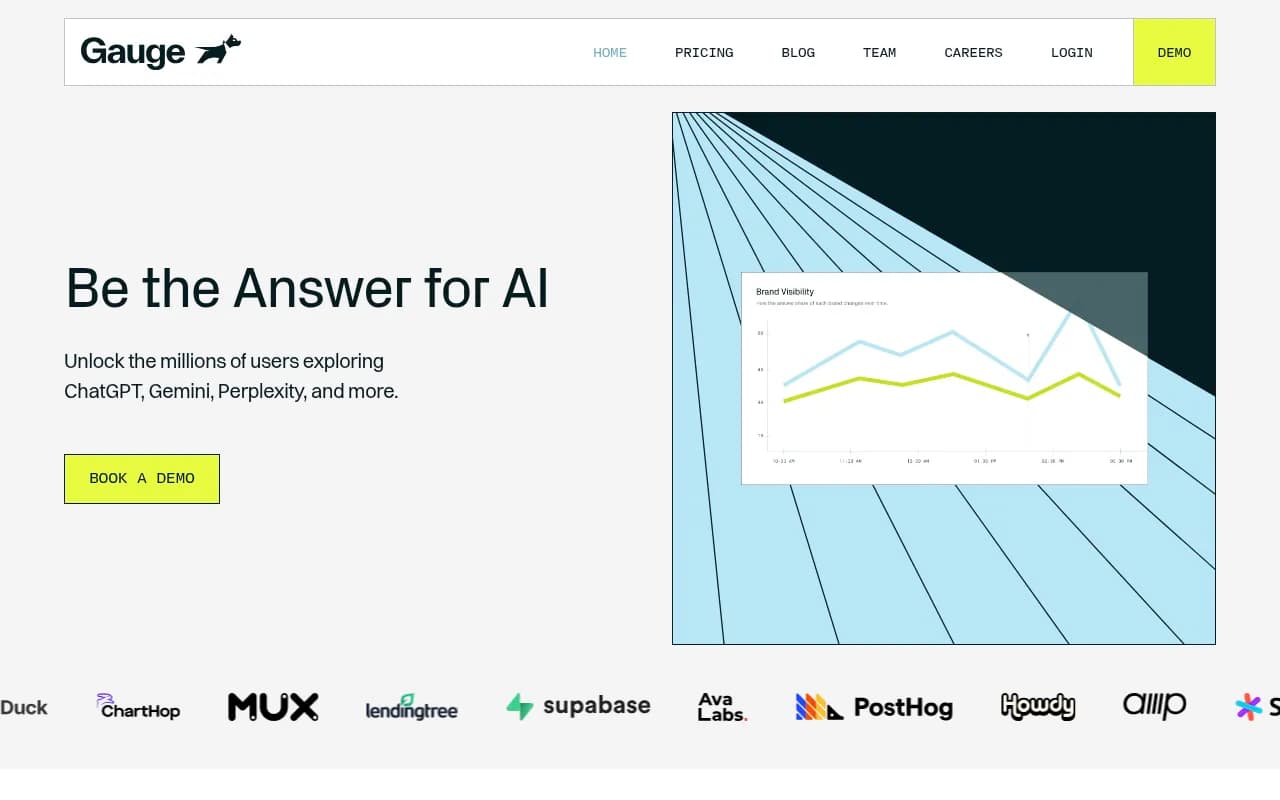
Gauge positions itself as a strategic competitive intelligence platform built specifically for AI visibility. The core pitch: track your brand across AI engines, understand where competitors are beating you, and get clear roadmaps to close the gap. It monitors ChatGPT, Claude, Gemini, Perplexity, Copilot, AI Mode, and AI Overviews. The platform emphasizes actionable insights -- not just "here's where you're mentioned" but "here's what content you need to create to win these prompts."
Gauge's workflow follows a track-understand-act loop. You see where your brand appears (or doesn't), analyze what content is being cited and what's missing, then get onsite and offsite recommendations. The platform includes content generation tools and affiliate targeting features. Pricing starts at $99/mo for 100 prompts (ChatGPT only, 3 articles), with the Growth plan at $599/mo covering 600 prompts across all models and 18 articles.
Indexly
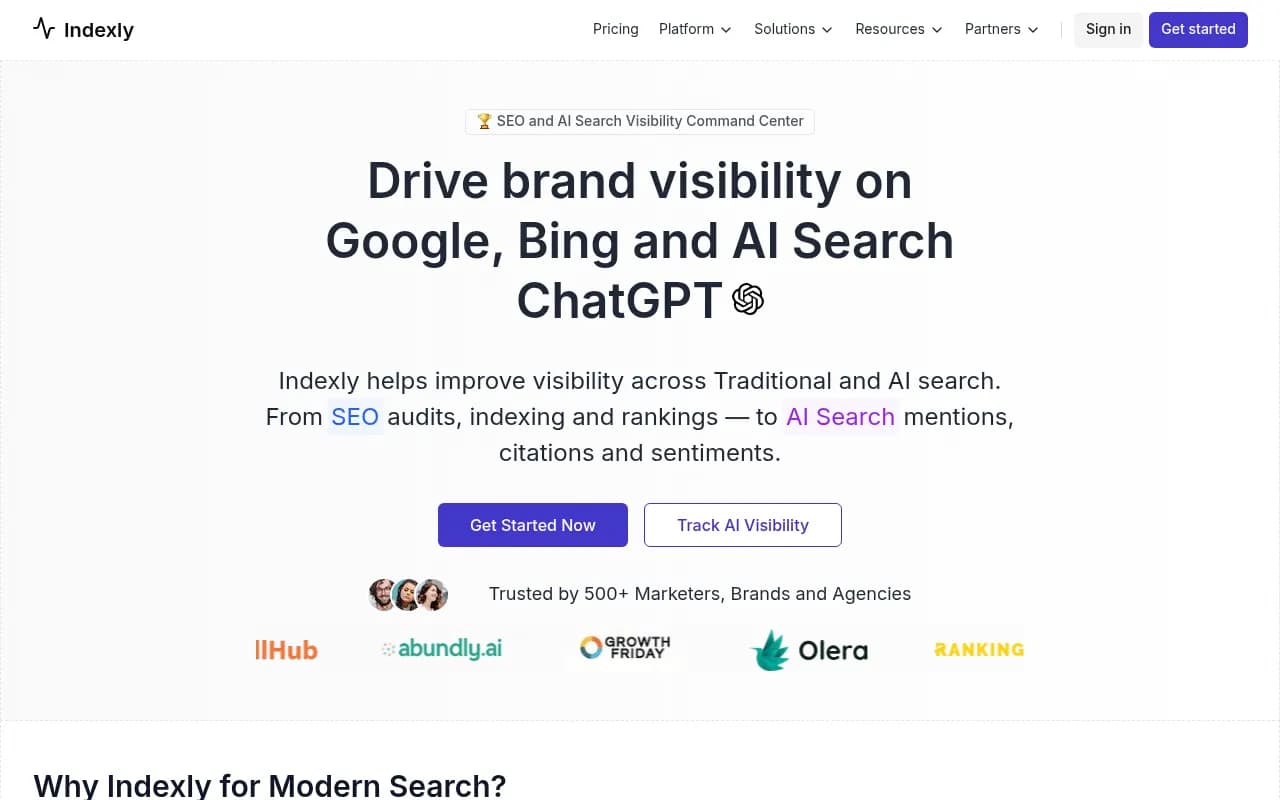
Indexly takes a broader approach -- it's an SEO and AI search visibility platform that covers both traditional search engines (Google, Bing) and AI models (ChatGPT, Perplexity, Claude, Gemini, Bing AI). The pitch: one dashboard for your entire search presence, from indexing status and keyword rankings to AI brand mentions and prompt visibility.
Indexly's feature set spans classic SEO tools (auto-indexing, website audits, backlink intelligence, keyword opportunities) and AI search monitoring (brand mentions, sentiment analysis, competitor visibility). It's designed for teams that want a unified view of search performance without juggling multiple tools. Pricing starts at $29/mo for the Basic plan, with Advanced at $59/mo (20 sites) and Pro at $197/mo.
Side-by-Side Comparison
| Feature | Gauge | Indexly |
|---|---|---|
| Starting price | $99/mo (100 prompts, ChatGPT only) | $29/mo (Basic plan) |
| AI models covered | 7 (ChatGPT, Claude, Gemini, Perplexity, Copilot, AI Mode, AI Overviews) | 5 (ChatGPT, Perplexity, Claude, Gemini, Bing AI) |
| Traditional SEO features | None | Full suite (indexing, audits, backlinks, keywords) |
| Content generation | Yes (included in plans) | No |
| Competitor analysis | Deep competitive intelligence | Basic competitor visibility tracking |
| Multi-site support | Limited (Growth plan covers more) | Up to 20 sites on Advanced ($59/mo) |
| Free trial | Yes | Yes |
| Sentiment analysis | Not mentioned | Yes |
| Affiliate targeting | Yes | No |
| Reddit/social tracking | Yes | Not mentioned |
| API access | Not mentioned | Not mentioned |
| Best for | AI-first brands, content teams, competitive strategy | Agencies, multi-site SEO + AI visibility |
AI model coverage and depth
Gauge monitors 7 AI engines: ChatGPT, Claude, Gemini, Perplexity, Copilot, Google AI Mode, and Google AI Overviews. The platform emphasizes depth over breadth -- it tracks what content is cited, analyzes gaps in your coverage, and provides competitive benchmarking. You see not just "you were mentioned 12 times" but "here's the specific content competitors have that you don't."
Indexly covers 5 AI models: ChatGPT, Perplexity, Claude, Gemini, and Bing AI. The focus is on brand mentions, sentiment, and visibility scores. You get a unified dashboard showing total mentions across models, sentiment breakdown (positive/neutral/negative), and audience reach estimates. It's more about monitoring and reporting than strategic guidance.
Verdict: Gauge wins on AI model coverage (7 vs 5) and depth of analysis. Indexly's sentiment tracking is a nice touch, but Gauge's competitive intelligence and content gap analysis are more actionable for improving visibility.
Traditional SEO capabilities
Gauge doesn't touch traditional SEO. It's purely focused on AI search visibility. If you need indexing monitoring, keyword tracking, or backlink analysis, you'll need a separate tool.
Indexly includes a full SEO suite: auto-indexing (submit pages to Google/Bing automatically), website audits (technical SEO health scores), keyword opportunity tracking, backlink intelligence, and ranking monitoring. It's designed as a unified platform for both traditional and AI search.
Verdict: Indexly wins by default -- it's the only one offering traditional SEO features. If you want one tool for both SEO and AI visibility, Indexly is the obvious choice. If you already have SEO covered (or don't care about it), Gauge's AI-first approach is cleaner.
Content optimization and generation
Gauge includes content generation tools as part of its "Act" phase. The platform analyzes what content competitors have that you don't, then helps you create articles, listicles, and other formats to fill those gaps. The Starter plan includes 3 articles/mo, Growth includes 18 articles/mo. It also provides onsite and offsite recommendations -- specific actions to improve your AI visibility.
Indexly doesn't include content generation. It shows you where you're mentioned (or not mentioned) and provides sentiment analysis, but you're on your own for creating content to improve visibility.
Verdict: Gauge wins decisively. Content generation is a core part of its value proposition. Indexly is monitoring-only on this front.
Competitive intelligence
Gauge emphasizes competitive analysis throughout. You see how your brand stacks up against competitors across AI engines, what content they're getting cited for, and where you have gaps. The platform is built around the question "why are competitors winning and how do I catch up?"
Indexly includes a competitor visibility dashboard showing brand presence across AI models, with metrics like mentions, visibility scores, and audience reach. It's useful for benchmarking but less detailed than Gauge's approach.
Verdict: Gauge is more strategic here. Indexly shows you the scoreboard; Gauge shows you the playbook.
Pricing comparison
| Plan | Gauge | Indexly |
|---|---|---|
| Entry tier | Starter $99/mo (100 prompts, ChatGPT only, 3 articles) | Basic $29/mo |
| Mid tier | Growth $599/mo (600 prompts, all models, 18 articles) | Advanced $59/mo (20 sites) |
| High tier | Enterprise (custom pricing) | Pro $197/mo |
| Free trial | Yes | Yes |
| Annual discount | Not mentioned | Not mentioned |
Indexly is significantly cheaper at every tier. The Advanced plan at $59/mo covers 20 sites and includes both SEO and AI visibility features. Gauge's Starter plan at $99/mo only covers ChatGPT and limits you to 100 prompts.
The catch: Gauge's pricing includes content generation (3-18 articles/mo depending on plan). If you value that, the higher price makes sense. If you just want monitoring, Indexly is a better deal.
Verdict: Indexly wins on price, especially for agencies managing multiple sites. Gauge is more expensive but includes content tools that justify the cost for some teams.
Multi-site and agency features
Gauge's site limits aren't clearly stated on the Starter plan. The Growth plan appears to support more sites but specifics aren't public.
Indexly's Advanced plan ($59/mo) explicitly supports 20 sites, making it agency-friendly. The Pro plan presumably supports even more. The unified dashboard for SEO + AI visibility across multiple properties is a clear agency play.
Verdict: Indexly is the better choice for agencies or anyone managing multiple sites. The pricing and feature set are designed for that use case.
Ease of use and interface
Both platforms emphasize visual dashboards. Gauge's interface is organized around the track-understand-act workflow, with separate views for monitoring, competitive analysis, and content recommendations. The design feels modern and focused.
Indexly's dashboard combines traditional SEO metrics (indexing status, audit scores, backlinks) with AI visibility data (mentions, sentiment, competitor scores). It's more information-dense but potentially overwhelming if you only care about one side of the equation.
Verdict: Tie. Gauge is cleaner if you only want AI visibility. Indexly is more comprehensive if you want everything in one place. Personal preference matters here.
Integration and workflow
Neither platform publicly lists extensive integrations. Both appear to be standalone dashboards rather than tools that plug into existing workflows.
Gauge mentions affiliate targeting and social source engagement (Reddit), suggesting some level of outreach workflow support.
Indexly's auto-indexing feature integrates with Google Search Console and Bing Webmaster Tools to submit pages automatically.
Verdict: Slight edge to Indexly for the GSC/Bing integration, but neither platform is strong on third-party integrations.
Reporting and analytics
Gauge provides visibility reports, competitive benchmarking, and content gap analysis. The focus is on actionable insights -- what to do next, not just what happened.
Indexly offers a unified Brand Visibility Score (across search engines and AI models), sentiment breakdowns, mention tracking over time, and audience reach estimates. The reporting is more comprehensive but less prescriptive.
Verdict: Depends on what you need. Gauge's reports are more strategic ("here's what to fix"). Indexly's reports are more comprehensive ("here's everything that's happening").
Pros and cons
Gauge pros
- Deep competitive intelligence and gap analysis
- Content generation tools included
- Clear action-oriented recommendations
- Covers 7 AI models including AI Overviews
- Reddit and social source tracking
- Affiliate targeting features
Gauge cons
- Higher starting price ($99/mo)
- Starter plan only covers ChatGPT
- No traditional SEO features
- Site limits unclear on lower tiers
- Fewer AI models on entry plan
Indexly pros
- Much cheaper starting price ($29/mo)
- Full SEO suite included (indexing, audits, backlinks, keywords)
- Supports 20 sites on Advanced plan ($59/mo)
- Unified dashboard for traditional + AI search
- Sentiment analysis included
- Auto-indexing integration with GSC/Bing
Indexly cons
- No content generation tools
- Less depth on competitive intelligence
- Fewer AI models covered (5 vs 7)
- More monitoring-focused, less strategic guidance
- Interface can feel information-dense
Who should pick which tool
Choose Gauge if:
- You're focused primarily on AI search visibility, not traditional SEO
- You want strategic guidance and content recommendations, not just monitoring
- Competitive intelligence is a priority -- you need to understand why competitors are winning
- You value content generation tools and want them built into your visibility platform
- You're willing to pay more for deeper AI model coverage and actionable insights
- You're a content team or brand marketer focused on owning your category in AI search
Choose Indexly if:
- You want one platform for both traditional SEO and AI visibility
- You're managing multiple sites (agencies, multi-brand companies)
- Budget is a constraint -- you need a lower entry price
- You prefer comprehensive monitoring and reporting over strategic guidance
- You value sentiment analysis and want to track brand perception in AI responses
- You're an SEO team expanding into AI search and want familiar features (indexing, audits, backlinks) alongside AI monitoring
Consider both if:
- You're a larger team with budget for specialized tools. Use Indexly for broad SEO + AI monitoring across multiple sites, and Gauge for deep competitive analysis and content strategy on your primary brand.
Worth noting: if you're also looking to track how your brand shows up in AI search results with even more depth -- including crawler logs, 880M+ citations analyzed, and Reddit/YouTube tracking -- Promptwatch covers that angle with a focus on closing the loop from visibility gaps to content creation to traffic attribution.

Final verdict
Gauge and Indexly serve different needs. Gauge is the better choice for teams that want strategic AI visibility optimization with built-in content tools and competitive intelligence. It's more expensive but delivers actionable insights that go beyond monitoring. Indexly is the better choice for agencies, multi-site operators, or teams that want a unified SEO + AI visibility platform at a lower price point.
If you're purely focused on AI search and want to move fast with content generation and competitive analysis, Gauge is worth the premium. If you need traditional SEO features alongside AI monitoring or you're managing multiple sites on a budget, Indexly delivers more breadth for less money.
The real question: do you want a strategic AI visibility platform with content tools (Gauge), or a comprehensive SEO + AI monitoring dashboard (Indexly)? Your answer determines which tool fits your workflow.