Key Takeaways
- Bluefish is AI-first and built exclusively for Fortune 500 brand marketers tracking AI search and agentic commerce -- expect to pay $4,000+/month with annual contracts
- Botify is a full-stack SEO platform that added AI search visibility (GEO/AEO) on top of its core technical SEO capabilities -- pricing starts around $10,000/month for enterprise
- Bluefish emphasizes brand influence and "how AI thinks" with custom audiences and tailored prompts; Botify emphasizes technical site health, crawl optimization, and AI agent automation
- If you're a large brand focused purely on AI search reputation and agentic commerce, Bluefish is purpose-built for that. If you need comprehensive SEO + AI search in one platform, Botify covers both.
- Neither offers a free tier or self-service pricing -- both require sales conversations and annual commitments
- For teams that want actionable content gap analysis and AI-optimized content generation alongside visibility tracking, tools like Promptwatch complement either platform by closing the loop from monitoring to optimization
Overview
Bluefish: Enterprise AI marketing for Fortune 500 brands
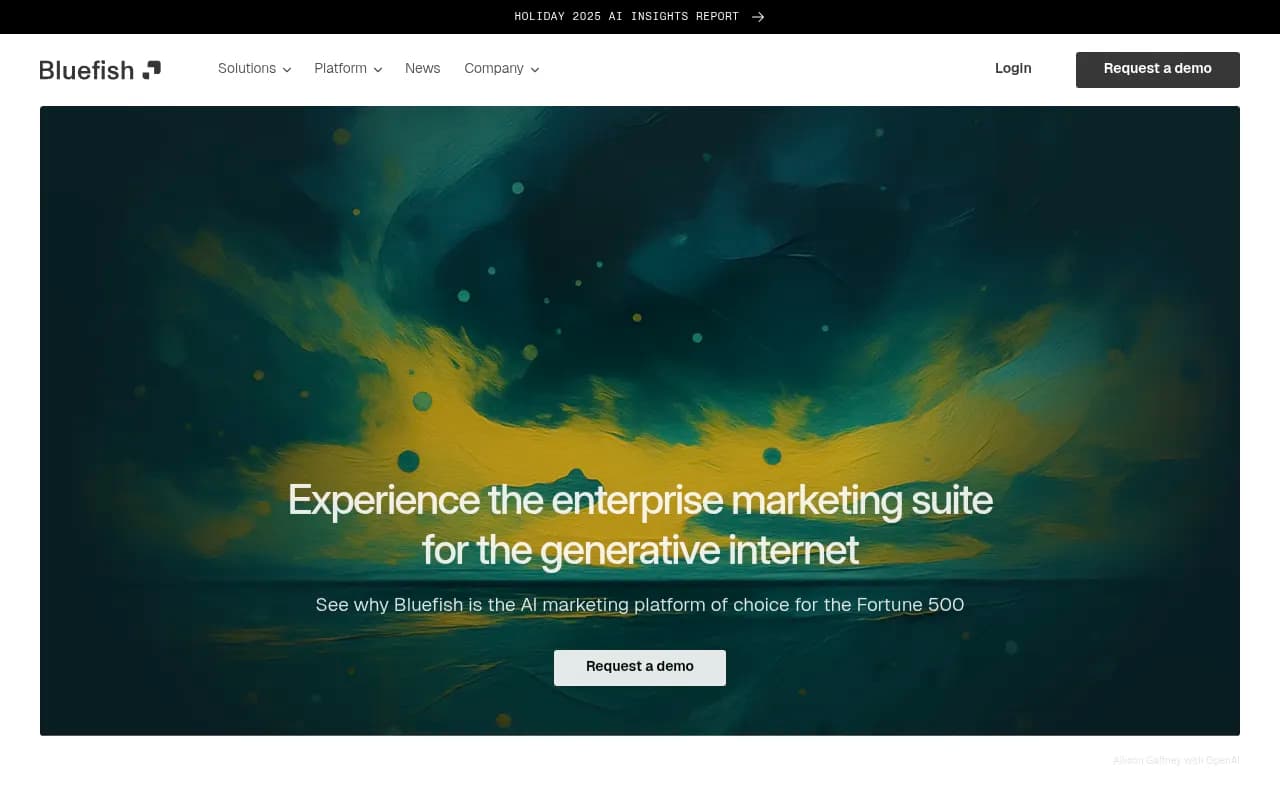
Bluefish positions itself as "the AI marketing platform of choice for the Fortune 500." It's designed exclusively for large marketing teams that need deep visibility into how their brand appears across AI-native channels -- ChatGPT, Perplexity, Google AI Overviews, and agentic commerce platforms. The pitch: go beyond superficial share-of-voice metrics to understand how AI "thinks" and optimize brand influence accordingly. Bluefish launched with a focus on AI monitoring, then added GEO optimization, measurement, and AI commerce tracking. It's enterprise-only, with custom pricing starting around $4,000/month and annual contracts standard.
Botify: All-in-one SEO + AI search optimization
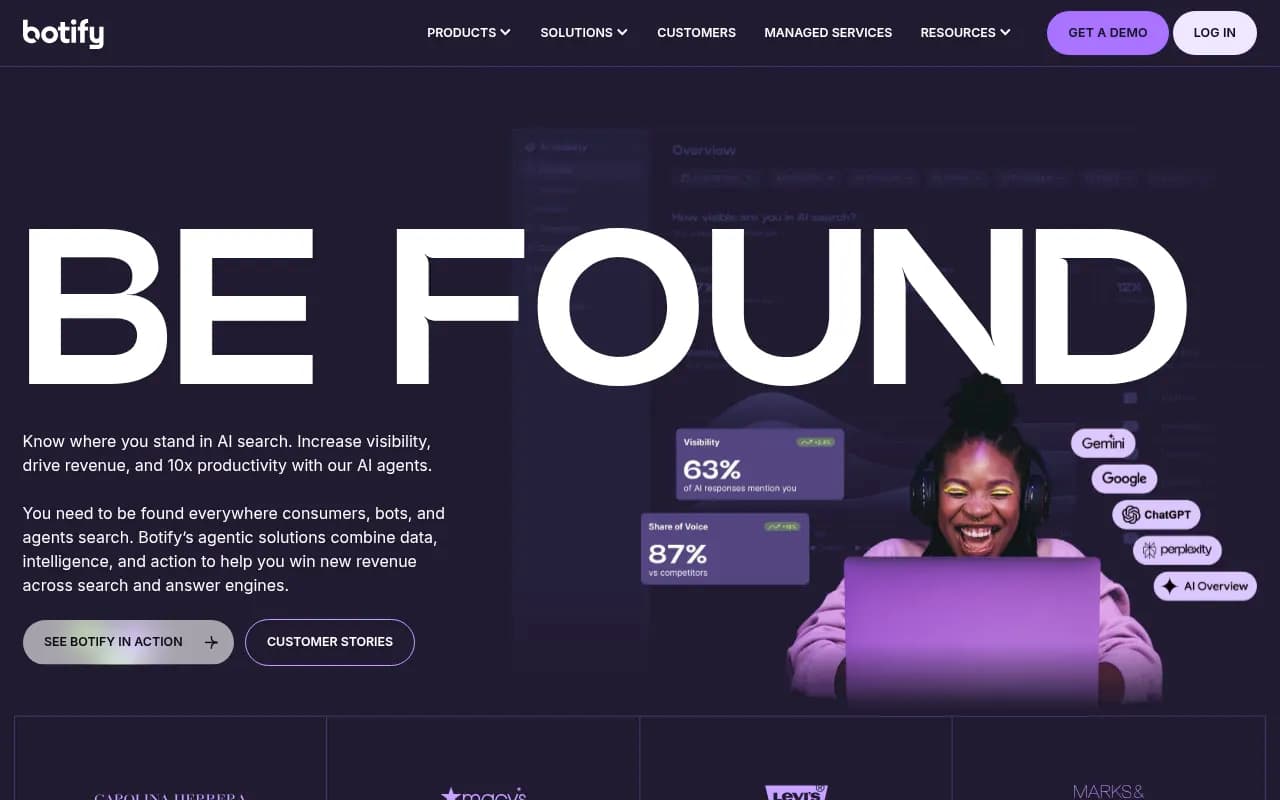
Botify started as a technical SEO powerhouse -- log file analysis, crawl budget optimization, site health diagnostics -- and has evolved into what it calls an "AI search optimization platform." It now covers traditional search engines (Google, Bing) plus AI answer engines (ChatGPT, Perplexity, Google AI Overviews). The core value prop: one platform for SEO, AEO (Answer Engine Optimization), and GEO (Generative Engine Optimization), with AI agents that automate recommendations and workflows. Botify targets enterprise brands and growth companies, with pricing starting around $10,000/month on annual contracts. Named a Strong Performer in The Forrester Wave 2025 for enterprise SEO platforms.
Side-by-Side Comparison
| Feature | Bluefish | Botify |
|---|---|---|
| Primary focus | AI-native channels (ChatGPT, Perplexity, agentic commerce) | Traditional SEO + AI search (SEO/AEO/GEO combined) |
| Target audience | Fortune 500 marketing teams | Enterprise brands, growth companies, SEO teams |
| AI models tracked | ChatGPT, Perplexity, Google AI Overviews, agentic commerce platforms | ChatGPT, Perplexity, Google AI Overviews, plus traditional search engines |
| Technical SEO depth | Not a focus | Core strength (log analysis, crawl optimization, site health) |
| AI agent automation | Limited | Yes (AI agents for recommendations and workflows) |
| Custom audiences/prompts | Yes (tailored prompts, custom audiences) | Standard prompt sets, less customization |
| Content optimization | GEO optimization guidance | AI-powered recommendations, automated workflows |
| Measurement/attribution | GEO measurement, AI commerce tracking | Traffic attribution, revenue tracking |
| Starting price | ~$4,000/month | ~$10,000/month |
| Free tier | No | No |
| Contract terms | Annual contracts | Annual contracts |
| Self-service signup | No (sales-led) | No (sales-led) |
Head-to-head feature deep-dive
Platform focus and philosophy
Bluefish is AI-first. It doesn't try to be an SEO platform -- it's built exclusively for tracking and optimizing brand presence in AI-native channels. The messaging is clear: this is for Fortune 500 marketers who need to understand how ChatGPT, Perplexity, and agentic commerce platforms represent their brand. Bluefish emphasizes "how AI thinks" -- not just whether you're mentioned, but how you're positioned, what context surrounds your brand, and how to influence that narrative. Custom audiences and tailored prompts let you simulate specific customer segments and track brand reputation across different use cases.
Botify takes a different approach. It's a full-stack platform that combines traditional SEO (where it has deep roots) with newer AI search capabilities. The pitch: you need to be found everywhere consumers, bots, and agents search. Botify's strength is technical depth -- log file analysis, crawl budget optimization, site health diagnostics -- plus AI agents that automate recommendations and workflows. The AI search piece (AEO/GEO) is a layer on top of the core SEO platform, not the sole focus.
Verdict: If your only concern is AI search and agentic commerce, Bluefish is purpose-built for that. If you need comprehensive SEO + AI search in one platform, Botify covers both.
AI search visibility and monitoring
Both platforms track the major AI answer engines -- ChatGPT, Perplexity, Google AI Overviews. Bluefish also tracks agentic commerce platforms (AI shopping assistants, recommendation engines). Botify covers traditional search engines (Google, Bing) in addition to AI answer engines.
Bluefish's monitoring emphasizes brand influence and sentiment. You're not just tracking whether you're mentioned -- you're tracking how you're positioned, what competitors are mentioned alongside you, and what context frames your brand. The platform offers custom audiences (simulate different customer personas) and tailored prompts (track specific use cases or product categories). This is useful if you're a large brand worried about brand reputation and competitive positioning in AI responses.
Botify's monitoring is more straightforward: are your pages being cited? Which pages? How often? It integrates with traditional SEO metrics (organic traffic, rankings) so you can see the full picture. The AI agent features automate some of the analysis -- flagging issues, suggesting optimizations, prioritizing actions.
Verdict: Bluefish gives you more control over what you're tracking (custom prompts, audiences) and emphasizes brand narrative. Botify gives you broader coverage (SEO + AI search) and automation.
Technical SEO and site health
This is where the platforms diverge sharply.
Botify is a technical SEO powerhouse. Log file analysis shows you exactly which bots are crawling your site, how often, and which pages they're hitting. Crawl budget optimization helps you prioritize important pages. Site health diagnostics flag indexing issues, broken links, slow pages, and other technical problems that hurt visibility. This is core Botify DNA -- it's what the platform was built for before AI search became a thing.
Bluefish doesn't focus on technical SEO. It's not trying to be a site health tool. If you need log analysis or crawl optimization, you'll need another platform.
Verdict: Botify wins this category by default. If technical SEO matters to you, Botify is the only choice here.
Content optimization and GEO
Both platforms offer some form of GEO (Generative Engine Optimization) guidance, but the depth varies.
Bluefish's GEO optimization focuses on understanding what influences AI recommendations and how to adjust your content strategy accordingly. The platform shows you which topics, angles, and content types get cited, and provides guidance on optimizing for AI visibility. It's more strategic than tactical -- you get insights, but you're still doing the content work yourself.
Botify's AI agents provide automated recommendations and workflows. The platform analyzes your site, compares it to competitors, and suggests specific content changes or new content to create. The Content Strategy Planner (mentioned in research) analyzes your site and provides content ideas that directly impact AI search visibility. This is more hands-on than Bluefish's approach.
Neither platform generates content for you. If you want AI-optimized content creation alongside visibility tracking, tools like Promptwatch fill that gap with built-in AI writing agents that generate articles grounded in real citation data.

Verdict: Botify's AI agents and Content Strategy Planner give you more actionable recommendations. Bluefish gives you strategic insights but less tactical guidance.
Measurement and attribution
Bluefish offers GEO measurement and AI commerce tracking. You can track brand visibility over time, measure the impact of campaigns, and see how your brand performs in agentic commerce scenarios (AI shopping assistants, product recommendations). The platform emphasizes "metrics that matter" -- not just vanity metrics like share-of-voice, but influence and conversion impact.
Botify provides traffic attribution and revenue tracking. You can connect AI search visibility to actual traffic and revenue, see which pages drive conversions, and measure ROI. The platform integrates with traditional SEO metrics, so you can compare AI search performance to organic search performance.
Verdict: Botify's attribution is more concrete (traffic, revenue). Bluefish's measurement is more brand-focused (influence, reputation).
Customization and control
Bluefish emphasizes customization. Custom audiences let you simulate different customer personas (e.g. "budget-conscious travelers" vs "luxury travelers"). Tailored prompts let you track specific use cases or product categories. The platform is designed for brands that need granular control over what they're tracking and how.
Botify uses standard prompt sets and offers less customization on the AI search side. The focus is on automation and scale -- AI agents handle the analysis and recommendations, so you don't need to manually configure everything.
Verdict: Bluefish gives you more control. Botify prioritizes automation over customization.
Enterprise features and scale
Both platforms are built for enterprise. Bluefish highlights that it "consistently passes infosec reviews with ease" and offers data teams more ways to customize, segment, and optimize data. The platform is designed for large marketing teams with complex needs.
Botify is also enterprise-grade, with a long track record serving large brands. Named a Strong Performer in The Forrester Wave 2025 for enterprise SEO platforms. The platform handles large-scale sites (millions of pages) and integrates with enterprise tech stacks.
Verdict: Both are enterprise-ready. Bluefish emphasizes infosec and data customization; Botify emphasizes scale and integration.
Pricing comparison
| Plan | Bluefish | Botify |
|---|---|---|
| Starting price | ~$4,000/month | ~$10,000/month |
| Pricing model | Custom quotes based on brands, markets, features | Custom quotes based on site size, features |
| Contract terms | Annual contracts standard | Annual contracts standard |
| Free tier | No | No |
| Self-service signup | No (sales-led) | No (sales-led) |
Both platforms require sales conversations and annual commitments. Bluefish is cheaper at the entry level (~$4k/month vs ~$10k/month), but Botify covers more ground (SEO + AI search). Neither offers transparent pricing -- you'll need to talk to sales to get a quote.
Pros and cons
Bluefish pros
- Purpose-built for AI-native channels and agentic commerce
- Custom audiences and tailored prompts for granular tracking
- Emphasis on brand influence and "how AI thinks"
- Lower starting price than Botify (~$4k/month)
- Designed specifically for Fortune 500 marketing teams
Bluefish cons
- No technical SEO capabilities -- you'll need another tool for that
- Less automation than Botify (no AI agents)
- Limited content optimization guidance (strategic insights, not tactical recommendations)
- Sales-led only, no self-service option
- Annual contracts required
Botify pros
- Full-stack platform covering SEO + AI search (AEO/GEO)
- Deep technical SEO capabilities (log analysis, crawl optimization, site health)
- AI agents automate recommendations and workflows
- Content Strategy Planner provides actionable content ideas
- Named a Strong Performer in Forrester Wave 2025
Botify cons
- Higher starting price (~$10k/month)
- Less customization on AI search tracking (standard prompt sets)
- AI search features are a layer on top of core SEO platform, not the primary focus
- Sales-led only, no self-service option
- Annual contracts required
Who should pick which tool
Pick Bluefish if:
- You're a Fortune 500 brand focused exclusively on AI search and agentic commerce
- Brand reputation and influence in AI responses is your top priority
- You need custom audiences and tailored prompts to track specific use cases
- You already have a technical SEO solution and just need AI search visibility
- You want the lower entry price (~$4k/month vs ~$10k/month)
Pick Botify if:
- You need comprehensive SEO + AI search in one platform
- Technical SEO (log analysis, crawl optimization, site health) is important to you
- You want AI agents to automate recommendations and workflows
- You need actionable content optimization guidance, not just strategic insights
- You're willing to pay more for a full-stack solution
Consider alternatives if:
- You're a smaller company or startup -- both platforms are enterprise-only with high price tags
- You want self-service signup and transparent pricing -- neither offers this
- You need content generation alongside visibility tracking -- both platforms provide insights but don't create content for you
Final verdict
Bluefish and Botify serve different needs. Bluefish is laser-focused on AI-native channels and brand influence -- it's the right choice if you're a large brand that needs deep visibility into how ChatGPT, Perplexity, and agentic commerce platforms represent you. Custom audiences and tailored prompts give you granular control, and the lower starting price (~$4k/month) makes it more accessible than Botify.
Botify is a full-stack platform that combines traditional SEO with AI search optimization. It's the right choice if you need comprehensive visibility across both traditional search engines and AI answer engines, plus technical SEO capabilities like log analysis and crawl optimization. The AI agents and Content Strategy Planner provide more actionable recommendations than Bluefish, but you'll pay more (~$10k/month starting price).
Neither platform is a budget option -- both require sales conversations, annual contracts, and enterprise-level budgets. If you're a smaller company or need self-service access, look elsewhere. And if you want to close the loop from monitoring to optimization with AI-generated content, you'll need to layer in additional tools.
One-liner: Bluefish is for Fortune 500 marketers who need AI-first brand visibility; Botify is for enterprise SEO teams that want traditional search + AI search in one platform.